Epiphany house blessing
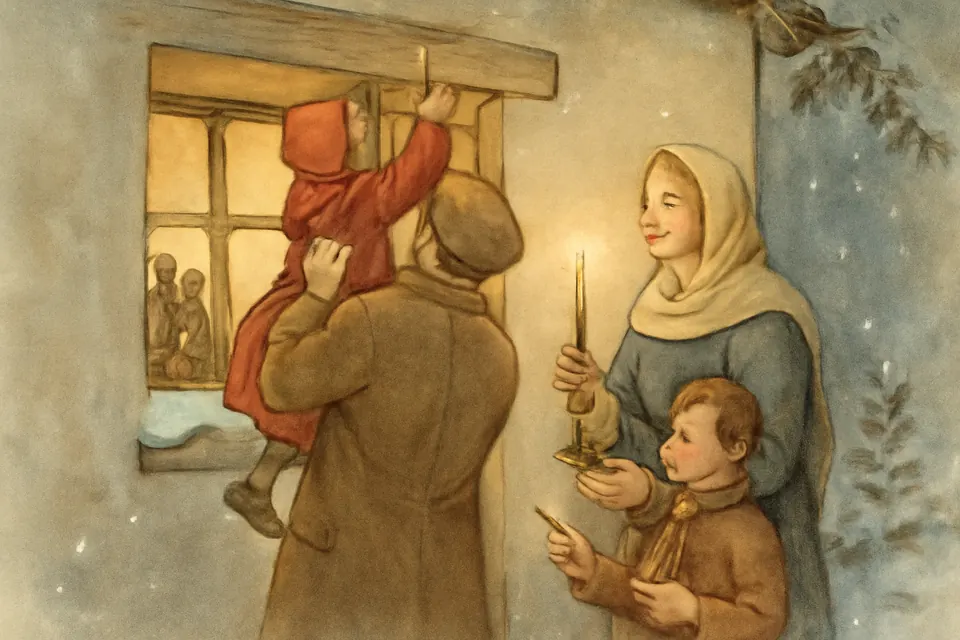
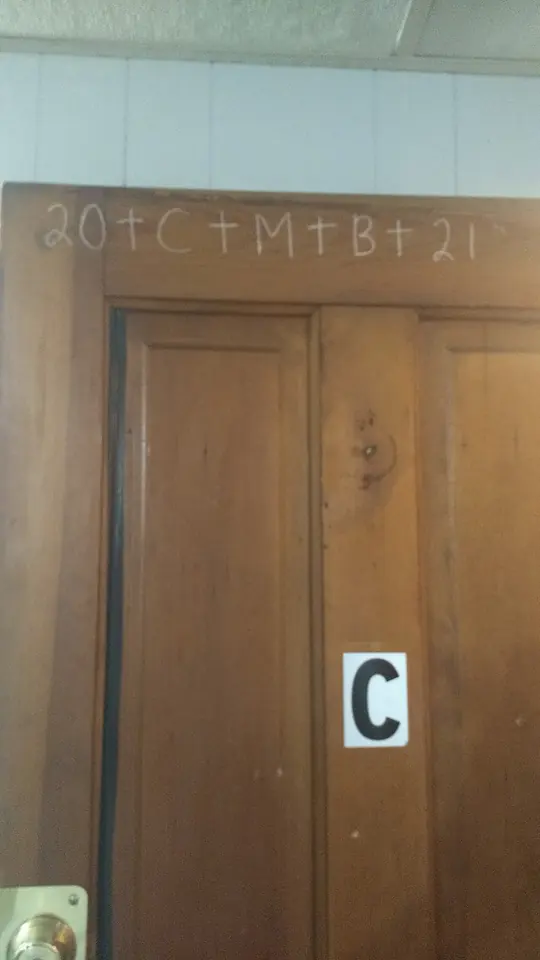
The Epiphany house blessing is the custom of writing the year and the letters C, M and B in blessed chalk above the front door at Epiphany (January 6). For 2027 the inscription is 20 + C + M + B + 27. The letters stand for the Magi, Caspar, Melchior and Balthasar, and are also read as Christus mansionem benedicat, "May Christ bless this house."
Each January, in homes from Bavaria to Ohio, a few letters and numbers appear in white chalk above front doors. The Epiphany house blessing marks the house for the new year in the name of Christ and of the Magi, the wise men who came to the house in Bethlehem where they "found the child with Mary his mother" (Matthew 2:11). It takes five minutes, costs nothing, and is one of the simplest Christmas customs a family can keep.
How to write the inscription for 2027
The chalk blessing splits the year around the initials of the three wise men. For 2027 it reads:
20 + C + M + B + 27
- Write the first two digits of the year, 20.
- Add a cross, then C, a cross, M, a cross, B.
- Add a final cross and the last two digits of the year, 27.
Write it on the lintel above the front door or on the door itself, high enough that it won't rub off at once. In German-speaking countries a star often stands in for one or more of the crosses, as on the church door in Heidelberg pictured below. Polish families write K+M+B, because Caspar is Kacper in Polish.

What C+M+B means
The letters have two meanings, and both are old enough to be honest.
- The Magi. C, M and B are the initials of Caspar, Melchior and Balthasar, the names Western tradition gave the Magi. The Gospel itself doesn't name them; the names appear in the 6th century. The Latin blessing of chalk in the Roman Ritual, quoted below, asks God to bless all who write on their doors "the names of your saints Gaspar, Melchior and Balthasar."
- "May Christ bless this house." The same letters spell Christus mansionem benedicat. This reading came later than the names, but it fits the custom so well that many families now explain the letters this way first.
The crosses stand for Christ, and the year places the house under his protection for the coming twelve months.


The traditional blessing of chalk
Chalk for the custom is usually blessed by a priest on the feast of the Epiphany, often at the end of Mass, and parishes hand it out to families. The Roman Ritual includes a short blessing for it, the Benedictio cretae in Festo Epiphaniae. The text below is from the 1927 edition of the Rituale Romanum, which is in the public domain. After the opening versicles, the priest prays:
Benedic, Domine Deus, creaturam istam cretae: ut sit salutaris humano generi; et praesta per invocationem nominis tui sanctissimi, ut, quicumque ex ea sumpserint, vel in ea in domus suae portis scripserint nomina sanctorum tuorum Gasparis, Melchioris et Baltassar, per eorum intercessionem et merita, corporis sanitatem, et animae tutelam percipiant. Per Christum Dominum nostrum. Amen.
In a literal translation by this site: "Bless, O Lord God, this creature chalk, that it may be helpful to the human race; and grant, through the invocation of your most holy name, that whoever takes some of it, or writes with it on the doors of their house the names of your saints Gaspar, Melchior and Balthasar, may receive through their intercession and merits health of body and protection of soul. Through Christ our Lord. Amen." The chalk is then sprinkled with holy water. The same appendix has a blessing of gold, frankincense and myrrh for the feast.

The prayers of the house blessing
The 1927 Rituale also gives a full blessing of homes on the Epiphany, the Benedictio domorum in Festo Epiphaniae. The priest greets the house with "Pax huic domui" ("Peace to this house"), and all sing the antiphon:
Ab Oriente venerunt Magi in Bethlehem, adorare Dominum: et apertis thesauris suis pretiosa munera obtulerunt, aurum Regi magno, thus Deo vero, myrrham sepulturae ejus. Alleluja.
In our literal translation: "From the East the Magi came to Bethlehem to adore the Lord, and opening their treasures they offered precious gifts: gold to the great King, incense to the true God, myrrh for his burial. Alleluia." The Magnificat follows while the rooms are sprinkled with holy water and incensed. After the Our Father and the collect of Epiphany comes the closing prayer:
Benedic, Domine, Deus omnipotens, locum istum (vel domum istam): ut sit in eo (ea) sanitas, castitas, victoriae virtus, humilitas, bonitas et mansuetudo, plenitudo legis, et gratiarum actio Deo Patri, et Filio et Spiritui Sancto; et haec benedictio maneat super hunc locum (vel hanc domum), et super habitantes in eo (ea). Per Christum Dominum nostrum. Amen.
Our literal translation: "Bless, O Lord God almighty, this place (or this house), that in it there may be health, chastity, the strength of victory, humility, goodness and gentleness, the fullness of the law, and thanksgiving to God the Father, and the Son, and the Holy Spirit; and may this blessing remain upon this place (this house) and upon all who live in it. Through Christ our Lord. Amen."
Who can do the Epiphany house blessing?
The blessings in the Roman Ritual are priestly blessings: a priest blesses the chalk and, in many parishes, still visits homes during the Christmas season. The chalking itself has always been a family custom. Parents or grandparents usually lead the prayers, and children often write the letters. The U.S. bishops publish a "Blessing of the Home and Household on Epiphany" among their prayers for families, so a household can keep the custom without a priest present. Anglican and Lutheran congregations have taken it up as well, and a number of Church of England parishes in London chalk their church doors each January.
A simple family order looks like this:
- Gather at the front door with the blessed chalk, holy water if you have it, and a candle.
- Read Matthew 2:1–12, the visit of the Magi.
- Pray the Our Father and, if you like, the antiphon and closing prayer above.
- Write 20 + C + M + B + 27 over the door.
- Walk through the house, sprinkling holy water in each room.
The star singers
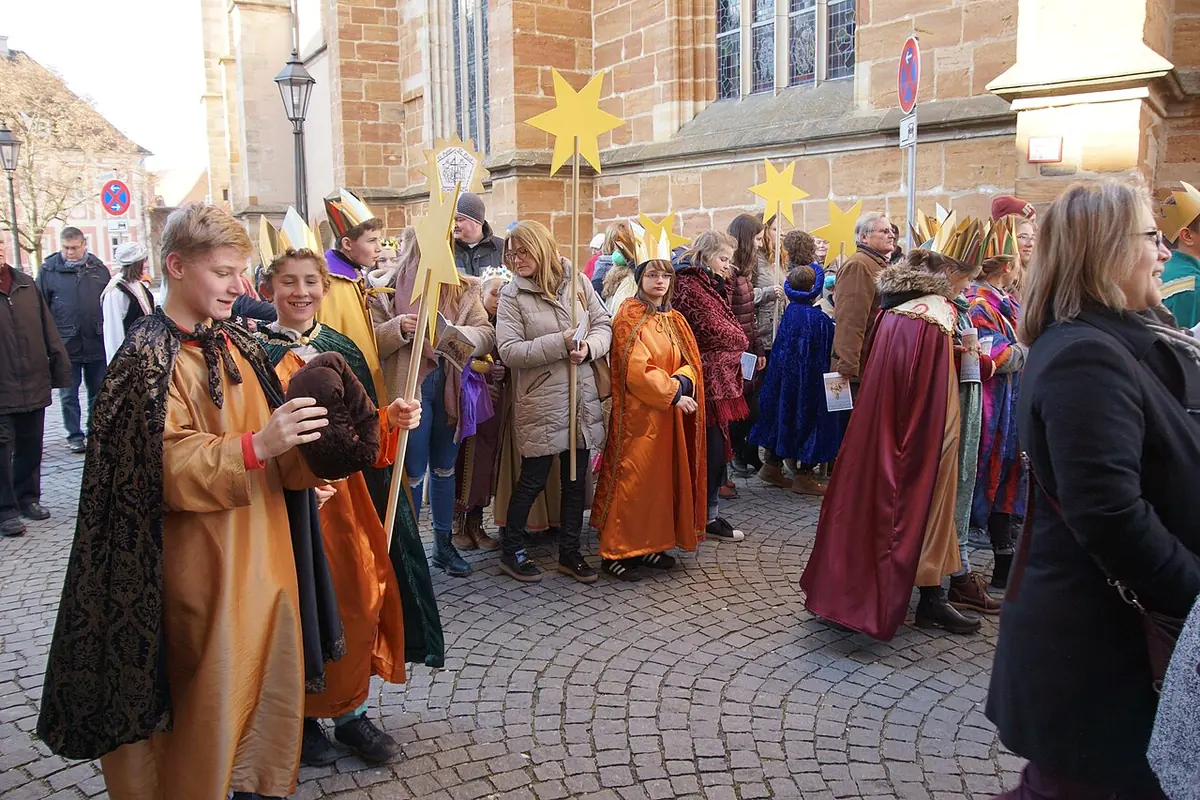
In Germany, Austria and neighboring countries, the inscription is often written by children rather than parents. Dressed as the three kings, with paper crowns and a star on a pole, the Sternsinger, or star singers, go from door to door around Epiphany, sing, collect money for children in need, and chalk the blessing over each door they visit. In Germany the campaign is run by the Catholic children's mission society, the Kindermissionswerk "Die Sternsinger." The custom of boys singing behind a star is much older, as a 17th-century woodcut from Nuremberg shows.



When to do it
The traditional day is the feast of the Epiphany, January 6, which in 2027 falls on a Wednesday. In the United States and some other countries the Epiphany is kept on the Sunday between January 2 and 8, which in 2027 is January 3. Families often chalk the door on whichever day their parish blesses the chalk, and anywhere in the Christmas season is fine. In Cologne, home of the shrine of the Magi, the feast is kept with special solemnity: on Epiphany the front panel of the shrine is removed so pilgrims can see the relics. See the feast day calendar for other January feasts.
Frequently asked questions
How do you write the Epiphany house blessing for 2027?
Write 20 + C + M + B + 27 in blessed chalk on or above the front door: the first two digits of the year, a cross, the letters C, M and B separated by crosses, another cross, and the last two digits of the year.
What does C+M+B mean?
C, M and B are the initials of the Magi in their Latin names, Caspar, Melchior and Balthasar, whom the traditional Latin blessing of chalk names directly. They are also read as Christus mansionem benedicat, "May Christ bless this house," a later and very popular reading. The crosses stand for Christ.
When do you chalk the door for Epiphany?
On the feast of the Epiphany, January 6, or on the Sunday it is celebrated where you live (January 3 in the United States in 2027). Many families do it any time during the Christmas season, after their parish has blessed chalk at the Epiphany Mass.
Do you need a priest to bless your house at Epiphany?
No. Traditionally a priest blesses the chalk and, where possible, visits homes, but families mark their own doors and pray the house blessing together, usually led by a parent. If you can't get blessed chalk, ordinary chalk and the family's prayer are still a fitting way to keep the custom.
How long should the chalk stay on the door?
There is no rule. Most families simply let it fade with the weather over the year, and some leave it until they chalk the new year's blessing the following January.
Sources
- Rituale Romanum (Mechlin and New York: Benziger, 1927), Appendix, pp. 434–436: Benedictio cretae and Benedictio domorum in Festo Epiphaniae
- Douay-Rheims Bible, Matthew 2
- Catholic Encyclopedia (1910): Magi
- USCCB: Blessing of the Home and Household on Epiphany
- Kindermissionswerk "Die Sternsinger": FAQ zum Sternsingen
- Catholic World Report: A Cathedral Fit for Three Kings (January 4, 2026)