St. Lucy of Syracuse
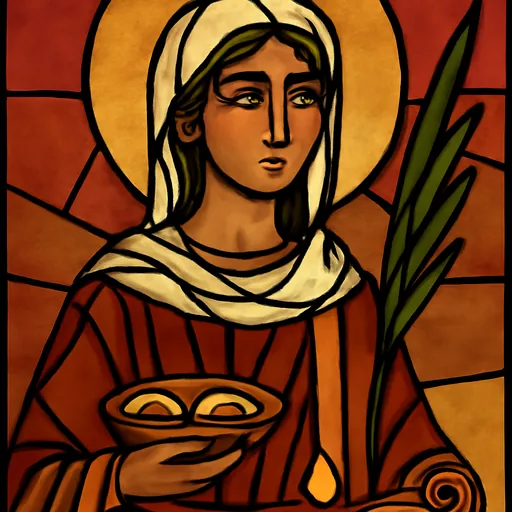
St. Lucy was a young Christian woman of Syracuse, Sicily, martyred around 304 in the persecution of Emperor Diocletian. Her name comes from the Latin lux, "light." Her feast day is December 13, celebrated with candlelight processions in Scandinavia and Italy, and she is the patron saint of the blind and of people with eye trouble.
Who was St. Lucy?
Lucy was born around 283 in Syracuse, a Greek city on the east coast of Sicily, to a wealthy family. Her father died when she was young. Her story comes mainly from the Acts of St. Lucy, written in the 5th or 6th century, more than a hundred years after her death. Historians accept that she was a real Christian martyr of Syracuse who died around 304, but many details of the Acts are legendary.
The story of her martyrdom
According to the Acts, Lucy had privately dedicated her life to God, while her mother, Eutychia, had arranged for her to marry a pagan man.
The pilgrimage to St. Agatha
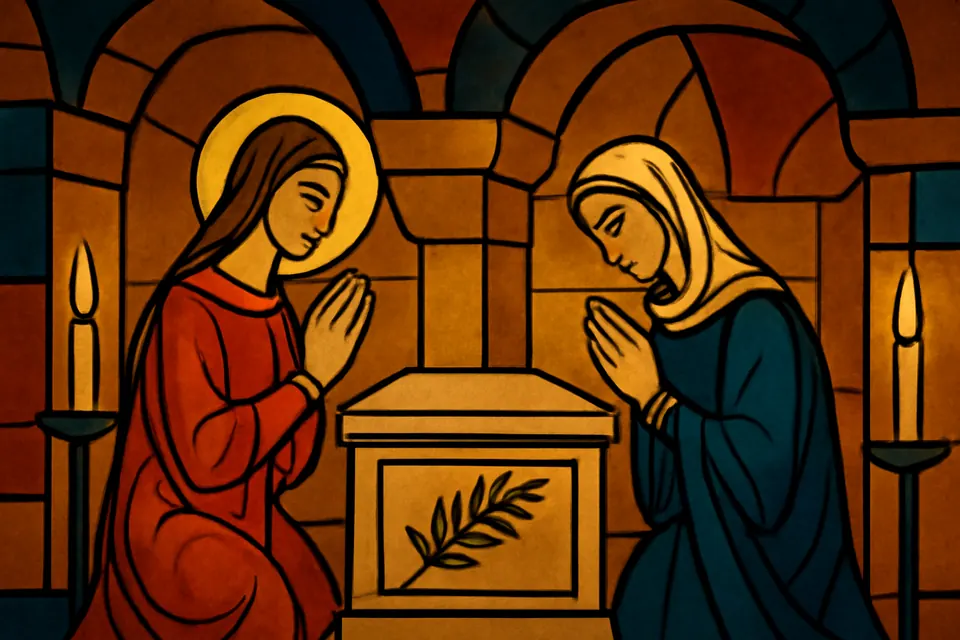
Eutychia suffered for years from a bleeding illness. Lucy persuaded her to make a pilgrimage to the tomb of St. Agatha, the famous martyr of nearby Catania. As they prayed there, Agatha appeared to Lucy in a dream and told her that her mother would be healed through Lucy's own faith. Eutychia recovered, and in gratitude she allowed Lucy to give her dowry to the poor.
Betrayal and trial
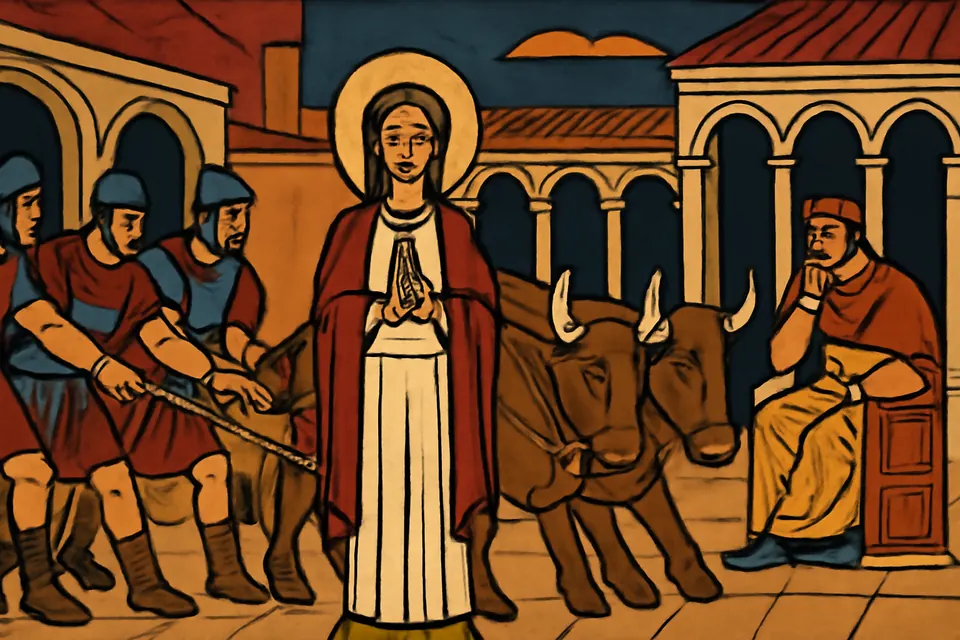
The rejected suitor denounced Lucy to the Roman governor, Paschasius, as a Christian during the persecution of Emperor Diocletian. When she refused to sacrifice to the Roman gods, he ordered her taken to a brothel. The Acts say guards couldn't move her, even when they harnessed her to a team of oxen. A fire built around her didn't burn her. She died by the sword, around the year 304.
Labels
All of these episodes are traditional: they come from her legend. The basic facts, that a young Christian woman named Lucy was martyred in Syracuse in the early 300s and honored there soon afterward, are historical.
Why St. Lucy is the patron saint of the blind
The Acts don't mention her eyes. Stories that her eyes were gouged out before her death, or that she plucked them out herself and sent them to the suitor who admired them, appear in the Middle Ages, along with the claim that God gave her new and more beautiful eyes. Together with her name, from lux, "light," these legends made her the patron saint of the blind and of anyone with eye trouble. In art she often holds two eyes on a dish.
Evidence for St. Lucy in the early Church
- The Euskia inscription: a Greek inscription from the late 300s or early 400s, found in the catacombs of San Giovanni in Syracuse, mentions a woman named Euskia who died on "the feast of my lady Lucy." It is among the oldest evidence for her cult.
- The Roman Canon: Lucy is one of seven women martyrs named in the Roman Canon, the oldest Eucharistic prayer of the Latin Mass, alongside Felicity, Perpetua, Agatha, Agnes, Cecilia and Anastasia.
- Early churches: by the 6th century, churches were dedicated to her in Rome and elsewhere.
Relics in Venice
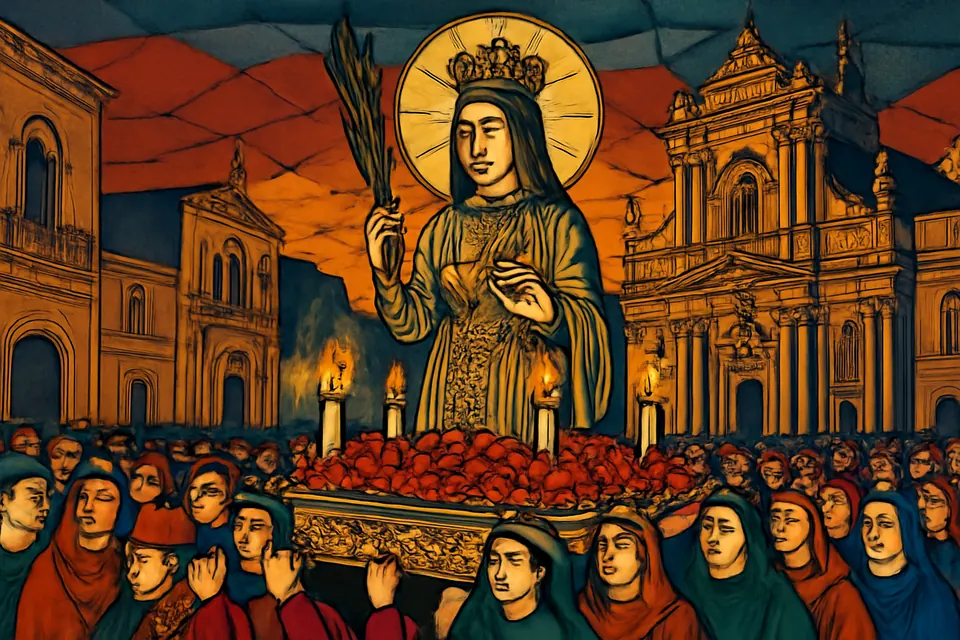
During the Byzantine reconquest of Sicily in the 11th century, Lucy's body was taken to Constantinople. After the Fourth Crusade sacked that city in 1204, the Venetians brought it to Venice. Since 1863 her relics have rested in the Church of San Geremia. Syracuse still keeps her empty tomb and celebrates her feast with a great procession carrying a silver statue of the saint.
St. Lucy's Day traditions
- Scandinavia: Sweden, Norway and Finland keep Luciadagen on December 13. A girl chosen as Lucia wears a white gown with a red sash and a crown of candles and leads a procession singing the Neapolitan song Santa Lucia, followed by saffron buns called lussekatter.
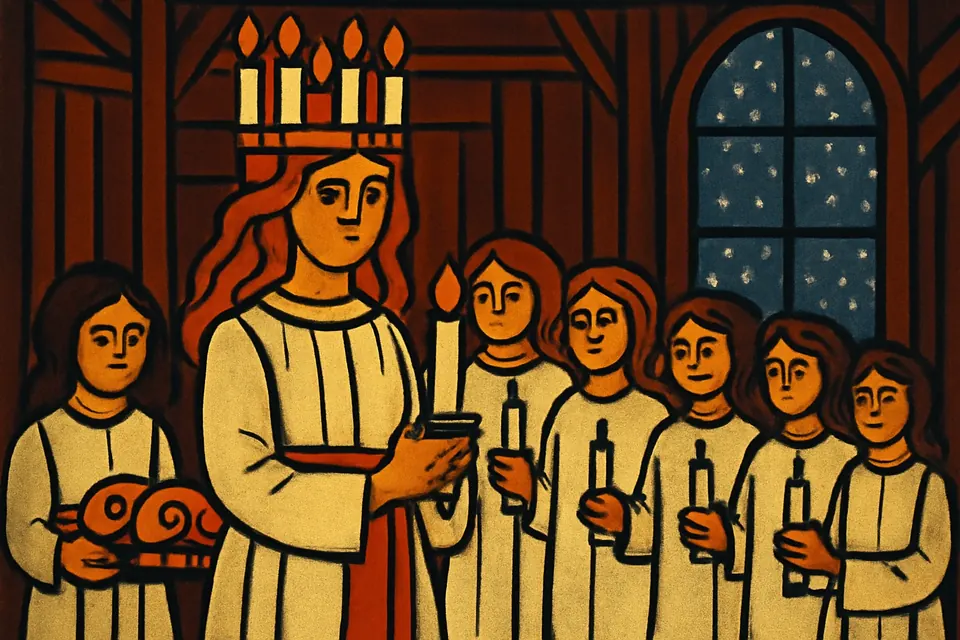
- Italy: in Syracuse and in parts of northern Italy, children receive gifts from Santa Lucia on the night of December 12.
- Food: in Sicily, people avoid bread and pasta on her feast and eat cuccìa, boiled wheat berries, recalling a famine said to have ended on her feast day when grain ships arrived.
Prayer to St. Lucy
Catholics traditionally ask St. Lucy's intercession for healing of the eyes, for those losing their sight and for spiritual light. Her name appears in the Roman Canon of the Mass, where the priest prays that God will grant us "some share and fellowship" with the apostles and martyrs, "with Felicity, Perpetua, Agatha, Lucy, Agnes, Cecilia, Anastasia and all your Saints."
Frequently asked questions
Why is St. Lucy shown holding eyes on a plate?
Medieval legends say her eyes were torn out before her death, or that she removed them herself to discourage a suitor, and that God restored them. These stories appear only centuries after her death, but they made her the patron saint of the blind and of eye ailments. Her name, from the Latin for "light," fit the tradition.
What is St. Lucy's Day?
December 13. In Sweden, Norway and Finland, a girl dressed in white with a crown of candles leads a procession with songs and saffron buns called lussekatter. In parts of Italy, Santa Lucia brings children gifts on the night of December 12.
Why is St. Lucy's Day so close to the winter solstice?
Under the old Julian calendar, December 13 fell on or near the shortest day of the year, so a feast of a saint named "light" became a festival of light in the darkest season. The saying "Lucy light, the shortest day and the longest night" comes from that time.
Is St. Lucy a real historical person?
Yes. An inscription from the late 300s or early 400s found in the catacombs of San Giovanni in Syracuse mentions her feast, and her name has been in the Roman Canon of the Mass since at least the 6th century. Many details of her story, however, come from legend.
Where are St. Lucy's relics?
Most are in the Church of San Geremia in Venice, which received them after the Fourth Crusade in 1204. Her empty tomb in Syracuse remains a place of pilgrimage.
Sources
- Catholic Encyclopedia (1910): St. Lucy
- Butler's Lives of the Saints, December 13
- Roman Martyrology, December 13
- The Roman Canon (Eucharistic Prayer I), "Nobis quoque peccatoribus"