Catherine Doherty

Catherine Doherty (1896–1985), born Ekaterina Kolyschkine in Russia, was a refugee baroness who became a Catholic in 1919, lived among the poor in Toronto and Harlem through her Friendship House, and in 1947 founded the Madonna House Apostolate in Combermere, Ontario. She wrote Poustinia. Her cause opened in 2000, so the Church calls her Servant of God; she is not yet Venerable, Blessed or a saint.
Catherine Doherty was a Russian baroness who lost everything in the Revolution, crossed the ocean as a refugee, and then gave away what she had rebuilt to live with the poor. She founded houses of hospitality in the slums of Toronto and in Harlem, and later, in the backwoods of Ontario, the community of Madonna House, which still welcomes guests and sends its members around the world. She brought the prayer of the Russian Christian East into the heart of the Catholic Church in North America. The Church calls her Servant of God, and her cause for canonization is open.
Fr. John Murray, writing about her for the Irish Jesuits, summed her up in the words she would have used herself: "a woman in love with God and the poor." Let us look at that life, and ask her to pray for us as we go.
Who was Catherine Doherty?
She was born Ekaterina Fyodorovna Kolyschkine on August 15, 1896, the feast of the Assumption, in Nizhny Novgorod, on the Volga in Russia. Her family was wealthy and devout, and she was baptized and raised in the Russian Orthodox Church. Her father's work took the family abroad, and in Alexandria, Egypt, she went to a Catholic convent school, her first meeting with the Church of the West.
The faith she learned at home was practical. Her mother insisted on being married in a poor village among the people she served, and Catherine often saw her father get up from the table to wait on beggars at the door. "A love that is not incarnate is not real love," she would say later.

War, revolution and exile
At fifteen she married her cousin, Baron Boris de Hueck. When the First World War broke out she served as a nurse at the front. Then came the Revolution. The couple escaped through Finland, nearly losing their lives, and reached England, where in 1919 Catherine was received into the Catholic Church. They emigrated to Toronto, where their son, George, was born. Poor and struggling, she took menial jobs, then became a popular lecturer and finally an executive with a lecture bureau in New York. By the end of the 1920s she was prosperous again.
She never forgot what she had seen in Russia. A whole Christian civilization, she believed, had collapsed in part because Christians had not loved the poor. "Wake up! Love the poor! Live the gospel," she warned, or God's anger would follow.
Friendship House: Toronto and Harlem
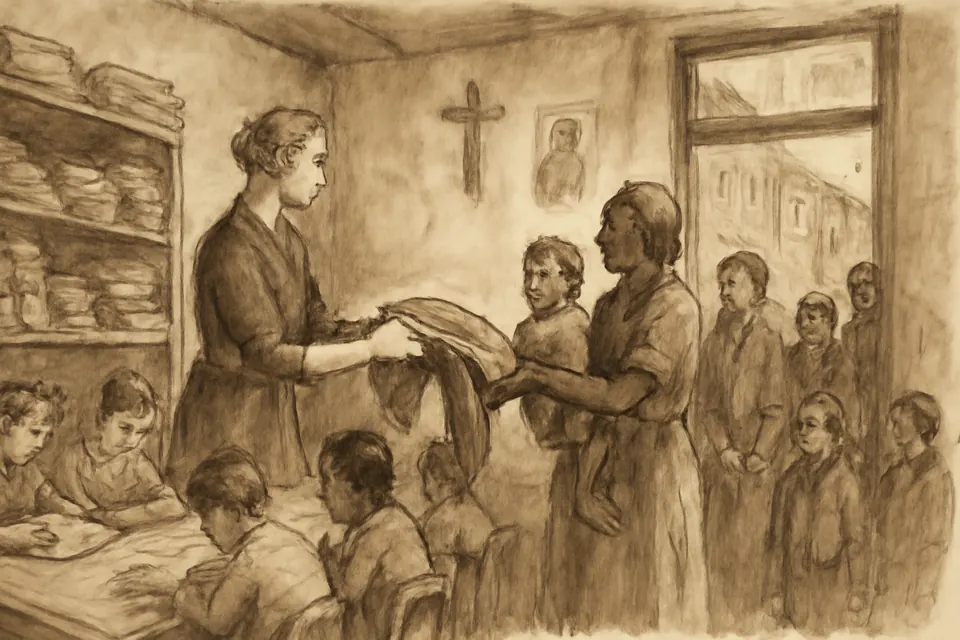
Comfort did not satisfy her. A passage of the Gospel kept rising before her eyes: arise, go, sell all you possess, take up your cross and follow me. In the early 1930s, with her bishop's blessing, she gave away her possessions and went to live in the slums of Toronto. Others joined her, and Friendship House was born. They begged for food and clothing, ran activities for young people and answered communist propaganda with the social teaching of the popes.
The Toronto house closed amid misunderstanding and criticism, but in the late 1930s she began again in Harlem, New York, living among and serving the Black community at a time when few Catholics would. Friendship Houses followed in other American cities. The Catholic Worker's founder, Dorothy Day, was among the few who understood what she was doing and stood by her.
She never thought of it as social work. "When I hear a knock on the door," she said, "I see a hand with a wound in it." Each person was Christ.
Her first marriage had long been unhappy, and the Church eventually declared it null. In 1943 she married Eddie Doherty, a well-known Irish-American newspaperman, who would be her partner in everything that followed.
Madonna House in Combermere
In 1947 Catherine and Eddie moved to the small village of Combermere, in the Madawaska valley of eastern Ontario, meaning to retire. Instead, people came to join them again, and the Madonna House Apostolate grew around them: a family of laymen, laywomen and priests who make lifetime promises of poverty, chastity and obedience. They farm, cook, sew, pray and welcome anyone who comes, and they run mission houses in several countries. When she died she left a spiritual family of more than 200 members.

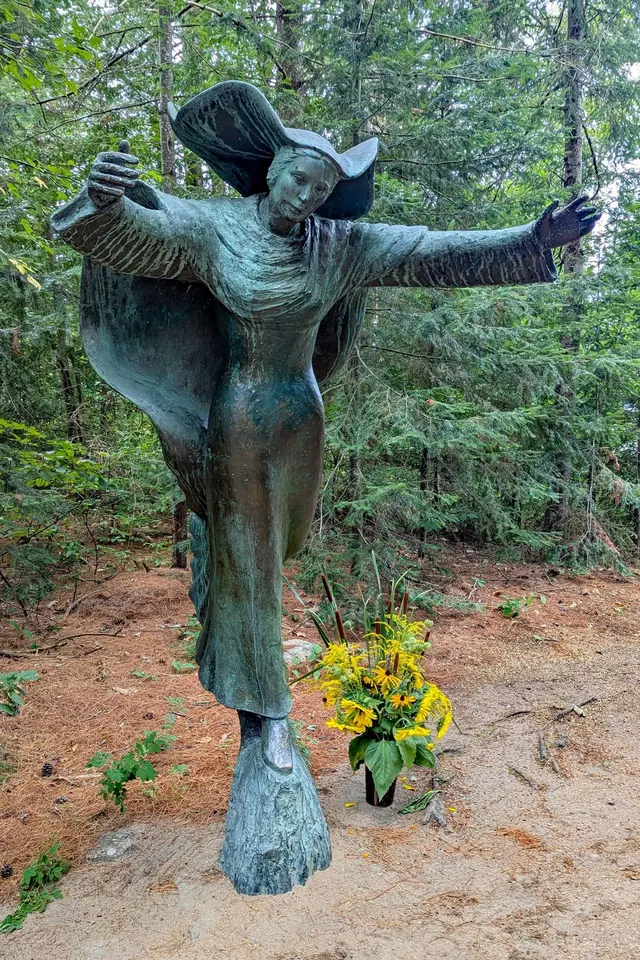
Our Lady was at the center of the house from the start. In 1960 a statue that the community calls Our Lady of Combermere, the "Questing Madonna," was blessed among the pines beside the main house. She runs forward with her arms open, to meet her children in their need.
The Little Mandate
The heart of Madonna House spirituality is what Catherine called the Little Mandate, words she believed she received from Christ over the course of her life. Madonna House calls it a "distillation of the Gospel." It begins:
Arise – go! Sell all you possess.
Little – be always little! Be simple, poor, childlike.
Preach the Gospel with your life – without compromise!
and ends:
Go without fear into the depths of men's hearts. I shall be with you.
Pray always. I will be your rest.
The full text is on the Madonna House website.
Poustinia: the desert in the heart
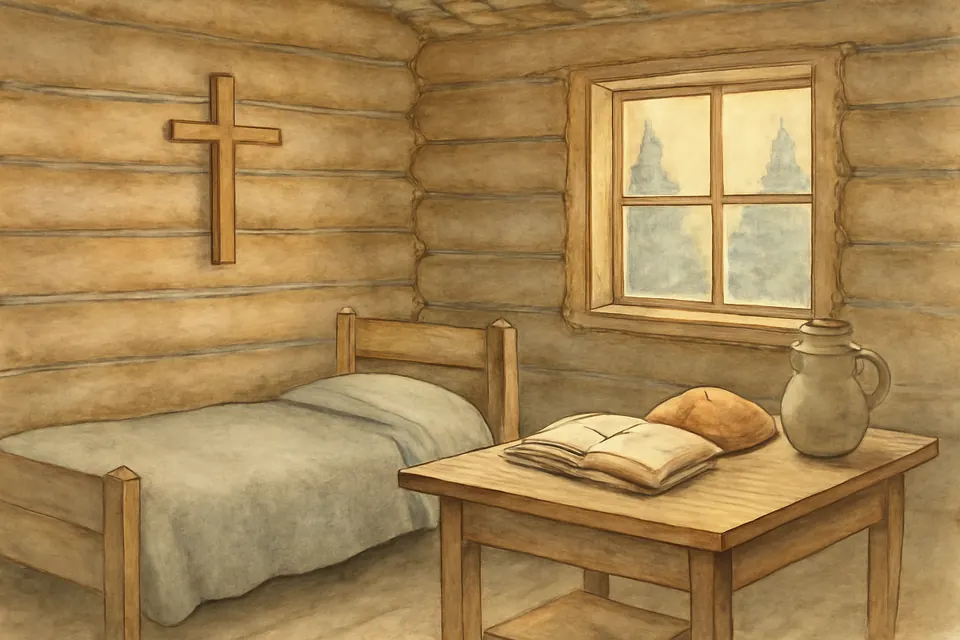
Catherine's most famous gift to the Church is the poustinia, the Russian word for "desert." In the Russia of her youth, a poustinik was a man or woman who lived alone near a village in prayer and fasting, yet remained at the service of the people. In 1962, as a way of praying for the Second Vatican Council, she set aside a room in an old farmhouse where members of the community could go for twenty-four hours with only a Bible, bread and water, a hard bed and a cross without a corpus. On October 11, 1962, the day the Council opened, the whole community walked there on pilgrimage, and the first two members made a poustinia.
Her book Poustinia, compiled from her talks by Fr. Robert Wild and published in 1975, became a spiritual classic. Madonna House reports that it sold 67,000 copies in its first two years and was translated into sixteen languages. She wrote more than twenty-five books in all, many with Russian titles, such as Sobornost (unity) and Strannik (pilgrim), and tens of thousands of letters. Through them she taught Western Catholics to breathe with both lungs of the Church, East and West.

Her death and her cause
Canada named her to the Order of Canada in 1976 "for a lifetime of devoted services to the underprivileged of many nationalities, both in Canada and abroad." She died at Madonna House on December 14, 1985, after a long illness, at 89.
In 2000 Bishop Brendan O'Brien of the Diocese of Pembroke, Ontario, opened her cause for canonization, and she received the title Servant of God. We have not found any later decree on her heroic virtue, so she is not yet Venerable. As with every cause, beatification would require a miracle through her intercession, investigated and approved by the Church, and canonization a second. Favors people credit to her prayers are reported, not approved. You can read more about each step on our pages on beatification and how someone becomes a saint.
Praying with Catherine Doherty
Because she is a Servant of God, the Church does not allow public veneration, a feast day or Masses in her honor. But we may ask her privately to pray for us. Madonna House offers this prayer for her intercession, which begins:
All loving Father, through your beloved Son, Jesus, we have been taught to ask for what we need. And through his spouse, our Mother the Church, we have been instructed to pray for one another, and to ask the intercession of your servants, who have fallen asleep in Christ. Therefore, through the intercession of your servant, Catherine Doherty, we ask
Here we name our petition, and the prayer ends, "We ask this for your honour and glory, and in the name of Jesus Christ, your Son Our Lord. Amen."
The best way to honor her is the way she lived: do the little things of each day exceedingly well for love of God, keep a little desert of silence in your heart, and open the door when the poor knock. Saints of her Russian homeland, such as St. Sergius of Radonezh and St. Seraphim of Sarov, belong to the same tradition of silent prayer that she carried to the West. Let us ask Catherine to pray for us, that we may love God and the poor as she did.
Frequently asked questions
Is Catherine Doherty a saint?
Not yet. Her cause for canonization was opened in 2000 by Bishop Brendan O'Brien of the Diocese of Pembroke, Ontario, which gave her the title Servant of God. The Church would first have to declare her Venerable, after a study of her heroic virtue, and then approve miracles through her intercession for beatification and canonization.
What is Madonna House?
A Catholic community of laymen, laywomen and priests founded by Catherine and Eddie Doherty in Combermere, Ontario, in 1947. Its members make lifetime promises of poverty, chastity and obedience and live a life of prayer, hospitality and simple work, with mission houses in several countries.
What is a poustinia?
Poustinia is the Russian word for "desert." In Catherine's Russian tradition it meant a bare hut or room where a person goes to pray and fast in silence, usually for twenty-four hours, with only the Bible, listening for God's word on behalf of the community and the world. Her book Poustinia (1975) introduced the practice to the West.
What is the Little Mandate?
A short series of sayings that Catherine believed she received from Christ over her life, beginning "Arise, go! Sell all you possess." Madonna House calls it a "distillation of the Gospel" and the heart of its spirituality.
Was Catherine Doherty married?
Twice. At fifteen she married Baron Boris de Hueck, and they had a son, George. That marriage later received a Church annulment. In 1943 she married the American newspaperman Eddie Doherty, who worked beside her at Madonna House.
Where is Catherine Doherty buried?
At Combermere, Ontario, where she died on December 14, 1985, at Madonna House, the community she founded.
Sources
- Madonna House Apostolate: Catherine Doherty. Her life in summary and the prayer for her intercession
- Madonna House press release: Order of Canada Medal Returned (July 2008; archived copy). The Order of Canada in 1976 and the opening of her cause in 2000 by Bishop Brendan O'Brien of Pembroke
- John Murray, Servant of God: Catherine de Hueck Doherty (The Messenger, July 2007; Catholicireland.net). Her schooling in Egypt, reception into the Church in England in 1919, Dorothy Day's support, and her sayings about the poor
- Madonna House Apostolate: The Little Mandate
- Miriam Stulberg, The Story of Poustinia (Madonna House, 2025). The first poustinia on October 11, 1962, the publication in 1975 and the book's sales and translations
- Madonna House Apostolate: Our Lady of Combermere