Dorothy Day
Dorothy Day (1897–1980) was an American journalist who entered the Catholic Church in 1927 and, with Peter Maurin, founded the Catholic Worker movement in 1933, with its penny newspaper and houses of hospitality for the poor. Her cause opened in 2000, so the Church calls her Servant of God; she is not yet Venerable, Blessed or a saint.
Dorothy Day spent nearly fifty years living among the poor of New York, feeding whoever came to the door, sharing their rooms and their hardships, and writing about it every month in a newspaper that cost a penny. She came to the Church as an adult, after years among socialists and anarchists, and she never stopped being a radical. She simply found the root of her radicalism in the Gospel, the Mass and the works of mercy. Today the Church calls her Servant of God, and her cause for canonization is under study in Rome.
When Pope Francis addressed the United States Congress in 2015, he named four Americans whose lives showed what makes a nation great, and she was one of them:
I cannot fail to mention the Servant of God Dorothy Day, who founded the Catholic Worker Movement. Her social activism, her passion for justice and for the cause of the oppressed, were inspired by the Gospel, her faith, and the example of the saints.
Let us look at the life behind those words, and ask her to pray for us as we go.
Who was Dorothy Day?
Dorothy Day was born in Brooklyn on November 8, 1897, the third of five children of a sportswriter, John Day, and his wife, Grace. The family moved often, to Oakland, California, and then to Chicago, following her father's newspaper jobs. She was baptized as a girl in the Episcopal Church in Chicago, but religion in the household was thin. What stayed with her from childhood was a hunger for God that came and went, and a strong sense, sharpened by reading Upton Sinclair and Jack London, that the poor of the city were suffering while comfortable people looked away.
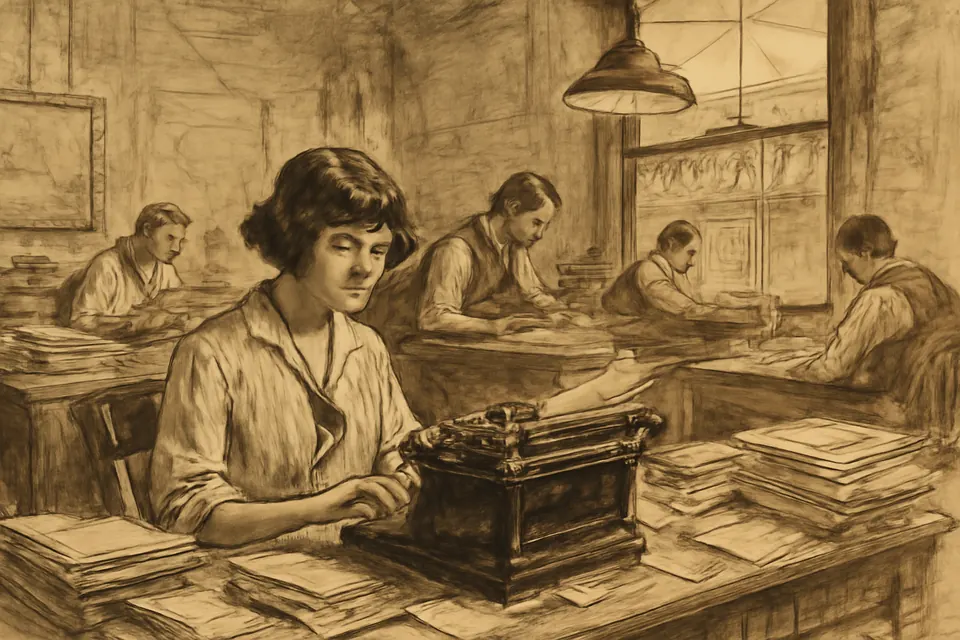
She went to the University of Illinois at sixteen, left after two years, and moved to New York to write. By 1917 she was a reporter for socialist papers such as The Call and The Masses, part of the bohemian world of Greenwich Village, friend to the playwright Eugene O'Neill and to radicals of every kind. That November she was arrested with suffragists picketing the White House and spent days in the Occoquan Workhouse in Virginia, where the women went on a hunger strike.
The years of searching
The next decade was the hardest of her life, and she never hid it. She had a love affair that ended in an abortion, a short civil marriage to Berkeley Tobey that soon fell apart, and years of drifting from one newspaper job to another. She wrote about the darkness of those years in her later books with great honesty and great sorrow. Her life is a good reminder for anyone who thinks their past has put them beyond God's reach.
Even then, something drew her to churches. She would slip into St. Joseph's Church on Sixth Avenue for early Mass after a long night out, and she kept a rosary she did not quite know how to pray.
Her conversion to the Catholic faith
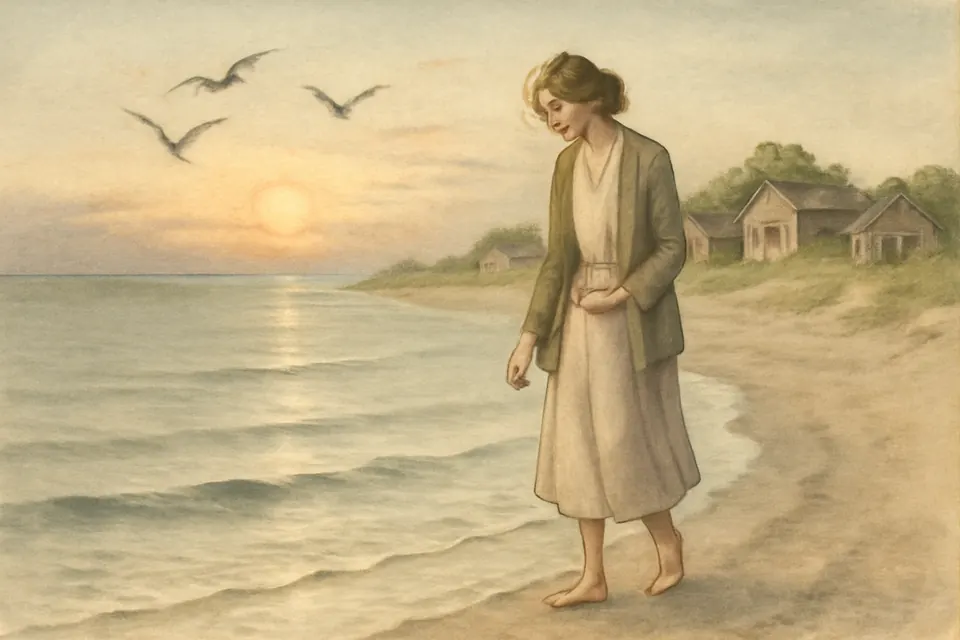
In 1924 she bought a small beach cottage in the fishing village of Huguenot on Staten Island with money from the film rights to her novel The Eleventh Virgin. There she lived with Forster Batterham, a biologist and anarchist who loved the shore, the fishing and the quiet, and who wanted nothing to do with marriage or religion. She was happier than she had ever been. Walking the beach, gathering shells, watching the seasons change, she found herself praying, and the prayer was thanks.
When she discovered she was pregnant, after fearing she could never have a child, her joy was so great that she wanted to thank someone, and she knew it had to be God. Their daughter, Tamar Teresa, was born in March 1926. Dorothy decided at once that Tamar would be baptized a Catholic, so that she would not grow up without the faith Dorothy had found so late. A Sister of Charity named Sister Aloysia, whom she met near the cottage, gave her instruction, and Tamar was baptized in July 1927.
Dorothy knew that following her daughter into the Church would cost her Forster, who would not marry her. It did. After months of struggle she was baptized herself on December 28, 1927, at Our Lady Help of Christians Church in Tottenville, at the southern tip of Staten Island. She received the sacraments with no feeling of consolation at all, only a dry determination. The consolation came later.

The prayer at the shrine
For five years she worked as a writer and researcher and raised Tamar, but she did not yet know what God wanted from her. In December 1932 she went to Washington to report on the Hunger March of the unemployed. On December 8, the feast of the Immaculate Conception, she went to the unfinished crypt of the National Shrine of the Immaculate Conception. She described the moment later:
I offered up a special prayer, a prayer which came with tears and anguish, that some way would open up for me
She returned to New York, and the next day a shabby, talkative Frenchman was waiting for her in her apartment.
Peter Maurin and the Catholic Worker
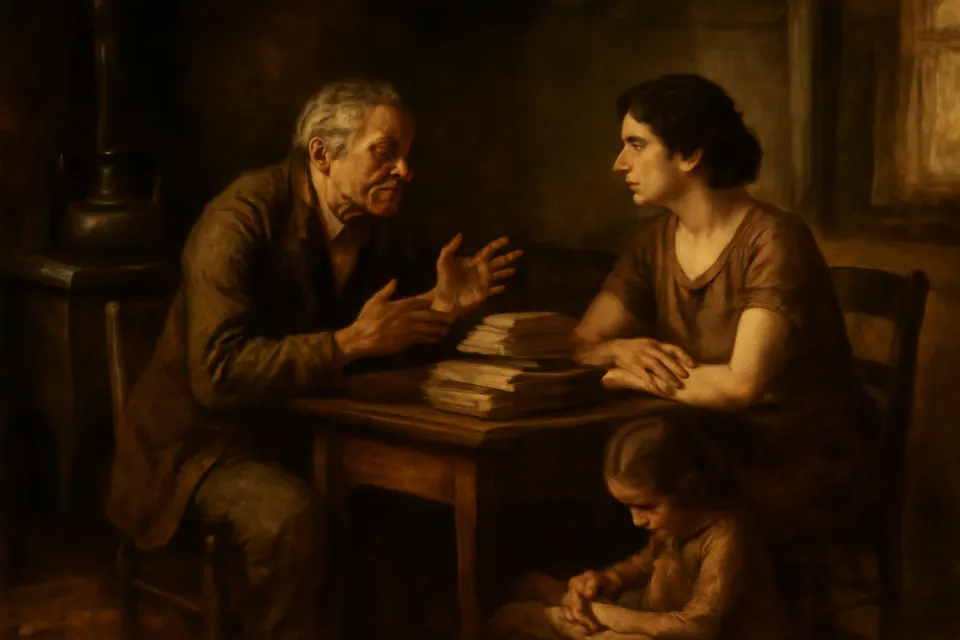
Peter Maurin was a peasant's son from southern France, a former teacher with the De La Salle Brothers, who had wandered through Canada and the United States doing manual labor and reading everything he could find on the Church's social teaching. George Shuster, the editor of Commonweal, had told him to look up Dorothy Day. He talked at her for hours. He wanted a newspaper to spread the social teaching of the Church, houses of hospitality in every parish where the poor would be received as Christ, and farming communes where workers and scholars would live together. He called it building "a new society within the shell of the old."
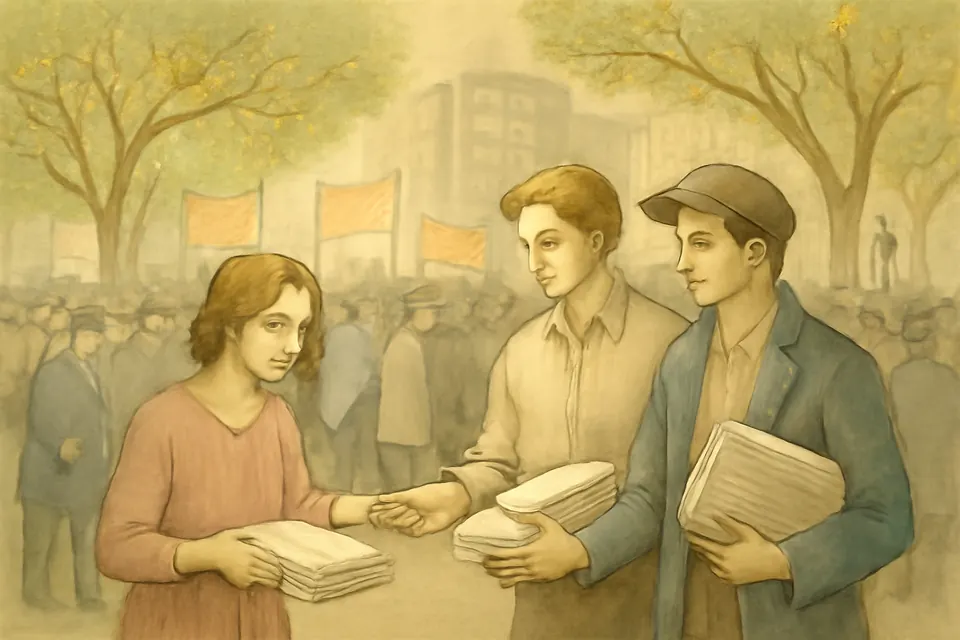
Dorothy saw that she could make at least the first part real. On May 1, 1933, she and a few helpers sold the first 2,500 copies of The Catholic Worker in Union Square for a penny each, in the middle of a Communist May Day rally. Her first editorial was addressed to the unemployed:
For those who are sitting on park benches in the warm spring sunlight. For those who are huddling in shelters trying to escape the rain. For those who are walking the streets in the all but futile search for work.
It went on to ask a question that summed up her whole life's work: "Is it not possible to be radical and not atheist?" The paper had no office, no salaries and no plan for its next issue. She wrote that it had been "planned, written and edited in the kitchen of a tenement on Fifteenth Street, on subway platforms, on the 'L,' the ferry."
The paper caught on fast. Parishes, schools and union halls ordered it by the bundle, and within a few years it was reaching many tens of thousands of readers a month. The price never changed. It is still a penny a copy.
The houses of hospitality
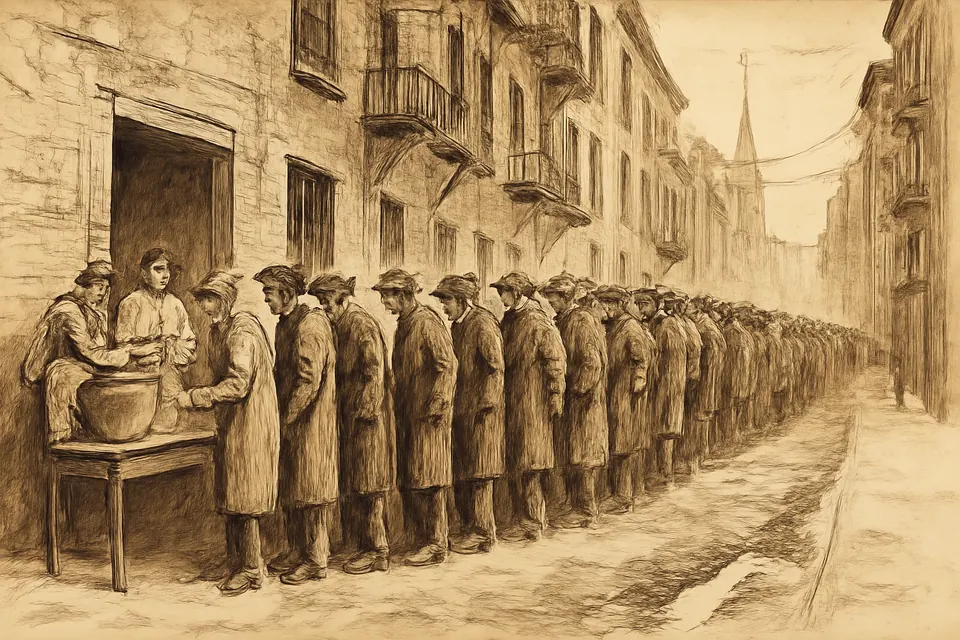
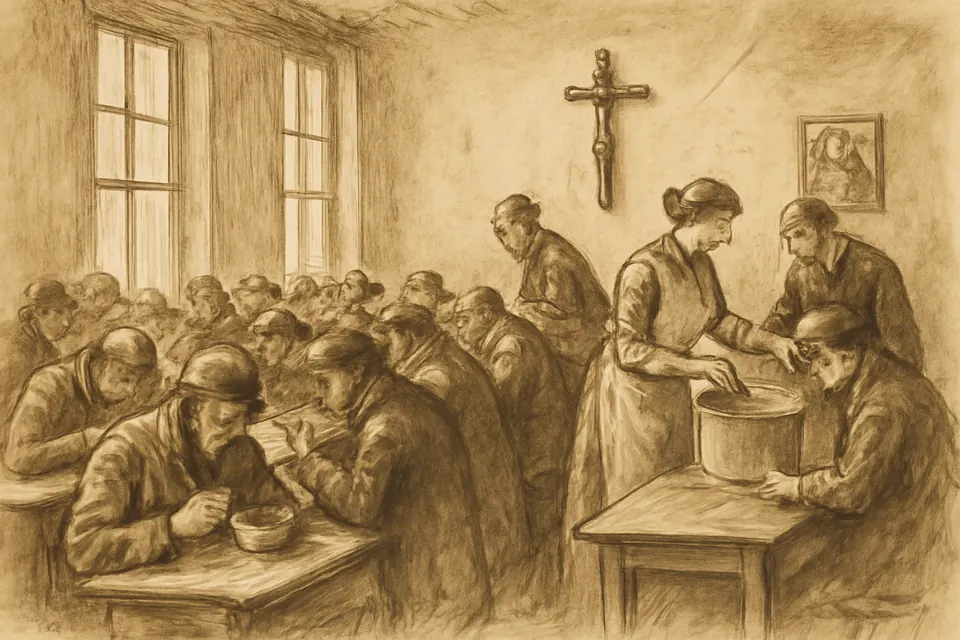
Readers soon began knocking on the door, hungry and homeless, and the Catholic Worker became a place to live as well as a newspaper. The first house of hospitality opened in Manhattan in 1933. Others followed in New York and then across the country, started by readers who wanted to do the same in their own cities. Over the decades the New York Worker moved from Charles Street to Mott Street to Chrystie Street, and finally to St. Joseph House on East First Street and Maryhouse on East Third Street, both still open today.
The idea was simple and demanding. The poor were not "cases" to be managed. They were guests, and Christ came to the door in each of them. Volunteers and guests lived together in voluntary poverty, ate the same food and shared the same crowded rooms. Dorothy herself lived in the houses for most of her life, with no private income and often no private room.
The works of mercy as a way of life
What held it all together was prayer. The Catholic Worker day began and ended with prayer, and Dorothy went to daily Mass, prayed the Divine Office and the rosary, went to confession weekly and made regular retreats. She was devoted to St. Therese of Lisieux and later wrote a book about her "little way," and she loved St. Teresa of Avila, whose name she gave to her daughter. She read the Gospels, the Russian novelists and the lives of the saints over and over.
In a column from June 1946 she explained why the work never seemed to "succeed" by the world's measures, and why that did not matter:
We confess to being fools and wish that we were more so. In the face of the approaching atom bomb test ... we face the situation that there is nothing we can do for people except to love them.
Later in the same column she wrote that they could still "work for the oasis, the little cell of joy and peace in a harried world."
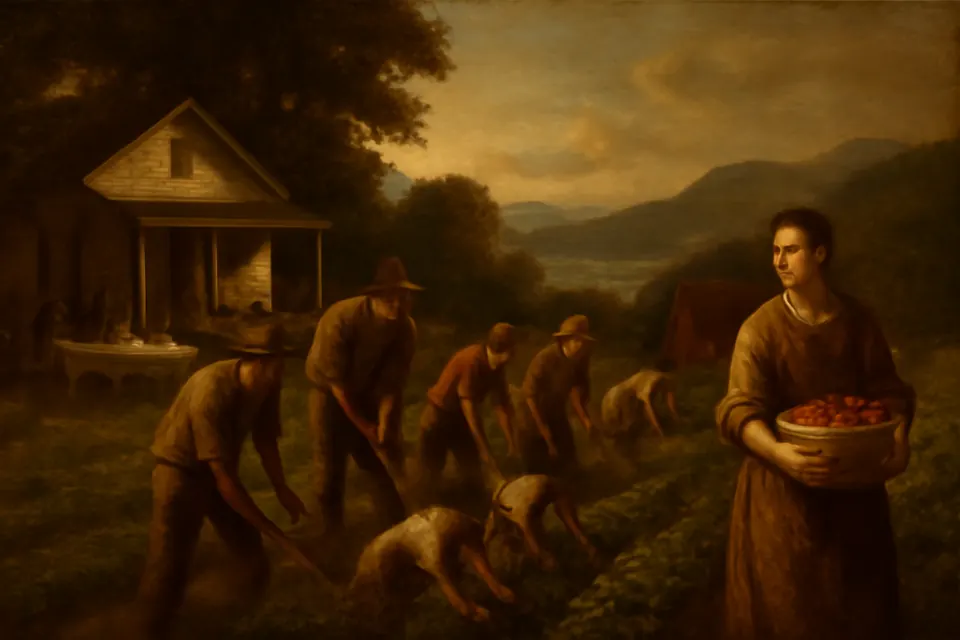
The farms were the third part of Peter Maurin's plan. The Worker ran farms at Easton, Pennsylvania, at Newburgh, New York, on Staten Island in the 1950s and at Tivoli on the Hudson from 1964. They never became the self-supporting communes Peter dreamed of, but they gave city guests fresh air, work and a place to rest. Peter himself died in 1949 at the Newburgh farm.
Dorothy Day's pacifism
Dorothy Day refused to support any war. She held that the Sermon on the Mount was meant to be lived, and that the works of mercy (feeding the hungry, sheltering the homeless) could not be squared with the works of war. During the Spanish Civil War she would not take sides, though many Catholic readers expected her to back Franco, and the paper lost subscribers.
After Pearl Harbor she held her ground. In January 1942 she wrote, sitting in a church on Mott Street:
We are still pacifists. Our manifesto is the Sermon on the Mount, which means that we will try to be peacemakers.
She was careful not to scorn her country. "We love our country and we love our President," the same column says. But the Worker would not help the war effort, and it supported Catholic conscientious objectors. The cost was real: circulation fell, and some houses of hospitality closed as their young men went to war or left in protest.
Prison and protest in later life
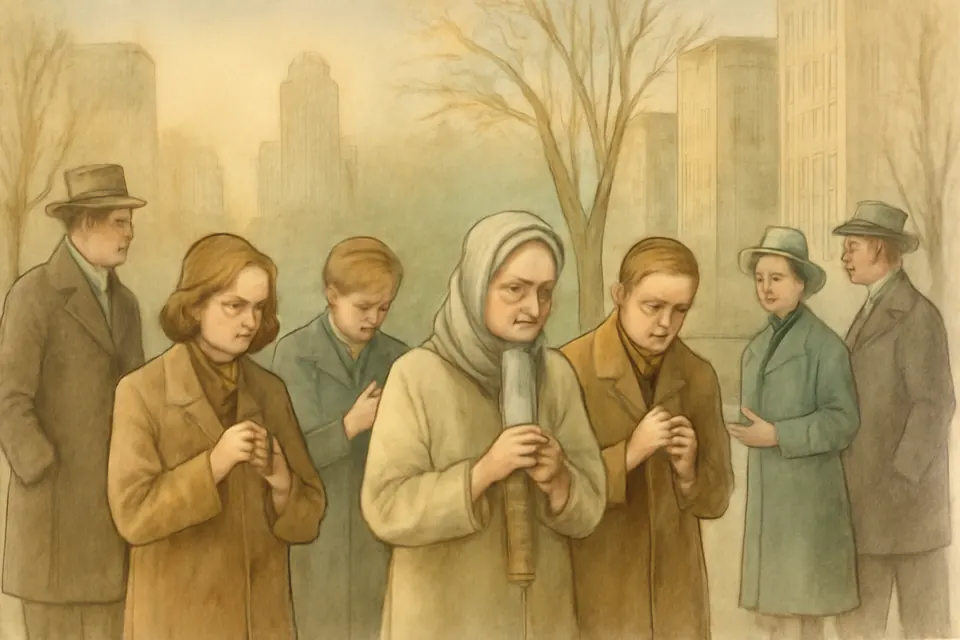
In the 1950s New York held "Operation Alert" civil defense drills, in which everyone had to take shelter from a pretend nuclear attack. Dorothy and her friends sat on park benches instead, and she went to jail several times for it, saying the drills taught people to accept nuclear war. She supported the civil rights movement, and in 1957 her car was shot at while she was visiting Koinonia Farm, an interracial community in Georgia. In 1965, during the Second Vatican Council, she joined a group of women in Rome who fasted for ten days and prayed that the bishops would speak clearly against modern war.
Her last arrest came in 1973, when she was seventy-five, on a picket line in California with the United Farm Workers. She was jailed for about ten days.
None of this made her a rebel against the Church. She called herself a daughter of the Church and said that if the Cardinal of New York ordered her to stop publishing, she would obey. She loved the liturgy, defended the Church's moral teaching, and kept her deepest loyalty for the sacraments, even when she disagreed sharply with Church leaders over war and money.
Her death and legacy
Dorothy Day died on November 29, 1980, at Maryhouse, among the homeless women she lived with, with Tamar beside her. Her funeral at the Church of the Nativity on Second Avenue was full of the poor. She was buried in Resurrection Cemetery in Pleasant Plains, Staten Island, near the shore where she had found faith. Her stone reads Deo Gratias.
She left books that are still in print: From Union Square to Rome (1938), her autobiography The Long Loneliness (1952), Loaves and Fishes (1963) and her book on St. Therese. Her diaries and letters were published in the 2000s. The Catholic Worker counts about 174 communities in the United States and 29 abroad today, each one independent, each one trying to live as she did. In 2023 New York launched a Staten Island ferry named the Dorothy Day.
Is Dorothy Day a saint? Her canonization cause
Not yet. Dorothy Day is a Servant of God, the first title in a cause for canonization. Here is where her cause stands, step by step.
- 1997 to 2000: Cardinal John O'Connor of New York asked Rome to open her cause, and in March 2000 the Holy See agreed. She became a Servant of God.
- 2012: The U.S. bishops, meeting in Baltimore, gave the cause their endorsement by voice vote, as the Church's rules ask of a bishops' conference. Cardinal Timothy Dolan called her "a saint for our time."
- 2016 to 2021: The Archdiocese of New York gathered testimony from people who knew her and examined her writings. Cardinal Dolan announced the close of this diocesan phase on December 8, 2021, the feast of the Immaculate Conception, exactly 89 years after her prayer at the National Shrine, and the evidence went to the Dicastery for the Causes of Saints in Rome.
- 2023: The Dicastery appointed a relator, Msgr. Maurizio Tagliaferri, to guide the writing of the positio.
- 2026: In July 2026 the Dorothy Day Guild reported that the summaries of the witnesses and documents had been approved by the Dicastery, that her official biography had been submitted, and that the postulator, Dr. Waldery Hilgeman, hoped to present the finished positio by the end of 2026.
If the theologians, the cardinals and bishops of the Dicastery and finally the Pope judge that she lived the Christian virtues to a heroic degree, she will be declared Venerable. Beatification would then require a miracle through her intercession, investigated and approved by the Church, and canonization a second one. No miracle has been approved yet. Favors people say they have received through her prayers are reported, and the Guild collects them. You can read more about each step on our pages on beatification and how someone becomes a saint.
"Don't call me a saint"
The words most often quoted from Dorothy Day are "Don't call me a saint. I don't want to be dismissed so easily." Her friends agree they sound like her: she did not want people to admire her from a distance and excuse themselves from doing what she did. But no one has found where she first said them. Writing in America in 2012, Fr. James Martin, who helped make the line famous, admitted, "Where did it come from? I can't honestly say."
Either way, the point stands. A cause for canonization is not a reward for a famous life. The Church raises up saints so that we will imitate them, and Dorothy Day would want nothing less from us.
Praying with Dorothy Day
The Church does not permit public veneration of a Servant of God, so there is no feast day, Mass or public shrine in her honor yet. But we may ask her, privately, to pray for us, as we would ask any friend in Christ, and every such prayer helps her cause. The Dorothy Day Guild has written a prayer for her canonization. It begins, "God our Father, Your servant Dorothy Day exemplified the Catholic faith by her life of prayer," and asks that her life lead us to see Christ in the poor and that her holiness be recognized by the Church. You can pray it in full on the Guild's website, which also asks that any favor received through her intercession be reported to the Guild.
The best way to pray with Dorothy Day is to do what she did. Go to Mass. Pray the rosary and the Psalms. Read the Gospels as if they mean what they say. Then do one work of mercy this week that costs you something: feed someone, visit someone, open a door. Let us ask her to pray for us, that like her we may see the face of Christ in the poor.
Her friends in the communion of saints were the saints she read about every day, among them St. Francis of Assisi, St. Vincent de Paul and St. Therese. Two other American women who served the poor and the outcast have already been raised to the altars, St. Katharine Drexel and St. Frances Cabrini, and in the same city where Dorothy Day lived, St. Mother Teresa's sisters still serve the dying poor. Dorothy Day met Mother Teresa in 1970, and the two women who chose poverty for love of Christ recognized one another at once.
Frequently asked questions
Is Dorothy Day a saint?
Not yet. The Church gave her the title Servant of God in 2000, when her cause for canonization formally opened. The next step would be a declaration that she lived the virtues to a heroic degree, which would make her Venerable. Beatification would then need a miracle attributed to her intercession, and canonization a second one.
Where does Dorothy Day's canonization cause stand?
The Archdiocese of New York finished its local inquiry on December 8, 2021, and sent the evidence to the Dicastery for the Causes of Saints in Rome. A relator was appointed in 2023. In July 2026 the Dorothy Day Guild reported that the postulator's team was finishing the positio, the formal study of her life and virtues, and hoped to present it to the Dicastery by the end of 2026.
What is Dorothy Day best known for?
For founding the Catholic Worker with Peter Maurin in New York in 1933. The movement publishes a newspaper that still costs a penny, runs houses of hospitality where volunteers live with and serve the homeless, and has farms where people work the land together. She is also remembered for her pacifism, her prison stays for civil disobedience and her long friendship with the poor.
What are some famous Dorothy Day quotes?
Two from her own columns in The Catholic Worker: "There is nothing we can do for people except to love them" (June 1946) and "Our manifesto is the Sermon on the Mount" (January 1942). The words most often attributed to her, "Don't call me a saint. I don't want to be dismissed so easily," are widely quoted, but no one has traced exactly where she said them.
Was Dorothy Day ever married, and did she have children?
She had a brief civil marriage to Berkeley Tobey around 1920 that soon ended. Later she lived in a common-law marriage with Forster Batterham on Staten Island, and their daughter, Tamar, was born in 1926. Day's decision to have Tamar baptized and to become a Catholic herself ended that relationship.
Where is Dorothy Day buried?
In Resurrection Cemetery in Pleasant Plains, Staten Island, not far from the beaches where she found her way to faith. Her simple gravestone carries the words Deo Gratias, "thanks be to God."
Can I pray to Dorothy Day?
Yes, privately. The Church does not allow public veneration, such as a feast day or Masses in her honor, before beatification, but the faithful may ask a Servant of God to pray for them. The Dorothy Day Guild offers a prayer for her canonization and asks people to report any favors received, which become part of the evidence for her cause.
When did Dorothy Day die?
She died on November 29, 1980, at Maryhouse, a Catholic Worker house for homeless women on East Third Street in Manhattan. She was 83.
Sources
- Dorothy Day Guild: Cause for Canonization. Servant of God (2000), the close of the diocesan phase (December 8, 2021), the relator (2023)
- Dorothy Day Guild: Summer Greetings and Canonization Updates (July 15, 2026). Progress on the positio and the plan to present it by the end of 2026
- Pope Francis, Address to the U.S. Congress (September 24, 2015)
- Dorothy Day, To Our Readers (The Catholic Worker, May 1933, first issue)
- Dorothy Day, Our Country Passes from Undeclared War to Declared War; We Continue Our Christian Pacifist Stand (January 1942)
- Dorothy Day, Love Is the Measure (The Catholic Worker, June 1946)
- Archdiocese of New York: Staten Island Ferry Named for Dorothy Day Makes Maiden Voyage (2023). Her baptism on December 28, 1927, in Tottenville, and her burial in Resurrection Cemetery
- Dorothy Day Guild: Dorothy Day (biography). Her prayer at the National Shrine in December 1932 and Peter Maurin's "new society within the shell of the old"
- James Martin, S.J., Don't Call Me a Saint? (America, November 14, 2012). The bishops' 2012 voice vote and the untraced origin of the famous line