Beatification
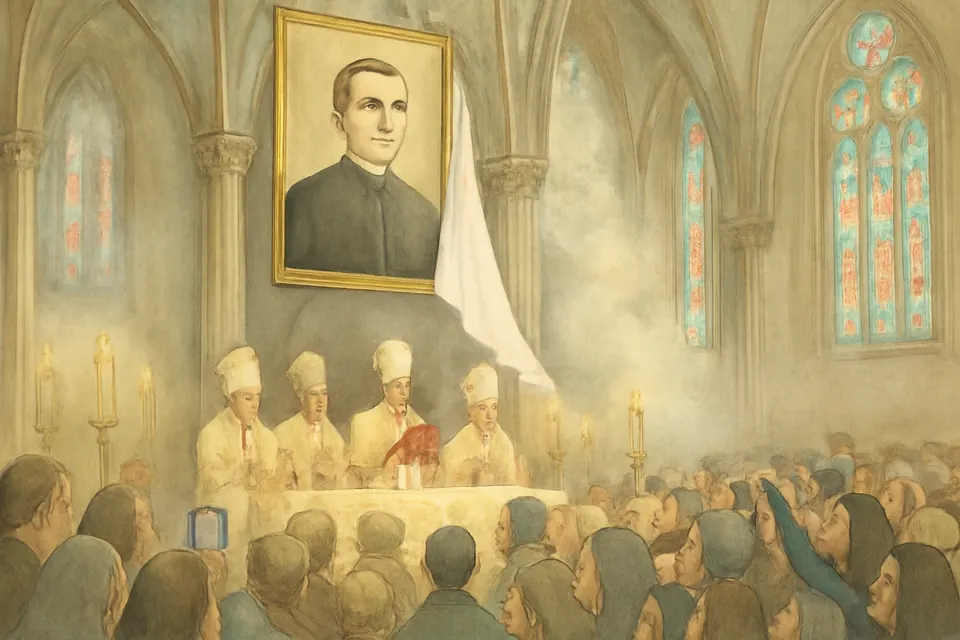
Beatification is the Catholic Church's declaration that a person who has died is in heaven and may be honored publicly, mainly in a particular diocese, country or religious order. It makes the person a Blessed, the step before saint. It normally requires one approved miracle, but martyrs can be beatified without one.
On September 24, 2026, about 50,000 people filled a football stadium in St. Louis to hear a cardinal read a letter in Latin. When he finished, the American archbishop whose television talks once drew as many as 30 million viewers a week had a new title: Blessed Fulton Sheen. That act was a beatification. This page explains what beatification is, the titles a candidate passes through on the way (Servant of God, Venerable, Blessed), the miracle rule and its exceptions, who presides, and how a Blessed differs from a saint. Sheen's long cause runs through it as an example. For the whole process from start to canonization, see how to become a saint.
What is beatification?
Beatification is a declaration by the pope that a person who has died lived a holy life (or died a martyr), is in heaven, and may receive public honor in the Church within certain limits. The person is then called Blessed (in Latin, Beatus or Beata, which gives the word its name).
The limits are the point. The Catholic Encyclopedia of 1907 put the classic distinction in two lines: beatification "is a permission to venerate, granted by the Roman Pontiffs with restriction to certain places," while canonization is "a precept of the Roman Pontiff commanding public veneration to be paid an individual by the Universal Church." A Blessed is honored in a diocese, a country or a religious order. A saint belongs to everyone.

The steps: Servant of God, Venerable, Blessed, Saint
The modern process comes from John Paul II's apostolic constitution Divinus perfectionis Magister of January 25, 1983, which gave diocesan bishops "the right" to inquire into a candidate's "life, virtues or martyrdom and reputation of sanctity or martyrdom, alleged miracles." In 2007 the Vatican's instruction Sanctorum Mater laid out how bishops run those inquiries. A cause passes through four titles.
Servant of God
When a bishop formally opens a cause, usually at least five years after the person's death, the candidate becomes a Servant of God. Sanctorum Mater defines it in one sentence: "The Catholic whose cause of beatification and canonization has been initiated is called Servant of God." The title promises nothing. It also brings a restriction: the same instruction says "it is prohibited for a Servant of God to be an object of public ecclesiastical cult" without the authorization of the Holy See. People may pray privately for the Servant of God's help, but there are no feast days or Masses in his or her honor.
Sheen's cause was opened by the Diocese of Peoria, Illinois, his home diocese, in 2002, twenty-three years after his death.
Venerable
Witnesses are heard, writings examined, and a long documented biography, the positio, is written and sent to Rome. If theologians and then the cardinals and bishops of the Dicastery for the Causes of Saints vote in favor, the pope approves a decree that the candidate practiced the Christian virtues "to a heroic degree." The candidate is then called Venerable.
So "what does Venerable mean?" It means the Church has formally judged the person's life heroic in virtue. It does not yet allow public liturgy. Benedict XVI declared Fulton Sheen Venerable on June 28, 2012. For a martyr, the decree recognizes martyrdom instead, and for the newest path, a heroic offering of life.
Blessed
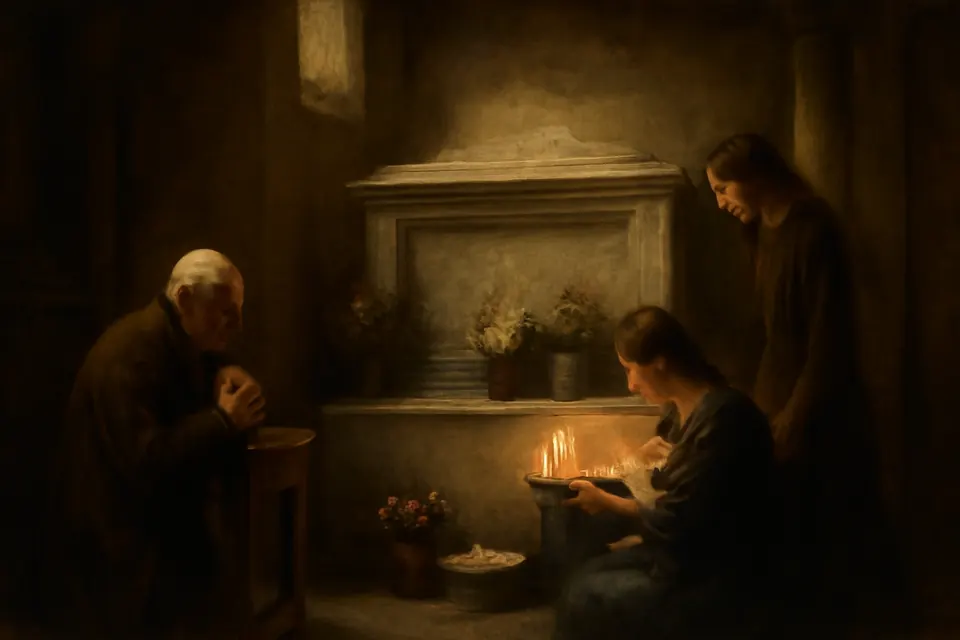
The next step needs a miracle, unless the candidate was a martyr. Once that is approved, the pope authorizes the beatification, and the candidate becomes Blessed, with a feast day on the calendars of the places allowed to keep it.
Saint
A second miracle, which must take place after the beatification, opens the way to canonization. The pope then declares the Blessed a saint, to be honored by the whole Church. That last step is covered in how to become a saint.
The miracle requirement
For a candidate who was not a martyr, beatification requires one miracle attributed to his or her intercession, after death. In practice it is almost always a healing. Divinus perfectionis Magister provides for "a board of medical experts" to study reported cures; only a case those physicians cannot explain goes on to the theologians, who judge whether it came through the candidate's prayers. The pope makes the final decision. Our guide to how the Church investigates miracles follows a case through those panels.
Sheen's miracle is a clear example. On September 16, 2010, James Fulton Engstrom was born in Illinois without a pulse. His parents prayed for Sheen's intercession, and after 61 minutes without a heartbeat, as doctors prepared to declare him dead, his heart started. He grew up healthy. The Vatican's medical experts found no scientific explanation in 2014, the theologians agreed, and Pope Francis approved the miracle on July 6, 2019. On this site it is an approved miracle. The full story, including the six-year delay that followed, is in our entry on Blessed Fulton Sheen.
Martyrs: the exception
A martyr is someone killed out of hatred for the faith who accepted death for Christ. If the Church proves martyrdom, the candidate can be beatified without a miracle. A miracle is still needed for canonization.
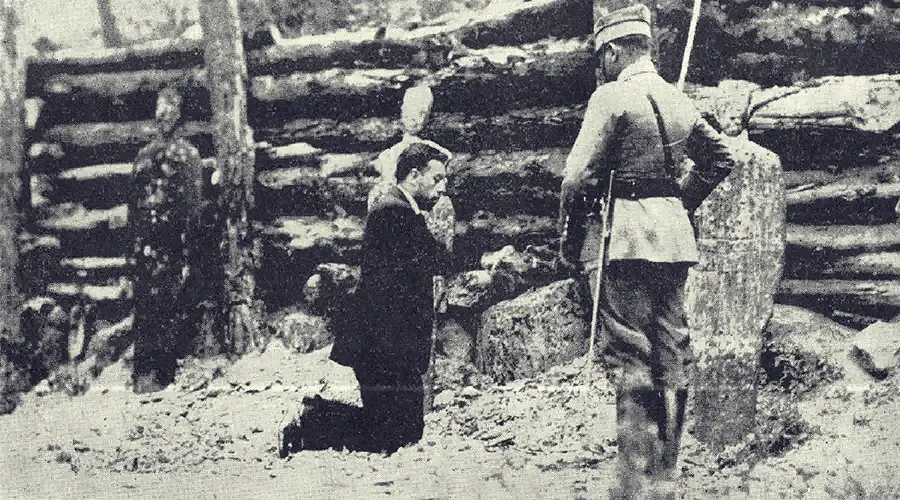
Blessed Miguel Pro, a Mexican Jesuit, was shot by a firing squad in Mexico City on November 23, 1927, during the government's persecution of the Church. The government had the execution photographed. John Paul II beatified him as a martyr on September 25, 1988. No miracle was needed, and his canonization still waits for one.
The offering of life (2017)
In 2017 Pope Francis added a third path beside heroic virtue and martyrdom. His apostolic letter Maiorem hac dilectionem, dated July 11, 2017, takes its name from Jesus' words in John 15:13, "Greater love hath no man than this, that a man lay down his life for his friends" (KJV). It covers people who were not killed for the faith but freely accepted a certain and early death out of love for others: a doctor who stays with plague victims, say, or a man who takes another's place in danger.
The letter sets five conditions. Among them are "a free and voluntary offer of life and heroic acceptance propter caritatem of a certain and untimely death," a direct link between the offering and the death, and Christian virtue lived "at least as ordinarily possible" before it. Unlike martyrdom, this path still requires a miracle for beatification.
Who presides at a beatification?
Under John Paul II, the pope usually beatified in person. He beatified Miguel Pro in St. Peter's Square and St. Juan Diego in the Basilica of Guadalupe in Mexico City in 1990, and he held beatifications on many of his journeys.
Benedict XVI changed that in 2005, to set the two acts apart. The Congregation for the Causes of Saints announced on September 29, 2005, that "the Holy Father will preside at a Canonization," while a beatification, "nonetheless a Pontifical act, will be celebrated by a representative of the Holy Father," normally the prefect of the Congregation. It also said the rite "will take place in the Diocese that has promoted the Cause," or another suitable place.

The representative is usually the prefect of the Dicastery for the Causes of Saints, but not always. Sheen's beatification was celebrated by Cardinal Luis Antonio Tagle, pro-prefect of the Dicastery for Evangelization, on behalf of Pope Leo XIV. It took place in St. Louis rather than Peoria because Peoria had no venue large enough.
What happens at the Mass
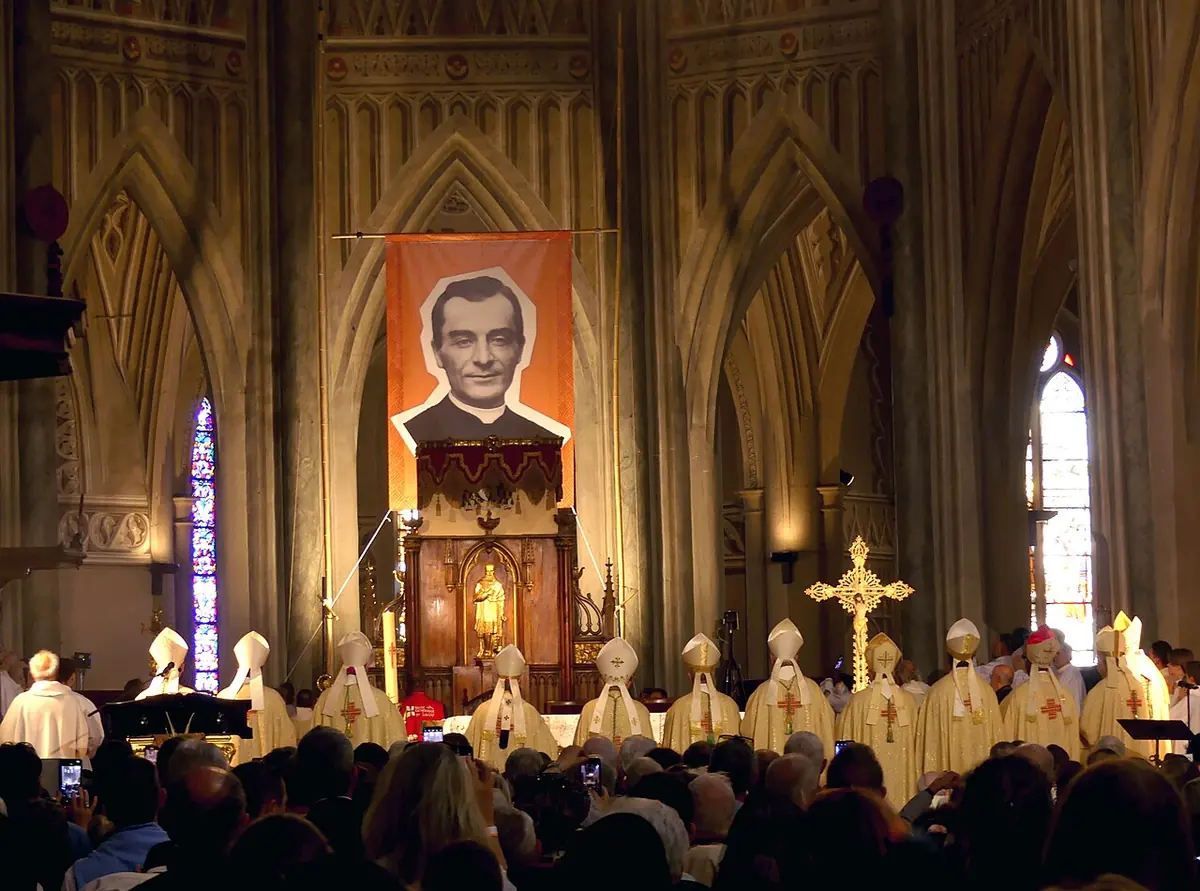
The rite is short and comes near the start of Mass. The local bishop asks that the candidate be beatified, and a brief life is read. The pope's representative then reads the apostolic letter, which declares the candidate Blessed and fixes the feast day. A large portrait is unveiled, and often a relic is carried forward. At Sheen's beatification, Cardinal Tagle read the letter in Latin and Bishop Louis Tylka of Peoria repeated it in English. A new official portrait was unveiled, and James Fulton Engstrom, the boy of the miracle, brought forward a relic of Sheen. The letter set his feast on December 9, the day he died in 1979.
Local cult and universal cult: Blessed vs. saint
"Cult" in church language means public honor, not a sect. The difference between a Blessed and a saint is mostly about where that honor may be given.
- A Blessed may be honored with public liturgy, such as a Mass and prayers on the feast day, in the places the Holy See allows: usually the diocese where the person lived or died, his or her country, or a religious order. Blessed Fulton Sheen's feast on December 9 is kept in Peoria and other places that have received approval, not on the General Roman Calendar.
- A saint may be honored everywhere in the Catholic Church, and the canonization enrolls him or her in the catalog of saints.
- Miracles: a non-martyr needs one approved miracle to be beatified and a second, after the beatification, to be canonized.
- Private prayer is allowed to both, and indeed to a Servant of God or a Venerable. The limits apply only to public liturgy.
Some Blesseds stay Blessed for centuries, revered locally and never canonized. Others move quickly: Thérèse of Lisieux was beatified by Pius XI on April 29, 1923, and canonized two years later.
Equipollent beatification
There is another way to become a Blessed without the full modern process. When Pope Urban VIII reserved beatification to the Holy See in 1634, he exempted people who already had a public cult going back at least a hundred years. The Catholic Encyclopedia calls a beatification granted on that basis "equivalent or virtual," often called equipollent beatification. The Church examines the evidence that the person has been honored as Blessed since time immemorial, and the pope confirms the cult. No new miracle is needed.
The best-known recent example is Blessed John Duns Scotus, the 13th-century Franciscan theologian who argued for Mary's Immaculate Conception. Franciscans had honored him for centuries, and on March 20, 1993, John Paul II confirmed that cult. The same idea at the next level, equivalent canonization, is how Benedict XVI declared St. Hildegard of Bingen a saint of the universal Church in 2012.

For the step that follows beatification, the history of the process and the Orthodox practice of glorification, see how to become a saint. For what the Church means by sainthood in the first place, see what is a saint.
Frequently asked questions
What does Venerable mean?
A Venerable is a person whose cause for sainthood has reached the point where the pope has approved a decree that he or she lived the Christian virtues to a heroic degree (or died a martyr, or offered his or her life). It is the step before beatification. Catholics may pray privately for a Venerable's intercession, but there is no public feast or Mass. Fulton Sheen was declared Venerable on June 28, 2012.
What does Servant of God mean?
It is the title given to a Catholic once a cause for beatification and canonization has been formally opened. The Vatican instruction Sanctorum Mater says simply, "The Catholic whose cause of beatification and canonization has been initiated is called Servant of God." It says the cause is under way and nothing more about the outcome.
What is the difference between Blessed and saint?
A Blessed may be honored publicly in a limited way, usually in a particular diocese, country or religious order. A saint may be honored by the whole Church and has a place on the Church's calendar of saints. A non-martyr usually needs one approved miracle to be beatified and a second, later one to be canonized.
How many miracles are needed for beatification?
One, for someone who was not a martyr. The miracle, almost always a healing, must be judged scientifically unexplained by the Vatican's medical board and attributed by theologians to the candidate's intercession, and the pope must approve it. Martyrs need no miracle for beatification, though they need one for canonization.
Who performs a beatification?
Since 2005, a beatification is normally celebrated by a cardinal or other representative of the pope, usually in the diocese that promoted the cause. The pope presides at canonizations. Fulton Sheen was beatified in St. Louis on September 24, 2026, by Cardinal Luis Antonio Tagle, acting for Pope Leo XIV.
Can you pray to a Blessed?
Yes. Catholics may ask a Blessed to pray for them anywhere, privately. What beatification adds is permission for public liturgy, such as a Mass on the Blessed's feast day, in the places the Holy See allows.
Is Fulton Sheen a saint?
Not yet. He is Blessed Fulton Sheen. His canonization would require a second approved miracle credited to his intercession after his beatification in 2026.
Sources
- John Paul II, Apostolic Constitution Divinus perfectionis Magister (January 25, 1983)
- Congregation for the Causes of Saints, Sanctorum Mater: Instruction for conducting diocesan or eparchial inquiries in the causes of saints (2007)
- Francis, Apostolic Letter Maiorem hac dilectionem, on the offering of life (July 11, 2017)
- Congregation for the Causes of Saints: Communiqué on the new rite of beatification (September 29, 2005)
- Catholic Encyclopedia (1907): Beatification and Canonization, by Camillo Beccari
- Vatican News: Fulton Sheen to be beatified in St. Louis on 24 September (March 2026)
- America Magazine (OSV News): Archbishop Fulton J. Sheen declared blessed at beatification Mass in St. Louis (September 25, 2026)