Fatima prayer

The Fatima prayer is the short decade prayer "O my Jesus, forgive us, save us from the fire of hell; lead all souls to Heaven, especially those who are most in need." Sister Lúcia wrote that Our Lady taught it to the three children of Fatima on July 13, 1917, asking that it be said after each mystery of the rosary.
Millions of us say it fifty times a day without thinking where it came from: a one-sentence plea taught to three shepherd children in a Portuguese pasture in the middle of the First World War. Here is the Fatima prayer, its original words, and the other prayers of Fatima.
The Fatima prayer
This is the English text published by the Shrine of Fatima:
O my Jesus, forgive us, save us from the fire of hell; lead all souls to Heaven, especially those who are most in need.
And in Portuguese, the language in which Sister Lúcia wrote it down:
Ó meu Jesus, perdoai-nos, livrai-nos do fogo do inferno; levai as almas todas para o Céu, principalmente as que mais precisarem.
Many English-speaking Catholics learned a longer form: "O my Jesus, forgive us our sins, save us from the fires of hell; lead all souls to Heaven, especially those in most need of Thy mercy." The added words are not in Lúcia's text, but they say nothing she did not mean. Use whichever form your family or parish prays.

Where the Fatima prayer comes from
On July 13, 1917, during the third apparition at the Cova da Iria, Our Lady showed the children a vision of hell, the first part of what became known as the secret of Fatima. Lúcia recorded what the Lady said afterward. The shrine's English edition of her fourth memoir, dated December 8, 1941, gives the words:
When you pray the Rosary, say after each mystery: "O my Jesus, forgive us, save us from the fire of hell. Lead all souls to Heaven, especially those who are most in need."
Almost everything we know about the words spoken at Fatima comes from Lúcia. Jacinta and Francisco died young, in 1920 and 1919. Lúcia wrote her memoirs at her bishop's request, and the Congregation for the Doctrine of the Faith notes that she set down the first two parts of the secret in her third memoir, dated August 31, 1941. The decade prayer is part of her account of that July day, so we should be honest that our source for its exact wording is her later writing, checked against the parish priest's notes of 1917 where they exist.
The Church judged the apparitions worthy of belief in 1930. Pope Francis canonized Francisco and Jacinta at Fatima on May 13, 2017, and on June 22, 2023 he approved the decree of heroic virtues of Lúcia, now Venerable Sister Lúcia of Jesus and of the Immaculate Heart. As with every private revelation, no Catholic is required to believe the apparitions. But the prayers of Fatima are fully in line with the faith, and the whole Church has taken them up.
What the prayer asks
It is a prayer of mercy for ourselves and for everyone else. We ask Jesus to forgive us and to save us from the one real tragedy, losing God forever. Then we turn outward and ask him to bring all souls to heaven, especially those most in need: the hardened sinner, the person who has never heard of God's mercy, the one who will die tonight. After the vision of hell the children understood why Our Lady asked for prayer and sacrifice for sinners, and Jacinta, by Lúcia's account, could not stop praying for them. Said after every decade, it keeps the rosary from becoming only about our own needs.
The Angel's prayers of 1916
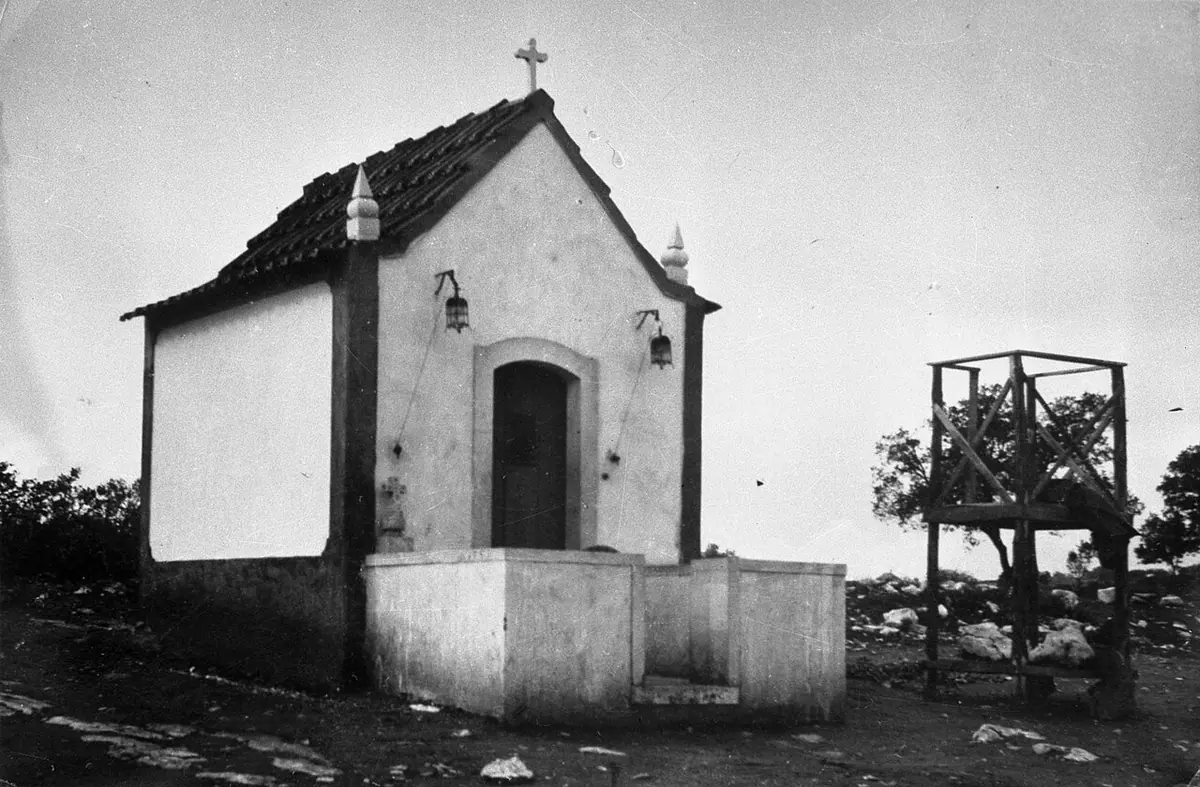
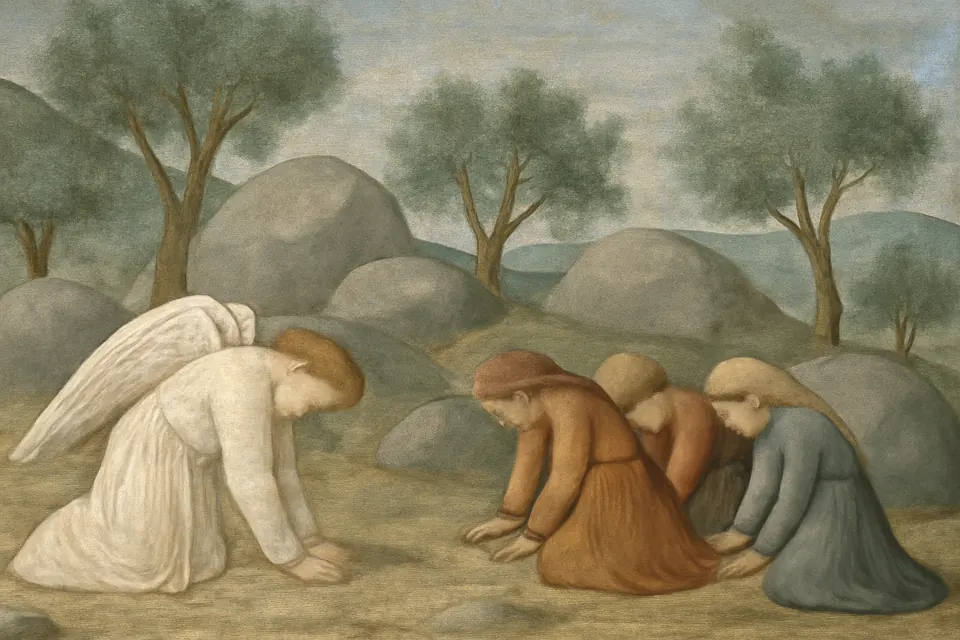
A year before Our Lady came, Lúcia wrote, the children were visited three times by an angel who called himself the Angel of Peace and the Angel of Portugal. On his first visit, in the spring of 1916 at the rocky outcrop called the Loca do Cabeço, he knelt, bowed his forehead to the ground and taught them this prayer, now called the Pardon prayer:
My God, I believe, I adore, I hope and I love You! I ask pardon of You for those who do not believe, do not adore, do not hope and do not love You!
Having repeated it three times, he said: "Pray thus. The Hearts of Jesus and Mary are attentive to the voice of your supplications."
In the fall he returned holding a chalice with a host above it. Leaving them suspended in the air, he prostrated himself and prayed three times:
Most Holy Trinity, Father, Son and Holy Spirit, I adore You profoundly, and I offer You the most precious Body, Blood, Soul and Divinity of Jesus Christ, present in all the tabernacles of the world, in reparation for the outrages, sacrileges and indifference with which He Himself is offended. And, through the infinite merits of His most Sacred Heart, and the Immaculate Heart of Mary, I beg of You the conversion of poor sinners.
Then he gave the children Communion. The shrine also lists two short prayers from 1917: the Sacrifice prayer Our Lady taught in July, "O Jesus, it is for love of You, for the conversion of sinners, and in reparation for the sins committed against the Immaculate Heart of Mary," and the words the children said from an inner impulse on May 13, "O most Holy Trinity, I adore You! My God, my God, I love You in the most Blessed Sacrament!"

How to pray the Fatima prayer in the rosary
Say it at the end of each decade, after the Glory Be and before announcing the next mystery. Our Lady's words were "after each mystery," so it comes five times in a five-decade rosary. St. John Paul II wrote in Rosarium Virginis Mariae (2002) that the short prayer after the Glory Be "varies according to local custom," which is why some communities use other invocations. In most parishes in the English-speaking world, though, the Fatima prayer is simply part of the rosary.
Let us pray it slowly next time, and mean every word. For the whole story of the apparitions, the secret and the Miracle of the Sun, see Our Lady of Fatima. For the rosary itself, see Our Lady of the Rosary, and for prayers that often close it, the Hail Holy Queen and the Litany of Loreto.
Frequently asked questions
What is the Fatima prayer?
It is the short prayer said after the Glory Be at the end of each decade of the rosary: "O my Jesus, forgive us, save us from the fire of hell; lead all souls to Heaven, especially those who are most in need." Sister Lúcia wrote that Our Lady taught it at Fatima on July 13, 1917.
Why do some versions say "forgive us our sins" and "those in most need of Thy mercy"?
English translations vary. Lúcia's Portuguese says "perdoai-nos" (forgive us) and ends "principalmente as que mais precisarem" (especially those who are most in need). Many English prayer books expanded it to "forgive us our sins" and "most in need of Thy mercy." The meaning is the same, and the Church allows local customs for the closing prayer of each decade.
What is the Fatima Pardon prayer?
"My God, I believe, I adore, I hope and I love You! I ask pardon of You for those who do not believe, do not adore, do not hope and do not love You!" Lúcia wrote that the Angel of Peace taught it to the children in the spring of 1916, repeating it three times with his forehead to the ground.
Do I have to say the Fatima prayer in the rosary?
No. St. John Paul II noted in Rosarium Virginis Mariae (2002) that the short prayer after the Glory Be "varies according to local custom." The Fatima prayer is by far the most common choice, but the rosary is complete without it.
Sources
- Shrine of Fatima: Fatima prayers
- Santuário de Fátima: Orações de Fátima (Portuguese texts)
- Shrine of Fatima: Narrative of the Apparitions (from Fatima in Lucia's Own Words, Fourth Memoir)
- Congregation for the Doctrine of the Faith: The Message of Fatima (June 26, 2000)
- John Paul II, Rosarium Virginis Mariae (2002), no. 35
- Holy See Press Office: Promulgation of Decrees of the Dicastery for the Causes of Saints, June 22, 2023 (Sister Lúcia)