Litany of Loreto
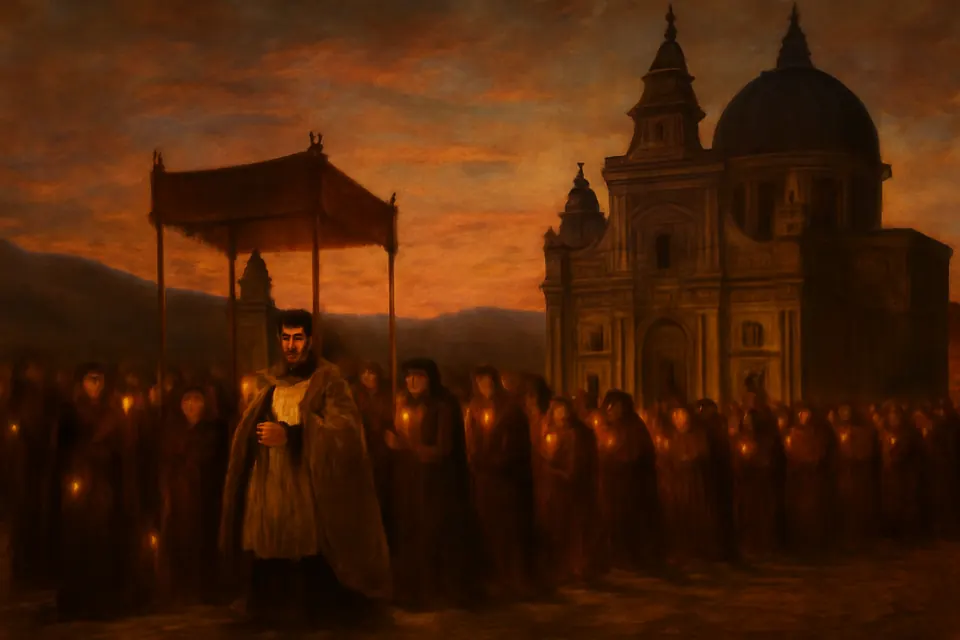
The Litany of Loreto is the Litany of the Blessed Virgin Mary, a chain of more than fifty titles of Our Lady ("Mother most pure," "Tower of ivory," "Help of Christians"), each answered "pray for us." Sung at the Holy House of Loreto by the 1500s, it was approved by Pope Sixtus V in 1587, and popes have added titles as recently as 2020.
For more than four hundred years the faithful have ended the rosary by calling Mary by her names, one after another, the way a child who loves his mother finds new ways to say so. Here is the Litany of Loreto in full, in English and Latin, followed by its history and the meaning of its titles.
The Litany of Loreto
The older invocations below are in the traditional English of The Catholic Girl's Guide (1906), a popular prayer book of its day. The titles added since then (marked †) are given as they appear in the Holy See's English text. After "Holy Mary" we answer pray for us to each invocation.
Lord, have mercy. Christ, have mercy. Lord, have mercy. Christ, hear us. Christ, graciously hear us. God the Father of heaven, have mercy on us. God the Son, Redeemer of the world, have mercy on us. God the Holy Ghost, have mercy on us. Holy Trinity, one God, have mercy on us. Holy Mary, pray for us. Holy Mother of God, Holy Virgin of virgins, Mother of Christ, Mother of the Church, † Mother of Mercy, † Mother of divine grace, Mother of Hope, † Mother most pure, Mother most chaste, Mother inviolate, Mother undefiled, Mother most amiable, Mother most admirable, Mother of good counsel, Mother of our Creator, Mother of our Saviour, Virgin most prudent, Virgin most venerable, Virgin most renowned, Virgin most powerful, Virgin most merciful, Virgin most faithful, Mirror of justice, Seat of wisdom, Cause of our joy, Spiritual vessel, Vessel of honor, Singular vessel of devotion, Mystical rose, Tower of David, Tower of ivory, House of gold, Ark of the covenant, Gate of heaven, Morning star, Health of the sick, Refuge of sinners, Solace of Migrants, † Comforter of the afflicted, Help of Christians, Queen of angels, Queen of patriarchs, Queen of prophets, Queen of apostles, Queen of martyrs, Queen of confessors, Queen of virgins, Queen of all saints, Queen conceived without original sin, Queen assumed into heaven, † Queen of the most holy Rosary, Queen of families, † Queen of peace, † Lamb of God, Who takest away the sins of the world, spare us, O Lord! Lamb of God, Who takest away the sins of the world, graciously hear us, O Lord! Lamb of God, Who takest away the sins of the world, have mercy on us! V. Pray for us, O holy Mother of God. R. That we may be made worthy of the promises of Christ. Let us pray. Grant, we beseech Thee, O Lord, that we Thy servants may enjoy perpetual health of mind and body; and, by the glorious intercession of the Blessed Virgin Mary, may be delivered from present sorrow and attain to eternal joy. Through Christ our Lord. Amen.
The closing prayer is the one printed in the same 1906 book; it is also the prayer the Holy See gives today. In some seasons older books used other collects, such as the Angelus prayer "Pour forth, we beseech Thee, O Lord, Thy grace into our hearts."
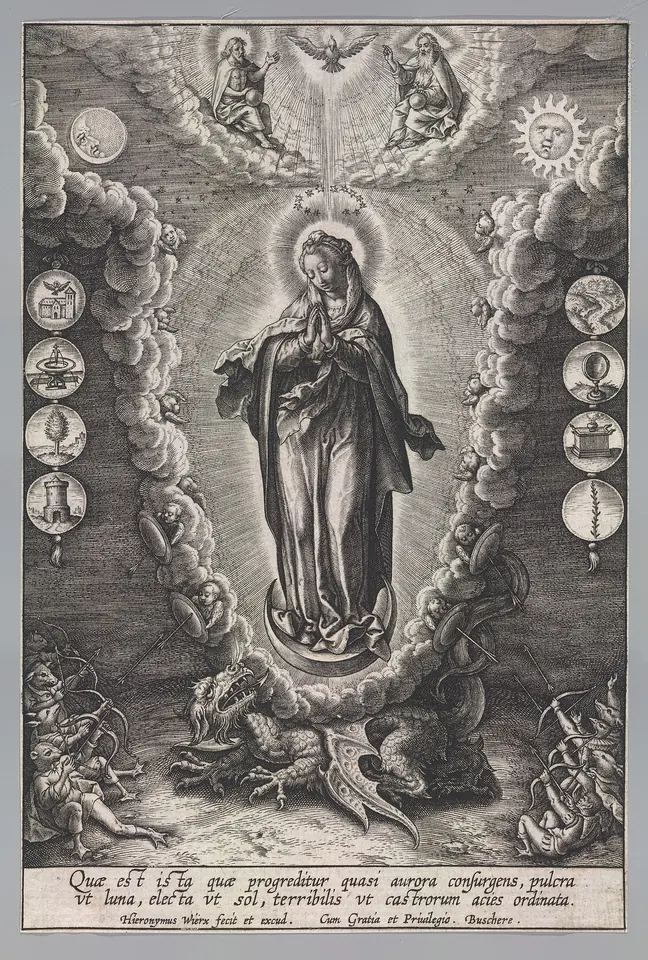
The Litany of Loreto in Latin
The Latin text, from the same 1906 book, with the later additions inserted where the Holy See has placed them (†). Each title after Sancta Maria is answered ora pro nobis.
Kyrie, eleison. Christe, eleison. Kyrie, eleison. Christe, audi nos. Christe, exaudi nos. Pater de caelis Deus, miserere nobis. Fili Redemptor mundi Deus, miserere nobis. Spiritus Sancte Deus, miserere nobis. Sancta Trinitas, unus Deus, miserere nobis. Sancta Maria, ora pro nobis. Sancta Dei Genitrix, Sancta Virgo virginum, Mater Christi, Mater Ecclesiae †, Mater misericordiae †, Mater divinae gratiae, Mater spei †, Mater purissima, Mater castissima, Mater inviolata, Mater intemerata, Mater amabilis, Mater admirabilis, Mater boni consilii, Mater Creatoris, Mater Salvatoris, Virgo prudentissima, Virgo veneranda, Virgo praedicanda, Virgo potens, Virgo clemens, Virgo fidelis, Speculum justitiae, Sedes sapientiae, Causa nostrae laetitiae, Vas spirituale, Vas honorabile, Vas insigne devotionis, Rosa mystica, Turris Davidica, Turris eburnea, Domus aurea, Foederis arca, Janua caeli, Stella matutina, Salus infirmorum, Refugium peccatorum, Solacium migrantium †, Consolatrix afflictorum, Auxilium Christianorum, Regina angelorum, Regina patriarcharum, Regina prophetarum, Regina apostolorum, Regina martyrum, Regina confessorum, Regina virginum, Regina sanctorum omnium, Regina sine labe originali concepta, Regina in caelum assumpta †, Regina sacratissimi Rosarii, Regina familiae †, Regina pacis †, Agnus Dei, qui tollis peccata mundi, parce nobis, Domine. Agnus Dei, qui tollis peccata mundi, exaudi nos, Domine. Agnus Dei, qui tollis peccata mundi, miserere nobis. V. Ora pro nobis, sancta Dei Genitrix. R. Ut digni efficiamur promissionibus Christi. Oremus. Concede nos famulos tuos, quaesumus, Domine Deus, perpetua mentis et corporis sanitate gaudere; et gloriosa beatae Mariae semper Virginis intercessione, a praesenti liberari tristitia, et aeterna perfrui laetitia. Per Christum Dominum nostrum. Amen.
Where the Litany of Loreto comes from
Litanies are very old in the Church. The Litany of the Saints, with its repeated "pray for us," was in use by the eighth century, and Marian litanies grew out of it. The Catholic Encyclopedia (1910), drawing on the research of the Jesuit historian Angelo De Santi, traces the oldest true Marian litany to a 12th-century manuscript at Mainz, where each title begins "Holy Mary." Over the next centuries the praises grew shorter and simpler, and many were drawn from medieval Latin hymns to Our Lady. In 15th-century Venice, Marian litanies were sung in processions in time of plague.
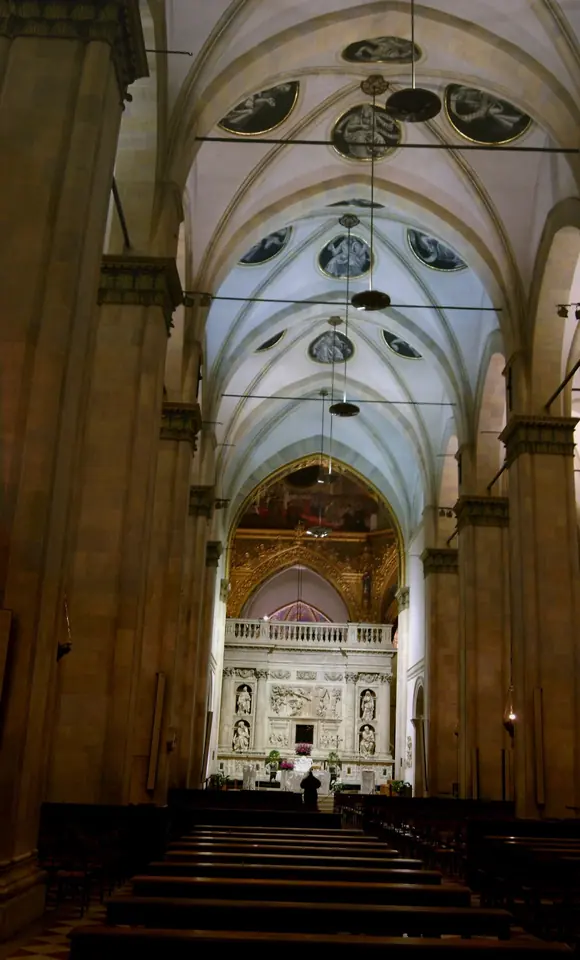
The Loreto text itself, the encyclopedia concludes, was put together in the late 15th or early 16th century from litanies already circulating in Italy. What made it famous was the place it was sung: the shrine of the Holy House at Loreto, on the Adriatic coast, where pilgrims from all over Europe heard it every Saturday and carried it home. The earliest printed copy known is from Dillingen in Germany, around 1558, titled "The Order of the Litany of Our Lady as said every Saturday at Loreto." Historians believe it was published by St. Peter Canisius, the Jesuit who did so much to keep southern Germany Catholic.
A close call and a papal approval
The litany nearly disappeared. In 1571 Pope St. Pius V reformed the Little Office of the Blessed Virgin and dropped the old prayers attached to it, litanies included. The clergy of Loreto feared their litany was forbidden and composed a new one made entirely of Scripture verses, which the choirmaster Costanzo Porta set to music in 1575. It never caught on. Pilgrim handbooks kept printing the old text, and the scriptural litany faded away by the 17th century.
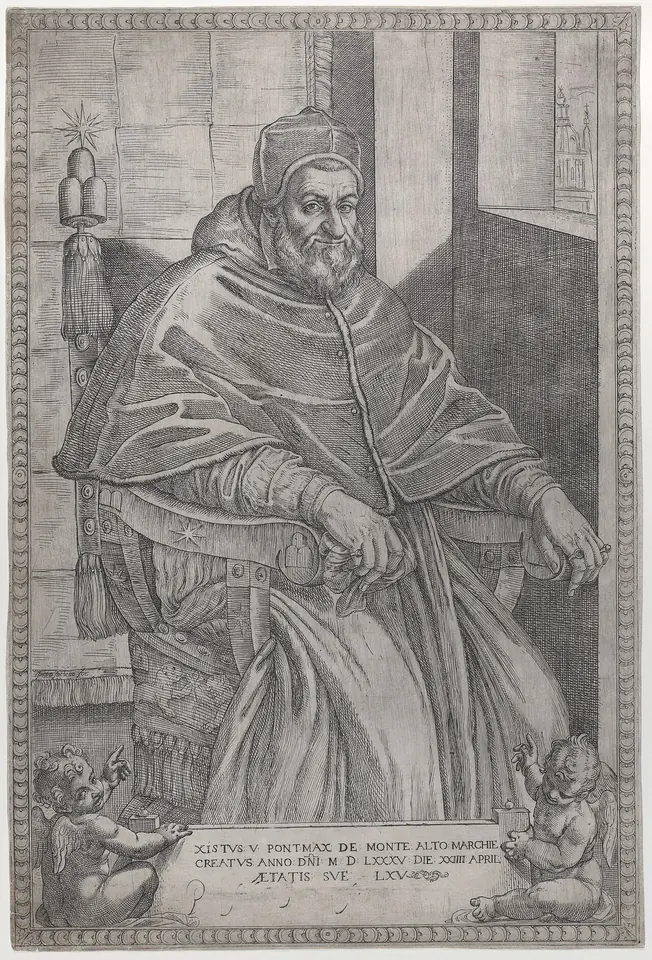
Then Pope Sixtus V, who had a great love for Loreto, gave the old litany formal approval in the bull Reddituri of July 11, 1587, and urged preachers everywhere to spread it. In 1601 Clement VIII, worried by a flood of new and sometimes careless litanies, banned unapproved ones from public worship, but expressly kept the Litany of Loreto. From Rome's Basilica of St. Mary Major, where Paul V ordered it sung in 1613, it spread to the whole Church.
The invocations added since
The litany has grown, a few titles at a time, as the Church has come to honor Mary in new ways. The dates below come from the Catholic Encyclopedia, papal documents and the Holy See's own text.
- Help of Christians (Auxilium Christianorum). A Breviary lesson once said St. Pius V added it after the victory of Lepanto in 1571. The Catholic Encyclopedia showed this cannot be right: it already appears in the Dillingen printing of about 1558.
- Queen conceived without original sin. Pius IX first allowed it for the diocese of Mechlin in 1846. After he defined the dogma of the Immaculate Conception in 1854, so many dioceses received permission that it became universal.
- Queen of the most holy Rosary. The Dominicans had added it by 1614. Leo XIII prescribed it for the whole Church on December 24, 1883.
- Mother of good counsel. Added by Leo XIII by decree of April 22, 1903.
- Queen of peace. Benedict XV allowed bishops to add it temporarily in November 1915, during the First World War. In a letter of May 5, 1917, he made it permanent from June 1 of that year, asking that the world turn to the Heart of Jesus through Mary. Eight days later, Our Lady first appeared at Fatima.
- Queen assumed into heaven. Added under Pius XII after he defined the dogma of the Assumption in 1950.
- Mother of the Church. The Congregation for Divine Worship's decree of 2018 recalls that the Holy See granted permission to add it in 1980, building on Paul VI's proclamation of Mary as Mother of the Church in 1964. In 2018 Pope Francis also placed the memorial of Mary, Mother of the Church, on the Monday after Pentecost.
- Queen of families. Inserted by St. John Paul II on December 31, 1995, after "Queen of the most holy Rosary."
- Mother of Mercy, Mother of Hope, Solace of Migrants. Announced by the Congregation for Divine Worship on June 20, 2020, the memorial of the Immaculate Heart of Mary, at Pope Francis's wish, "even in this present moment which is marked by feelings of uncertainty and trepidation." The letter placed them after "Mother of the Church," after "Mother of divine grace" and after "Refuge of sinners."
What the titles mean
Many titles are taken from Scripture, read the way the Fathers read it, as pointing to Mary. A few examples:
- Tower of David and Tower of ivory come from the Song of Songs (4:4 and 7:4). A tower is strong and stands guard; ivory is pure and precious.
- House of gold recalls Solomon's Temple, overlaid with gold inside, the dwelling place of God. Mary carried God himself within her.
- Ark of the covenant: the ark held the tablets of the Law and the manna and was the sign of God's presence among his people. Mary carried the Word made flesh and the Bread of Life.
- Gate of heaven echoes Jacob's words at Bethel (Genesis 28:17). Through Mary, Christ came into the world.
- Morning star: the star that rises just before dawn, as Mary came just before Christ, the sun of justice.
- Seat of wisdom: Mary held on her lap the Wisdom of God made man, which is why statues show the Child Jesus enthroned on her knees.
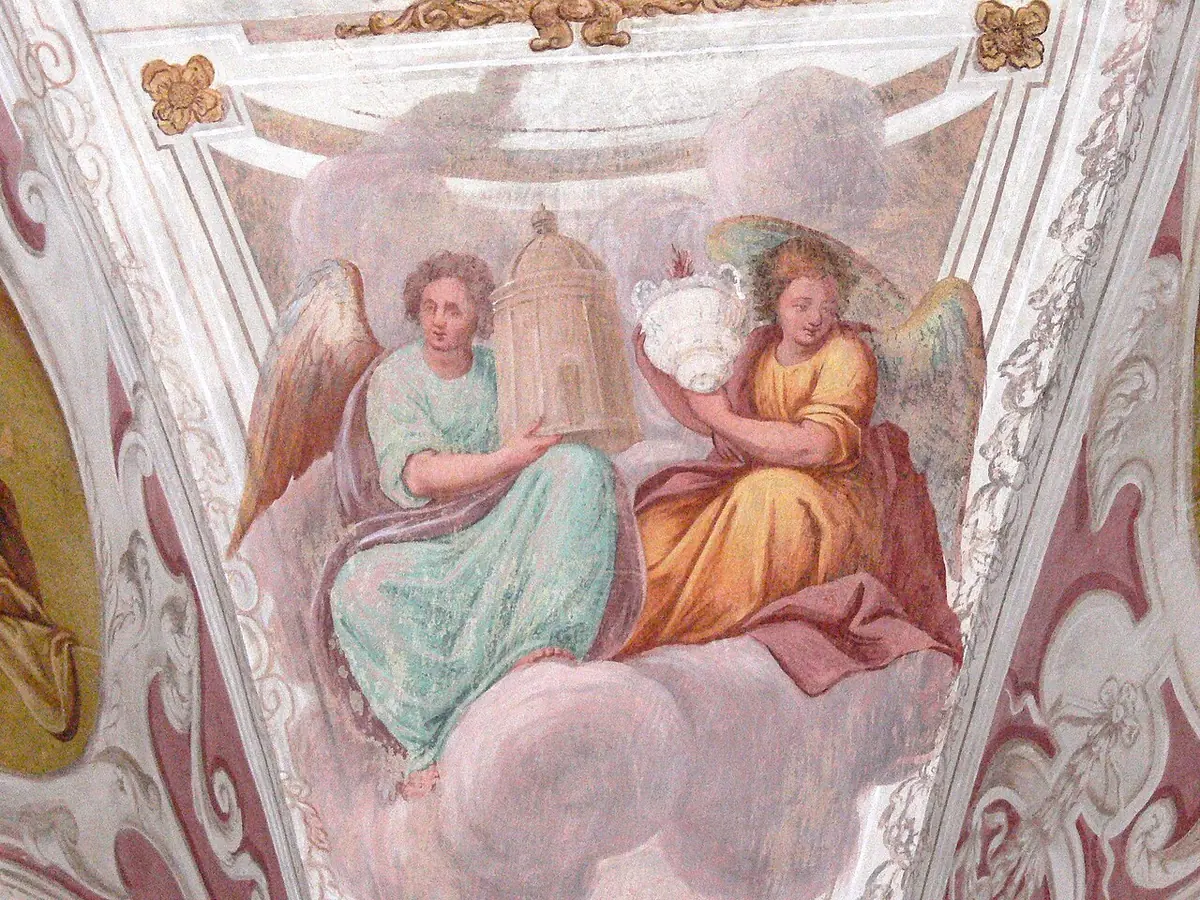
Artists turned these titles into a whole language of symbols. Juan de Juanes, painting in Valencia in the 1530s, set the Virgin among a tower, a fountain, a gate, the sun and moon, a star and a garden.

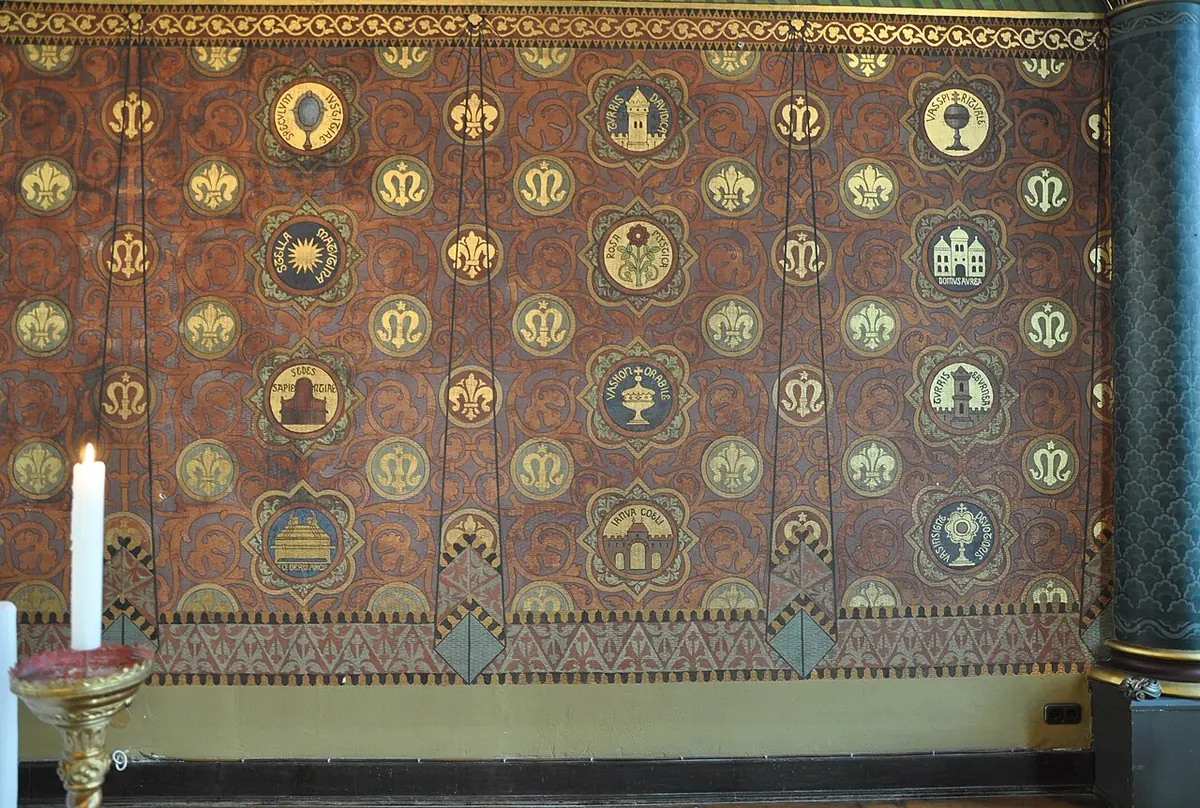
Three and a half centuries later, a painter at Mehrerau Abbey in Austria covered a chapel wall with medallions of the litany. Once you know the litany, you will start finding it on church ceilings and windows everywhere.
When and how we pray the Litany of Loreto
The most common time is at the end of the rosary. St. John Paul II wrote in Rosarium Virginis Mariae (2002) that after the rosary the soul feels the need "to burst forth in praise of the Blessed Virgin, either in that splendid prayer the Salve Regina or in the Litany of Loreto." It is also sung at May crownings and October devotions, at Saturday Marian services, and on the feast of Our Lady of Loreto on December 10.
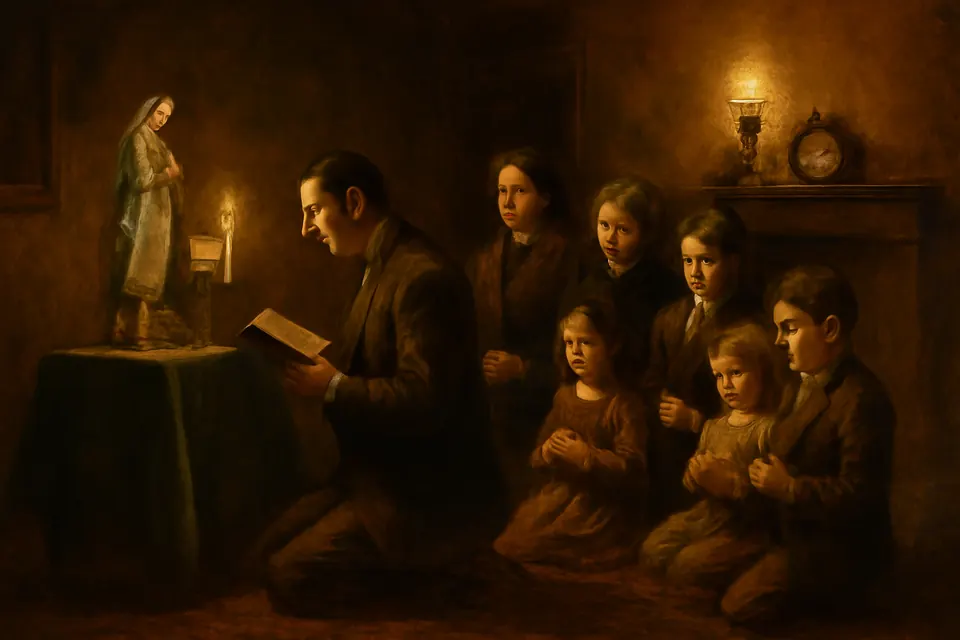
In a group, one person reads each title and everyone answers "pray for us." Prayed alone, it can be read slowly, stopping on whatever title speaks to the day: "Health of the sick" beside a hospital bed, "Comforter of the afflicted" at a funeral, "Solace of Migrants" when we pray for refugees. The Church's handbook of indulgences, the Enchiridion Indulgentiarum (2004), grants a partial indulgence for praying it devoutly.

Let us call on her by her names tonight. For Mary's life, feasts and titles, see the Blessed Virgin Mary. For other Marian prayers, see the Hail Holy Queen, the Memorare, the Magnificat and the Fatima prayer. For the shrine that gave the litany its name, see Our Lady of Loreto, and for its place in the rosary, Our Lady of the Rosary.
Frequently asked questions
What is the Litany of Loreto?
It is the Litany of the Blessed Virgin Mary: after invoking the Holy Trinity, it calls on Mary by more than fifty titles, each answered "pray for us," and ends with the Lamb of God and a closing prayer. It takes its name from the shrine of the Holy House at Loreto, Italy, where it was sung every Saturday in the 16th century.
Is the Litany of Loreto the same as the Litany of the Blessed Virgin Mary?
Yes. "Litany of the Blessed Virgin Mary" is its official name, and "Litany of Loreto" (or Loretto) is the traditional nickname. It is the Marian litany the Church approved for public worship in 1587, and the one her handbook of indulgences names today.
Who approved the Litany of Loreto?
Pope Sixtus V gave it formal approval in the bull Reddituri of July 11, 1587, and urged preachers to spread its use. In 1601 Pope Clement VIII forbade publishing new litanies for public worship without approval, while upholding the Litany of Loreto.
What new invocations were added to the Litany of Loreto?
In June 2020 Pope Francis added "Mother of Mercy," "Mother of Hope" and "Solace of Migrants." Earlier additions include "Queen of the most holy Rosary" (made universal in 1883), "Mother of good counsel" (1903), "Queen of peace" (1917), "Queen assumed into heaven" (1950s), "Mother of the Church" (1980) and "Queen of families" (1995).
When is the Litany of Loreto prayed?
Most often at the end of the rosary. St. John Paul II named it, with the Salve Regina, as the natural crowning of the rosary. It is also sung at Marian devotions, in May and October, on Saturdays and on feasts of Our Lady, and it can be prayed alone at any time.
Is there an indulgence for the Litany of Loreto?
Yes. The Enchiridion Indulgentiarum (2004) grants a partial indulgence for devoutly praying the approved litanies, and the Litany of the Blessed Virgin Mary is one of them.
Sources
- Catholic Encyclopedia (1910): Litany of Loreto
- The Catholic Girl's Guide (1906), Litany of the Blessed Virgin in Latin and English (archive.org)
- The Holy See: The Litany of Loreto (current English text)
- Benedict XV, Letter to Cardinal Gasparri adding "Regina pacis" to the Litany of Loreto (May 5, 1917)
- Congregation for Divine Worship: Decree on the celebration of the Blessed Virgin Mary Mother of the Church (February 11, 2018)
- Holy See Press Office: Letter on the invocations to be inserted into the Litany of Loreto (June 20, 2020)
- Fr. Donald Calloway, MIC: The Original Final Invocations of the Litany (Marians of the Immaculate Conception, 2020)
- John Paul II, Rosarium Virginis Mariae (2002), no. 37