Takashi Nagai
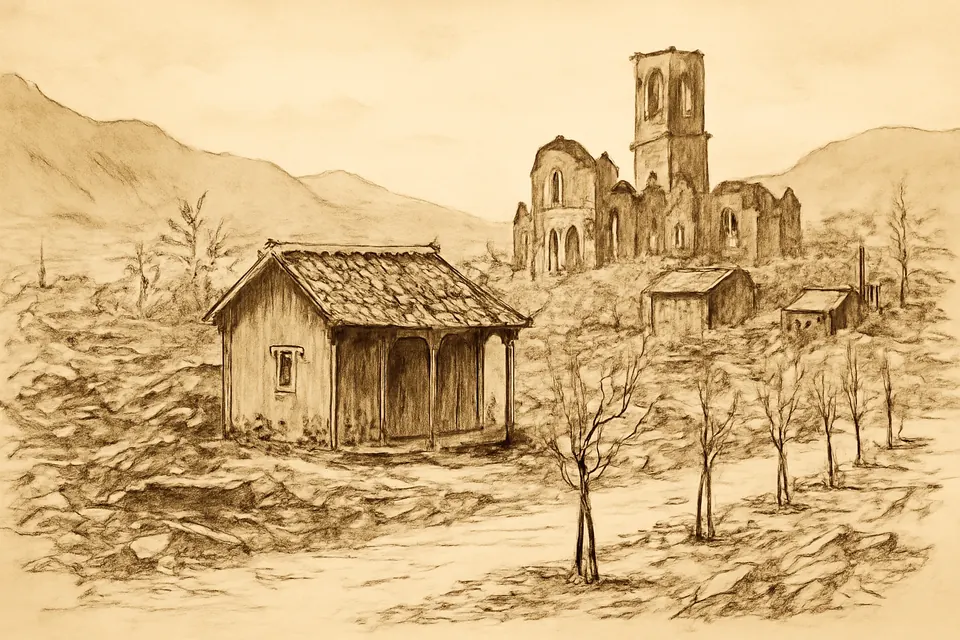
Takashi Nagai (1908 to 1951) was a Japanese Catholic doctor, a radiologist in Nagasaki who survived the atomic bomb of August 9, 1945, though it killed his wife, Midori. Already dying of leukemia, he served the survivors, wrote The Bells of Nagasaki and other books from a two-mat hut, and became a voice of faith and peace. Since 2021 he and Midori are Servants of God.
Who was Takashi Nagai?
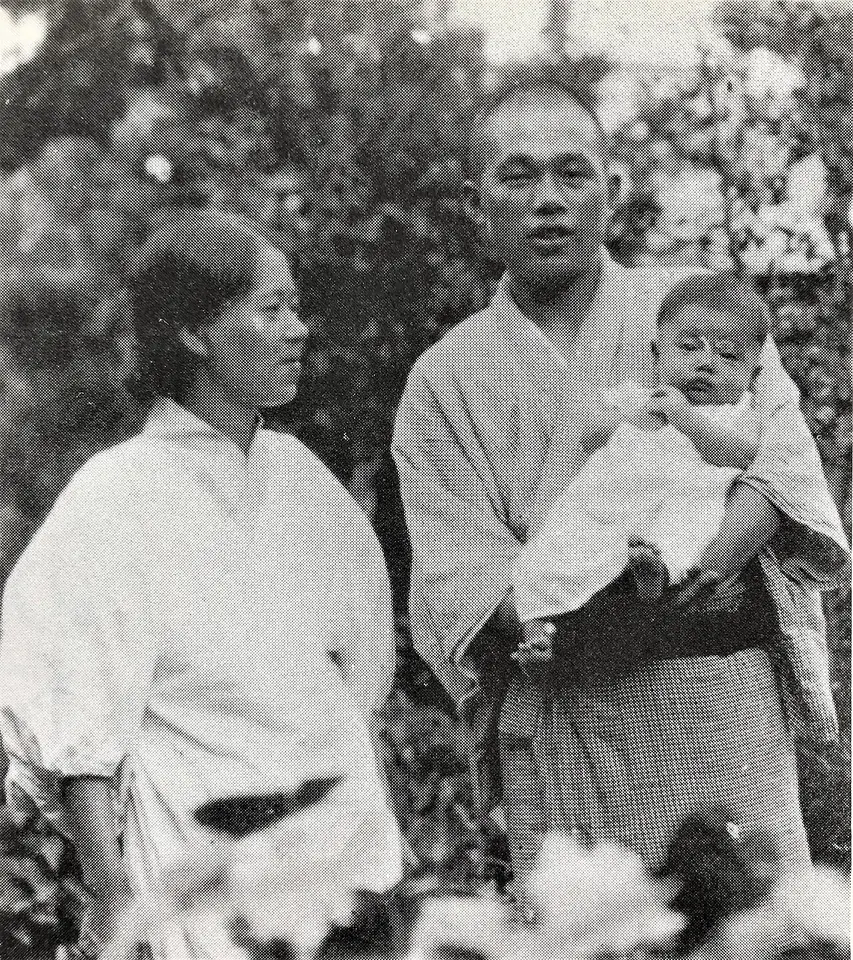
Takashi Nagai was a Japanese doctor, a radiologist at Nagasaki Medical College, who survived the atomic bomb dropped on Nagasaki on August 9, 1945. The bomb destroyed his home in Urakami, the old Catholic district of the city, and killed his wife, Midori. Already dying of leukemia caught from years of X-ray work, he cared for the wounded, then wrote book after book from his sickbed in a tiny hut, giving the money away to rebuild his neighborhood. He died on May 1, 1951, at forty-three.
In Nagasaki people still call him the Saint of Urakami. The Church has not yet said so. In October 2021 the Archbishop of Nagasaki opened the causes for the beatification of Takashi and Midori Nagai together, and both are now Servants of God.

From atheism to the Church
A doctor's son from Matsue
Nagai was born on February 3, 1908, in Matsue, in Shimane Prefecture, the first son of a physician, Hiroshi Nagai, and his wife, Tsune. He grew up in a family steeped in Shinto tradition, loved poetry, painting and sports, and in 1928 entered Nagasaki Medical College. By his own later account he was then a convinced materialist.
In March 1930 he was called home to his dying mother. In her last look, his biographers at the Friends of Takashi and Midori Nagai write, he glimpsed something in a human being that does not die. He began to read Blaise Pascal's Pensées, and Pascal stayed with him for the rest of his life.
The Moriyama house and Christmas 1932
As a student he lodged in Urakami with the Moriyama family. He did not know at first that they descended from the leaders of Urakami's Hidden Christians, who had kept the Catholic faith in secret through more than two centuries of persecution. On Christmas Eve 1932 the family invited him to Mass, and after some hesitation he went. He later said he felt someone close to him whom he did not yet know.
The next day the Moriyamas' daughter, Midori, a schoolteacher who had been at dinner with them, fell ill with acute appendicitis. Nagai carried her through the snow to the hospital, and the surgery saved her life.
He graduated at the top of his class in 1932. An ear infection had left him partly deaf, so he gave up internal medicine, where he would need a stethoscope, and took up radiology, then a new field.

War, the catechism and baptism
In 1933 he was sent to the war in Manchuria as an army doctor. Midori wrote to him and sent him a catechism, and he read it in the camp. When he came home, he asked the parish priest of Urakami for instruction, and in 1934 he was baptized, taking the name Paul after the Japanese martyr St. Paul Miki. In August 1934 he and Midori were married.

They had four children; two died in infancy, and Makoto and Kayano survived. Nagai joined the Society of St. Vincent de Paul and visited the poor. Among his patients was St. Maximilian Kolbe, then a missionary in Nagasaki, whose chest he X-rayed in 1935. From 1937 to 1940 he served again as a medical officer in China. He returned to Nagasaki as an assistant professor and head of radiology.
August 9, 1945
In June 1945 Nagai diagnosed himself with chronic myelogenous leukemia, the result of years of exposure to scattered radiation in an age with little protection. He was given about three years to live. Midori received the news calmly and with faith.
On August 9, at 11:02 a.m., the second atomic bomb exploded over Urakami. Nagai was in the radiology department of the medical college, about 700 meters from the hypocenter. Flying glass cut the right side of his body and severed an artery at his temple. He bound his head and worked with his surviving staff to care for the wounded until he collapsed from loss of blood.
When he was finally able to reach his home, he found only ashes where the kitchen had been, and among them the beads of Midori's rosary with its little metal cross. He understood that she had died praying. The Memorial Museum keeps the rosary today.
In September he fell gravely ill with radiation sickness and his wound reopened. The Friends of Takashi and Midori Nagai record that his mother-in-law gave him water from the Lourdes grotto at Father Kolbe's friary, that he heard a woman's voice telling him to ask Father Kolbe's prayers, and that the bleeding stopped. This is a reported grace; it has not been examined by the Church.
The funeral Mass in the ruins
On November 23, 1945, the Catholics of Urakami gathered before the ruins of their cathedral for a Requiem Mass for the thousands of their parish killed by the bomb, and Nagai spoke to them. As the historian Chad Diehl summarizes it, he told the mourners that Urakami's church had been placed on the altar of sacrifice as a pure lamb, an offering for the sin of the world war, and that the war ended because of it.
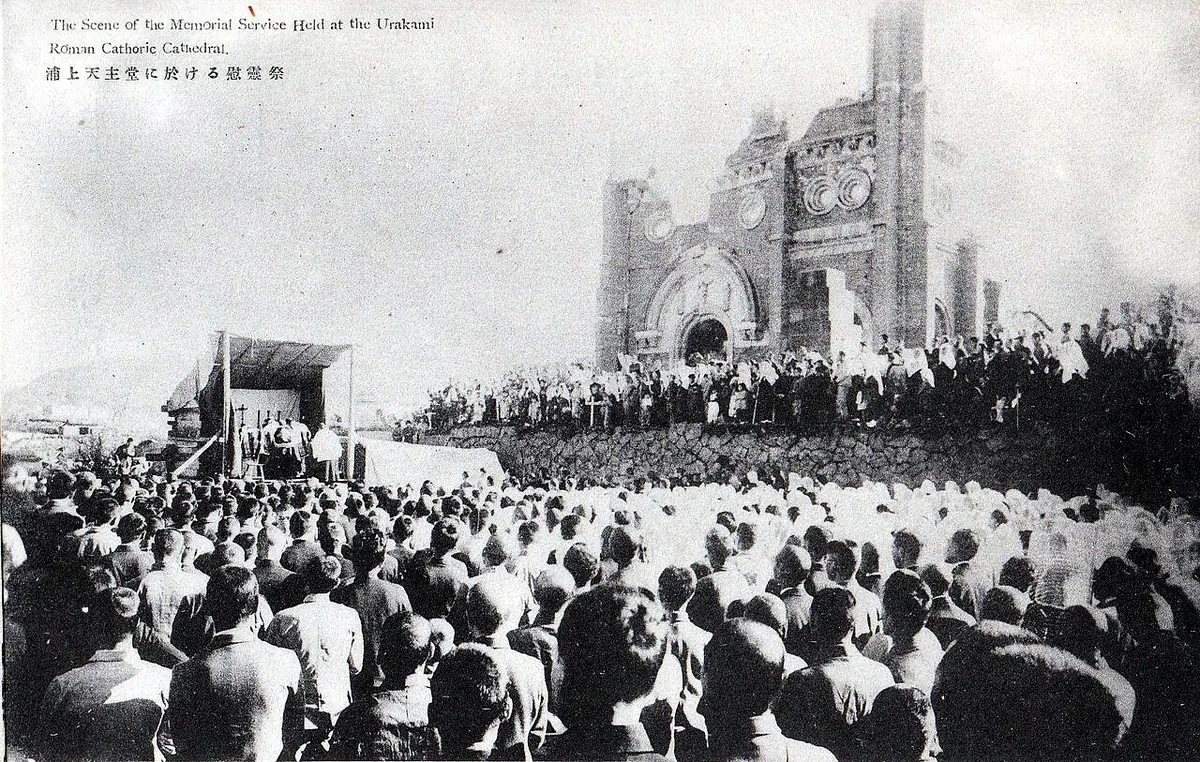
Readers have wrestled with these words ever since. But to many survivors, who had been told the bomb was a punishment, Nagai gave another way to see their dead: not as cursed, but as joined to the sacrifice of Christ.
Rebuilding Urakami
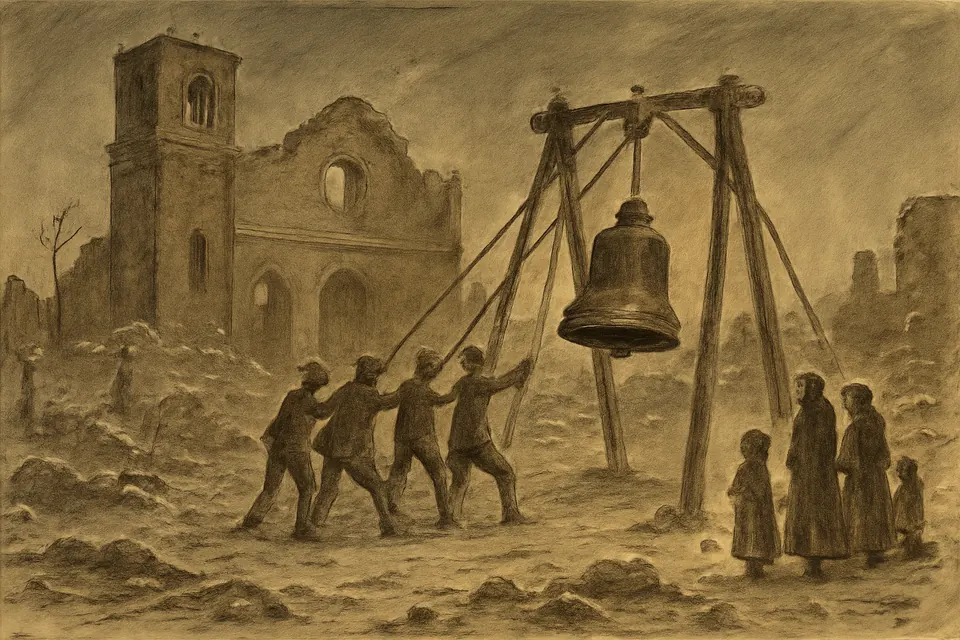
In October 1945 Nagai returned to live in the ruins of Urakami, in a shack of salvaged sheet metal on the site of his old home. On Christmas Eve 1945 he and his friends dug the smaller of the cathedral's two bells out of the rubble, hung it from a makeshift frame and rang it at nightfall. It gave him the title of his most famous book.
He became professor in 1946 and kept visiting patients until he collapsed at Nagasaki station that year. From then on he could not leave his bed.

The Nyokodo and the books
In the spring of 1948 the people of Urakami and the parish built him a hut of two tatami mats, about four square meters. He named it Nyokodo, "as yourself," from Christ's command to love your neighbor as yourself. He lay on one mat; Makoto and Kayano lived on the other.
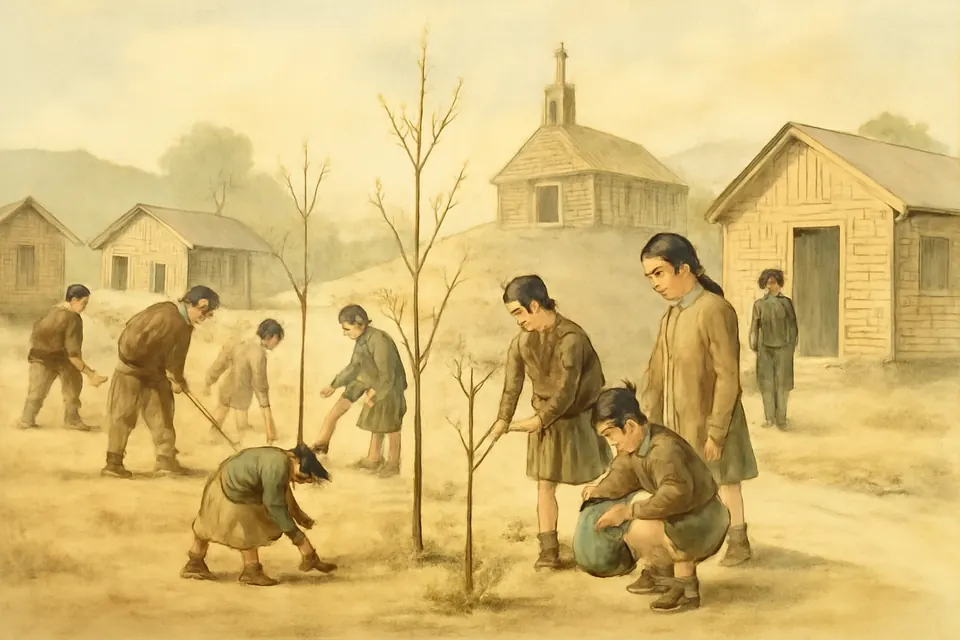
From that bed he wrote, with his son Makoto rubbing his ink. The Memorial Museum counts seventeen books by the time of his death, among them The Bells of Nagasaki, Leaving These Children Behind, The Rosary Chain and River of Life. Most of his income went to the poor children of Urakami, to the rebuilding of the cathedral and the city, and to a small lending library for children he called "Our Bookcase." He paid for more than 1,200 cherry saplings so that the atomic wasteland would bloom again.
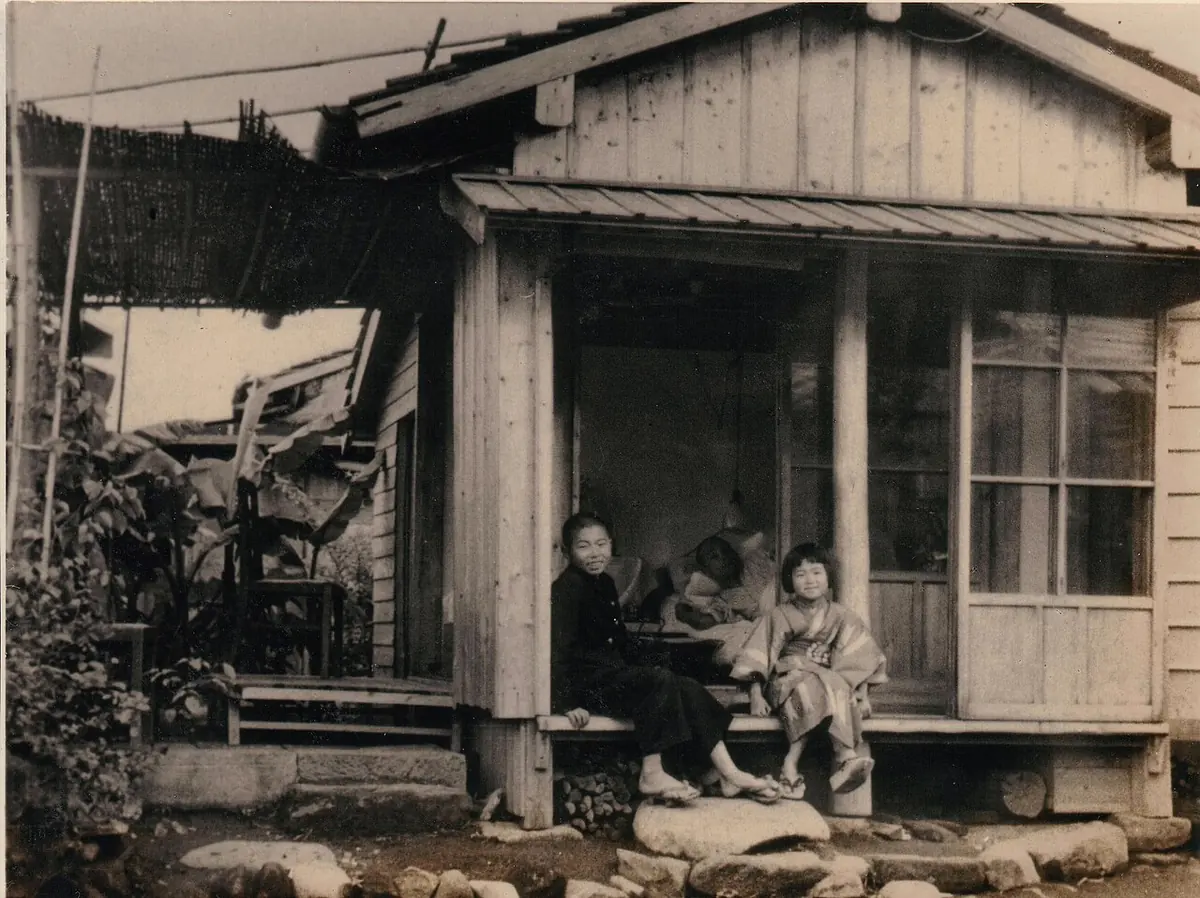
Visitors came by the thousands: the Emperor, Helen Keller, and an envoy of Pope Pius XII among them. In December 1949 Nagasaki made him its first honorary citizen after the war, and in 1950 the national government honored him for encouraging the nation through his writing.
His death and his words
At the end of April 1951 he finished his last manuscript. On May 1 his condition suddenly worsened; he was carried to the hospital of the medical college, prayed aloud, and died at 9:50 that night, with his children beside him. He left his body to the college for study. His funeral was held at Urakami church on May 3, followed by a civic funeral on May 14.
He lies beside Midori in Sakamoto International Cemetery. The epitaph he chose is from the Gospel of Luke: "We are useless servants. We have done what we had to do."

His words still travel. In his message for the eightieth anniversary of the atomic bombings in 2025, Pope Leo XIV quoted him: "The person of love is the person of 'bravery' who does not bear arms." And the Friends of Takashi and Midori Nagai quote a line that sums up his joy: "The life of a new day awaits me, true joy."
Takashi and Midori Nagai: the cause for sainthood
The cause belongs to husband and wife together. Midori Marina Moriyama, born on October 8, 1908, prayed for Takashi's conversion before she married him, and died in the bomb at their home on August 9, 1945.
- March 23, 2021: the Friends of Takashi and Midori Nagai committee was formed in Rome.
- September 8, 2021: Archbishop Joseph Mitsuaki Takami of Nagasaki recognized the committee as the canonical petitioner and approved its postulator, a Discalced Carmelite.
- October 2021: the archbishop accepted the request to open both causes, and Takashi and Midori became Servants of God.
- November 9, 2021: the archbishop approved an official prayer for their intercession and canonization.
The diocesan inquiry into their lives and virtues is the next stage. Like Dorothy Day, they are not yet Venerable or Blessed, and the Church does not yet keep a feast day for them; May 1, the day of his death, is when Nagasaki remembers him.
Let us ask the Lord, through the prayers of Takashi and Midori Nagai, for peace among nations and for all who suffer the wounds of war.
Frequently asked questions
Is Takashi Nagai a saint?
Not yet. In October 2021 the Archbishop of Nagasaki accepted the request to open the causes for beatification and canonization of Takashi Nagai and his wife Midori, together, and both became Servants of God. The Church has not yet declared him Venerable or Blessed, and he has no feast day.
Who was Dr. Takashi Nagai?
A radiologist and professor at Nagasaki Medical College, a convert from atheism who was baptized in 1934 and took the name Paul after St. Paul Miki. He survived the atomic bombing of Nagasaki, cared for the wounded, and spent his last years bedridden with leukemia, writing books whose income he gave to rebuild his city. He died on May 1, 1951, at 43.
What is The Bells of Nagasaki about?
It is Nagai's account of the bombing of Nagasaki and its aftermath, written from his sickbed. Its title comes from the bell of Urakami Cathedral, which he and his friends dug out of the ruins and rang again on Christmas Eve 1945. The book became a best seller in Japan and inspired a popular song and a film.
What is the Nyokodo?
The two-tatami hut, about four square meters, where Nagai lived from 1948 until his death with his son Makoto and daughter Kayano. Its name means "as yourself," from the command to love your neighbor as yourself. It still stands in Nagasaki beside the Nagai Takashi Memorial Museum.
Where is Takashi Nagai buried?
In Sakamoto International Cemetery in Nagasaki, together with his wife Midori. He chose his own epitaph from the Gospel of Luke (17:10), "We are useless servants. We have done what we had to do."
Can I pray to Takashi Nagai?
Yes, privately. Before beatification the Church does not allow public liturgical veneration, but the faithful may ask a Servant of God to pray for them. In November 2021 the Archbishop of Nagasaki approved an official prayer for the intercession and canonization of Takashi and Midori Nagai.
Sources
- Nagai Takashi Memorial Museum (Nagasaki City): Brief history of Takashi Nagai. Dates of his life, the 1945 diagnosis, 1,200 cherry saplings, honorary citizen of Nagasaki (1949), burial at Sakamoto
- Nagai Takashi Memorial Museum: Chapter 4, Nyokodo
- Friends of Takashi and Midori Nagai: Who we are (steps in the cause). The committee's recognition (September 2021) and the opening of the two causes (October 2021)
- Friends of Takashi and Midori Nagai: Prayer. The official prayer approved by Archbishop Takami on November 9, 2021
- Friends of Takashi and Midori Nagai: Takashi Paul Nagai (biography, PDF). Pascal, the Moriyama family, his baptismal name, the healing he attributed to Father Kolbe, his epitaph
- Friends of Takashi and Midori Nagai: Today in Nagasaki. Midori's rosary, the Christmas Eve bell, his visit to Father Kolbe in 1935
- EWTN News (CNA): Takashi Nagai continues to inspire at New York Encounter. The November 23, 1945 funeral address, as summarized by the historian Chad Diehl
- Pope Leo XIV, Message for the 80th anniversary of the atomic bombings of Hiroshima and Nagasaki (July 14, 2025)