Cherubim

The cherubim are the second of the nine choirs of angels, mighty spirits who guard the holiness of God. A cherub with a flaming sword guarded Eden after the fall (Genesis 3:24), two golden cherubim spread their wings over the Ark of the Covenant, and Ezekiel saw them as four-faced living creatures bearing God's throne. They have nothing in common with the winged babies of later art.
Valentine's cards and Christmas wrapping paper have given us an odd picture of a cherub: a plump winged baby, maybe holding a little bow. The cherubim of the Bible are nothing like that. The first cherub in Scripture stands at the gate of Eden with a sword of fire. Later, cherubim of beaten gold guard the Ark of the Covenant, and the prophet Ezekiel sees them as four-faced living creatures carrying the throne of God. This page gathers what Scripture and the Church teach about these mighty angels.
The cherubim at the gate of Eden
The cherubim enter the Bible at one of its saddest moments. Adam and Eve have sinned and must leave the garden, and God sets a guard on the way back: "And he cast out Adam; and placed before the paradise of pleasure Cherubims, and a flaming sword, turning every way, to keep the way of the tree of life" (Genesis 3:24, Douay-Rheims).
The Catholic Encyclopedia points out that this verse alone shows the cherubim are real beings and not mere symbols: the sentence "would bear no sense at all if cherubim did not stand for ministerial beings, differing from man, carrying out the behest of God." From their first appearance, the cherubim are guardians of holiness. They keep sinful man from grasping at life on his own terms. Through Christ, the new Adam, the way to the tree of life is opened again.

The cherubim of the Ark of the Covenant
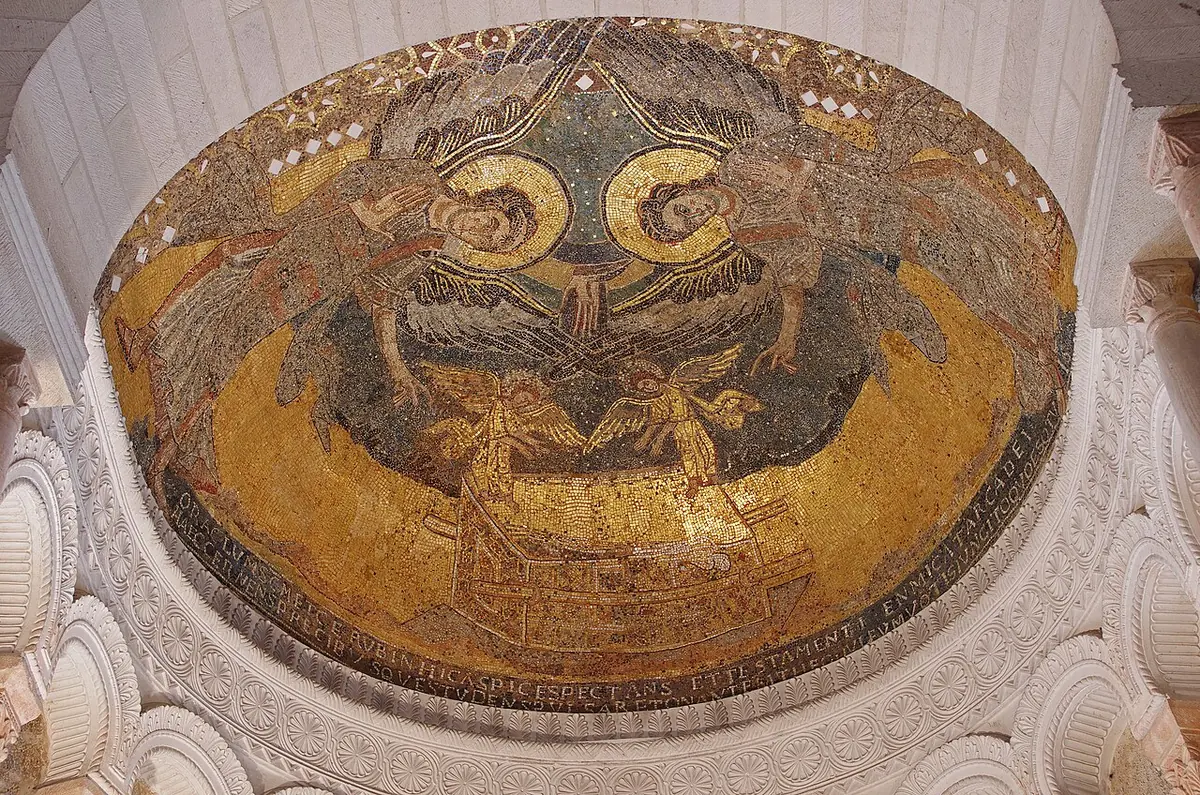
When God gave Moses the pattern for the Tabernacle, he asked for cherubim at its very heart. On the lid of the Ark, the "propitiatory" or mercy seat, there were to be two cherubim of gold:
Thou shalt make also two cherubims of beaten gold, on the two sides of the oracle. Let one cherub be on the one side, and the other on the other. Let them cover both sides of the propitiatory, spreading their wings, and covering the oracle, and let them look one towards the other, their faces being turned towards the propitiatory wherewith the ark is to be covered. In which thou shalt put the testimony that I will give thee. Thence will I give orders, and will speak to thee over the propitiatory, and from the midst of the two cherubims. (Exodus 25:18-22)
God promised to speak "from the midst of the two cherubims." That is why Scripture so often calls him the Lord "sitting upon the cherubims" (1 Kings 4:4; Psalm 79:2). According to the Hebrew text of Exodus 26:31, cherubim were also embroidered on the veil of the Tabernacle, and every year on the Day of Atonement the high priest sprinkled blood on the mercy seat between their wings.
The cherubim of Solomon's Temple
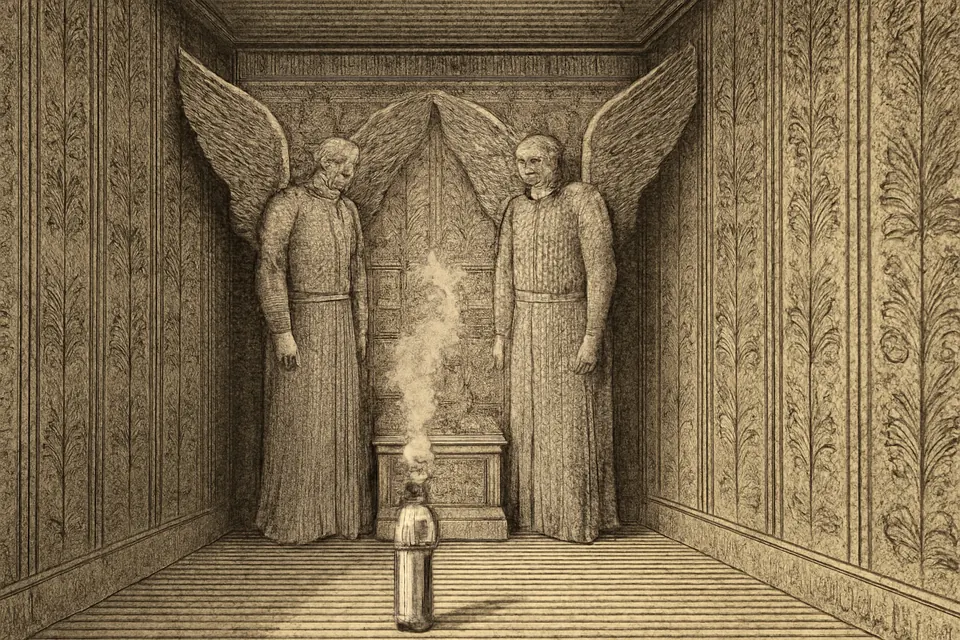
When Solomon built the Temple, he set two enormous cherubim in the Holy of Holies, carved from olive wood and overlaid with gold, each ten cubits (about fifteen feet) tall. "The wing of the one touched one wall, and the wing of the other cherub touched the other wall: and the other wings in the midst of the temple touched one another" (3 Kings 6:27). Cherubim, palm trees and open flowers were carved all over the Temple's walls.
What did they look like? No one knows. The Catholic Encyclopedia notes that by the time of Christ even the Jewish historian Josephus admitted that no one could say what form they had. Many scholars think they resembled the winged guardian figures common in the art of Egypt and Assyria, with human faces and outstretched wings.
Ezekiel's living creatures
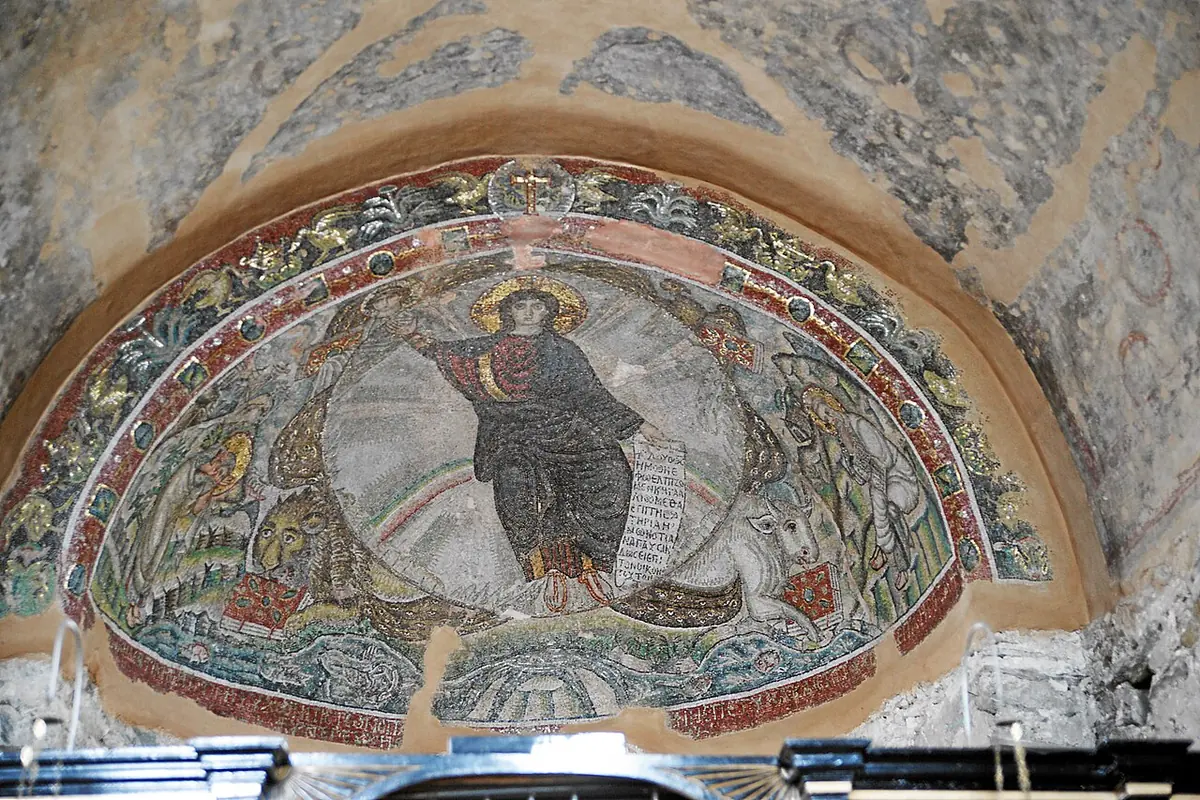
The fullest description of the cherubim comes from the prophet Ezekiel, who was in exile in Babylon by the river Chobar when the heavens opened. Out of a storm cloud full of fire came four living creatures: "there was the likeness of a man in them. Every one had four faces, and every one four wings" (Ezekiel 1:5-6). They had straight legs ending in calves' feet, human hands under their wings, and the faces of a man, a lion, an ox and an eagle. "Their appearance was like that of burning coals of fire," and beside each one turned a great wheel full of eyes. Above them was a crystal firmament, and above that a sapphire throne with "the likeness of the glory of the Lord."
In chapter 10, Ezekiel sees the same creatures again in the Temple and names them: "This is the living creature, which I saw under the God of Israel by the river Chobar: and I understood that they were cherubims" (Ezekiel 10:20). So the cherubim are the bearers of God's throne, his living chariot. The psalmist sings of the Lord coming to rescue his servant: "he ascended upon the cherubim, and he flew; he flew upon the wings of the winds" (Psalm 17:11).
St. John saw four living creatures again around the throne in heaven, "full of eyes before and behind," like a lion, a calf, a man and a flying eagle (Apocalypse 4:6-7). Early Christians took these four faces as signs of the four Evangelists: the man for St. Matthew, the lion for St. Mark, the ox for St. Luke and the eagle for St. John. The Catholic Encyclopedia calls it "a thought of rare grandeur and singular felicity." For more on the strange beauty of these visions, see biblically accurate angels and the ophanim, the wheels beside the cherubim.
The cherubim in the nine choirs
In the nine choirs of angels the cherubim stand second, between the seraphim and the thrones. Pseudo-Dionysius wrote that their name means "a fulness of knowledge or stream of wisdom," and that it shows "their knowledge and their vision of God, and their readiness to receive the highest gift of light," and their "ungrudging communication to those next to them, by the stream of the given wisdom."
St. Gregory the Great taught the same: cherubim means "the fulness of knowledge, and these most sublime hosts are thus called, because they are filled with a knowledge which is the more perfect as they are allowed to behold the glory of God more closely." St. Thomas Aquinas adds that the seraphim excel in love and the cherubim in knowledge, which is why the seraphim stand just above them.
St. Augustine drew a lesson for all of us from the psalm verse "Thou that sittest upon the cherubims." Cherubim, he said, means the seat of God's glory: "yet if thou wilt, thou too shalt be one of the cherubim. For if cherubim means, Seat of God, remember what the Scripture says: The soul of the just is the Seat of Wisdom." A soul in grace becomes a resting place for God.

The fallen cherub
Ezekiel also uses the image of a cherub in a lament over the proud king of Tyre: "Thou a cherub stretched out, and protecting, and I set thee in the holy mountain of God... and thou hast sinned" (Ezekiel 28:14-16). The prophet is speaking of a human king. But because the passage describes a glorious being cast down from the mountain of God for pride, many Christian writers have also read it as an image of the fall of Satan. That reading is traditional, not the literal sense of the text. Read more on the fallen angels.
How the cherub became a baby
So how did the guardian of Eden end up on Valentine's cards? The answer lies in the history of art.
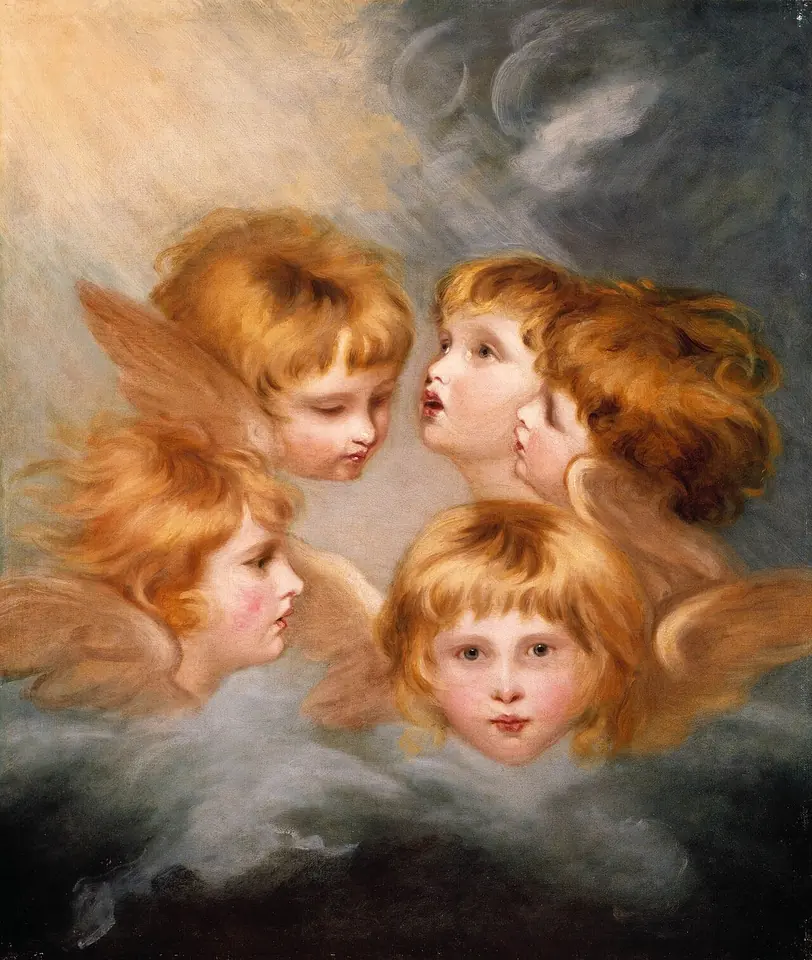
Early Christians painted angels as grown men, first without wings and then, from the time of Constantine, with wings borrowed from the figures of Victory in Roman art. Byzantine painters gave the cherubim and seraphim a special shorthand: a face surrounded by wings. The Byzantine painter's guide printed by A. N. Didron says simply, "The Cherubim are represented with a head only, and two wings." Those winged heads, sometimes painted blue for the cherubim and red for the seraphim, crowd around Christ and Our Lady in many medieval and Renaissance altarpieces.
During the Renaissance, sculptors and painters such as Donatello and Raphael revived another figure from ancient Rome: the putto (plural putti), a plump little winged boy descended from the Roman love gods, the amorini. Putti were charming, and artists put them everywhere, holding up curtains, playing music, peeking over ledges. Over time the two figures blurred together, and in English the putto came to be called a "cherub."
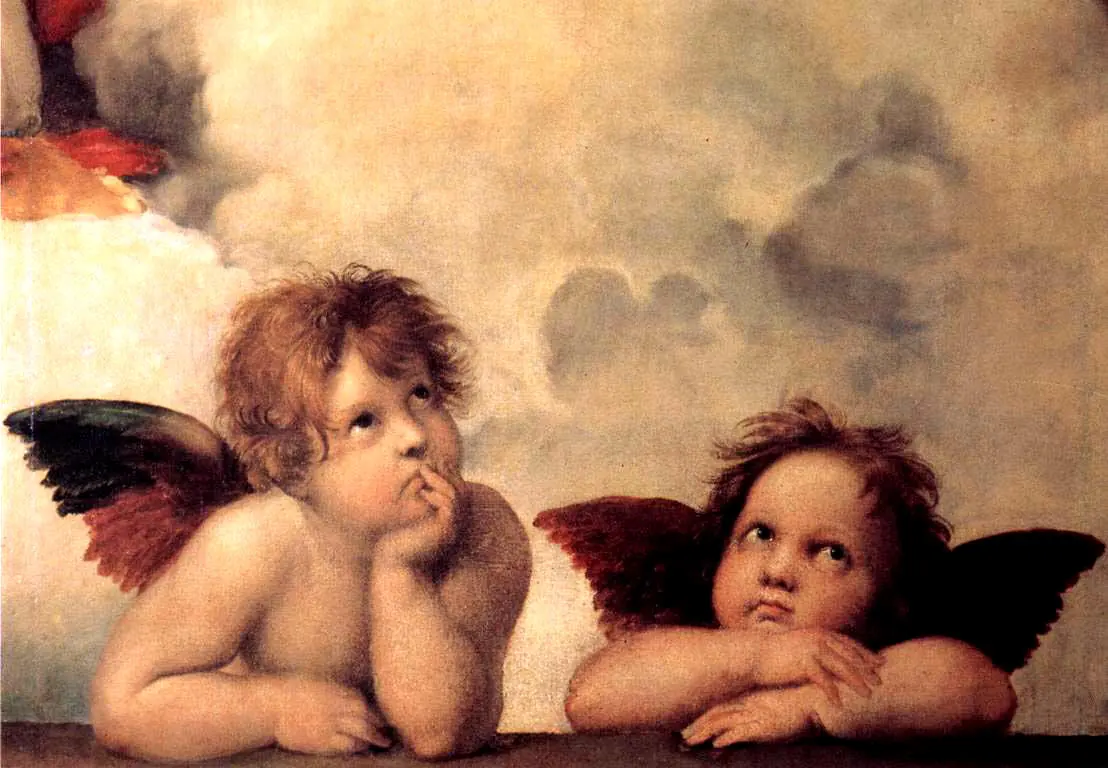
There is nothing wrong with putti. They can stand for the joy of heaven and the innocence of children. But they are not the cherubim of Scripture. The real cherubim are powerful, awesome and wise, the guardians of God's holiness and the bearers of his throne.
The cherubim in the Church's prayer
The Church still sings with the cherubim. The Te Deum says that the cherubim and seraphim cry out without ceasing, Holy, holy, holy. In the Byzantine Divine Liturgy, as the gifts are carried to the altar, the faithful sing the Cherubic Hymn, in which the earthly congregation mystically represents the cherubim around God's throne (Catechism 335).
When we come before the tabernacle, we stand where the cherubim stood, near the presence of God. Let us ask them to teach us reverence and to fill us with the wisdom that comes from seeing God. For every page on the holy angels, see our angels hub.
Holy cherubim, guardians of God's glory, pray for us.
Frequently asked questions
What is a cherub?
In Scripture a cherub is a mighty angel who guards the holiness of God. Cherubim (the Hebrew plural) guarded Eden after the fall, stood in gold over the Ark of the Covenant and bore God's throne in Ezekiel's vision. In the nine choirs of angels they are second, just below the seraphim.
What do cherubim look like in the Bible?
Ezekiel describes them as living creatures with the likeness of a man, four faces (man, lion, ox and eagle), four wings, hands under their wings, straight legs with calves' feet, and a gleam like burning coals (Ezekiel 1 and 10). The golden cherubim of the Ark had faces and outstretched wings, but Scripture does not describe them further.
Are cherubs baby angels?
No. The chubby winged babies in Renaissance and later art are putti, borrowed from the little love gods of ancient Roman art. In English they came to be called cherubs, but the biblical cherubim are powerful guardians at the throne of God.
What is the difference between cherubim and seraphim?
Both belong to the highest triad of angels. Tradition names the seraphim for burning love and the cherubim for fullness of knowledge. Isaiah's seraphim have six wings; Ezekiel's cherubim have four wings and four faces. In the order of Dionysius and St. Thomas Aquinas the seraphim rank first and the cherubim second.
What does the word cherub mean?
Its origin is uncertain. The Catholic Encyclopedia links it with the Assyrian karabu, "to be near," so cherubim are those near to God, his personal attendants. The ancient interpretation passed on by St. Gregory the Great and Pseudo-Dionysius is "fulness of knowledge."