St. Jude Thaddeus
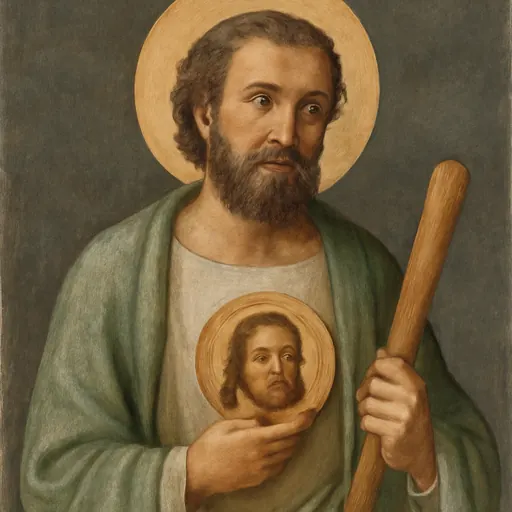
St. Jude Thaddeus was one of the twelve apostles of Jesus, called "Judas, not Iscariot" in the Gospel of John, and is traditionally held to be the author of the short Letter of Jude in the New Testament. Tradition says he preached in Mesopotamia and Persia and died a martyr. His feast day is October 28, shared with St. Simon, and he is the patron saint of hopeless causes and desperate situations.
Who was St. Jude?
St. Jude is one of the twelve apostles Jesus chose, and one of the least known. The Gospels give him only one line of speech. His name in Greek is Judas, the same as the apostle who betrayed Jesus, and English Bibles have long called him Jude so that readers can tell the two men apart. Matthew and Mark list him as Thaddeus, so Catholics usually call him St. Jude Thaddeus.
Almost everything else about him comes from tradition. The Church has long held that he wrote the Letter of Jude, the second-to-last book of the Bible. Early Christian writers place his preaching in Syria, Mesopotamia and Persia, and the most widely told story says he died a martyr in Persia with the apostle St. Simon, which is why the two share a feast day on October 28.


His fame today has little to do with the few facts known about him. Since the early 20th century, St. Jude has been one of the most popular saints in the Catholic world as the patron of hopeless causes. Small "Thank you, St. Jude" notices still appear in newspaper classifieds, and his statue stands at the door of one of America's best-known children's hospitals.
St. Jude in the Gospels
Judas, not Iscariot
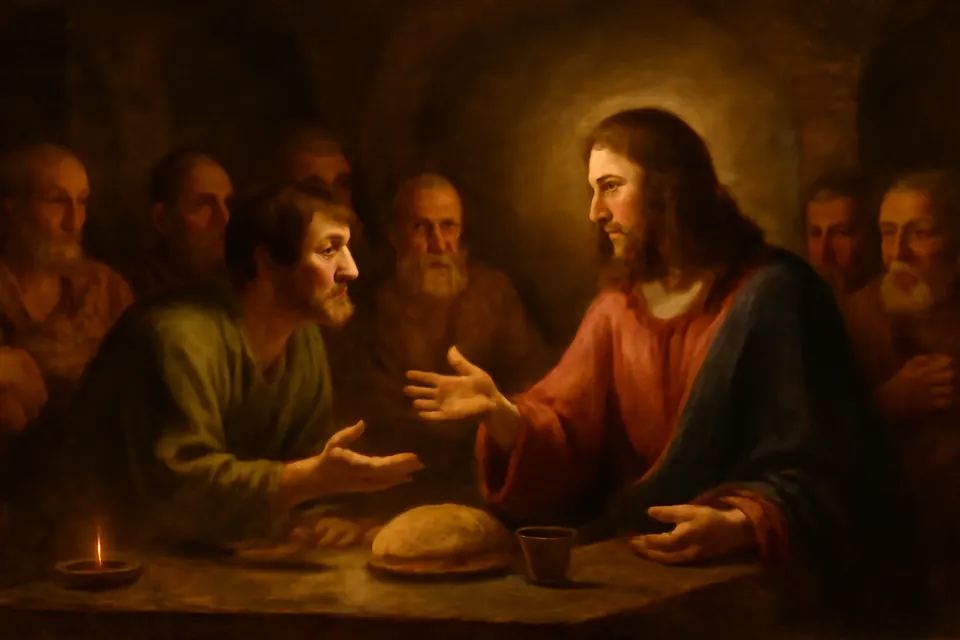
The Gospel of John records the only words St. Jude speaks in the New Testament. At the Last Supper, after Jesus promised to show himself to those who love him, "Judas (not Iscariot) said to him, 'Lord, how is it that you will manifest yourself to us, and not to the world?'" (John 14:22, RSV). Jesus answered that he and the Father would come to anyone who loves him and keeps his word, "and make our home with him."
Pope Benedict XVI, in a 2006 catechesis on Simon and Jude, said Jesus' answer teaches that the risen Lord is seen and heard with an open heart. He does not show himself like an object that anyone can look at.
Thaddeus, Lebbaeus and "Judas of James"
The four lists of the Twelve don't name him the same way. Matthew 10:3 and Mark 3:18 have "Thaddaeus," and some old manuscripts of Matthew read "Lebbaeus." Luke 6:16 and Acts 1:13 have "Judas of James," a Greek phrase that can mean either "son of James" or "brother of James." Since every list has twelve names and only this place differs, most readers since the early Church have taken Thaddeus and Judas of James to be one man with two names. Benedict XVI called the origin of the name Thaddeus uncertain.
A relative of Jesus?
Matthew 13:55 names the "brothers" of Jesus as James, Joseph, Simon and Judas. The Letter of Jude opens, "Jude, a servant of Jesus Christ and brother of James." Putting these verses together, Catholic tradition holds that Jude was a close relative of Jesus, a cousin on most readings, and the brother of St. James the Less. Eusebius, quoting the 2nd-century writer Hegesippus, says Jude "was said to have been the brother of the Lord according to the flesh," and that two of his grandsons, poor farmers in Palestine, were brought before the Emperor Domitian.
Whether the apostle Jude and Jude the brother of the Lord were the same man is an old question. Western tradition says yes. The Orthodox Church honors the Apostle Jude, "the brother of the Lord," on June 19 and teaches that out of humility he called himself only the brother of James.
The Letter of Jude
The Letter of Jude is only 25 verses long. Its writer urges his readers "to contend for the faith which was once for all delivered to the saints" (Jude 3) and warns against teachers who turn God's grace into an excuse for immorality. He calls them "waterless clouds, carried along by winds" (Jude 12) and quotes the Book of Enoch, a Jewish writing outside the Hebrew Bible (Jude 14–15). The letter ends with one of the best-known blessings in the New Testament:
"Now to him who is able to keep you from falling and to present you without blemish before the presence of his glory with rejoicing, to the only God, our Savior through Jesus Christ our Lord, be glory, majesty, dominion, and authority, before all time and now and for ever. Amen." (Jude 24–25, RSV)
The Catholic Encyclopedia notes that some early churches doubted whether the letter belonged in the Bible, and Eusebius listed it among the "disputed" books, but no one in the early Church denied that Jude wrote it. The Muratorian Fragment, around 170, already counts it as Scripture. The Council of Trent confirmed it in the Catholic canon. Many modern scholars think it was written late in the 1st century and question whether the apostle himself was the author. Catholic and Orthodox tradition keeps the older attribution.

St. Jude's mission and martyrdom
The New Testament says nothing about where Jude went after Pentecost. The stories below come from later centuries and are told here as tradition.
Edessa and King Abgar
Around 325, the historian Eusebius of Caesarea wrote that he had found, in the archives of Edessa (today Şanlıurfa in southeastern Turkey), letters in Syriac between Jesus and Abgar, the king of that city. Abgar was ill and begged Jesus to come and heal him. Jesus replied, "Blessed are you who hast believed in me without having seen me," and promised to send one of his disciples after his ascension. Eusebius says that after the Resurrection, the apostle Thomas sent Thaddeus to Edessa. Thaddeus laid his hand on the king "in his name," and Abgar was cured.
Eusebius calls this Thaddeus "one of the Seventy," the larger group of disciples Jesus sent out in Luke 10, not one of the Twelve. Eastern churches still keep the two apart and honor Thaddeus of the Seventy on August 21. Western tradition came to merge the two Thaddeuses, and the Edessa story became part of St. Jude's own legend.


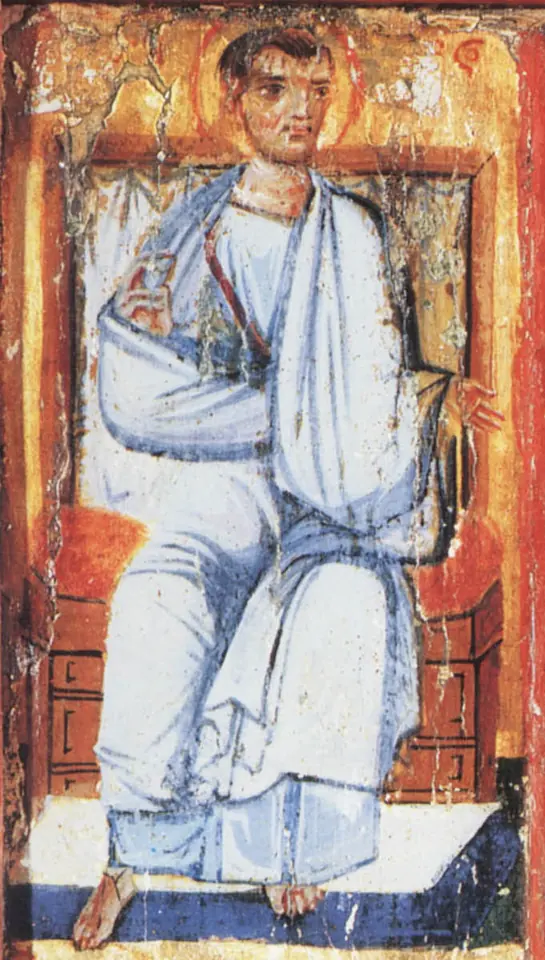
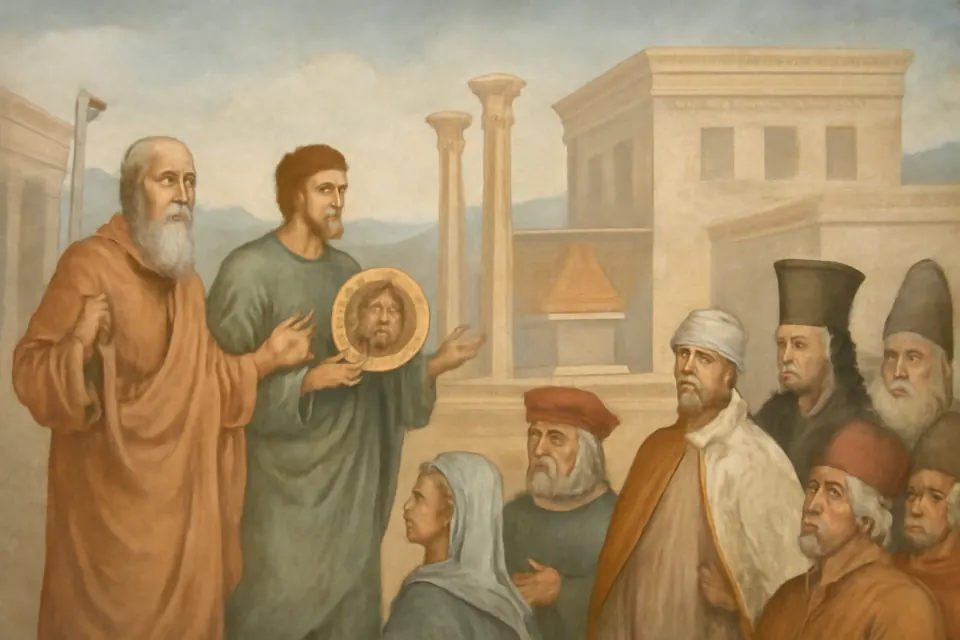
Later versions add an image. By about 400 the Syriac Teaching of Addai says the king's messenger painted Jesus' portrait. In the 6th century the story grew into the Image of Edessa, or Mandylion: a cloth on which Jesus pressed his own face and which Thaddeus carried to the king. In 944 the Byzantines brought a cloth believed to be this image from Edessa to Constantinople, and the painted wings at Sinai, made soon afterward, show Thaddeus and Abgar with it. The National Shrine of St. Jude tells the story this way, and it is why St. Jude so often holds a medallion with the face of Christ.
Persia with St. Simon
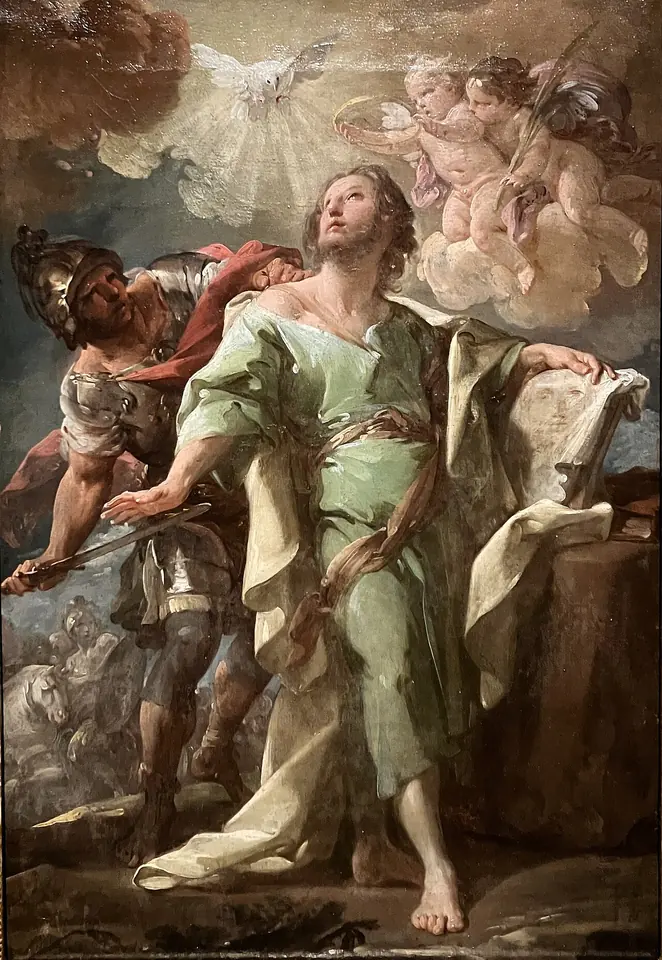
The Latin Passion of Simon and Jude, part of a collection of apostles' lives that claims to be by Abdias, a first bishop of Babylon, sends both apostles to Persia. There they defeat two magicians named Zaroes and Arfaxat, heal the sick, baptize many people and ordain a bishop. In the city of Suanir, pagan priests demand that they sacrifice to the sun and moon. When they refuse, the priests kill them. The Golden Legend, the 13th-century collection of saints' lives by Jacobus de Voragine, retold the story and spread it across medieval Europe.
How Jude died depends on the source. Western art usually gives him a club, an axe or a halberd. A 1954 prayer book from the Chicago shrine says tradition holds he was clubbed and then struck with a broad axe. The shrine gives the year as 65.

Armenia
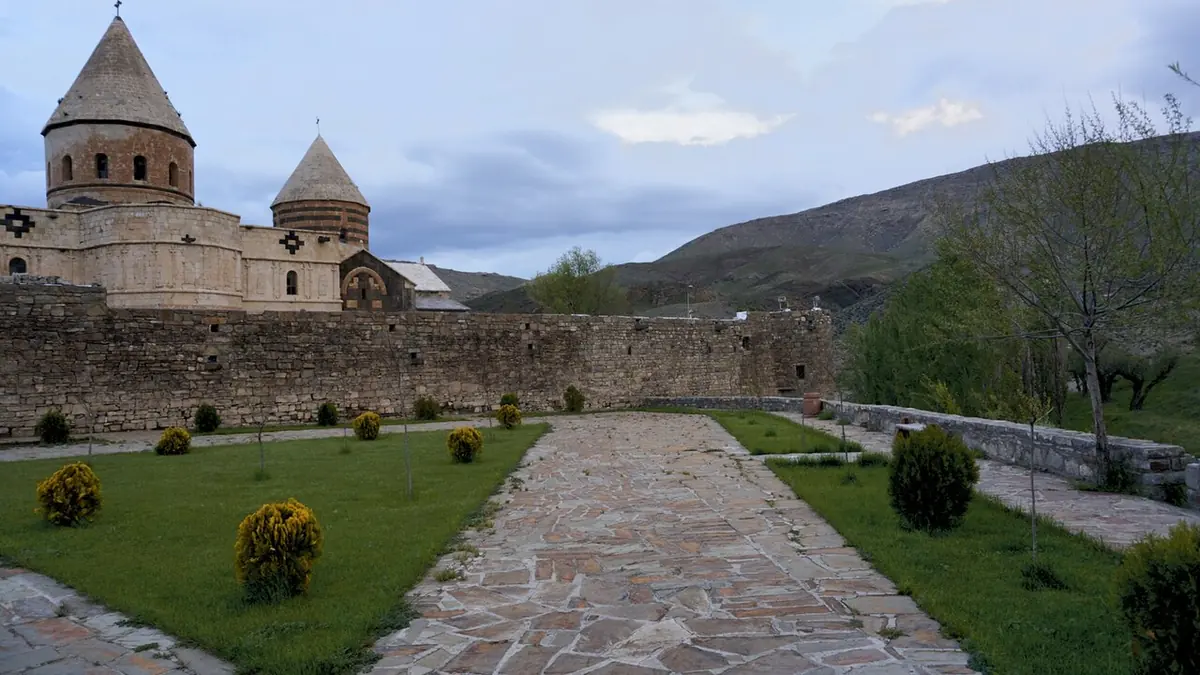
The Armenian Apostolic Church honors Thaddeus and St. Bartholomew as the first apostles of Armenia. Armenian tradition says Thaddeus was martyred there. The Orthodox life of the Apostle Jude, kept by the Orthodox Church in America, says he preached in Judea, Arabia, Syria and Mesopotamia, finished the work of Thaddeus of the Seventy at Edessa and was crucified and shot with arrows near Mount Ararat around the year 80. The Monastery of St. Thaddeus in northwestern Iran, near the old Armenian border, stands on the place Armenian Christians honor as his grave.

The miracles of St. Jude
St. Jude lived long before the Church began formally investigating miracles, so no miracle of his has been approved in the modern sense. The stories fall into two groups.
- Traditional: the healing of King Abgar of Edessa, which Eusebius reports from the city's archives about Thaddeus of the Seventy. The cloth with Jesus' face sent to Abgar is a later addition to that story.
- Traditional: the healings, exorcisms and defeat of the magicians Zaroes and Arfaxat in Persia, from the Passion of Simon and Jude and the Golden Legend. The Passion also says lightning struck the temple of the priests who killed the apostles.
- Reported: answered prayers attributed to St. Jude's intercession by his devotees. The Chicago shrine has received petitions and thanks for nearly a century. The best known account is that of the entertainer Danny Thomas, described below. These are personal testimonies, not cases examined by the Church.
Why St. Jude is the patron saint of hopeless causes
No document records the moment St. Jude became the patron of hopeless causes. The 1954 novena book of the National Shrine admits that the origins of the devotion "are nearly as obscure as details of the life of the great Apostle."
The usual explanation starts with his name. In Latin and most European languages he was "Judas," the same name as the traitor, and for centuries people hesitated to pray to him. He was, as Danny Thomas later called him, the "forgotten apostle." The traditional Chicago prayer says it outright: "the name of the traitor who delivered thy beloved Master into the hands of His enemies has caused thee to be forgotten by many." Devotional writers concluded that a saint so seldom asked for anything would be eager to help, and that people would turn to him only when every other hope had failed.
Devotional books also point to St. Bridget of Sweden, the 14th-century mystic. They say that in a vision Christ told her to turn to Jude with confidence: "In accordance with his surname, Thaddeus, the amiable or loving, he will show himself most willing to give help." The Chicago shrine quotes these words, and they appear in its prayer books, but the exact passage is hard to find in the published editions of Bridget's Revelations.
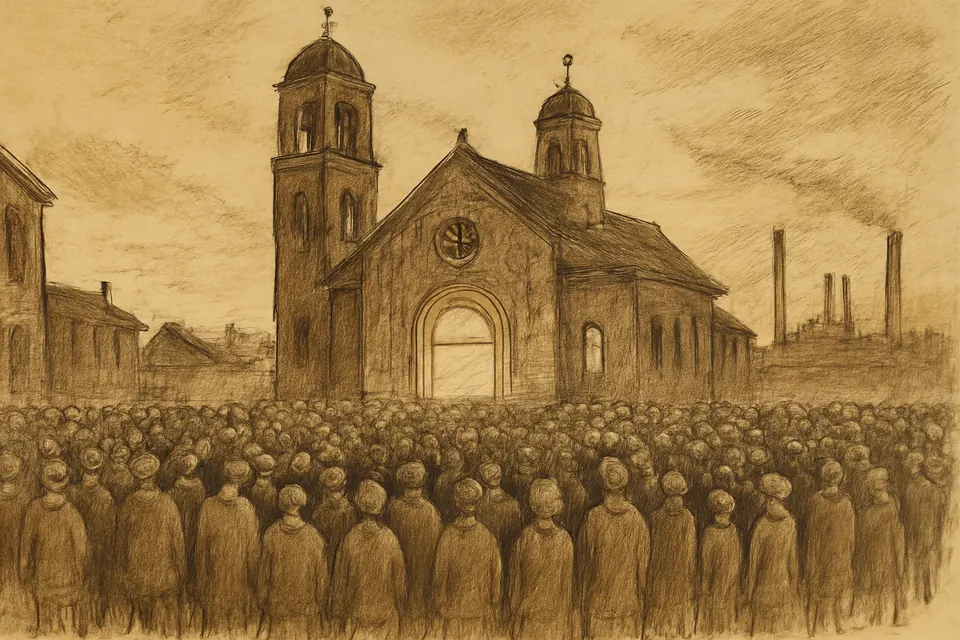
What made the title famous in America was the shrine in Chicago. In 1929, the Claretian priest Fr. James Tort began devotions to St. Jude at Our Lady of Guadalupe Church in South Chicago, a parish of steelworkers and their families. The shrine records that the first solemn novena began on February 17, 1929, and that by the feast of St. Jude that October more than 1,000 people stood outside the church to hear the service. Through the Great Depression and World War II, thousands came to the novenas, and devotion to the "patron saint of hopeless causes" spread across the country.
St. Jude shares the title with St. Rita of Cascia, the "saint of the impossible." See all the patron saints by cause.
Symbols of St. Jude in art
St. Jude is easy to confuse with the other apostles, especially since painters gave him different weapons over the centuries. These are the clues to look for, in a museum or above a side altar.
- A medallion with the face of Christ: the most recognizable sign of St. Jude in modern statues and holy cards. It is the Image of Edessa, the cloth that legend says Thaddeus carried to King Abgar. The two Sinai icons on this page show the original story.
- A flame above his head: the tongue of fire of Pentecost, when the Holy Spirit came on the apostles (Acts 2:3). It became a standard part of his image in later Western art and on the St. Jude medal.
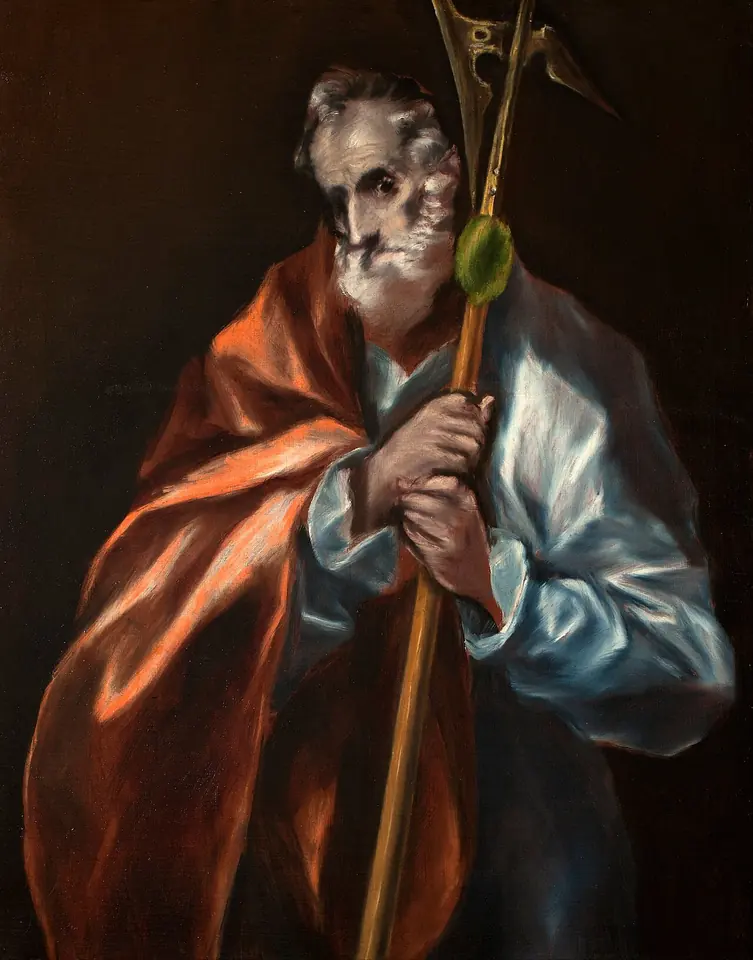
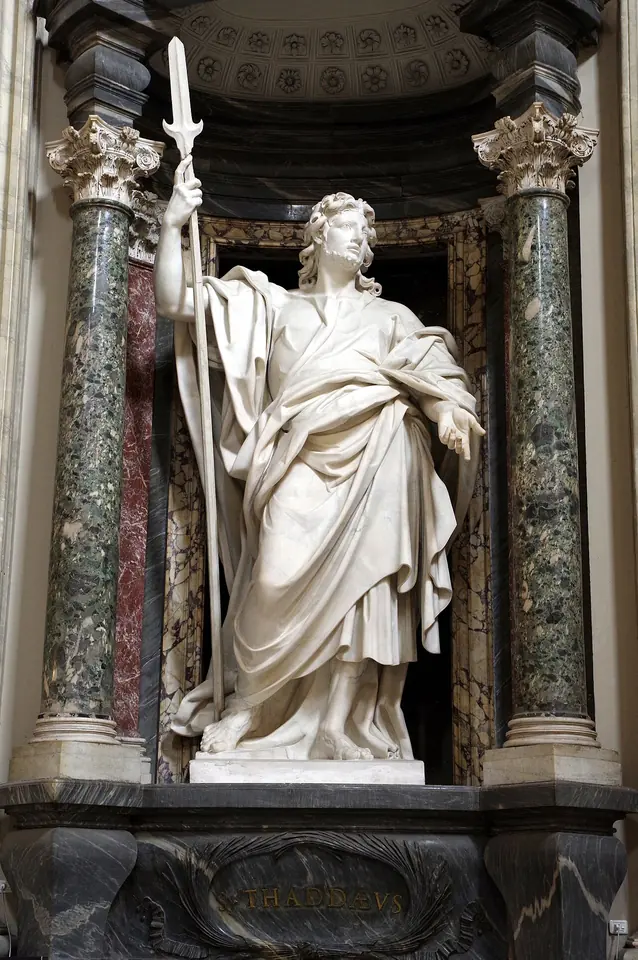
- A club, axe or halberd: the weapon of his martyrdom in Western tradition. El Greco and La Tour both put a halberd, a long pole with an ax blade, in his hands. Be careful: St. James the Less carries a fuller's club, and St. Matthias often has an axe.
- A green robe: common on modern statues and holy cards. The National Shrine explains green as the color of hope and new life. Older paintings show him in red, blue or brown as often as green.
- A book or scroll: his letter in the New Testament, as in Van Dyck's study of him with a book under his arm.
- Next to St. Simon: when two apostles appear together with a saw and a club, they are almost always Simon and Jude.
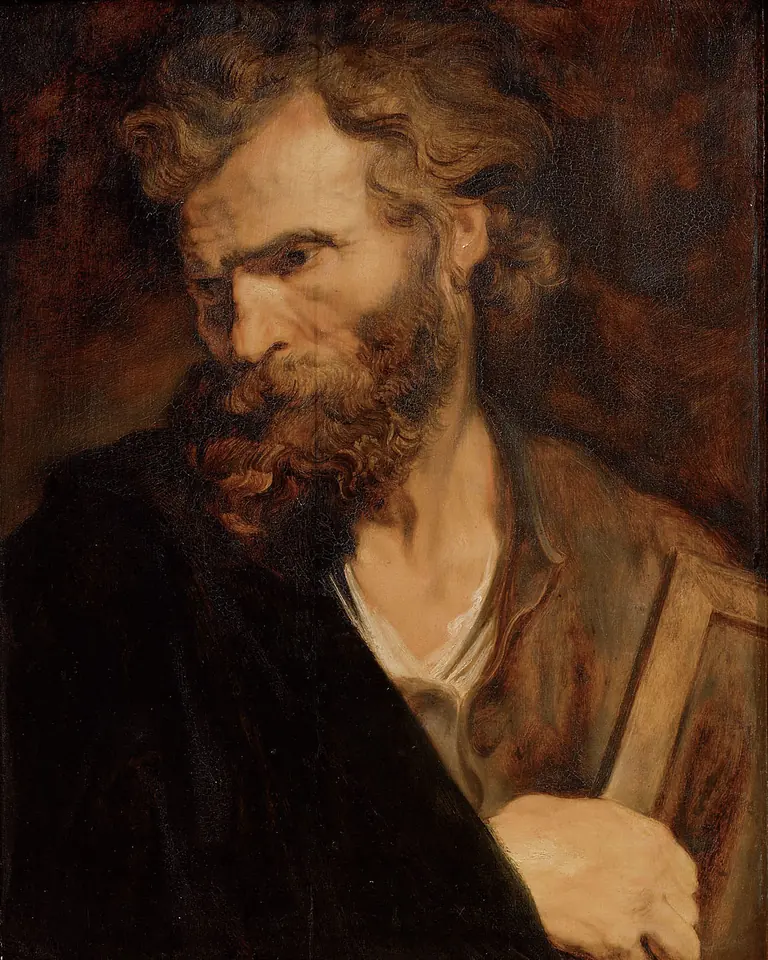

Eastern icons show him as a young or middle-aged apostle with a dark beard, holding a scroll or his letter, with his name written beside him. Icons of the Mandylion and of King Abgar, like the 10th-century Sinai panels above, show Thaddeus as the messenger who carried the image.

The St. Jude medal, sold in Catholic shops and worn by many devotees, usually shows him in a green robe with the medallion of Christ on his chest and the flame above his head, with "St. Jude, pray for us" around the edge. It is a devotional object only; the Church does not attach any special promise to it.
Feast day and where St. Jude is honored
The Roman Catholic Church celebrates Saints Simon and Jude together on October 28. The Roman Martyrology names both on that day, and many Anglican and Lutheran churches keep the same date. The Orthodox Church honors the Apostle Jude on June 19 and Thaddeus of the Seventy on August 21. See the feast day calendar.
St. Peter's Basilica, Rome
The relics of St. Jude and St. Simon lie in an ancient sarcophagus on the altar of St. Joseph in the left transept of St. Peter's Basilica. The altar was first dedicated to the two apostles, and a painting of them by Agostino Ciampelli hung there from 1630. Since 1963 the altarpiece has been a mosaic of St. Joseph, blessed by Pope John XXIII, but two oval mosaics of Simon and Jude after Vincenzo Camuccini still flank it.

The National Shrine of St. Jude, Chicago
Our Lady of Guadalupe Church, at 3200 E. 91st Street in South Chicago, is still the home of the National Shrine, run by the Claretians. The Vatican gave the shrine two first-class bone relics of St. Jude in the 1940s. One is set in the altar; the other is sealed in glass at a kneeler so visitors can touch it. The shrine holds five solemn novenas a year, the largest from October 20 to 28.


Danny Thomas and St. Jude Children's Research Hospital
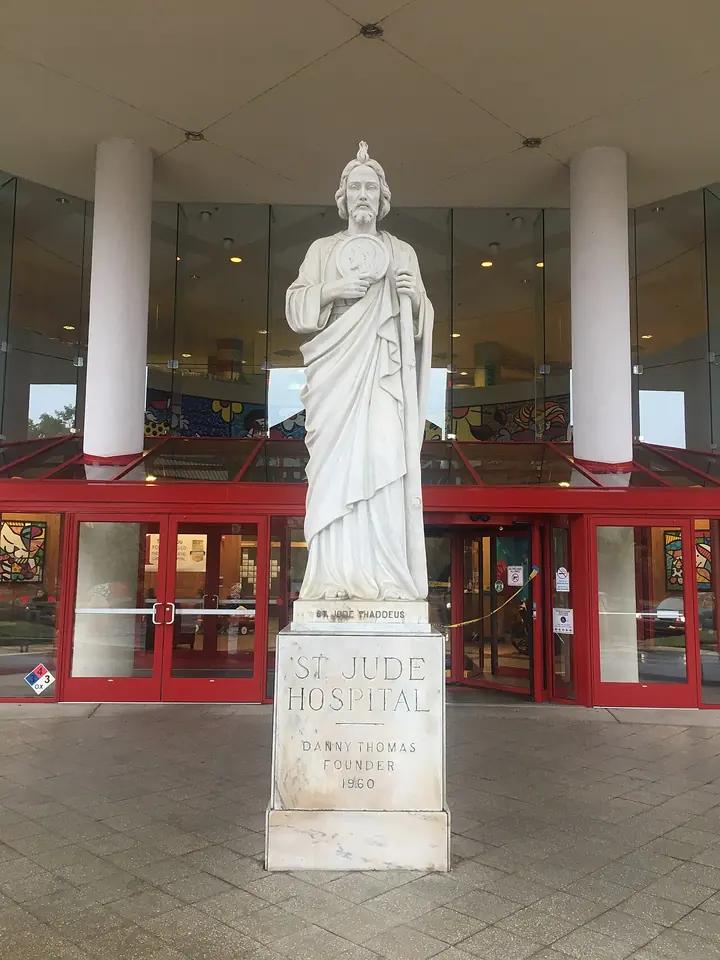
The Lebanese-American comedian Danny Thomas first heard of St. Jude from a stagehand in Detroit around 1940, when he was struggling to support his young family. According to St. Jude Children's Research Hospital, he prayed, "Show me my way in life, and I will build you a shrine." His career took off soon after, first in Chicago nightclubs and later on television in Make Room for Daddy. He kept the promise. St. Jude Children's Research Hospital opened in Memphis, Tennessee, on February 4, 1962, and a statue of the saint stands at its entrance. Thomas also supported the Chicago shrine. He died in 1991.

Other places
The Monastery of St. Thaddeus in Iran draws Armenian pilgrims every summer. Countless parishes, schools and hospitals carry his name, and in Mexico City the church of San Hipólito fills on the 28th of every month with people bringing statues of San Judas Tadeo.
St. Jude's prayer and novena
Catholics ask St. Jude to pray for them in situations that seem to have no way out: serious illness, unemployment, addiction, broken families. The prayers below come from published sources.
The traditional prayer to St. Jude
This prayer is of unknown authorship. It appears in common Catholic prayer books and in the St. Jude Novena Prayer Book of the National Shrine in Chicago, printed in 1954 with the imprimatur of Samuel Cardinal Stritch, archbishop of Chicago, under the heading "Prayer in Trials":
Most holy apostle, St. Jude, faithful servant and friend of Jesus, the name of the traitor who delivered thy beloved Master into the hands of His enemies has caused thee to be forgotten by many, but the Church honors and invokes thee universally as the patron of hopeless cases, of things despaired of. Pray for me who am so miserable; make use, I implore thee, of that particular privilege accorded to thee, to bring visible and speedy help where help is almost despaired of. Come to my assistance in this great need that I may receive the consolations and succor of Heaven in all my necessities, tribulations and sufferings, particularly (here make your request) and that I may bless God with thee and all the elect forever.
I promise thee, O blessed St. Jude, to be ever mindful of this great favor, and I will never cease to honor thee as my special and powerful patron and to do all in my power to encourage devotion to thee. Amen.
The shrine's current prayer
The National Shrine of St. Jude now uses a shorter version in modern English, which calls him "the patron of hope":
Most holy Apostle, St. Jude, faithful servant and friend of Jesus, the Church honors and invokes you universally as the patron of hope. Please intercede on my behalf. Make use of that particular privilege given to you to bring hope, comfort, and help where they are needed most. Come to my assistance in this great need that I may receive the consolation and help of heaven as I work with my challenges, particularly (here make your request). I praise God with you and all the saints forever.
I promise, blessed St. Jude, to be ever mindful of this great favor, to always honor you as my special and powerful patron, and to gratefully encourage devotion to you. Amen.
How to pray a St. Jude novena
A novena is a prayer offered on nine days in a row. The Chicago shrine explains the number by the nine days the apostles prayed together between the Ascension and Pentecost. Its 1954 prayer book says that to make a novena "with greater fruit one should go to Confession, hear Mass, and receive Holy Communion," and have "great confidence in God." A simple way to pray it:
- Choose one intention and begin nine days before a date that matters to you, such as October 20 to end on his feast.
- Each day, pray the traditional prayer above, naming your request.
- Add an Our Father, a Hail Mary and a Glory Be.
- When the novena ends, thank God, whatever the outcome. The shrine's prayer book includes a separate prayer of thanksgiving for that purpose.
The shrine also prays its solemn novena publicly five times a year, and people send petitions to be placed at St. Jude's altar.
The "never known to fail" prayer
Another short prayer to the Sacred Heart and St. Jude, to be said nine times a day for nine days, circulates on cards, in newspapers and online with the promise that it has "never been known to fail" and the instruction to publish a notice of thanks. It is a traditional prayer of unknown authorship. The Church has never attached a guaranteed result to any prayer, and the newspaper notices are a popular custom, not a requirement. The Claretians at the National Shrine put it simply: a prayer can be as short as "St. Jude, pray for us," or "Thank you, St. Jude."
Frequently asked questions
What is St. Jude the patron saint of?
Hopeless causes, desperate situations and things despaired of. The Armenian Church also honors Thaddeus, with Bartholomew, as one of the first apostles of Armenia. In the United States his name is tied to St. Jude Children's Research Hospital in Memphis, founded by Danny Thomas.
When is St. Jude's feast day?
October 28 in the Roman Catholic calendar and in many Anglican and Lutheran calendars, where he shares the day with St. Simon. The Orthodox Church honors the Apostle Jude on June 19. The National Shrine of St. Jude in Chicago ends its October solemn novena on October 28.
Is St. Jude the same as Judas Iscariot?
No. They were two different apostles who had the same common Jewish name, Judah. The Gospel of John calls St. Jude "Judas (not Iscariot)," and Luke calls him "Judas the son of James." English Bibles call him Jude to keep the two apart.
Why is St. Jude the patron of hopeless causes?
No one knows exactly when the title began. The usual explanation is that his name sounded like the traitor's, so for centuries few people prayed to him, and he became the saint people turned to when every other hope was gone. A vision attributed to St. Bridget of Sweden and the novenas at the Chicago shrine from 1929 on made the title famous.
How do you pray the St. Jude novena?
A novena is a prayer said on nine days in a row, usually for one intention. Catholics often pray the traditional "Most holy apostle, St. Jude" prayer each day, with an Our Father, Hail Mary and Glory Be. The National Shrine in Chicago holds five solemn novenas a year, including October 20 to 28.
What does St. Jude hold in pictures?
Usually a medallion or cloth with the face of Jesus, recalling the Image of Edessa, and a club, axe or halberd, the weapon tradition says killed him. A small flame above his head stands for Pentecost, and he is often dressed in green.
Where are St. Jude's relics?
In St. Peter's Basilica in Rome, in an ancient sarcophagus on the altar of St. Joseph in the left transept, together with relics of St. Simon. The National Shrine of St. Jude in Chicago keeps two bone relics given by the Vatican in the 1940s.
Did St. Jude write the Letter of Jude?
The letter's author calls himself "Jude, a servant of Jesus Christ and brother of James." Catholic and Orthodox tradition identifies him with the apostle. Many modern scholars think the writer was Jude the brother of the Lord, who may or may not be the same man as the apostle, and some date the letter later than his lifetime.
Sources
- Catholic Encyclopedia (1910): Epistle of Saint Jude
- Catholic Encyclopedia (1912): St. Simon the Apostle
- Eusebius, Church History, Book I, chapter 13 (King Abgar and Thaddeus)
- Benedict XVI, General Audience of 11 October 2006: Simon and Jude
- National Shrine of St. Jude: St. Jude Thaddeus Symbols
- National Shrine of St. Jude: History of the Shrine
- National Shrine of St. Jude: A Prayer to St. Jude
- National Shrine of St. Jude: St. Jude and Danny Thomas
- St. Jude Novena Prayer Book, National Shrine of St. Jude, Chicago (imprimatur Samuel Cardinal Stritch, 1954)
- St. Jude Children's Research Hospital: St. Jude history
- Orthodox Church in America: Apostle Jude the Brother of the Lord
- Jacobus de Voragine, The Golden Legend (Caxton translation): Life of SS. Simon and Jude
- St. Jude Thaddeus in Art (Christian Iconography)
- St. Peter's Basilica: Altar of St. Joseph
- Roman Martyrology, October 28