St. Martin de Porres
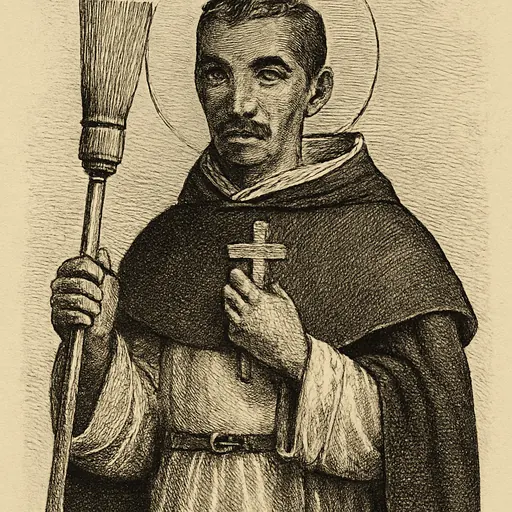
St. Martin de Porres (1579–1639) was a Dominican lay brother in Lima, Peru, the son of a Spanish nobleman and a freed Black woman from Panama. He worked as a barber-surgeon and infirmarian, fed the poor of the city and was the first saint of the Americas of African descent. His feast day is November 3, and he is the patron saint of social justice, race relations and mixed-race people.
Who was St. Martin de Porres?
Martin de Porres was a lay brother of the Dominican Order in Lima, Peru, in the first decades of the 17th century. He never became a priest, never preached and left no writings. He swept floors, cut the friars' hair, nursed the sick in the convent infirmary and begged for the poor of the city, and by the time he died in 1639 people of every class in Lima called him a saint.
He was born in Lima on December 9, 1579. His father, Juan de Porras, was a Spaniard of good family; his mother, Ana Velázquez, was a freed Black woman born in Panama, and some accounts add Indigenous ancestry. His parents never married. In the language of colonial Peru, Martin was a mulato, and he used the word of himself all his life. That mixed heritage shaped the limits placed on him, and centuries later it made him a patron for people who had been told they did not belong.


Pope John XXIII canonized him on May 6, 1962. In his homily the pope said Martin's life showed that holiness is reached by the road Christ taught: loving God with the whole heart and loving one's neighbor as oneself.
The life of St. Martin de Porres
A poor childhood in Lima
His father acknowledged the boy only after several years and later left the family after the birth of a daughter, Juana, in 1581. Ana Velázquez raised the two children in poverty. According to a novena booklet of the Blessed Martin Guild in New York, his father later took him to Guayaquil for two years of schooling.
The barber-surgeon's apprentice
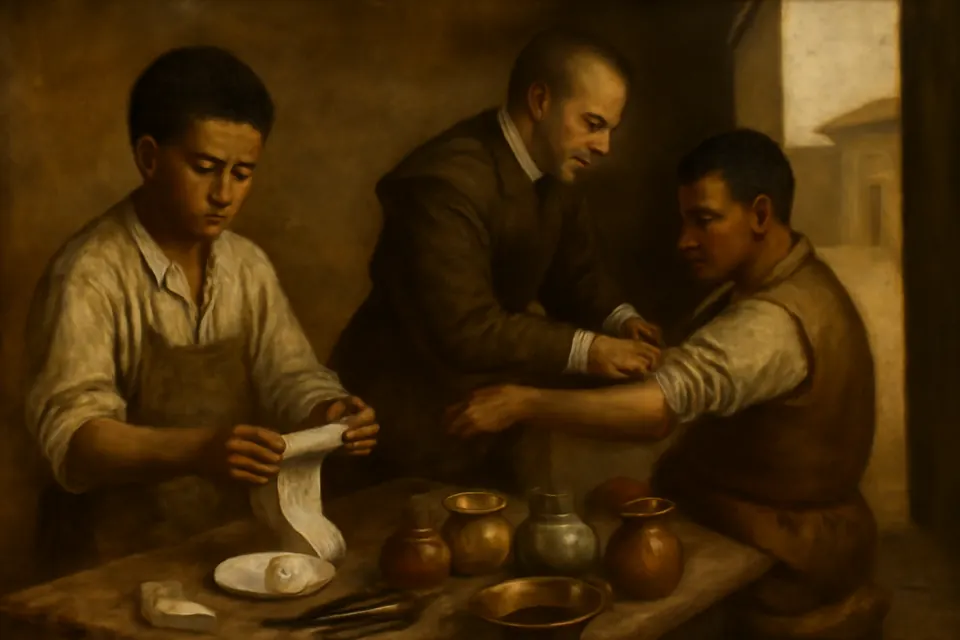
Around the age of twelve, Martin was apprenticed to a barber-surgeon. Franciscan Media lists what he learned: cutting hair, drawing blood, caring for wounds and preparing medicines. These were the skills he used for the rest of his life.
A servant at the Convent of the Rosary
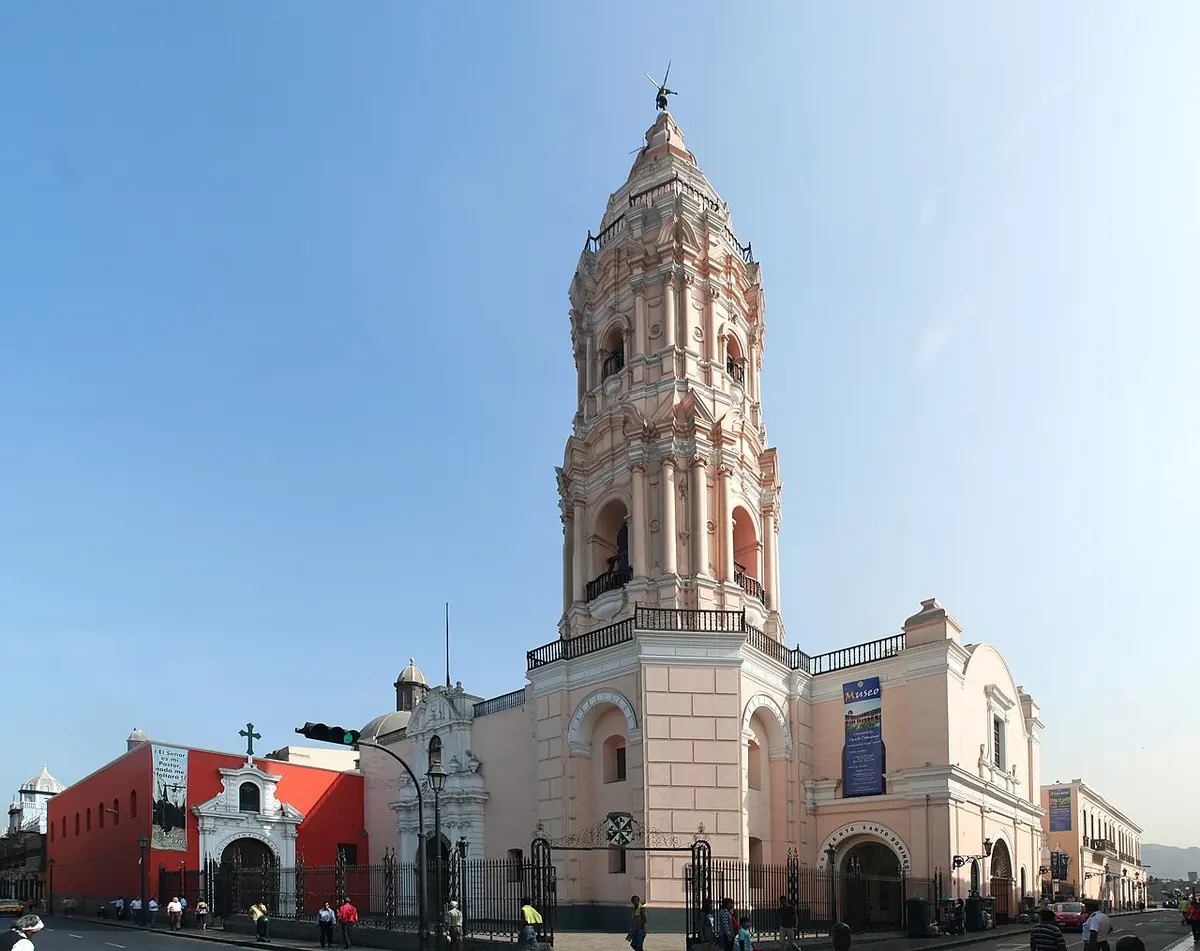
At fifteen, in 1594, Martin knocked at the Dominican Convent of Our Lady of the Rosary, known today as Santo Domingo. Laws and customs in Peru kept men of African descent out of full membership in religious orders, and he asked only to be taken in as a donado, a lay helper who wore a habit and lived with the community in exchange for menial work. Franciscan Media says he felt unworthy to ask for more. After nine years the community asked him to make full religious profession, and in 1603 he took vows as a Dominican lay brother.

Infirmarian and "father of the poor"
Martin worked in the kitchen, the laundry and above all the infirmary, where he spent most of his life as a religious. He treated sick friars and anyone else who came to the door. The Blessed Martin Guild's booklet says he fed nearly two hundred people a day and that he helped found an orphanage, the Orphanage of the Holy Cross, for abandoned children. Franciscan Media adds that he raised money for dowries so that poor girls could marry or enter a convent, and that he cared for enslaved Africans.
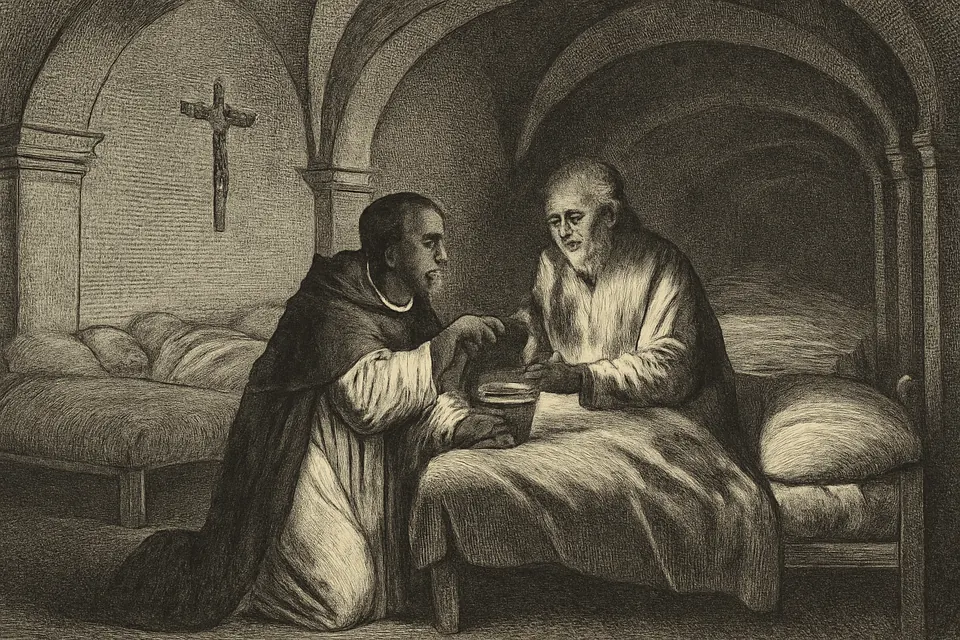
When the convent was badly in debt, he offered himself to the prior. Franciscan Media records his words: "I am only a poor mulatto. Sell me. I am the property of the order. Sell me." The prior refused.
John XXIII's homily lists what Lima saw in him. He cheerfully cared for the sick, gave food, clothing and medicine to the weak, and helped farmworkers, Black people and people of mixed race, who did the city's lowest-paid work. The people of Lima, the pope said, named him Martín de la Caridad, Martin of Charity.

His friends
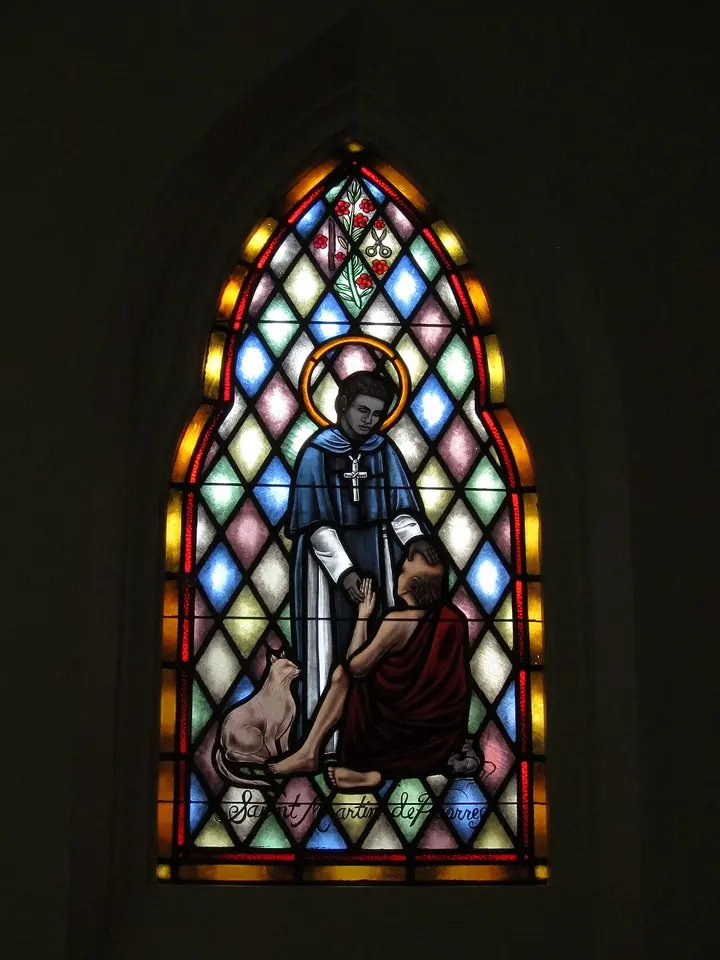
St. Rose of Lima, a Dominican tertiary seven years younger than Martin, lived nearby until her death in 1617. Tradition and the early accounts of both saints describe a friendship between them; EWTN's life of Martin says Rose aided him and respected his penances. St. John Macías (1585–1645), a Spanish-born lay brother and porter at the Dominican priory of St. Mary Magdalene, was another close friend. Both men were beatified in 1837, and Pope Paul VI canonized John Macías in 1975.

Death
Martin died on November 3, 1639, at about sixty. EWTN notes that the viceroy of Peru, the Count of Chinchón, knelt by his bed to ask his blessing.
The miracles of St. Martin de Porres
Most stories about Martin come from witnesses in the inquiry that the archbishop of Lima opened less than twenty years after his death. The historian Celia Cussen points out that he left no writings and that almost everything we know comes from a small circle of devotees.
- Reported: healings in his lifetime, given in testimony for his cause. Aleteia, drawing on the Dominicans of the Southern Province, mentions a priest with a badly infected leg and a young student whose crushed fingers threatened his hopes of the priesthood.
- Reported: bilocation. Witnesses said he passed through locked doors to reach sick novices, and the Blessed Martin Guild's booklet repeats the claim that he was seen helping captives in Africa and the sick in Mexico, China and Japan, though he never left Peru.
- Reported: levitation and light during prayer, which John XXIII alluded to when he said that in prayer Martin more than once seemed to be caught up to heaven.
- Reported: the exhumation of 1664. Cussen describes how, when his remains were moved to a new chapel, witnesses said the bones were fresh and fragrant, and a free Black man named Juan Criollo testified that his fever left him after he drank water mixed with earth from the grave.
- Traditional: the animal stories told below.
- Approved: the two miracles accepted for his canonization. In 1948 in Paraguay, an 89-year-old woman (named in some Spanish-language accounts as Dorotea Caballero Escalante) was expected to die within hours; her daughter prayed to Blessed Martin, and she recovered. In 1956 in Garachico, on Tenerife in the Canary Islands, a cement block crushed the left leg of a small boy, Antonio Cabrera Pérez-Camacho. Doctors found gangrene and planned to amputate. A relative gave his mother a holy card of Blessed Martin, which she laid on the leg while she prayed through the night; the next day circulation returned. He was at St. Peter's for the canonization in 1962.
The mice, the cat and the dog
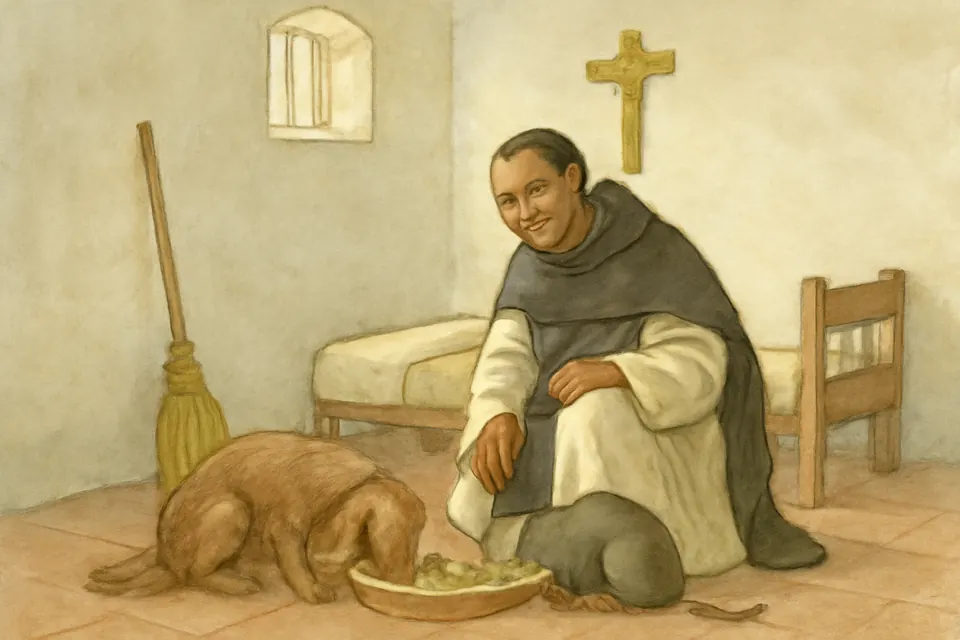
Lima's best-loved stories about Martin involve animals. The Peruvian writer Ricardo Palma retold them in his Tradiciones peruanas, drawing on a leaflet of his virtues and miracles printed in Lima around 1840 for the beatification celebrations. When mice overran the convent, the story goes, Martin caught one, told it to lead the others out to the garden and promised to feed them there every day, and they went. He kept a dog and a cat in his cell that ate from the same dish, and one day a mouse joined them. These are traditional stories, but Franciscan Media also records that he excused the kitchen mice as underfed and kept stray cats and dogs at his sister's house.
Why St. Martin de Porres is the patron saint of social justice
John XXIII said that Martin's charity took paths that were new for his time and seemed to anticipate our own. He cared for people regardless of race or rank, in a city where almost half the population was enslaved Africans and their descendants. In 1945 Pius XII named him patron of all social institutions in Peru, and he is now widely invoked as patron of social justice and race relations.
His other patronages come straight from his work: barbers and hairdressers from his first trade; public health workers, nurses and pharmacists from the infirmary; the poor, whom he fed daily; animals, from the stories above. Because of his own birth, people of mixed race see him as one of their own. See all the patron saints.
Devotion among Black Catholics in the United States
In the 20th century, Martin's cult crossed to North America. In 1935 Dominicans in New York formed the Blessed Martin Guild to spread devotion to him, gather reports of favors and push for his canonization; its monthly magazine, The Torch, printed the reports. Parishes and schools across the United States took his name, and Cussen argues that the final push for his canonization was bound up with the American struggle for racial justice. He is often named with other saints who matter to Black Catholics, such as St. Peter Claver and St. Katharine Drexel.
Symbols of St. Martin de Porres in art
He is almost always shown as a dark-skinned friar with a broom.
- Dominican lay brother's habit: a white tunic with a black scapular and a black cape. Older images, like the 17th-century portrait near the top of this page, show him with a long rosary.
- A broom: his humble work and his nickname, the "saint of the broom."
- A dog, a cat and a mouse eating from one dish: the peace he kept among animals and, by extension, among people.
- A crucifix: his devotion to Christ crucified; John XXIII said he wept as he contemplated the Passion.
- A basket of bread, or a sick person at his feet: his charity and his work as a healer, as in the Norfolk window.
Feast day and where St. Martin de Porres is honored
His feast is November 3, an optional memorial in the General Roman Calendar. Find his neighbors on the feast day calendar.
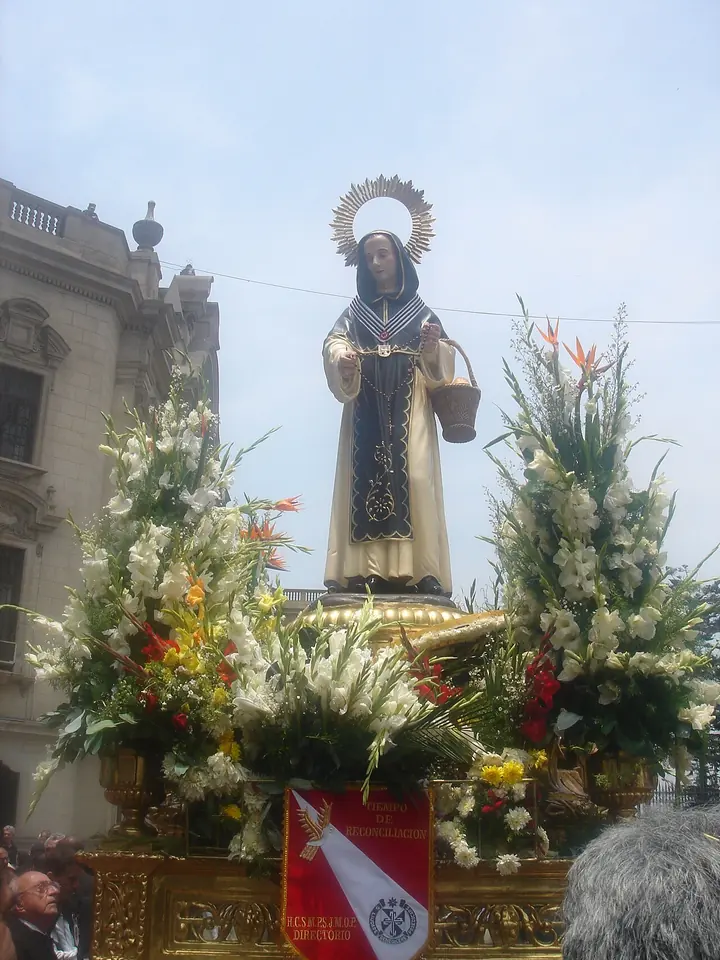
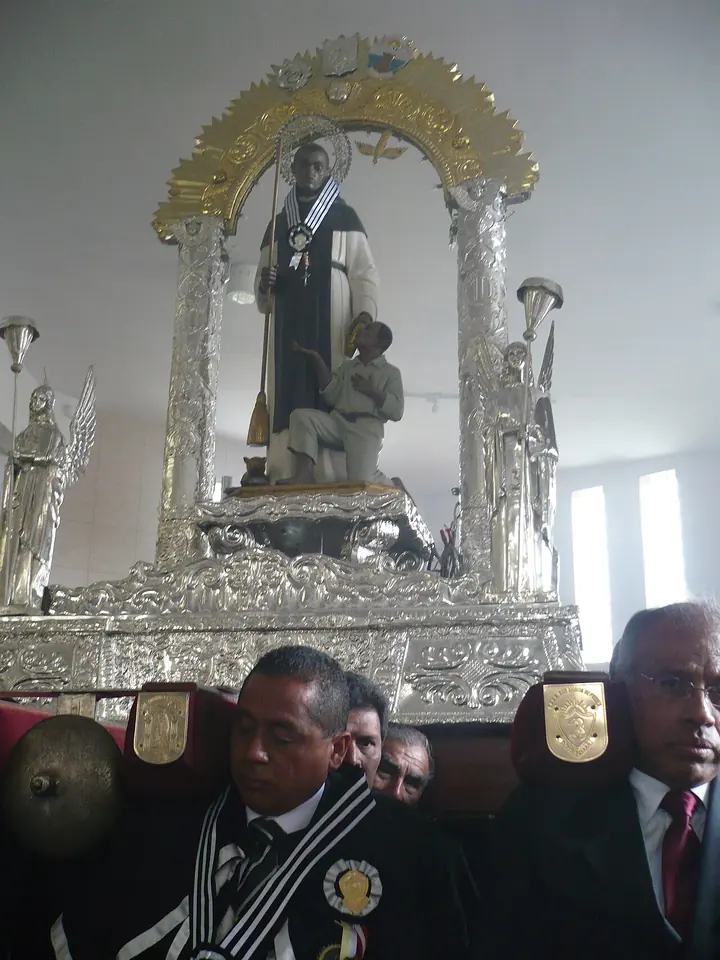
His relics are in the Basilica and Convent of Santo Domingo in Lima, on a side altar in the right aisle with those of St. Rose of Lima and St. John Macías. Peruvian parishes carry his image through the streets on silver platforms in the days around his feast.



Prayer to St. Martin de Porres
Catholics ask St. Martin to pray for them in sickness, poverty and conflicts between people. The prayer below was printed by the Blessed Martin Guild of New York with the imprimatur of Patrick Cardinal Hayes, archbishop of New York, dated November 19, 1935, before Martin was canonized:
Most humble Martin of Porres, whose burning charity embraced not only thy needy brethren, but also the very animals of the field, splendid example of charity, we hail thee and invoke thee! From that high throne which thou dost occupy, deign to listen to the supplications of thy needy brethren that, by imitating thy virtues, we may live contented in that state in which God has placed us and carrying with strength and courage our cross, we may follow in the footsteps of Our Blessed Redeemer and His most afflicted Mother, that at last we may reach the Kingdom of Heaven through the merits of Our Lord Jesus Christ. Amen.
The same booklet gives a short invocation for use when a relic, picture or medal of Martin is applied to a sick person:
In the name of the Most Holy Trinity, In the name of Jesus Christ, the Son of God, In the name of Mary, Queen of Heaven, In the name of Joseph, Patron of the Universal Church, Blessed Martin cure (help) me (him, her) For the honor and glory of God And the salvation of souls.
Frequently asked questions
What is St. Martin de Porres the patron saint of?
Social justice, race relations and people of mixed race, as well as barbers and hairdressers, public health workers, the poor and animals. In 1945 Pope Pius XII named him patron of all social welfare institutions in Peru.
When is St. Martin de Porres' feast day?
November 3, the day he died in 1639. It is an optional memorial in the General Roman Calendar. In Lima his statue is carried in procession from the Basilica of Santo Domingo on or near that day.
What miracles did St. Martin de Porres perform?
In his lifetime, witnesses described healings, bilocation (being seen in two places at once), levitation in prayer and a gentle command over animals; these are reported or traditional. The two miracles approved for his canonization were the healings of an elderly woman in Paraguay in 1948 and of a small boy's crushed, gangrenous leg in Tenerife in 1956.
Why is St. Martin de Porres shown with a broom?
He did the convent's humblest work, sweeping, washing and cleaning, and Catholics came to call him the "saint of the broom." The broom stands for his humility and his belief that no honest work is beneath anyone.
Was St. Martin de Porres friends with St. Rose of Lima?
Yes, according to tradition and the early accounts of both saints. Rose of Lima was a Dominican tertiary in the same city, and his friend St. John Macías was a lay brother at another Dominican house in Lima. Their relics now rest together in the Basilica of Santo Domingo.
Sources
- John XXIII, Homily for the canonization of Blessed Martín de Porres, May 6, 1962 (Spanish)
- Franciscan Media: Saint Martin de Porres (Saint of the Day)
- EWTN: St. Martin de Porres (from Our Sunday Visitor's Encyclopedia of Saints)
- EWTN News: St. Martin de Porres, first black saint of the Americas, celebrated Nov. 3
- EWTN News (CNA): Man recounts miraculous healing through St. Martin de Porres' intercession
- EWTN News (Spanish): Los milagros de San Martín de Porres que lo llevaron a la santidad
- Aleteia: St. Martin de Porres was a skilled surgeon and healer
- Novena to Blessed Martin de Porres, O.P., Blessed Martin Guild, New York (imprimatur Francis Cardinal Spellman)
- Celia Cussen, Black Saint of the Americas: The Life and Afterlife of Martín de Porres (Cambridge University Press, 2014)
- Ricardo Palma, Tradiciones peruanas: Los ratones de fray Martín
- Roman Martyrology, November 3