Surrender novena

The Surrender Novena is a nine-day devotion attributed to the Servant of God Fr. Dolindo Ruotolo (1882–1970), a priest of Naples. Each day has a short meditation in the voice of Jesus, followed by the refrain "O Jesus, I surrender myself to you, take care of everything!" said ten times. In Italian the heart of it is three words: "Gesù, pensaci tu," Jesus, you take care of it.
Some prayers ask God for something. This one asks for the grace to stop holding on. The Surrender Novena gives nine short meditations in which Jesus speaks to a worried soul, and after each one the same words: O Jesus, I surrender myself to you, take care of everything. Behind it stands a Neapolitan priest who had every reason to worry and learned, through decades of trial, to hand it all over.
The Surrender Novena prayer
The refrain is the heart of the novena. In the English version most people know, it reads:
O Jesus, I surrender myself to you, take care of everything!
In Fr. Dolindo's Italian it is shorter still:
o Gesù, mi abbandono in te, pensaci Tu!
Word for word, "O Jesus, I abandon myself in you, you take care of it!" Some newer English translations keep that closer sense ("I abandon myself to you," "Jesus, you take care of it"), and that is where the search phrase "Jesus, you take over" comes from.
The novena got its name from a line in the text itself, where Jesus says, in the Italian quoted by Aldo Maria Valli from the 2020 biography: "Mille preghiere non valgono un atto solo di abbandono. Ricordatelo bene. Non c'è novena più efficace di questa." In English: "A thousand prayers are not worth one single act of surrender. Remember this well. There is no novena more effective than this."
A note on the text
We print the refrain and short quotations, not the full nine meditations, and this is why. Fr. Dolindo died in 1970, so his Italian text stays under copyright in Italy until 2040. The English version shared on parish sites, apps and holy cards, such as the one Catholic Exchange printed in 2020, names no translator and is recent. It isn't a public-domain text, and our rule is to reproduce only public-domain prayers in full. Below is a faithful summary of each day so you can follow along in any printed copy, along with the opening line of the first day in that common English version.

The nine days, in brief
Each day the meditation is in the voice of Jesus, speaking tenderly and a little sternly to a soul that won't stop fretting.
- Day 1: why worry? It opens, "Why do you confuse yourselves by worrying?" Jesus asks the soul to leave the care of its affairs to him, and promises peace in return.
- Day 2: surrender is not anxiety. Handing something to God doesn't mean fretting about it in prayer, or demanding he follow our plan. It means closing our eyes and resting.
- Day 3: what he does for a soul that turns to him. When we look to him and say "you take care of it," he acts, often in ways we wouldn't have chosen.
- Day 4: evil growing instead of shrinking. Even when things look worse, the soul is asked not to panic, but to keep trusting.
- Day 5: a different path. If he leads us on a road we didn't expect, he will carry us along it in his arms.
- Day 6: the sleepless planner. The soul that wants to judge, direct and see to everything gets in God's way. Surrender means letting him act.
- Day 7: miracles and surrender. He works wonders in proportion to our full trust in him and our not thinking of ourselves.
- Day 8: the current of grace. Close your eyes and let yourself be carried, as on a river, without fear of what lies ahead.
- Day 9: pray always, ready to surrender. Prayer offered in constant readiness to surrender brings great peace, even when what we receive is not what we asked for.
After each day's meditation, say the refrain ten times: "O Jesus, I surrender myself to you, take care of everything!"
How to pray the Surrender Novena
- Bring one worry, or all of them. Unlike most novenas, this one isn't mainly about asking for a particular outcome. You can name a need, but the point is to hand it over.
- Read the day's meditation slowly, once, in a quiet moment. Many people find it hits hardest at night, when the mind won't stop.
- Say the refrain ten times. Some people count on the beads of a rosary decade.
- Keep going for nine days, then keep the refrain. Fr. Dolindo meant it as a way of living, not a nine-day program; the short prayer "Jesus, you take care of it" can be said a hundred times a day.
Some printed versions add a short offering to Our Lady at the end. We couldn't trace it to Fr. Dolindo, so we haven't printed it here, though there is nothing wrong with closing any novena by entrusting it to the Mother of God.

What the novena asks: surrender, not passivity
Surrender here doesn't mean doing nothing. It means doing what is ours to do and leaving the rest, and the outcome, to God. The meditations say this sharply: the soul that prays "take care of everything" and then keeps fretting hasn't surrendered at all.
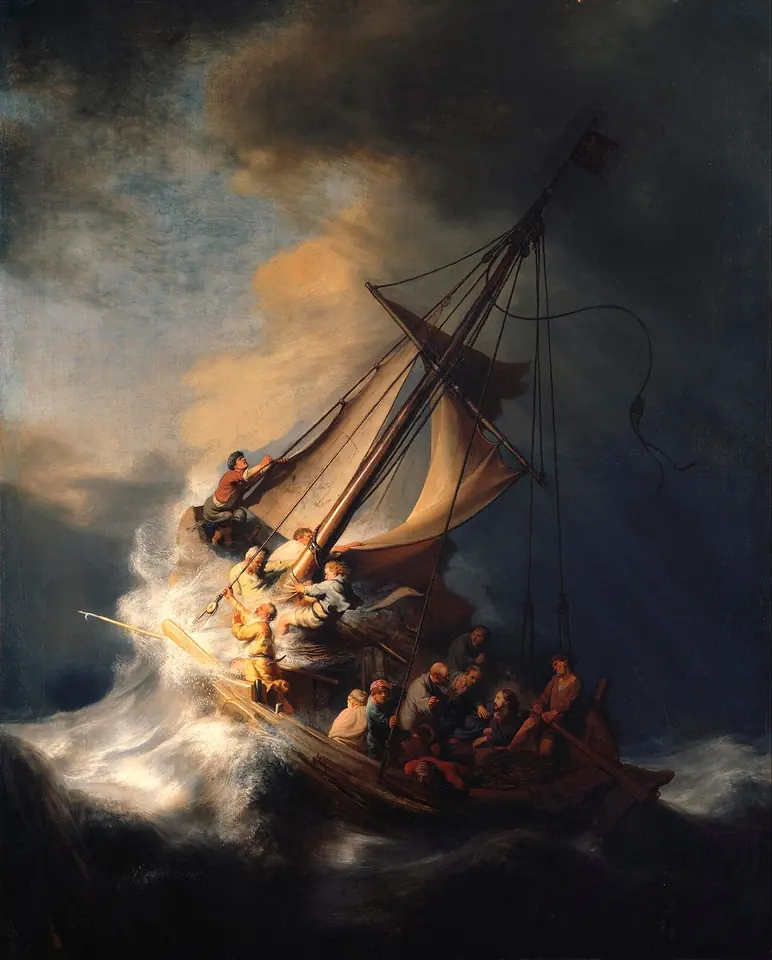
The idea is as old as the Gospel. St. Peter wrote, "Casting all your care upon him, for he hath care of you" (1 Peter 5:7, Douay-Rheims). The disciples in the storm cried out to Jesus while he slept, "Lord, save us, we perish," and he asked them, "Why are you fearful, O ye of little faith?" before he calmed the sea (Matthew 8:25–26).
The same trust runs through St. Thérèse of Lisieux's little way and the words "Jesus, I trust in you" on the Divine Mercy image given through St. Faustina. Fr. Dolindo's refrain belongs to that family of prayers.

Who was Fr. Dolindo Ruotolo?
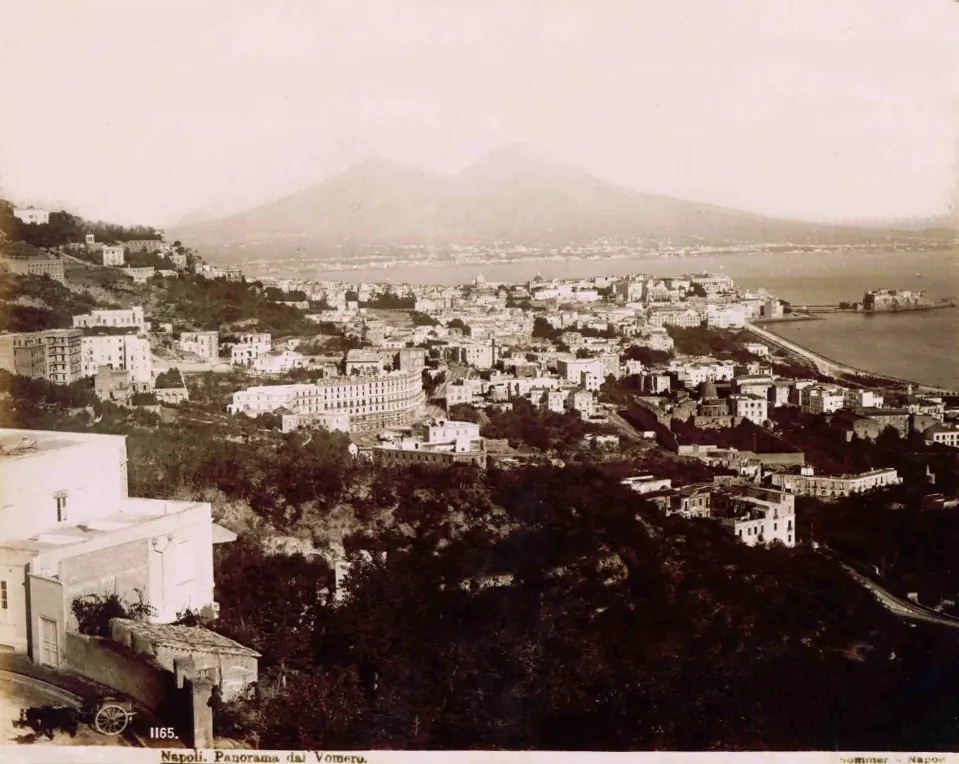
Dolindo Ruotolo was born in Naples on October 6, 1882, and was ordained a priest on June 24, 1905.
Years of trial
Church authorities examined him again and again. According to the biography by Antonio Borrelli, he was suspended from saying Mass in 1907 and examined in Rome by the Holy Office, restored in 1910, called back to Rome in 1911, and condemned again in 1921. He was not definitively rehabilitated until July 17, 1937, and the Benedictines of Silverstream Priory count about 18 years of his life under suspension. In November 1940 his long commentary on Sacred Scripture was condemned.
We state these facts plainly because they are central to his story. Aldo Maria Valli's review of his 2020 biography points to his "obbedienza all'autorità della Chiesa," his obedience to the Church's authority, as one of the traits he shared with Padre Pio. He accepted each judgment, kept praying, and kept hearing confessions. Silverstream Priory dates the words now called the Surrender Novena to the day after the 1940 condemnation, and notes that the text "was not originally a novena."
"The holy apostle of Naples"
In his later years Fr. Dolindo was a much-sought confessor and spiritual guide, even as his health failed. Padre Pio held him in high esteem. Famiglia Cristiana and La Nuova Bussola Quotidiana both report that he called Don Dolindo "il santo apostolo di Napoli," the holy apostle of Naples, and that he asked pilgrims from Naples, "Che ci venite a fare qui da me, voi che tenete don Dolindo a casa vostra?" ("Why do you come here to me, when you have Don Dolindo at home?"). Borrelli quotes a letter in which Padre Pio wrote that nothing that came from Don Dolindo's pen should be lost.
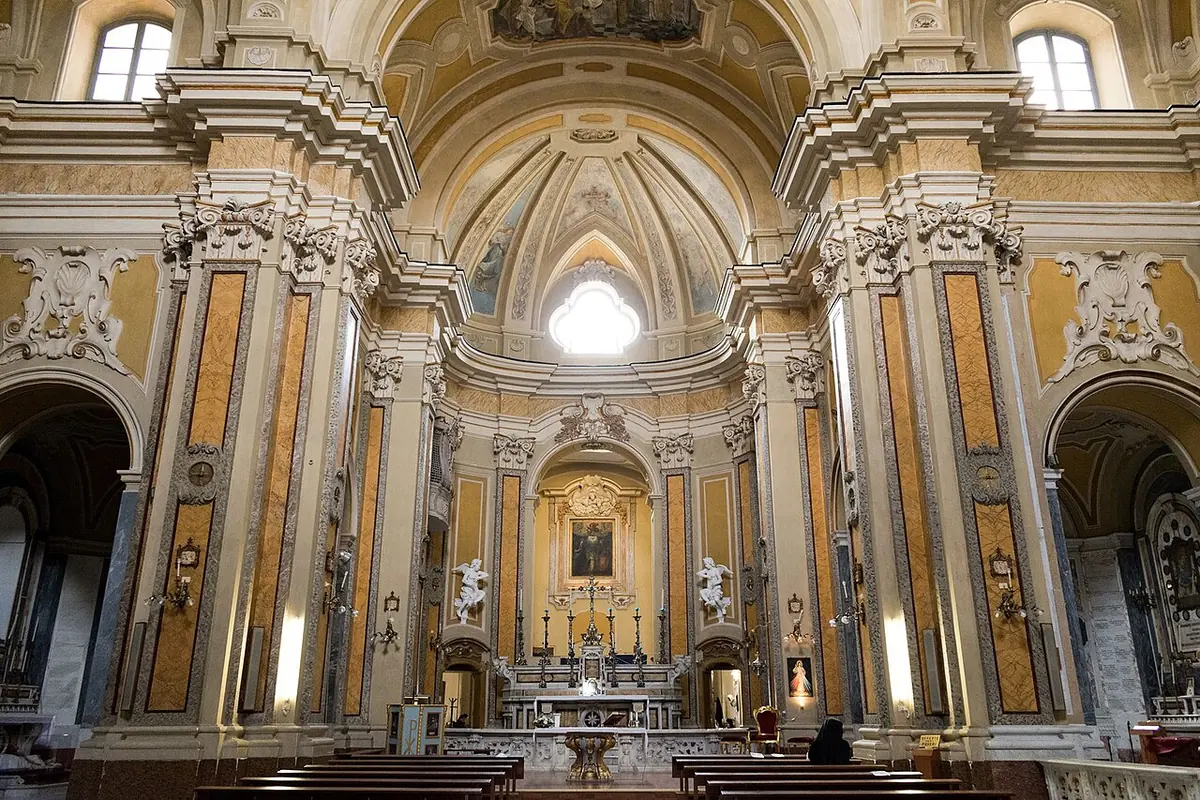
He died in Naples on November 19, 1970. Borrelli records that he is buried in the Church of San Giuseppe dei Vecchi in Naples, where pilgrims still come to pray at his tomb.
His cause for beatification
Fr. Dolindo has the title Servant of God, the first step toward beatification. The first efforts to open his cause go back decades, but the decisive step came in 2021, when Archbishop Domenico Battaglia of Naples signed a decree naming the Archdiocese of Naples and the parish of San Giuseppe dei Vecchi e Immacolata di Lourdes as the parties promoting it. Fr. Francesco Asti, dean of the San Tommaso section of the Pontifical Theological Faculty of Southern Italy, was named postulator. At the time La Nuova Bussola Quotidiana reported that the cause was waiting for the Holy See's nulla osta.
We found no decree of heroic virtue, so he is not "Venerable," whatever some websites say, and no miracle has been approved for his beatification. Any healings credited to his prayers are reported, not approved. Let us pray for the progress of his cause, and ask his prayers for ourselves.
The novena has spread especially in Poland and the English-speaking world. A Polish biography by Joanna Bątkiewicz-Brożek, titled after the same words, sold about half a million copies, according to La Nuova Bussola Quotidiana, and in 2021 she was named vice-postulator of his cause.
Related prayers and saints
If the Surrender Novena speaks to you, so may the Divine Mercy Chaplet, with its own prayer of trust, and the Memorare, which hands our needs to Our Lady. Fr. Dolindo's friend and admirer Padre Pio has his own entry, as does St. Thérèse of Lisieux, whose little way is the same surrender in another key. For a novena that asks for help in a desperate case, see the St. Jude novena, and for more devotions through the year, our novenas page.
O Jesus, I surrender myself to you, take care of everything.
Frequently asked questions
Who wrote the Surrender Novena?
It is attributed to Fr. Dolindo Ruotolo (1882–1970), a diocesan priest of Naples whose cause for beatification has been taken up by the Archdiocese of Naples. He presented the words as what he heard from Jesus in prayer. It was not originally written as a novena; the name comes from a line in the text itself, "There is no novena more effective than this."
What are the words of the Surrender Novena refrain?
In the common English version: "O Jesus, I surrender myself to you, take care of everything!" It is said ten times at the end of each day's meditation. The Italian behind it is "o Gesù, mi abbandono in te, pensaci Tu!" Some newer translations say "I abandon myself to you" or "Jesus, you take care of it," which is closer to the Italian.
Is the Surrender Novena approved by the Church?
The Church has made no formal judgment on Fr. Dolindo's writings as private revelation, and no private revelation binds the faithful. The novena is a private devotion, prayed freely by many Catholics, and its message, trusting surrender to God, is the Gospel's own: "Casting all your care upon him, for he hath care of you" (1 Peter 5:7).
Is Fr. Dolindo Ruotolo a saint?
Not yet. He has the title Servant of God. In 2021 Archbishop Domenico Battaglia of Naples signed a decree naming the Archdiocese of Naples and the parish of San Giuseppe dei Vecchi as the parties promoting his cause, and a postulator was appointed. We found no decree on his heroic virtues, so he is not Venerable.
How long does the Surrender Novena take each day?
About five minutes: read that day's short meditation slowly, then say the refrain ten times. Many people pray it in the morning, or at night when worries are loudest.
What did Padre Pio say about Fr. Dolindo?
Padre Pio called him "the holy apostle of Naples." Pilgrims from Naples remembered him asking why they came all the way to San Giovanni Rotondo when they had Don Dolindo at home, and he wrote that nothing that came from Don Dolindo's pen should be lost.
Sources
- Antonio Borrelli, "Servo di Dio Dolindo Ruotolo," Santi e Beati
- Wlodzimierz Redzioch, "Don Dolindo, a Jasna Góra si prega per la beatificazione," La Nuova Bussola Quotidiana, November 17, 2021
- Bret Thoman, OFS, "'Jesus, you take care of it': Prayer of a priest Padre Pio admired," Aleteia, April 20, 2021
- Aldo Maria Valli, review of Grazia Ruotolo and Luciano Regolo, "Gesù, pensaci Tu": Vita, opere, scritti e eredità di don Dolindo Ruotolo (Milan: Ares, 2020), September 24, 2020 (PDF from Edizioni Ares)
- "Mistico ed esorcista: don Dolindo Ruotolo, il Padre Pio di Napoli," Famiglia Cristiana, September 24, 2020
- "Don Dolindo's Surrender Novena," Vultus Christi (Silverstream Priory), November 2025
- Maura Roan McKeegan, "The Surrender Novena: Let Jesus Take Care of Everything," Catholic Exchange, March 18, 2020. The widely shared English text, no translator named
- 1 Peter 5:7 and Matthew 8:24–26, Douay-Rheims Bible