St. Jude novena
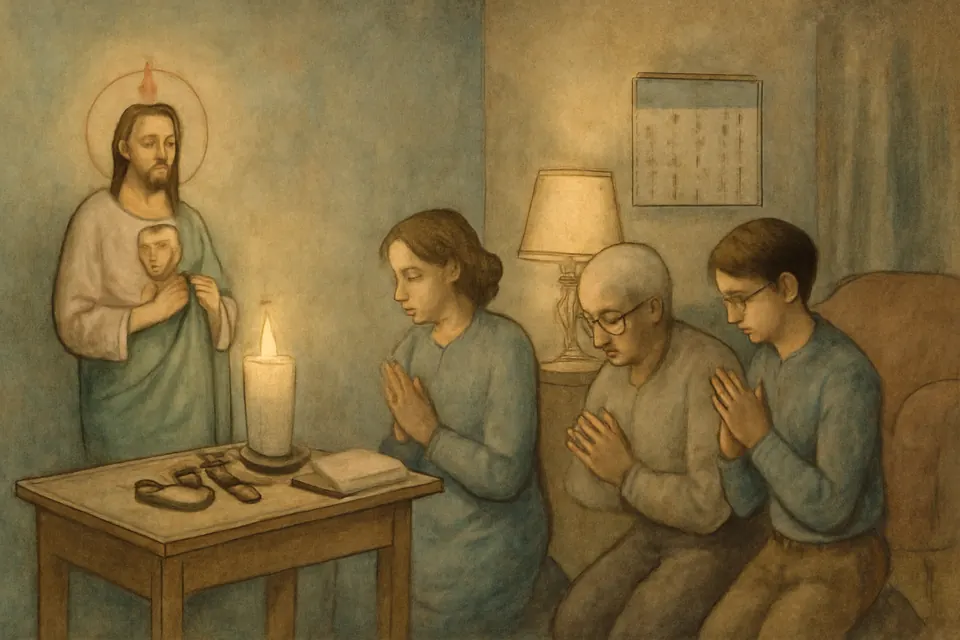
The St. Jude novena is nine days of prayer to the Apostle Jude Thaddeus for one intention, usually a situation that looks hopeless. The traditional form, printed in Chicago in 1929, repeats the same prayers each day, including the "Most holy apostle" prayer. You can pray it any time; the solemn novena runs October 20 to 28.
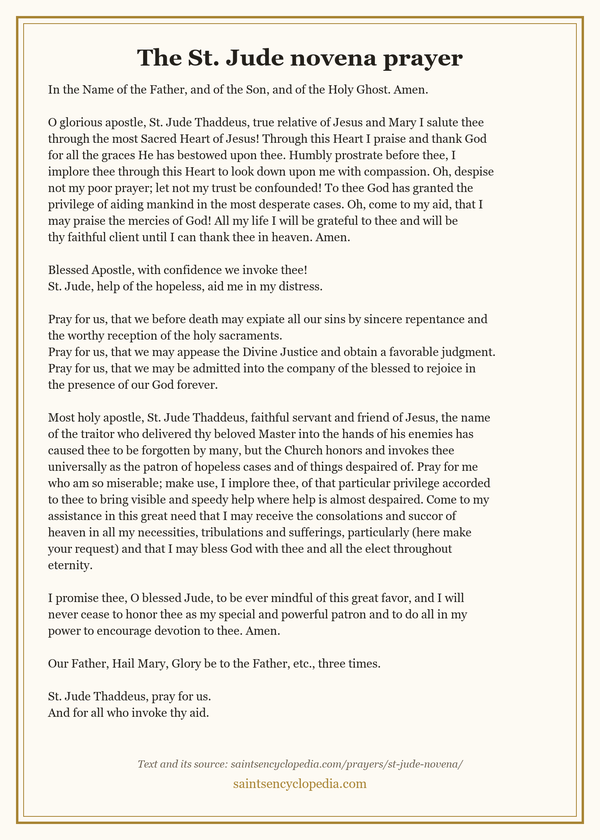 Free printable prayer card 5 × 7 inch PDF, ready to print, frame or tuck in a missal.
A novena to St. Jude is what people pray when one prayer doesn't feel like enough. For nine days we come back to the same words, with the same request, and let the repetition carry us when our own words run out. The novena below is the one the Dominican Fathers printed for their Shrine of St. Jude Thaddeus in Chicago in 1929, the year devotion to Jude as the patron of hopeless cases took hold in America.
The St. Jude novena prayer
These are the "Novena Prayers (First Form)" from Fr. William A. Marchant's Life of St. Jude Thaddeus, "Helper in Despaired of Cases" (Chicago, 1929, with the imprimatur of George Cardinal Mundelein), printed word for word. The booklet is in the public domain. Pray the whole sequence once each day for nine days. Where the booklet gives a line to the priest and the people, say it once yourself when praying alone.
In the Name of the Father, and of the Son, and of the Holy Ghost. Amen.
O glorious apostle, St. Jude Thaddeus, true relative of Jesus and Mary I salute thee through the most Sacred Heart of Jesus! Through this Heart I praise and thank God for all the graces He has bestowed upon thee. Humbly prostrate before thee, I implore thee through this Heart to look down upon me with compassion. Oh, despise not my poor prayer; let not my trust be confounded! To thee God has granted the privilege of aiding mankind in the most desperate cases. Oh, come to my aid, that I may praise the mercies of God! All my life I will be grateful to thee and will be thy faithful client until I can thank thee in heaven. Amen.
Blessed Apostle, with confidence we invoke thee! St. Jude, help of the hopeless, aid me in my distress.
Pray for us, that we before death may expiate all our sins by sincere repentance and the worthy reception of the holy sacraments. Pray for us, that we may appease the Divine Justice and obtain a favorable judgment. Pray for us, that we may be admitted into the company of the blessed to rejoice in the presence of our God forever.
Most holy apostle, St. Jude Thaddeus, faithful servant and friend of Jesus, the name of the traitor who delivered thy beloved Master into the hands of his enemies has caused thee to be forgotten by many, but the Church honors and invokes thee universally as the patron of hopeless cases and of things despaired of. Pray for me who am so miserable; make use, I implore thee, of that particular privilege accorded to thee to bring visible and speedy help where help is almost despaired. Come to my assistance in this great need that I may receive the consolations and succor of heaven in all my necessities, tribulations and sufferings, particularly (here make your request) and that I may bless God with thee and all the elect throughout eternity.
I promise thee, O blessed Jude, to be ever mindful of this great favor, and I will never cease to honor thee as my special and powerful patron and to do all in my power to encourage devotion to thee. Amen.
Our Father, Hail Mary, Glory be to the Father, etc., three times.
St. Jude Thaddeus, pray for us. And for all who invoke thy aid.
The litany of St. Jude (second form)
The same booklet gives a "Second Form" of the novena: this litany, marked "For private use only," followed by a closing prayer. Many people pray it after the first form, or on its own on days when they want something longer.
Lord, have mercy on us. Christ, have mercy on us. Lord, have mercy on us. Christ hear us. Christ graciously hear us. God the Father of heaven, have mercy on us! God the Son, Redeemer of the world, have mercy on us! God the Holy Ghost, have mercy on us! Holy Trinity, one God, have mercy on us!
St. Jude, relative of Jesus and Mary, pray for us! St. Jude, while on earth deemed worthy to see Jesus and Mary and to enjoy their company, pray for us! St. Jude, raised to the dignity of an apostle, pray for us! St. Jude, who hadst the honor of beholding thy Divine Master humble Himself to wash thy feet, pray for us! St. Jude, who at the Last Supper didst receive the Holy Eucharist from the hands of Jesus, pray for us! St. Jude, who, after the profound grief which the death of thy beloved Master caused thee, hadst the consolation of beholding Him risen from the dead, and of assisting at His glorious Ascension, pray for us! St. Jude, who wast filled with the Holy Ghost on the day of Pentecost, pray for us! St. Jude, who didst preach the Gospel in Persia, pray for us! St. Jude, who didst convert many people to the Faith, pray for us! St. Jude, who didst perform wonderful miracles in the power of the Holy Ghost, pray for us! St. Jude, who didst restore an idolatrous king to health, both of soul and body, pray for us! St. Jude, who didst impose silence on demons, and confound their oracles, pray for us! St. Jude, who didst foretell to a weak prince an honorable peace with his powerful enemy, pray for us! St. Jude, who didst take from deadly serpents the power of injuring man, pray for us! St. Jude, who, disregarding the threats of the impious, didst courageously preach the doctrine of Christ, pray for us! St. Jude, who didst gloriously suffer martyrdom for the love of thy Divine Master, pray for us!
Blessed apostle, with confidence, we invoke thee! (three times) St. Jude, help of the hopeless, aid me in my distress! (three times)
That by thy intercession both priests and people of the Church may obtain an ardent zeal for the Faith of Jesus Christ, we beseech thee, hear us! That thou wouldst defend our Sovereign Pontiff and obtain peace and unity for the Holy Church, we beseech thee, hear us! That all heathens and unbelievers may be converted to the true Faith, we beseech thee, hear us! That faith, hope and charity may increase in our hearts, we beseech thee, hear us! That we may be delivered from all evil thoughts, and from all the snares of the devil, we beseech thee, hear us! That thou wouldst vouchsafe to aid and protect all those who honor thee, we beseech thee, hear us! That thou wouldst preserve us from all sin and from all occasion of sin, we beseech thee, hear us! That thou wouldst defend us at the hour of death, against the fury of the devil and his evil spirits, we beseech thee, hear us!
Lamb of God, Who takest away the sins of the world, spare us, O Lord. Lamb of God, Who takest away the sins of the world, graciously hear us, O Lord. Lamb of God, Who takest away the sins of the world, have mercy on us, O Lord.
The closing prayer in affliction
The second form ends with this prayer. It is the one to turn to on the worst days of a novena, because it says plainly what despair feels like: "my heart is an ocean of bitterness."
Let Us Pray.
O St. Jude Thaddeus, thou relative of Jesus Christ, thou glorious apostle and martyr, renowned for thy virtues and miracles, faithful and prompt intercessor of all who honor thee and trust in thee! Thou art a powerful patron and helper in grievous afflictions. I come to thee and entreat thee from the depths of my heart, come to my aid with thy powerful intercession, for thou hast received from God the privilege to assist with thy manifest help, those who almost despair of all hope. Look down upon me; my life is a life of crosses, my days are days of tribulation, and my heart is an ocean of bitterness. All my paths are strewn with thorns and scarcely one moment passes but is witness of my tears and sighs. And withal, my soul is enveloped in darkness! disquietude, discouragement, mistrust, yes, sometimes even a kind of despair preys upon my soul. Divine Providence seems lost to my sight, and Faith seems to falter in my heart. Overwhelmed by these thoughts, I see myself surrounded by a dark cloud.
Thou canst not forsake me in this sad plight. I will not depart from thee until thou hast heard me. Oh! hasten to my aid. I will be grateful to thee all my life. I will honor thee as my special patron, I will thank God for the graces bestowed upon thee, and will propagate thy honor according to my power. Amen.
St. Jude Thaddeus, pray for us. And for all who invoke thy aid.

Prayer of thanksgiving
The 1929 booklet adds this prayer "to be said when a favor has been granted." We say it at the end of a novena whatever the outcome, since every answer God gives is a grace.
O most sweet Lord Jesus Christ, in union with the unutterable heavenly praise with which the Most Holy Trinity extols itself and which thence flows upon Thy Sacred Humanity, upon Mary, upon all the angels and saints, I praise, glorify and bless Thee for all the graces and privileges Thou hast bestowed upon Thy chosen apostle and intimate friend, Jude Thaddeus. I pray Thee for the sake of his merits, grant me Thy grace, and through his intercession come to my aid in all my needs, but especially at the hour of my death deign to strengthen me against the rage of my enemies. Amen.
Our Father, Hail Mary, Glory be to the Father, etc., three times.
How to pray the St. Jude novena
The traditional novena to St. Jude is simple. Unlike novenas that give a different meditation for each day, the 1929 booklet uses the same prayers on all nine days. Booklets with nine separate daily reflections exist, but they are later compositions.
- Choose one intention. Name it plainly. St. Jude is the saint of the case that looks closed, so don't be shy about the size of it.
- Pick your nine days. Any nine days in a row will do. To finish on his feast, begin on October 20 and end on October 28.
- Pray the first form each day, from the Sign of the Cross to "And for all who invoke thy aid," naming your request where the prayer says "(here make your request)."
- Add the litany and the closing prayer if you have time. Families often pray the litany together, one person reading the invocations and everyone answering.
- Go to Confession and receive Holy Communion during the nine days if you can. The 1929 booklet asks this "if at all possible," and the Claretians' 1954 prayer book says that to make a novena "with greater fruit one should go to Confession, hear Mass, and receive Holy Communion."
- End with thanksgiving. Pray the prayer of thanksgiving on the ninth day, and again later when you see how God has answered.
If you miss a day, take it up again and finish. The 1929 booklet tells people who couldn't come to the shrine on one day to "say the novena prayers at home" instead; it never suggests that the whole novena is lost.

Other ways to make the novena
The Dominicans' booklet describes three ways of making a novena to St. Jude, and all of them still work:
- A private novena of nine days in a row, at home or in church, at any time of year.
- A solemn novena made by joining the public novena services at a shrine for nine days, or praying along from home while they are held. "Those out of town can and should say the novena prayers at home during the nine days."
- A novena of nine Thursdays or nine Sundays, for those who can't pray every day. You start on one Thursday or Sunday and keep going for nine weeks in a row. Thursday was the shrine's weekly day of St. Jude devotions.
The same booklet mentions other customs: nine weekly holy hours before the Blessed Sacrament, nine Holy Communions offered in his honor, and a novena of Masses.
Why nine days?
The nine days go back to the Upper Room. After the Ascension the apostles waited in Jerusalem for the Holy Spirit, as Jesus had told them. St. Luke names Jude among them: "Peter and John, James and Andrew, Philip and Thomas, Bartholomew and Matthew, James of Alpheus, and Simon Zelotes, and Jude the brother of James. All these were persevering with one mind in prayer with the women, and Mary the mother of Jesus" (Acts 1:13–14, Douay-Rheims). The National Shrine of St. Jude gives this as the reason its novenas last nine days: the apostles, St. Jude among them, prayed together between the Ascension and Pentecost.
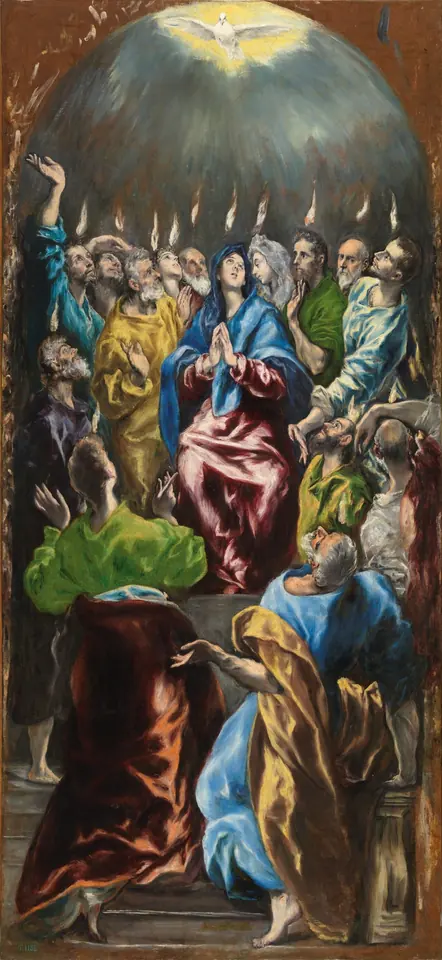
The Catholic Encyclopedia of 1911 calls that wait "the first Pentecost novena" and the best model for every novena since. It also notes that the novena of prayer for a particular need grew up among the faithful in France, Belgium and the Rhineland in the early Middle Ages, often to ask a saint's help in sickness. By the 1900s it was one of the most familiar Catholic devotions, and the Chicago shrines of 1929 were built around it.
The solemn novena before October 28
The best-known St. Jude novena is the one that ends on his feast. The Church keeps the feast of Sts. Simon and Jude on October 28, so the solemn novena runs from October 20 to October 28. On October 20, 1929, the Dominicans held the first public devotions at their new shrine in St. Pius V Church, and their history records that the crowd was so large that police and firemen had to be called. Across the city, the Claretians' National Shrine of St. Jude had begun its first solemn novena in February of the same year.
The Claretian shrine at Our Lady of Guadalupe Church in South Chicago still holds five solemn novenas a year. For 2026–2027 it lists August 15–23, October 20–28, February 13–21, April 24 to May 2, and June 19–27. In October it now offers the novena for the faithful departed as well as for the petitions people send, with daily services in English and Spanish, and it places mailed and online petitions at St. Jude's altar during the nine days.
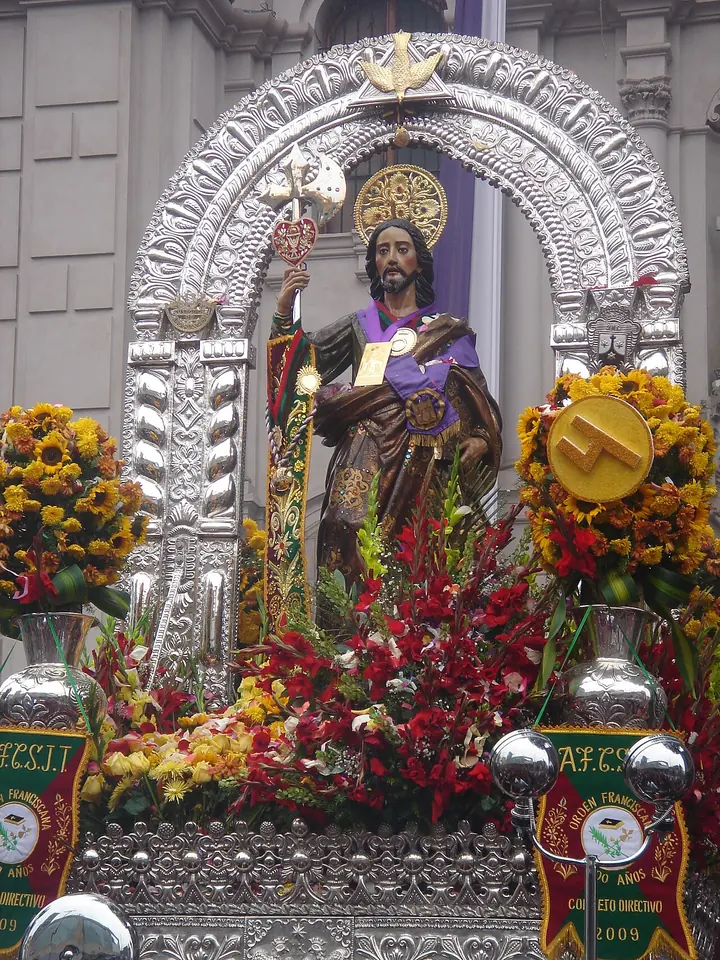
The great public novenas are not only an American custom. In Mexico City the faithful crowd the church of San Hipólito on the 28th of every month, and in Lima a richly dressed statue of San Judas Tadeo is carried through the streets in October.
The "Thank you, St. Jude" custom
The novena prayer ends with a promise "to do all in my power to encourage devotion to thee." For generations of Catholics, keeping it meant a line in the newspaper's personal column, usually signed with initials: "Thank you, St. Jude, for favors granted." The Carmelites at the National Shrine of Saint Jude in Faversham, England, note that he is "frequently thanked in the personals column of many daily newspapers," and the custom was just as common in the United States. Today the same thanks are posted online or written in shrine books.
It is a good custom, and only a custom. The Church has never required it, and no answer to prayer depends on it. Some cards attach a short prayer to the Sacred Heart and St. Jude, to be said nine times a day, with the promise that it has "never been known to fail" and an order to publish a notice. That promise has no Church approval. We pray the novena trusting God, not a formula. The history of the notices, and of the St. Jude prayer itself, is on the St. Jude prayer page.
St. Jude, patron of the novena
Christian art showed St. Jude as a preaching apostle long before America knew him as the patron of hopeless cases. At Chartres Cathedral, a medieval window tells the story of his mission with St. Simon in Persia, the same mission the litany recalls when it asks him as the one "who didst preach the Gospel in Persia."
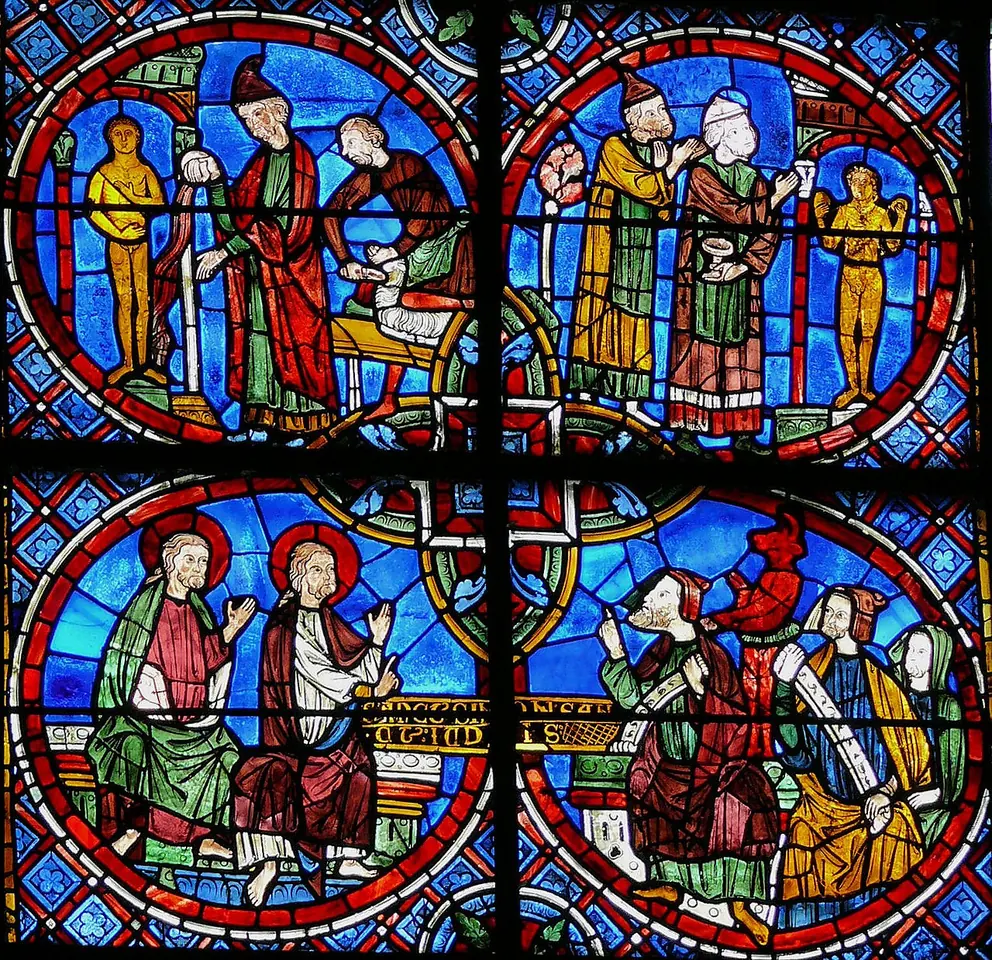
His life, his letter in the New Testament, and his symbols are in his own entry: St. Jude. He shares the patronage of impossible causes with St. Rita of Cascia, and many people pray a novena to her as well. For other novenas through the year, such as the St. Andrew Christmas novena, see our novenas page and the feast day calendar.
St. Jude Thaddeus, pray for us, and for all who invoke your aid.
Frequently asked questions
How do you pray the St. Jude novena?
Choose one intention and pray the same set of prayers once a day for nine days in a row. The traditional 1929 form is the greeting "O glorious apostle, St. Jude Thaddeus," a few short invocations, the prayer "Most holy apostle, St. Jude," in which you name your request, and an Our Father, Hail Mary and Glory Be said three times. The full text is at the top of this page. Many people add the litany of St. Jude.
When should I start the St. Jude novena?
Any day of the year. To end on his feast, October 28, begin on October 20. The National Shrine of St. Jude in Chicago also keeps solemn novenas in February, April, June and August, and the 1929 booklet suggests a novena of nine Thursdays or nine Sundays for people who can't manage nine days in a row.
What if I miss a day of the novena?
Pick up again and finish. The novena is a way of persevering in prayer, not a formula that fails on a technicality. The 1929 booklet itself tells people who couldn't get to the shrine on one day to say the prayers at home instead. God sees the intention of the heart.
Does the St. Jude novena always work?
No prayer comes with a guarantee, and the Church has never promised one for this novena. We ask St. Jude to intercede for us and trust God to answer in the way that is best for us, which is not always the way we planned. Cards that say a St. Jude prayer has "never been known to fail" carry no Church approval.
Why do people publish \"Thank you, St. Jude\" after a novena?
Because the novena prayer ends with a promise "to do all in my power to encourage devotion to thee." A short thank-you in a newspaper's personal column is one way of keeping that promise. It is a popular custom, never a requirement, and nothing depends on it.
Is the St. Jude novena the same as the St. Jude prayer?
The novena uses the St. Jude prayer, but adds other prayers and spreads them over nine days. The prayer's own history, its author and the Chicago shrines are on the St. Jude prayer page.
Sources
- Wm. A. Marchant, O.P., Life of St. Jude Thaddeus, "Helper in Despaired of Cases": Devotional Exercises and Novena Prayers (Chicago: Shrine of St. Jude Thaddeus, Dominican Fathers, 1929; imprimatur George Cardinal Mundelein), Internet Archive. Source of every prayer text printed on this page
- St. Jude Novena Prayer Book, National Shrine of St. Jude, Chicago (imprimatur Samuel Cardinal Stritch, 1954)
- National Shrine of St. Jude: Celebrate a St. Jude Novena (solemn novena dates and why nine days)
- National Shrine of St. Jude: October Solemn Novena
- Shrine of St. Jude Thaddeus, St. Pius V Church, Chicago: History of our Shrine
- Joseph Hilgers, "Novena," Catholic Encyclopedia (1911)
- Acts of the Apostles 1:13–14, Douay-Rheims Bible
- National Shrine of Saint Jude, Faversham (Carmelites): Thank you Saint Jude