All Souls Day
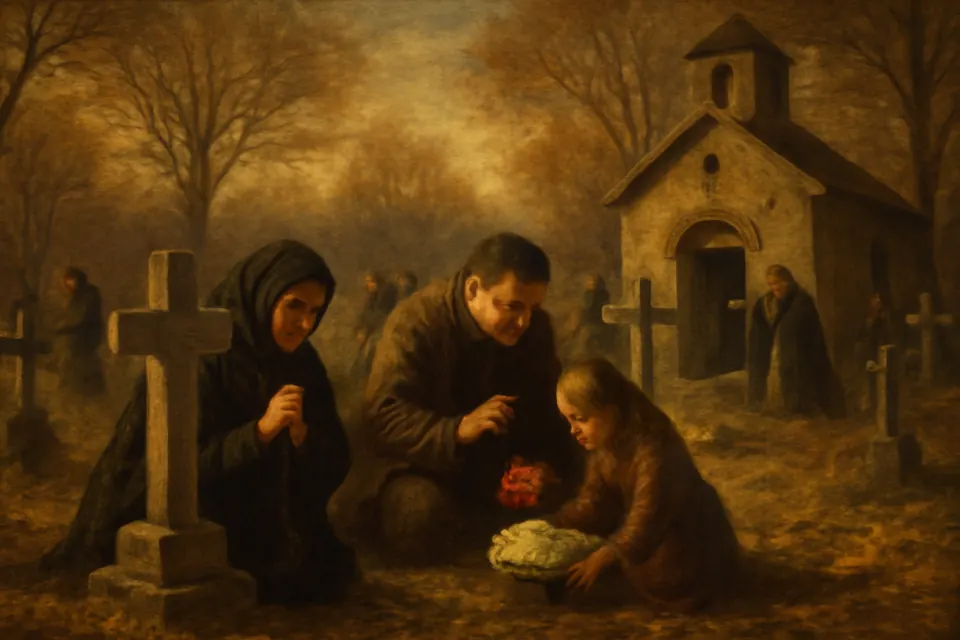
All Souls Day, kept on November 2, is the day the Catholic Church prays for all the faithful departed, especially the souls Catholics believe are being purified in purgatory before entering heaven. Catholics attend Mass, visit and bless graves, and pray the Eternal Rest prayer. The day follows All Saints Day, which honors those already in heaven.
On November 1 the Church celebrates the saints in heaven. On November 2 it turns to everyone else who has died: parents and grandparents, friends, children lost too soon, soldiers, strangers no one remembers. All Souls Day is the Catholic day of prayer for the dead. Black or violet vestments replace the white of All Saints, families visit graves, and in many parishes the names of those who died in the past year are read aloud at Mass.
What is All Souls Day?
The official name is the Commemoration of All the Faithful Departed. It is kept on November 2 every year. In 2026 it falls on a Monday; in 2027, on a Tuesday. When November 2 falls on a Sunday, as it did in 2025, the Roman Rite still keeps All Souls that day in place of the Sunday Mass.
All Souls Day is not a holy day of obligation. It is a commemoration with its own Mass texts, and the Lectionary (no. 668) lets the priest choose from many readings. The first option is Wisdom 3:1-9: "The souls of the just are in the hand of God, and no torment shall touch them."


Why Catholics pray for the dead: purgatory
The feast rests on a teaching the Catechism of the Catholic Church sets out in three paragraphs. Paragraph 1030 reads:
All who die in God's grace and friendship, but still imperfectly purified, are indeed assured of their eternal salvation; but after death they undergo purification, so as to achieve the holiness necessary to enter the joy of heaven.
Paragraph 1031 says that "the Church gives the name Purgatory to this final purification of the elect, which is entirely different from the punishment of the damned," and that the doctrine was formulated "especially at the Councils of Florence and Trent." Purgatory, in Catholic teaching, is not a second chance or a lesser hell. Everyone there is saved. It is the last cleansing of love before seeing God.
Paragraph 1032 ties the doctrine to prayer. It points to 2 Maccabees 12, where Judas Maccabeus has a sacrifice offered for fallen soldiers. The Douay-Rheims renders the verse: "It is therefore a holy and wholesome thought to pray for the dead, that they may be loosed from sins." The Catechism goes on: "From the beginning the Church has honored the memory of the dead and offered prayers in suffrage for them, above all the Eucharistic sacrifice," and it closes with words of St. John Chrysostom: "Let us not hesitate to help those who have died and to offer our prayers for them."
The early Church did exactly that. When St. Monica was dying at Ostia in 387, she told her son St. Augustine, as he records in the Confessions: "Lay this body anywhere, let not the care for it trouble you at all. This only I ask, that you will remember me at the Lord's altar, wherever you be."
Other Christians see this differently. The Orthodox pray for the dead constantly but do not define purgatory as the Catholic Church does, and most Protestants, including evangelicals like the curator of this site, do not pray for the dead or accept purgatory, holding that believers go straight to be with Christ. This page describes the Catholic practice in its own terms.


The history of All Souls Day
Prayer for the dead is older than the feast. The Catholic Encyclopedia (1907) notes that early Christians wrote the names of the departed on the diptychs read at Mass. In the 6th century Benedictine monasteries held a commemoration of their dead brothers at Pentecost. In Spain, in the time of St. Isidore of Seville (d. 636), there was a day for the dead on the Saturday before Sexagesima or before Pentecost.
St. Odilo of Cluny
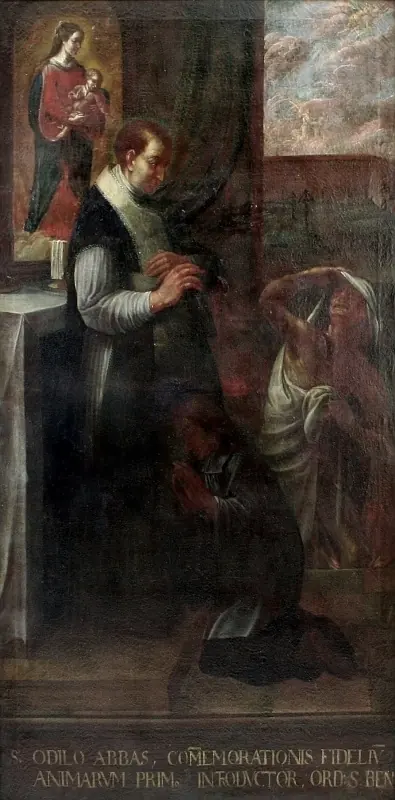
The November 2 date comes from St. Odilo, abbot of the great Burgundian monastery of Cluny from about 994 until his death in 1048 or 1049. He ordered every house of his congregation to keep a yearly commemoration of all the faithful departed on the day after All Saints. Popular accounts date his decree to 998. The Catholic Encyclopedia's article on Odilo is more cautious: he established it "probably not in 998 but after 1030." Either way, Cluny's growing network of monasteries carried it across Europe. The diocese of Liège adopted it under Bishop Notger (d. 1008), and the custom spread from diocese to diocese until Rome made it universal.

Three Masses on November 2
All Souls is the only day of the year when every Catholic priest may celebrate three Masses. The custom began, as Pope Benedict XV explains, in the Kingdom of Aragon. On August 26, 1748, Pope Benedict XIV extended the privilege to every priest in the lands of the kings of Spain and Portugal. Requests to extend it worldwide reached Rome for generations; Leo XIII declined, ordering instead a special Requiem on September 30, 1888.
Benedict XV granted it on August 10, 1915, in the apostolic constitution Incruentum Altaris. He gave two reasons. Many old foundations for Masses for the dead had been lost or neglected, and the war then raging across Europe was killing so many young men in the flower of their years. Every priest could now offer three Masses on All Souls Day: one for an intention of his choice, with an offering; one for all the faithful departed; and one for the intention of the pope.
The plenary indulgence for the souls in purgatory
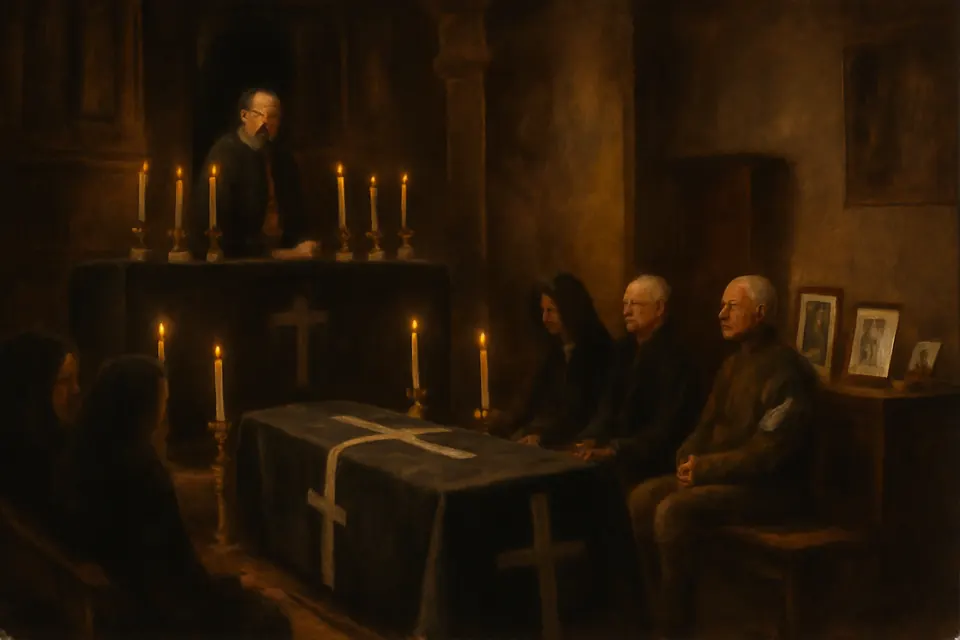
In Catholic teaching an indulgence is a remission of the temporal punishment due to sins already forgiven, and Catholics may offer one for the dead. The Apostolic Penitentiary's Enchiridion Indulgentiarum (Handbook of Indulgences, 4th edition, 1999), grant 29, sets out two plenary indulgences for the souls in purgatory:
- On each day from November 1 to 8, for devoutly visiting a cemetery and praying for the dead, even if only mentally (vel mente tantum, in the Latin text).
- On November 2, for devoutly visiting a church or oratory and praying the Our Father and the Creed there.
On other days of the year a cemetery visit, or praying the Eternal Rest prayer, gains a partial indulgence for the dead. The usual conditions apply to a plenary indulgence: sacramental confession, Holy Communion, prayer for the pope's intentions, and detachment from all sin, even venial sin. In 2020 and 2021, because of the pandemic, the Penitentiary extended the cemetery indulgence to the whole of November.
All Souls Day prayers
The prayer most Catholics know is the Eternal Rest, from the old Requiem Mass:
Requiem aeternam dona eis, Domine, et lux perpetua luceat eis. Requiescant in pace. Amen.
>
Eternal rest grant unto them, O Lord, and let perpetual light shine upon them. May they rest in peace. Amen.
Catholics also pray Psalm 130 (Psalm 129 in the Douay numbering, the De profundis: "Out of the depths I have cried to thee, O Lord"), the rosary, and the Office of the Dead. Full texts, with their sources, are on our page of prayers for the dead. The prayer associated with St. Gertrude the Great is also popular in November; our page on the St. Gertrude prayer explains where it comes from and why the "1,000 souls" promise printed with it has no approved basis.
Catholics who want a saint's help for the dead often turn to St. Nicholas of Tolentino, patron of the souls in purgatory, to St. Gertrude, and to St. Catherine of Genoa, whose Treatise on Purgatory describes it as a fire of love.
How All Souls Day is kept
Mass. Many Catholics attend Mass on November 2, often the parish's Mass for the deceased of the past year.
The book of the dead. Through November, many parishes set out a book near the altar where families write the names of their dead, and those names are remembered at every Mass of the month.

Visiting graves. Families clean and decorate graves, light candles and pray. Priests bless graves with holy water. In much of Europe and Latin America this happens on November 1, the public holiday, so the two days run together. In France the flower of the season is the chrysanthemum.


November. Catholic tradition gives the whole month to the holy souls. It begins with All Saints and All Souls and ends near the close of the Church year, when the Sunday readings turn to death, judgment and the end of time.
Día de los Muertos
In Mexico, November 1 and 2 are Día de Muertos, the Day of the Dead. UNESCO, which added it to its list of the Intangible Cultural Heritage of Humanity in 2008, describes it as a time when families welcome "the transitory return to Earth of deceased relatives and loved ones," and calls it "the fusion of pre-Hispanic religious rites and Catholic feasts." The festival falls at the end of the maize harvest. In many places the dead are remembered by category, with children, the angelitos, honored first.


The center of the celebration is the ofrenda, a home altar for the family's dead with their photographs. The Mexico City government's guide lists what goes on it and why: water for souls thirsty after the long journey; pan de muerto, the "fraternal food" offered to a friend; salt for purification; candles, whose light shows the dead the way; flowers, white for children and orange cempasúchil (marigold) for all; clay toys, including little dogs that recall the dog believed in Aztec tradition to guide the dead across a river to Mictlan; copal incense; and the foods and drinks the dead loved. Many families also spend the night at the cemetery.


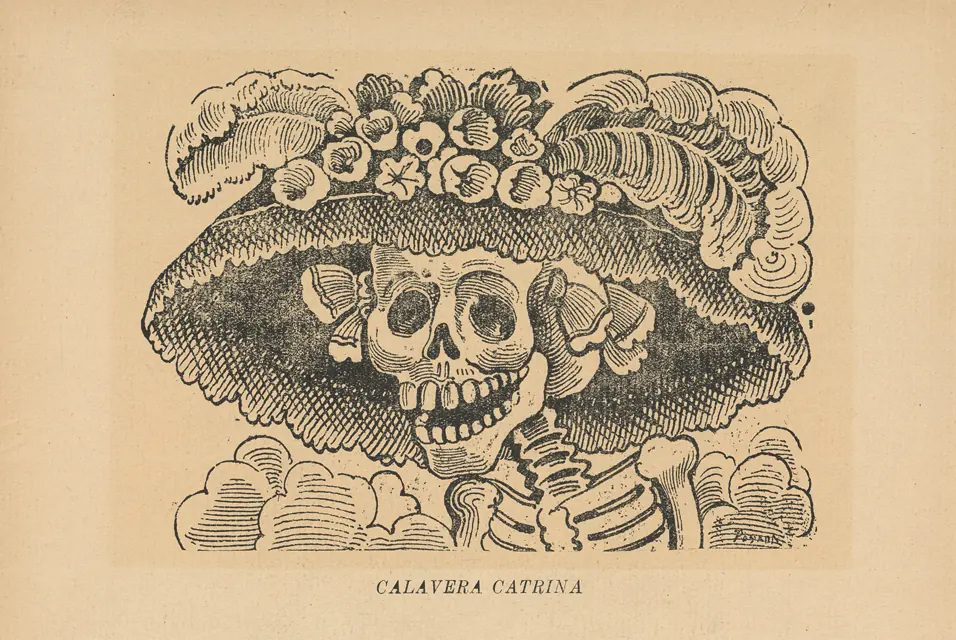
The grinning skeletons (calaveras) of the season owe much to the Mexican printmaker José Guadalupe Posada, whose etching of a skeleton lady in an enormous fashionable hat, the Calavera Catrina, poked fun at upper-class airs and became the festival's best-known figure. The Library of Congress guide notes a small linguistic point: the "los" in "Día de los Muertos" seems to come from translating the English phrase back into Spanish, and was rarely used before the 1960s. Both names are now common.

For most Mexican families the festival and the Catholic feasts are one celebration: they have Masses said for their dead, pray the rosary at the graves, and often set a crucifix or an image of Our Lady of Guadalupe among the photographs on the ofrenda.
Soul Saturdays in the Orthodox Church
The Orthodox Church has no November All Souls Day. It prays for the dead every Saturday, and on several Saturdays of Souls (Psychosabbata) it remembers all the departed together. The two universal ones are the Saturday before Meatfare Sunday, a week before Great Lent, and the Saturday before Pentecost. The Orthodox Church in America explains that the Church set "Saturday as the proper day of the week for remembering the dead," and that on Meatfare Saturday it prays especially for those who died suddenly, far from home, or without anyone to pray for them. Many churches add the second, third and fourth Saturdays of Lent,.
At these services the faithful bring kollyva, boiled wheat sweetened and decorated, blessed in memory of the dead. The wheat recalls Christ's words that a grain of wheat must fall into the earth and die to bear fruit (John 12:24).


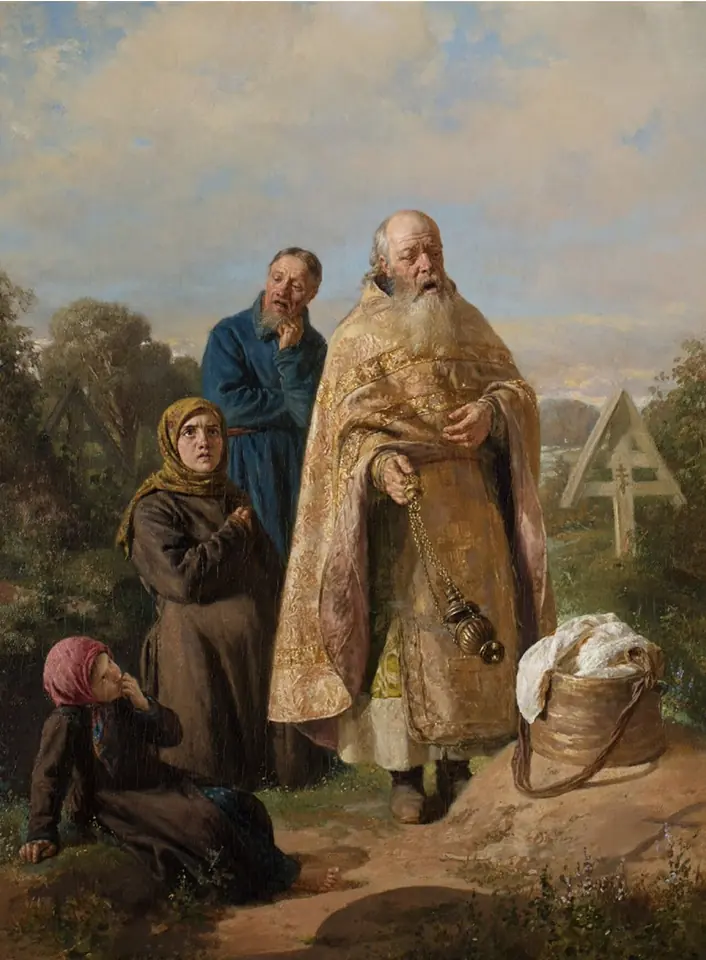
Orthodox families also ask the priest to serve a short memorial service, the panikhida or trisagion, at the grave, on the anniversary of a death and on the days of the dead. The service ends with the prayer "Memory eternal."

Frequently asked questions
What is All Souls Day?
All Souls Day, formally the Commemoration of All the Faithful Departed, is the Catholic day of prayer for everyone who has died in Christ. It is kept on November 2, the day after All Saints. Catholics believe that many who die in God's friendship still need purification, which the Church calls purgatory, and that the prayers and Masses of the living help them.
What is the All Souls Day prayer?
The best-known prayer is the Eternal Rest prayer, "Eternal rest grant unto them, O Lord, and let perpetual light shine upon them. May they rest in peace. Amen." In Latin it begins "Requiem aeternam." Catholics also pray the rosary, Psalm 130 (the De profundis) and the Office of the Dead. Our page on prayers for the dead gives the full texts.
Is All Souls Day a holy day of obligation?
No. All Souls Day is not a holy day of obligation, though many Catholics attend Mass that day, and every priest may celebrate three Masses for the dead. All Saints Day on November 1 is the holy day.
How do you get the All Souls plenary indulgence?
According to the Church's handbook of indulgences, a Catholic can gain a plenary indulgence, applicable only to the souls in purgatory, on each day from November 1 to 8 by devoutly visiting a cemetery and praying for the dead, even mentally. On November 2 a visit to a church with the Our Father and the Creed also qualifies. The usual conditions apply, confession, Communion, prayer for the pope's intentions, and freedom from attachment to any sin.
What is the difference between All Souls Day and Día de los Muertos?
All Souls Day is a Catholic liturgical day of prayer for the dead, kept worldwide. Día de los Muertos is Mexico's festival of the dead on November 1 and 2, which UNESCO describes as a fusion of pre-Hispanic rites with these Catholic feasts. It adds home altars called ofrendas, marigolds, special bread and nights at the cemetery.
Sources
- Catholic Encyclopedia (1907): All Souls' Day
- Catholic Encyclopedia (1911): St. Odilo
- Catechism of the Catholic Church, nos. 1030-1032: The Final Purification, or Purgatory
- Benedict XV, Apostolic Constitution Incruentum Altaris (August 10, 1915), Italian text
- Apostolic Penitentiary, Enchiridion Indulgentiarum, 4th edition (1999), Latin text (grant 29, for the faithful departed)
- National Catholic Register (CNA): Here's How Catholics Can Get 8 Plenary Indulgences During the First Week of November
- USCCB: Readings for the Commemoration of All the Faithful Departed (Lectionary 668)
- St. Augustine, Confessions, Book IX (New Advent)
- Douay-Rheims Bible: 2 Machabees 12
- UNESCO Intangible Cultural Heritage: Indigenous festivity dedicated to the dead (Mexico)
- Mexico City government tourism site: Ofrendas de Día de Muertos
- Library of Congress: Halloween & Día de Muertos Resources (research guide)
- Orthodox Church in America: Memorial Saturday of Meatfare