All Saints Day
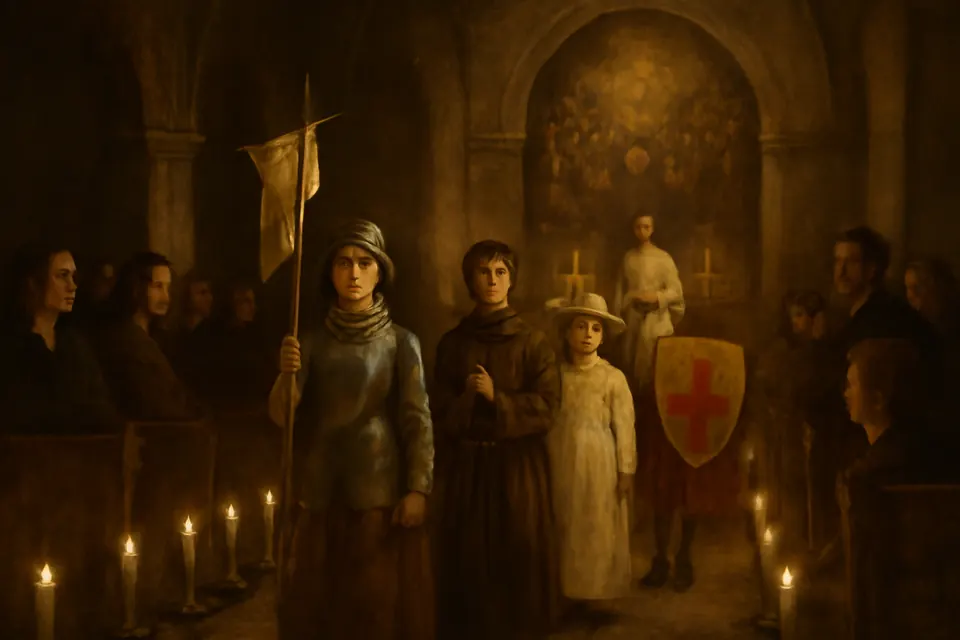
All Saints Day is the Christian feast on November 1 that honors every saint in heaven, the canonized ones and the countless unknown ones. For Catholics it is a solemnity and, in most years, a holy day of obligation. Its eve, October 31, was called All Hallows' Eve, the name that became Halloween.
Most saints have one day a year. On November 1 the Church remembers all of them at once: the apostles and martyrs whose names fill the calendar, and the far larger crowd of holy men and women whose names no one wrote down. Grandmothers who prayed the rosary every night for sixty years are, in Catholic belief, part of this feast as surely as St. Peter or St. Francis. This page explains what All Saints Day celebrates, how it grew from a common feast of martyrs into a feast of the whole Church in heaven, the holy day rules, its Mass readings and customs, and how its eve became Halloween.
What is All Saints Day?
All Saints Day is a solemnity, the highest rank of feast in the Catholic calendar, kept on November 1. The Catholic Encyclopedia of 1907 sums up its purpose in one line: it "is instituted to honour all the saints, known and unknown." It adds a second reason given by Pope Urban IV in the 13th century, to make up for any shortcomings in the way the faithful kept the saints' feasts during the rest of the year.
The "unknown" part matters. The Church has canonized a few thousand people, and the process of becoming a saint is slow and rare. But Catholic teaching holds that everyone who dies in God's friendship and reaches heaven is a saint, whether or not anyone ever opens a cause. All Saints Day is their feast. For many families it is also the day they quietly think of a parent or grandparent they hope is among them. (On what the word means, see what is a saint?)


All Saints and the communion of saints
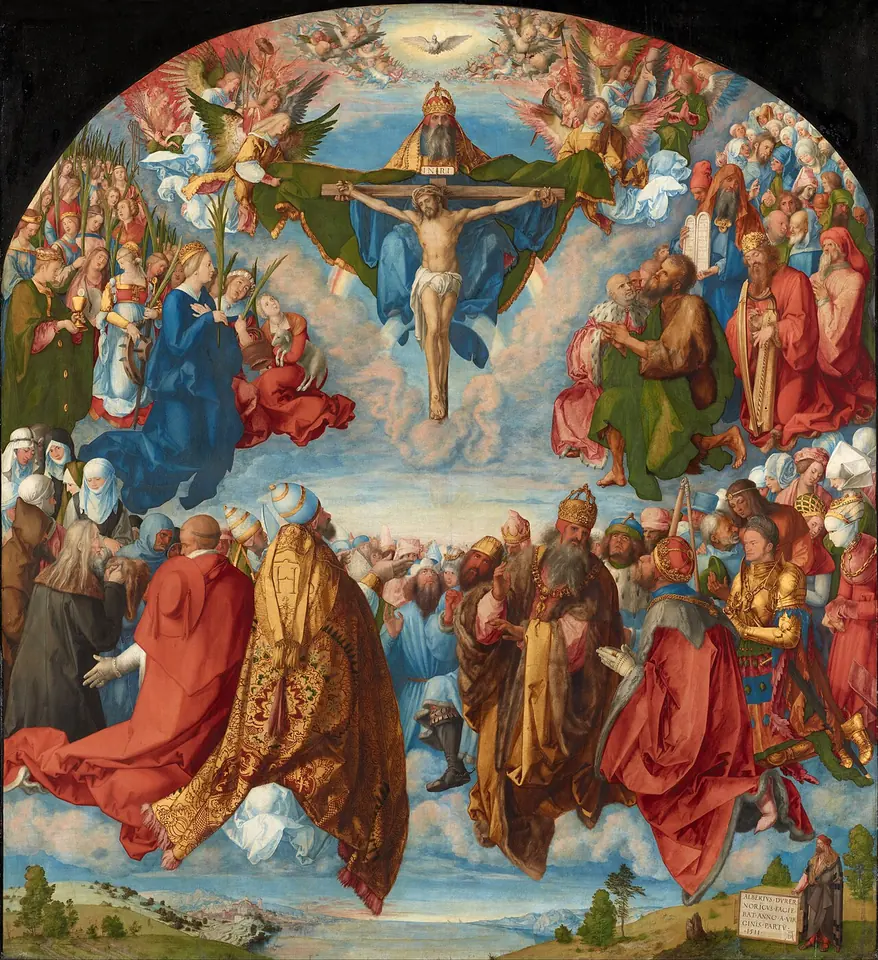
Behind the feast stands a line of the Apostles' Creed: "I believe in... the communion of saints." Catholics and Orthodox take it to mean that the Church on earth, the souls being purified after death, and the saints in heaven make up one family in Christ, bound together by love and prayer. The Letter to the Hebrews pictures believers running their race watched by those who went before. In the Douay-Rheims translation:
And therefore we also having so great a cloud of witnesses over our head, laying aside every weight and sin which surrounds us, let us run by patience to the fight proposed to us: Looking on Jesus, the author and finisher of faith.
That is why All Saints Day is followed at once by All Souls Day on November 2. The first day celebrates those who have arrived. The second prays for those still on the way.
When is All Saints Day?
In the Roman Catholic Church, and in the Anglican and Lutheran calendars, All Saints Day is fixed on November 1 every year. The day of the week changes:
- 2026: Sunday, November 1. A holy day of obligation; the feast replaces that Sunday's Mass.
- 2027: Monday, November 1. The US obligation to attend Mass is lifted.
- 2028: Wednesday, November 1. A holy day of obligation.
- 2029: Thursday, November 1. A holy day of obligation.
- 2030: Friday, November 1. A holy day of obligation.
Eastern Orthodox churches, and Eastern Catholic churches of the Byzantine tradition, keep a different feast: All Saints Sunday, the first Sunday after Pentecost. Its date moves with Easter. More on that below.
Is All Saints Day a holy day of obligation?
Yes, in most years. Canon 1246 of the Code of Canon Law lists All Saints among the days on which Catholics must attend Mass, but it lets each country's bishops adjust the list. The United States bishops did so in a decree of 1991, confirmed by the Holy See in 1992. It keeps All Saints as a holy day, with one exception:
Whenever January 1, the solemnity of Mary, Mother of God, or August 15, the solemnity of the Assumption, or November 1, the solemnity of All Saints, falls on a Saturday or on a Monday, the precept to attend Mass is abrogated.
The thinking is pastoral: when the feast lands next to a Sunday, the bishops did not want to ask for two Masses on two days in a row. So in 2027, when November 1 is a Monday, American Catholics have no obligation to attend Mass, though the day keeps its rank and parishes still celebrate it. In 2026 the feast falls on a Sunday, and the Sunday obligation covers it. The rules differ in other countries, where bishops' conferences have made their own decisions, so Catholics outside the US should check with their diocese.
The history of All Saints Day
A common feast for the martyrs
The first Christians honored each martyr at the grave, on the anniversary of death (the origin of saints' feast days; see feast days and the Church calendar). By the 4th century, the Catholic Encyclopedia explains, neighboring churches began sharing feasts and relics, and groups of martyrs who died together were remembered together. Then came the persecution of Diocletian, when "the number of martyrs became so great that a separate day could not be assigned to each." The Church answered with one common day for all.
The earliest trace is at Antioch, where the common feast was kept on the Sunday after Pentecost. St. Ephrem the Syrian mentions a common day in a sermon dated to 373, and St. John Chrysostom preached on it in his 74th homily before his death in 407. At first only martyrs and St. John the Baptist were honored this way. Other saints were added slowly.
The Pantheon becomes a church, 609 or 610
The Western story begins with a pagan temple. The Pantheon in Rome was built under the emperor Hadrian as a temple to all the gods. On May 13, 609 or 610, Pope Boniface IV consecrated it "to the Blessed Virgin and all the martyrs," as the Catholic Encyclopedia puts it, and ordered the anniversary kept each year. (This Boniface is a 7th-century pope, not St. Boniface, the English missionary to Germany.) For more than a century, May 13 was Rome's feast of Mary and the martyrs.


Gregory III, Gregory IV and November 1
The date we keep comes from a chapel. Pope Gregory III (pope 731 to 741) consecrated a chapel in St. Peter's Basilica "to all the saints," not only the martyrs, and fixed its anniversary on November 1. A century later, Pope Gregory IV (827 to 844) extended the November 1 celebration "to the entire Church." From then on the feast belonged to the whole Latin West.

The Catholic Encyclopedia notes that "the vigil seems to have been held as early as the feast itself." Pope Sixtus IV (pope 1471 to 1484) later gave the feast an octave, eight days of celebration. The octave was dropped in the middle of the 20th century, but its memory survives in the Church's grant of a plenary indulgence for the dead on each day from November 1 to 8 (see All Souls Day).
All Saints Sunday in the Eastern churches
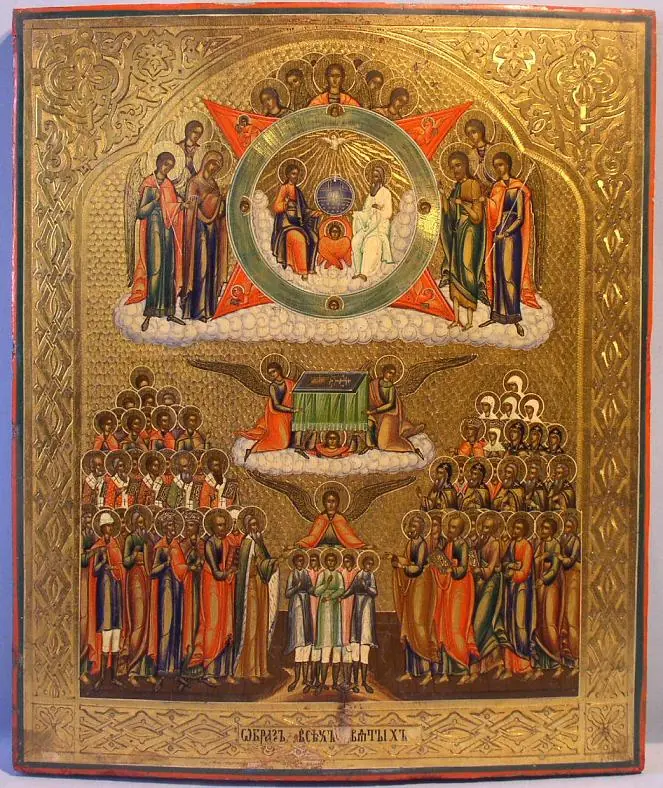
The Christian East kept the older date. In the Byzantine tradition, the Sunday after Pentecost is the Synaxis of All Saints: the Holy Spirit came down at Pentecost, and the next Sunday the Church honors the saints the Spirit has made. The Orthodox Church in America notes that the feast "may have originated at an early date, perhaps as a celebration of all martyrs," and that it "achieved great prominence in the ninth century, in the reign of the Byzantine Emperor Leo VI the Wise (886-911)." Its hymns list six kinds of saints: apostles, prophets, martyrs, hierarchs, monastic fathers and the righteous.
The Sunday after that, many Orthodox churches keep a feast of the saints of their own land: All Saints of Russia, of Mount Athos, of North America. Syriac and Chaldean churches have their own dates as well. The Catholic Encyclopedia records a "Commemoration of the Confessors" on the Friday after Easter in a Chaldean calendar of 411.

All Hallows' Eve: where Halloween comes from
Hallow is an Old English word for a holy person. All Hallows' Day was the English name for All Saints Day, and the evening before it, October 31, was All Hallows' Eve or All Hallows' Even. Shortened in Scotland to Hallowe'en, the name stuck. The Catholic Encyclopedia of 1907 begins its article on All Saints by noting that "the vigil of this feast is popularly called 'Hallowe'en' or 'Halloween'."
Like every major feast, All Saints began liturgically the evening before, with First Vespers and a vigil. In the Middle Ages the night of October 31 was a holy evening in its own right, and the next two days, given to the saints and then to the dead, were known together as Hallowtide.

What about Samhain?
Almost every Halloween article says the holiday began as Samhain, a Celtic festival held around November 1 that marked the end of the harvest. The Library of Congress research guide repeats a common form of the story, that missionaries assigned All Saints and All Souls to November 1 and 2 "to substitute for Samhain and ultimately to replace it," and that Christian and pre-Christian customs then mingled.
The documented history is narrower than that. Here is what can be said with confidence:
- The date was set in Rome. Gregory III chose November 1 for a chapel in St. Peter's, and Gregory IV extended it to the whole Church. Neither the papal records nor the Catholic Encyclopedia's account of them mentions Samhain or any Celtic custom.
- Samhain is real. Early Irish literature describes a festival of that name at the start of winter, with gatherings and feasting.
- The link between them is disputed. The historian Ronald Hutton, in The Stations of the Sun (1996), argues that much of what is said about Samhain, including that it was a festival of the dead or the Celtic New Year, rests on 19th-century theories with thin evidence behind them. Other writers still hold that some Irish and Scottish folk customs of Halloween night, such as bonfires, divination games and carved lanterns, carry older harvest-season traditions.
The fair summary: Halloween is a Christian name for the eve of a Christian feast, fixed for Roman reasons. Some of the folk customs that grew up around that night in Ireland and Scotland may be older, and Irish and Scottish immigrants carried them to North America in the 19th century, where they turned into the Halloween most Americans know.


The Mass readings for All Saints Day
The readings for the solemnity (Lectionary 667) are the same every year:
- First reading: Revelation 7:2-4, 9-14, John's vision of the sealed servants of God and the great multitude in white robes.
- Responsorial Psalm: Psalm 24, with the refrain "Lord, this is the people that longs to see your face."
- Second reading: 1 John 3:1-3, "we shall see him as he is."
- Gospel: Matthew 5:1-12a, the Beatitudes.
The first reading is the heart of the feast. In the Douay-Rheims translation:
After this I saw a great multitude, which no man could number, of all nations, and tribes, and peoples, and tongues, standing before the throne, and in sight of the Lamb, clothed with white robes, and palms in their hands: And they cried with a loud voice, saying: Salvation to our God, who sitteth upon the throne, and to the Lamb.


The Gospel answers the question of what makes a saint. The Beatitudes, again in the Douay-Rheims:
Blessed are the poor in spirit: for theirs is the kingdom of heaven. Blessed are the meek: for they shall possess the land. Blessed are they that mourn: for they shall be comforted. Blessed are they that hunger and thirst after justice: for they shall have their fill. Blessed are the merciful: for they shall obtain mercy. Blessed are the clean of heart: for they shall see God. Blessed are the peacemakers: for they shall be called children of God. Blessed are they that suffer persecution for justice' sake: for theirs is the kingdom of heaven.
How All Saints Day is kept
At church
Catholics attend Mass, either on the day or at a vigil Mass the evening before. The priest wears white or gold. Many parishes sing the Litany of the Saints, the ancient chain of invocations ("Holy Mary, Mother of God, pray for us. Saint Michael, pray for us...") used at baptisms and ordinations, and the hymn "For All the Saints," written in 1864 by the English clergyman William Walsham How, later an Anglican bishop, is sung in Catholic and Protestant churches alike.

Dressing as saints
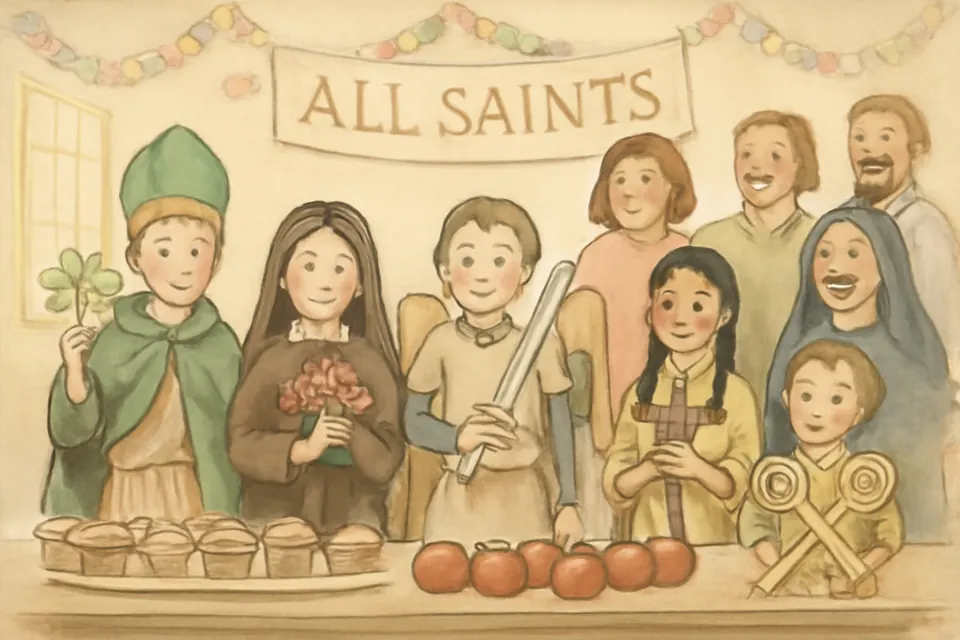
In recent decades many Catholic parishes and schools have started holding All Saints parties on or around October 31. Children come dressed as a favorite saint, and the game is to guess who's who from the clues: keys for St. Peter, a sword and banner for St. Joan of Arc, roses for St. Thérèse, a dragon for St. George, a shamrock for St. Patrick, a crown of candles for St. Lucy. Recent saints have joined the parade, from St. Kateri Tekakwitha to St. Carlo Acutis in jeans and a sweatshirt. Our guide to saints' symbols in art is a good costume source.
In the Philippines, where the feast is a public holiday, some parishes hold street processions in which young people dress as saints.


At the cemetery
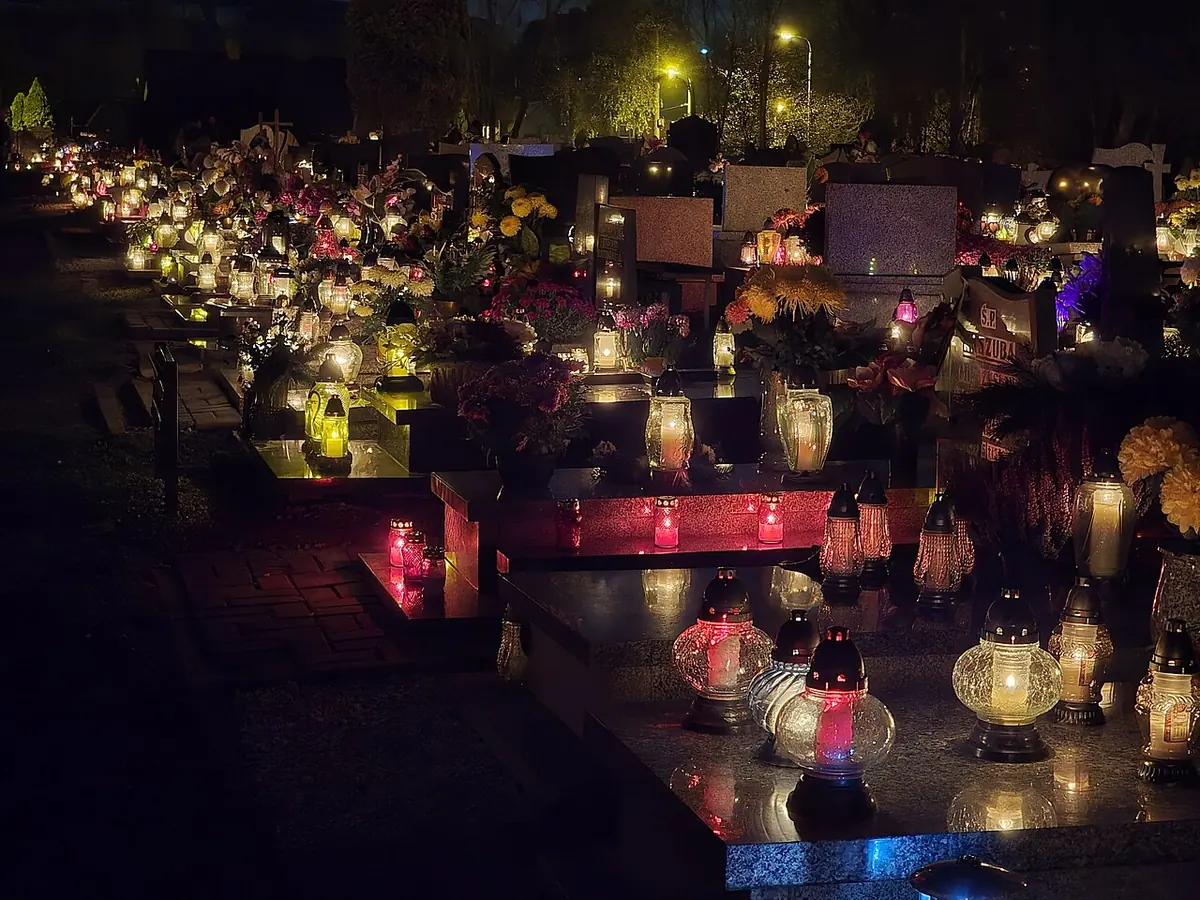
In much of Catholic Europe and Latin America, November 1 is a public holiday and November 2 is not, so families visit the graves of their dead on All Saints Day itself, even though prayer for the dead belongs to the next day. In Poland the cemeteries fill at dusk with thousands of candles in glass lanterns. In France people bring pots of chrysanthemums. In the Philippines, families spend the day, and sometimes the night, at the graves.

Foods
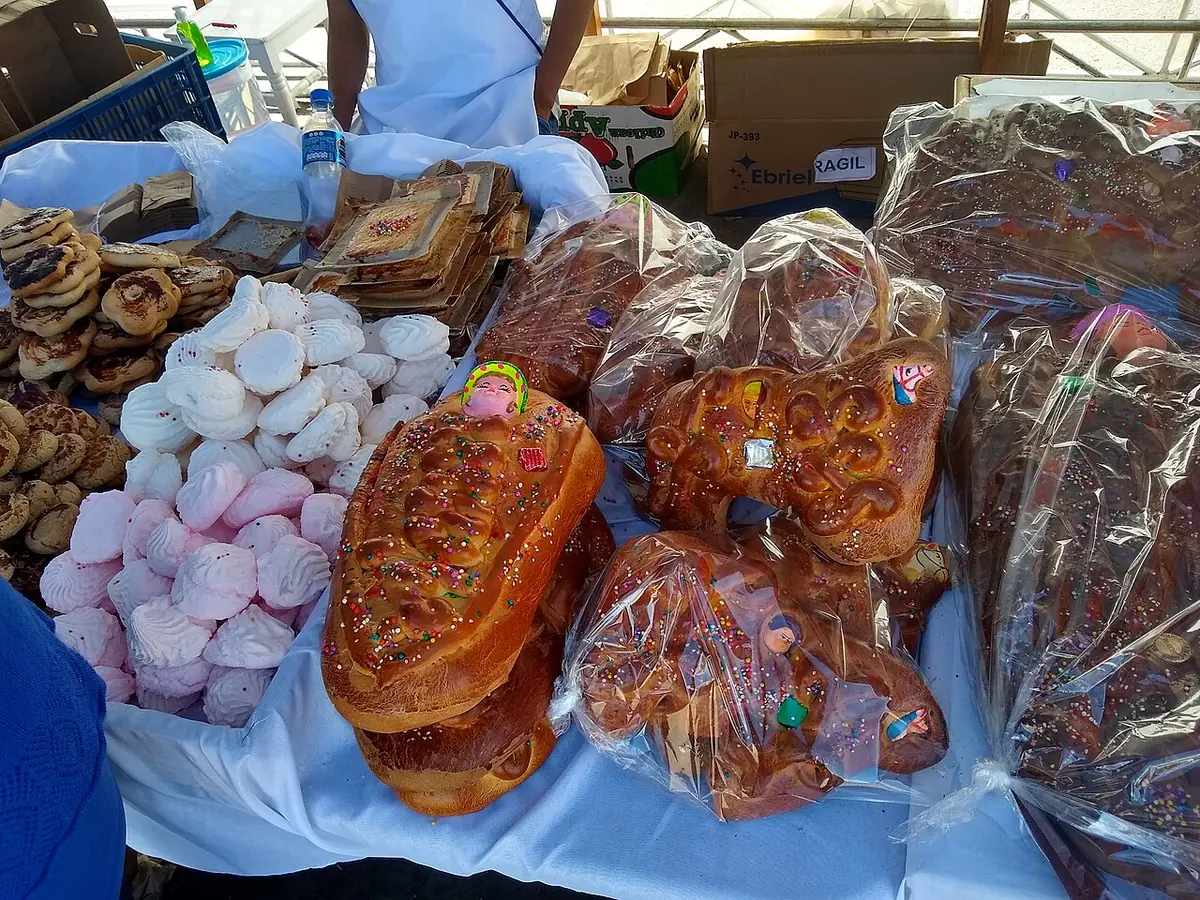
Many regions have their own breads and sweets for the feast. In the Andes, bakeries and market stalls sell sweet loaves for All Saints, some of them shaped like swaddled babies, which families buy to share during the two days of the saints and the dead.

All Saints Day in Protestant churches
All Saints Day survived the Reformation in the Lutheran and Anglican traditions, and many other Protestant churches have taken it up since. The Church of England keeps it as a principal feast. Its 1662 Book of Common Prayer gives this collect for the day:
O Almighty God, who hast knit together thine elect in one communion and fellowship, in the mystical body of thy Son Christ our Lord: Grant us grace so to follow thy blessed Saints in all virtuous and godly living, that we may come to those unspeakable joys, which thou hast prepared for them that unfeignedly love thee; through Jesus Christ our Lord. Amen.
Lutheran, Episcopal, Methodist and Presbyterian congregations often keep All Saints Sunday, the first Sunday in November, and many read aloud the names of members who died in the past year, sometimes lighting a candle for each. Protestants generally use "saints" the way St. Paul did when he wrote to the church at Corinth, "called to be saints" (1 Corinthians 1:2): it means all believers, living and dead. So the day is less about canonized heroes than about the whole Church, and it is not an occasion for asking the saints to pray for us, which most Protestants do not practice. (The curator of this site is an evangelical, and this is the sense in which many evangelicals who keep the day understand it.)
Reformation Day, October 31
For Lutherans and many other Protestants, October 31 is also Reformation Day. On October 31, 1517, the eve of All Saints, Martin Luther sent his Ninety-five Theses on indulgences to Archbishop Albert of Mainz. The timing was not random. The Castle Church in Wittenberg was dedicated to All Saints, and All Saints Day was the most important day of its year for the display of its large relic collection, which drew pilgrims seeking indulgences. Whether Luther actually nailed the theses to the church door is debated; Philip Melanchthon was the first to mention the posting. The church burned during a bombardment in 1760, and the bronze "Theses Door" there today, cast with the Latin text, was installed in 1858.


Saints whose feasts follow in November
All Saints opens a month full of saints' days. Some of the best loved, all with entries on this site:
- November 3: St. Martin de Porres and St. Hubert
- November 4: St. Charles Borromeo
- November 11: St. Martin of Tours
- November 13: St. Frances Xavier Cabrini
- November 15: St. Albert the Great
- November 16: St. Gertrude the Great and St. Margaret of Scotland
- November 17: St. Elizabeth of Hungary
- November 22: St. Cecilia
- November 23: St. Clement of Rome
- November 25: St. Catherine of Alexandria
- November 30: St. Andrew, whose feast begins the St. Andrew Christmas novena
The full calendar is on our feast days page.
Frequently asked questions
When is All Saints Day?
All Saints Day is always November 1 in the Catholic, Anglican and Lutheran calendars. In 2026 it falls on a Sunday, and in 2027 on a Monday. Eastern Orthodox and Byzantine Catholic churches keep their own All Saints Sunday on the first Sunday after Pentecost, in late spring or early summer.
Is All Saints Day a holy day of obligation?
Yes, for Catholics in most years. In the United States, the bishops' complementary norm to canon 1246 says that when November 1 falls on a Saturday or a Monday, "the precept to attend Mass is abrogated." So in 2027, when it falls on a Monday, American Catholics are not obliged to attend Mass, though it is still a solemnity. In 2026 it falls on a Sunday, so the usual Sunday obligation applies.
What is All Hallows' Eve?
All Hallows' Eve is the evening of October 31, the vigil of All Saints Day. "Hallow" is an old English word for a saint or holy one, so All Hallows' Day means All Saints Day. The Catholic Encyclopedia of 1907 notes that the vigil "is popularly called Hallowe'en or Halloween."
Is Halloween a pagan holiday?
The name and the date are Christian. Halloween is the eve of All Saints, a feast fixed on November 1 in Rome in the 700s and extended to the whole Church in the 800s. Many popular accounts, including the Library of Congress, say the Church placed the feast there to replace the Celtic festival of Samhain. Historians such as Ronald Hutton question that story, because the papal sources never mention Samhain and the November date was chosen for a chapel in St. Peter's in Rome. Some folk customs of the night may be older than the feast; how much older is still argued.
What is the difference between All Saints Day and All Souls Day?
All Saints Day (November 1) honors those who are already in heaven. All Souls Day (November 2) is a day of prayer for all the faithful departed, especially, in Catholic teaching, those still being purified in purgatory. One is a day of celebration; the other is a day of intercession.
What are the Mass readings for All Saints Day?
Revelation 7:2-4, 9-14 (the great multitude no one could count), Psalm 24 ("Lord, this is the people that longs to see your face"), 1 John 3:1-3 ("we shall see him as he is") and the Beatitudes from Matthew 5:1-12a.
Do Protestants celebrate All Saints Day?
Many do. The Church of England keeps it as a principal feast, and Lutheran, Episcopal and Methodist churches commonly mark it on November 1 or the Sunday after, often remembering members who died during the year. Protestants usually understand "saints" in the New Testament sense of all believers, so the day honors the whole Church, past and present.
Why do Catholic children dress up as saints?
It is a modern parish custom of holding All Saints parties where children come dressed as a favorite saint and tell the others who they are. It gives families a Christian way to keep the costumes of Halloween while pointing to the feast the night belongs to.
Sources
- Catholic Encyclopedia (1907): All Saints' Day
- USCCB: Canon 1246, §2, Holy Days of Obligation (complementary norm). Text of the 1991 decree; confirmed by the Holy See in 1992
- USCCB: Readings for the Solemnity of All Saints (Lectionary 667)
- Orthodox Church in America: Synaxis of All Saints
- National Catholic Register (CNA): Here's How Catholics Can Get 8 Plenary Indulgences During the First Week of November. On the All Saints octave and the November indulgences
- Library of Congress: Halloween & Día de Muertos Resources (research guide)
- Ronald Hutton, The Stations of the Sun: A History of the Ritual Year in Britain (Oxford, 1996)
- The Church of England: All Saints' Day (Book of Common Prayer collect, epistle and gospel)
- Hymnary.org: For all the Saints, who from their labor rest (William Walsham How)
- Wikipedia: Ninety-five Theses (for Luther's letter of October 31, 1517)
- Wikipedia: All Saints' Church, Wittenberg
- Douay-Rheims Bible: Apocalypse (Revelation) 7
- Douay-Rheims Bible: Matthew 5
- Douay-Rheims Bible: Hebrews 12