St. Augustine of Hippo
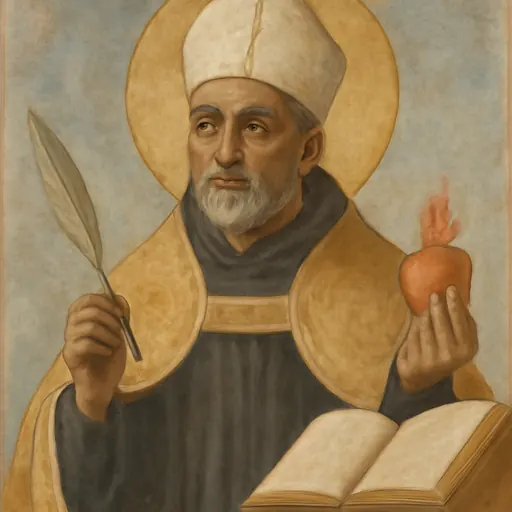
St. Augustine of Hippo (354–430) was a North African teacher of rhetoric who, after years of searching, was converted in a garden in Milan in 386, baptized by St. Ambrose, and became bishop of Hippo in present-day Algeria. He wrote the Confessions and The City of God and is a Doctor of the Church, called the Doctor of Grace. His feast day is August 28, and he is the patron saint of theologians and of the Augustinian orders.
Who was St. Augustine of Hippo?
Augustine was a bishop in Roman North Africa who became the most widely read of the early Church Fathers. He was born in 354 in Thagaste, a small town in what is now Algeria, to a pagan father and a Christian mother, St. Monica. He grew up clever and ambitious, studied and taught rhetoric, lived for years with a woman he never married, joined a religious sect called the Manichaeans, and moved from Carthage to Rome to Milan in search of a career and the truth. In a garden in Milan in 386, at the age of 31, he gave his life to Christ. He spent the rest of it, more than forty years, as a monk, priest and bishop in the port city of Hippo Regius.
He wrote more than any other Father of the Church. His Confessions, a long prayer to God telling the story of his life, is still read by people who share none of his faith, and his City of God shaped how the West thought about history for a thousand years. Pope Benedict XVI, who gave five talks on him in 2008, called him "the greatest Father of the Latin Church."


(The city of St. Augustine, Florida, founded by the Spanish in 1565, is named for him; this page is about the saint.)
The life of St. Augustine
Almost everything about his early life comes from his own pen. The Confessions, written around the year 400 when he was a bishop in his forties, tell the story up to his mother's death in 387. Possidius's Life of Augustine covers his years as priest and bishop.
Childhood in Thagaste
His father, Patricius, was a town councilor of modest means and a pagan, though he was baptized before he died around 371. His mother had him signed with the cross and enrolled as a catechumen, a candidate for baptism, but did not have him baptized. Once, as a boy, he fell dangerously ill and begged for baptism, then recovered, and it was put off, as was common then. He had a brother, Navigius, and a sister.
He went to school in Thagaste and nearby Madaura and never liked Greek. The Confessions recall a night when he and his friends stole pears from a neighbor's tree, not from hunger but for the thrill of doing wrong, and threw most of them to the pigs. Looking back, the small theft showed him how a person can love wrongdoing for its own sake.


Carthage and the Manichaeans
In 370 he went to study in Carthage, the great city of Roman Africa. He fell in with a fast crowd, went to the theater and, still a teenager, began living with a woman whose name he never records. She bore him a son around 372, Adeodatus, "given by God." Augustine stayed faithful to her for some fifteen years.
At nineteen he read a lost book by Cicero, the Hortensius, and fell in love with wisdom. "The book changed my feelings," he wrote. He tried reading the Bible next, found it crude next to Cicero, and joined the Manichaeans. They called themselves the true Christians, promised answers by reason alone, and explained evil as a power in the world equal to good. He stayed with them about nine years as a "hearer," never as one of the inner "elect," and drew several friends in after him. His disappointment came when Faustus, the famous Manichaean teacher, finally visited Carthage and could not answer his questions about the stars.
Rome and Milan
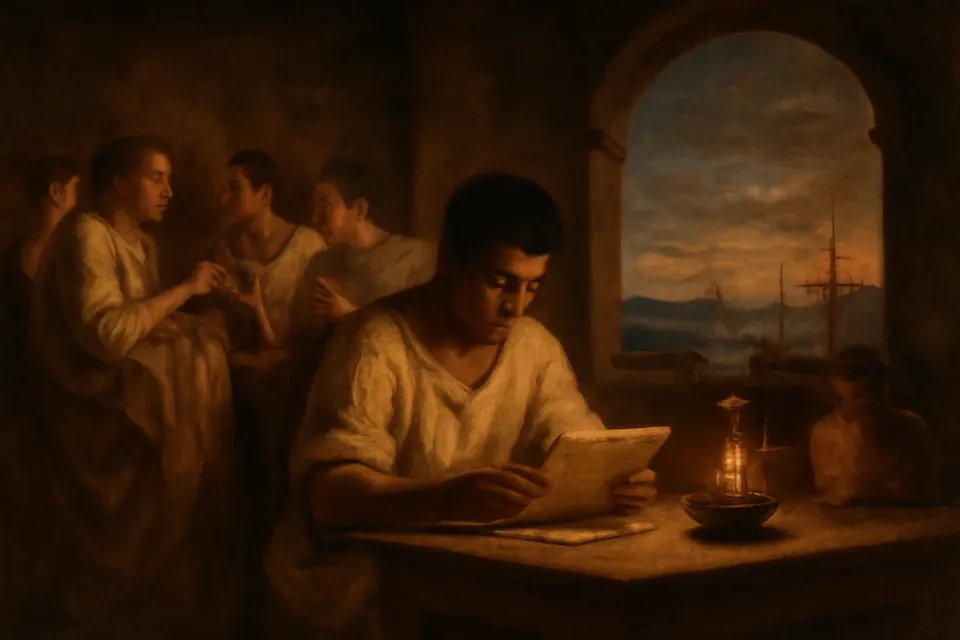
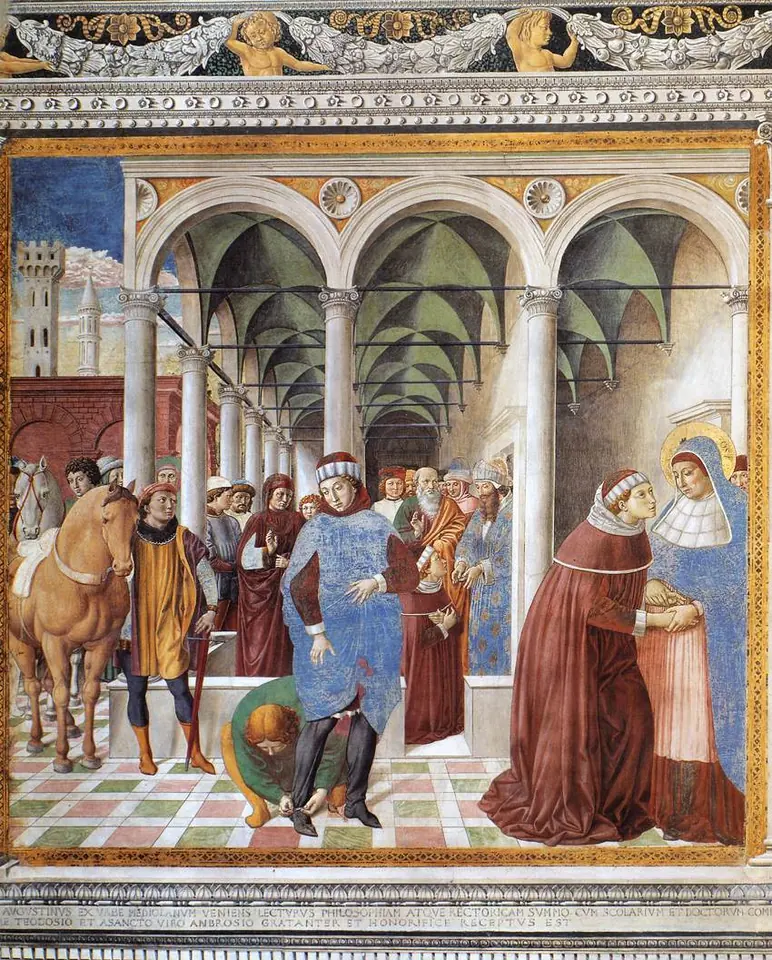
In 383 he sailed to Rome, slipping away at night while his mother prayed in a chapel by the harbor. After a grave illness there, he won the post of professor of rhetoric in Milan, where the imperial court lived, in 384. He went to hear the bishop, St. Ambrose, at first to study his style, but the content reached him. Ambrose read the Old Testament as pointing to Christ, and Augustine's old objections to the Bible started to fall away.
Monica followed him to Milan. Under her urging he became engaged to a girl of good family who was still too young to marry. The mother of Adeodatus was sent back to Africa. Augustine says she vowed never to be with another man, and that his heart "was racked, and wounded, and bleeding." He took another mistress while he waited. Of this time he later wrote his most quoted line about himself: as a young man he had prayed, "Grant me chastity and continency, but not yet" (VIII.7).

The garden in Milan
The Platonist philosophers convinced him that God was spirit and that evil had no being of its own. He then turned to the letters of St. Paul. He now believed, he says, but could not bring himself to change his life. Two stories pushed him to the edge: how the famous rhetorician Victorinus had become a Christian, and how two court officials had left everything after reading the life of St. Anthony of Egypt.
In the late summer of 386, sitting in the garden of the house where he stayed with his friend Alypius, he broke down. He went off alone under a fig tree, weeping and asking "How long, how long? Tomorrow, and tomorrow?" Then, in the Confessions (VIII.12), comes the moment that has been painted for a thousand years:
I heard the voice as of a boy or girl, I know not which, coming from a neighbouring house, chanting, and oft repeating, Take up and read; take up and read.
In Latin the words are tolle, lege. He could not remember any children's game with such words. Remembering how Anthony had been converted by a single verse of the Gospel, he went back to the place where he had left his book of Paul's letters, opened it, and read the first passage his eyes fell on:
Not in rioting and drunkenness, not in chambering and wantonness, not in strife and envying; but put on the Lord Jesus Christ, and make not provision for the flesh, to fulfil the lusts thereof. (Romans 13:13–14)
"No further would I read, nor did I need," he writes, for "all the gloom of doubt vanished away." Alypius read the next line, "Him that is weak in the faith, receive," and joined him. They went in and told Monica, who "leaps for joy."


Baptism in Milan
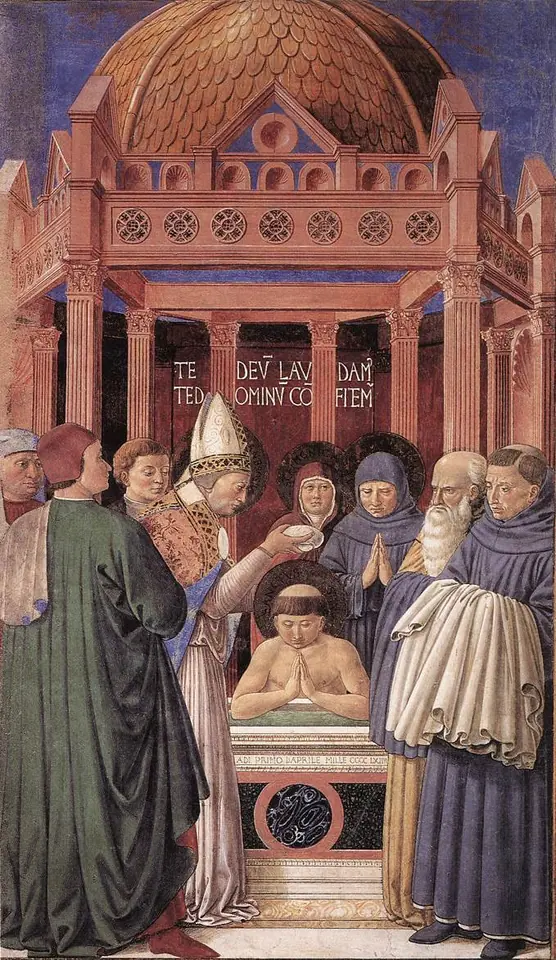
Augustine resigned his professorship and spent the autumn and winter at a friend's country house at Cassiciacum, north of Milan, with Monica, Adeodatus and a few friends, reading the Psalms and writing philosophical dialogues. He was baptized by Ambrose at the Easter Vigil of 387, on the night of April 24, with Adeodatus and Alypius. A medieval story says that Ambrose and Augustine composed the Te Deum that night, singing alternate verses. The Catholic Encyclopedia calls it groundless, but Gozzoli wrote the hymn's opening words behind the font.

Ostia and his mother's death
That autumn the family waited at Ostia, the port of Rome, for a ship to Africa. At a window overlooking the garden, Augustine and Monica talked about eternal life until, he says, they "slightly touched" the Wisdom of God "with the whole effort of our heart." Days later she fell ill, and on the ninth day she died. The story, from Book IX of the Confessions, is told on the page of St. Monica.
Priest and bishop of Hippo
Back in Africa in 388, Augustine gave up his property and lived with friends in a small community of prayer and study at Thagaste, where Adeodatus died young. In 391 Augustine went to the port of Hippo Regius, about 60 miles away, to meet an imperial official who, Possidius says, had promised to give up the world if he could hear Augustine speak. While he stood in church, the bishop, Valerius, told the people that he needed a priest. Possidius writes that the congregation "laid hands on him" and brought him forward to be ordained, "while he wept freely."
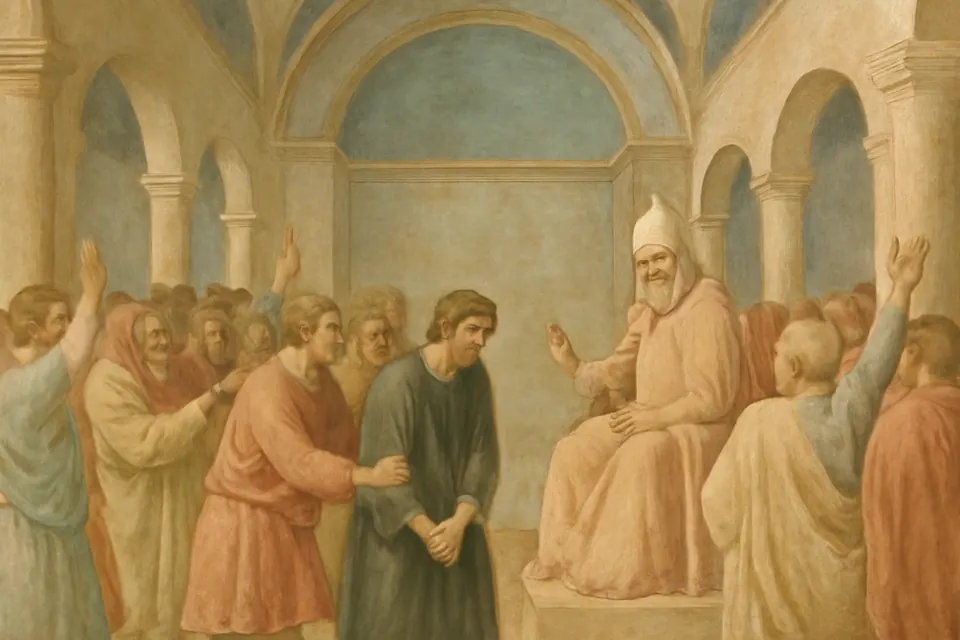
He founded a monastery within the church grounds and was allowed, unusually in Africa, to preach while still a priest. In 395 or 396 he was made coadjutor bishop and soon succeeded Valerius. He turned the bishop's house into a monastery for his clergy, who gave up private property. He preached several times a week, heard lawsuits as a judge, answered letters from across the Roman world and went to Church councils at Carthage.
The Donatists and Pelagius
Two great controversies took up his years as bishop. The Donatists were a rival African church, as large as the Catholic one, which held that sacraments given by unworthy priests were invalid. Augustine answered that the Church on earth holds saints and sinners together, holy because of Christ and not because of its members. At first he wanted only debate. After years of violence by Donatist gangs, which nearly killed his friend Possidius, he came to accept the emperors' laws against them, though he begged the officials never to use the death penalty. A conference at Carthage in 411, with 286 Catholic and 279 Donatist bishops, ended in a ruling for the Catholics.
The Pelagians, followers of the British monk Pelagius, taught that a person could live without sin by free will and effort. Augustine, remembering his own long helplessness, answered that every good desire, even the first turning toward God, is a gift of grace. African councils and Pope Zosimus condemned Pelagius in 418. For these writings Augustine has been called the Doctor of Grace ever since.


The City of God
In 410 the Goths under Alaric sacked Rome. Refugees reached Africa, and pagans blamed the disaster on the empire's turn from the old gods to Christ. Augustine answered with The City of God, 22 books written between 413 and about 426 and dedicated to his friend Marcellinus. It tells human history as the story of two cities, mixed together until the end of time:
Accordingly, two cities have been formed by two loves: the earthly by the love of self, even to the contempt of God; the heavenly by the love of God, even to the contempt of self. (City of God XIV.28)
Near the end of his life he reread all his books and wrote the Retractations, listing what he would now correct.

The siege of Hippo and his death
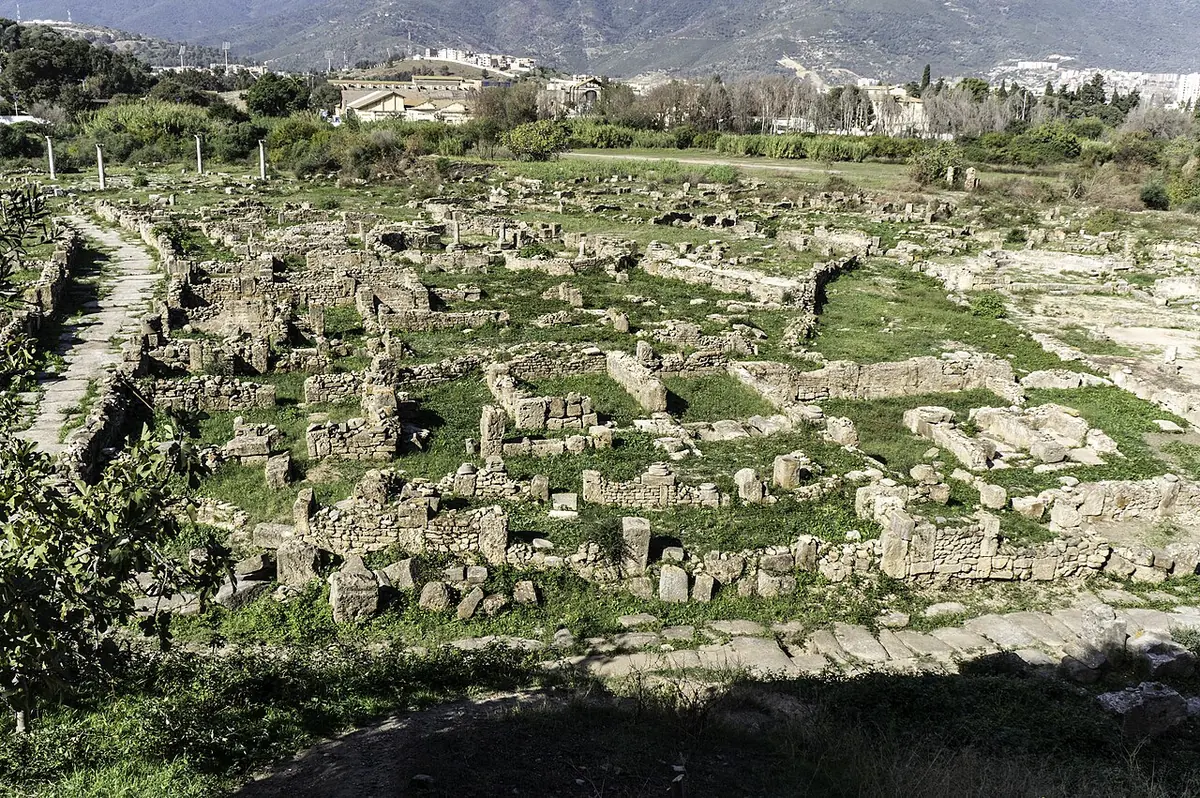
In 426, at 72, Augustine had the people approve the priest Heraclius as his successor. In 429 the Vandals, Arian Christians from Spain, invaded Africa, and by the summer of 430 they were besieging Hippo, where refugee bishops, Possidius among them, had taken shelter. Possidius says that in the third month of the siege Augustine fell ill with fever. He had often said that no Christian, however good, should die without repentance, so "he commanded that the shortest penitential Psalms of David should be copied for him, and during the days of his sickness as he lay in bed he would look at these sheets as they hung upon the wall and read them; and he wept freely and constantly." For his last ten days he asked to be left alone except when the doctors came or food was brought.
He died on August 28, 430, at 75. "He made no will," Possidius writes, "because as a poor man of God he had nothing from which to make it." He asked only that the church's library be kept safe. Hippo fell to the Vandals the next year, but his books survived.

The miracles of St. Augustine
Augustine is honored for his teaching, not for wonders, and lived long before the Church formally examined miracles.
- Reported: Possidius, who was with him at the end, writes that during his last illness a man brought a sick relative, saying a dream had told him to ask Augustine to lay hands on him. Augustine answered that if he had such power he would have used it on himself first, but he laid on his hands, and the sick man went away healed. Possidius adds that demons left people Augustine prayed for with tears.
- Reported: Augustine himself was a careful recorder of miracles by other saints. In The City of God (XXII.8) he lists healings at the shrines of St. Stephen in Africa that he had written down and read aloud in church.
- Traditional: the medieval Golden Legend tells of Augustine appearing from heaven in shining vestments to people who prayed to him, and of cures at his tomb.
- Traditional: the child at the seashore, told below, and the first Te Deum at his baptism.


The story in Carpaccio's painting comes from a letter falsely attributed to Augustine and is traditional only. The real Augustine and St. Jerome did write to each other.
Why St. Augustine is a patron saint
Theologians. His teaching on grace, original sin, the Church and the Trinity runs through medieval theology, through St. Thomas Aquinas and through the Protestant Reformers, who read him closely. The Church counts him among the first four Doctors of the Church in the West, with Ambrose, Jerome and St. Gregory the Great. A decree of Pope Boniface VIII in 1298 ordered the feasts of these four to be kept throughout the Church.
Augustinian religious. The short Rule of St. Augustine, drawn from his writings on community life, is followed by the Augustinian friars, the Canons Regular, the Dominicans and many communities of sisters. In 1256 Pope Alexander IV joined several groups of hermits in Italy into a single order, the Hermits of St. Augustine, in black habits. Its members have included St. Rita of Cascia, St. Nicholas of Tolentino, the geneticist Gregor Mendel and, before his break with Rome, Martin Luther. In 2025 an Augustinian friar, Robert Prevost, was elected pope as Leo XIV.
Converts. Because his own conversion came after long searching, Catholics ask him, with his mother, to pray for loved ones who have left the faith.
Brewers. Catholic Online and other popular lists name him the patron of brewers, explaining it by the wild youth he turned away from. See more patron saints by cause.
Symbols of St. Augustine in art
In a church or museum, look for these clues:
- A heart, burning or pierced by an arrow: his most personal attribute, the love of God that, in his own words, set him on fire. Champaigne's painting at the top of this page shows a flaming heart. An arrow through the heart recalls his line in the Confessions about hearts pierced by God's love.
- Splendid bishop's vestments: a jeweled miter, crozier and embroidered cope, often grander than those of other bishops. Christian Iconography notes that the real Augustine sold costly gifts of clothing for the poor; the splendor stands for the "robe of glory" of the old Mass of his feast.
- A book and pen: for the Confessions, The City of God and his many other books, as in Botticelli's and Carpaccio's studies.
- A black habit with a leather belt: in pictures made for the Augustinian friars, who wore one.
- A child at the seashore: with a shell or spoon, digging a hole in the sand.
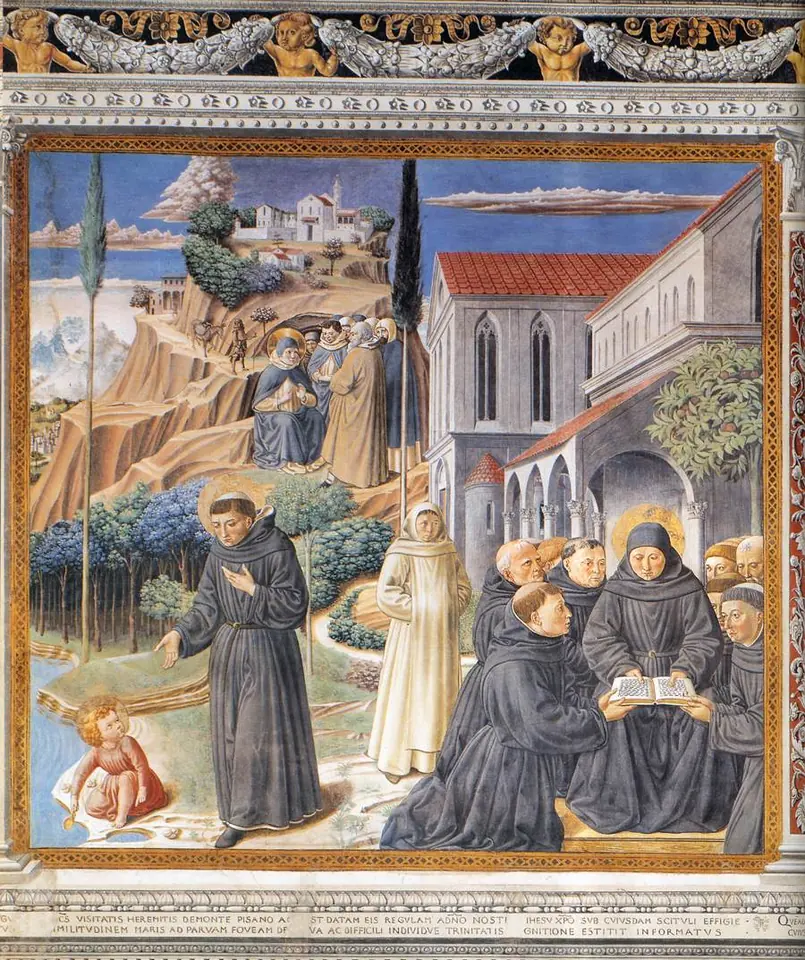

The seashore story is a traditional medieval legend, not in his own writings. Walking by the sea and thinking about the Trinity, Augustine saw a child pouring seawater into a hole with a spoon. When he called it impossible, the child answered that it would be easier to empty the sea into that hole than to fit the Trinity into his understanding, and vanished.
Most frescoes on this page are from Benozzo Gozzoli's cycle of his life (1464–1465) in the Augustinian church of San Gimignano, Tuscany.
Feast day and where St. Augustine is honored
Catholics keep his memorial on August 28, the day he died, directly after his mother's on August 27. Many Anglican and Lutheran calendars keep the same date. The Orthodox Church commemorates "Blessed Augustine" on June 15, and the Orthodox Church in America's life of him notes his relics in Pavia and a portion in a monastery in Attica, Greece. See the full feast day calendar.
Pavia: his tomb
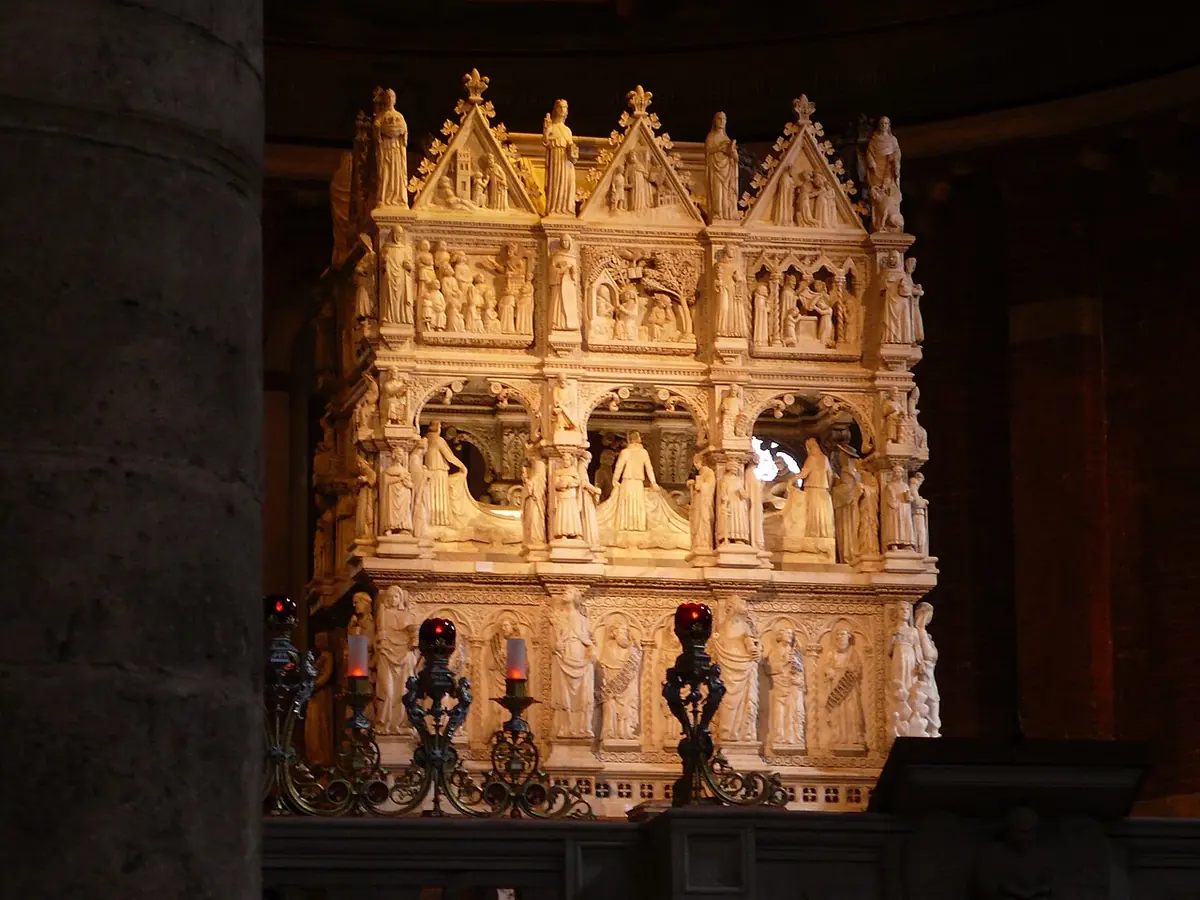
Augustine was buried at Hippo. At some unknown date his body was taken to Sardinia, and around 725 it was brought to the church of San Pietro in Ciel d'Oro in Pavia, northern Italy where it still rests. The relics lie in the Arca di Sant'Agostino, a white marble shrine finished in 1362 and crowded with carved figures and scenes. Pope Benedict XVI made a pilgrimage there in April 2007 to express, he said, "the homage of the entire Catholic Church" and his "personal devotion and gratitude."

Annaba, the old Hippo
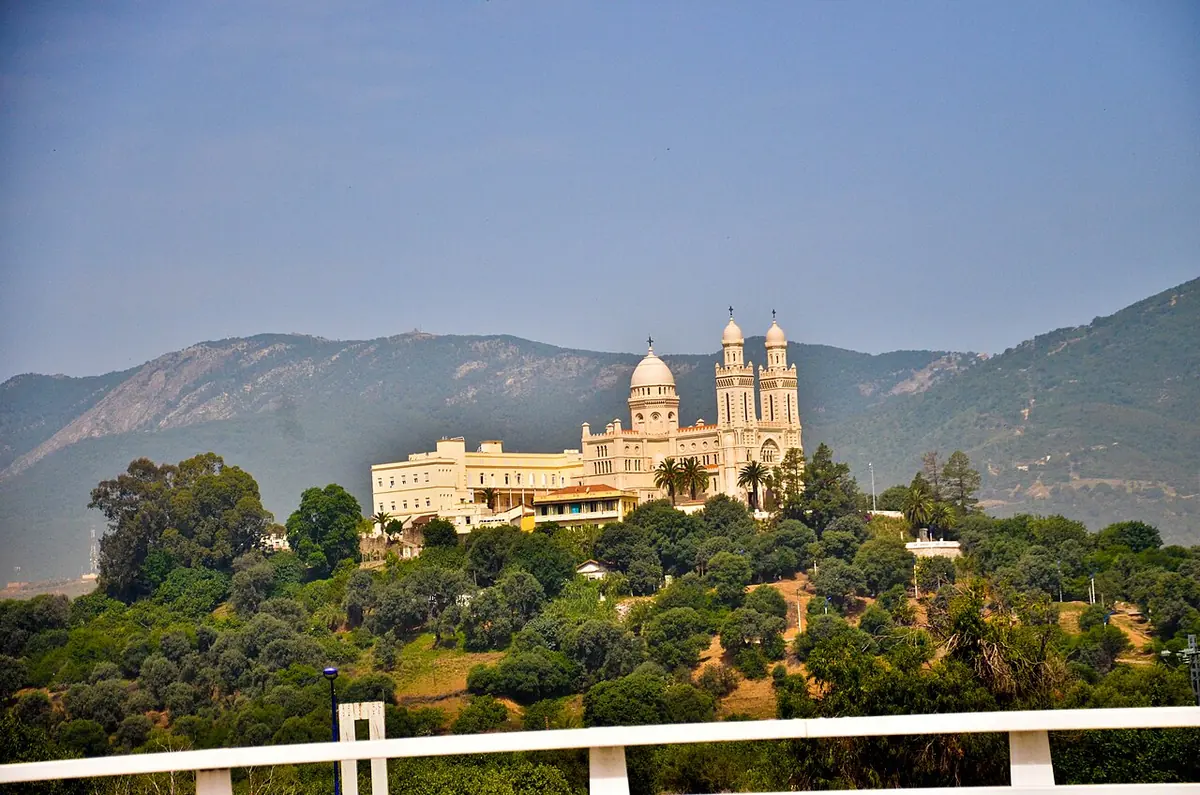
Above the ruins of Hippo Regius, in the Algerian city of Annaba, stands the Basilica of St. Augustine, built at the end of the 19th century, when Algeria was under French rule. It looks down on the excavated streets and baths of the city where he preached for nearly forty years.

Prayers of St. Augustine
St. Augustine's best-known prayers are his own words. The Confessions are written from start to finish as a prayer to God, and many Christians pray with passages from them. The quotations below are from J.G. Pilkington's translation, as revised on New Advent.
"Our hearts are restless" (Confessions I.1)
You move us to delight in praising You; for You have made us for Yourself, and our hearts are restless until they rest in You.
"Late have I loved you" (Confessions X.27)
Too late did I love You, O Fairness, so ancient, and yet so new! Too late did I love You! For behold, You were within, and I without, and there did I seek You; I, unlovely, rushed heedlessly among the things of beauty You made. You were with me, but I was not with You. Those things kept me far from You, which, unless they were in You, were not. You called, and cried aloud, and forced open my deafness. You gleamed and shine, and chase away my blindness. You exhaled odours, and I drew in my breath and do pant after You. I tasted, and do hunger and thirst. You touched me, and I burned for Your peace.
Benedict XVI quoted it in 2008 as "Late have I loved you, beauty so old and so new."
The closing prayer of On the Trinity
Augustine ended his great work on the Trinity (Book XV, chapter 28) with a prayer, in the translation of Arthur West Haddan:
O Lord the one God, God the Trinity, whatever I have said in these books that is of Yours, may they acknowledge who are Yours; if anything of my own, may it be pardoned both by You and by those who are Yours. Amen.
The collect of his feast
The Roman Missal (English translation of 2011) gives this prayer for August 28:
Renew in your Church, we pray, O Lord, that spirit with which you endowed your Bishop Saint Augustine that, filled with the same spirit, we may thirst for you, the sole fount of true wisdom, and seek you, the author of heavenly love. Through our Lord Jesus Christ, your Son, who lives and reigns with you in the unity of the Holy Spirit, God, for ever and ever.
Frequently asked questions
Who was St. Augustine of Hippo?
A Roman citizen of North Africa, born in 354 in Thagaste, who became a professor of rhetoric, spent nine years among the Manichaeans, and was converted to Christianity in Milan in 386. He was bishop of Hippo Regius from the mid-390s until his death in 430 and is one of the most influential Christian writers in history.
When is St. Augustine's feast day?
August 28, the day he died in 430. It is a memorial in the Catholic calendar and is kept by many Anglican and Lutheran churches too. The Orthodox Church commemorates Blessed Augustine on June 15. His mother, St. Monica, is honored the day before, on August 27.
What is St. Augustine the patron saint of?
Theologians, because of his vast and lasting influence on Christian theology, and the Augustinian religious orders, which follow his Rule. Popular lists also name him the patron of brewers, explained by the hard-living youth he gave up, and Catholics often ask his prayers for the conversion of someone they love.
What does "tolle lege" mean?
It is Latin for "take up and read." In the Confessions (Book VIII, chapter 12), Augustine says he heard a child's voice chanting these words from a nearby house. He opened the letters of St. Paul at random, read Romans 13:13–14, and his long struggle ended.
What are St. Augustine's most famous quotes?
In older and newer translations: "Our hearts are restless until they rest in You" (Confessions I.1); "Late have I loved you, beauty so old and so new" (Confessions X.27); "Grant me chastity and continency, but not yet" (Confessions VIII.7, about his youth); "Love, and do what you will" (Homily 7 on the First Epistle of John); and the "two cities" formed by "two loves" in The City of God (XIV.28).
Was St. Augustine African?
Yes. He was born, worked and died in Roman North Africa, in what is now Algeria, and spent only about five years in Italy. He wrote in Latin. Some historians think his mother's name, Monica, was of local Berber origin.
Where is St. Augustine buried?
In the Basilica of San Pietro in Ciel d'Oro in Pavia, Italy, in a marble shrine of 1362 called the Arca. His body was first buried at Hippo, later taken to Sardinia, and brought to Pavia around 725. Pope Benedict XVI prayed at the tomb in 2007.
What does the flaming heart mean in pictures of St. Augustine?
It stands for his burning love of God, drawn from his own writings, where he speaks of giving his heart to God and of hearts pierced by God's love. Sometimes an arrow pierces the heart. It is his most common attribute, along with his bishop's vestments and a book.
Sources
- Augustine, Confessions (trans. J.G. Pilkington), New Advent
- Augustine, Confessions, Book VIII
- Augustine, Confessions, Book X
- Augustine, The City of God, Book XIV
- Augustine, Homily 7 on the First Epistle of John
- Augustine, On the Trinity, Book XV
- Possidius, Life of St. Augustine (trans. H.T. Weiskotten, 1919)
- Catholic Encyclopedia (1907): St. Augustine of Hippo
- Catholic Encyclopedia (1909): Doctors of the Church
- Catholic Encyclopedia (1910): Hermits of St. Augustine
- Benedict XVI, General Audience of 9 January 2008: Saint Augustine of Hippo (1)
- Benedict XVI, General Audience of 16 January 2008: Saint Augustine of Hippo (2)
- Benedict XVI, General Audience of 30 January 2008: Saint Augustine of Hippo (3)
- Benedict XVI, General Audience of 27 February 2008: Saint Augustine of Hippo (5)
- John Paul II, Apostolic Letter Augustinum Hipponensem (1986)
- Orthodox Church in America: Blessed Augustine, Bishop of Hippo
- Christian Iconography: St. Augustine in Art
- Catholic Culture: Memorial of St. Augustine (collect)
- Catholic Online: St. Augustine of Hippo
- Roman Martyrology, August 28