Metatron
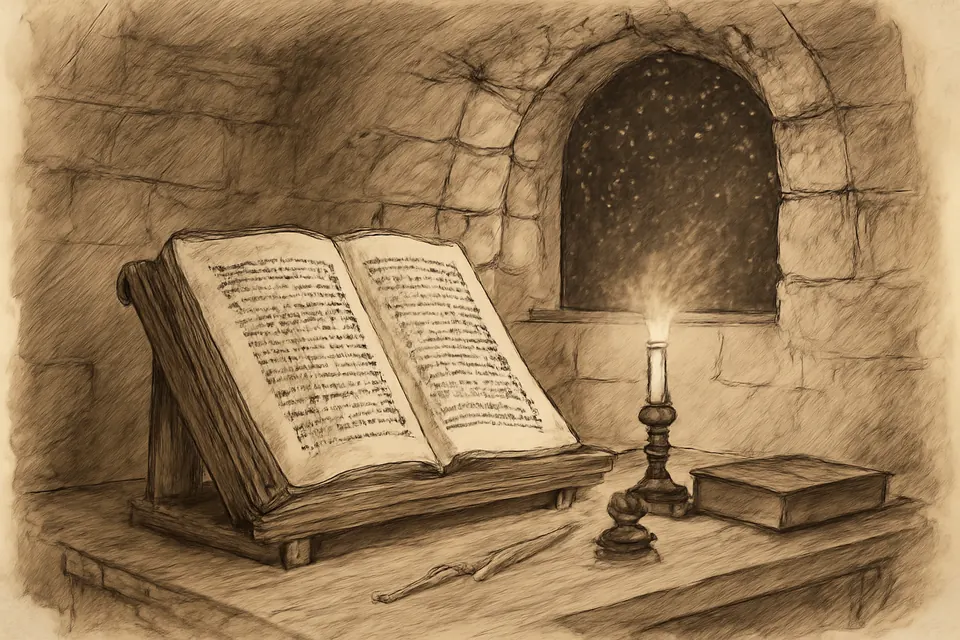
Metatron is an angel of Jewish tradition, named a few times in the Talmud and given a large role in the mystical Hebrew Book of Enoch (3 Enoch), where the patriarch Enoch is changed into the angel Metatron. He does not appear in the Bible and is not part of Catholic teaching; the Church names only Michael, Gabriel and Raphael.
Metatron is a name many people meet first online, often as "Archangel Metatron," with a glowing geometric symbol beside it. The real figure is much older and much more modest. He belongs to Jewish tradition: a few lines in the Talmud and a large part in the mystical writings of the early Middle Ages. He is not in the Bible, and he is not part of Catholic teaching. Here is what the old sources actually say, and how a Catholic can think about it.
Who is Metatron?
The Jewish Encyclopedia (1906) begins its article simply: Metatron is the "name of an angel found only in Jewish literature." The name itself is a puzzle. The encyclopedia favors a link with the Latin metator, a guide or one who marks out the way; other scholars have proposed Greek, Persian and Hebrew roots, and none has won general agreement.
Metatron in the Talmud
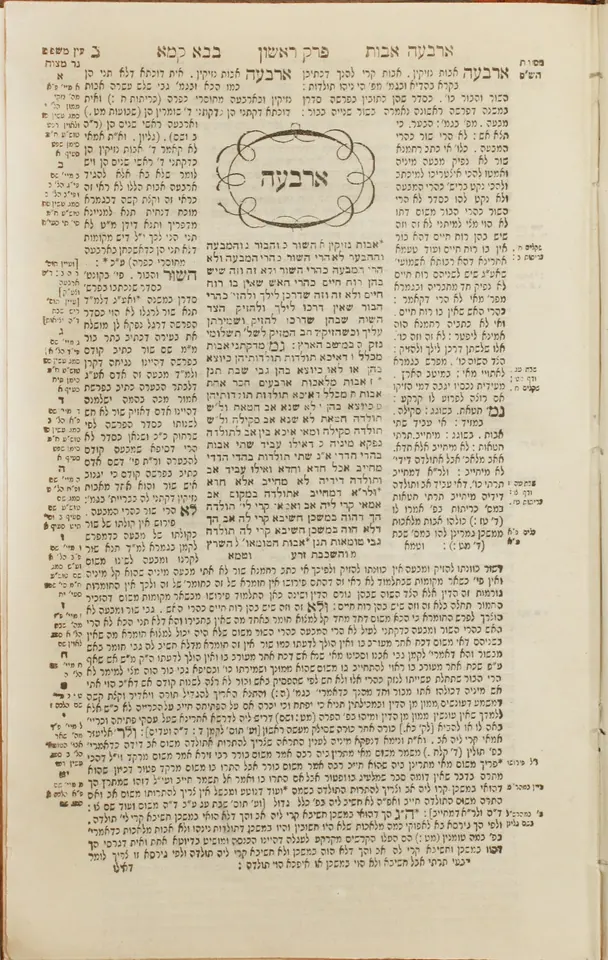
The Babylonian Talmud mentions Metatron only a handful of times. The best known passage is in tractate Hagigah (15a). It tells of Elisha ben Abuyah, a learned rabbi of the second century who later abandoned the faith. In a vision he saw Metatron seated in heaven, writing down the merits of Israel, and concluded that there might be "two powers" in heaven. The Talmud tells the story as a warning: it adds that Metatron was punished with lashes of fire, to show that no angel shares the throne of God.
A second passage (Sanhedrin 38b) quotes Exodus 23:21, "my name is in him," about the angel God sends before Israel. The rabbis apply it to Metatron, and then insist at once that he may not be worshiped. A third (Avodah Zarah 3b) pictures Metatron teaching the Torah to children for most of each day, with God himself teaching them in the last hours. Even in these few lines, the Jewish sources guard carefully against treating him as more than a servant of God.

The legend that Enoch became Metatron
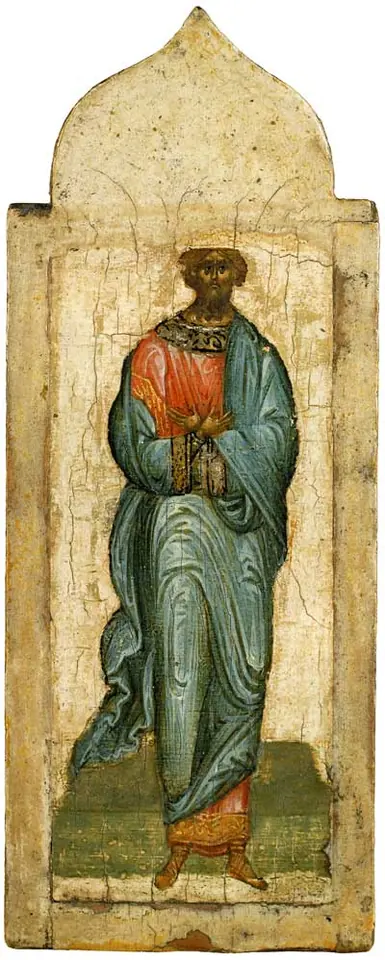
The larger story comes later. In the Hebrew Book of Enoch, usually called 3 Enoch, and the related Hekhalot writings, the patriarch Enoch is taken up to heaven and transformed into the angel Metatron. There he is called the "prince of the presence" and the great scribe, set over the heavenly hosts and their treasures. The Jewish Encyclopedia notes that one of these texts says plainly, "Enoch whose name is Metatron." The Aramaic paraphrase of Genesis known as the Targum Pseudo-Jonathan likewise calls Enoch "the great scribe."
Scripture's own words about Enoch are few and reverent:
And he walked with God, and was seen no more: because God took him. (Genesis 5:24, Douay-Rheims)
The Letter to the Hebrews adds, "By faith Henoch was translated, that he should not see death" (Hebrews 11:5), and Sirach says he "pleased God, and was translated into paradise" (Sirach 44:16). The Church honors Enoch as a holy patriarch, and the Eastern churches place his icon among the forefathers of Christ. Nowhere does Scripture say that he became an angel.
Metatron in later Jewish mysticism
The figure grew in the medieval Kabbalah. The Zohar describes Metatron as "little lower than God," borrowing the words of Psalm 8, and lists of angelic ranks put him at the head of the heavenly host. The Jewish Encyclopedia traces the many attempts to explain where the idea came from, and concludes that Metatron "combines various traits derived from different systems of thought." These ideas belong to Jewish mystical speculation. They are not part of the Hebrew Bible.

Is Metatron part of Catholic teaching?
No. The Church believes in the holy angels as "a truth of faith" (Catechism, no. 328), and she names three of them because Scripture does: St. Michael, St. Gabriel and St. Raphael. The Directory on Popular Piety and the Liturgy (2001) says that "the practice of assigning names to the Holy Angels should be discouraged, except in the cases of Gabriel, Raphael and Michael whose names are contained in Holy Scripture" (no. 217). Metatron falls outside that line on every count: his name is not in Scripture, and his story comes from writings the Church never received.
There is a deeper point too. The Catechism describes angels as "purely spiritual creatures" with "intelligence and will" (no. 330). Human beings are a different creature, body and soul. The saints in heaven are not angels, and they will rise in their own bodies at the end of time. So the idea of a holy man turned into an angel does not fit the Christian picture of creation, however poetic it may be.
The modern "Archangel Metatron" of New Age books, channeled messages and "Metatron's cube" has even less to do with the old sources. It is a recent invention, and Catholics should leave it alone.
Where to turn instead
If what drew you to Metatron was a sense that heaven is near, that God keeps a record of every good deed, and that the angels serve him, all of that is true, and the Church gives it to us in a surer form. We have the three archangels Scripture names, the nine choirs of angels, and a guardian angel for each of us. Let us end where Scripture leaves Enoch, walking with God, and pray with confidence the Guardian Angel prayer. For the full list of angels named in the Bible, see names of angels.
Frequently asked questions
Is Metatron in the Bible?
No. The name Metatron does not appear anywhere in the Old or New Testament. It first appears in the Babylonian Talmud and in later Jewish mystical writings, especially the Hebrew Book of Enoch, known as 3 Enoch.
Is Metatron an archangel in the Catholic Church?
No. The Catholic Church honors three archangels by name, Michael, Gabriel and Raphael, because Scripture names them. The Directory on Popular Piety and the Liturgy (2001) asks the faithful not to give other names to angels, and Metatron belongs to Jewish mystical lore, not to Christian teaching.
Did Enoch become Metatron?
That is a legend of later Jewish mysticism, told in 3 Enoch and other Hekhalot writings. Scripture says only that Enoch "walked with God, and was seen no more: because God took him" (Genesis 5:24). Catholic teaching holds that angels and human beings are different kinds of creatures, so a man does not turn into an angel, even in glory.
What is Metatron's cube?
It is a geometric figure made popular in modern New Age and "sacred geometry" circles and named after Metatron. It has no source in the Bible, in Christian tradition or in the old Jewish texts about Metatron, and it has nothing to do with Catholic prayer.
Sources
- Jewish Encyclopedia (1906): Metatron, by Joseph Jacobs and Ludwig Blau. Talmud passages (Hagigah 15a, Sanhedrin 38b, Avodah Zarah 3b), Enoch-Metatron, origin of the name
- Jewish Encyclopedia (1906): Angelology
- Catholic Encyclopedia (1910): Henoch
- Catechism of the Catholic Church, nos. 328-336 (the angels)
- Directory on Popular Piety and the Liturgy (2001), no. 217