What is a saint?
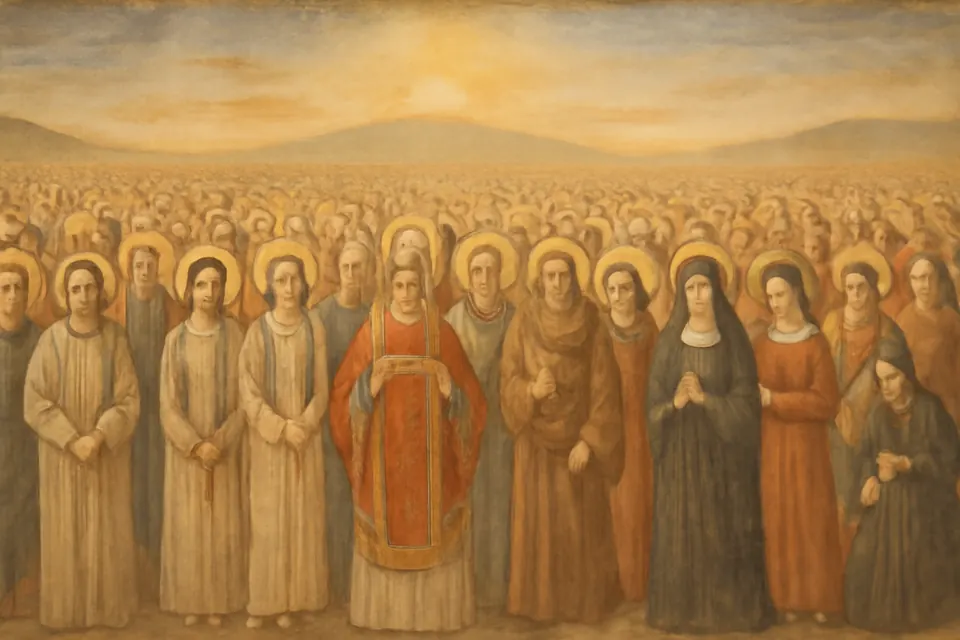
A saint is a holy person. In the New Testament the word is used for every believer in Christ, and the Apostles' Creed confesses "the communion of saints." Catholic and Orthodox Christians also use it for people the Church recognizes as now with God in heaven, honors on feast days and asks to pray for us. The Catholic Church is commonly said to honor more than 10,000 saints, but no one knows the exact number.
What does the word "saint" mean?
"Saint" comes from the Latin sanctus, "holy." Behind it stands the Greek word of the New Testament, hagios, which means set apart for God. A saint, in the plainest sense, is a holy one: a person who belongs to God.
The New Testament uses the word for ordinary believers. When the apostle Paul wrote to the church in Philippi, he did not address its famous members. He wrote to all of them:
Paul and Timotheus, the servants of Jesus Christ, to all the saints in Christ Jesus which are at Philippi, with the bishops and deacons.
Philippians 1:1, King James Version
He opens his letter to Rome the same way, "to all that be in Rome, beloved of God, called to be saints" (Romans 1:7, KJV), and his letters to Corinth and Ephesus begin with the same greeting. In Paul's usage the saints are the church, the people God has called and made his own. They were not yet perfect. The Corinthians he called saints were quarreling, suing one another and getting drunk at the Lord's Supper.


Over the following centuries the word took on a second, narrower meaning. Christians began to speak of "the saints" for those who had died and were believed to be with Christ, above all the martyrs. Today English uses "saint" in four overlapping ways:
- Every Christian believer, as in Paul's letters.
- Everyone who has died in God's friendship and is now with him in heaven, known or unknown.
- People a church has formally recognized as being in heaven, such as St. Francis of Assisi or St. Thérèse of Lisieux.
- In everyday speech, anyone unusually patient or kind ("she's a saint").
This encyclopedia is mostly about the third group.
The first saints were martyrs
The earliest Christians honored as saints were the martyrs, believers killed for refusing to deny Christ. The word martyr is Greek for "witness." St. Stephen, stoned in Jerusalem (Acts 7), was the first. Most of the apostles followed, and in the persecutions of the second and third centuries thousands more.
The oldest detailed account of a martyr's death outside the Bible is the Martyrdom of Polycarp, a letter from the church of Smyrna about its bishop St. Polycarp, burned around the year 155. It already shows the two things Christians would do for saints ever after: they kept his remains, and they gathered on the day he died.
we afterwards took up his bones, as being more precious than the most exquisite jewels, and more purified than gold, and deposited them in a fitting place, whither, being gathered together, as opportunity is allowed us, with joy and rejoicing, the Lord shall grant us to celebrate the anniversary of his martyrdom
Martyrdom of Polycarp, chapter 18 (Ante-Nicene Fathers translation)
The same letter draws a line that Christians still draw. Answering the charge that they would now worship Polycarp instead of Christ, the Smyrnaeans wrote: "For Him indeed, as being the Son of God, we adore; but the martyrs, as disciples and followers of the Lord, we worthily love on account of their extraordinary affection towards their own King and Master."
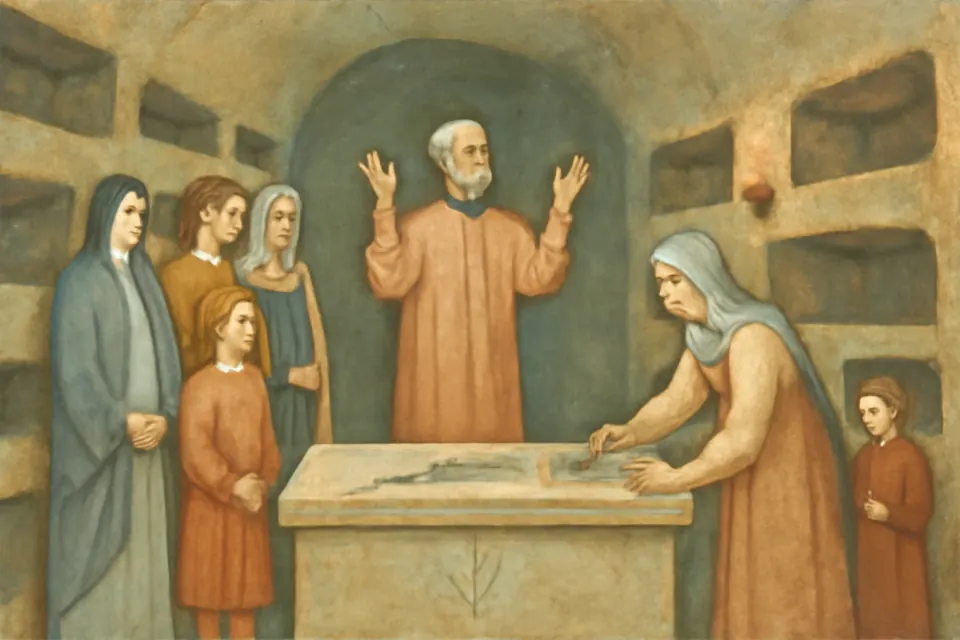
Local churches kept lists of their martyrs and the days they died. When the persecutions ended in the fourth century, the same honor began to be given to others: hermits and monks whose self-denial was seen as a slow martyrdom, bishops who had suffered for the faith, and teachers who defended it.

The communion of saints
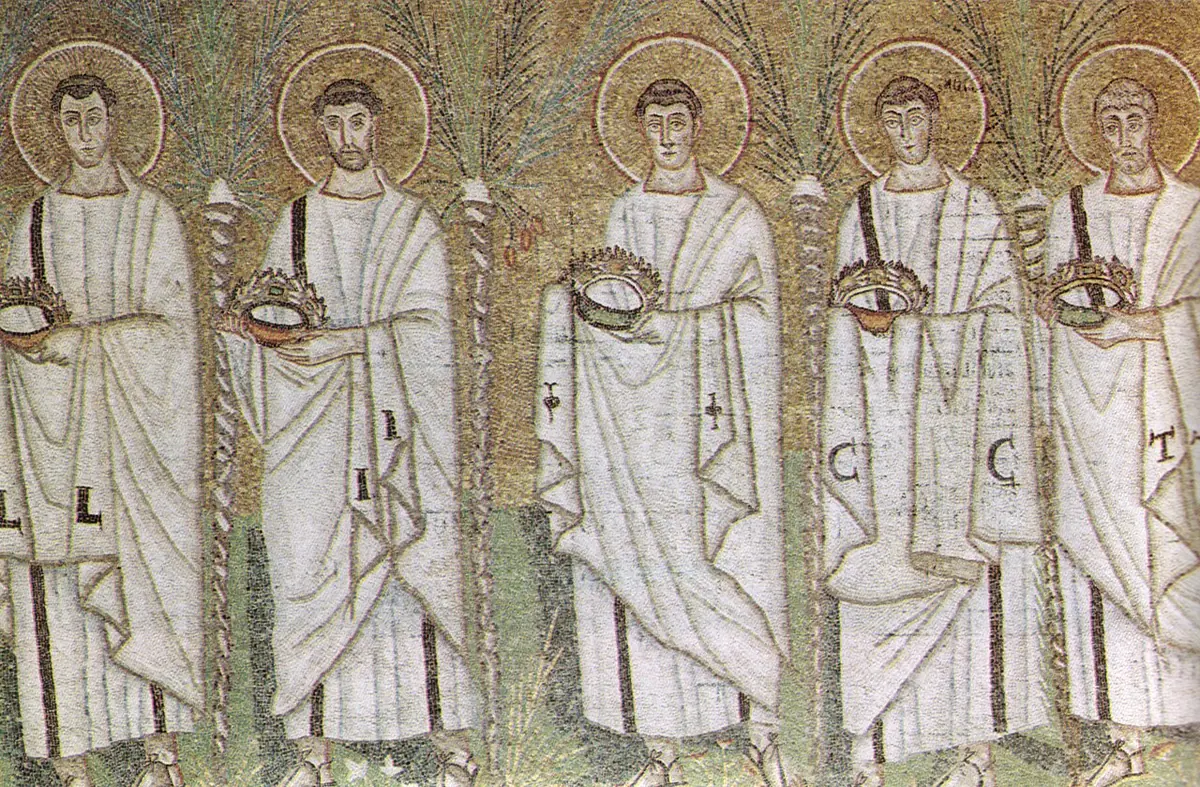
The Apostles' Creed, said by Catholics, Anglicans, Lutherans and many other Protestants, confesses belief in "the communion of saints." The Catechism of the Catholic Church explains the phrase this way: "What is the Church if not the assembly of all the saints?" (no. 946). The communion of saints is the Church itself, all who belong to Christ, bound together in him.
Catholic teaching describes three states of that one Church: the pilgrims still on earth, those who have died and are being purified, and those already in glory (no. 954). Death does not break the bond between them. The Letter to the Hebrews, after listing the heroes of faith from Abel to the prophets, turns to its readers:
Wherefore seeing we also are compassed about with so great a cloud of witnesses, let us lay aside every weight, and the sin which doth so easily beset us, and let us run with patience the race that is set before us
Hebrews 12:1, King James Version
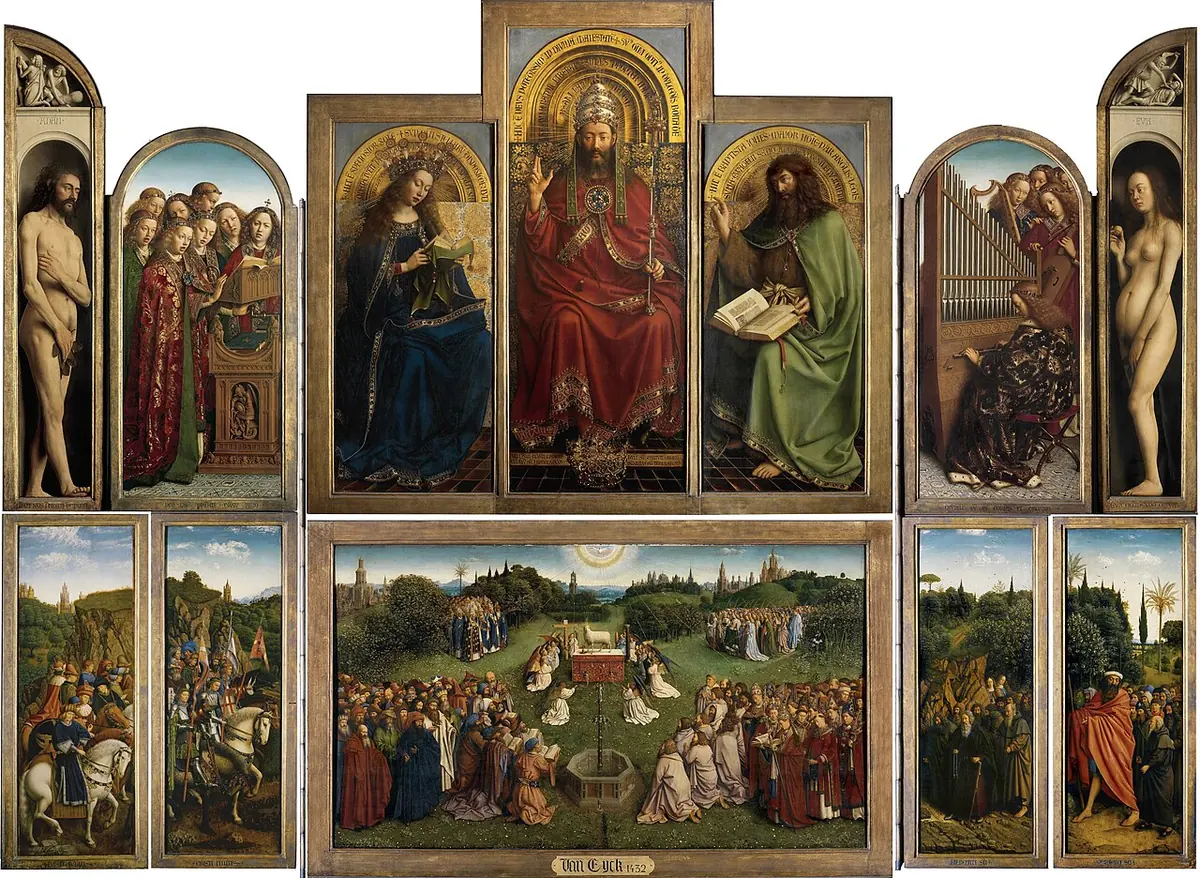
Painters tried to show this crowd. Fra Angelico filled a gold panel with prophets, apostles, martyrs, bishops, monks and virgins, all facing Christ, for the altar of his own friary at Fiesole. A few years later the van Eyck brothers painted the Ghent Altarpiece, where saints stream in from every side of a green meadow to adore the Lamb of God from the Book of Revelation.



How Catholics understand saints
For Catholics a canonized saint is someone the Church has declared, after investigation, to be in heaven and worthy of honor by the whole Church. The Catechism puts it this way: "By canonizing some of the faithful, i.e., by solemnly proclaiming that they practiced heroic virtue and lived in fidelity to God's grace, the Church recognizes the power of the Spirit of holiness within her and sustains the hope of believers by proposing the saints to them as models and intercessors" (no. 828).
Models and intercessors: those are the two reasons Catholics turn to the saints. As models, they show that the Gospel can be lived by a teenager like St. Carlo Acutis, a Polish friar like St. Maximilian Kolbe or a nun in Calcutta like St. Teresa of Calcutta. As intercessors, they are believed to pray for the living. The Catechism quotes two saints on this point. St. Dominic told his brothers as he was dying, "Do not weep, for I shall be more useful to you after my death and I shall help you then more effectively than during my life," and Thérèse of Lisieux wrote, "I want to spend my heaven in doing good on earth" (no. 956). And it states plainly: "We can and should ask them to intercede for us and for the whole world" (no. 2683).
Worship and veneration: latria and dulia
Catholic theology uses three old words to keep the honor given to saints apart from the worship given to God:
- Latria (Greek for "service" or "worship") is adoration, owed to God alone.
- Dulia (from the Greek for "servant") is the honor paid to the saints, the kind of respect shown to a good and great person.
- Hyperdulia is the higher honor given to the Virgin Mary as the Mother of God, still entirely different from worship.
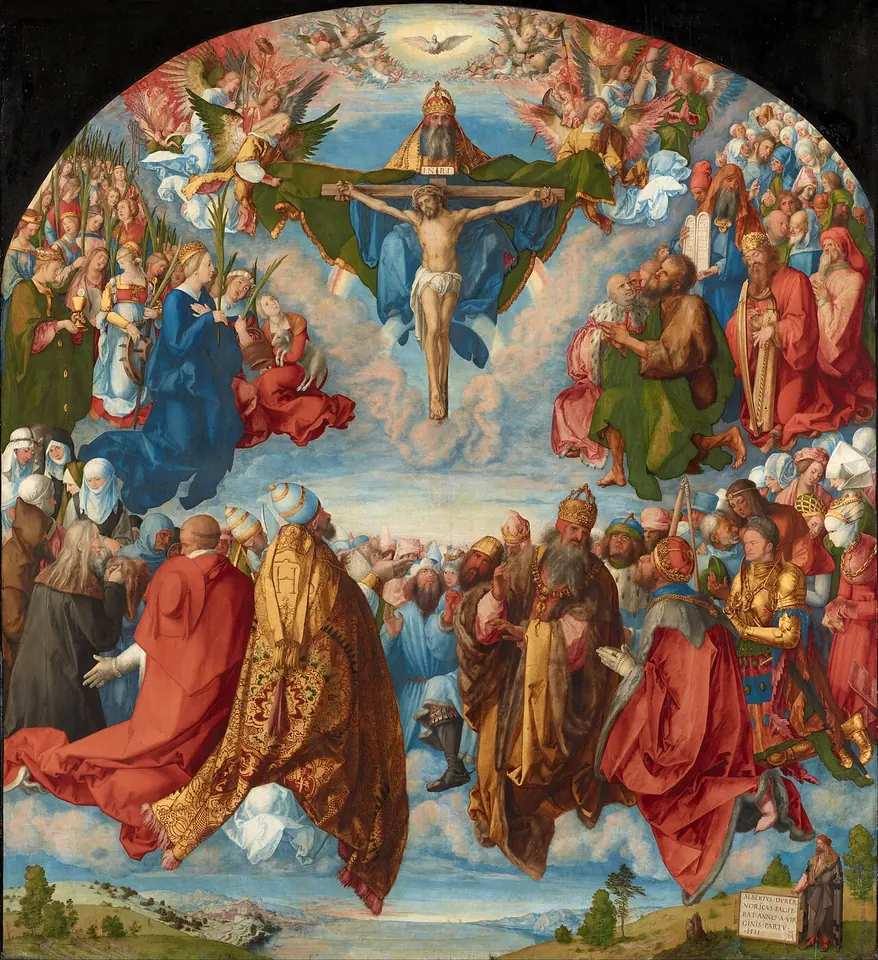
The Catholic Encyclopedia traces the distinction to St. Augustine's City of God and to Thomas Aquinas, and insists that the difference is "one of kind and not merely of degree." In practice this means that the Mass is offered to God alone, never to a saint, and that a prayer to a saint is a request to pray with and for the person asking.

How Orthodox Christians understand saints
The Eastern Orthodox Churches share the ancient practice of honoring saints and asking their prayers. The Second Council of Nicaea in 787, the seventh ecumenical council recognized by both Orthodox and Catholics, defended the veneration of icons and drew the same line as Polycarp's church: honor and veneration for the saints and their images, true worship for God alone.
Every day of the Orthodox year commemorates several saints, and the iconostasis, the screen of icons in front of the altar, sets Christ, his Mother and the saints before the congregation at every service. Believers kiss the icons and light candles before them.
Orthodox churches speak of glorification rather than canonization. A local church's synod of bishops, after reviewing a person's life, reputation and the faithful's devotion, recognizes that he or she is already glorified by God. St. Seraphim of Sarov was glorified by the Russian Church in 1903, and the Orthodox Church in America keeps August 9 as the feast of the glorification of St. Herman of Alaska. Another difference: as an Orthodox Church in America answer explains, "Generally it is not the custom in the Orthodox Church to have patron saints of various vocations and trades." Orthodox Christians do have the saint they are named for, whose day they keep as a name day.


The Orthodox keep a Sunday of All Saints on the first Sunday after Pentecost. Icons for the day show the saints in ranks around Christ.


How Anglicans and Lutherans understand saints
The Reformers of the sixteenth century kept the saints but changed how they were honored. The Lutheran Augsburg Confession of 1530 put it in two sentences:
Of the Worship of Saints they teach that the memory of saints may be set before us, that we may follow their faith and good works, according to our calling
But the Scripture teaches not the invocation of saints or to ask help of saints, since it sets before us the one Christ as the Mediator, Propitiation, High Priest, and Intercessor.
Augsburg Confession, Article XXI
Philip Melanchthon's Apology (defense) of the Confession went further. It approved a "threefold honor" of the saints: thanksgiving to God for them, the strengthening of our faith by their example, and the imitation of their faith and virtues. It even granted that "in heaven they pray for the Church in general," while rejecting prayers addressed to particular saints. Lutheran churches today keep calendars of commemorations, and many congregations bear the names of apostles and saints.
The Church of England's Thirty-Nine Articles are sharper in tone. Article XXII calls "invocation of Saints" "a fond thing vainly invented, and grounded upon no warranty of Scripture." Yet the Book of Common Prayer kept the feasts of the apostles and of All Saints, and the Church of England's calendar today includes many saints, from the early martyrs to figures of the twentieth century. Anglicans in the Anglo-Catholic tradition do ask the saints' prayers; evangelical Anglicans generally do not.
How other Protestants understand saints
Baptists, Pentecostals, Methodists, Presbyterians and most evangelical churches use "saint" in the New Testament sense: every believer is a saint, set apart by God's grace. They honor the great Christians of the past as examples, and many still say "St. Paul" out of custom.
Most do not ask the departed to pray for them. They point to Paul's words, "For there is one God, and one mediator between God and men, the man Christ Jesus" (1 Timothy 2:5, KJV), and to the absence in Scripture of prayers addressed to the dead. Catholics and Orthodox answer that asking a saint to pray is no more a rival to Christ's mediation than asking a living friend to pray, since "the effectual fervent prayer of a righteous man availeth much" (James 5:16, KJV). This site's curator is an evangelical pastor; our editorial policy explains how we describe each tradition's practice in its own terms.
Canonized and uncanonized saints
The Catholic Church does not claim that only canonized saints are in heaven. Canonization is a public declaration about a few people, so that the whole Church may honor them and learn from them. The Solemnity of All Saints on November 1 is there for the others: in the words of the Catholic Encyclopedia, it honors "all the saints, known and unknown."
For centuries there was no formal process at all. Martyrs and holy bishops were acclaimed by their local church, and their cult spread from there. Many of the best-loved saints, among them St. Nicholas, St. Patrick, St. Jude and St. Christopher, were never canonized in the modern sense; they were honored long before the process existed. The first saint known to have been canonized by a pope was Ulrich of Augsburg, in 993. The full story, with every step of today's process from Servant of God to Venerable, Blessed and Saint, is in our guide to how someone becomes a saint, and the medical side is covered in how the Church investigates miracles.


How many saints are there?
Nobody knows, and the Church has never claimed to know. The figure most often quoted, "more than 10,000," is an estimate of everyone the Catholic Church has honored as a saint over two thousand years. The official list is smaller. When the second edition of the Roman Martyrology appeared in 2004, the Adoremus Bulletin reported that it "contains 7,000 saints and blesseds currently venerated by the Church."
There are good reasons the count can't be exact:
- Early saints were never formally listed. For the first thousand years a saint was recognized locally, and many names survive only in a single calendar, church dedication or legend.
- Some saints are honored in groups. In 2013 Pope Francis canonized Antonio Primaldo and his companions, the martyrs of Otranto; his homily described them as "About 800 people" killed in 1480. Entries like the Martyrs of Korea, Vietnam or Japan cover dozens or hundreds of people.
- Blesseds blur the line. Lists often mix saints and blesseds, and blesseds may later be canonized.
- Churches keep different lists. The Orthodox Churches have glorified many saints the Catholic Church has not, especially since the split of 1054, and the reverse is also true.
And in the oldest sense of the word, the number is beyond counting. The Book of Revelation describes "a great multitude, which no man could number, of all nations" standing before the throne (Revelation 7:9, KJV).

The kinds of saints: martyrs, confessors, virgins and doctors
Older calendars and prayer books sort the saints into types. The Roman Missal still has "Commons," sets of prayers for each type, used when a saint has no prayers of his or her own.
Martyrs
Those who died for the faith. Besides Stephen and Polycarp, the Roman Canon of the Mass names early martyrs such as St. Lawrence, Sts. Perpetua and Felicity, St. Agatha, St. Lucy, St. Agnes and St. Cecilia. Martyrs are often painted holding a palm branch, the sign of victory. Modern martyrs include Maximilian Kolbe, who died in Auschwitz in 1941.
Confessors
In the old usage, a confessor is a man who "confessed" the faith by his life without dying for it, or who suffered for it without being killed. The title covers bishops, monks, priests and laymen: St. Martin de Porres, St. Francis of Assisi, St. John Vianney. Today's Missal speaks instead of pastors and of holy men and women.
Virgins
Women honored for consecrating their lives to Christ, often martyrs too in the early centuries. Agnes, Agatha, Lucy and Cecilia were all honored as virgin martyrs; later virgins include St. Clare of Assisi, St. Rose of Lima and St. Kateri Tekakwitha.


Doctors of the Church
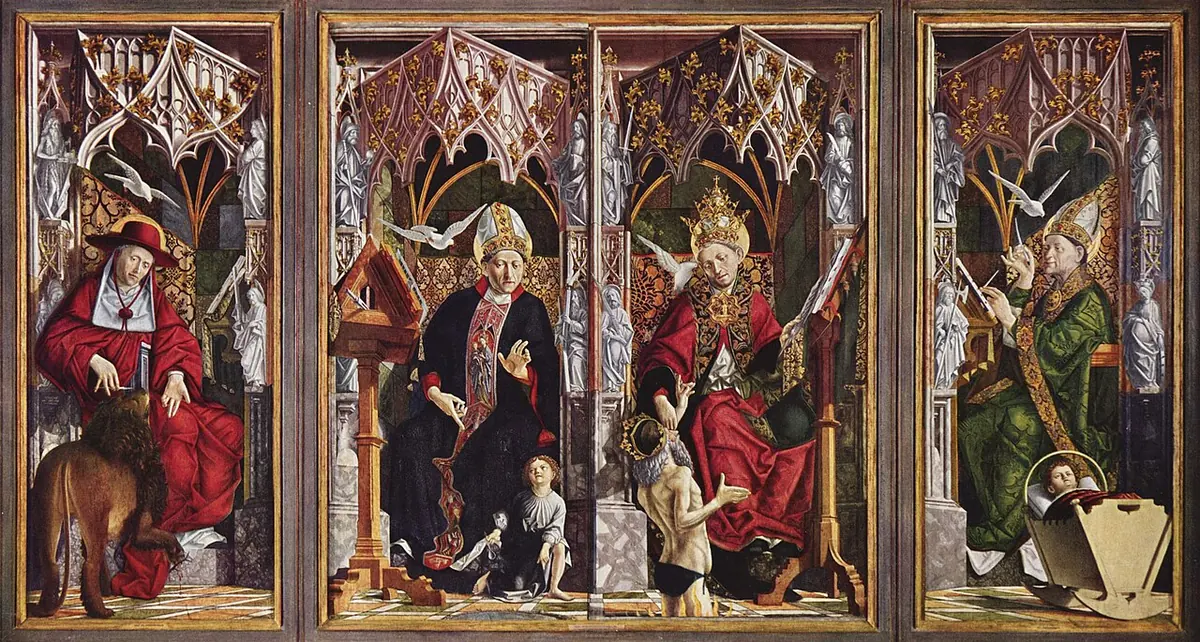
A title the Catholic Church gives to saints whose teaching has served the whole Church. The first four, honored together since the early Middle Ages and given feasts throughout the Western Church by Pope Boniface VIII in 1298, were the Latin Fathers Ambrose, Jerome, Augustine and Gregory the Great. Later popes added the great Greek teachers such as St. John Chrysostom and St. Athanasius, medieval theologians such as St. Thomas Aquinas and St. Bonaventure, and four women: St. Teresa of Avila and St. Catherine of Siena in 1970, Thérèse of Lisieux in 1997 and St. Hildegard of Bingen in 2012. The most recent is St. John Henry Newman, declared a Doctor in 2025.

Women saints
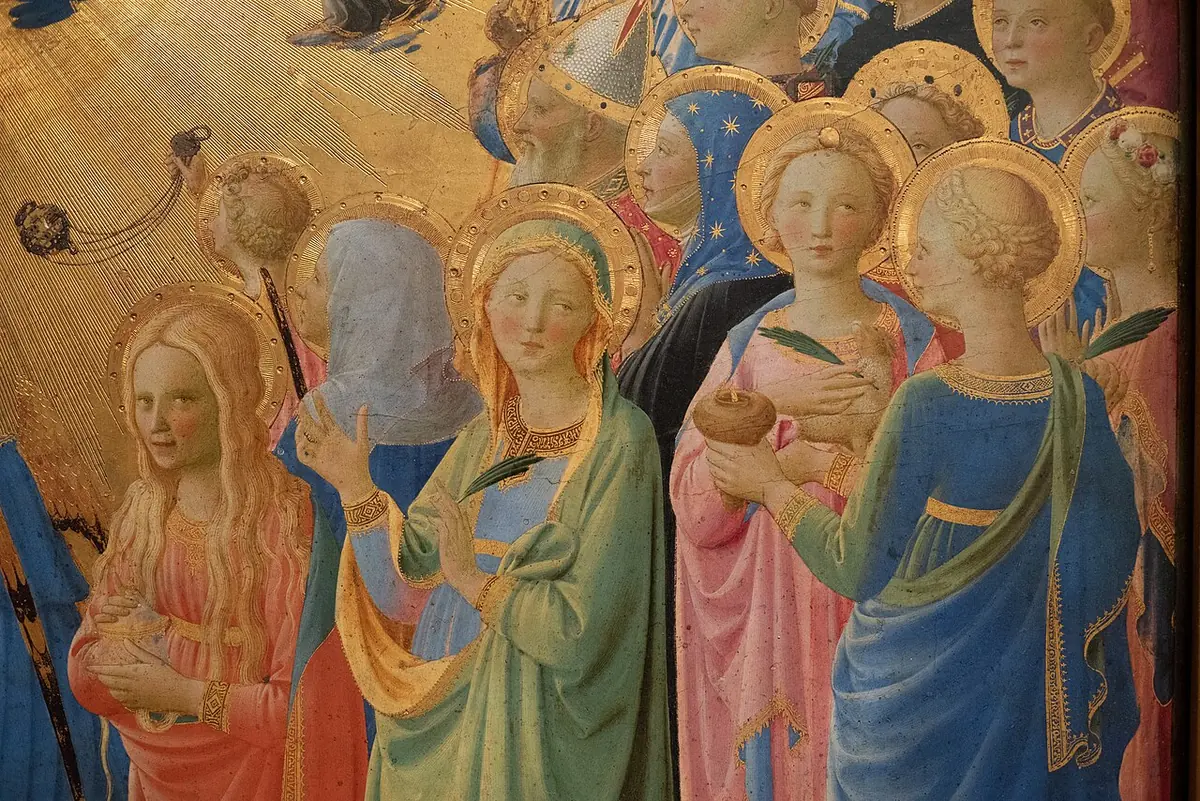
Female saints are found in every category: queens such as St. Margaret of Scotland, mothers and widows such as St. Monica and St. Rita of Cascia, founders such as St. Elizabeth Ann Seton, the first American-born saint, and visionaries such as St. Bernadette. Mary, the Mother of Jesus, is honored above them all, and St. Mary Magdalene was the first witness of the Resurrection.

Patron saints: why people ask saints to pray for them
A patron saint is a saint chosen as a special protector of a person, place, church, trade or need. The custom grew naturally from the early Church. A martyr's tomb made him or her the patron of that town; a church built over the tomb carried the saint's name; children baptized there took the name too.
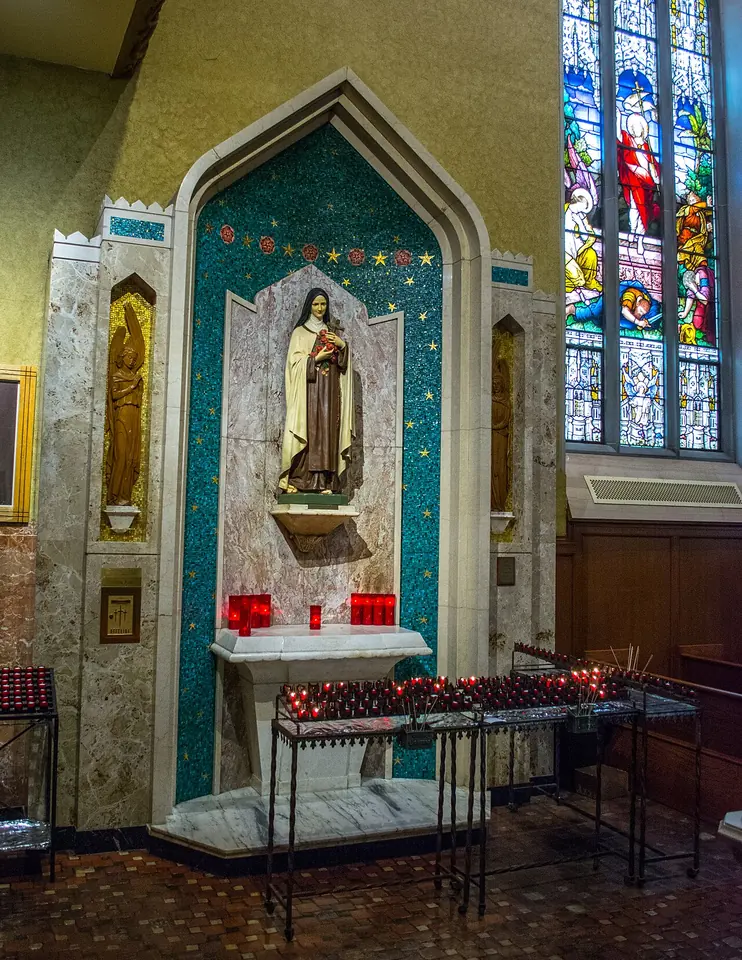
Most patronages come from the saint's own story. St. Lucy, whose name means light, is the patron of the blind and of eye trouble. St. Joseph, a carpenter, is the patron of workers and of a good death, because tradition holds that he died with Jesus and Mary beside him. St. Peregrine, healed of a cancerous leg, is invoked by cancer patients. Some patronages are newer: Carlo Acutis, who built websites about Eucharistic miracles, is often called a patron of the internet. Browse the full list of patron saints to find the saint for a need.
Why ask a saint at all? Catholics and Orthodox give the same answer: because Christians have always asked one another for prayer, and death does not end the Church's fellowship. The Book of Revelation shows the elders in heaven offering "golden vials full of odours, which are the prayers of saints" (Revelation 5:8, KJV). A Catholic asking St. Jude for help in a hopeless case is asking a friend of God to pray alongside. Our page on relics and incorrupt saints covers the role of tombs and relics in that devotion.

Feast days: the saints' birthdays in heaven
Most saints are remembered on the day they died, which early Christians called the dies natalis, the birthday into eternal life. A few are kept on other dates: the day their relics were moved, the date of a church's dedication, or a day chosen when the calendar was revised. See the month-by-month feast day calendar, and our guide to feast days and the Church calendar for how the ranks and seasons work.
One feast covers everyone. According to the Catholic Encyclopedia, the early Church in Antioch kept a common day for all martyrs on the Sunday after Pentecost, the date the Orthodox still use. In Rome, Pope Boniface IV dedicated the ancient Pantheon to the Virgin Mary and all the martyrs on May 13, 609 or 610, and Pope Gregory III (731 to 741) dedicated a chapel in St. Peter's to all the saints and fixed its anniversary on November 1. All Saints' Day has been kept on that date in the West ever since, with Halloween, "All Hallows' Eve," on the night before and All Souls' Day, for all the faithful departed, on November 2.
Frequently asked questions
What is a saint in simple terms?
A holy person who belongs to God. The Bible calls every Christian a saint. Catholics and Orthodox Christians also use the word for men and women the Church recognizes as being in heaven, people whose lives showed the love of God so clearly that the Church holds them up as examples and asks for their prayers.
How many saints are there?
No one knows exactly. The Catholic Church's official list of saints and blesseds, the Roman Martyrology, names about 7,000 in its 2004 edition, and the figure "more than 10,000" is often given for everyone honored as a saint across the centuries. Many early saints were never formally canonized, some are honored in groups ("and companions"), and the Orthodox Churches keep their own calendars. Catholics also believe that heaven holds countless saints whose names no list records.
Do Catholics worship saints?
Catholic teaching says no. Worship in the full sense (latria) belongs to God alone. Saints receive honor (dulia), the respect given to a good and holy person, and the Virgin Mary a higher honor (hyperdulia). Catholics ask saints to pray for them, much as they would ask a friend.
Why do Catholics pray to saints?
Catholics believe the saints are alive in Christ and still part of the one Church, so asking them to pray is like asking a fellow believer on earth to pray. The Catechism says, "We can and should ask them to intercede for us and for the whole world" (no. 2683). The prayer is still directed to God; the saint is asked to join in it.
What is a patron saint?
A saint who is honored as a special protector and intercessor for a place, a church, a job, an illness or a group of people. A saint usually becomes a patron because of something in his or her life: St. Lucy, whose name means light, for the eyes; St. Joseph, the carpenter, for workers. See our list of patron saints.
Who are the most famous female saints?
The Virgin Mary first of all, then Mary Magdalene, the early martyrs Agnes, Agatha, Lucy and Cecilia, Joan of Arc, Clare of Assisi, Catherine of Siena, Teresa of Avila, Rose of Lima, Rita of Cascia, Thérèse of Lisieux, Bernadette, Faustina and Mother Teresa. Four women have been named Doctors of the Church.
Do Protestants believe in saints?
Yes, though they understand them differently. Most Protestants use "saints" in the New Testament sense for all believers, living and dead, and honor great Christians of the past as examples. Lutheran and Anglican churches keep calendars of saints' days. Protestant confessions generally teach that Christians should pray to God alone rather than ask the saints for help.
What is the difference between a saint and a blessed?
In the Catholic Church, a "Blessed" has been beatified, the step before canonization, and may be honored publicly in a particular region or religious order. A "Saint" has been canonized and may be honored by the whole Church. Our guide to how someone becomes a saint explains every step.
Sources
- Catechism of the Catholic Church, nos. 823–829 (the Church is holy; canonization, no. 828)
- Catechism of the Catholic Church, nos. 946–959 (the communion of saints)
- Catechism of the Catholic Church, nos. 2683–2691 (a cloud of witnesses)
- Catholic Encyclopedia (1908): Communion of Saints
- Catholic Encyclopedia (1909): Dulia
- Catholic Encyclopedia (1907): Beatification and Canonization
- Catholic Encyclopedia (1908): Confessor
- Catholic Encyclopedia (1910): Martyr
- Catholic Encyclopedia (1909): Doctors of the Church
- Catholic Encyclopedia (1907): All Saints' Day
- Martyrdom of Polycarp (Ante-Nicene Fathers translation), New Advent
- Adoremus Bulletin, February 2005: Roman Martyrology Lists 7,000 Saints and Blesseds (archived)
- Pope Francis, Homily for the canonization of Antonio Primaldo and companions (the Martyrs of Otranto), 12 May 2013
- Vatican News: St John Henry Newman set to become newest Doctor of the Church (July 2025)
- Augsburg Confession (1530), Article XXI: Of the Worship of the Saints
- Apology of the Augsburg Confession, Article XXI: Of the Invocation of Saints
- Church of England: Articles of Religion (Article XXII)
- Orthodox Church in America, Questions and Answers: Patron Saints
- Orthodox Church in America: Glorification of Venerable Herman of Alaska
- The Holy Bible, King James Version (Philippians 1:1; Romans 1:7; Hebrews 12:1; James 5:16; Revelation 5:8; Revelation 7:9; 1 Timothy 2:5)