How the Church investigates miracles
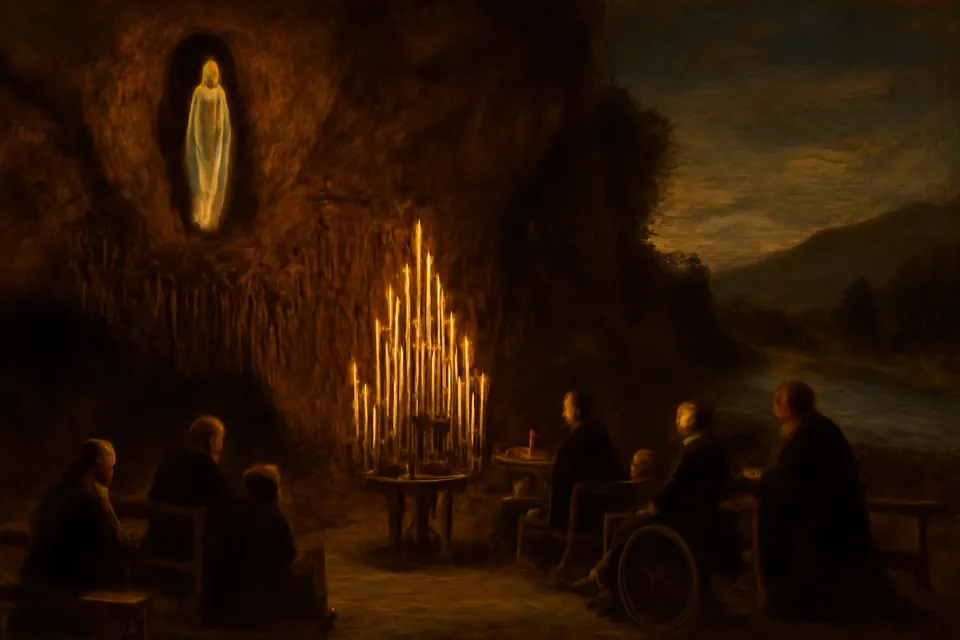
The Catholic Church treats miracles as rare events and tests a claim before it approves one. For a cure to count in a cause for sainthood, doctors must find it instantaneous, complete, lasting and medically unexplained, theologians must link it to prayer to the candidate, and the pope must approve the decree. Even then, Catholics are not obliged to believe in any miracle after New Testament times, and most claimed wonders are never formally judged at all.
Every saint's life on this site has miracles in it, and every one of them carries a label: approved, reported or traditional. This page explains what those labels mean, how the Catholic Church tests a claimed miracle before it approves one, and why some of the most famous wonders in Catholic history have never been formally judged at all.

What the Church means by a miracle
The Catholic Encyclopedia of 1911 defines miracles, in their strict sense, as "wonders performed by supernatural power as signs of some special mission or gift and explicitly ascribed to God." Two parts of that definition matter. A miracle is an event that nature, as far as anyone can tell, could not have produced on its own. And it is a sign: it points to something beyond itself.
The Gospels are full of such signs: the blind see, the lame walk, the dead are raised. Catholic and Orthodox Christians believe the wonders did not stop with the apostles, and the lives of the saints are crowded with healings, visions and stranger things. Some are well documented. Many are legends, written down centuries after the saint died. The Church has never asked anyone to believe all of them, and from early on it has tried to tell the solid cases from the rest.
The saints themselves were often the most wary. St. Teresa of Ávila warned her nuns not to seek visions, and St. John of the Cross told his readers to set them aside. Miracles in the Catholic view are gifts that confirm faith. They are not its foundation.
Our three labels: approved, reported, traditional
Because claims of miracles vary so widely in quality, this encyclopedia labels each one it describes:
- Approved: the event was formally investigated by Church authority and accepted. Most approved miracles are healings examined for a beatification or canonization. Cures recognized at Lourdes after review by its international medical committee and a decree by the cured person's bishop are also approved.
- Reported: a documented claim, often with named witnesses, dates and places, that the Church has not formally judged as a miracle. Many modern wonders fall here, as do famous events like the Miracle of the Sun at Fátima.
- Traditional: a story handed down by legend or long custom, usually written long after the events. Many medieval lives belong here, like St. Nicholas raising three boys from a pickling tub or St. Christopher carrying the Christ Child across a river.
The labels say nothing about whether a story is true. A traditional story may preserve a real memory, and an approved miracle is still a judgment made by people. They tell you how much investigation lies behind a claim, so that a reader can weigh it.

Miracles in a cause for sainthood
The most rigorous tests a miracle can face are the ones in a cause for canonization. The steps from Servant of God to saint are described in our guide on how to become a saint; here the focus is the miracle itself.
Under the present rules, one approved miracle is normally needed before a candidate can be beatified, unless the candidate died a martyr, and a second miracle, which must happen after the beatification, is needed for canonization. The rules were once stricter. The Catholic Encyclopedia of 1907 describes a system in which two to four miracles were needed for the beatification of a confessor, depending on the quality of the witnesses to his virtues, and two more for canonization. Popes can dispense from the requirement, and they sometimes do; Francis canonized St. John XXIII in 2014 without a second miracle.
Nearly every approved miracle today is a healing. Healings leave medical records, they can be compared with a known diagnosis, and doctors can be asked whether medicine explains them.
Benedict XIV and the classic criteria
The standards still used go back to Cardinal Prospero Lambertini, a canon lawyer who spent two decades as Promoter of the Faith before he became Pope Benedict XIV in 1740. In his great treatise on beatification and canonization he set out what a cure must look like before it can be called miraculous.
The Lourdes sanctuary, which applies the same criteria, summarizes them this way: the illness must be serious, "with an unfavourable prognosis"; it must be "known and recorded by medicine"; it must be organic, with objective evidence, so that psychological or functional complaints are excluded; no treatment may account for the cure; the recovery "must be sudden, instantaneous, immediate and without convalescence"; and it must be a return of normal function that lasts, not a remission that may later relapse.
In shorthand, a miraculous cure must be instantaneous, complete, lasting and scientifically inexplicable. That last word is chosen carefully. Doctors are never asked to declare a miracle. They are asked only whether, in the present state of medical knowledge, the cure can be explained.

Step one: the diocesan inquiry
A miracle is investigated where it happened. The bishop of that diocese opens an inquiry, which gathers hospital records, test results and scans, and takes sworn testimony from the patient, the family, the doctors and nurses, and the people who prayed. The key questions are simple to state and hard to answer: What exactly was wrong? Who was asked to pray, and when? What happened, and how fast? Is the person still well?
The sealed acts go to Rome, to the Dicastery for the Causes of Saints, where the postulator of the cause prepares a summary of the evidence.
Step two: the medical board
The Dicastery's medical board, the Consulta Medica, is a panel of specialists, chosen for the case, who need not be Catholic. They study the file and vote on whether the cure has a natural explanation.
New regulations approved by Pope Francis in August 2016 tightened the rules. A quorum of six experts is required, with at most seven on any panel, and a two-thirds majority is needed to find that a healing has no natural or scientific explanation. The old rule had been a simple majority. A claimed miracle cannot be examined more than three times, and an appeal after a negative vote goes to a new panel. Experts are paid only by bank transfer.

Step three: the theologians, the cardinals and the pope
If the doctors find no natural explanation, the file passes to a panel of theologians. Their question is different: Did the cure follow prayer to this particular candidate, and only to this candidate? If a family prayed to five saints at once, the case may fail here.
The theologians' panel is chaired by the Promoter of the Faith. Before John Paul II's reform of 1983 this official was popularly called the "devil's advocate," and his job was to argue against the cause. The Catholic Encyclopedia describes him raising objections in writing, which the cause's advocate then had to answer. The office still exists, with a less adversarial role.
Finally the cardinals and bishops who are members of the Dicastery vote, and the pope authorizes a decree recognizing the miracle. Only then is the healing approved in the sense this encyclopedia uses. Some cases take decades. The cures approved for St. Teresa of Calcutta were examined in this way, and both were also challenged; our entry gives the arguments on each side.
Lourdes: the doctors at the grotto
No shrine has examined claimed cures as closely as Lourdes, in the foothills of the Pyrenees, where St. Bernadette said the Virgin Mary appeared to her eighteen times in 1858. Pilgrims began to report cures almost at once. Four years after the apparitions, in 1862, the bishop of Tarbes declared that the faithful were "justified in believing the reality of the apparition." Our entry on Our Lady of Lourdes tells the full story.


The Medical Bureau
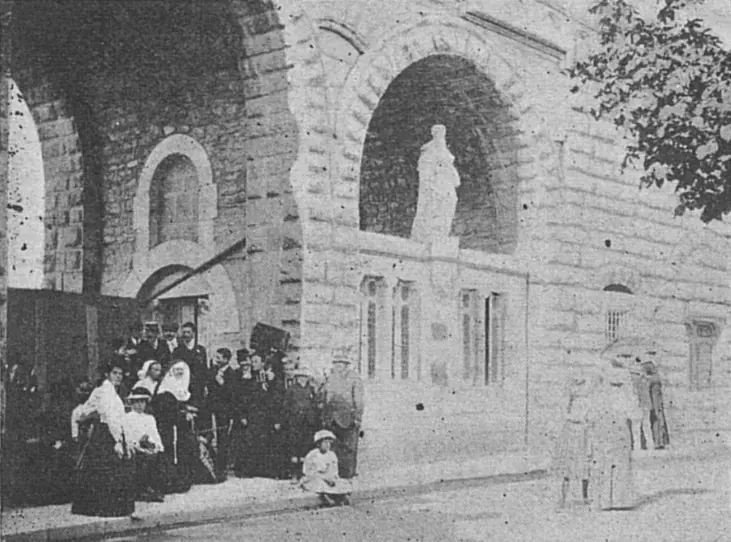
In 1883 Dr. Georges-Fernand Dunot de Saint-Maclou, at the request of the sanctuary's first rector, Father Rémi Sempé, set up the Bureau des Constatations Médicales, the Medical Bureau. Its purpose was to record claimed cures and check them against medical evidence. From the start it was open, in the words of the 1910 Catholic Encyclopedia, "to all physicians, whatever their nationality or religious belief." Any doctor in Lourdes on a given day may still attend its meetings.
A permanent physician runs the Bureau today. The sanctuary says that more than 7,000 cures have been reported at Lourdes since the apparitions. Most are never pursued. In 1947 a medical committee was formed to review the strongest cases, and in 1954 it became the International Medical Committee of Lourdes, known by its French initials CMIL, made up of specialists from several countries.

Three stages from cure to miracle
Since 2006 the CMIL has followed three stages:
- Declared to "unexpected." A medical officer of the Bureau builds a file on the illness and the person's present health, and checks for trickery, illusion or a hysterical condition. A case may be closed, left pending or classed as an "unexpected cure."
- "Unexpected" to "confirmed." The medical records before and after are compared, specialists give opinions, and the CMIL decides whether the cure is confirmed, that is, a clear change from a precise diagnosis to restored health.
- Recognition. The CMIL may affirm that the cure is exceptional and unexplained in the present state of science. The bishop of Tarbes and Lourdes then sends the file to the bishop of the diocese where the cured person lives.
The decision to call the cure a miracle belongs to that bishop alone, sometimes after his own medical and theological commission. The doctors never make it.
Seventy-two recognized cures
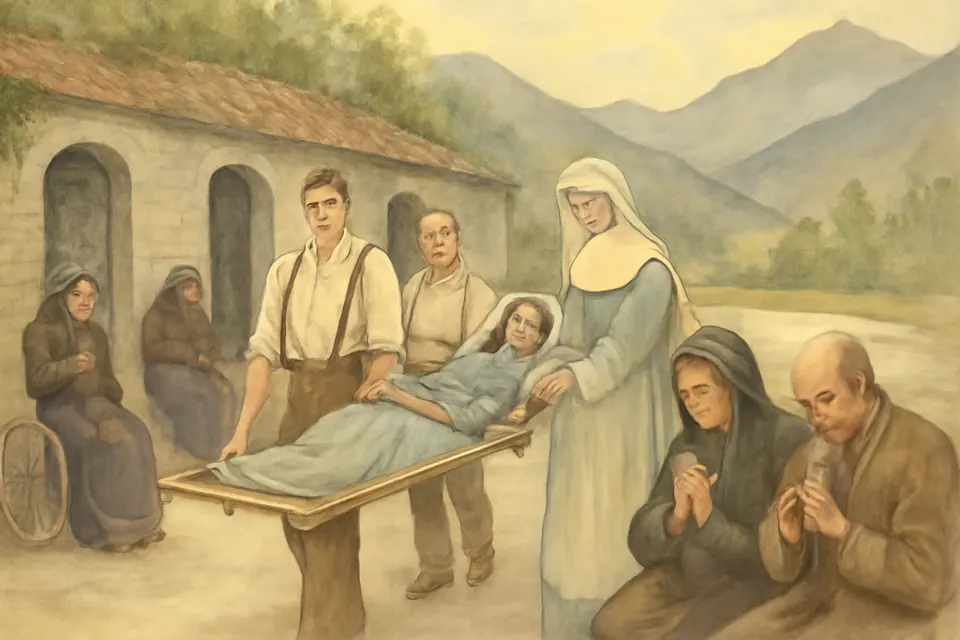
As of 2025 the Church has recognized 72 cures at Lourdes as miraculous. Seven were declared in 1862 alone, after the first inquiry. The pace slowed sharply in the 20th century as medicine improved and the standards tightened.
The two most recent show how long the process can take. John Traynor, a British veteran badly wounded in the First World War, was cured on the first Liverpool diocesan pilgrimage in July 1923. Lourdes examined his case in 1926, but the conclusions never reached his archbishop, and only in December 2024 did Archbishop Malcolm McMahon of Liverpool formally recognize the cure, the 71st. Antonia Raco, from the diocese of Tursi-Lagonegro in southern Italy, had a progressive motor neuron disease and recovered after bathing in the sanctuary's pools in 2009. The CMIL found her recovery unexplained, and her bishop's decision was announced at Lourdes on April 16, 2025, sixteen years after her cure. Both are approved cures in this site's terms.

Fátima and the Miracle of the Sun
In 1917, in the middle of the First World War, three shepherd children at Fátima in Portugal, Lúcia dos Santos and her cousins Francisco and Jacinta Marto, said a radiant Lady appeared to them on the 13th of each month from May to October. They said she had promised a sign in October so that people would believe.
On October 13, 1917, a crowd of tens of thousands stood in the rain at the Cova da Iria. Afterward many witnesses described what they had seen: the clouds parted, and the sun appeared as a pale disk that could be looked at, spun, threw off colors and seemed to fall toward the earth before returning to its place. Some said their soaked clothes were suddenly dry. The Lisbon daily O Século, an anticlerical paper, sent its editor Avelino de Almeida, whose account of the "dance of the sun" appeared two days later. Judah Ruah's photographs of the crowd ran in the magazine Ilustração Portugueza on October 29.


What the Church approved
On October 13, 1930, after a canonical commission had studied the events, Bishop José Alves Correia da Silva of Leiria published a pastoral letter declaring the children's visions "worthy of belief" and allowing the cult of Our Lady of Fátima. That is an approval of the apparitions as a private revelation. The bishop did not issue a separate decree declaring the solar phenomenon a miracle, and no pope has done so since. On this site the Miracle of the Sun is therefore labeled reported: very widely witnessed and well documented, but not formally judged.
Francisco and Jacinta were canonized by Pope Francis at Fátima in 2017, and the miracle approved for that canonization, the healing of a Brazilian boy after a fall, was investigated in the ordinary way described above. See our entry on Our Lady of Fátima.


How others have explained it
Witnesses disagreed about details, and some in the crowd saw nothing unusual. Skeptics have proposed that people who stared at the sun for minutes saw afterimages and the effects of dazzled retinas, or that a rare atmospheric effect bent the light. The Belgian physicist Auguste Meessen of the Catholic University of Louvain, who studied reports of "solar miracles" at Fátima and at later apparition sites, concluded that such sightings are subjective optical effects produced by looking at the sun. Defenders reply that the event came at the time and place the children had announced months in advance, and that many witnesses miles away reported it too. Neither side can settle the question with new evidence now.
Eucharistic miracles
Catholics believe that at every Mass the bread and wine become the Body and Blood of Christ while keeping the appearance of bread and wine. A Eucharistic miracle is a reported event in which that hidden change is said to have become visible: a host bleeds, or turns to flesh. These stories should be read carefully, because Catholic teaching on the Real Presence does not depend on any of them.
Bolsena and Orvieto (traditional)
The most famous story is set in 1263 at Bolsena, north of Rome. A priest from Bohemia who doubted the Real Presence was saying Mass, the legend says, when blood flowed from the host onto the corporal, the linen cloth on the altar. Pope Urban IV was staying in nearby Orvieto, and tradition holds that the event moved him to extend the feast of Corpus Christi to the whole Church in 1264.


The bloodstained corporal is still kept in Orvieto Cathedral, in a silver reliquary made by the Sienese goldsmith Ugolino di Vieri in 1337 and housed in the Chapel of the Corporal. But the historical case is thin, and the Catholic Encyclopedia says so plainly: the miracle "is not supported by strong historical evidence." Urban IV's bull establishing Corpus Christi does not mention it, his biographer describes his stay at Orvieto without it, and the earliest surviving record is the enamel scenes on the reliquary itself, made more than seventy years later. This site labels Bolsena traditional.


Lanciano (reported)
At Lanciano in the Abruzzo region of Italy, tradition holds that in the 8th century a monk who doubted the Real Presence saw the host turn to flesh and the wine to blood as he said Mass. What is shown today in the Church of San Francesco is a round of brownish tissue in a silver monstrance and, below it, a crystal chalice holding small hardened globules described as blood.
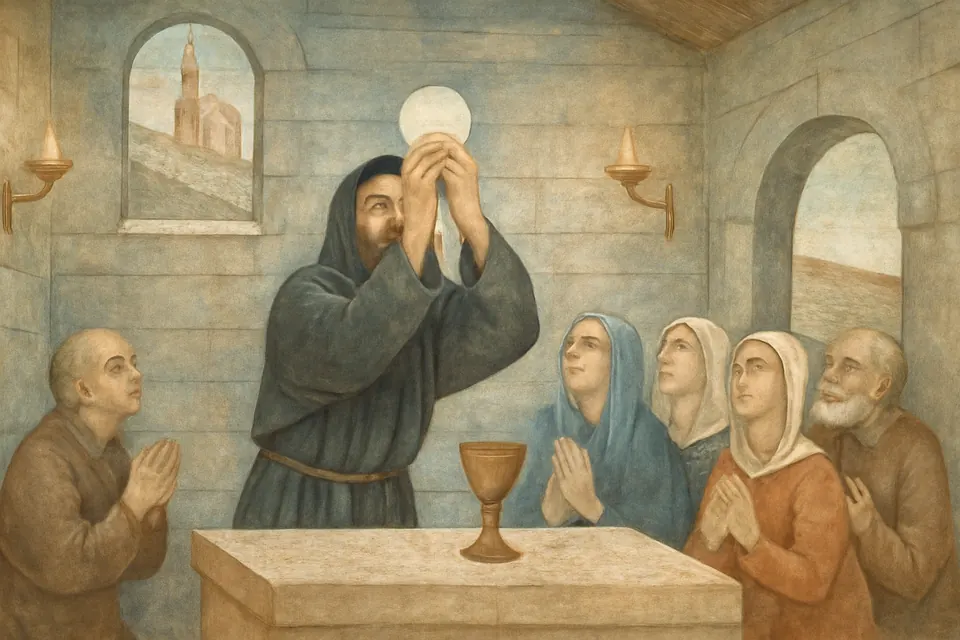
In 1970 and 1971, at the request of the archbishop and the Franciscans, Professor Odoardo Linoli, a pathologist in Arezzo, examined samples. According to his report, presented on March 4, 1971, and published that year, the flesh was human heart muscle and the blood was human, type AB, with no preservatives found. Supporters cite this as confirmation. Critics point out that the study was not independently repeated, that no one can trace the relics' history back to the 8th century, and that tissue can survive centuries in a dry environment. The Church has never formally declared Lanciano a miracle, although it permits veneration of the relics. This site labels it reported.


What Catholics are not required to believe
This surprises many people, Catholic and not: no Catholic is obliged to believe in Lourdes, Fátima, Guadalupe, Lanciano or any other miracle after the New Testament.
The Church distinguishes the public revelation completed in Christ and handed on by the apostles from later private revelations. The Catechism says private revelations do not "complete Christ's definitive Revelation" but "help live more fully by it in a certain period of history." In his commentary on the message of Fátima in 2000, Cardinal Joseph Ratzinger, later Pope Benedict XVI, put it simply: a private revelation "is a help which is offered, but which one is not obliged to use."
New norms issued by the Dicastery for the Doctrine of the Faith in May 2024 go further. As a rule, they say, neither bishops nor the Vatican will declare that an apparition or wonder is supernatural in origin. The most a bishop will normally grant is a nihil obstat: nothing stands in the way of devotion. Even then the phenomena "do not become objects of faith," and the faithful "are not obliged to give an assent of faith to them." The norms list six possible verdicts, running from nihil obstat down to a declaration that a claim is not supernatural.
Approved miracles in causes for sainthood work a little differently: the Church relies on them in declaring someone a saint. But even here a Catholic is not asked to accept the medical details of a particular cure as a matter of faith.
Skeptical views, fairly stated
Doubts about miracles are as old as the claims. They come in a few main forms.
- Philosophical. David Hume argued in 1748 that the evidence for any miracle can never outweigh the uniform experience that nature follows its laws. Christian philosophers reply that this assumes the conclusion, ruling out miracles before looking at the evidence.
- Medical. Diseases sometimes go into spontaneous remission, diagnoses are sometimes wrong, and records from decades ago may be incomplete. Critics note that recognized cures at Lourdes have become rarer as medicine has improved, and that no recognized cure has ever restored a lost limb.
- Procedural. The investigations are run by the Church that benefits from a positive result. The Church answers that its panels reject most claims, that it uses non-Catholic doctors and now requires a two-thirds majority, and that a whole office once existed to argue against causes.
- Historical. Many older miracle stories were written down centuries after the events, and similar legends traveled from saint to saint. This is the reason this encyclopedia labels such stories traditional.


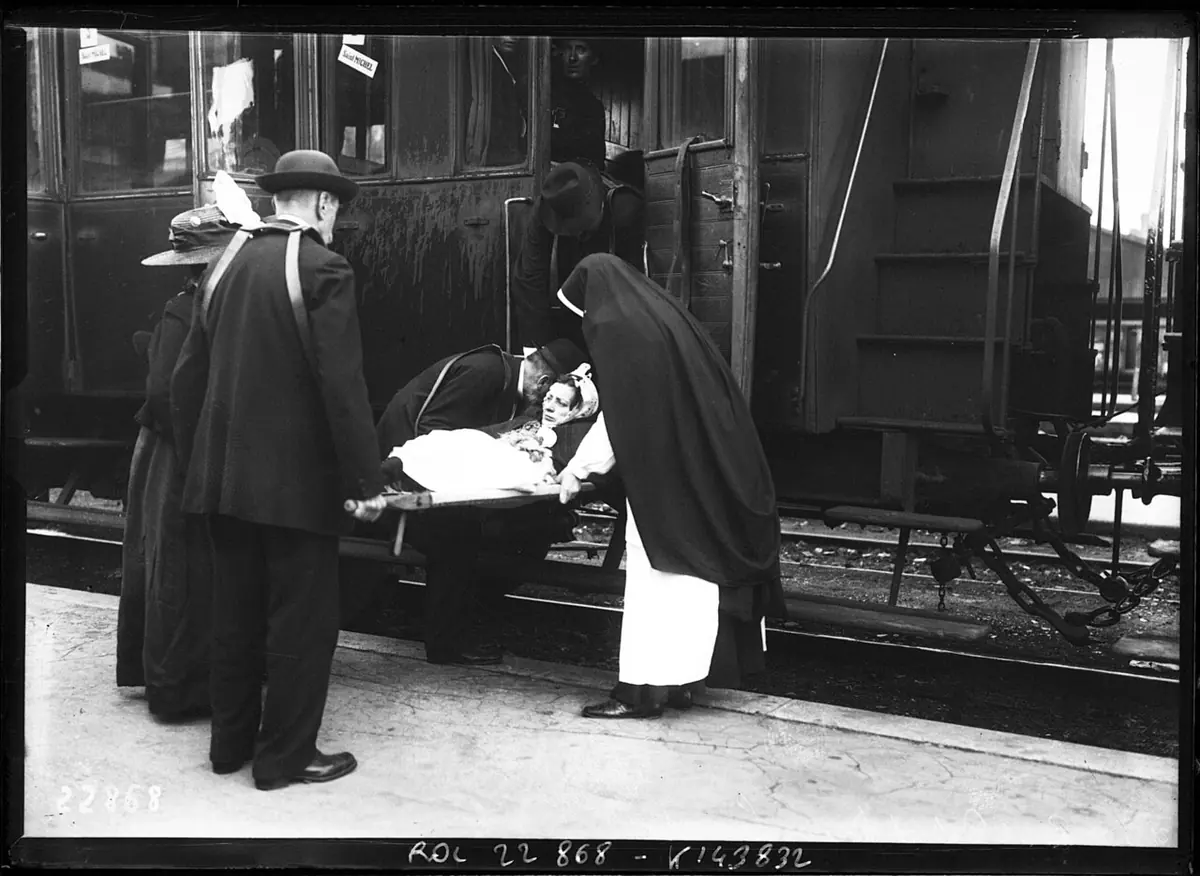
The French novelist Émile Zola joined a national pilgrimage to Lourdes in 1892 and turned it into a novel, Lourdes (1894), which treated the cures as the work of hope and suggestion. A few years later, in 1902, the surgeon Alexis Carrel, who later won the Nobel Prize in medicine, traveled on a pilgrimage train with a young woman, Marie Bailly, dying of tuberculous peritonitis, and watched her recover at Lourdes. He said he could not explain it, and later wrote an account of the journey, published after his death as The Voyage to Lourdes. The two men saw the same place and drew opposite conclusions, as people still do.
How this encyclopedia handles miracles
Each saint's entry on this site gives the miracles that matter most to the people who honor that saint, labeled and, where possible, sourced. Where an approved miracle was challenged, the challenge is given too. Where a story is legend, the entry says so without mocking it, because legends tell us what earlier Christians loved about a saint even when they cannot tell us what happened.
To read further, see what a saint is, how a person becomes a saint, and the related topic of relics and incorruptible saints, where many reported wonders are found. Several saints known above all for their miracles have entries here, including Padre Pio, St. Charbel, St. Anthony of Padua, St. Rita of Cascia and St. Januarius, whose blood is reported to liquefy in Naples three times a year.
Frequently asked questions
How does the Catholic Church decide something is a miracle?
For a healing in a cause for sainthood, the local bishop first gathers the medical records and sworn testimony. A board of medical experts in Rome then judges whether the cure has a natural explanation; at least two-thirds must agree that it does not. Theologians next decide whether the cure followed prayer to the candidate, the cardinals and bishops of the Dicastery vote, and the pope approves the decree.
How many miracles are needed to become a saint?
Today one approved miracle is normally needed for beatification and a second, after beatification, for canonization. Martyrs can be beatified without a miracle, and popes have sometimes waived the second miracle, as Francis did for John XXIII in 2013. See the full steps in our guide to how to become a saint.
How many miracles have been recognized at Lourdes?
Seventy-two, as of 2025. More than 7,000 cures have been reported at the Lourdes Medical Bureau since 1858. The 71st was John Traynor, a wounded British veteran cured in 1923 and formally recognized by the Archbishop of Liverpool in December 2024. The 72nd was Antonia Raco, an Italian woman cured in 2009, announced in April 2025.
What was the Miracle of the Sun at Fátima?
On October 13, 1917, a large crowd gathered at the Cova da Iria near Fátima, Portugal, where three children said the Virgin Mary had promised a sign. After a rainstorm, many witnesses reported that the sun spun, changed color and seemed to plunge toward the earth. The Church approved the Fátima apparitions as worthy of belief in 1930, but it has never issued a separate ruling that the solar event was a miracle.
Do Catholics have to believe in Lourdes, Fátima or Eucharistic miracles?
No. These are private revelations or local wonders, not part of the public revelation that ended with the apostles. When the Church approves an apparition, it says only that nothing in it is contrary to faith and that devotion is allowed. The Vatican's 2024 norms state that the faithful "are not obliged to give an assent of faith" to such phenomena.
What is a Eucharistic miracle?
A reported event in which the consecrated bread or wine of the Mass is said to have visibly changed into flesh or blood, or to have bled. The best known are at Lanciano, Italy, said to date from the 8th century, and Bolsena, Italy, in 1263, whose blood-stained cloth is kept in Orvieto Cathedral. Catholic belief in the Real Presence does not depend on any of them.
Who was the devil's advocate?
The popular name for the Promoter of the Faith, the official who raised objections to a cause and probed weak points in claimed miracles. John Paul II's reform of 1983 reduced the office's adversarial role, though a Promoter of the Faith still presides over the theologians who study each cause.
What does the label "approved" mean on this site?
It means the miracle was formally investigated and accepted by the Church, usually as one of the miracles for a beatification or canonization, or by a bishop after the Lourdes medical committee's review. "Reported" means a documented claim that the Church has not formally judged, and "traditional" means a story handed down by legend or long tradition.
Sources
- Catholic Encyclopedia (1907): Beatification and Canonization
- Catholic Encyclopedia (1911): Miracle
- Archdiocese of Pittsburgh (Catholic News Service): Vatican revises norms for examining alleged miracles (2016)
- Sanctuary of Our Lady of Lourdes: The miracles of Lourdes (the Lambertini criteria)
- Sanctuary of Our Lady of Lourdes: The Medical Bureau of the Sanctuary
- Sanctuary of Our Lady of Lourdes: Recognition of a miracle
- Sanctuary of Our Lady of Lourdes: Miraculous healings
- Catholic Encyclopedia (1910): Notre-Dame de Lourdes
- Trenton Monitor (OSV News): Lourdes confirms 71st miracle, the first for an English speaker (December 2024)
- Catholic World Report (CNA): Lourdes announces 72nd miracle (April 16, 2025)
- Sanctuary of Fátima: Fatima, Sign of Hope for our time (Portuguese Episcopal Conference, 2016)
- National Catholic Register: So That All May Believe: The Miracle of the Sun
- Auguste Meessen, Apparitions and Miracles of the Sun (2005)
- Congregation for the Doctrine of the Faith: The Message of Fatima (2000)
- Dicastery for the Doctrine of the Faith: Norms for Proceeding in the Discernment of Alleged Supernatural Phenomena (2024)
- Catholic Encyclopedia (1911): Orvieto (the miracle of Bolsena)
- Catholic Encyclopedia (1908): Feast of Corpus Christi
- EWTN (ZENIT): Physician Tells of Eucharistic Miracle of Lanciano (2005)