St. Joseph prayer
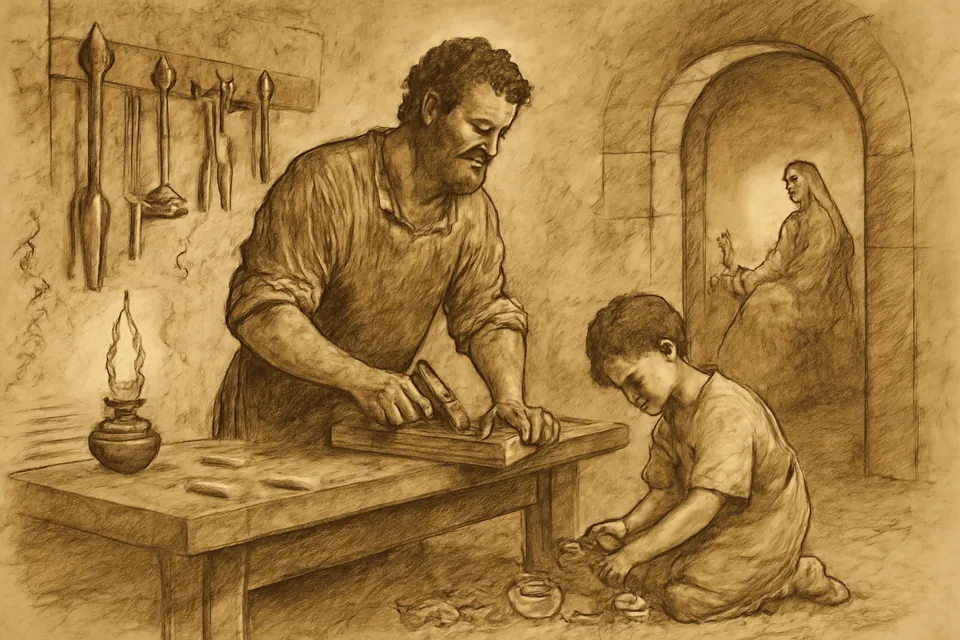
The best-known St. Joseph prayer is "To thee, O blessed Joseph," which Pope Leo XIII sent to the whole Church with his encyclical Quamquam pluries in 1889 and asked Catholics to add to the Rosary every October. Catholics also pray the Litany of St. Joseph (approved 1909), a prayer for work indulgenced by Pius X, and the Memorare to St. Joseph.
Joseph never speaks a word in the Gospels, but Catholics talk to him constantly: for work, for a home, for their families, for a good death. These are the prayers they use most, printed from the papal documents and older prayer books where they first appear.
The St. Joseph prayer of Leo XIII
Pope Leo XIII sent this prayer to the bishops of the world with his encyclical Quamquam pluries on August 15, 1889. In the encyclical he prescribed "that during the whole month of October, at the recitation of the Rosary ... a prayer to St. Joseph be added, the formula of which will be sent with this letter, and that this custom should be repeated every year." This is the English text as printed in the prayer book Blessed Be God (1925):
To thee, O blessed Joseph, we have recourse in our affliction, and, having implored the help of thy thrice-holy spouse, we now with hearts filled with confidence earnestly beg thee also to take us under thy protection. By that charity wherewith thou wert united to the immaculate Virgin Mother of God, and by that fatherly love with which thou didst cherish the Child Jesus, we beseech thee and we humbly pray that thou wilt look down with gracious eye upon that inheritance which Jesus Christ purchased by His Blood, and wilt succor us in our need by thy power and strength. Defend, O most watchful guardian of the Holy Family, the chosen offspring of Jesus Christ. Keep from us, O most loving father, all blight of error and corruption. Aid us from on high, most valiant defender, in this conflict with the powers of darkness; and as thou didst once rescue the Child Jesus from great peril to His life, so now defend God's holy Church from the snares of the enemy and all adversity. Finally, shield every one of us with thy patronage that imitating thy example and strengthened by thy help we may live a holy life, die a happy death, and attain to everlasting happiness in heaven. Amen.
Prayer books of the time say Leo XIII attached an indulgence to it on September 21, 1889. Several English translations circulated in those years; this one is the version most Americans learned, and many modern books print it in updated form, beginning "To you, O blessed Joseph."
The Latin original
The American Ecclesiastical Review printed the official Latin in October 1889, under the heading Oratio ad Sanctum Josephum:
Ad te, beate Joseph, in tribulatione nostra confugimus, atque implorato Sponsae tuae sanctissimae auxilio, patrocinium quoque tuum fidenter exposcimus. Per eam, quaesumus, quae te cum immaculata Virgine Dei Genitrice conjunxit, caritatem, perque paternum, quo Puerum Jesum amplexus es, amorem, supplices deprecamur, ut ad hereditatem, quam Jesus Christus acquisivit sanguine suo, benignus respicias, ac necessitatibus nostris tua virtute et ope succurras. Tuere, O Custos providentissime divinae Familiae, Jesu Christi sobolem electam; prohibe a nobis, amantissime Pater, omnem errorum ac corruptelarum luem; propitius nobis, sospitator noster fortissime, in hoc cum potestate tenebrarum certamine e caelo adesto; et sicut olim Puerum Jesum e summo eripuisti vitae discrimine, ita nunc Ecclesiam sanctam Dei ab hostilibus insidiis atque ab omni adversitate defende; nosque singulos perpetuo tege patrocinio, ut ad tui exemplar et ope tua suffulti, sancte vivere, pie emori, sempiternamque in caelis beatitudinem assequi possimus. Amen.

Where the prayer comes from and what it asks
Leo XIII wrote in a hard decade for the Church. The Papal States were gone, Rome was the capital of a new Italian kingdom that kept him a self-declared prisoner in the Vatican, and laws hostile to the Church were being passed across Europe. Quamquam pluries asks the faithful to turn to Joseph because he guarded the Holy Family, and the Church is that family grown large. Pius IX had already declared Joseph Patron of the Universal Church in 1870, and Leo's encyclical builds on that title.
The prayer follows the same logic. It approaches Joseph after Mary ("having implored the help of thy thrice-holy spouse"), it asks him to protect "that inheritance which Jesus Christ purchased by His Blood," meaning the Church, and it recalls the flight into Egypt: as he once saved the Child from Herod, may he now defend the Church. It ends with three requests that sum up his patronages, to live a holy life, die a happy death, and reach heaven. The same encyclical recommended giving all of March to Joseph and holding a triduum before his feast.
The Litany of St. Joseph
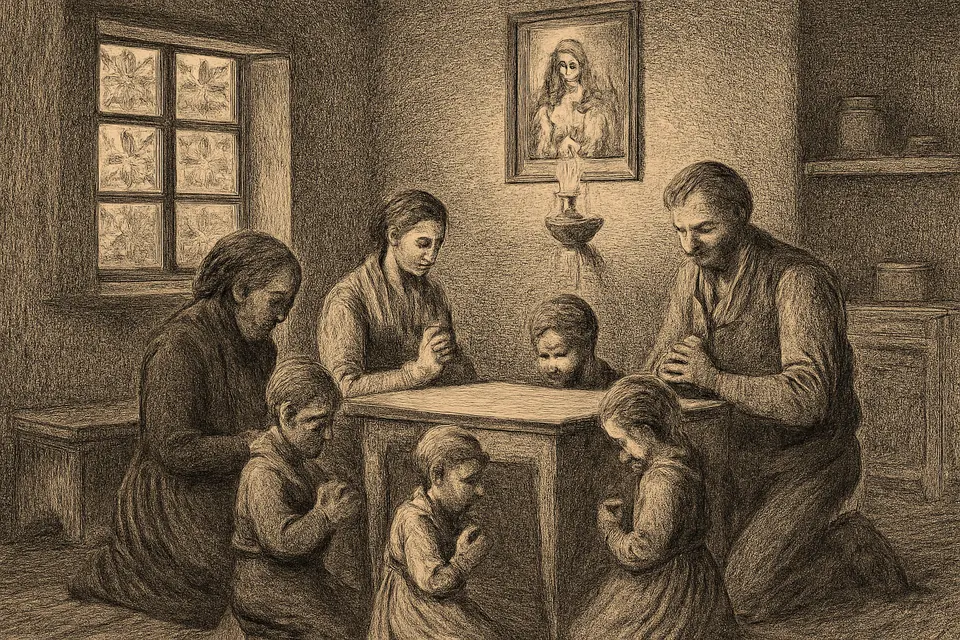
The Holy See approved the Litany of St. Joseph for public use in 1909; the Congregation for Divine Worship's 2021 letter cites its publication in the Acta Apostolicae Sedis that year. This is the text as printed in Blessed Be God (1925). After each invocation from "Holy Mary" on, the response is "pray for us."
Lord, have mercy on us. Christ, have mercy on us. Lord, have mercy on us. Christ, hear us. Christ, graciously hear us. God, the Father of heaven, have mercy on us. God, the Son, Redeemer of the world, have mercy on us. God, the Holy Ghost, have mercy on us. Holy Trinity, one God, have mercy on us. Holy Mary, Holy Joseph, Noble scion of David, Light of the patriarchs, Spouse of the Mother of God, Chaste guardian of the Virgin, Foster-father of the Son of God, Sedulous defender of Christ, Head of the Holy Family, Joseph most just, Joseph most chaste, Joseph most prudent, Joseph most valiant, Joseph most obedient, Joseph most faithful, Mirror of patience, Lover of poverty, Model of workers, Ornament of domestic life, Protector of virgins, Pillar of families, Consolation of the afflicted, Hope of the sick, Patron of the dying, Terror of the demons, Protector of holy Church, Lamb of God, Who takest away the sins of the world, spare us, O Lord! Lamb of God, Who takest away the sins of the world, graciously hear us, O Lord! Lamb of God, Who takest away the sins of the world, have mercy on us. V. He made him master of his house. R. And ruler of all his possessions. Let us pray. O God, Who in Thy ineffable providence didst vouchsafe to choose blessed Joseph to be the spouse of Thy most holy Mother; grant, we beseech Thee, that we may have him whom we venerate as our protector on earth, as our intercessor in heaven. Who livest and reignest forever and ever. Amen.
The 1925 book notes an indulgence granted by Pius X on March 18, 1909, the eve of Joseph's feast.
The 2021 additions
For the Year of St. Joseph, the Congregation for Divine Worship sent the bishops of the world a letter dated May 1, 2021, the feast of St. Joseph the Worker, announcing seven new invocations approved by Pope Francis. Each is taken from a papal document or a Church Father: Custos Redemptoris (Guardian of the Redeemer), from John Paul II's Redemptoris custos; Serve Christi (Servant of Christ), from a 1966 homily of Paul VI; Minister salutis (Minister of salvation), from St. John Chrysostom; Fulcimen in difficultatibus (Support in difficulties), from Francis's Patris corde; and Patrone exsulum, afflictorum, pauperum (Patron of exiles, of the afflicted, of the poor), also from Patris corde. Bishops' conferences publish the updated litany in their own approved translations.

Prayer to St. Joseph for work
This is the prayer Catholics most often use for work, for a job search, or before a day's labor. The text is from The Young Man's Guide (Benziger, 1910):
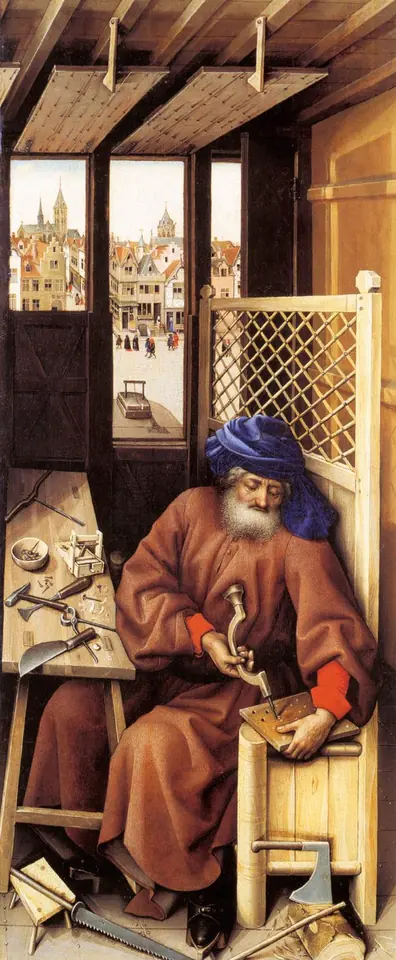
O glorious St. Joseph! model of all those who are devoted to labor, obtain for me the grace to work in a spirit of penance for the expiation of my many sins; to work conscientiously, setting devotion to duty above my own inclinations; to work with thankfulness and joy, considering it an honor to employ and develop by work the gifts received from God; to work with order, peace, moderation, and patience, never shrinking from weariness and trials; to work especially with pure intention and detachment from self, keeping unceasingly before my eyes death and the account I must give of time lost, talents unused, good omitted, and vain complacency in success, so fatal to the work of God. All for Jesus, all through Mary, all in imitation of thee, O Patriarch Joseph; such shall be my motto in life and in death. Amen.
The book records "Indulgence of 300 days, once a day. — Pius X, Nov. 25, 1906." The prayer is widely said to be Pius X's own composition. That may be true, but the prayer books of his day that we checked credit him only with the indulgence, so we can't confirm it. The prayer asks for more than a paycheck: it asks to work honestly, gladly and without vanity, the way a village carpenter would have worked. Pius XII gave the Church the feast of St. Joseph the Worker on May 1 in 1955.
The Memorare to St. Joseph
This prayer borrows the form of the Memorare to the Virgin Mary (see our page on the Memorare). Its author is unknown. The oldest version we found is in an English devotional book by the Jesuit Jean Lyonnard, published in London in 1871, which says it carried an indulgence of 300 days from Pius IX:
Remember, O most chaste spouse of the Virgin Mary, my amiable protector, that never was it known, that any one who invoked thy protection and implored thy help, remained without consolation. Full of confidence in thy power, I come into thy presence, and recommend myself to thee with fervour. O! thou who art called father of the Redeemer, do not disdain my prayers, but in thy mercy hear and answer me. Amen.
Several later versions circulate, most beginning "Remember, O most chaste spouse of the Virgin Mary, that never was it known that anyone who implored your help and sought your intercession were left unassisted."
The sleeping St. Joseph
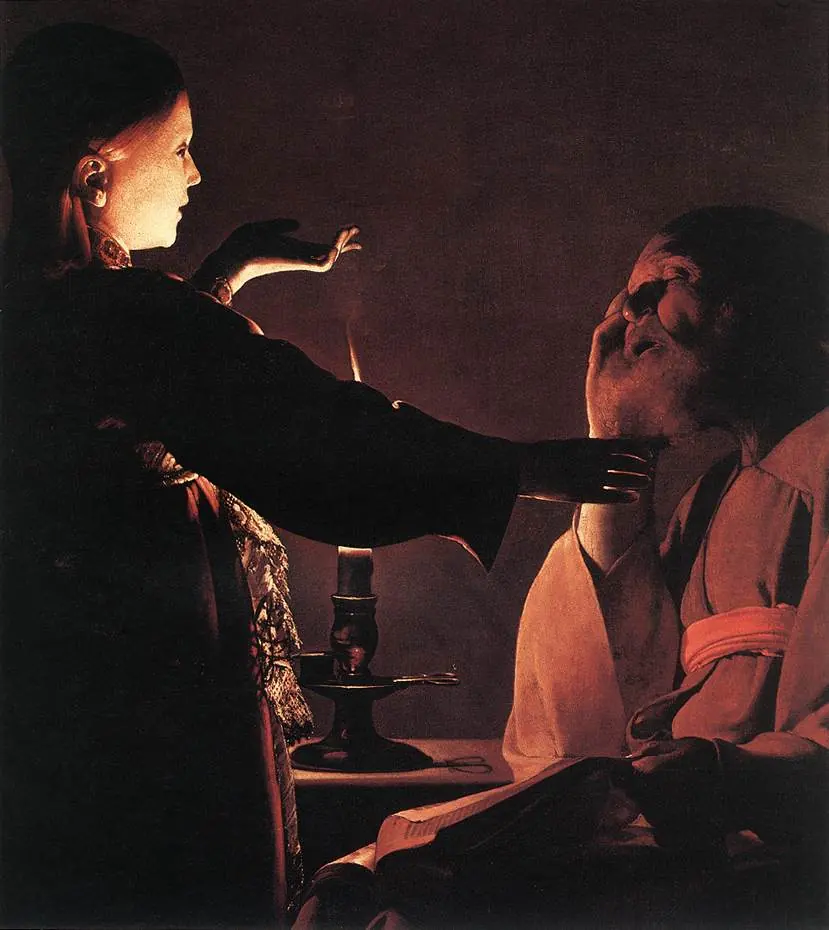
The sleeping St. Joseph is a new custom with an old root. Matthew's Gospel tells of four dreams in which an angel speaks to Joseph: to take Mary as his wife, to flee to Egypt, to return, and to settle in Galilee. Painters loved the scene, usually showing Joseph dozing over his work or his book while an angel leans in.

The devotion took off after Pope Francis's visit to the Philippines. Speaking to families in Manila on January 16, 2015, he said: "I have great love for Saint Joseph, because he is a man of silence and strength. On my table I have an image of Saint Joseph sleeping. Even when he is asleep, he is taking care of the Church!" When he has a problem, he went on, "I write a little note and I put it underneath Saint Joseph, so that he can dream about it!" Statues of the sleeping Joseph have sold widely ever since.
There is no official "sleeping St. Joseph prayer." The practice is the note itself: you write down the worry or the request and place it under the statue, entrusting it to Joseph, as Francis put it, "In other words I tell him: pray for this problem!" Many people add the Leo XIII prayer or the Memorare when they do.

Novenas and when to pray
There is no single official St. Joseph novena; the usual one runs for nine days before his feast, March 10 to 18, and we will give it its own page as the St. Joseph novena. Wednesdays and the month of March are traditionally his. His two feasts are March 19, the solemnity of St. Joseph, Husband of Mary, and May 1, St. Joseph the Worker; see the feast days calendar.
Related saints and pages
- St. Joseph: his life in the Gospels, legends, symbols in art and the St. Joseph's Table.
- The Blessed Virgin Mary, his wife.
- St. Teresa of Ávila, who wrote that she had never asked Joseph for anything he did not obtain.
- St. André Bessette, the Montreal doorkeeper who built Saint Joseph's Oratory.
- Las Posadas, where Joseph and Mary seek shelter before Christmas.
Frequently asked questions
What is the most powerful prayer to St. Joseph?
The Church doesn't rank prayers by power, but the one with the highest standing is "To thee, O blessed Joseph," which Leo XIII wrote for the whole Church in 1889 and asked Catholics to pray after the Rosary every October. The Litany of St. Joseph, approved by the Holy See in 1909, is the official litany in his honor.
What is the prayer to St. Joseph for work?
The traditional one begins "O glorious St. Joseph! model of all those who are devoted to labor, obtain for me the grace to work in a spirit of penance." Pius X attached an indulgence to it on November 25, 1906. It is often said to be his own composition, but the prayer books of his day record only the indulgence. The full text is on this page.
What is the sleeping St. Joseph prayer?
There is no official sleeping St. Joseph prayer. The custom comes from Pope Francis, who told families in Manila in 2015 that he keeps an image of St. Joseph sleeping on his desk and slips notes about his problems underneath it so that Joseph will "dream about it." People write their own petition on the note, and many add one of the traditional prayers on this page.
What was added to the Litany of St. Joseph in 2021?
On May 1, 2021, the Congregation for Divine Worship added seven invocations drawn from papal documents: Guardian of the Redeemer, Servant of Christ, Minister of salvation, Support in difficulties, Patron of exiles, Patron of the afflicted and Patron of the poor. Pope Francis approved them for the Year of St. Joseph.
When do Catholics pray the St. Joseph prayer?
Leo XIII asked for "To thee, O blessed Joseph" after the Rosary throughout October. It is also prayed in March, the month of St. Joseph, on Wednesdays, the weekday traditionally given to him, and on his feasts, March 19 and May 1. Many Catholics say it daily.
Is there a St. Joseph novena?
Yes. The most common one is prayed for nine days before his feast, from March 10 to 18, using the prayers on this page or a novena booklet. There is no single official text.
Sources
- Leo XIII, encyclical Quamquam pluries (August 15, 1889) (Vatican)
- American Ecclesiastical Review, vol. 1, October 1889: Oratio ad Sanctum Josephum (Latin text of the October prayer), Internet Archive
- Charles J. Callan, O.P., and John A. McHugh, O.P., Blessed Be God: A Complete Catholic Prayer Book (New York: P. J. Kenedy, 1925), Internet Archive
- F. X. Lasance, The Young Man's Guide: Counsels, Reflections, and Prayers for Catholic Young Men (New York: Benziger, 1910), Internet Archive
- Jean Lyonnard, S.J., Perpetual Intercession to the Agonizing Heart of Jesus (London, 1871): Memorare to St. Joseph, Internet Archive
- Congregation for Divine Worship: Letter on the new invocations in the Litany of Saint Joseph (May 1, 2021)
- Francis, Address at the Meeting with Families, Mall of Asia Arena, Manila (January 16, 2015) (Vatican)