St. André Bessette
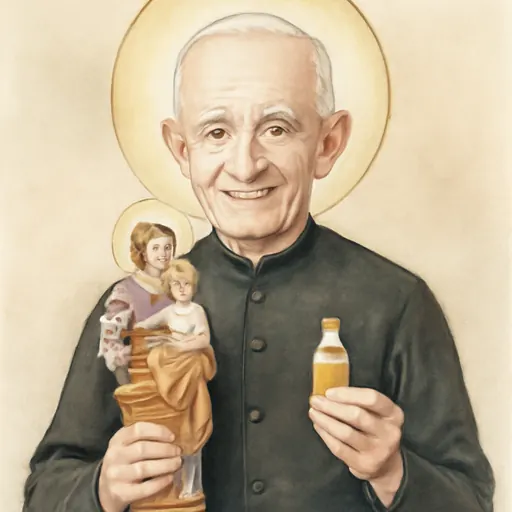
St. André Bessette (1845–1937), known as Brother André, was a Holy Cross brother in Montreal who could barely read or write. For about forty years he was doorkeeper of the Collège Notre-Dame, where he prayed with the sick and urged them to trust in St. Joseph. He founded Saint Joseph's Oratory on Mount Royal, and thousands of healings were reported there. His feast day is January 6.
Who was St. André Bessette?
Brother André was born Alfred Bessette on August 9, 1845, in Saint-Grégoire, a village southeast of Montreal. His father, a carpenter and woodcutter, was killed by a falling tree in 1855, and his mother died of tuberculosis two years later, when Alfred was twelve. He was so frail that he had been baptized in an emergency at birth, and he stayed sickly all his life. Poverty and poor health ended his schooling early. According to the Dictionary of Canadian Biography, he could only sign his name and read print.


He worked as a farmhand, baker's apprentice and shoemaker, and from 1863 to 1867 in the cotton mills and on farms of New England, like thousands of young French Canadians. Back in Quebec, his parish priest, Fr. André Provençal, noticed how much he prayed and sent him to the Congregation of Holy Cross in Montreal with a letter saying he was sending them a saint. He arrived at the Collège Notre-Dame on November 22, 1870, took the habit and the name André on December 27, and made his final vows on February 2, 1874.
The doorkeeper of Collège Notre-Dame
The congregation almost turned him away because of his health. Bishop Ignace Bourget reassured him, and the novice master recommended him with the words, "If this young man becomes unable to work, he will at least be able to pray well."
He was named doorkeeper of the college and kept the post until 1909. He also swept floors, cut the boys' hair, nursed sick students, ran errands and carried the mail. He later joked that at the end of his novitiate his superiors "showed me the door, and I stayed there for 40 years."
St. Joseph's oil and the healings
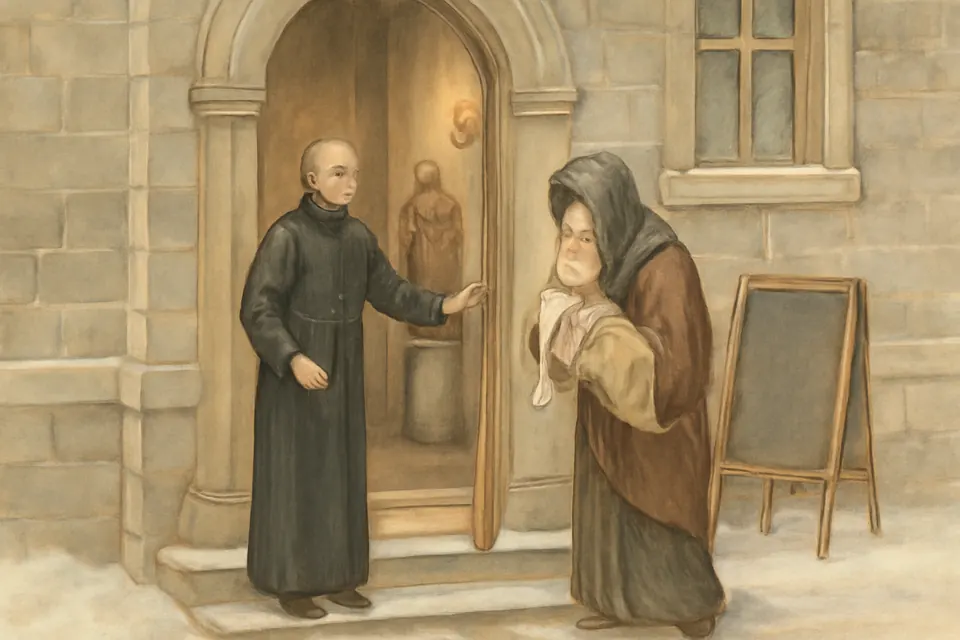
Visitors at the door began asking the little brother, barely five feet tall, to pray for them. He prayed with them, gave them a St. Joseph medal, and gave them a few drops of the olive oil burning before St. Joseph's statue in the college chapel, telling them to rub it on with confidence. More and more people said they had been cured. The first written account appeared in Paris in 1878.
Not everyone was pleased. Parents, teachers and the school doctor complained about sick people coming so close to the students, and some called him a charlatan. Around 1900 he was sent to receive visitors in a shelter at the streetcar stop across the road.
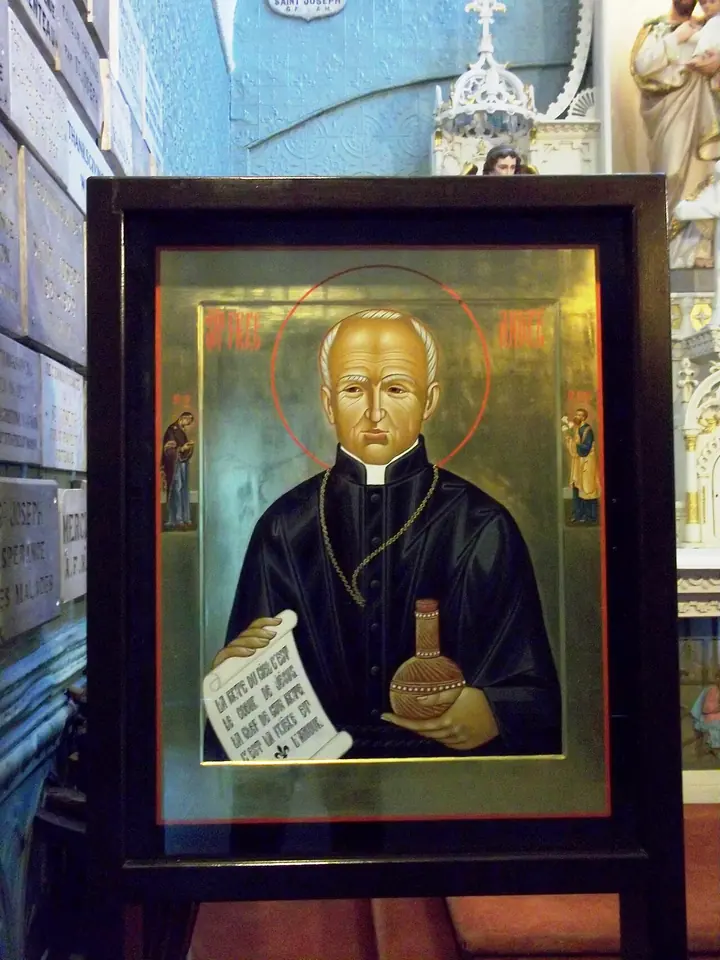

He refused all credit. "It is not I who heals," he would say, in tears, according to the Dictionary of Canadian Biography. "It is St. Joseph." The Oratory remembers his joke that he was only "Saint Joseph's little lap dog." In his canonization homily, Benedict XVI quoted his advice to the sick: "Do not seek to have your trials removed, ask rather for the grace to bear them well."
The thousands of cures claimed during his lifetime are reported. The Church has never examined them one by one.
Saint Joseph's Oratory
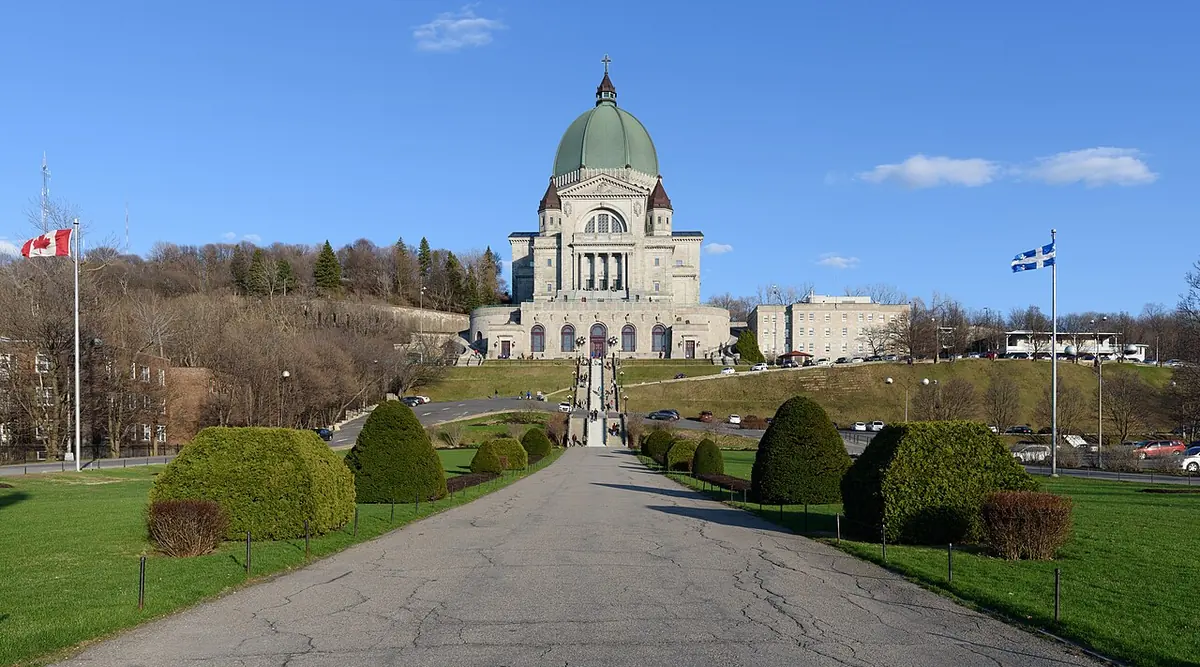
Brother André's dream was a chapel to St. Joseph on Mount Royal, across from the college. He placed a statue of the saint in a niche on the slope and brought visitors there to pray. With donations and the help of friends, a small wooden chapel opened in October 1904. Crowds forced the college to enlarge it four times by 1912.
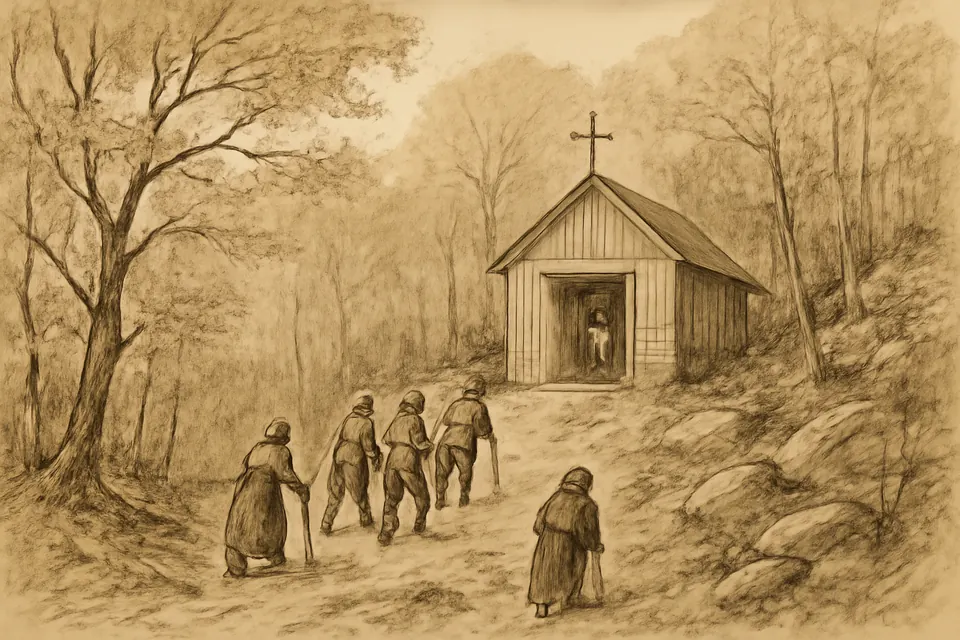
A crypt church seating 1,000 opened in 1917 and was too small within a year. He received visitors daily from 9 a.m. to 5 p.m., then was driven to see the sick at home in the evenings. He got 200 to 300 letters a day. Construction of the great basilica began in 1924; it was finished in 1967, three decades after his death.


He died at a hospital in Saint-Laurent on January 6, 1937, at ninety-one. The Oratory says hundreds of thousands filed past his coffin in freezing rain between January 7 and 13, and newspapers estimated a million.

His heart
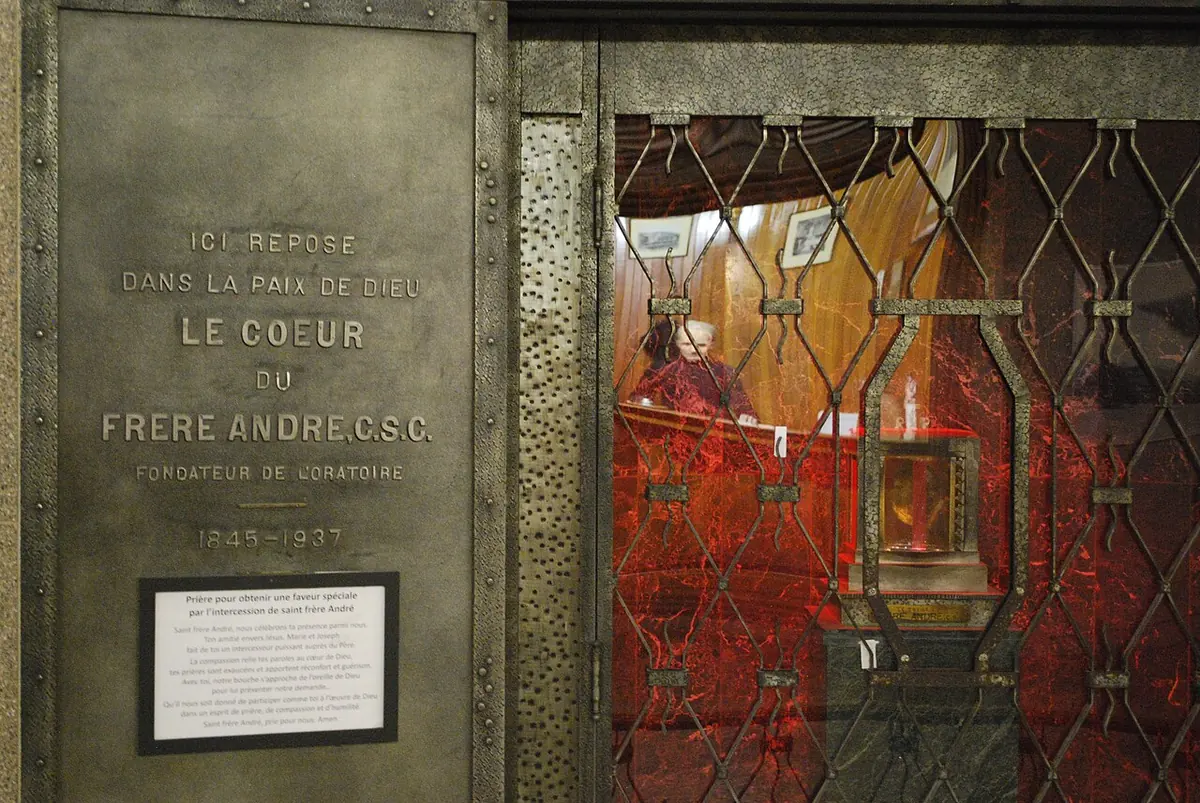
On the night he died, a death mask was made and his heart was removed. Archbishop Georges Gauthier had suggested reviving an old custom of preserving the hearts of revered people. The heart was kept in a reliquary at the Oratory. On the night of March 15, 1973, the reliquary was stolen. Police found it in a basement in Montreal on December 21, 1974, after an anonymous tip, and it was put back on display with a security system.

His body lies in a tomb in the Oratory, in a chapel built in the 1940s beside the crypt church.
Approved miracles and canonization
- Approved: the cure of Giuseppe Carlo Audino from cancer in 1958, accepted for his beatification by John Paul II on May 23, 1982.
- Approved: the recovery of a nine-year-old Quebec boy from a coma after severe head injuries in a 1999 road accident, declared medically unexplainable in 2009. Benedict XVI canonized Brother André on October 17, 2010, and almost 48,000 people attended a Mass of thanksgiving at Montreal's Olympic Stadium.
Symbols of St. André Bessette in art
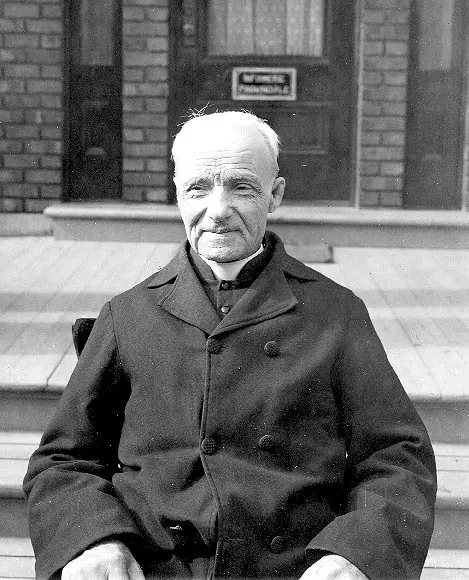
Because he lived into the age of photography, artists keep close to his photographs. Look for a small, elderly brother with short white hair and a lined, smiling face, in a black buttoned habit with a narrow white collar. He often holds a small bottle of oil, a St. Joseph medal or a statue of St. Joseph, and Saint Joseph's Oratory may appear behind him. His statue stands on the Oratory grounds and at Holy Cross schools such as the University of Notre Dame.

Feast day and prayer
His feast is January 6, an optional memorial in the United States; Canada keeps it on January 7. See the feast day calendar and our page on St. Joseph. The U.S. collect for his memorial, in Latin, addresses God as the lover of the humble, who gave Brother André great devotion to St. Joseph and care for the poor and afflicted, that by following his example of prayer and love we may share his glory.
He left no prayer of his own. Pilgrims to the Oratory light candles at his tomb and ask him to pray for the sick, as he once asked St. Joseph.
Frequently asked questions
When is St. André Bessette's feast day?
January 6, the day he died in 1937. It is in the Roman Martyrology and is an optional memorial in the United States. The Church in Canada keeps his memorial on January 7.
Why is Brother André connected with healings?
People who came to him in his years as doorkeeper said they were cured after praying with him, wearing a St. Joseph medal and rubbing themselves with oil from the lamp before St. Joseph's statue. He always gave the credit to St. Joseph. These cures are reported; the Church approved two others, after his death, for his beatification and canonization.
What is St. Joseph's oil?
Olive oil that burned in the lamp before a statue of St. Joseph. Brother André gave a few drops to the sick and told them to rub it on with confidence while praying. Catholics treat such oil as a sacramental, an aid to prayer, not a medicine or a charm.
Where is Brother André's heart?
In a reliquary at Saint Joseph's Oratory in Montreal. His heart was removed after he died, at the suggestion of the archbishop, as was once done for notable people. It was stolen in March 1973 and found in a basement in Montreal in December 1974, after a tip to police. It is back on display under added security.
Sources
- Dictionary of Canadian Biography: Bessette, Alfred, named Brother André (Denise Robillard)
- Benedict XVI, Homily for the Canonization of Six New Saints, 17 October 2010
- Benedict XVI, Litterae decretales for the canonization of Blessed Andrew Bessette, 17 October 2010 (Latin)
- Saint Joseph's Oratory: Saint Joseph's Oratory, a Place of Prayer and Healing
- Saint Joseph's Oratory: A Lying-in-State for Brother André
- Saint Joseph's Oratory: Remembering an Historic Day
- USCCB: Proper Formularies for the United States in their Original Languages (January 6)
- The Globe and Mail (Canadian Press): Brother André becomes Quebec's first saint (2010)
- The Globe and Mail: Brother André, the Rocket Richard of miracles (2010)
- National Catholic Register: 'Miracle Man' to Be Canonized (2010)
- CBC Archives: Police recover Brother Andre's stolen heart (December 26, 1974)