St. Dymphna of Geel
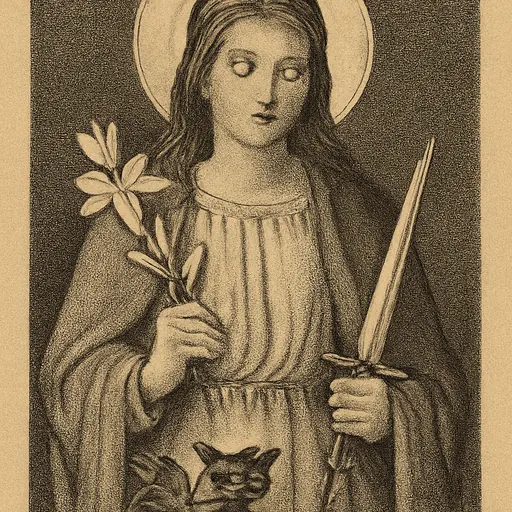
St. Dymphna is a virgin martyr venerated at Geel, in present-day Belgium. Her 13th-century legend says she was the daughter of a pagan Irish king who fled to Geel to escape her father and was killed there by him. She is the patron saint of mental illness, and Catholics today also ask her help with anxiety and depression. Her feast day is May 15.
Who was St. Dymphna?
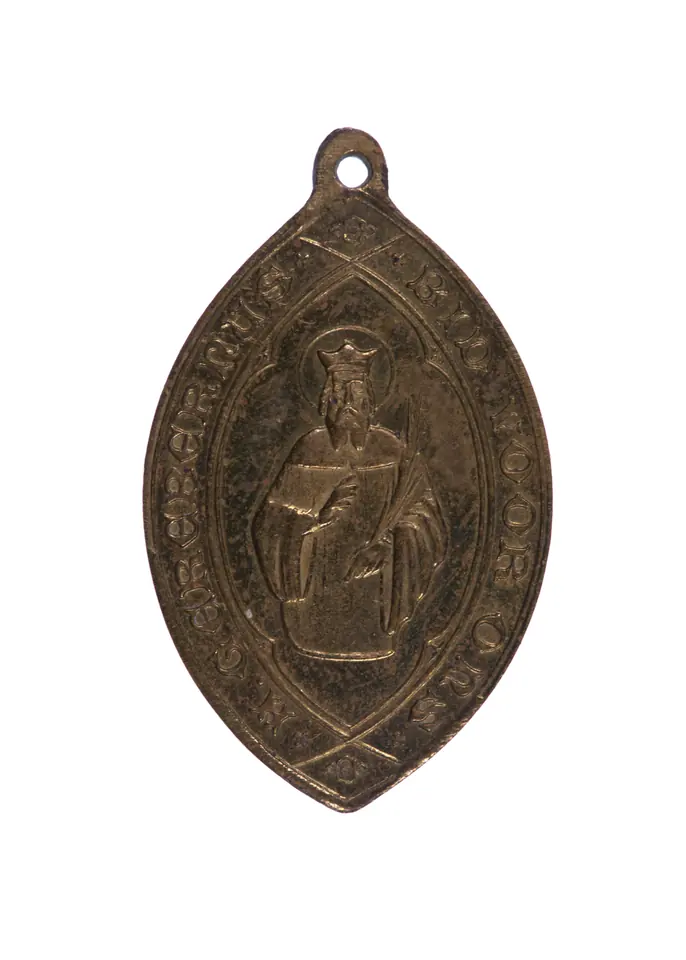
St. Dymphna is a young virgin martyr whose tomb is in Geel, a town in the Campine region of northern Belgium, about 25 miles east of Antwerp. According to her legend she was an Irish princess, the daughter of a pagan king and a Christian mother. After her mother died, her father wanted to marry her. She fled across the sea with an old priest named Gerebernus, and her father followed them to Geel and killed them both.
That is all legend, and this encyclopedia labels it traditional. The oldest written account of her life is a Latin Vita composed in the mid-1200s, roughly six centuries after the events it describes. The Catholic Encyclopedia of 1909 judged that the story has no historical foundation. What is not legend is what happened at her grave. By the 13th century people were bringing relatives with mental illness to Geel to ask for her prayers, and the town learned to take those pilgrims into its homes. That custom has lasted to the present day.

Her name is spelled many ways: Dymphna, Dympna, Dimpna in Flemish and Damhnait in Irish. Irish devotion sometimes calls her the "Lily of Éire." For many Catholics today she is simply the saint to ask for help with mental illness, anxiety and depression.
The legend of St. Dymphna
The story below follows the Vita and the devotional retellings based on it, such as the one the National Shrine of St. Dymphna in Ohio reprints from a 1946 Benedictine magazine. Every episode is traditional.
A king's daughter in Oriel
Dymphna was born in the 7th century, the legend says, to a pagan petty king of Oriel, a kingdom in what is now the northeast of Ireland. Her mother was a Christian, known for her goodness and her beauty. The child was secretly taught the faith and baptized by Gerebernus, a priest of the household, who also taught her to read. While still young, the shrine's account says, she consecrated her virginity to Christ.
Her father's grief
When Dymphna was in her early teens her mother died. Her father was overcome by grief, and his counselors urged him to marry again. He sent messengers to find a woman as beautiful as his late wife. They came back saying that the only woman like her was his own daughter, and the king, as the legend puts it, "conceived the evil design" of marrying her.
The old accounts don't dwell on this, and neither will we. A grieving man lost his reason and turned on his own child. Dymphna asked for time, went to Gerebernus, and on his advice fled.


Flight to Geel
She left with Gerebernus and two servants of the court, a jester and his wife. They crossed the sea, landed near Antwerp and traveled inland to Geel, then a small village in the forests and heaths of Brabant. The Catholic Encyclopedia summary of the Vita says they settled beside a chapel of St. Martin and lived there quietly in prayer.


The father's search
The king set out after them. In a detail often added to the story, his messengers stopped at an inn in the nearby village of Westerlo, where the innkeeper recognized the foreign coins they paid with. The princess had paid with the same coins, and that gave her away. The king found her at Geel.

The martyrdom
The king first tried to persuade her to come home. Gerebernus rebuked him, and the king had his men kill the priest. When Dymphna still refused, her father drew his sword and beheaded her himself. The shrine's account says she was in her fifteenth year. The people of Geel buried the two bodies in a cave nearby.


How old is the story of St. Dymphna?
The Vita of St. Dymphna was written by Peter, a canon of the church of St. Aubert at Cambrai, at the request of Bishop Guy (Guiard) of Laon, who led the diocese of Cambrai from 1238 to 1248. Peter worked from the oral tradition of Geel. No written account older than his is known. The Bollandists printed the Vita in the Acta Sanctorum for May.
The Catholic Encyclopedia article by J. P. Kirsch is frank about it. It calls the story a variant of a common folk tale, about a king who wants to marry his own daughter, that is told in many forms. It also notes that her identification with St. Damhnait, an Irish holy woman honored at Tydavnet in County Monaghan, can't be proved, though local Irish tradition makes the link.
None of this means nothing happened at Geel. Kirsch points to fragments of two ancient sarcophagi kept there and a brick said to come from one of them, with letters read as "DYMPNA." Two people, one of them named Dymphna, were buried and honored at Geel long before anyone wrote down why. Catholics who honor her today do so as the Church honors many early martyrs: on the strength of an old cult and a holy place, with the details of the story left to tradition.
The finding of the relics
The legend says that some years after the martyrdom the villagers decided to give the two bodies a worthier grave. When workmen cleared the earth from the mouth of the cave, they found two stone coffins "whiter than snow," as if carved by angels, though no one in the village had made them. On Dymphna's breast lay a red tile inscribed with her name. Her body was moved to the village church, and Gerebernus's bones were later taken to Xanten in Germany.
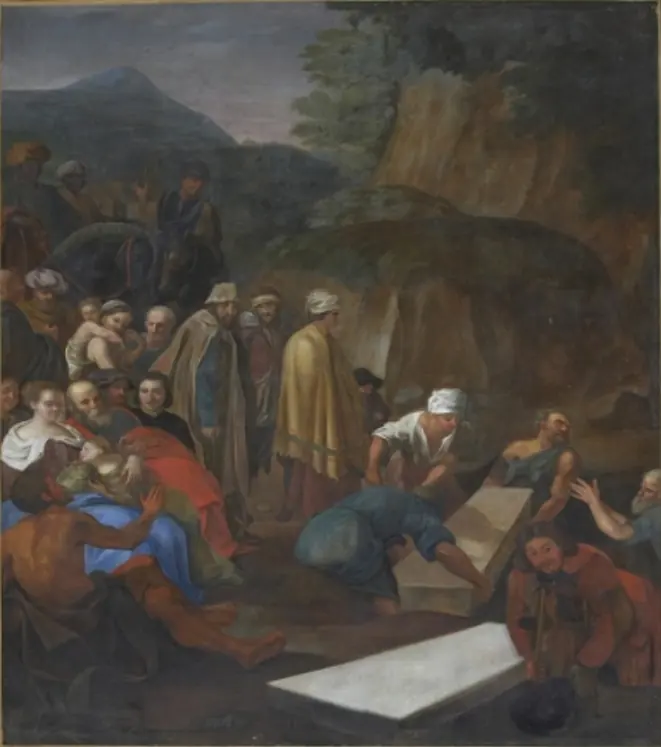

Both the finding and the "angel-carved" tombs are traditional. The fragments and the inscribed brick shown at Geel are real objects, and the cult around them was strong enough by the 1240s for a bishop to order a written life.
The miracles of St. Dymphna
St. Dymphna's cult is far older than the modern canonization process, so no miracle of hers has been formally investigated and approved by the Church. Sorted by this encyclopedia's labels:
- The angel-made tombs and the inscribed tile: traditional.
- Healings of people with mental illness at her shrine in Geel: reported. The shrine's novena booklet speaks of "the many Miraculous cures at Gheel," and pilgrims have told of them for centuries, but they were never examined as a canonization case would be.
- Answered prayers today: reported. The National Shrine in Massillon reads letters from people who credit her prayers with help in depression, anxiety and other illnesses. These are personal testimonies.
The town of Geel tends to point to a different kind of wonder: the ordinary families who have lived with strangers in mental distress for seven hundred years.
Geel: seven centuries of family care
Geel is famous among psychiatrists, and it has nothing to do with legend. It is one of the oldest systems of community mental health care in the world, and it is still running.
From pilgrimage to boarding
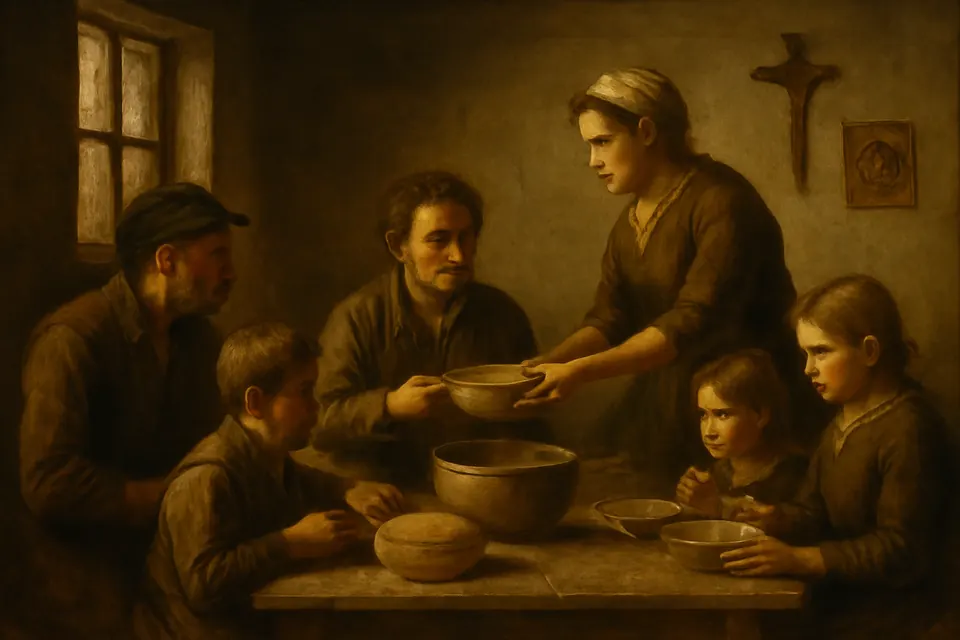
Pilgrims began coming to Dymphna's grave in the Middle Ages, bringing family members who were "possessed," "mad" or deeply troubled. The church built rooms for them. According to the historian Mike Jay, a dormitory annex was added to the church in 1480 to hold the growing number of pilgrims, and the overflow was lodged with families in the town. Some families went home and left relatives who had not been cured. Geel's people, most of them farmers, took them in as guests or boarders, and the boarders helped with the work.
State care from 1850
The custom drew visitors. Jean-Étienne Esquirol, the French psychiatrist, came in 1821. In 1850 the Belgian state took over supervision from the Church, paid the families a modest sum in return for inspection, and banned restraint and corporal punishment. A hospital opened on the edge of town in 1861. By the late 1930s, Jay writes, almost 4,000 boarders lived among a native population of about 16,000.
Geel today
The numbers have fallen as psychiatric care has changed, but the system continues. NPR reported about 250 boarders in 2016. Everyone who joins it first goes to the public psychiatric hospital in Geel, which assesses them, matches them with a host family and keeps supporting both. The families receive a small state stipend, along with training and help from professionals, and hospital care is there when needed. The people are not called patients but boarders, and many stay with the same family for decades.
Why St. Dymphna is the patron saint of mental illness
Dymphna's patronage comes from Geel, not from any detail of her life. The legend never says she was ill or worked with the sick. But the shrine's 1946 account and its novena booklet give the old devotional reasoning: she resisted "the insane, raging love of her father," and God made her the protectress "of all who are afflicted with nervous disorders." Her death at the hands of a father who had lost his reason became, for pilgrims, a sign that she understood the illness they carried to her grave.
The patronages, sorted by how old they are:
- Mental illness and "nervous disorders": traditional. People with mental illness were brought to Geel for centuries, and the litany used at the National Shrine calls her "Protectress against all nervous disorders."
- Anxiety and depression: a modern way of naming the same patronage. Medieval prayer books didn't use these words, but Catholics today ask her help with them more than with anything else.
- Mental health caregivers: a natural extension, honoring the families of Geel and the nurses, doctors and counselors who care for the sick.
- Geel: the town's patron since the Middle Ages.
Some survivors of abuse within their own families also pray to her, because of the story of what her father tried to do. She is shown on our patron saints page alongside St. John of God, who founded hospitals after his own breakdown, and St. Raphael the Archangel, whose name means "God heals."
If you are struggling: asking a saint's prayers goes hand in hand with getting care, never instead of it. Please talk to a doctor, counselor or someone you trust. In the United States you can call or text 988, the Suicide and Crisis Lifeline, at any hour. Outside the U.S., your local emergency number or health service can connect you with help.
Symbols of St. Dymphna in art
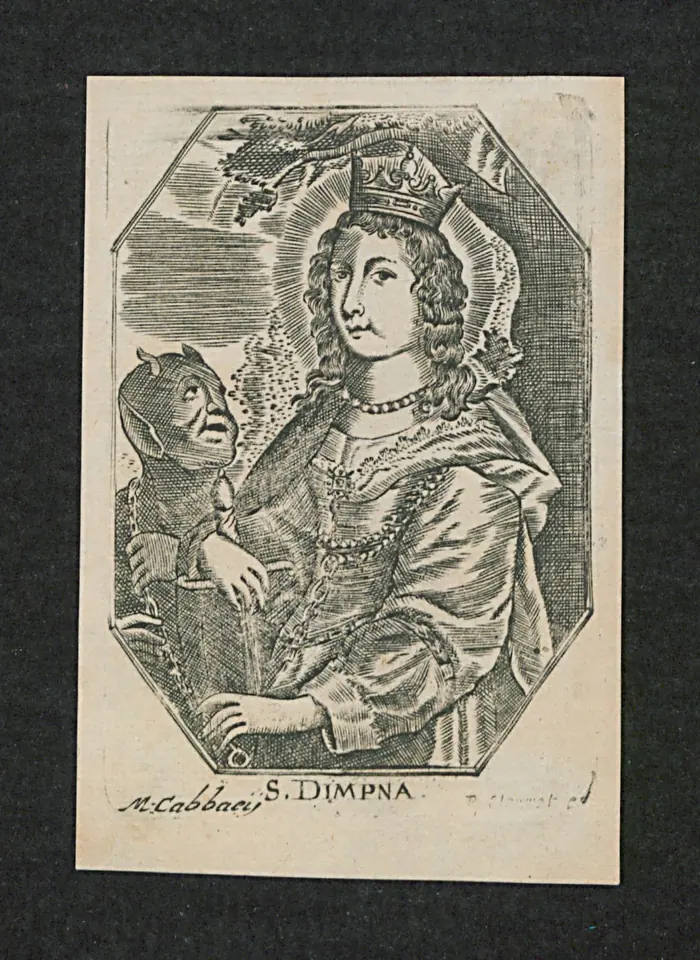
St. Dymphna is almost always shown as a young girl in fine clothes, since the legend makes her a king's daughter. To tell her from other young virgin martyrs such as St. Agnes or St. Lucy, look for these:
- A sword: the weapon her father used. She holds it, or it lies at her feet.
- A demon on a chain: her most distinctive attribute. The bound devil stands for the torments of mental illness, which medieval people often blamed on evil spirits, and for her power to relieve them.
- A crown or circlet: her royal birth.
- A lily: her purity.
- A martyr's palm: like all martyrs.
- A lamp or book: on some modern holy cards, recalling her prayer and her faith.

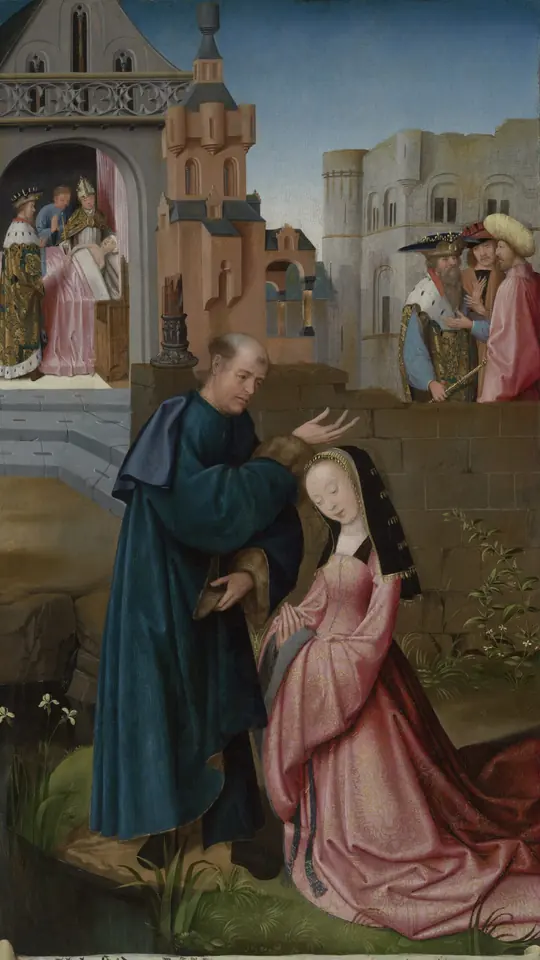
Older Flemish art also tells her story in scenes. Goossen van der Weyden's panels near the top of this page come from an altarpiece painted around 1505 for Tongerlo Abbey, not far from Geel. According to the Belgian broadcaster VRT, it was sawn into eight pieces in the 18th century, one panel was lost during the French Revolution, and the monks sold the other seven in 1913. The Phoebus Foundation in Antwerp bought them in 2010, restored them for three years and showed them in Geel's church in 2022.
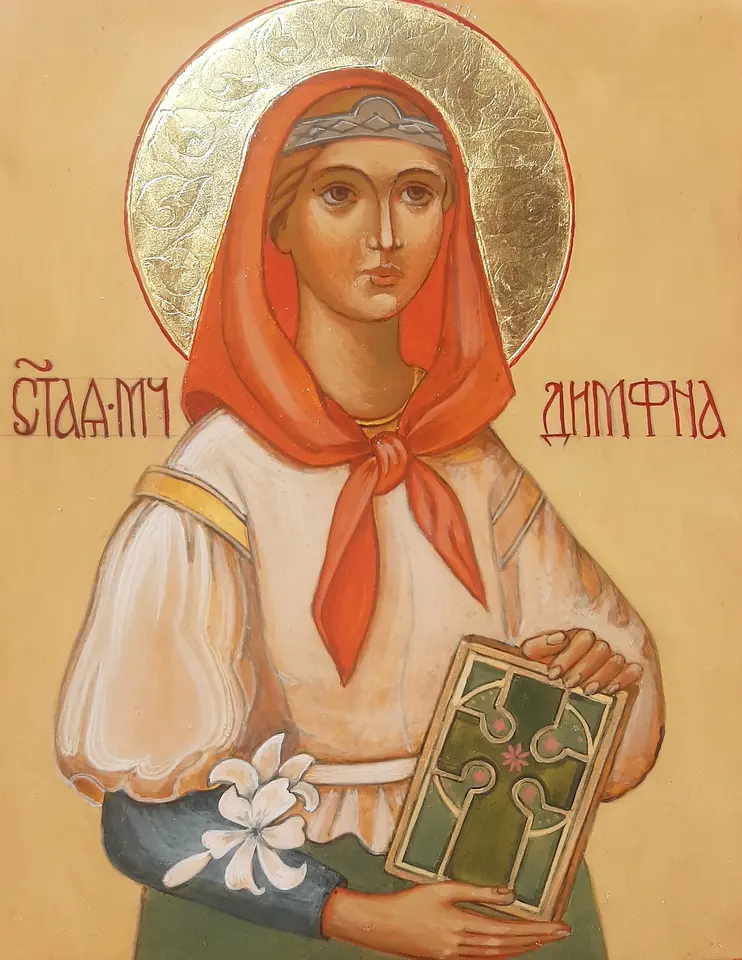
Popular statues in American churches usually give her a green or white gown, a crown, a lily and a lamp, sometimes with the chained demon at her feet. The Eastern Orthodox Church does not have an ancient icon tradition for her, but some Orthodox Christians in the West venerate her as a pre-schism Irish saint, and new icons have been painted for them.

Feast day and where St. Dymphna is honored
Her feast is May 15, the day kept at Geel and in most Catholic calendars and prayer books. She is not on the General Roman Calendar, so the day is kept by devotion and in places where she is a patron. Our feast days calendar shows her neighbors, including St. Isidore the Farmer, who shares the date.
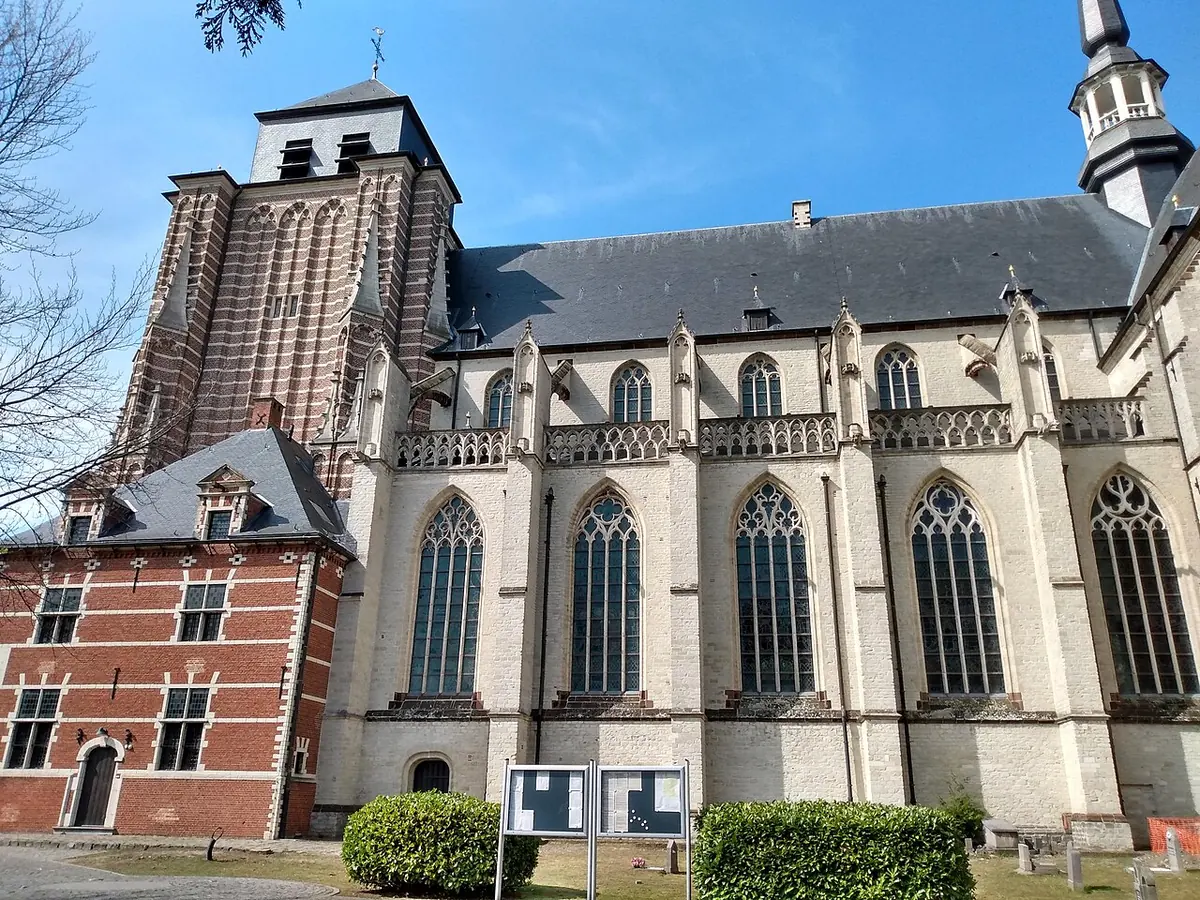
The Church of St. Dymphna, Geel
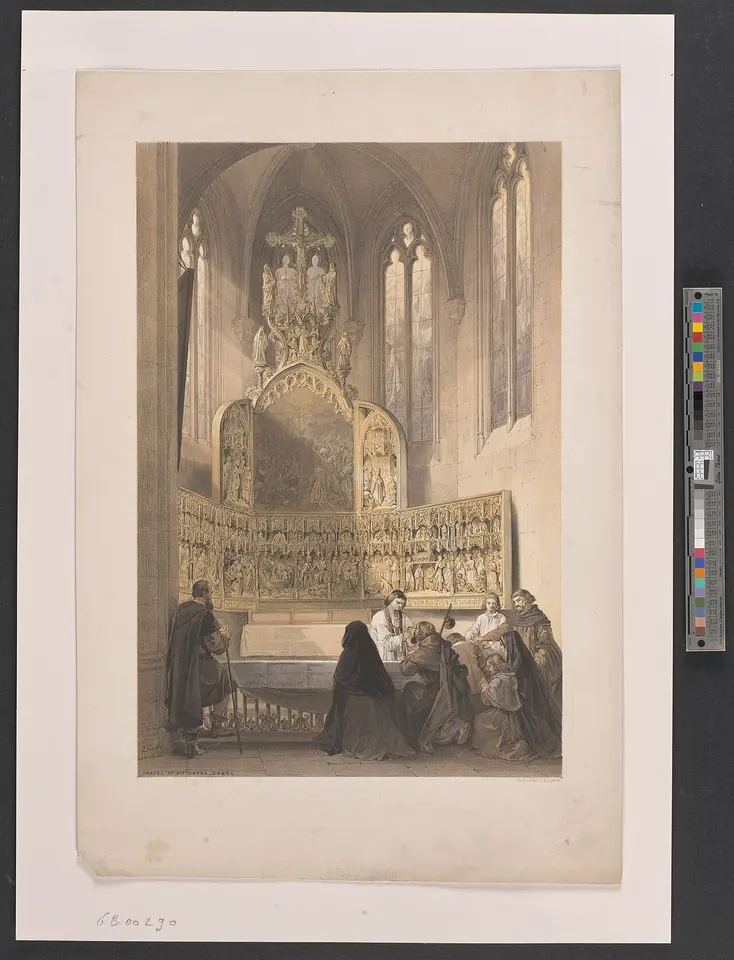
The Gothic Sint-Dimpnakerk stands on the place where tradition says Dymphna was first buried. The Catholic Encyclopedia records that the older church burned in 1489 and that the new one was consecrated in 1532. Her relics rest there in a silver reliquary. Every five years the reliquary is carried through Geel in the great Dymphna procession on her feast, and the Catholic Encyclopedia notes that pilgrims also came on the Tuesday after Pentecost.

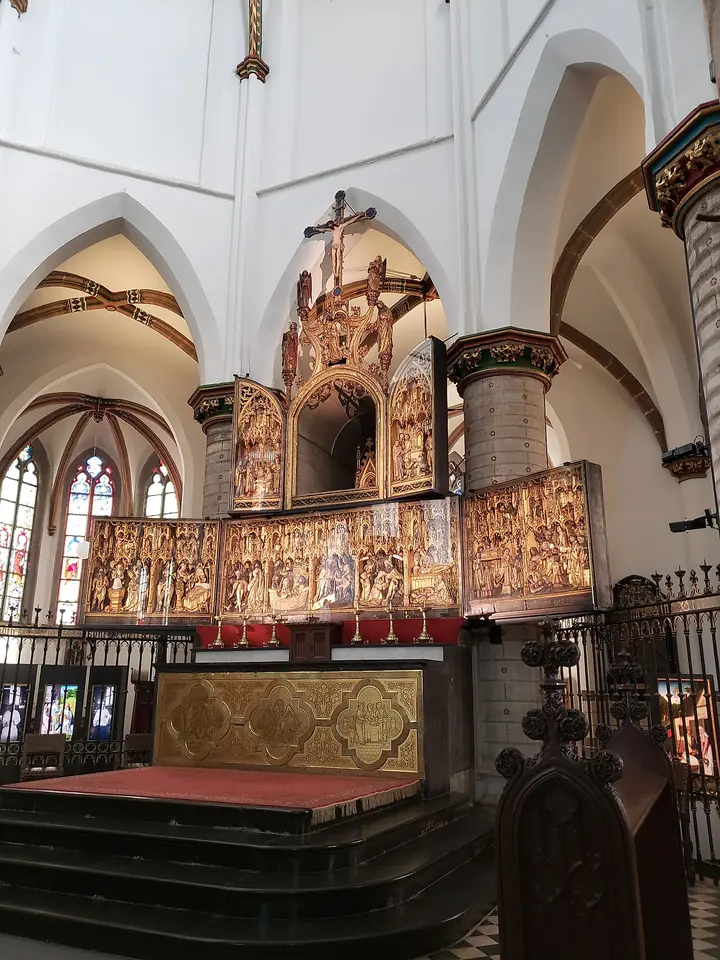
Behind the high altar stands a carved and gilded altarpiece from about 1515, made in Antwerp and attributed to Jan van Wavere. Its small figures tell Dymphna's life from her baptism to her death and the healing of the sick at her tomb. The church also keeps the large paintings by Godfried Maes and Jan Carel Vierpeyl shown on this page.

Geel's Gasthuismuseum, in the old hospital buildings near the church, shows centuries of images of the saint, from altarpiece fragments to the holy cards pilgrims took home.

The National Shrine of St. Dymphna, Massillon, Ohio
The first American church built in her honor stood beside Massillon State Hospital in northeastern Ohio, a large public psychiatric hospital. The National Catholic Register reports that it was dedicated on her feast in 1938. Fr. Austin W. Scully had become the hospital's first chaplain in June 1937. The church became the National Shrine of St. Dymphna, with an outdoor statue surrounded by vigil lights and a League of St. Dymphna whose members support the shrine's prayers for the sick.

In 2012 the shrine moved into St. Mary's Church in Massillon. A fire on August 4, 2015, destroyed the chapel that held it, and the shrine was rebuilt. Today it keeps a first-class relic of the saint, prays a weekday novena and accepts prayer requests by mail and online.
Other places
In Ireland, Tydavnet in County Monaghan honors her as its own Damhnait, and the Harry Clarke window in nearby Carrickmacross is one of her finest modern images. Hospitals, schools and chapels for people with mental illness carry her name around the world.
Prayer to St. Dymphna
There is no prayer that goes back to Dymphna herself. The prayers most used come from the National Shrine of St. Dymphna in Massillon, whose novena booklet contains a litany, a closing prayer and nine daily prayers. Catholics pray them for themselves or for family members with mental illness.
The shrine's prayer after the litany
The litany in honor of St. Dymphna asks her prayers as "Patroness of Gheel," "Protectress against all nervous disorders" and the saint "renowned for many miracles, particularly in Gheel." It ends with this prayer, quoted from the shrine's booklet:
O God, Who gave St. Dymphna to the infant Church in Brabant as a model perfect in all virtues, and Who ordained that Thy handmaid should seal with her innocent blood and with numerous miracles the teachings of the Gospels for the spread of the true faith, grant we beseech Thee that those especially who honor the Holy Relics may continue to enjoy her powerful protection so that being fortified in faith and gratefully imitating her other virtues may be able to gain a new glory from Thy infinite and supreme majesty, through Christ our Lord. Amen.
The St. Dymphna novena
The shrine's novena gives each of the nine days a virtue: faith, hope, charity, piety, prudence, justice, fortitude, temperance and chastity. Each day has its own prayer, followed by the Our Father, Hail Mary and Glory Be said five times. The prayer for the eighth day asks that "being preserved from all nervous disorders we may come to a happy end." The shrine prays the litany and the day's prayer every weekday and invites people to join it.
Simple prayer
Many people don't use a set text at all. They light a candle before her statue, name the person they are worried about and say, "St. Dymphna, pray for us." Catholics ask her to pray for them in times of anxiety, depression, addiction and fear, and for the families and caregivers who walk with the sick, as the families of Geel have done for seven hundred years.
Frequently asked questions
What is St. Dymphna the patron saint of?
People with mental illness and what older prayer books call "nervous disorders," and those who care for them. The patronage grew out of Geel, where people with mental illness were brought to her shrine from the Middle Ages on. Catholics today also ask her help with anxiety and depression, which fall under the same patronage. She is also the patron of the town of Geel.
When is St. Dymphna's feast day?
May 15. That is the date kept at Geel, at the National Shrine in Massillon, Ohio, and in most Catholic calendars and prayer books. She is not on the General Roman Calendar, so her feast is kept locally and by devotion.
Is the story of St. Dymphna true?
The Church honors her as a martyr, but her life story is legend. It was first written down in the mid-1200s, about six hundred years after the events it describes, by a canon of Cambrai working from local oral tradition. The 1909 Catholic Encyclopedia says the story has no historical foundation. What is certain is that she was venerated at Geel by the 1200s and that the town's care for people with mental illness grew from that devotion.
Is there an official prayer to St. Dymphna?
The National Shrine of St. Dymphna in Massillon, Ohio, uses a litany and a nine-day novena from its own novena booklet, which ends with a prayer beginning "O God, Who gave St. Dymphna to the infant Church in Brabant as a model perfect in all virtues." Many Catholics also simply say, "St. Dymphna, pray for us."
Where are St. Dymphna's relics?
In a silver reliquary in the Church of St. Dymphna in Geel, Belgium, which stands where tradition says her body was first buried. Every five years the reliquary is carried through the town in a procession on her feast. The bones of St. Gerebernus, the priest killed with her, were taken to Xanten in Germany.
Why is Geel famous for mental health care?
Pilgrims brought relatives with mental illness to Dymphna's shrine for centuries. When the church's sick room overflowed, townspeople took them into their homes. The custom never stopped. Belgium put it under state supervision in 1850, and a public psychiatric hospital in Geel still places boarders with local families today.
What are St. Dymphna's symbols?
A sword, for her martyrdom, and a demon on a chain at her feet, for her power against the torments of the mind. She is usually young and crowned as a king's daughter, often with a lily for purity or a martyr's palm.
Is St. Dymphna the patron saint of anxiety?
Yes, by extension. Her traditional patronage covers mental and "nervous" illness of every kind. Anxiety and depression were not named that way in medieval prayer, but devotees today ask her help with them, and the National Shrine receives many such requests.
Sources
- Catholic Encyclopedia (1909): St. Dymphna
- National Shrine of St. Dymphna: History
- National Shrine of St. Dymphna: Novena booklet (Litany and Novena in Honor of St. Dymphna)
- National Shrine of St. Dymphna: The History of St. Dymphna (reprinted from Tabernacle and Purgatory, Benedictine Sisters, Clyde, Missouri, 1946), archived
- National Catholic Register: A Heavenly Hospital of a Shrine (2001)
- GCatholic: National Shrine of St. Dymphna, Massillon, Ohio
- Mike Jay, Geel: where the mentally ill are welcomed home (Aeon, 2014)
- NPR: A Community Takes On Caring For Strangers With Mental Illness (2016)
- VRT NWS: Maak kennis met Dimpna van Geel, middeleeuws en toch actueel (2022)
- The Phoebus Foundation: Dymphna is finally coming home
- KIK-IRPA BALaT: Onthoofding van de H. Dimpna (Godfried Maes, 1688), Sint-Dimpnakerk, Geel
- KIK-IRPA BALaT: Ontgraving van het gebeente van HH. Dimpna en Gerebernus (Jan Carel Vierpyl), Sint-Dimpnakerk, Geel
- 988 Suicide and Crisis Lifeline
- Acta Sanctorum, May, vol. 3 (Vita S. Dympnae by Peter, canon of St. Aubert, Cambrai)