St. Brigid of Kildare
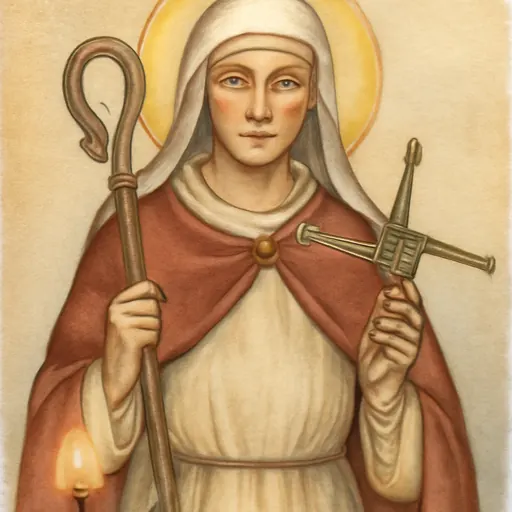
St. Brigid of Kildare (about 451–525) was an Irish nun who founded a monastery for women and men at Kildare and became, with St. Patrick and St. Columba, one of the patron saints of Ireland. Her feast day is February 1, when Irish families weave St. Brigid's crosses from rushes, and since 2023 Ireland has marked her day with a public holiday.
Who was St. Brigid?
Brigid of Kildare was an Irish nun of the late 5th and early 6th centuries who founded a monastery at Kildare, in the plains of Leinster, and became the best-loved woman saint of Ireland. Irish Catholics call her Mary of the Gael. With St. Patrick and St. Columba, she is one of the country's three patron saints.
The Catholic Encyclopedia gives her birth as 451 or 452 at Faughart, near Dundalk in County Louth, and her death at Kildare on February 1, 525. Both dates are traditional, and the early Irish annals do not agree on the exact year of her death.

The early lives
The oldest life is the Latin Life of St. Brigid by Cogitosus, a monk of Kildare. The CODECS database of Celtic studies dates it to the third quarter of the 7th century, about 150 years after her death. His Brigid is a worker of miracles of mercy, and he ends with a description of the great church of Kildare, its decorated interior and the tombs of Brigid and her bishop, Conleth, on either side of the altar.
The second early source is Bethu Brigte, a life in Old Irish probably written in the 9th century, which survives in a single incomplete copy. It gives the family story: her father, Dubthach, was a Leinster chieftain, and her mother, a slave in his household, was sold to a druid, so Brigid grew up in the druid's house. Both lives mix memory with legend, and everything in the next sections is traditional unless noted.
The life of St. Brigid
A girl who gave everything away
The Old Irish life is full of stories of Brigid giving away her father's goods. Sent to help her enslaved mother in the dairy, she divided each churning into thirteen portions, for Christ and the twelve apostles, and gave it to the poor. The druid, seeing the butter multiply, freed her mother and asked to be baptized.
The best-known story concerns a sword. Angry at her giving, Dubthach took her to the king of Leinster to sell her, and while he went inside, she gave away his sword to a leper. When the king asked why she gave away something worth ten cows, she answered, "Even if I had the power to give all to Leinster, I would give it to God." The king told Dubthach she could be "neither sold nor bought."
Taking the veil
Brigid refused marriage and went with seven companions to Bishop Mel, a disciple of Patrick, to receive the veil. The life adds that Mel, "intoxicated with the grace of God," read out over her the prayers for ordaining a bishop and declared that she alone in Ireland would hold that honor. The story appears only in this life, and the Church has never treated it as an ordination, but it shows how highly the abbesses of Kildare were regarded.
The foundation at Kildare
Brigid settled at Cill Dara, "the church of the oak," and made it a double monastery, with a community of women under her and one of men under Bishop Conleth, whom she chose, says the Catholic Encyclopedia, "to govern the church along with herself." For centuries Kildare was ruled by an abbess and a bishop together.

The miracles and legends of St. Brigid
None of Brigid's wonders was ever formally investigated. All of the following are traditional.
- Water into ale: the Old Irish life tells how she blessed water carried in by her nuns and it became ale for a visiting bishop, and how one sack of malt brewed enough for seventeen churches over Easter.
- The cloak on the sunbeam: her early lives tell how she came in from the rain and hung her wet cloak on a ray of sunlight, which held it.
- Healings: both lives tell of many cures of lepers, the blind and the paralyzed.
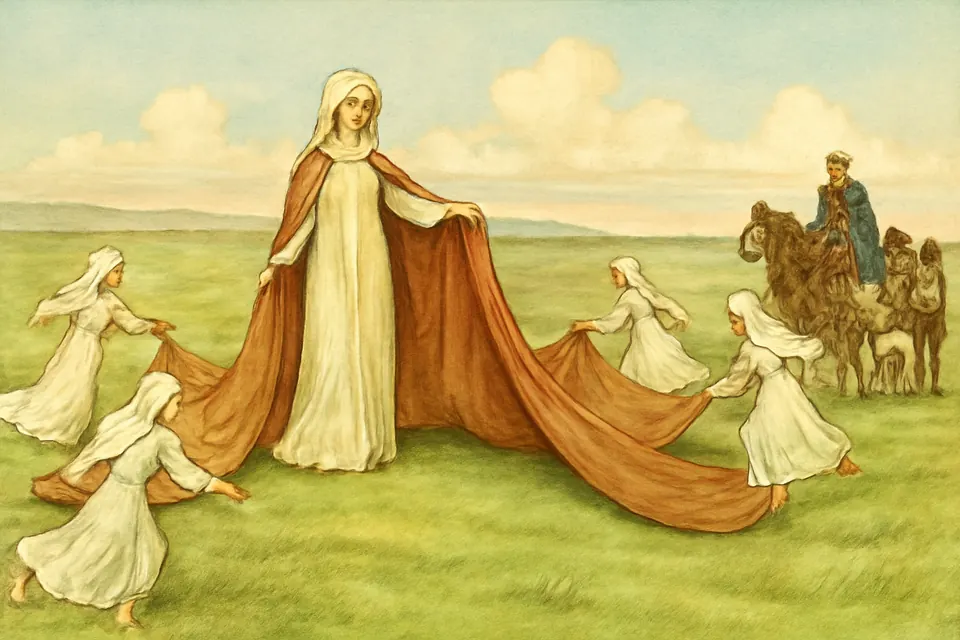
- The cloak and the Curragh: a later folk legend, told in Kildare to this day, says Brigid asked the king of Leinster for land, and he laughed and offered as much as her cloak would cover. She spread it on the ground, it stretched out across the whole plain of the Curragh, and the king gave her the land.
Cures after prayers to Brigid or visits to her wells are still told of today. These are reported, not formally investigated.
The Kildare fire
Kildare kept a fire that was never allowed to go out. Gerald of Wales, the Welsh churchman who visited Ireland in the 1180s, wrote in his Topography of Ireland that nineteen nuns took turns tending it, one night each. On the evening before the twentieth night, the last nun heaped wood on the fire and said, in Thomas Forester's translation (edited by Thomas Wright, 1863), "Brigit, take charge of your own fire; for this night belongs to you." In the morning the fire was still burning.
According to Kildare tradition, the archbishop of Dublin, Henry de Loundres, ordered the fire put out in 1220. In 1993 Mary Teresa Cullen, then leader of the Brigidine Sisters, relit Brigid's flame in Kildare's Market Square, and the sisters have kept it burning since at their center, Solas Bhríde.
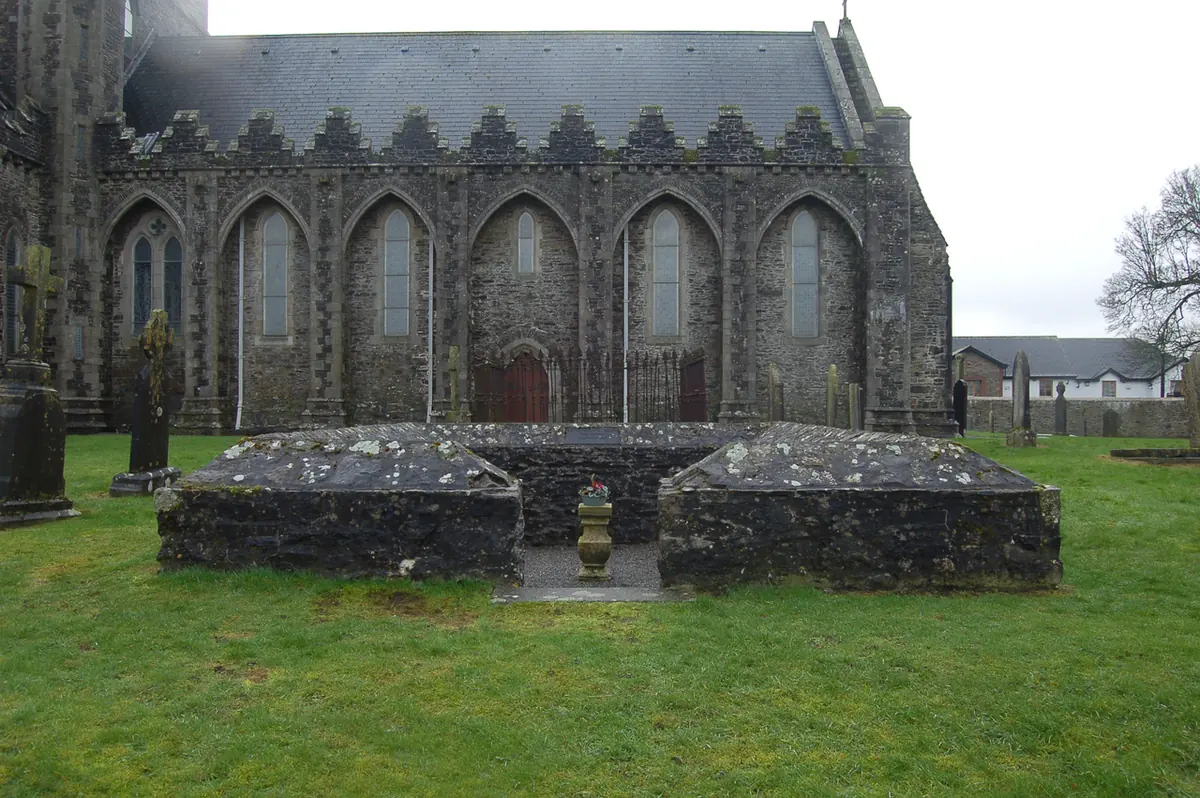

Was Brigid a goddess?
Brigid shares her name with a goddess. Cormac's Glossary, written around 900, describes a pagan Brigit, daughter of the Dagda, honored by poets, with two sisters also called Brigit, one linked to healing and one to smithcraft. Brigid's feast falls on February 1, the old Irish festival of Imbolc at the start of spring, and her legends are full of fire, milk and cattle. Some writers conclude that the saint is a goddess in Christian dress. Trinity College Dublin's library writes that the 7th-century hymn to Brigid in its collections shows "Brigid in her aspect as Goddess."
Others answer that the early lives describe a woman with a father, a mother, a monastery and a bishop, and that a real abbess could have carried a common name and absorbed older customs as her feast took over the old festival. The Catholic Encyclopedia treats her as a historical abbess. The evidence that would settle the question does not survive.
Why St. Brigid is a patron saint
- Ireland: as one of the three national patrons with Patrick and Columba.
- Dairy workers and farmers: from the stories of her work in the dairy, her butter and her cows.
- Newborn babies and midwives: from a Scottish Highland legend in which Bride was carried to Bethlehem to help at the birth of Christ, which made her the patron of women in labor.
- Poets: from the poets' Brigit of the old tradition.
See the full list on our patron saints page.
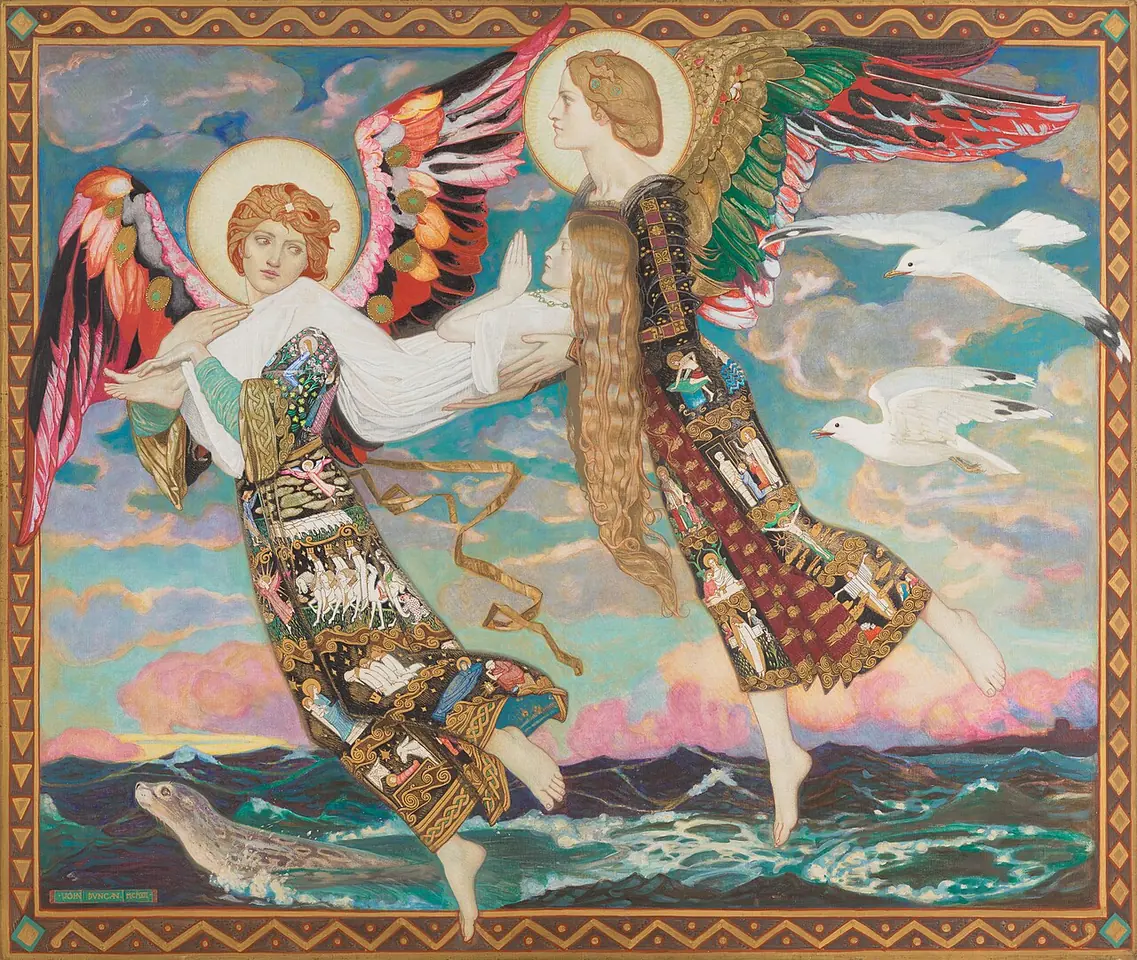

Symbols of St. Brigid in art
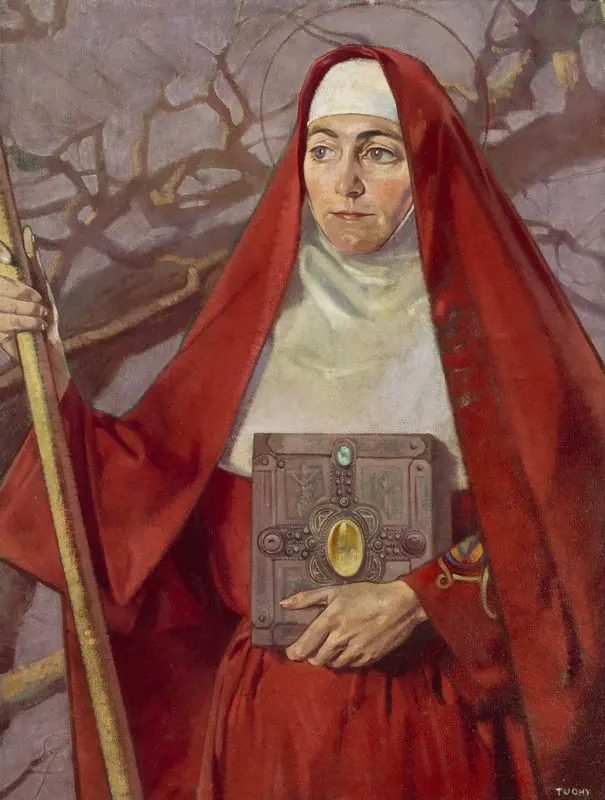
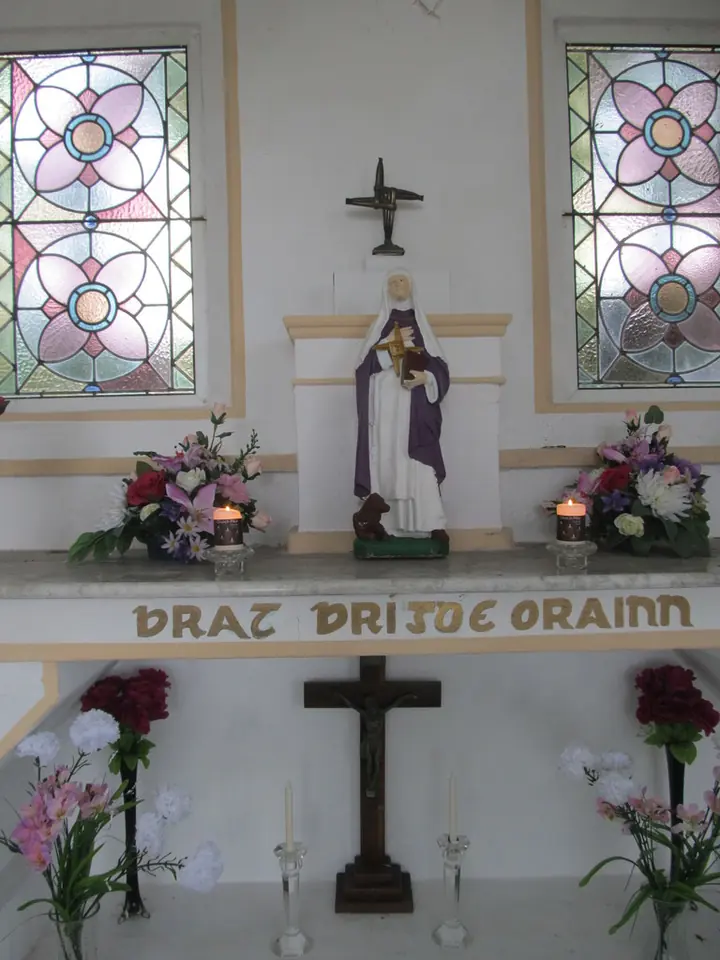
In churches and holy pictures Brigid is a nun or abbess, usually in a white veil, with a crozier as head of her monastery. Look for:
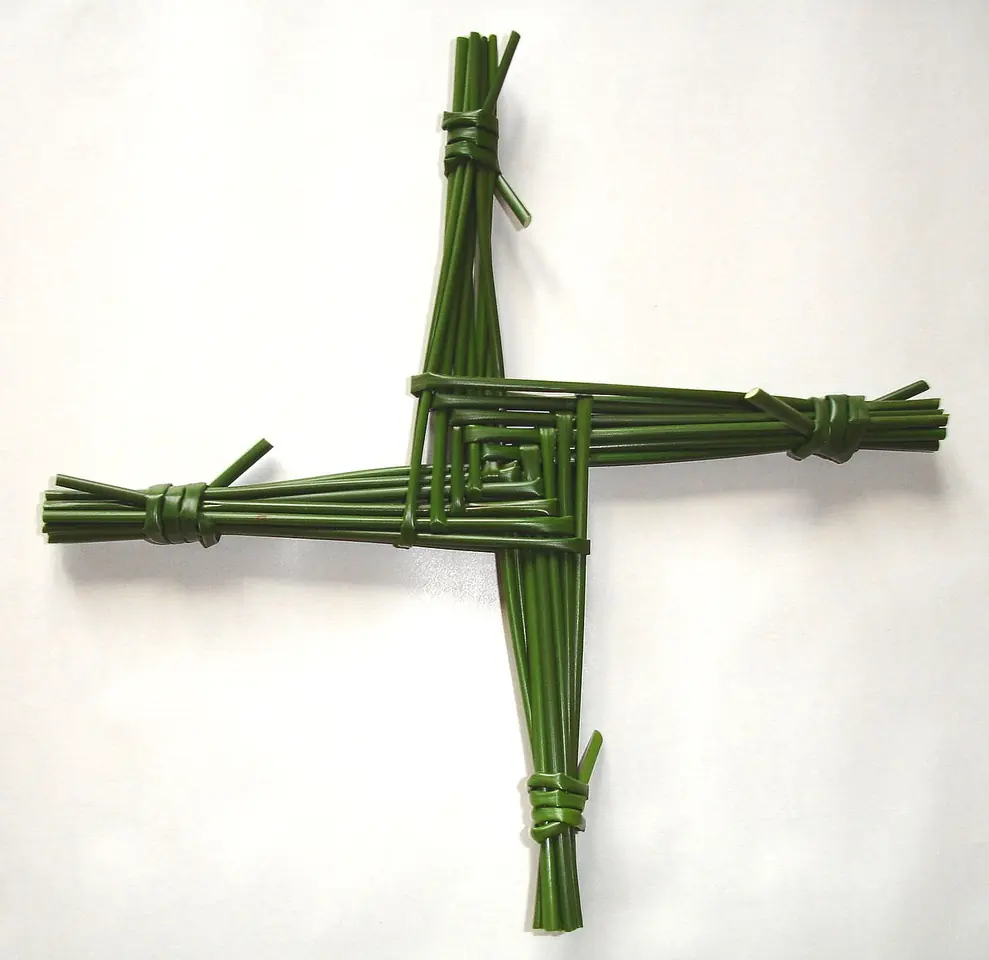
- The St. Brigid's cross: a small cross of woven rushes, held in her hand or set near her. It is the surest sign of Brigid.
- A flame or lamp: the Kildare fire, or the "fiery column" the Old Irish life says rose above her as a child and at her veiling.
- A cow or calf: her care for the dairy and the poor.
- A model of a church or an oak: her foundation at Kildare, "the church of the oak."
- A cloak: the legend of the Curragh.
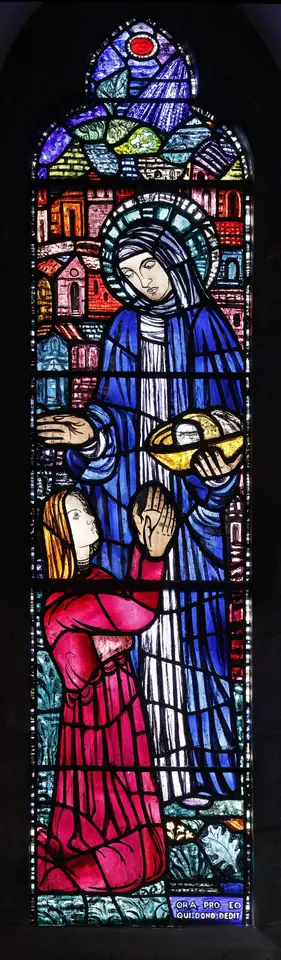

St. Brigid's Day and the St. Brigid's cross
Brigid's feast is February 1, and since 2023 Ireland has kept a public holiday in her honor on the first Monday in February, or on February 1 when that day is a Friday. When the government announced it in January 2022, then-Tánaiste Leo Varadkar called it "the first Irish public holiday named after a woman." See her neighbors on the calendar, including St. Blaise on February 3 and St. Valentine on February 14, on our feast days page.
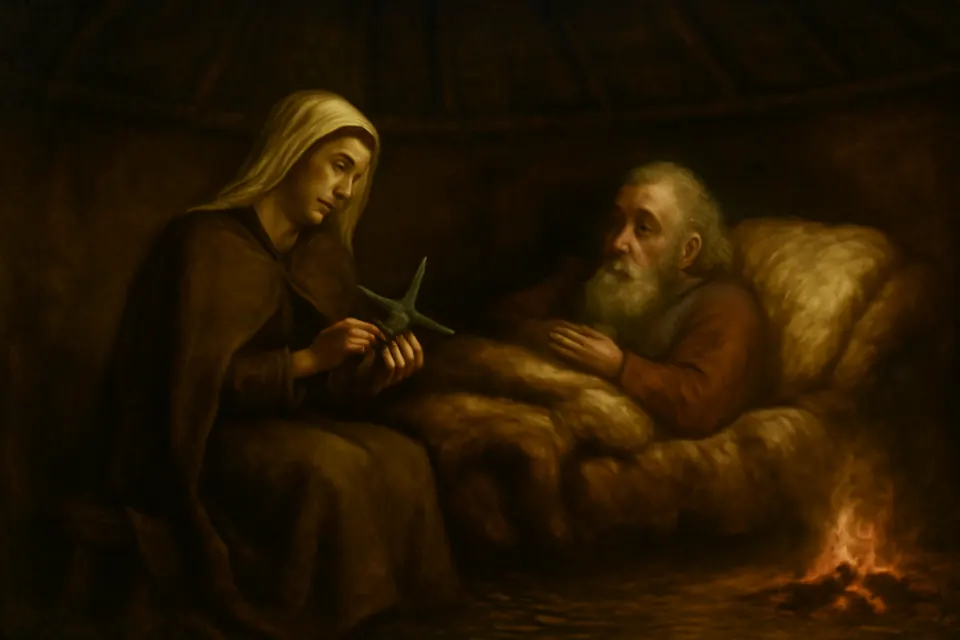
The best-known custom is the weaving of the cross on St. Brigid's Eve, January 31. Tradition says Brigid wove the first one from rushes on the floor while she sat with a dying pagan chieftain, sometimes said to be her father, to explain the Cross of Christ, and he asked for baptism before he died. It is a folk legend, not found in the early lives.
The National Museum of Ireland, which holds more than 300 of these crosses, says regional styles varied: "diamond, interlaced, or wheel-shaped," with two, three or four arms, made from straw, rushes, reeds and other materials. The four-armed rush cross is the most familiar. To make one:
- Gather 16 or more long green rushes. Tradition says to pull them, not cut them.
- Hold one rush upright. Fold a second rush in half around its middle so it points to the right.
- Turn the pair a quarter turn and fold a third rush around both, so it points the same way.
- Keep turning and folding, always holding the center tight, until a square woven center has four even arms.
- Tie each arm near its end with thread or a thin rush, and trim the ends evenly.
Families sprinkle the cross with holy water and hang it over the door or in the barn for the year. On the same eve some households leave a cloth or ribbon outside, the brat Bríde (Brigid's cloak), which Brigid is believed to bless as she passes.

Relics and places of pilgrimage
The Catholic Encyclopedia says Brigid was buried at Kildare beside the high altar, and that around 878, during the Viking raids, her relics were taken to Downpatrick and laid in the tomb of Patrick and Columba. They were found there in 1185 and moved within the church in 1186. An old couplet records the tradition: "In Down three saints one grave do fill, Brigid, Patrick and Columcille."
A relic of her head is kept in the Church of St. John the Baptist at Lumiar, near Lisbon, where tradition says three Irish knights brought it in the 13th century. In the 1930s the Lumiar parish gave a portion of it to the Brigidine Sisters at Tullow, County Carlow. In January 2024, for the 1,500th anniversary of her death, the fragment was carried in procession through Kildare town, and Bishop Denis Nulty installed it in St. Brigid's Parish Church, where it is now on permanent display.
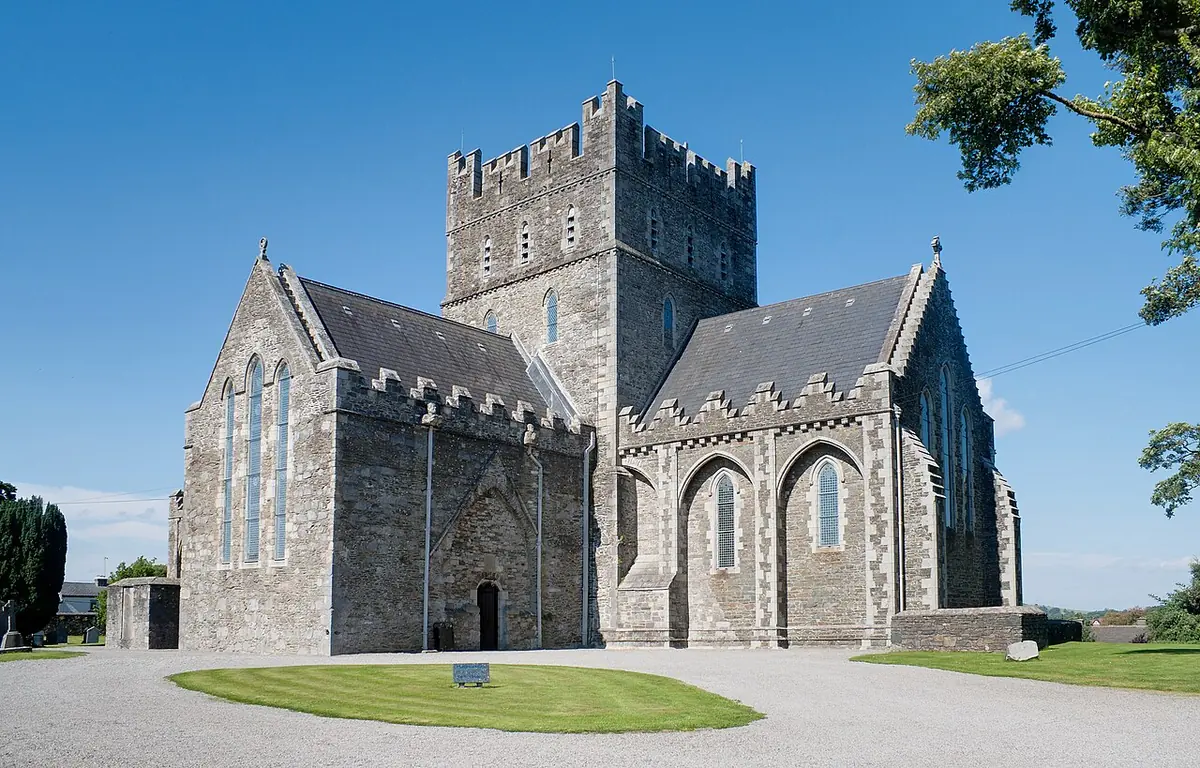

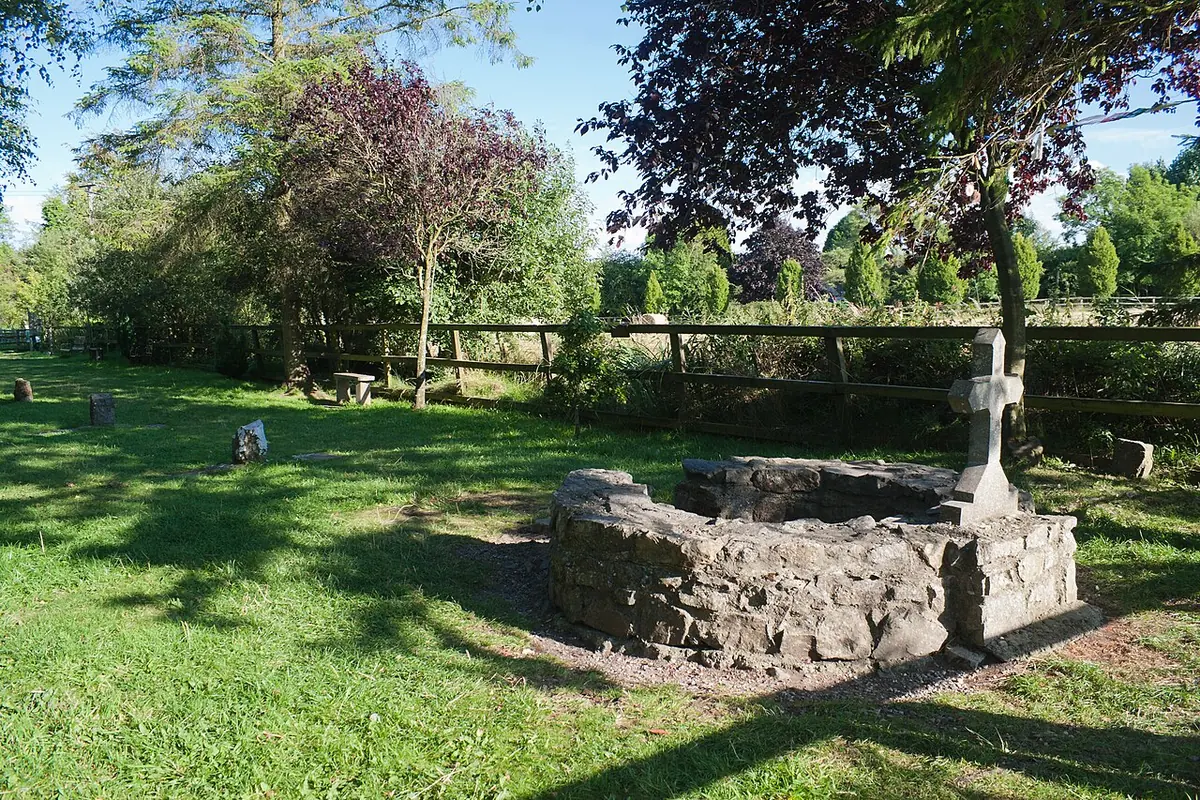
Kildare's medieval cathedral, now Church of Ireland, stands on the site of her monastery beside a round tower. Outside the town, pilgrims walk the stations at St. Brigid's Well.

Prayer to St. Brigid
The oldest prayer to Brigid is a hymn in Old Irish attributed to St. Ultan, preserved in the Irish Liber Hymnorum and dated by Trinity College Dublin to the 7th century. Its first verse, in Trinity's translation, reads:
Brigit, ever good woman
A sparkling golden flame
May she lead us to the eternal realm
The shining bright sun.
The National Museum of Ireland notes that a prayer welcoming the saint into the home was often said when the crosses were made. Irish Catholics ask Brigid to pray for their families, farms and animals, and for mothers and newborns.
Frequently asked questions
Who was St. Brigid of Kildare?
Brigid was an Irish abbess of the late 5th and early 6th centuries. Her earliest biographers say she was the daughter of a Leinster chieftain, Dubthach, and a slave woman, took the veil young, and founded a double monastery for women and men at Kildare, which became one of the great churches of Ireland. She died around 525 and is one of Ireland's three patron saints.
How do you make a St. Brigid's cross?
The traditional cross is woven from green rushes pulled (not cut) on January 31, St. Brigid's Eve. Hold one rush upright, fold a second in half around its middle, turn the pair and fold a third around both, and keep turning and adding rushes so that a square woven center builds up with four arms. When it's big enough, tie the ends of each arm with thread or a thin rush and trim them. The National Museum of Ireland says the materials were sprinkled with holy water and the cross was hung in the house or the cow shed for Brigid's blessing.
Is St. Brigid's Day a public holiday in Ireland?
Yes, since 2023. The holiday falls on the first Monday in February, or on February 1 itself when that day is a Friday. The first was Monday, February 6, 2023. When the government announced it, then-Tánaiste Leo Varadkar called it "the first Irish public holiday named after a woman."
Was St. Brigid originally a goddess?
The question is old and still open. Cormac's Glossary, written around 900, describes a pagan Brigit, daughter of the god Dagda, honored by poets, with two sisters of the same name linked to healing and smithcraft. The saint shares her name, her feast falls on the old festival of Imbolc, and her legends are full of fire and cattle. The earliest Christian lives, however, present a real abbess with a family, a monastery and named companions, and the Catholic Church honors her as a historical woman.
Where are St. Brigid's relics?
Tradition says she was buried at Kildare and her remains were later moved to Downpatrick, to rest with St. Patrick and St. Columba. A relic of her head has been kept since the 13th century in the Church of St. John the Baptist at Lumiar, near Lisbon, Portugal. A fragment of it went to the Brigidine Sisters in Tullow in the 1930s, and in January 2024 they gave it to St. Brigid's Parish Church in Kildare.
Sources
- Catholic Encyclopedia (1907): St. Brigid of Ireland
- Bethu Brigte (Old Irish Life of Brigid), ed. and trans. Donncha Ó hAodha, CELT
- CODECS: Vita sanctae Brigitae (Cogitosus)
- CODECS: Bethu Brigte (Old Irish life)
- Trinity College Dublin: A look through Trinity's digital collections, an artistic history of St. Brigid
- National Museum of Ireland: St Brigid's Cross
- National Catholic Register: Public Holiday Marking St. Brigid's Feast Established in Ireland
- Catholic World Report: Ireland celebrates 1,500th anniversary of St. Brigid's death
- Irish Post: Relic of St Brigid returns to Co. Kildare after hundreds of years
- Kildare eHistory Journal: St. Brigid
- Gerald of Wales, The Topography of Ireland, chs. 34–36, trans. Thomas Forester, ed. Thomas Wright (1863), Internet Archive
- Cormac's Glossary (Sanas Cormaic), about 900