St. Anthony the Great
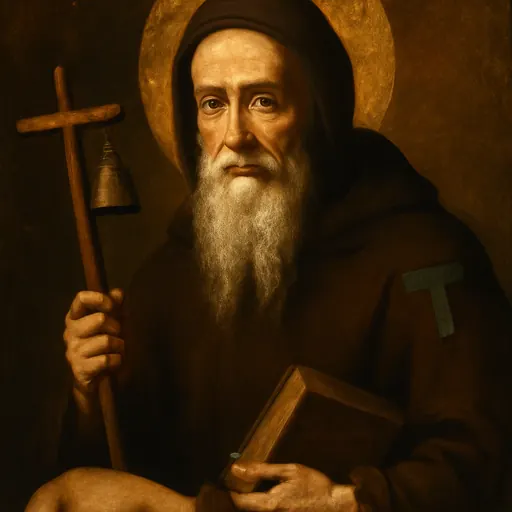
St. Anthony the Great (about 251 to 356) was an Egyptian Christian who gave away his inheritance, lived for decades as a hermit in the desert and drew so many followers that he is called the father of monks. St. Athanasius of Alexandria wrote his life. His feast day is January 17, when many churches bless animals, and he is the patron saint of monks, animals, farmers and people with skin diseases.
Who was St. Anthony the Great?
Anthony was an Egyptian Christian of the 3rd and 4th centuries who left his village, his land and his family to live alone with God in the desert. He was not the first Christian ascetic, but he became the model for all who came after him. By the end of his long life the deserts of Egypt were full of monks, and Christians from Gaul to Syria called him their father. The Catholic Encyclopedia sums it up: "He is justly recognized as the father not only of monasticism, strictly so called, but of the technical religious life in every shape and form."
Nearly everything known about him comes from the Life of Antony, written by St. Athanasius, bishop of Alexandria, soon after Anthony's death in 356. Athanasius says he had "seen him many times" and had been his attendant for a long time.
He is easy to confuse with St. Anthony of Padua, the Franciscan patron of lost things, who lived nine centuries later. The two are different men. When a statue shows an old hermit with a long beard, a T-shaped staff, a bell and a pig, it is Anthony the Great, also called Anthony the Abbot or Anthony of Egypt.
The life of St. Anthony
"Go and sell that you have"
Anthony was born around 251 in Coma, a village in Middle Egypt, to well-off Christian parents. When he was about eighteen or twenty his parents died, leaving him with a younger sister and some three hundred acres of good farmland.
About six months later he walked into church thinking about the apostles, who had left everything to follow Jesus. Athanasius tells what happened next:
"Pondering over these things he entered the church, and it happened the Gospel was being read, and he heard the Lord saying to the rich man, 'If you would be perfect, go and sell that you have and give to the poor; and come follow Me and you shall have treasure in heaven.' Antony, as though God had put him in mind of the Saints, and the passage had been read on his account, went out immediately from the church, and gave the possessions of his forefathers to the villagers." (Life of Antony 2)
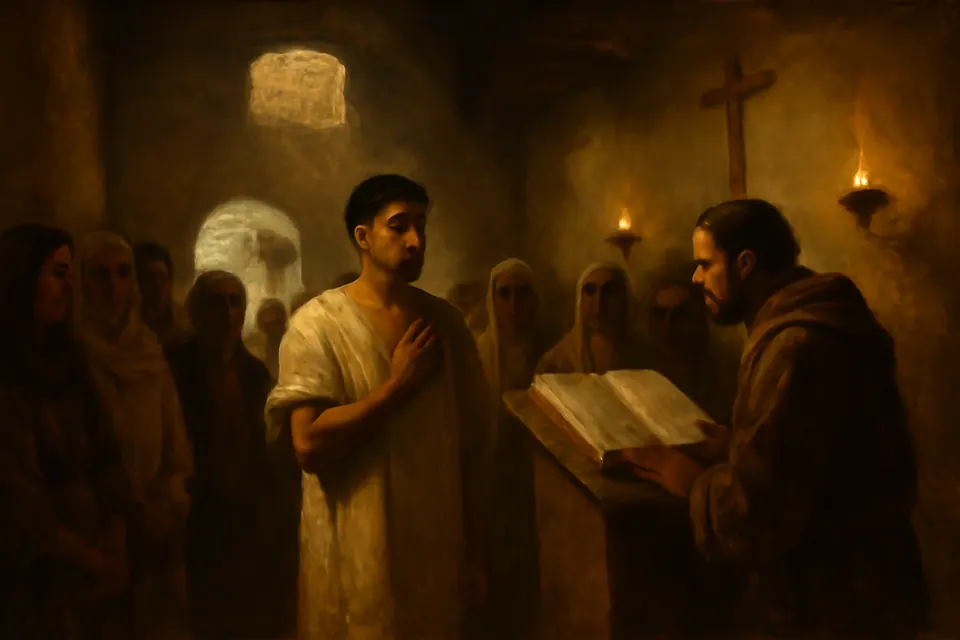
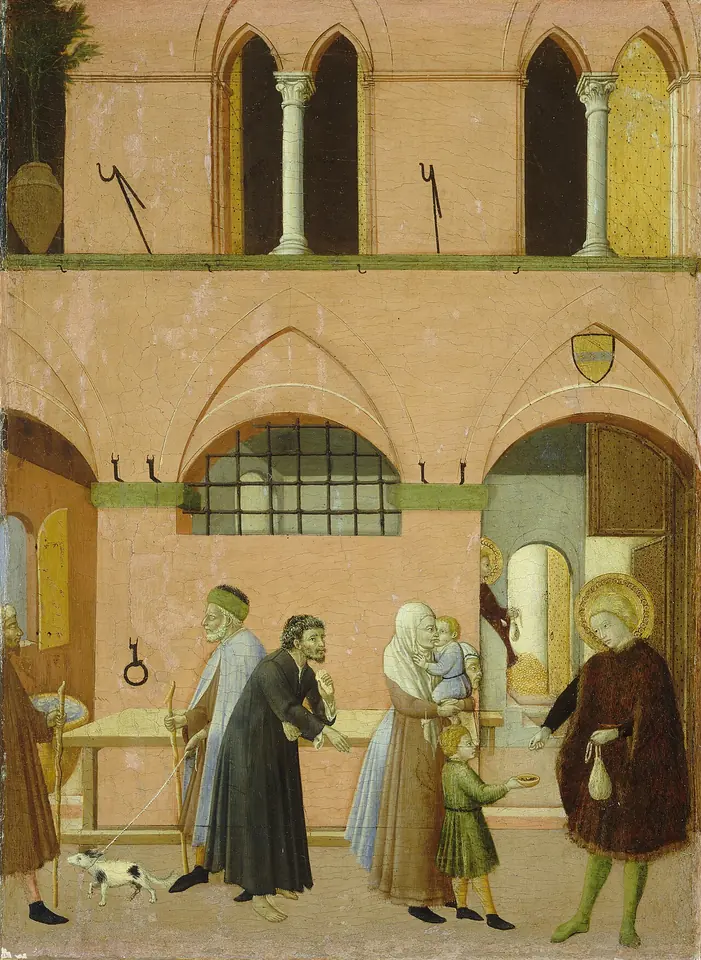
He sold everything else, kept a little for his sister and soon gave that away too. He placed her with a community of consecrated virgins and began to live as an ascetic at the edge of his village, working with his hands, praying and learning from older hermits nearby.

The tombs and the temptations
The Life describes his first years as a long fight. The devil reminded him of his money and his sister, then tried thoughts of lust, and one night "even took upon him the shape of a woman." Anthony answered with prayer and fasting.
He then shut himself in an old tomb outside the village. Athanasius says demons beat him so badly that the friend who brought his bread found him lying as if dead. Anthony asked to be carried back. The next night the demons came "in the likeness of beasts and creeping things," lions, bears, leopards, bulls, serpents, scorpions and wolves. Then the roof seemed to open, a ray of light came down and the demons vanished. Anthony asked where God had been, and a voice answered:
"Antony, I was here, but I waited to see your fight; wherefore since you have endured, and hast not been worsted, I will ever be a succour to you, and will make your name known everywhere." (Life of Antony 10)
He was about thirty-five. These scenes became one of the great subjects of European art.


Twenty years in the fort
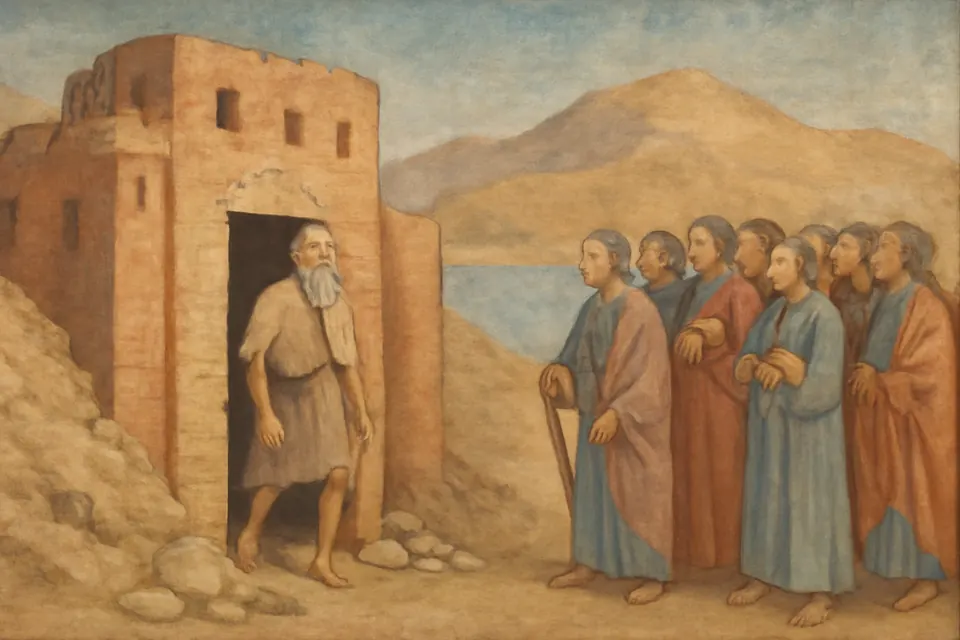
On his way into the desert, the Life says, he passed a large silver dish and later a heap of real gold lying in the road, and walked by both. Across the Nile, at a place the Catholic Encyclopedia identifies as Pispir, he found a deserted fort, walled up the entrance and lived inside for nearly twenty years. Friends lowered bread to him twice a year.


Around 305 his admirers broke down the door. Athanasius writes that he came out neither fat nor wasted, as calm as if he had never left. So many people stayed to imitate him that "cells arose even in the mountains, and the desert was colonised by monks."
Alexandria and the inner mountain
In 311, during the persecution under Maximinus, Anthony went to Alexandria to serve Christians in the prisons and mines and to stand beside the martyrs in court. He hoped to die a martyr himself, but no one arrested him.
Later he went still deeper into the desert, three days' journey east to a mountain near the Red Sea with a spring and a few palm trees. He grew his own grain there. When wild animals came for the water and trampled his garden, he caught one gently and told them, "Why do you hurt me, when I hurt none of you? Depart, and in the name of the Lord come not near this spot." Athanasius says they never came back.
The emperor Constantine and his sons wrote to him. Near the end of his life he went down to Alexandria once more to preach against the Arians, who denied that the Son of God is eternal. He died in 356 at about 105 years old, after telling his two companions to "live as though dying daily." He ordered them to bury him in a secret place, and he left one of his sheepskins to Athanasius.

St. Anthony and St. Paul the Hermit
St. Jerome, writing around 375, added a famous story in his Life of Paulus the First Hermit. When Anthony was ninety, he learned in the night that a holier hermit lived deeper in the desert, and he set out to find him. Paul of Thebes, then 113 years old, welcomed him. A raven brought them a whole loaf instead of Paul's usual half, and the two old men argued until evening about who should break it. Anthony went home to fetch the cloak Athanasius had given him, and returned to find Paul dead. Two lions came out of the desert and dug the grave. Back at his cell Anthony told his disciples, "I have seen Elias, I have seen John in the desert, and I have really seen Paul in Paradise."
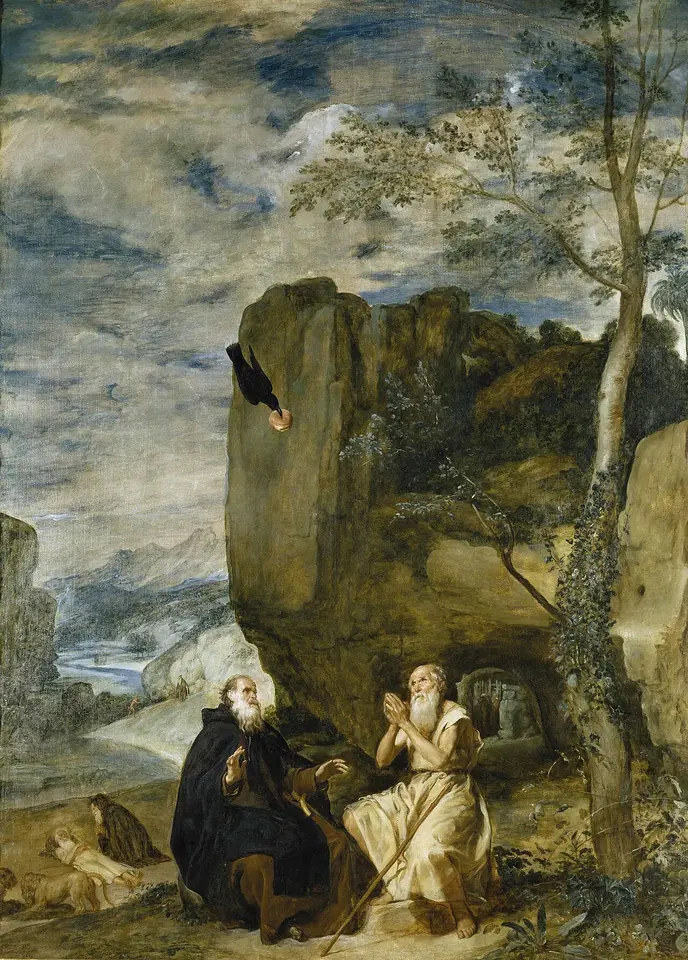

This story is traditional. The Catholic Encyclopedia says Jerome's Life of Paul "cannot be used for historical purposes," though some kernel of fact may lie behind it.
The miracles of St. Anthony
No miracle of Anthony's has been approved in the modern sense, since he lived long before the Church examined miracles formally.
- Reported: healings and deliverances in the Life of Antony, which Athanasius says he saw or heard from witnesses. When an officer named Martinian begged help for his daughter, who had an evil spirit, Anthony stayed behind his door and told him, "Man, why do you call on me? I also am a man even as you. But if you believe in Christ whom I serve, go, and according as you believe, pray to God, and it shall come to pass." The girl was healed.
- Traditional: the raven's loaf and the lions that buried Paul, from St. Jerome.
- Traditional: cures of St. Anthony's fire through his relics in France, which led to the founding of the Antonine brothers around 1095.
Why St. Anthony is the patron of monks, animals and the sick
Monks and hermits. The communities that gathered around Anthony at Pispir and on his mountain were the first organized desert monasteries. The Catholic Encyclopedia notes that his younger contemporary Pachomius, not Anthony, founded the first true common life under a rule, but that "St. Anthony was looked upon as the founder and father of Christian monachism." St. Benedict and the monks of the West looked back to him, and in his Confessions St. Augustine says that remembering Anthony's conversion led him to open the Bible himself in a garden in Milan in 386.
St. Anthony's fire. In the Middle Ages, people who ate rye bread infected with the ergot fungus suffered from ergotism. Their hands and feet burned, swelled and turned black. Anthony's relics had been brought from Constantinople to La Motte-Saint-Didier in France in the 11th century, and the sick came there to pray. The Catholic Encyclopedia says a nobleman named Gaston of Dauphiné and his son founded the Hospital Brothers of St. Anthony around 1095 "in thanksgiving for miraculous relief from 'St. Anthony's fire'." The Antonines wore a black habit with a blue tau cross, ran hospitals across France, Spain and Italy, and kept going until 1777, when they were merged into the Knights of Malta.


Grünewald painted the Isenheim Altarpiece between 1512 and 1516 for the Antonine house at Isenheim in Alsace, where the sick were nursed. It is now in the Musée Unterlinden in Colmar.
Animals and farmers. According to Christian Iconography, the Antonines were allowed to raise pigs to pay for their charity, so painters gave Anthony a pig, and the farmers and swineherds who saw it took him as their patron.
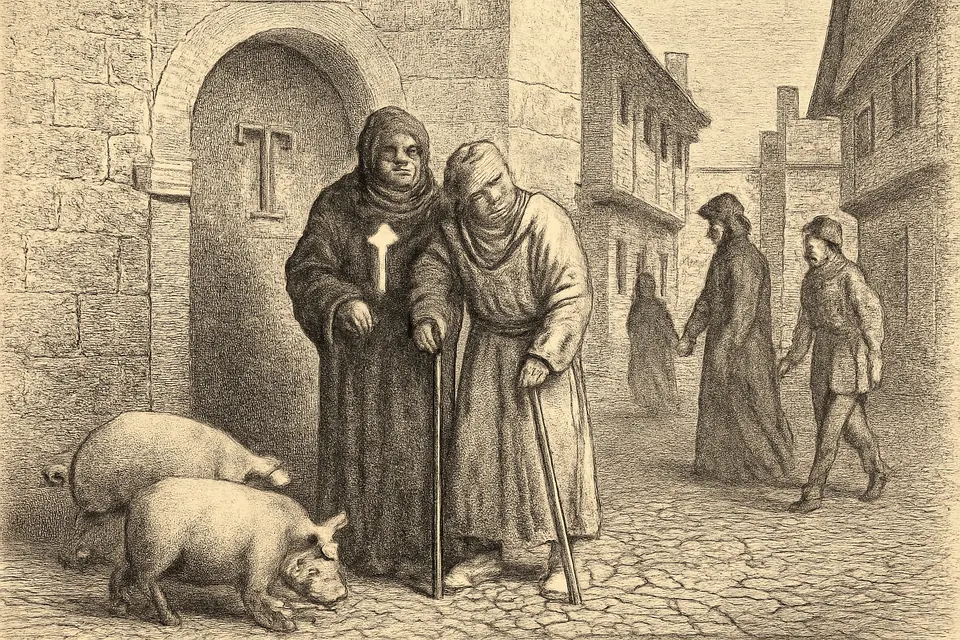
Symbols of St. Anthony the Great in art
A 17th-century Jesuit, Théophile Raynaud, described the usual image of Anthony as "a venerable old man with a long beard wearing a monk's habit with a T printed on the left side of the hood, holding a book and staff in one hand and a bell in the other, and having a pig at his feet. Also a brightly burning fire." That still works as a checklist in a church or museum.
- The tau cross: a T-shaped cross, on his staff or sewn on his habit. Raynaud thought it was the form of the cross used in Egypt in Anthony's day. It became the badge of the Antonine order.
- The bell: often hung from the tau staff. Christian Iconography explains that bells were used to call swine in at night.
- The pig: for the Antonine hospitals and his patronage of animals.
- Flames: in his hand, on his staff or at his feet, for St. Anthony's fire and for the fires of temptation he overcame.
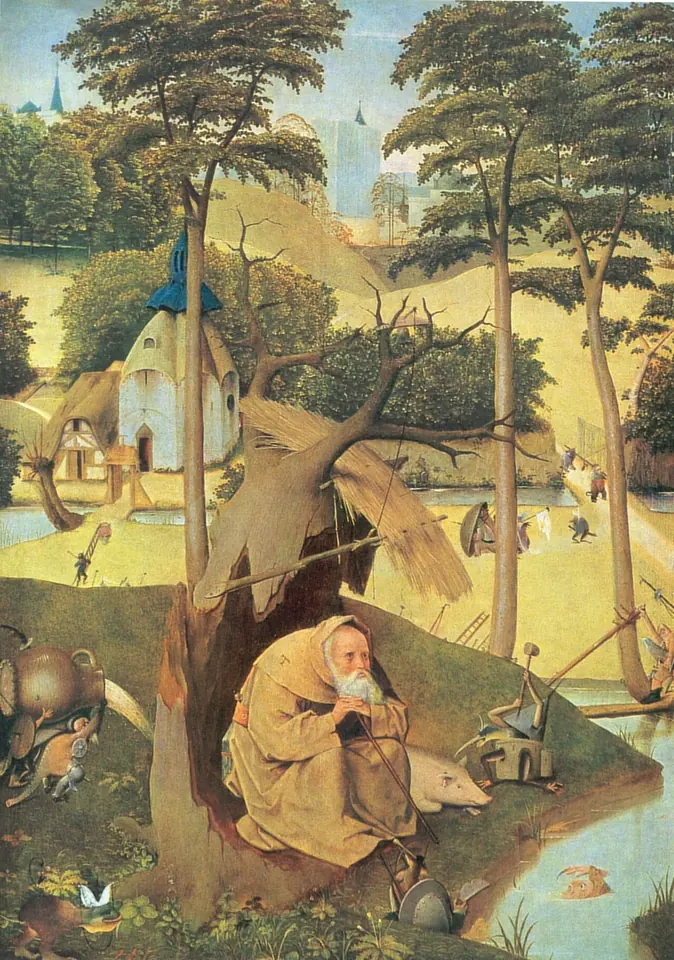
- Demons: in temptation scenes, from Schongauer and Bosch to Grünewald.

Eastern icons show him differently. He wears a dark monastic hood marked with crosses and holds a scroll with words of his teaching. There is no pig and no bell, and often no staff. He usually has a very long white beard, sometimes forked, as in the 16th-century icon on this page.


Feast day, relics and the blessing of animals
The Catholic Church keeps the memorial of St. Anthony, Abbot, on January 17, the date the Roman Martyrology gives for his death. The Orthodox Church honors him on the same day, and the Coptic Church on 22 Tobi. See the feast days calendar.
In many countries the day brings a blessing of animals. Catholic Culture notes that animals are traditionally blessed on his feast, and in Italy and Spain farmers and pet owners still bring horses, dogs, cats and livestock to church doors. In parts of Italy villages light large bonfires on the eve of the feast, in his name.


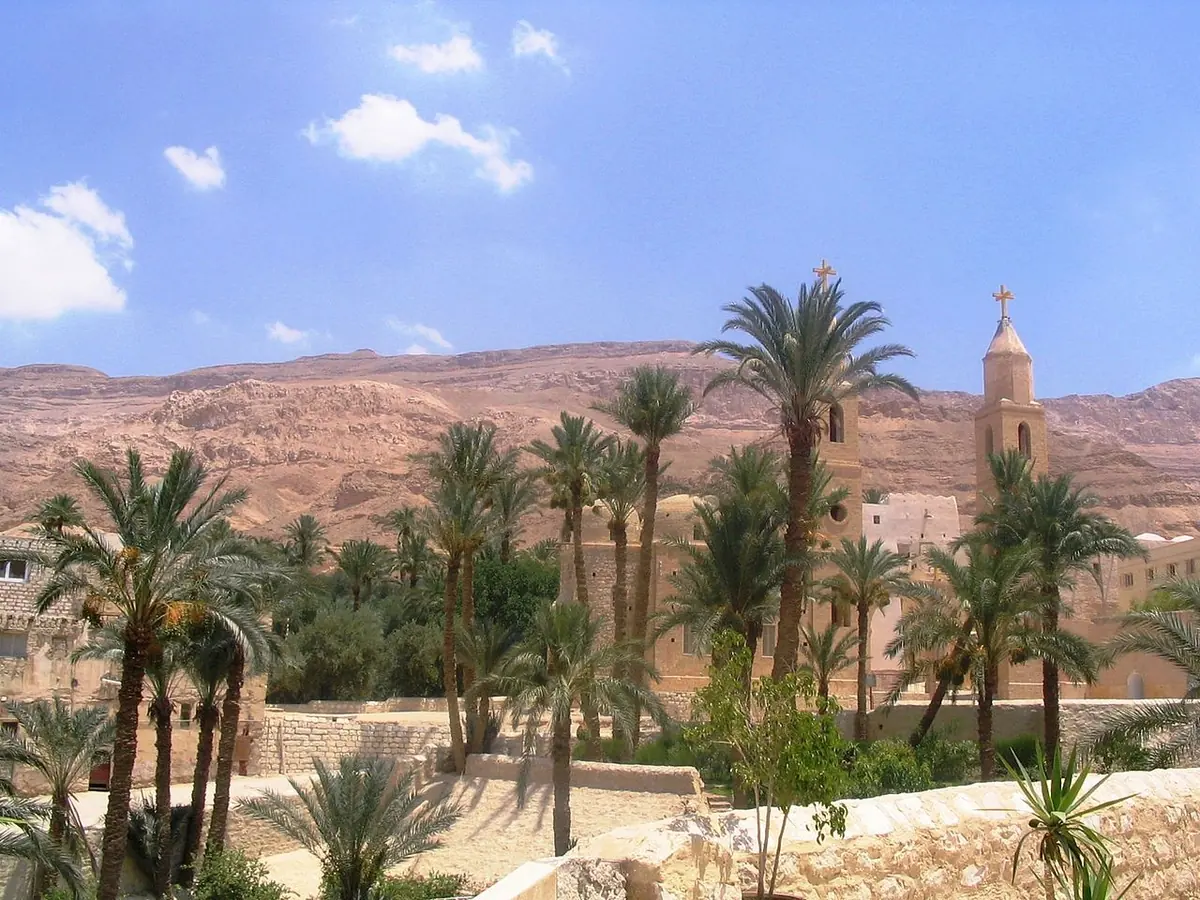
Anthony's grave was meant to stay hidden. The Roman Martyrology says that in the time of Justinian the place was revealed and his body taken to Alexandria. Later it went to Constantinople, and in the 11th century to France. The abbey church of Saint-Antoine-l'Abbaye in the Dauphiné still keeps relics, and the town took his name. In Egypt, the Coptic Monastery of St. Anthony stands at the foot of his mountain near the Red Sea, and it is often called the oldest active monastery in the world.

Prayer to St. Anthony the Great
No prayer by Anthony himself survives, but Catholic and Orthodox liturgies honor him in set prayers.
The Collect for his memorial in the Roman Missal:
O God, who brought the Abbot Saint Anthony to serve you by a wondrous way of life in the desert, grant, through his intercession, that, denying ourselves, we may always love you above all things. Through our Lord Jesus Christ, your Son, who lives and reigns with you in the unity of the Holy Spirit, God, for ever and ever.
The Troparion for January 17, in the translation of the Orthodox Church in America:
By emulating the ways of Elias the zealot, and following the straight paths of the Baptist, O Father Anthony, you made the desert a city, and upheld the world by your prayers. Therefore, entreat Christ God that our souls be saved.
The Catholic Book of Blessings has an Order for the Blessing of Animals that parishes often use on his feast.
Frequently asked questions
Is St. Anthony the Great the same as St. Anthony of Padua?
No. Anthony the Great was an Egyptian hermit who died in 356 and is honored on January 17. St. Anthony of Padua was a Portuguese Franciscan friar and preacher who died in 1231. He is the patron of lost things, and his feast is June 13. The Franciscan took the name Anthony in honor of the desert saint.
When is the feast of St. Anthony the Great?
January 17 in the Catholic Church, where it is a memorial, and in the Orthodox Church (January 30 on the civil calendar for churches that keep the old Julian calendar). The Coptic Church remembers him on 22 Tobi.
Why is St. Anthony the Great shown with a pig?
The pig comes from the Hospital Brothers of St. Anthony, a medieval order that cared for people with "St. Anthony's fire." The brothers were allowed to raise pigs to support their hospitals, and the animal became the saint's emblem. It is also why he is a patron of animals and farmers.
What is St. Anthony's fire?
A medieval name for burning, blistering illnesses, above all ergotism, a poisoning caused by a fungus on rye bread that made limbs burn and blacken. Sufferers made pilgrimages to the relics of St. Anthony in France, and the Antonine brothers nursed them. The name was also given to erysipelas and shingles.
What is St. Anthony the Great the patron saint of?
Monks and hermits, animals and livestock, farmers, butchers, basket makers, gravediggers and people suffering from skin diseases and St. Anthony's fire.
Sources
- Athanasius, Life of Antony (Nicene and Post-Nicene Fathers, second series, vol. 4)
- Catholic Encyclopedia (1907): St. Anthony
- Catholic Encyclopedia (1907): Orders of Saint Anthony
- Catholic Encyclopedia (1911): Saint Paul the Hermit
- Jerome, The Life of Paulus the First Hermit
- Augustine, Confessions, Book VIII
- Orthodox Church in America: Venerable and God-bearing Father Anthony the Great
- Orthodox Church in America: Anthony the Great, Troparion and Kontakion
- Catholic Culture: Memorial of St. Anthony, Abbot (January 17)
- Christian Iconography: Anthony Abbot in Art
- Roman Martyrology, January 17