St. Josemaría Escrivá
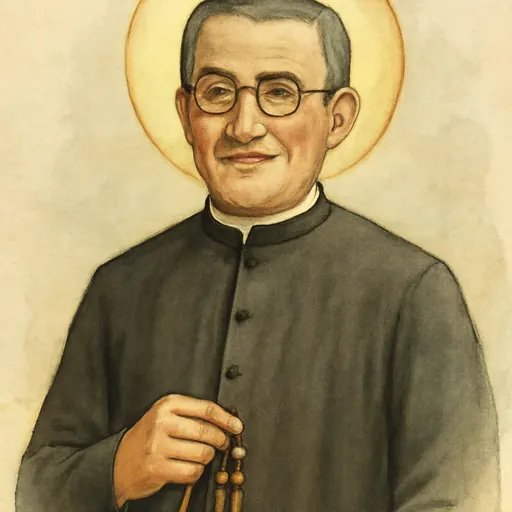
St. Josemaría Escrivá (1902–1975) was a Spanish priest who founded Opus Dei in 1928 to teach that ordinary people can become saints through their daily work and family life. Pope John Paul II canonized him in 2002, after a cause that critics called too fast. His feast day is June 26.
Who was St. Josemaría Escrivá?
Josemaría Escrivá was born on January 9, 1902, in Barbastro, a small town in Aragon in northeastern Spain. He was ordained a priest on March 28, 1925, and moved to Madrid in 1927. On October 2, 1928, he understood, as he later described it, that God was asking him for something new: a path for ordinary Christians to seek holiness in the middle of the world, in their work and families, without becoming priests or religious. He called it Opus Dei, "the Work of God."


He spent the rest of his life building that institution. In 1943 he founded the Priestly Society of the Holy Cross for priests, and in 1950 the Holy See allowed Opus Dei to accept cooperators who, in his biography's words, "could be Catholics, non-Catholic Christians or even non-believers." He later settled in Rome, where he died on June 26, 1975. Today Opus Dei counts about 90,000 members, most of them lay men and women.

Holiness in ordinary work
Escrivá's message was simple to state: everyone is called to be a saint, and daily work done well and offered to God is a way there. At his canonization John Paul II summed it up:
Work and any other activity, carried out with the help of grace, is converted into a means of daily sanctification.
The pope quoted Escrivá's own words from a 1954 meditation: "The ordinary life of a Christian who has faith, when he works or rests, when he prays or sleeps, at all times, is a life in which God is always present." Many readers met these ideas first in The Way, a book of short numbered points for meditation. Opus Dei says it has sold nearly four million copies in 43 languages. One of its points, which the pope also quoted, puts prayer first: "in the first place prayer; then expiation; in the third place, but very much in third place, action."


Controversy and criticism
Few modern canonizations have been argued over as much as his, and an honest account has to say so.
- Speed of the cause: he was beatified in 1992, seventeen years after his death. The Anglican Journal, reporting on the canonization, noted that other prelates thought this "too hasty." Newsweek reported in 1992 that two of the nine theologian consultors had voted against him, contradicting claims that the vote was unanimous; the Vatican did not deny it. Supporters answer that the 1983 reform of canonization procedures made all causes faster, and the Vatican's own chronology of the cause records "many testimonies and postulatory letters from people all over the world" after his death.
- Secrecy: Opus Dei does not publish its members' names, which has led to charges, even inside the Church, that it is a secretive sect. Its members reject the charge.
- Franco: some members of Opus Dei served as government ministers under General Franco, and on that ground critics have accused Escrivá of supporting the dictatorship. How far his own views went is still argued over by historians.
The Church's own treatment of Opus Dei has also changed. In 1982 John Paul II made it a personal prelature, a structure unique in the Church. In 2022 Pope Francis, in the letter Ad charisma tuendum, placed it under the Dicastery for the Clergy and ruled that its prelate would no longer be made a bishop, so that it would be governed, he wrote, "based on charism more than on hierarchical authority."
Miracles of St. Josemaría
- The cure approved for his beatification: approved. A cure investigated in Madrid was judged inexplicable by the Vatican's medical consultants in 1990 and approved by decree on July 6, 1991.
- Dr. Manuel Nevado Rey, 1992: approved. A surgeon who had operated for years under X-rays developed chronic radiodermatitis, a progressive, cancerous skin disease of the hands. In November 1992 he began praying to the newly beatified Escrivá, and the lesions disappeared. John Paul II approved the decree on December 20, 2001.
- His own diabetes: reported. Opus Dei says he suffered from diabetes for about ten years and was cured suddenly on April 27, 1954, the feast of Our Lady of Montserrat, after a severe allergic reaction; his doctor called it "a case of a scientifically inexplicable cure."
Who asks St. Josemaría's prayers
He is the patron of Opus Dei. Because of his own illness, people with diabetes often ask his prayers, though no pope has named him their patron. More broadly, Catholics ask his help with work, study and family life. See our patron saints page.
Symbols of St. Josemaría in art
As a 20th-century saint he is shown as he looked in photographs.
- Black cassock and round glasses: the way most people remember him.
- A smile: he is usually shown cheerful, often mid-gesture as if speaking.
- The cross inside a circle: the emblem of Opus Dei.
- A book: often The Way.
Feast day and where he is honored
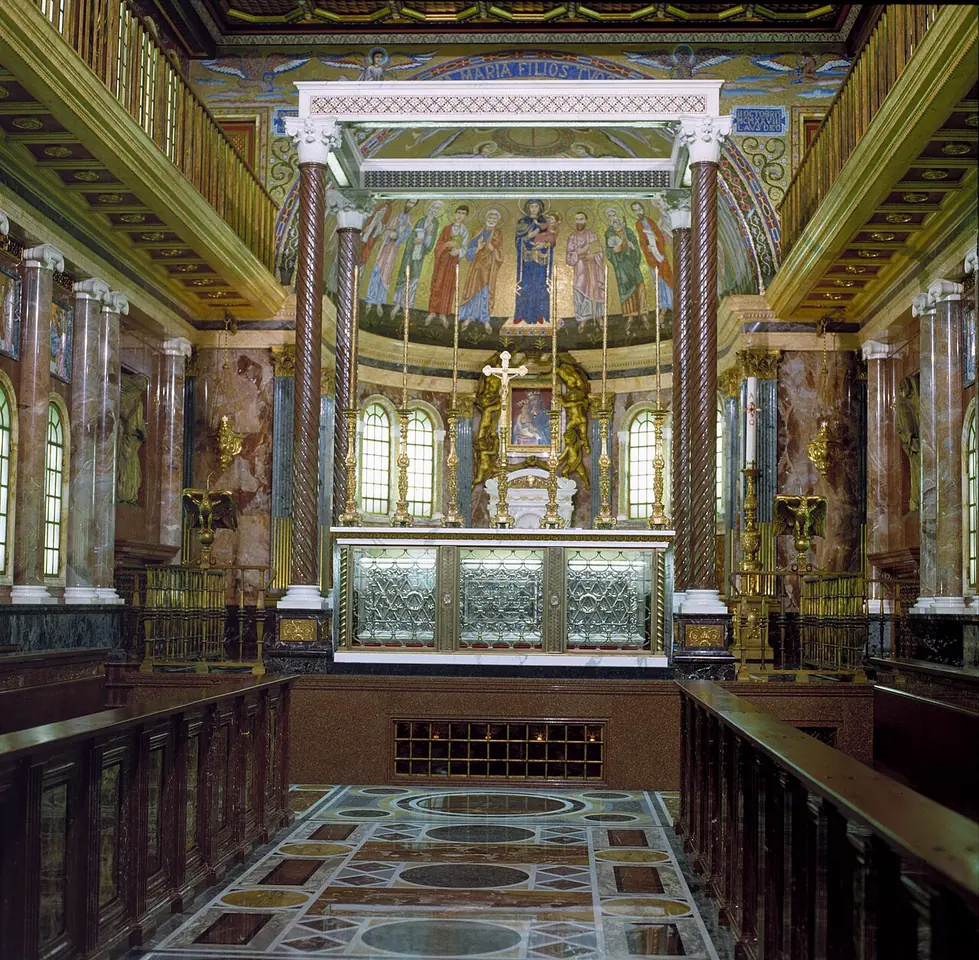
His feast is June 26, the day he died. It is not on the General Roman Calendar; where it is celebrated, it is an optional memorial with its own collect. See our feast days page. His remains rest in the Prelatic Church of Our Lady of Peace in Rome, the central church of Opus Dei.

Prayer to St. Josemaría
The collect for his memorial, as printed by Catholic Culture, reads:
O God, who raised up your priest Saint Josemaría Escrivá in the Church to proclaim the universal call to holiness and the apostolate, grant that by his intercession and example we may, through our daily work, be formed in the likeness of Jesus your Son and serve the work of redemption with burning love. We ask this through our Lord Jesus Christ your Son, who lives and reigns with you and the Holy Spirit, God, for ever and ever.
Frequently asked questions
What is Opus Dei?
Opus Dei ("Work of God") is a Catholic institution founded by Escrivá in Madrid on October 2, 1928. It teaches that work and ordinary life can be a path to holiness. Most of its roughly 90,000 members are lay people. John Paul II made it a personal prelature, the only one so far, in 1982.
What does "sanctification of ordinary work" mean?
It is Escrivá's central idea. In John Paul II's words at his canonization, "work and any other activity, carried out with the help of grace, is converted into a means of daily sanctification." Office work, housework or farming done well and offered to God can be a path to holiness.
Why was Escrivá's canonization controversial?
Critics said the cause moved too fast, only 17 years from his death to his beatification, and Newsweek reported in 1992 that two of the nine theologians who examined it had voted against him. Opus Dei has also faced accusations of secrecy and of ties to the Franco regime in Spain, which its members deny. Supporters point out that the Church's procedures had been streamlined in 1983 and that his cause drew petitions from all over the world.
What miracle led to his canonization?
The 1992 cure of Dr. Manuel Nevado Rey, a Spanish surgeon, from chronic radiodermatitis, a cancerous skin disease caused by years of X-ray exposure. Pope John Paul II approved it on December 20, 2001.
Sources
- Holy See: 6 October 2002, Canonization of St Josemaría Escrivá de Balaguer (homily of John Paul II)
- Holy See: Josemaría Escrivá de Balaguer, The Miracle Approved for the Canonization
- Holy See: Josemaría Escrivá de Balaguer, Chronology of the Cause for Canonization
- Opus Dei: Biography of Saint Josemaría Escrivá
- Opus Dei: Saint Josemaria and Our Lady of Montserrat
- Opus Dei: Our Lady of Peace
- Pope Francis, Apostolic Letter Ad charisma tuendum (14 July 2022)
- Anglican Journal: Controversial saint
- Newsweek (March 1, 1992): Saint Questions
- Catholic Culture: Optional Memorial of St. Josemaría, June 26