St. Elizabeth of Portugal

St. Elizabeth of Portugal (1271–1336), known in Portugal as the Rainha Santa Isabel, was a princess of Aragon who married King Denis of Portugal, spent her wealth on the poor, and more than once rode out to stop wars between members of her own family. She is honored as a patron of peacemakers and of the city of Coimbra, where her tomb is. Her feast day is July 4.
Who was St. Elizabeth of Portugal?
Elizabeth was born in 1271 into the royal house of Aragon, a daughter of King Pedro III, and was named for her great-aunt St. Elizabeth of Hungary. The Portuguese know her by the Spanish form of that name, Isabel, and simply call her the Rainha Santa, the Holy Queen. She was married very young to King Denis (Dinis) of Portugal, a poet and an energetic ruler whom his people called the "farmer king."
The Catholic Encyclopedia (1909) describes a girl raised to strict piety who kept up her prayers and fasting at a court it calls corrupt, and who gave every spare hour to the poor and sick. Denis was unfaithful to her for most of their marriage, and she answered, the encyclopedia says, with gentleness and patience. They had two children, Constance and Afonso.
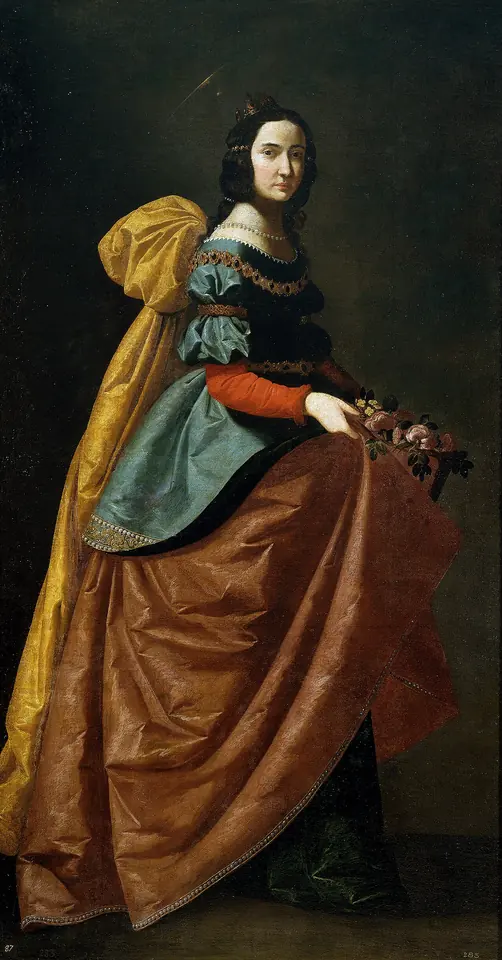

The peacemaker queen
Between her husband and her son
Prince Afonso resented the favor his father showed to an illegitimate half-brother, and by the early 1320s the quarrel had become a civil war. In 1323 the two armies faced each other near Alvalade, outside Lisbon. Elizabeth rode out between the lines, and the fighting stopped. The Catholic Encyclopedia puts it plainly: she "rode in person between the opposing armies, and so reconciled her husband and son." Franciscan Media lists further disputes she helped settle, including one between the kings of Aragon and their cousin.

Widow and tertiary at Coimbra
Denis repented late in life, which the Catholic Encyclopedia credits to her prayers, and died in 1325. Elizabeth then settled beside the convent of Poor Clares she had founded at Coimbra and took the habit of the Franciscan Third Order. She lived there simply and kept giving away what she had.

The last journey to Estremoz
In 1336 her son, now King Afonso IV, marched against King Alfonso XI of Castile, who was neglecting and mistreating Afonso's daughter Maria. Elizabeth was in her sixties and ill, but she hurried to Estremoz, where the armies were gathering, and helped arrange a peace. She caught a fever there and died on July 4, 1336.
The miracle of the roses and other wonders
The best-known story about her is a legend she shares with her great-aunt. Carrying bread (or in some versions coins) for the poor in her lap, the queen meets the king, who asks what she is hiding. "Roses," she answers, and when she opens her cloak, roses are what he sees.
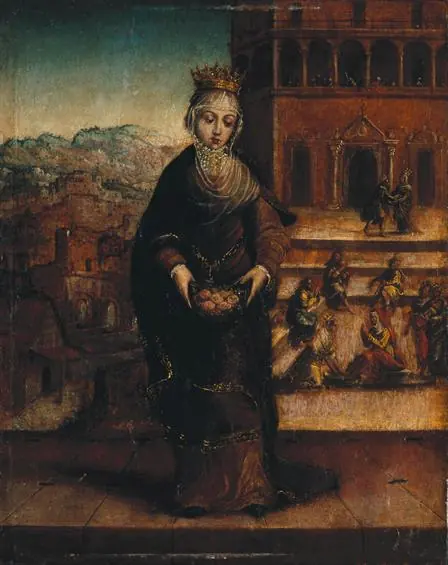

The story is traditional, and it is late. Helena Toipa of the University of Coimbra has traced it through the written record. Her earliest Life, the Lenda, does not contain it, and neither do the royal chronicles of the 15th century. It first appears in writing in the 1550s. The Jesuit Pedro João Perpinhão, writing her life between 1557 and 1561, said he had found it in no document, old or new, but only in what people said and in a painting at her convent, and that such paintings were no older than the reign of King Manuel I (1495–1521). Perpinhão noted that the same story was told of St. Casilda of Toledo. It is also told of St. Elizabeth of Hungary, whose cult was well known in Portugal; Toipa thinks Perpinhão probably knew that version too.


Other wonders sorted by this encyclopedia's labels:
- The fragrance at her funeral: reported. The chronicler Rui de Pina wrote that a sweet smell came from her coffin on the hot journey from Estremoz to Coimbra.
- Healings through her intercession: reported. Rui de Pina's chronicles list cures drawn from sworn statements made by the people healed and their witnesses.
- Her incorrupt body: reported. On March 26, 1612, witnesses watched her tomb opened at Coimbra, and a surgeon declared that it was "beyond natural order for a body to be so many years without decay."
Why St. Elizabeth of Portugal is the patron of peacemakers
Her title "the Peacemaker" goes back to her own century, and it rests on events that are documented, not legendary: the field near Alvalade in 1323 and the mission to Estremoz that cost her her life. The prayer of her feast asks God to make Christians "peacemakers" through her intercession.
She is also the patroness of Coimbra. The Confraria da Rainha Santa Isabel, founded in 1560, still exists to keep her feasts and look after her church. See more patrons on our patron saints page.
Symbols of St. Elizabeth of Portugal in art
Look for a crowned woman who is also plainly charitable:
- Crown and royal dress: she was a reigning queen, so most images give her a crown even when she wears a religious habit.
- Roses in her lap or cloak: from the legend. Red and white roses are common, as in the 1540 panel above.
- Bread or coins: the alms the roses replaced.
- A Franciscan or Poor Clare habit: for her widowhood at Coimbra.
- A dove or olive branch: for her work as a peacemaker.
Telling the two Elizabeths apart is not always easy, since both carry roses. A Portuguese setting, the arms of Aragon or Portugal, or a king who looks like Denis rather than a German landgrave point to Elizabeth of Portugal. A hospital or a triple crown usually means Elizabeth of Hungary.
Feast day and her tomb at Coimbra
Her feast is July 4 in the General Roman Calendar, moved to July 5 in the United States. Find nearby saints on the feast days page. Coimbra keeps the Festas da Rainha Santa in July with processions of her image through the city.
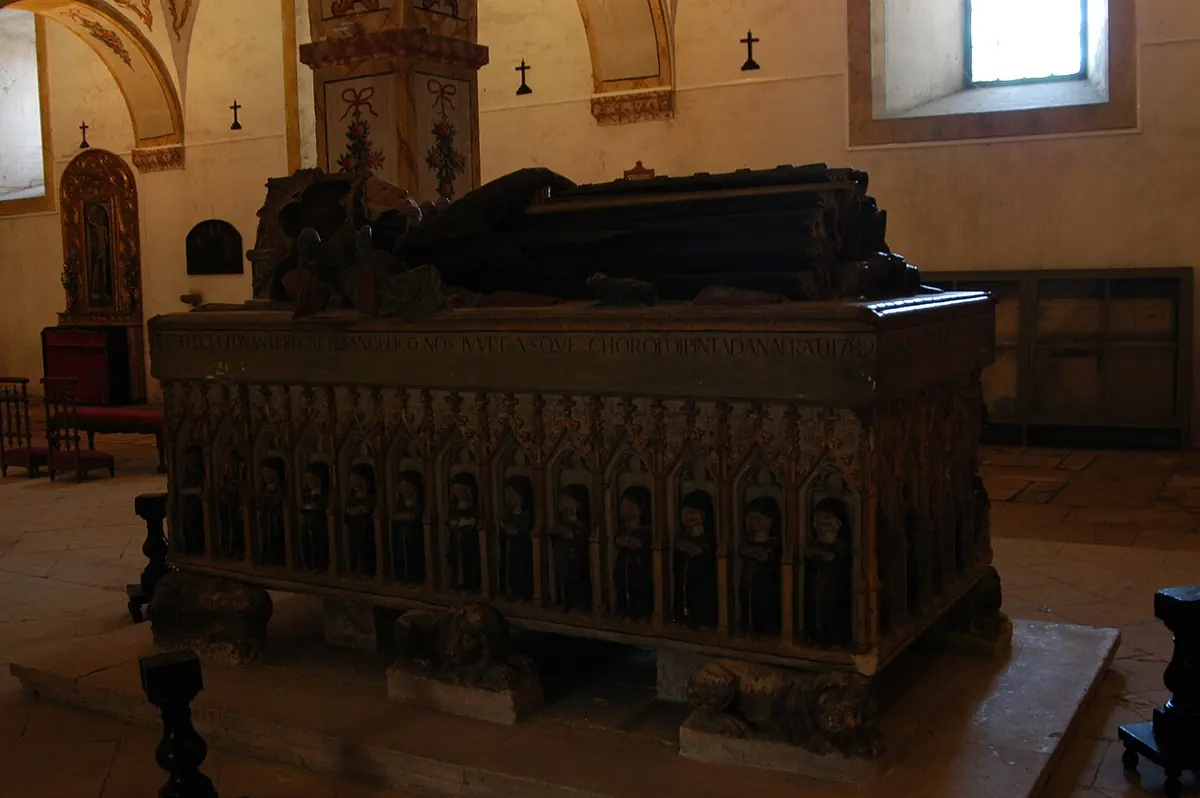
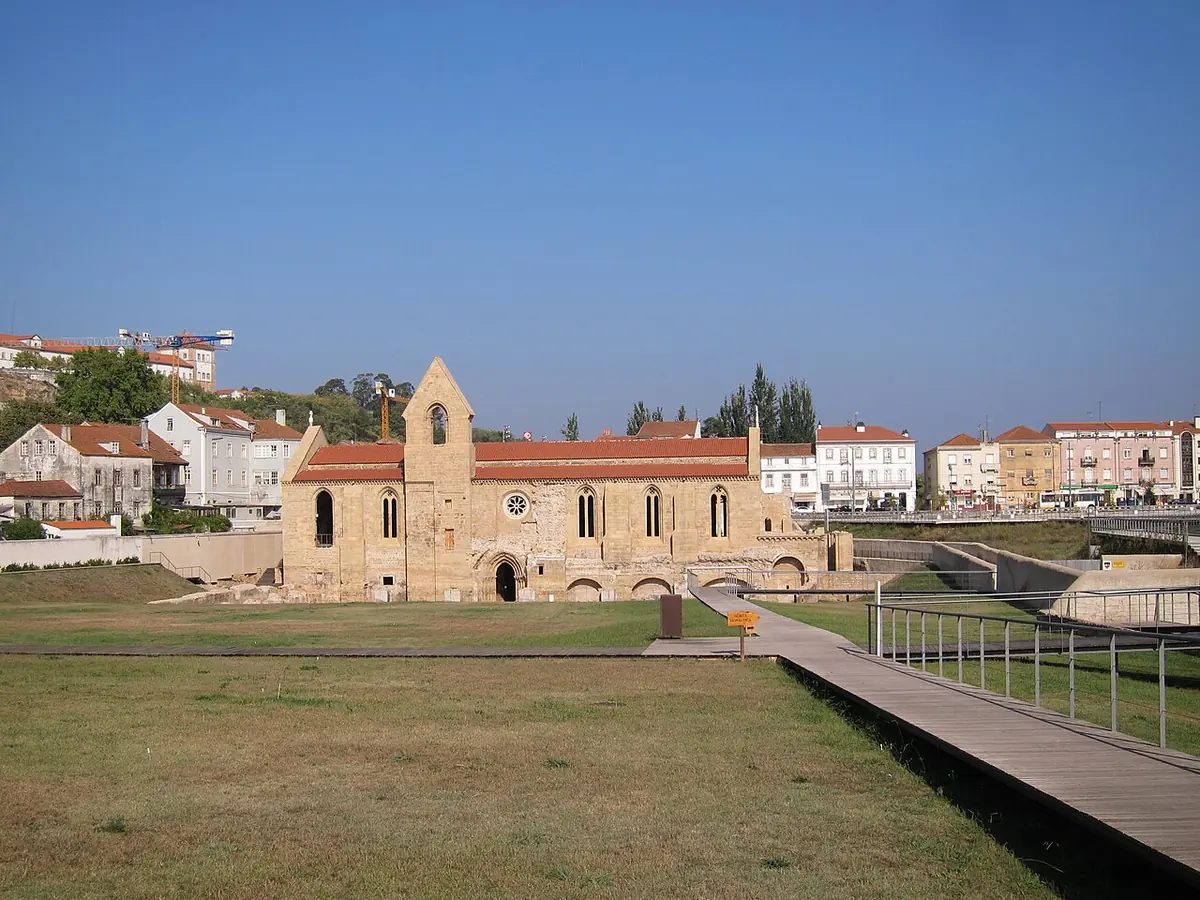
She was first buried in her Gothic tomb at the convent of Santa Clara on the bank of the Mondego. The river flooded the convent again and again, and in the 17th century the nuns moved to a new monastery on the hill, Santa Clara-a-Nova, taking her body with them. It now lies in a silver and crystal shrine in the main chapel there, and the old stone tomb is kept in the same church.


Prayer to St. Elizabeth of Portugal
The collect of her memorial in the Roman Missal, as printed for the American calendar, reads:
O God, author of peace and lover of charity, who adorned Saint Elizabeth of Portugal with a marvelous grace for reconciling those in conflict, grant, through her intercession, that we may become peacemakers, and so be called children of God. Through our Lord Jesus Christ, your Son, who lives and reigns with you in the unity of the Holy Spirit, God, for ever and ever.
Catholics ask her prayers for families torn by quarrels, for difficult marriages and for peace between nations.
Frequently asked questions
What is St. Elizabeth of Portugal the patron saint of?
She is honored as a patron of peacemakers, because she reconciled her husband and son in 1323 and brought two kings to terms in 1336. She is also the patroness of the city of Coimbra, where she founded a convent of Poor Clares and where her tomb is.
Is the miracle of the roses told of Elizabeth of Portugal or Elizabeth of Hungary?
Both. Each queen is said to have been carrying food or money for the poor when her husband stopped her, and to have shown him roses instead. For Elizabeth of Portugal the story is traditional and late; it first appears in writing in the mid-1500s, more than two centuries after her death, and her early biography does not contain it.
When is St. Elizabeth of Portugal's feast day?
July 4 in the General Roman Calendar, the day she died. In the United States her memorial is kept on July 5. Before the 1969 calendar reform it was celebrated on July 8.
Where is St. Elizabeth of Portugal buried?
In the Monastery of Santa Clara-a-Nova in Coimbra, Portugal. Her original Gothic tomb is kept there too. Witnesses who saw the tomb opened in 1612 reported that her body was incorrupt.
Sources
- Catholic Encyclopedia (1909): St. Elizabeth of Portugal
- Helena Toipa, O milagre das rosas em De vita et moribus beatae Elisabethae Lusitaniae Reginae de Pedro João Perpinhão (Boletim de Estudos Clássicos 60)
- Medievalists.net: Isabel of Aragon (d. 1336): Model Queen or Model Saint?
- Confraria da Rainha Santa Isabel, Coimbra
- Catholic Culture: Optional Memorial of St. Elizabeth of Portugal (USA), July 5
- Franciscan Media: Saint Elizabeth of Portugal