St. Josephine Bakhita
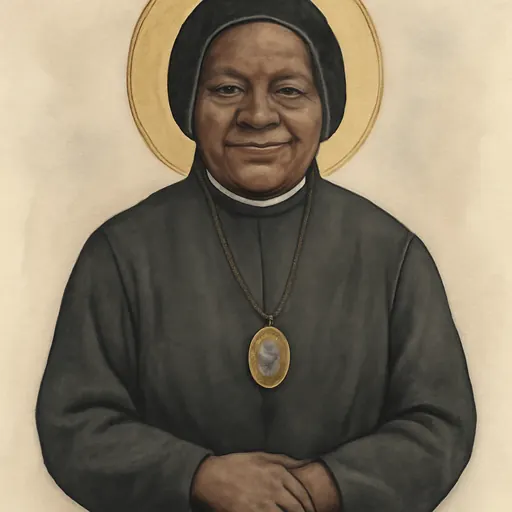
St. Josephine Bakhita was a Sudanese woman, kidnapped as a child around 1877 and sold as a slave, who came to Italy, was declared free in 1889 and became a Canossian sister. She spent most of her life as the gentle doorkeeper of a convent in Schio and died in 1947. Canonized in 2000, she is the patron saint of Sudan and of victims of human trafficking, and her feast day is February 8.
Who was St. Josephine Bakhita?
Josephine Bakhita was born around 1869 in Darfur, in the west of today's Sudan. As a small child she was kidnapped by slave traders and sold again and again in the markets of El Obeid and Khartoum. An Italian consul bought her, brought her to Italy, and there, in the care of the Canossian Sisters in Venice, she came to know Christ. In 1889 the Italian authorities recognized that she was free. She was baptized, became a Canossian sister, and spent most of her remaining life as the cook, seamstress and doorkeeper of a convent in the small industrial town of Schio, near Vicenza.
The people of Schio called her Madre Moretta, which the Vatican biography renders "our Black Mother." She died there on February 8, 1947, and Pope John Paul II canonized her in 2000. Pope Benedict XVI opened his 2007 encyclical on hope, Spe salvi, with her story.


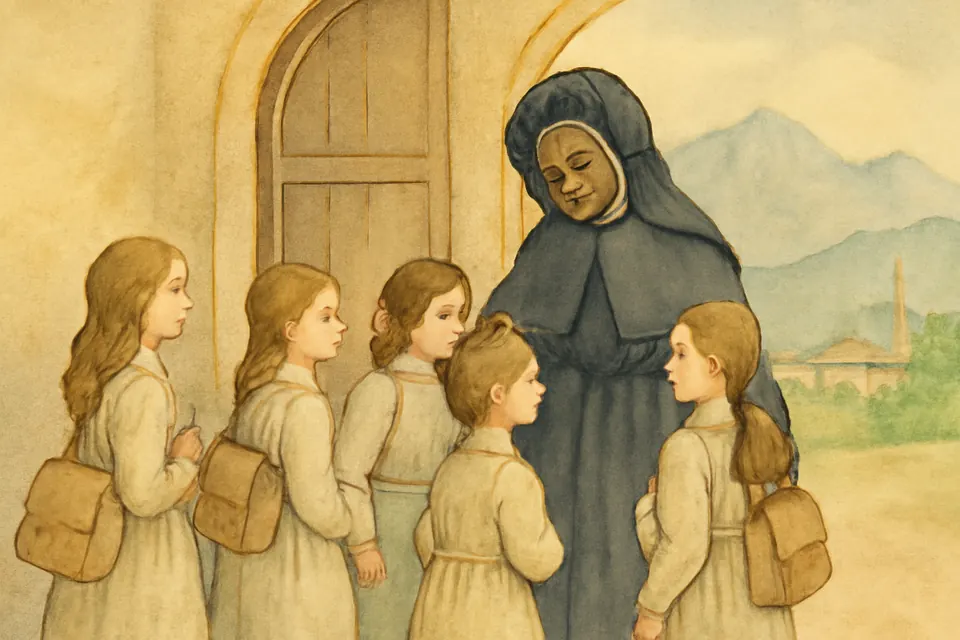
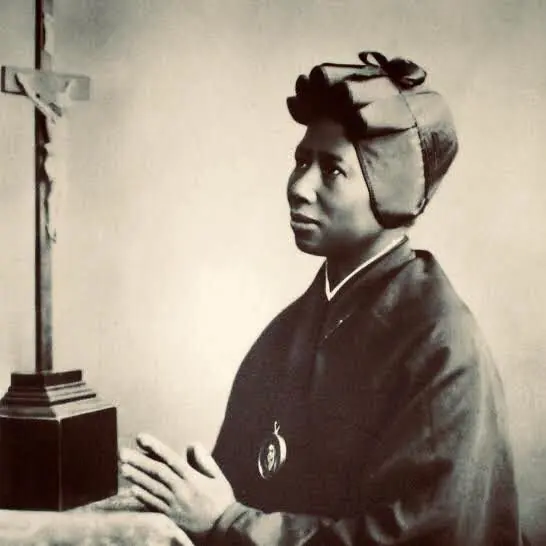
Bakhita lived into the age of photography, and real photographs of her survive. The pictures of her on this page are those photographs or drawings made for this encyclopedia in an illustrative style. None is a made-up "photo."
The life of St. Josephine Bakhita
A childhood in Darfur
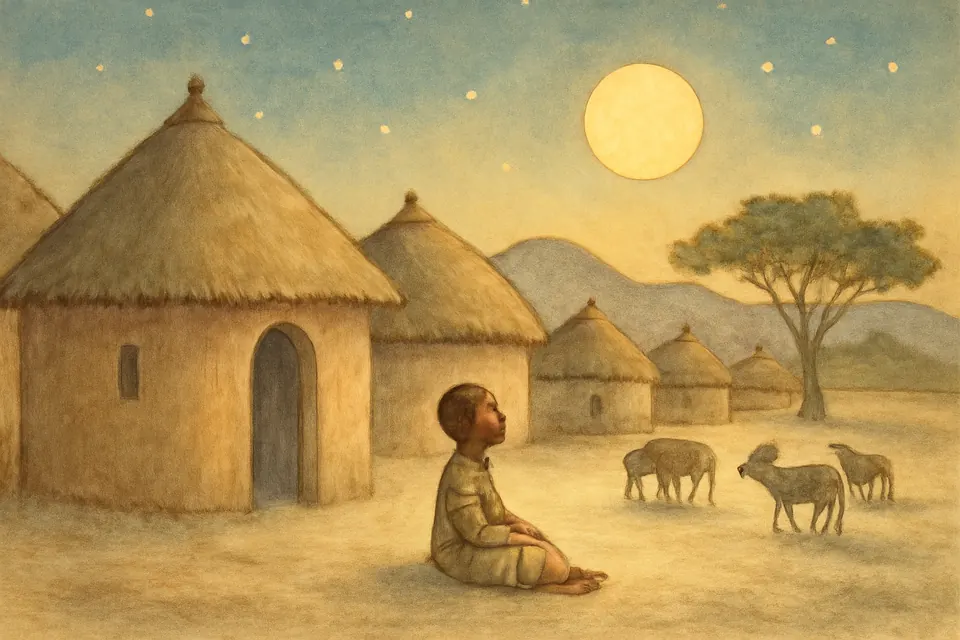
Bakhita came from Olgossa, a village in Darfur, and remembered a happy childhood in a large family. She did not know the year of her birth. Later in life she described how, as a child, she had looked at the sky and wondered about its maker. The biography published by the Vatican for her canonization quotes her:
Seeing the sun, the moon and the stars, I said to myself: Who could be the Master of these beautiful things? And I felt a great desire to see him, to know Him and to pay Him homage...
Kidnapped and sold
Two slave raiders seized her near her village. The sources differ on her age: John Paul II's canonization homily says seven, while Spe salvi and Vatican News say nine. The terror of the kidnapping made her forget her own name, and her captors called her Bakhita, Arabic for "fortunate."
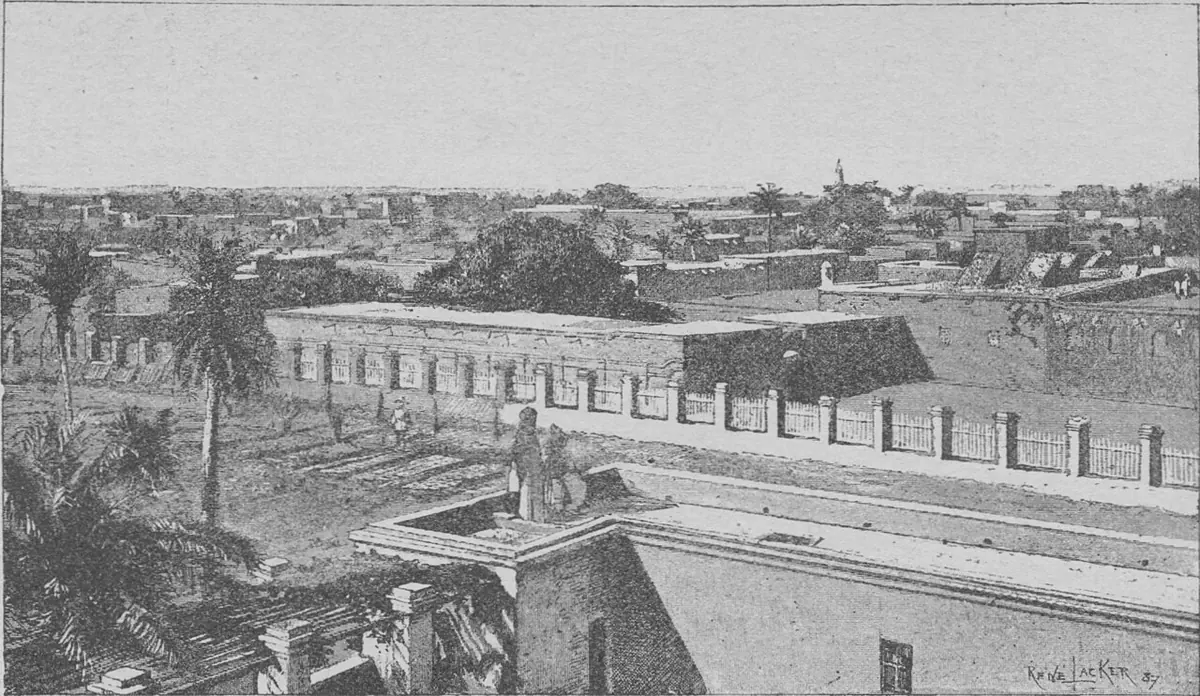
She was sold and resold in the slave markets of El Obeid and Khartoum. Benedict XVI summarized what followed: she was "sold five times in the slave-markets of Sudan," and in the house of a Turkish general's mother and wife "she was flogged every day till she bled; as a result of this she bore 144 scars throughout her life." The scars came from a deliberate cutting of patterns into her skin, with salt rubbed into the wounds so the marks would stay.
An Italian consul, and a journey to Italy
In 1882 or 1883 (Spe salvi says 1882), she was bought in Khartoum for Callisto Legnani, the Italian consul. For the first time since her capture, the Vatican biography says, "no one used the lash when giving her orders." When the Mahdist uprising forced Legnani to leave Sudan, Bakhita begged to go with him. They reached Genoa with a friend of his, Augusto Michieli, and at the request of Michieli's wife Legnani left Bakhita with that family. She went to live at their home in Zianigo, near Mirano in the Veneto, and became nanny to their small daughter, Alice, called Mimmina.

Venice and the Canossian Sisters
When Mrs. Michieli went to join her husband at a hotel he had bought in Suakin, on the Red Sea, she left Mimmina and Bakhita with the Canossian Sisters at the Institute of the Catechumens in Venice, a house that prepared adults for baptism. There Bakhita learned about the God she had wondered about as a child.


"Contenta di non aver ceduto": her freedom
When Mrs. Michieli came back to take her daughter and her maid to Africa, Bakhita refused to leave. The dispute went to the Italian authorities, and the Canossian Sisters and the Patriarch of Venice took her side. Franciscan Media summarizes the outcome: since slavery was illegal in Italy, the judge concluded that she had actually been free since 1885. The Vatican biography says simply that Bakhita, by then of age, "enjoyed the freedom of choice which the Italian law ensured."

Bakhita's own account, from the Diario published by the Canossian sanctuary in Schio, recalls Mrs. Michieli weeping with anger as she led the child away. In our translation from the Italian: "I let them go in tears and withdrew, happy not to have given in. It was November 29, 1889."
Baptism and religious life
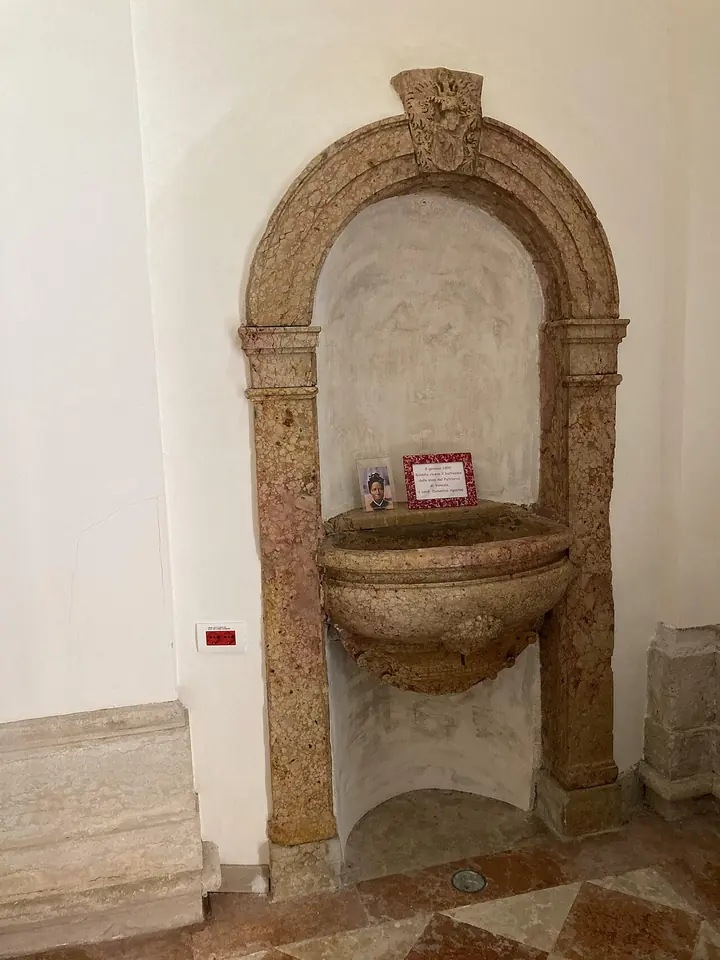
On January 9, 1890, she received baptism, confirmation and First Communion from the Patriarch of Venice, with the names Giuseppina Margherita Fortunata, in English Josephine Margaret Fortunata. The Vatican biography says she was often seen afterward kissing the baptismal font and saying, "Here, I became a daughter of God!"

She entered the novitiate of the Canossian Daughters of Charity and made her vows in Verona on December 8, 1896. In 1902 she was sent to the community at Schio, where she lived for most of the next 45 years. She cooked, sewed, embroidered, cared for the sacristy and, above all, kept the door, where she laid her hands on the heads of the schoolchildren and welcomed the poor. Spe salvi adds that she traveled around Italy to speak for the missions.
"As the Master desires"
In old age she was often ill and used a wheelchair. Asked how she was, she would answer, "As the Master desires." In her last agony, the Vatican biography says, she relived her slavery and begged her nurse, "Please, loosen the chains... they are heavy!" Her last words were "Our Lady! Our Lady!" She died at the convent in Schio on February 8, 1947.
"Paron": Bakhita's faith
In the Venetian dialect she learned in Italy, paron means "master" or "boss." Benedict XVI noted that Bakhita used this word for God. After the cruel masters of her childhood, she found that there is a Paron "above all masters, the Lord of all lords, and that this Lord is good, goodness in person." In his words, she was "known and loved and she was awaited," and so she was "no longer a slave, but a free child of God."
She once told a questioner that if she met the men who had kidnapped and tortured her, she would kneel and kiss their hands, because without them she would not have become a Christian and a religious.

Miracles and canonization
Bakhita's cause opened in 1959, twelve years after her death. On December 1, 1978, the Church declared that she had practiced the virtues to a heroic degree, giving her the title Venerable.
- Approved: as for every modern saint, one miracle was formally investigated and approved by the Church before her beatification on May 17, 1992, and another before her canonization on October 1, 2000.
- Reported: favors attributed to her prayers. The Vatican biography says many people "receive graces through her intercession," and the sanctuary at Schio collects testimonies from Africa, from victims of trafficking and from pilgrims.
John Paul II canonized her together with St. Katharine Drexel, the Martyrs of China and others. He called her "a shining advocate of genuine emancipation" and asked the whole Church to pray through her for the persecuted and enslaved, "especially in Africa and in her native Sudan." In 1993 he went to Khartoum and celebrated Mass in her honor, saying: "Rejoice, all of Africa! Bakhita has come back to you: the daughter of the Sudan sold into slavery as a living piece of merchandise and yet still free."
Why St. Josephine Bakhita is the patron saint of Sudan and of victims of trafficking
The Church in Sudan honors her as its own daughter and patron. Because she was herself trafficked as a child, she has also become the patron of people caught in modern slavery. Since 2015 her feast has been the International Day of Prayer and Awareness against Human Trafficking, promoted by the international unions of women and men religious superiors (UISG and USG) and coordinated by Talitha Kum, their network against trafficking. On February 8, 2015, Pope Francis asked government leaders "to remove the causes of this disgraceful scourge." See all the patron saints by cause.
Symbols of St. Josephine Bakhita in art
Since real photographs of her exist, most images of St. Bakhita follow them closely. Look for:
- The Canossian habit: a plain black dress and a round black bonnet gathered in ruffles around the face, as in the photographs on this page.
- A medal of Our Lady of Sorrows on her chest, visible in the old photographs.
- Broken chains: her slavery and her freedom, often at her feet or in her hands on modern holy cards.
- Children: the schoolchildren she greeted at the door in Schio.
The best-known modern work is Let the Oppressed Go Free, a bronze by the Canadian sculptor Timothy Schmalz. It shows Bakhita pulling open a trapdoor as a crowd of people climbs out from underground. A cast was installed near her tomb in Schio in 2023, and others stand elsewhere, including Toronto.


Feast day and where St. Bakhita is honored
The Church keeps her feast on February 8, an optional memorial. Find her on the feast days calendar.
Her body lies in the Church of the Holy Family at the Canossian Institute in Schio, now the Sanctuary of St. Bakhita. The sisters keep the room where she died and a permanent exhibition about her life, and the solemnity of her feast is celebrated there every February 8. In Venice, the church of the old Institute of the Catechumens, where she was baptized, reopened in 2018 with its baptistery in its original place.


Prayer to St. Josephine Bakhita
The Roman Missal gives this Collect for her memorial:
O God, who led Saint Josephine Bakhita from abject slavery to the dignity of being your daughter and a bride of Christ, grant, we pray, that by her example we may show constant love for the Lord Jesus crucified, remaining steadfast in charity and prompt to show compassion. Through our Lord Jesus Christ, your Son, who lives and reigns with you in the unity of the Holy Spirit, God, for ever and ever.
Her own words, as the Vatican biography records them, are often used as a short prayer and program of life: "Be good, love the Lord, pray for those who do not know Him. What a great grace it is to know God!" Catholics ask St. Bakhita to pray for people held in forced labor and sexual exploitation, for refugees and for the peace of Sudan.
Frequently asked questions
What is St. Josephine Bakhita the patron saint of?
Sudan, her native country, and victims of human trafficking and modern slavery. Since 2015 her feast, February 8, has been the International Day of Prayer and Awareness against Human Trafficking.
What does the name Bakhita mean?
It is Arabic for "fortunate" or "lucky." It was not her real name. The men who kidnapped her gave it to her, and the shock of her capture made her forget the name her parents had given her. At baptism she took the names Josephine Margaret Fortunata, the last being the Latin form of Bakhita.
How did Bakhita become free?
In 1889 her Italian mistress wanted to take her back to Africa. Bakhita, then studying the faith with the Canossian Sisters in Venice, refused to go. The case went to the Italian authorities, who held that she was free, since Italian law did not recognize slavery. She left the family on November 29, 1889, and was baptized on January 9, 1890.
When was St. Josephine Bakhita canonized?
Pope John Paul II declared her venerable in 1978, beatified her on May 17, 1992, and canonized her in St. Peter's Square on October 1, 2000, the same day as St. Katharine Drexel.
Where is St. Josephine Bakhita buried?
In the Church of the Holy Family at the Canossian Institute in Schio, near Vicenza, now the Sanctuary of St. Bakhita. Visitors can also see the room where she died and a permanent exhibition about her life.
Sources
- Vatican: Mother Josephine Bakhita (1869-1947), biography for the canonization
- John Paul II, Homily for the canonization of October 1, 2000
- John Paul II, Homily in honor of Blessed Josephine Bakhita, Khartoum, February 10, 1993
- Benedict XVI, Encyclical Spe salvi (2007), sections 3 and 4
- Vatican News: St. Josephine Bakhita
- Franciscan Media: Saint Josephine Bakhita
- Canossiane Bakhita Schio: Riapertura della Chiesa dei Catecumeni a Venezia
- Canossiane Bakhita Schio: C, 20th Sunday in Ordinary Time, Acconsentire all'umiliazione (quoting Bakhita's Diario)
- Canossiane Bakhita Schio: Visita Santuario
- International Day of Prayer and Awareness against Human Trafficking (UISG, USG and Talitha Kum)
- Catholic Culture: Optional Memorial of St. Josephine Bakhita (collect)