Epiphany 2027
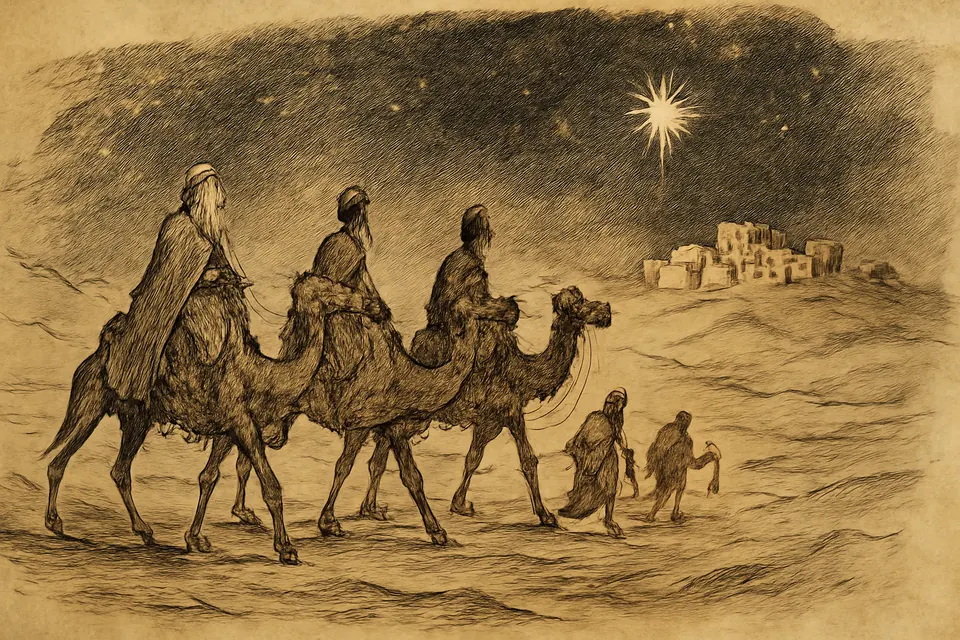
Epiphany 2027 is celebrated on Sunday, January 3, 2027, in the United States, where the bishops move it to the Sunday between January 2 and 8. Its traditional date, still kept in Rome and many countries, is Wednesday, January 6. The feast celebrates Christ revealed to the nations, above all in the coming of the Magi.
Epiphany 2027 is Sunday, January 3, 2027, in the United States, and Wednesday, January 6, in the places that keep the traditional day. On this feast the Church celebrates the Lord made known to the nations: the Magi from the East, guided by a star, kneel before the Child in Bethlehem. The name comes from the Greek epiphaneia, a showing or appearing.
Epiphany 2027 at a glance
- Twelfth Night: Tuesday, January 5, 2027, the eve of the traditional Epiphany
- Epiphany in the United States: Sunday, January 3, 2027, with the Vigil Mass on Saturday evening, January 2
- Traditional Epiphany (Three Kings Day): Wednesday, January 6, 2027
- Readings: Isaiah 60:1-6, "Arise, be enlightened, O Jerusalem"; Ephesians 3:2-3a, 5-6; Matthew 2:1-12
- The Baptism of the Lord: Sunday, January 10, 2027, which ends the Christmas season
- Theophany in the Orthodox churches: January 6, or January 19 in churches on the Julian calendar
Why the US keeps Epiphany on a Sunday
Canon 1246 names the Epiphany among the holy days of the universal Church, and lets a bishops' conference transfer such a day to a Sunday. The United States did so after the reform of the calendar. The rule printed in the US bishops' calendar is simple: the Epiphany is celebrated on the "Sunday between January 2 and January 8." In 2027 that Sunday is January 3. Wednesday, January 6, is an ordinary Christmas weekday in the US, with the optional memorial of St. André Bessette.
Rome, Italy, Spain, Poland, Austria and parts of Germany and Switzerland keep January 6 itself, and in several of those countries it is a public holiday. Wherever you are, the Sunday Mass of the Epiphany fulfills the obligation in the US; see holy days of obligation 2027.
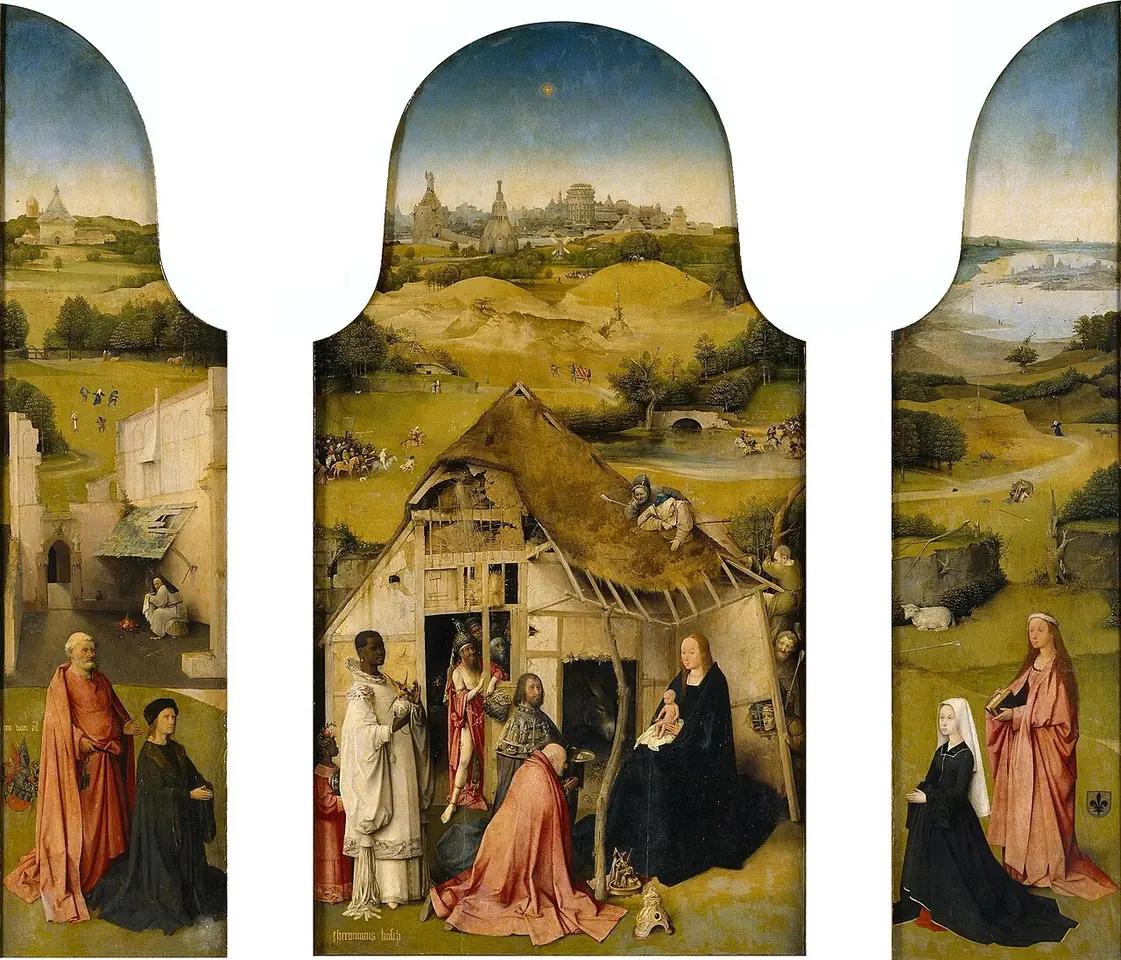
The Gospel of the Epiphany
The Gospel of the day is St. Matthew's account of the wise men, in the Douay-Rheims translation:
When Jesus therefore was born in Bethlehem of Juda, in the days of king Herod, behold, there came wise men from the east to Jerusalem.
Saying, Where is he that is born king of the Jews? For we have seen his star in the east, and are come to adore him.
And king Herod hearing this, was troubled, and all Jerusalem with him. ...
Who having heard the king, went their way; and behold the star which they had seen in the east, went before them, until it came and stood over where the child was.
And seeing the star they rejoiced with exceeding great joy.
And entering into the house, they found the child with Mary his mother, and falling down they adored him; and opening their treasures, they offered him gifts; gold, frankincense, and myrrh. (Matthew 2:1-3, 9-11)
Matthew doesn't say there were three of them or that they were kings. Tradition counted three from the three gifts and later named them Caspar, Melchior and Balthasar; see the Magi for what Scripture says, what tradition added, and the shrine of their relics in Cologne. The Fathers read the gifts as a confession of faith: gold for a king, incense for God, myrrh for one who would die.
Three manifestations in one feast
The Epiphany is older than Christmas in many places. The Catholic Encyclopedia says plainly that "the Epiphany had its origin in the Eastern Church," where January 6 at first celebrated the Lord's birth and his baptism together. When the West took up the feast in the 4th century, it kept the Eastern day but gave more and more weight to the Magi.
The feast remembers three moments when the hidden glory of Christ was shown: the star that led the Magi, the voice of the Father and the descent of the Spirit at his Baptism in the Jordan, and the first of his signs, water made wine at Cana. The Catholic Encyclopedia quotes the antiphon for the Magnificat at Second Vespers:
We keep our Holy Day adored with three miracles: today a star led the Magi to the crib, today wine was made from water at the marriage, today in Jordan Christ willed to be baptized by John to save us.
The Roman calendar now gives the Baptism its own feast the following Sunday, January 10, 2027, and the Eastern churches still center their Theophany on the Jordan. In the Orthodox and Eastern Catholic churches it is the day of the Great Blessing of Waters, when the priest blesses water, often outdoors at a river or the sea, and the faithful take it home.
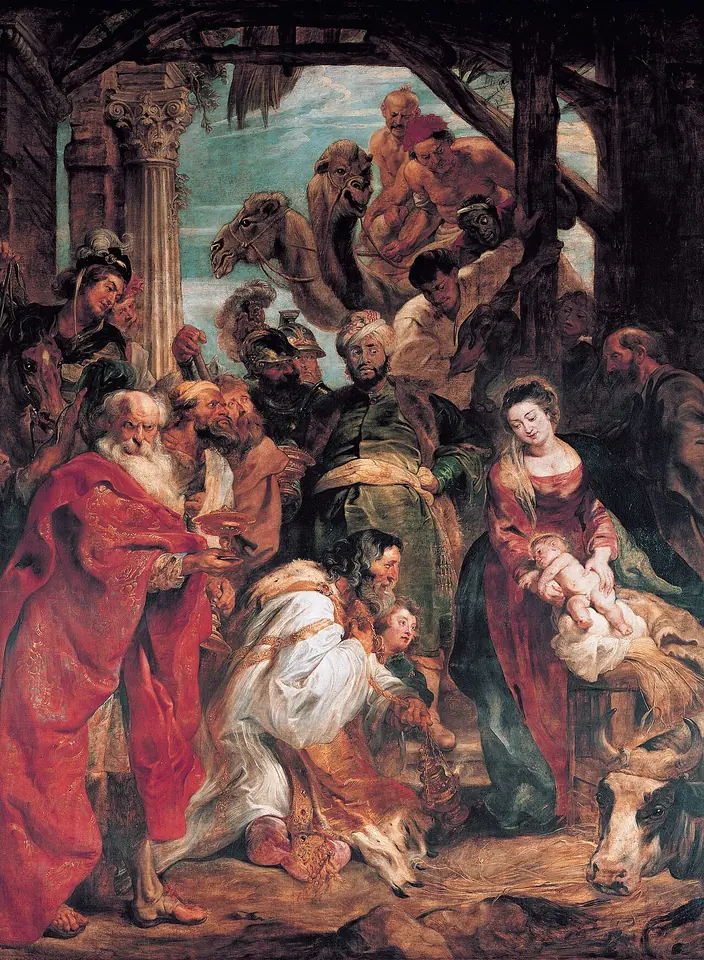
The proclamation of Easter on the Epiphany
On the Epiphany the Church has long announced the date of Easter and the movable feasts for the coming year. The Catholic Encyclopedia notes it was "a very general custom," ordered by the councils of Orléans in 541 and Auxerre in 578 and 585, at a time when few people had a calendar and the date of Easter had to be computed. The Roman Missal keeps a solemn chant for it, sung after the Gospel in many parishes. For 2027 it announces:
- Ash Wednesday: February 10, 2027
- Easter Sunday: March 28, 2027
- The Ascension: May 6, 2027, or Sunday, May 9, where it is transferred
- Pentecost: May 16, 2027
- The Body and Blood of Christ: May 30, 2027, in the United States
- The First Sunday of Advent: November 28, 2027
See Ash Wednesday 2027, Easter 2027, Pentecost 2027 and the whole year on the Catholic calendar 2027.

How we keep the Epiphany
Chalking the door
On the Epiphany or in the days around it, families bless their homes and write the year and the initials of the Magi above the door: 20+C+M+B+27. The letters also stand for Christus mansionem benedicat, "May Christ bless this house." The traditional blessing of chalk, the prayers and the steps are on our Epiphany house blessing page. In 2027 a good day for it is Sunday, January 3, after Mass, when the whole family is home.
The twelve days
The twelve days of Christmas run from Christmas Day, Friday, December 25, 2026, to Tuesday, January 5, 2027, which is Twelfth Night; the traditional Epiphany comes the morning after. In the United States the Sunday Epiphany arrives before the twelve days are over, but nothing stops a family from keeping both: the kings at Mass on January 3, and the cake, the gifts and the last carols on the evening of January 5.
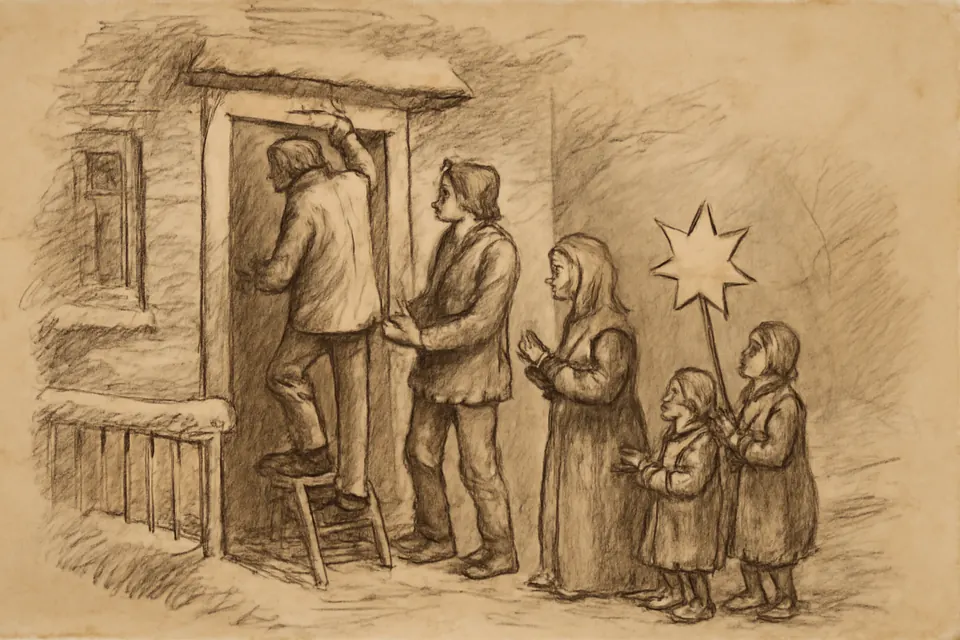
Star singers
In Germany, Austria and Poland, children dressed as the three kings go door to door with a star on a pole, singing, chalking doors and collecting for children in need. The custom is described on the house blessing page.
Three Kings Day
In Spain, Mexico, Puerto Rico and across Latin America, January 6 is Día de los Reyes. Children leave their shoes out, sometimes with grass for the camels, and wake to gifts from the kings. Families share a rosca de reyes, a ring-shaped sweet bread with a small figure of the Christ Child baked inside; whoever finds it often hosts the tamales on Candlemas, February 2. In New Orleans and the Gulf Coast the king cake season opens on Twelfth Night.

At home
Move the Magi figures in your Nativity scene to the manger on the Epiphany, after their slow trip across the room through the twelve days of Christmas. Read Matthew 2 aloud. Let us pray for all who are still searching for Christ, that the light which led the Magi may lead them too.
The days around Epiphany 2027
The Epiphany falls inside the Christmas season, two days after the Solemnity of Mary, Mother of God on January 1. Two American saints follow it closely: St. Elizabeth Ann Seton on Monday, January 4, and St. John Neumann on Tuesday, January 5. The Baptism of the Lord on January 10 closes the season, and the forty days of Christmas find their last echo at Candlemas on February 2.
Arise, be enlightened, O Jerusalem: for thy light is come (Isaiah 60:1).
Frequently asked questions
When is Epiphany 2027?
In the United States the Epiphany of the Lord is Sunday, January 3, 2027. Its traditional date, January 6, falls on a Wednesday, and the Vatican, Italy, Spain, Poland and other countries keep it that day.
Is Epiphany a holy day of obligation in 2027?
In the US it is kept on a Sunday, so the ordinary Sunday obligation covers it. Canon 1246 lists the Epiphany among the holy days of the universal Church, and countries that keep it on January 6 may require Mass that day; check your bishops' list.
Why is Epiphany on January 6?
It is the twelfth day after Christmas and one of the Church's oldest feasts, kept in the East before Christmas itself. The Catholic Encyclopedia notes that the reason for the date can't be recovered with certainty.
What are the three manifestations of the Epiphany?
The visit of the Magi, the Baptism of the Lord in the Jordan and the miracle at the wedding at Cana. An old antiphon of the feast sings all three; in the Western Church the Magi came to dominate the day.
When do you chalk your door for Epiphany 2027?
On the Epiphany or in the days around it, usually January 3 to 6, writing 20+C+M+B+27 over the door. Our Epiphany house blessing page gives the prayers.
Sources
- USCCB: Liturgical Calendar for the Dioceses of the United States of America, 2027 (PDF). USA: The Epiphany of the Lord, Sunday, January 3, 2027; the rule "Sunday between January 2 and January 8"; Baptism of the Lord, January 10
- Catholic Encyclopedia (1909): Epiphany. Eastern origin, the three manifestations, the Magnificat antiphon, the announcement of Easter on the feast
- Code of Canon Law, Book IV, canons 1244-1253
- Douay-Rheims Bible: Matthew 2