Solemnity of Mary, Mother of God 2027
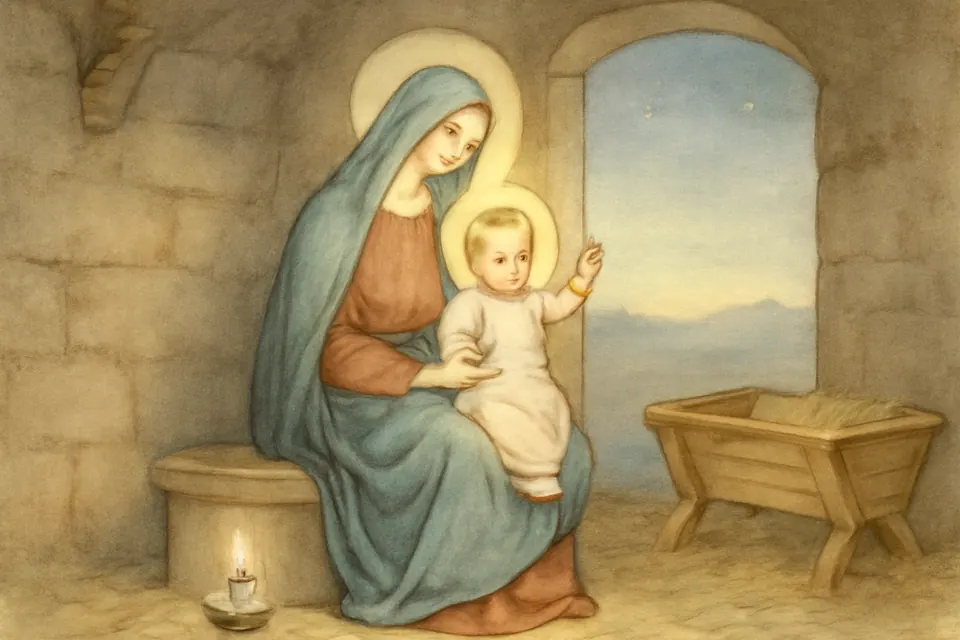
The Solemnity of Mary, Mother of God 2027 falls on Friday, January 1, 2027, the octave day of Christmas and the first day of the year. It is a holy day of obligation in the United States this year, because it falls on a Friday. The Church also keeps January 1 as the World Day of Peace.
The Solemnity of Mary, Mother of God 2027 falls on Friday, January 1, 2027. On the first day of the new year, the eighth day of Christmas, the Church turns to the Virgin who held the newborn Lord and gives her the greatest of her titles: Mother of God. It is a holy day of obligation in the United States this year and the World Day of Peace everywhere.
Mary, Mother of God 2027 at a glance
- Vigil Mass: Thursday evening, December 31, 2026 (New Year's Eve)
- The solemnity: Friday, January 1, 2027, the octave day of Christmas
- Holy day of obligation: yes, in 2027
- Friday abstinence: lifted, because it is a solemnity
- World Day of Peace: January 1, 2027
- Readings: Numbers 6:22-27, the priestly blessing; Galatians 4:4-7, "God sent his Son, made of a woman"; Luke 2:16-21, the shepherds at the manger and the naming of Jesus
- Next: the Epiphany, Sunday, January 3, 2027, in the United States
Is January 1, 2027, a holy day of obligation?
Yes. Canon 1246 lists "Holy Mary the Mother of God" among the holy days of the universal Church, and the US bishops keep it. Their complementary norm lifts the obligation for January 1, August 15 and November 1 when one of them falls on a Saturday or a Monday, so that people are not asked to attend two days running. In 2027 New Year's Day is a Friday, so the obligation holds, and the US calendar prints "Holyday of Obligation" under it. A Mass on New Year's Eve, Thursday evening, December 31, counts. In 2028, January 1 falls on a Saturday and the obligation will be lifted.
Since it is a Friday, a word about meat: canon 1251 says Friday abstinence does not apply when "a solemnity should fall on a Friday." Christmas and New Year's Day are both Fridays this season, and both are days to feast. The full list of this year's holy days is on our holy days of obligation 2027 page.

Why we call Mary the Mother of God
The Greek title behind this feast, and the council that defended it, are explained on our page on the Theotokos.
The title says first of all who Jesus is. The child Mary conceived and bore is not a man to whom God later joined himself, but the eternal Son of God made man, one divine person. A mother is mother of the person she bears, and so Mary is truly the Mother of God, Theotokos in Greek, "the God-bearer." St. Paul says it in the second reading of the day: "God sent his Son, made of a woman" (Galatians 4:4).
Christians had called Mary Theotokos long before it was disputed. In 428 Nestorius, the new archbishop of Constantinople, objected to the title and preferred "Mother of Christ." St. Cyril of Alexandria answered him, and the Council of Ephesus met in 431 and deposed Nestorius. The Catholic Encyclopedia's account of that day is worth reading: the session ran long, "and it was evening when the result was known. The people of Ephesus, full of rejoicing, escorted the fathers to their houses with torches and incense." The bishops had defended the truth about Christ, and the people knew it was also a feast of his Mother.
The oldest known prayer to Mary already uses the title. The Compendium of the Catechism gives it in English:
We fly to thy protection, O holy Mother of God. Despise not our petitions in our necessities, but deliver us always from all dangers O glorious and blessed Virgin.
And in Latin, the Sub tuum praesidium:
Sub tuum praesidium confugimus, sancta Dei Genetrix; nostras deprecationes ne despicias in necessitatibus; sed a periculis cunctis libera nos semper, Virgo gloriosa et benedicta.
How the feast came back to January 1
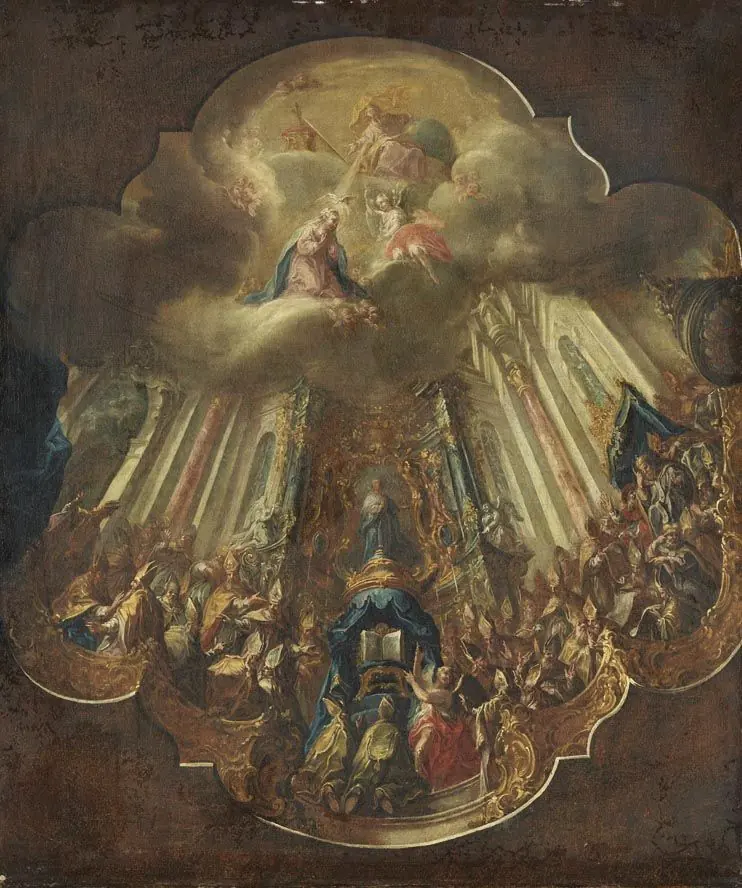
January 1 is Mary's oldest feast in Rome. The Catholic Encyclopedia notes that in the city's early liturgy "the oldest and only feast of Our Lady was 1 January, the octave of Christ's birth," kept first at St. Mary Major. Over the centuries the day took another name. By the time of the Tridentine missal it was the Circumcision of the Lord and Octave of the Nativity, remembering the eighth day when the Child "was called JESUS" (Luke 2:21). Even then, the Catholic Encyclopedia observes, its prayers kept "special reference to the Blessed Virgin," and the Office sang her privileges.
The reformed Roman Calendar of 1969 gave the day back its Marian title. Pope St. Paul VI explained the change in Marialis cultus (1974). The solemnity, he wrote, is "placed on January 1 in conformity with the ancient indication of the liturgy of the City of Rome" and "is meant to commemorate the part played by Mary in this mystery of salvation." The circumcision and naming of Jesus remain in the day's Gospel, and the memorial of the Most Holy Name of Jesus follows on January 3, though in 2027 the Epiphany takes that Sunday.
The Eastern churches honor the same mystery a week earlier. In the Byzantine calendar, kept by the Orthodox and by Eastern Catholics such as the Ukrainian and Melkite Catholic churches, the day after Christmas, December 26, is the Synaxis of the Most Holy Theotokos: having celebrated the birth of Christ, the Church gathers to honor the one who gave him birth. East and West arrive at the same place by different roads. Wherever the Church remembers the Nativity, it does not leave the Mother out of the picture.

The World Day of Peace
On December 8, 1967, Paul VI asked "all men of good will" to keep "The Day of Peace" on January 1, 1968, and to repeat it every year "at the beginning of the calendar which measures and outlines the path of human life in time." Every pope since has issued a message for the day. In Marialis cultus Paul VI joined the two observances: the octave of Christmas, he wrote, is "a fitting occasion" for "imploring from God, through the Queen of Peace, the supreme gift of peace." The Pope's message for January 1, 2027, will be published on the Vatican website in December. For prayers you can use any day, see our prayer for peace.
Praying on New Year's Day
For prayers to begin the year, including the Te Deum on December 31 and the Veni Creator on January 1, see our New Year prayer page.
The first reading of the Mass is the blessing God gave Aaron and his sons to speak over Israel, "The Lord bless thee, and keep thee." It is a good blessing for parents to say over their children on the first day of the year.
The Church also opens the year by calling on the Holy Spirit. The Enchiridion of Indulgences grants a plenary indulgence, under the usual conditions, to those who take part in the public singing or recitation of the Veni Creator on January 1, "to implore divine help for the course of the whole year," just as it does for the Te Deum of thanksgiving on December 31. Its first verse in Latin:
Veni, creator Spiritus, mentes tuorum visita, imple superna gratia, quae tu creasti pectora.
Many parishes sing it after the Mass of January 1. If yours does not, pray it at home, and begin the new year by consecrating it to Mary, asking her to show us her Son in every month of it. You might also pray the Angelus at noon, or one set of the joyful mysteries of the Rosary, which follow the Christmas Gospel from the Annunciation to the finding in the Temple.
The saints around January 1
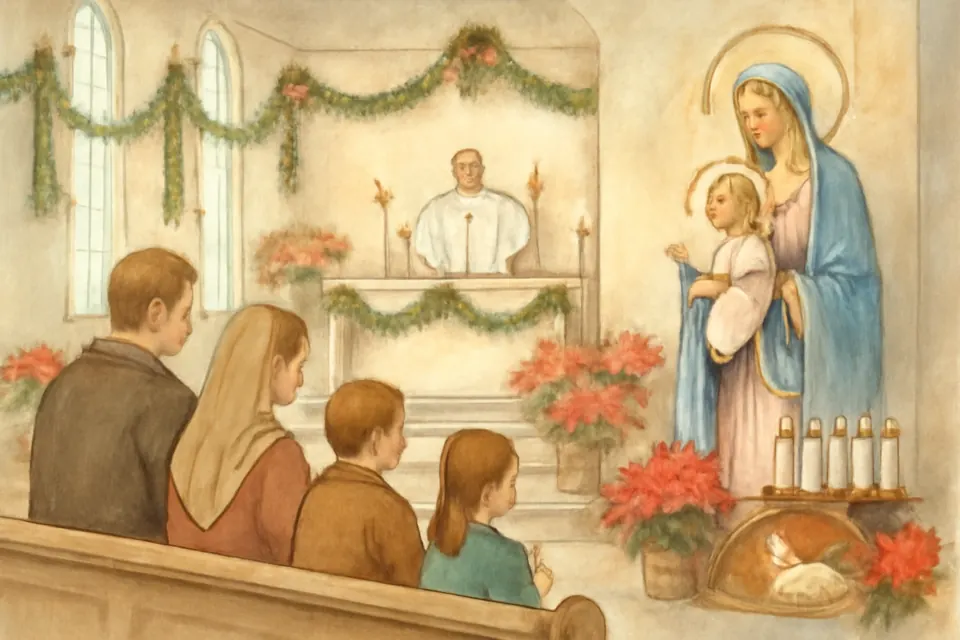
The day after the solemnity, Saturday, January 2, the Church remembers St. Basil the Great and St. Gregory Nazianzen, the Cappadocian friends who defended the faith of Nicaea in the generation before Ephesus. In the United States, St. Elizabeth Ann Seton follows on Monday, January 4, and St. John Neumann on Tuesday, January 5. For all of Mary's titles, dogmas and feasts, see the Blessed Virgin Mary; for the season as a whole, Christmas 2026 and the Catholic calendar 2027.
Holy Mary, Mother of God, pray for us, and obtain for the world the peace your Son came to bring.
Frequently asked questions
Is January 1, 2027, a holy day of obligation?
Yes. The Solemnity of Mary, Mother of God, falls on Friday, January 1, 2027, and the US bishops' calendar marks it "Holyday of Obligation." The obligation is lifted only when January 1 falls on a Saturday or a Monday, which will next happen on Saturday, January 1, 2028. A Mass on the evening of December 31 counts.
Can Catholics eat meat on January 1, 2027?
Yes. It is a Friday, but canon 1251 lifts Friday abstinence when a solemnity falls on a Friday, and the Solemnity of Mary, Mother of God, is one.
Why is Mary called the Mother of God?
Because the child she bore is God the Son, one divine person who truly became man. The Council of Ephesus in 431 confirmed the title Theotokos, "God-bearer," against those who would call her only the mother of Christ. The title says something first about Jesus, that he is God from the moment of his conception, and then about Mary's place in our salvation.
What happened to the Feast of the Circumcision?
Before 1969 the Roman calendar called January 1 the Circumcision of the Lord and the Octave of the Nativity. The reform of the calendar restored the older Roman feast of Mary on that day. The Gospel still includes the circumcision and naming of Jesus on the eighth day (Luke 2:21).
What is the World Day of Peace?
A day of prayer for peace that Pope St. Paul VI began on January 1, 1968. Each year the pope publishes a message for it. Paul VI linked it to the Solemnity of Mary in Marialis cultus, asking us to pray for peace through the Queen of Peace.
Sources
- USCCB: Liturgical Calendar for the Dioceses of the United States of America, 2027 (PDF). January 1, 2027, as a holyday of obligation; readings Nm 6:22-27, Gal 4:4-7, Lk 2:16-21
- USCCB: Canon 1246, §2, Holy Days of Obligation (complementary norm)
- Catholic Encyclopedia (1909): Council of Ephesus
- Catholic Encyclopedia (1908): Feast of the Circumcision
- Paul VI, Apostolic Exhortation Marialis cultus (February 2, 1974), no. 5
- Paul VI, Message for the First World Day of Peace (January 1, 1968)
- Compendium of the Catechism of the Catholic Church, Appendix: Common prayers (Sub tuum praesidium)
- Apostolic Penitentiary, Enchiridion Indulgentiarum, 4th edition (Latin), grant 26: the Veni Creator on January 1