Ash Wednesday 2027

Ash Wednesday 2027 is Wednesday, February 10, 2027, the first day of Lent. Catholics receive ashes on the forehead as a sign of repentance. It is a day of fasting (ages 18 to 59) and abstinence from meat (14 and older), but it is not a holy day of obligation. Easter follows on March 28.
Ash Wednesday 2027 falls on Wednesday, February 10, 2027. It opens the forty days of Lent 2027, seven weeks before Easter on March 28.
The date
Ash Wednesday has no fixed date because Easter has none. It always falls 46 days before Easter Sunday: forty days of fasting plus the six Sundays of Lent, which are never fast days. With Easter on March 28, 2027, Ash Wednesday comes on February 10. Mardi Gras, Shrove Tuesday, is the day before, February 9.
What the ashes mean
Ashes are one of the oldest signs of repentance in Scripture. In the Douay-Rheims Bible, Job repented "in dust and ashes," the king of Nineveh put on sackcloth and sat in ashes when Jonah preached, and Daniel prayed "with fasting, and sackcloth, and ashes" for his people. The Church takes up this sign at the start of Lent to say two things at once: we are mortal, and we are sinners who need to turn back to God.
The ashes are made by burning the palms blessed on Palm Sunday of the year before, so the palms of 2026 become the ashes of 2027. Last spring's branches of triumph become this year's sign of humility. The priest blesses the ashes during Mass, after the homily, and sprinkles them with holy water.
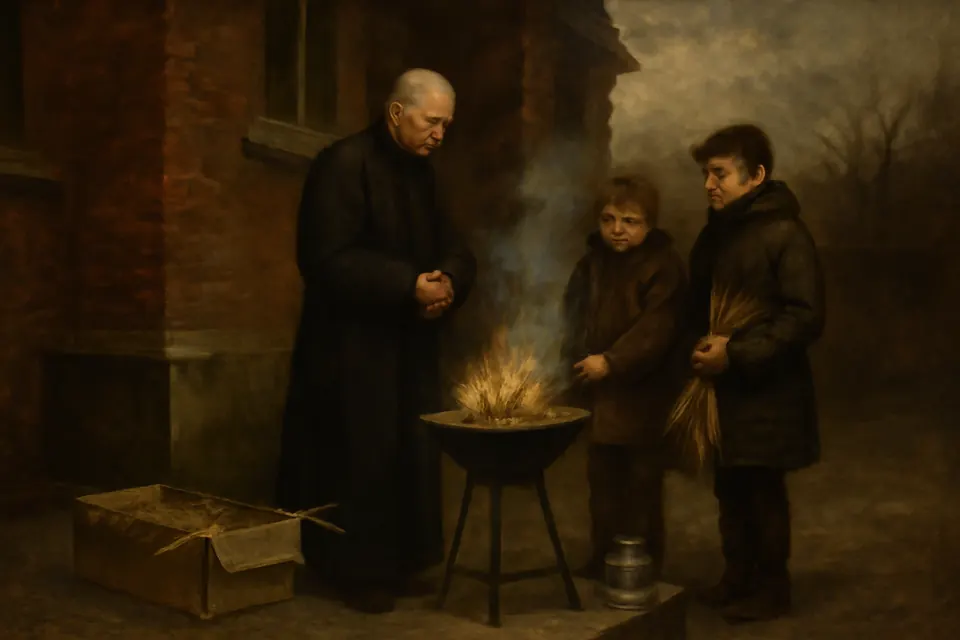
Ashes are a sacramental, a sacred sign instituted by the Church. They have no power of their own; they dispose us to receive God's grace through the Church's prayer and our own repentance.
The words said with the ashes
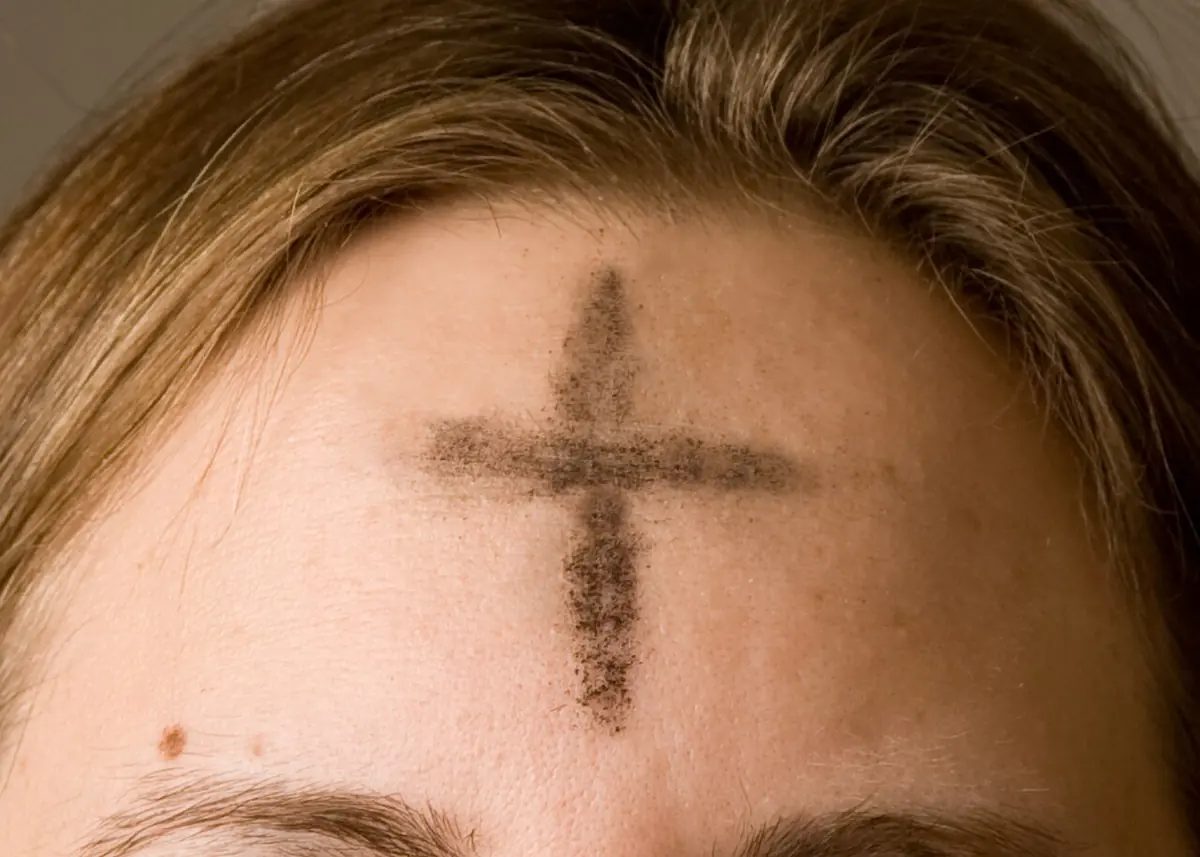
The priest, deacon or minister traces a cross of ashes on the forehead (in Rome and much of Europe, the ashes are sprinkled on the crown of the head instead) and says one of two formulas from the Roman Missal:
- "Repent, and believe in the Gospel," from Mark 1:15. In Latin, Paenitemini, et credite Evangelio.
- "Remember that you are dust, and to dust you shall return," from Genesis 3:19. The older English form in the Catholic Encyclopedia reads, "Remember man that thou art dust and unto dust thou shalt return," from the Latin Memento, homo, quia pulvis es, et in pulverem reverteris.
The second formula repeats God's words to Adam after the fall, in the Douay-Rheims version: "for dust thou art, and into dust thou shalt return." The first repeats the opening words of Christ's preaching. Both call us to the same thing.

Where the custom comes from
In the early Church, those who had committed grave public sins did public penance through Lent. They were sprinkled with ashes and dressed in sackcloth at the start of the season and reconciled on Holy Thursday. The Catholic Encyclopedia explains that ashes for everyone began as "a devotional imitation" of the public penitents. About the year 1000 the English homilist Ælfric urged all his hearers to "strew ashes upon our heads to signify that we ought to repent of our sins during the Lenten fast," and the Synod of Benevento in 1091 speaks of the custom as general for clergy and laity alike.
Fasting and abstinence on February 10, 2027
Ash Wednesday is one of only two days of fasting in the Latin Church; the other is Good Friday, March 26, 2027. Canon 1251 says, "Abstinence and fasting are to be observed on Ash Wednesday and Good Friday." The US bishops apply it this way:
- Fasting binds Catholics from age 18 until age 59. You may eat one full meal and two smaller meals that together don't equal a full meal, with no solid food between meals.
- Abstinence from meat binds everyone 14 and older. Fish, eggs, milk and cheese are permitted.
- Excused are the sick, including those with chronic conditions such as diabetes, and pregnant or nursing women.
Children under 14 are not bound, but many families involve them in a small sacrifice suited to their age. The 1969 liturgical norms call Ash Wednesday "a universal day of fast."
Not a holy day of obligation
Ash Wednesday is not a holy day of obligation. No Catholic sins by missing Mass that day, and ashes can be received at a short service outside Mass as well. Even so, churches fill on Ash Wednesday in a way they rarely do on weekdays. If your work hours are hard, look for early-morning, noon and evening Masses; most parishes schedule several, and many cathedrals downtown offer ashes all day.
The readings set the tone for the season. Joel calls the people to "rend your hearts, and not your garments," St. Paul pleads, "now is the day of salvation," and in Matthew 6 Christ teaches the three works of Lent: almsgiving, prayer and fasting, done quietly for the Father who sees in secret.
Beginning Lent well
Ash Wednesday is a good day to decide how you will keep Lent: what you will give up, what you will add, and how you will give to the poor. Our Lent 2027 page has the dates of every Friday of abstinence, practical ideas and the Stations of the Cross. The season ends with Holy Week and Easter 2027 on March 28.
Let us receive the ashes on February 10 with humble hearts, asking God for the grace to turn back to him with our whole heart during these forty days.
Frequently asked questions
When is Ash Wednesday 2027?
Ash Wednesday 2027 is February 10, 2027. It always comes 46 days before Easter, which in 2027 is March 28.
Is Ash Wednesday a holy day of obligation?
No. Catholics are not required to attend Mass on Ash Wednesday, though it is one of the best-attended days of the year and the Church warmly encourages it. The fast and abstinence, however, are obligatory.
Can I eat meat on Ash Wednesday?
No, if you are 14 or older. Ash Wednesday is a day of abstinence from meat. Fish, eggs and dairy are allowed.
How long do I keep the ashes on?
There is no rule. Many people leave them on through the day as a quiet witness, but you may wash them off whenever you need to.
Can non-Catholics receive ashes?
Yes. Ashes are a sacramental, not a sacrament, and anyone who wishes to begin Lent with a sign of repentance may come forward to receive them.