Bilocation
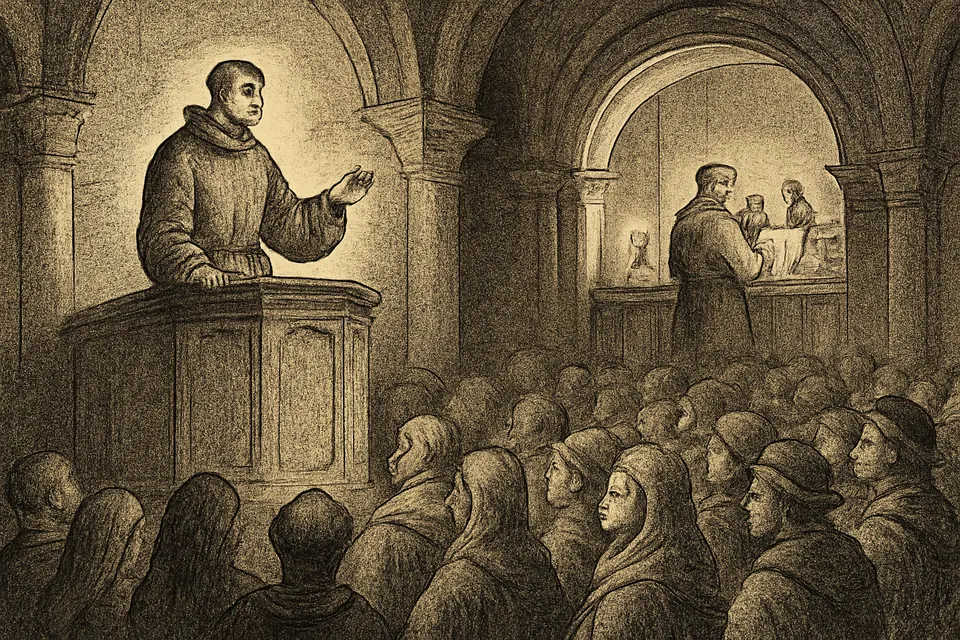
Bilocation is the reported presence of one person in two places at the same time. In Catholic tradition it is told of a number of saints, among them Padre Pio, Venerable Mary of Agreda, St. Martin de Porres, St. Alphonsus Liguori and St. Anthony of Padua. The Church has never formally approved any case of bilocation as a miracle.
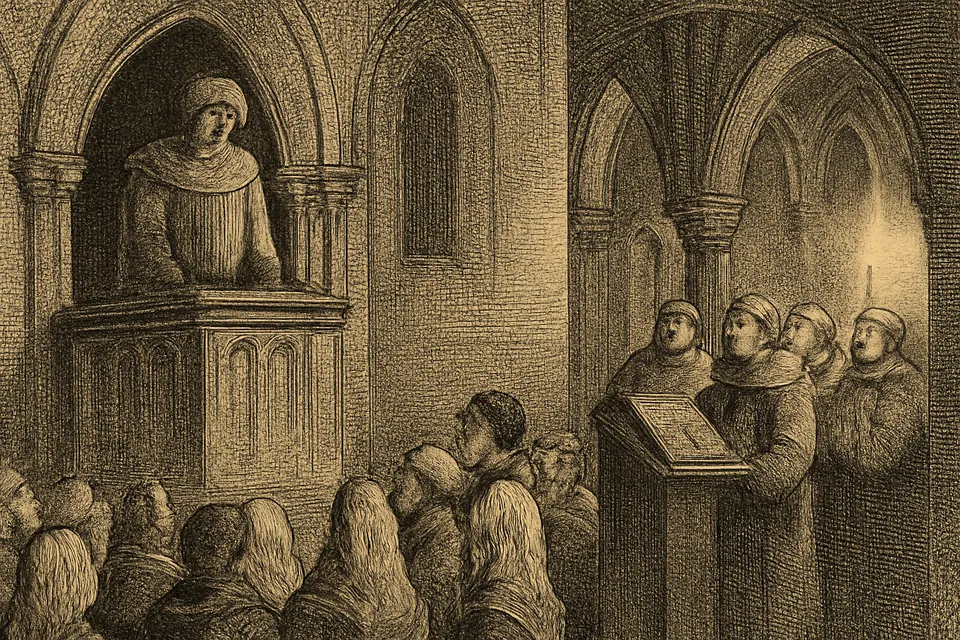
On Holy Thursday night in the year 1226, a young Franciscan was preaching in the Church of St. Pierre du Queyroix at Limoges, in France. In the middle of his sermon he remembered that he was due to sing a lesson of the Divine Office with his brothers in their choir. He stopped speaking, and the people waited. At that same moment, the old account says, the friars saw him standing among them in the choir, singing his lesson. Then he went on with his sermon.
The preacher was St. Anthony of Padua, and the story is the most famous early account of bilocation in the lives of the saints.
What is bilocation?
Bilocation is the presence of one person in two places at once. In the lives of the saints it usually looks like this: a holy man or woman is known to be at home, often deep in prayer, while people far away see, hear or speak with the same person. Sometimes the saint later confirms it. More often the saint says nothing, and the testimony comes from the people who were visited.
The Catholic Encyclopedia gives the theology plainly. Catholic philosophers, it says, agree that bilocation is "physically impossible, that is, contrary to all the conditions of matter at present known to us." But they also hold that it involves no contradiction, so God, who is not bound by the conditions of matter, could bring it about. The idea first grew, the article notes, out of the Church's faith in the Eucharist, where Christ is truly and substantially present in every consecrated Host in every tabernacle in the world.
Theologians differ on how bilocation would work. St. Thomas Aquinas and others held that a body cannot be fully present in two places, and explained the accounts in the saints' lives as true appearances of the saint, given by God, rather than a second body. Blessed John Duns Scotus, St. Robert Bellarmine and Francisco Suárez defended the possibility of real bilocation. The Church has never settled the question.
How the Church treats reports of bilocation
The Church weighs reports of bilocation the way she weighs other extraordinary gifts. The Catechism calls them charisms, special graces that are "sometimes extraordinary, such as the gift of miracles or of tongues," and it says they "are oriented toward sanctifying grace and are intended for the common good of the Church." A gift like this does not make anyone holy. Holiness is charity, and the Church looks for heroic virtue in a candidate for sainthood, not for wonders.
When a cause for canonization is opened, witnesses may describe bilocations, levitations or other marvels, and the investigators record them with everything else. But the miracles formally examined and approved for beatification and canonization are of a different kind: healings and other signs granted through the saint's intercession after death, studied by doctors and theologians. No bilocation has ever been approved in that way. You can read more in our guide to how the Church investigates miracles.
So on this page, as across the site, each account carries a label. Reported means it rests on named witnesses or documents but was never formally judged. Traditional means it comes down to us in old lives and chronicles, often written long after the event. None is approved. The faithful are free to believe these accounts, and many saints and popes have believed them.
St. Anthony of Padua at Limoges
The Limoges story above is told in the chronicles of the early Franciscans. The Catholic Encyclopedia counts it among "the most authentic miracles" of Anthony's years in the Limousin, where he served the friars as custos in 1226, and tells it in a single sentence: "Interrupting suddenly his discourse, he appeared at the same moment among the friars in choir to sing his Lesson, after which he continued his sermon."
Status: traditional. It belongs to the medieval tradition about Anthony rather than to a sworn record.

Venerable Mary of Agreda and the Lady in Blue
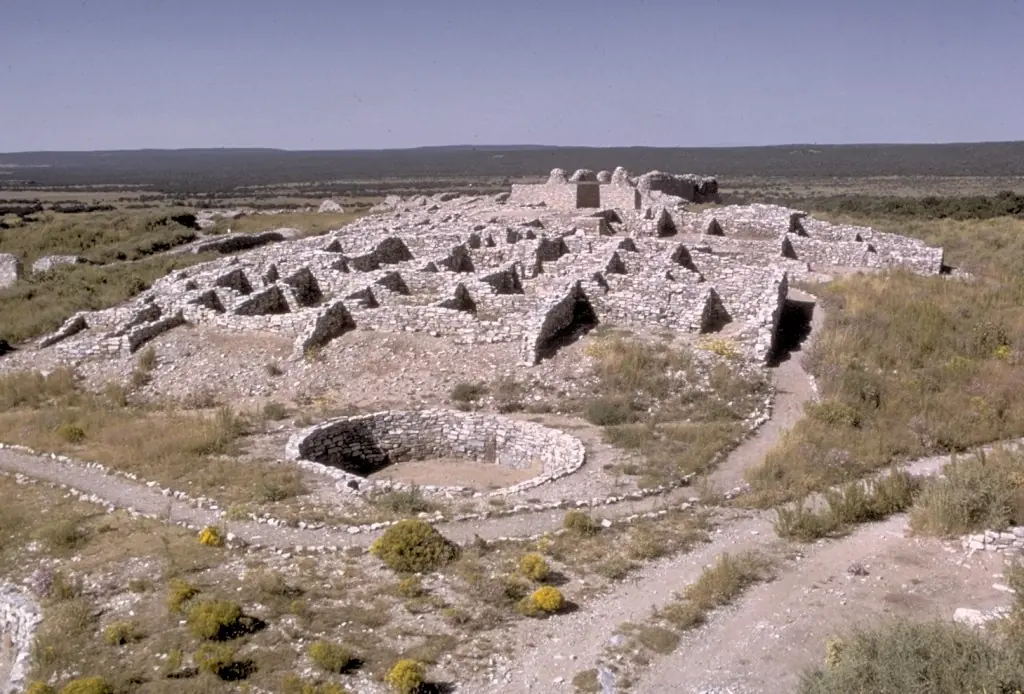
The most remarkable bilocation story in American history begins in the deserts of New Mexico. In 1630 Fray Alonso de Benavides, the Franciscan custos of New Mexico, sent King Philip IV a long report on the missions, the Memorial of 1630. In it he described the "miraculous conversion" of the Jumano people, who lived on the plains east of the Salinas pueblos. For years they had come asking for friars and for baptism. When the friars asked why, the Jumanos said that a woman had preached to each of them in their own tongue and told them to go and summon the Fathers. They compared her to a painting of a nun that hung in the friary: the clothing was the same, they said, but the woman who came to them was "young and beautiful."
Back in Spain, Benavides went to the town of Agreda, on the border of Castile and Aragon, at the end of April 1631. There he met Mother Mary of Jesus (María de Jesús Coronel), the young abbess of the Conceptionist convent, who was then about 29. She told him that since 1620 she had been carried to New Mexico many times, sometimes three or four times in a single day, and she described the people and places she had seen. On May 15, 1631, she gave him a signed statement, and Benavides concluded that she was the woman the Jumanos had described. Later tellings call her the Lady in Blue, after the blue mantle of her order's habit.
How she was present is another question. The National Park Service, which cares for the Salinas missions today, sums up her account this way: while in a trance at her convent in Agreda, she said she was spiritually present in New Mexico. Whether she was ever there in body has been argued for four centuries. The editors of the 1916 English edition of the Memorial were frankly skeptical of some details.

Mary of Agreda died in 1665. Her cause for canonization was opened in 1672, and she has been declared Venerable. When her cause was taken up again in 2017, Catholic World Report noted that "the Vatican has never ruled definitively" on whether her visits to what is now western Texas and eastern New Mexico were a true instance of bilocation. Bishop Michael Sis of San Angelo, Texas, told CNA that Catholics there still keep a strong devotion to the Lady in Blue. She is also the author of The Mystical City of God, a long life of the Blessed Virgin that has drawn both deep devotion and sharp criticism since it was published in 1670.
Status: reported.

St. Martin de Porres in Lima
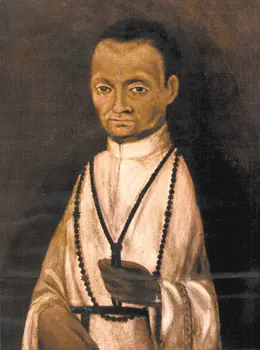
St. Martin de Porres (1579–1639), the Dominican lay brother of Lima, never left Peru. Yet witnesses in the inquiry opened after his death said he had been seen far beyond it. A booklet of the Blessed Martin Guild in New York, printed with the imprimatur of Cardinal Spellman, sums up their testimony: "Martin, though he spent all his life in South America, helped the Christian captives in Africa and ministered to the sick and poor in Mexico, China, and Japan." His brothers in Lima also told of finding him at the bedside of sick novices behind locked doors.
Status: reported. The two miracles approved for his canonization in 1962 were healings in Paraguay and the Canary Islands after his death.
St. Alphonsus Liguori at the deathbed of Clement XIV
In September 1774, St. Alphonsus Liguori, then an old and ailing bishop, fell into a long, motionless trance at Arienzo near Naples. When he came to himself, he told those around him that he had been assisting the dying Pope Clement XIV. The news of the Pope's death in Rome arrived afterward. The Catholic Encyclopedia puts it briefly: "He fell into a clairvoyant trance at Arienzo on 21 September, 1774, and was present in spirit at the death-bed in Rome of Pope Clement XIV."
Status: reported. Notice the careful words "present in spirit": this account is often listed with the bilocations, though it may be better described as a vision.
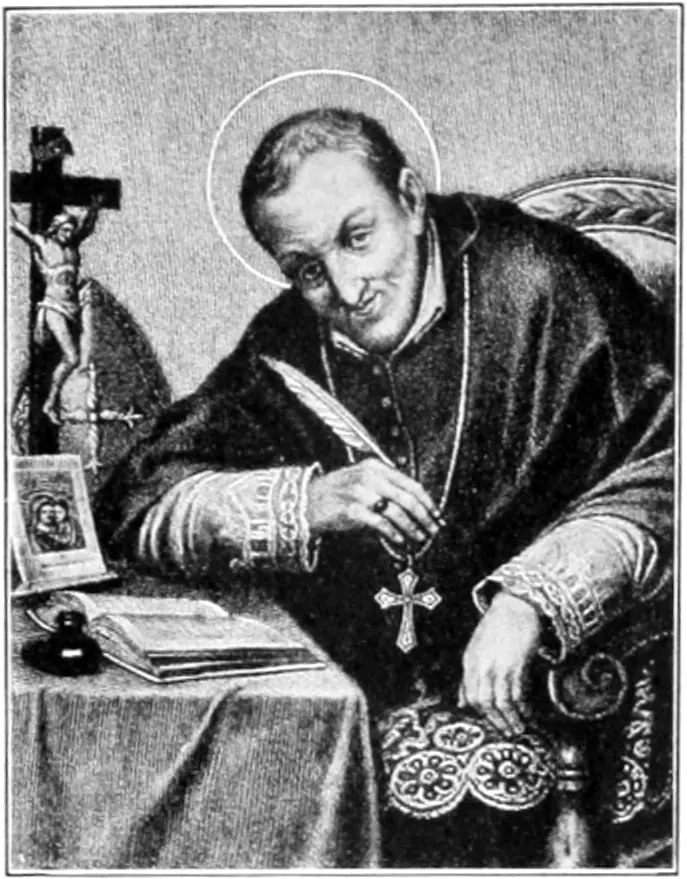
Padre Pio: "it did happen to me"
No saint is more closely linked with bilocation than St. Pio of Pietrelcina. He lived in the friary at San Giovanni Rotondo from 1916 until his death in 1968, and for most of those years he hardly left it. Yet people across Italy and beyond said they had seen him at their side.
The earliest account comes from his student days. On January 18, 1905, at 11 o'clock at night, the 17-year-old friar was praying in the choir at Sant'Elia a Pianisi when, he later wrote, he found himself in a house in Udine, far to the north, where a father was dying and a child was being born. He wrote the account down within three weeks and gave it to his superiors. The Capuchins tell that he met the girl born that night in person only years later.
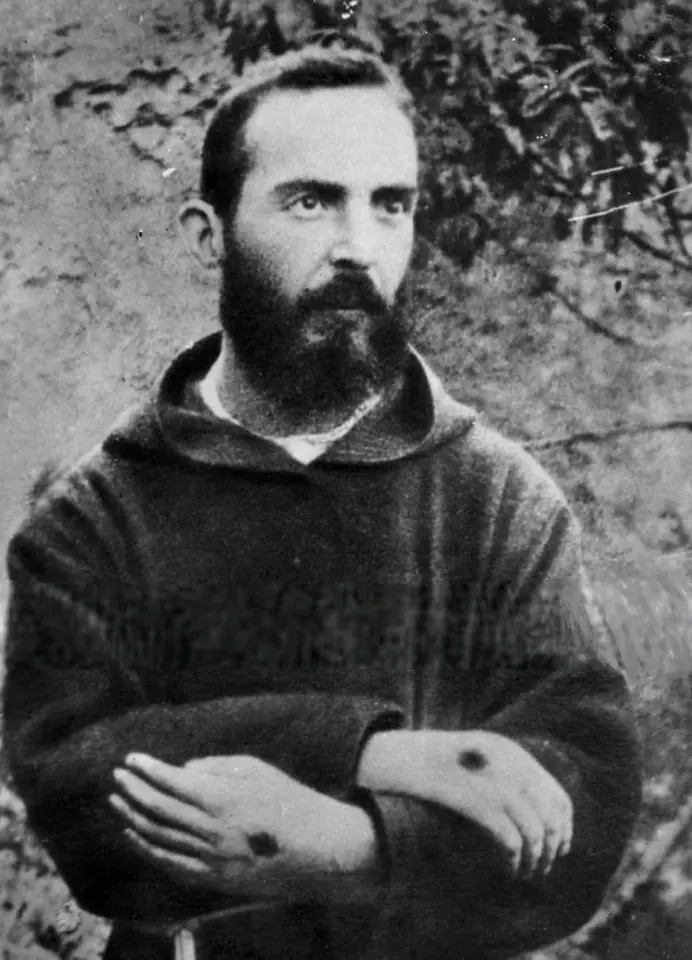
Padre Pio almost never spoke of these things. Questioned by investigators from Rome, he answered: "I don't know how it is or the nature of this phenomenon, but it did happen to me to be in the presence of this or that person, to be in this or that place. Usually it happened while I was praying." The last account the Capuchins record is from September 22, 1968, the day before he died, when Padre Umile, a friar bedridden in Genoa, told his nurse that Padre Pio had come to say goodbye.
Status: reported. The miracles approved for Padre Pio's beatification (1999) and canonization (2002) were healings after his death.
Other saints with reports of bilocation
The same gift appears, more briefly, in the lives of other saints on our site. Witnesses at the cause of St. Gerard Majella said he was seen in two places at once. The biography of St. Faustina published by her congregation lists bilocation among the gifts described in her Diary. Both are reported.
What these stories ask of us
The saints who were seen in two places were all going somewhere for the same reasons: to sing God's praise with their brothers, to preach the faith, to comfort the dying, to help the poor. Bilocation, if God gave it, was never a display. Padre Pio said it happened while he was praying, and that is the part of his gift each of us can share.
Let us ask these saints to pray for us, and especially for the dying who have no one at their bedside tonight. For other extraordinary signs in the lives of the saints, see our pages on the stigmata, incorruptible saints and Eucharistic miracles.
Frequently asked questions
What is bilocation?
Bilocation is the presence of one person in two different places at the same moment. In the lives of the saints it usually means that a holy person was seen, heard or even touched far away while witnesses saw him or her at home in prayer.
Which saints bilocated?
The best-known accounts are told of St. Anthony of Padua (Limoges, 1226), Venerable Mary of Agreda (New Mexico and Texas, from 1620), St. Martin de Porres (Lima, 17th century), St. Alphonsus Liguori (the deathbed of Pope Clement XIV, 1774) and St. Pio of Pietrelcina (Padre Pio, 20th century). Similar reports appear in the lives of St. Gerard Majella and St. Faustina.
Did Padre Pio bilocate?
Many witnesses said so, and the earliest account dates from January 18, 1905, when he was a 17-year-old student. Questioned later by Church investigators, he said, "I don't know how it is or the nature of this phenomenon, but it did happen to me to be in the presence of this or that person, to be in this or that place." His bilocations are reported; the miracles approved for his beatification and canonization were healings after his death.
Is bilocation a miracle approved by the Catholic Church?
No case of bilocation has been formally approved as a miracle. The miracles the Church examines for beatification and canonization are healings or other signs obtained through a saint's intercession after death. Gifts such as bilocation are recorded in the testimony about a saint's life, and the Church leaves the faithful free to believe the accounts or not.
Is bilocation possible?
The Catholic Encyclopedia notes that Catholic philosophers agree bilocation is physically impossible in the ordinary course of nature, but that it involves no contradiction, so God could bring it about. Theologians differ on how. St. Thomas Aquinas held that a body cannot be fully present in two places, and explained such accounts as an appearance of the saint, while St. Robert Bellarmine and Francisco Suárez defended the possibility of true bilocation.
Who was the Lady in Blue?
The Lady in Blue was a woman whom the Jumano people of New Mexico and Texas said had preached to them before any missionary arrived. In 1631 the Franciscan Fray Alonso de Benavides concluded that she was Venerable Mary of Jesus of Agreda, a Conceptionist abbess in Spain, who said she had been carried there many times since 1620. The Church has never ruled on whether this was true bilocation.
Sources
- Catholic Encyclopedia (1907): Bilocation
- Catechism of the Catholic Church, nos. 2003–2005 (charisms)
- The Memorial of Fray Alonso de Benavides, 1630, trans. Mrs. Edward E. Ayer, annotated by F. W. Hodge and C. F. Lummis (Chicago, 1916)
- National Park Service, Salinas Pueblo Missions National Monument: María de Ágreda
- Catholic World Report (CNA): Did this Spanish nun bi-locate to Texas? Vatican aims to find out (September 14, 2017)
- Capuchin Franciscans, Western America Province: The Saint Who Bilocated to Be With the Dying
- Novena to Blessed Martin de Porres, O.P., Blessed Martin Guild, New York (imprimatur Francis Cardinal Spellman)
- Catholic Encyclopedia (1907): St. Alphonsus Liguori
- Catholic Encyclopedia (1907): St. Anthony of Padua