Incorruptible saints

Incorruptible saints are saints whose bodies were found, years after death, without the normal decay. Famous examples include St. Bernadette at Nevers, St. Catherine Labouré in Paris, St. John Vianney at Ars and St. Zita in Lucca. Incorruption is not required for sainthood or proof of it, and many incorrupt saints now wear wax masks.
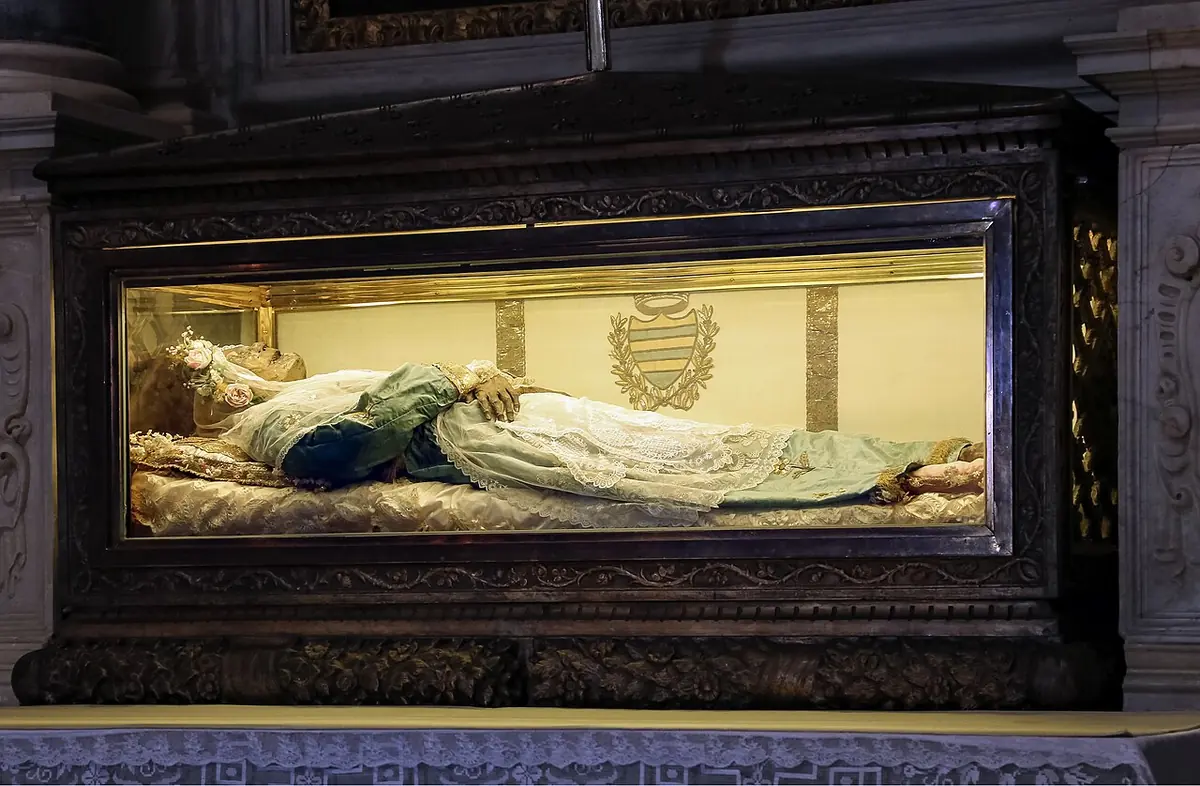
In the chapel of a convent in Nevers, St. Bernadette lies in a glass reliquary, her hands folded on a rosary, looking as if she had fallen asleep. She died in 1879. Pilgrims who see her often ask the same questions. Is she really incorrupt? Is that a miracle? Does it prove she is a saint? The answers are more interesting, and more honest, than the legends that sometimes circulate. This page explains what incorruption is and what it is not, how the Church treats it, why so many incorrupt saints wear wax, and where the best-known incorruptible saints rest today.
What "incorruptible" means
From time to time the tomb of a holy person is opened, for a canonical recognition before beatification or for a transfer to a new shrine, and the body is found largely intact, sometimes years or centuries after death, without having been embalmed. The faithful call such a saint "incorruptible" or "incorrupt." Joan Carroll Cruz's book The Incorruptibles (1977) collected 102 cases and made the subject widely known.
The faithful have always been moved by these bodies, and with reason. The Church honors the bodies of the saints because they were temples of the Holy Spirit and will rise again on the last day. A saint's body that seems to wait, untouched, for the resurrection speaks to that hope. Eastern Christians have long counted the preservation of a body among the signs that God has glorified a holy person.
According to Cruz, Pope Benedict XIV, the great 18th-century authority on canonization, held that only a preservation keeping "lifelike flexibility" should be thought extraordinary. Many of the famous cases do not meet that standard, and the Church has never claimed they do.
What incorruption is not
Four points are often misunderstood.
- It is not required for sainthood. Most saints' bodies decayed normally, including some of the greatest: St. Francis of Assisi, St. Thérèse of Lisieux and St. Vincent de Paul among them. The miracles examined for beatification and canonization are healings or similar events worked through the saint's intercession after death. See how the Church investigates miracles.
- It is not proof of holiness. Natural conditions can preserve a body: a dry, cool or sealed tomb, the soil, or the slow conversion of body fat into a waxy substance called adipocere. The Church does not deny this. A body that stays intact where others decayed may be a sign of God's favor, but it is not a verdict.
- It is not always complete. Many incorrupt bodies have darkened, dried or partly mummified. Some were embalmed after a later exhumation. Research reported by the science writer Heather Pringle, and cited by Catholic News Agency in 2020, found extensive embalming in the body of St. Margaret of Cortona but "not a trace of human intervention" in that of St. Zita.
- It is not deception when a shrine uses wax. Several of the most visited incorrupt saints wear thin wax coverings over the face and hands, which spare pilgrims the sight of darkened skin. The shrines say so openly.
How the Church treats an incorrupt body
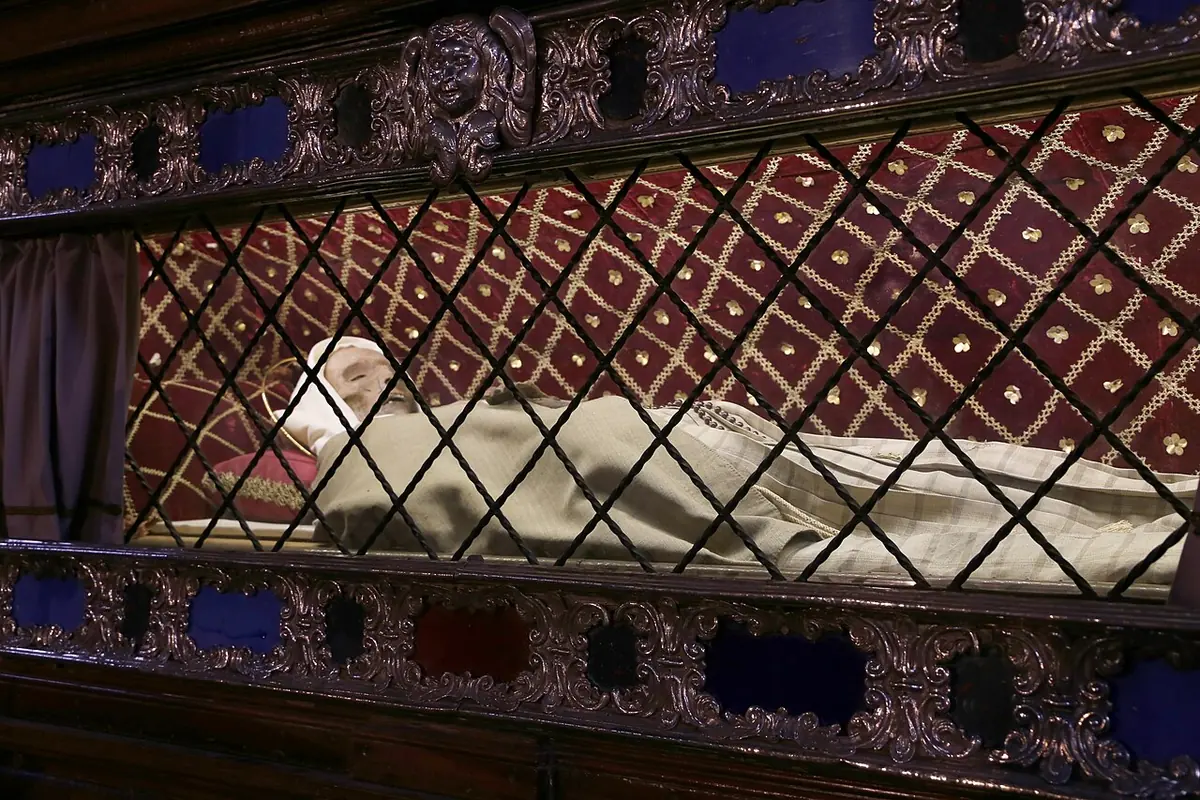
Church law treats an incorrupt body like any other significant relic. The Congregation for the Causes of Saints' 2017 instruction Relics in the Church sets the procedure. When a saint's tomb is opened, the "canonical recognition" is done under the bishop's authority, with doctors and witnesses, and every step is recorded and sealed. If the remains need preservation work, it is done with the bishop's consent and with "the most accredited techniques." Significant relics are kept in sealed urns, may not be displayed without a certificate of authenticity, and may never be sold.
That is why so many modern shrines show a saint's body with a mask, a coating or a protective treatment. The Church's aim is reverence and preservation, not the display of a marvel.
List of incorruptible saints
Each entry gives where the saint rests and the honest status. On this site incorruption is a reported wonder unless noted, because the Church does not formally rule on it; traditional marks accounts known only from old lives.
- St. Bernadette (died 1879): Espace Bernadette, chapel of Saint-Gildard, Nevers, France. The Sisters of Charity of Nevers state that her body was found incorrupt when it was exhumed in 1909, 1919 and 1925. Thin wax coverings were fitted over the face and hands in 1925. Reported.
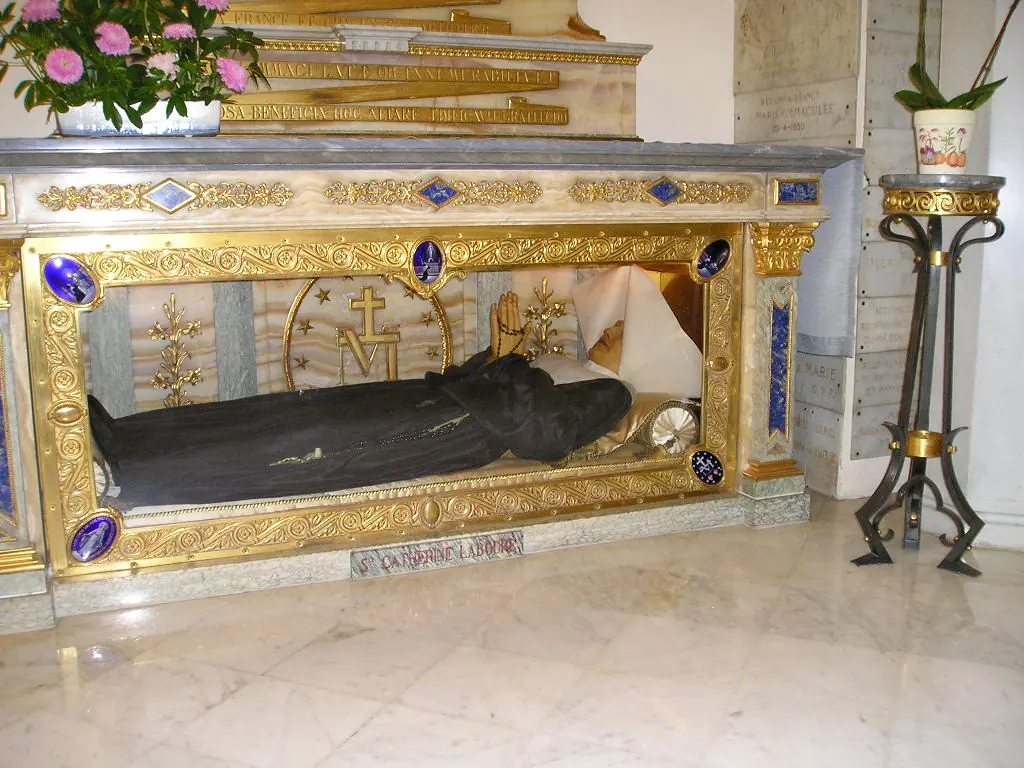
- St. Catherine Labouré (died 1876): Chapel of Our Lady of the Miraculous Medal, rue du Bac, Paris. Reported intact when her vault was opened in 1933; wax mask over the face. Reported.
- St. John Vianney (died 1859): Basilica of Ars, France. The 1904 exhumation report found the body darkened and dried but whole; it lies in a gilded shrine with a wax mask. Reported.
- St. Rita of Cascia (died 1457): Basilica of Santa Rita, Cascia, Italy. Never buried; the monastery describes the face, hands and feet as mummified, with the skeleton intact. Reported.
- St. Zita (died 1278): Basilica of San Frediano, Lucca, Italy. Tomb opened in 1580; the small, darkened body is naturally preserved. Reported.
- St. Catherine of Bologna (died 1463): Santuario del Corpus Domini, Bologna, Italy. Exhumed shortly after her death and found intact, she has been kept seated upright in her Poor Clare habit for centuries; the skin has darkened. Reported.
- St. Margaret of Cortona (died 1297): Sanctuary of Santa Margherita, Cortona, Italy, in a silver shrine. Described as incorrupt by the Catholic Encyclopedia; research found embalming. Reported.
- St. Catherine of Genoa (died 1510): Church of St. Catherine (Santissima Annunziata di Portoria), Genoa, Italy. Reported.
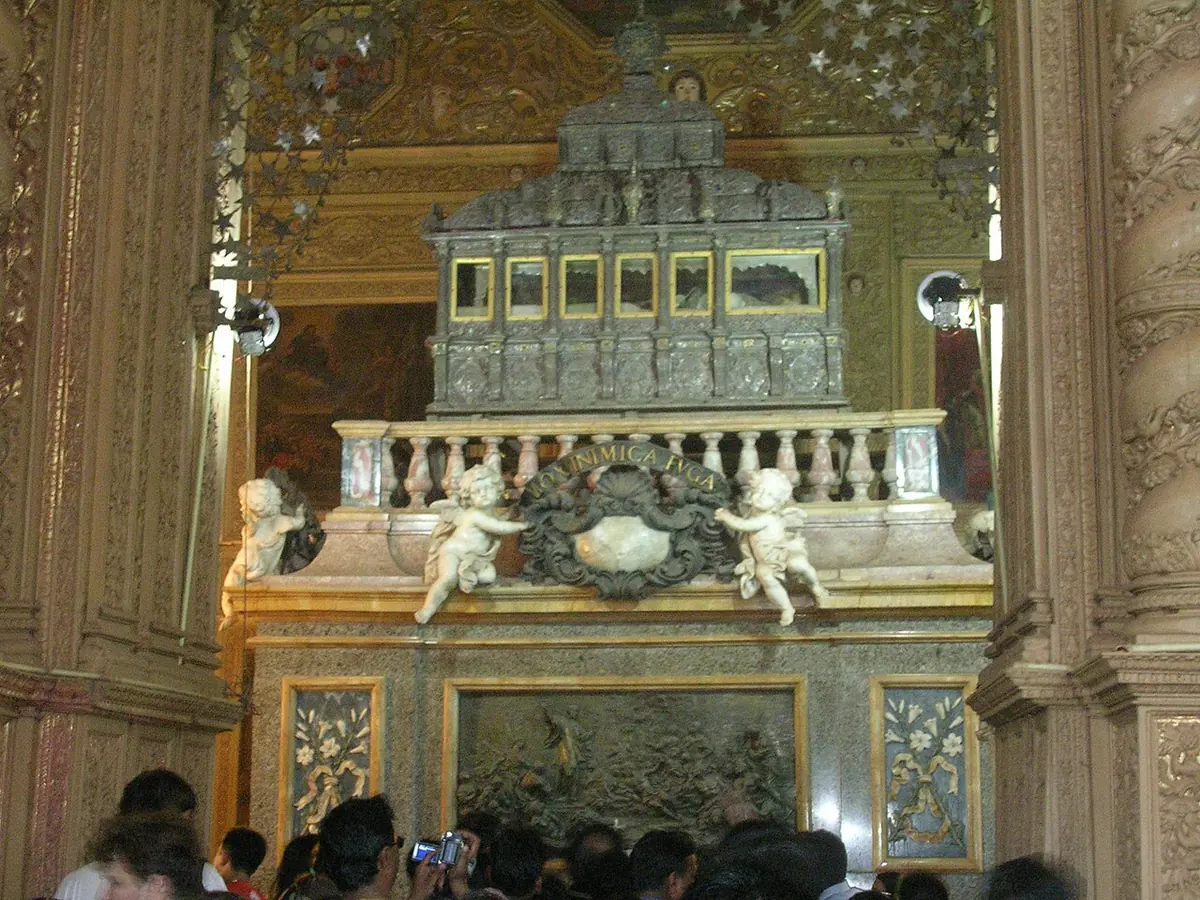
- St. Francis Xavier (died 1552): Basilica of Bom Jesus, Old Goa, India. Shown publicly about once a decade, most recently from November 2024 to January 2025. Reported.
- St. Charbel (died 1898): Monastery of St. Maron, Annaya, Lebanon. Found intact in 1899, 1927 and 1950, giving off a reddish fluid; the postulator of his cause reported that by 1976 only the skeleton remained. Reported.
- St. Teresa of Avila (died 1582): Convent of the Annunciation, Alba de Tormes, Spain. Her nuns found the body intact months after her death; the Catholic Encyclopedia says it "is said to be preserved incorrupt." Reported.
- St. Elizabeth of Portugal (died 1336): Monastery of Santa Clara-a-Nova, Coimbra, Portugal. Witnesses reported the body incorrupt when the tomb was opened in 1612. Reported.
- St. Cecilia (martyred in the 3rd century): Santa Cecilia in Trastevere, Rome. When her tomb was opened in 1599, witnesses reported the body whole, lying on its side; Stefano Maderno's statue shows how she lay. Reported.
- St. Cuthbert (died 687): Durham Cathedral, England. Found "whole, as if he were still alive" in 698, and reported incorrupt again in 1104; only bones were found in 1827. Reported.
- St. Isidore the Farmer (died 1130): Real Colegiata de San Isidro, Madrid. The medieval life says his body was found intact forty years after his death. Traditional.
- St. Angela Merici (died 1540): Sant'Angela Merici, Brescia, Italy. Reported free from corruption in 1672; by 1774 only parts were preserved. Reported.
- St. Pier Giorgio Frassati (died 1925): Cathedral of St. John the Baptist, Turin. Found incorrupt in 1981; it played no part in his cause. Reported.
- Padre Pio (died 1968): San Giovanni Rotondo, Italy. Exhumed in 2008 and found by Church officials in "fair condition"; a silicone mask covers the face. Reported.
- St. Nectarios of Aegina (died 1920): Holy Trinity Monastery, Aegina, Greece. Found whole when his grave was opened, as is the Greek custom, and later returned to bones; the relics were moved in 1953. Reported, in the Orthodox tradition.

Often called incorrupt, but not
Some shrines are mistaken for incorrupt bodies because a lifelike figure lies in the reliquary. Honesty helps here, and so do the shrines' own explanations.
- St. Vincent de Paul: his body was largely intact when it was opened in 1712, but by his canonization in 1737 only the skeleton remained. His bones lie in a silver reliquary in the chapel of the Vincentian motherhouse in Paris, with a wax face and hands.
- St. Pius X: his body lies in a crystal casket in St. Peter's Basilica with the face and hands covered in silver. The Church has made no declaration that it is incorrupt.
- St. John Neumann: his bones are inside a lifelike effigy in Philadelphia, with a face made by a forensic sculptor. The shrine doesn't claim incorruption.
- St. Carlo Acutis: when his tomb in Assisi was opened in 2020, Bishop Domenico Sorrentino corrected reports that he was incorrupt. The body, he said, "was found in the normal state of transformation typical of the cadaveric condition," and the face was given a silicone reconstruction. "But this mortal body," the bishop added, "is destined for resurrection."

Visiting the incorrupt saints
Most of these shrines welcome pilgrims every day. They are churches, not museums: we come to pray, to ask the saint's intercession, and to thank God for the holiness he worked in an ordinary human body. Many people bring a rosary or holy card to touch to the glass.
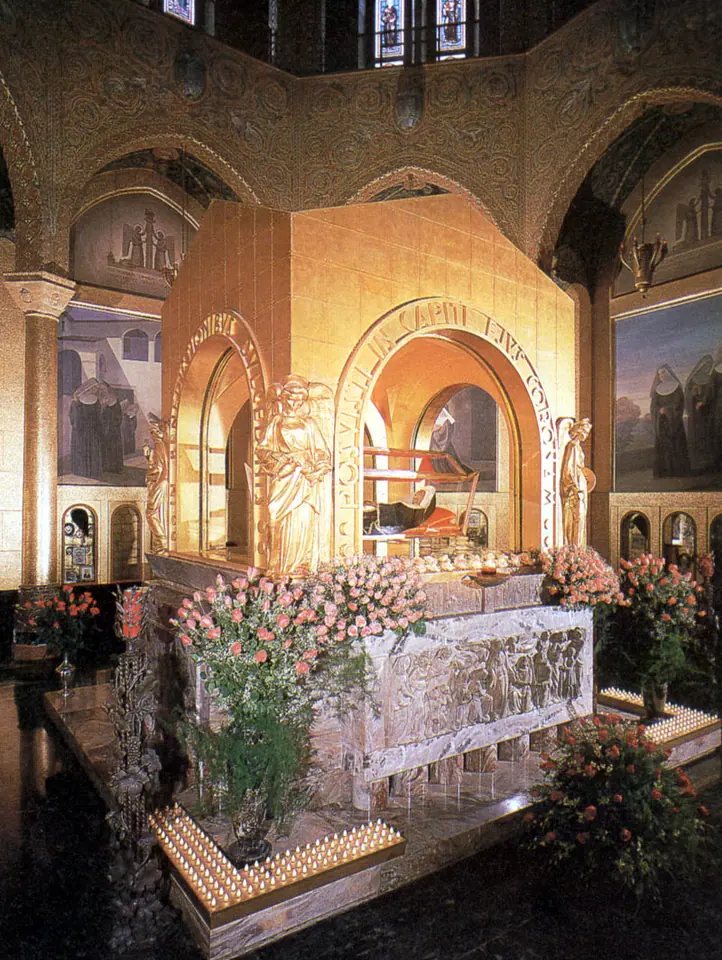
St. Charbel's story is a good lesson to carry along. His body stayed intact for decades and then returned to bone, and the healings asked through his prayers went on all the same. Paul VI canonized him in 1977 for his holiness and the miracles worked through his intercession, not for the state of his body. Let us ask the incorrupt saints to pray for us, that our own bodies, whatever becomes of them in the grave, may share in Christ's resurrection.
For the wider subject of relics, their classes and the Church's rules, see relics and incorruptible saints, and for a single great relic, the Shroud of Turin.
Frequently asked questions
What does incorruptible mean for a saint?
It means the saint's body was found, often decades or centuries after burial, without the normal decay and without having been embalmed, sometimes still flexible. The faithful have long seen this as a sign of God's favor. The Church does not treat it as one of the miracles required for canonization, and it is not a requirement for sainthood.
Which saints are incorruptible?
Well-known examples include St. Bernadette (Nevers), St. Catherine Labouré (Paris), St. John Vianney (Ars), St. Rita (Cascia), St. Zita (Lucca), St. Catherine of Bologna (Bologna), St. Margaret of Cortona (Cortona), St. Francis Xavier (Goa) and St. Charbel (Annaya, though by 1976 only the skeleton remained). The list on this page gives each one's location and status.
Are incorrupt saints covered in wax?
Some are. St. Bernadette's face and hands were covered with thin wax coverings in 1925, St. John Vianney and St. Catherine Labouré wear wax masks, and Padre Pio has a silicone mask. The masks spare pilgrims the sight of darkened skin; the shrines say so openly. The body underneath is real.
Is incorruption proof that someone is a saint?
No. Many great saints decayed normally, and natural conditions such as a dry, cool or sealed tomb can preserve a body. The Church canonizes a person for heroic virtue and for miracles worked through his or her intercession, examined one by one.
Is Carlo Acutis incorrupt?
No. When his tomb was opened in 2020, Bishop Domenico Sorrentino of Assisi said the body, though intact, "was found in the normal state of transformation typical of the cadaveric condition." His face was given a silicone reconstruction for public veneration.
Sources
- Congregation for the Causes of Saints: Instruction, Relics in the Church: Authenticity and Preservation (2017)
- Sisters of Charity of Nevers: Son corps (Bernadette's body)
- Monastery of Saint Rita of Cascia: Basilica of Saint Rita
- Sanctuary of Ars: Timeline
- Paul VI, Homily for the canonization of Charbel Makhlouf, October 9, 1977 (French)
- Catholic World Report (CNA): Carlo Acutis raises question: What does it mean if a saint's body is 'incorrupt'? (2020)
- NBC News: Exhumed body of Italian saint draws thousands (2008)
- Congregation of the Mission: The translation of the relics of Saint Vincent de Paul