St. Alphonsus Liguori
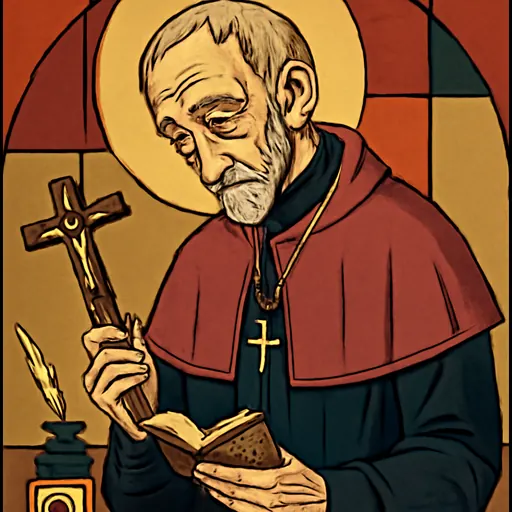
St. Alphonsus Liguori (1696–1787) was a brilliant Naples lawyer who became a priest, founded the Redemptorists in 1732 and served as bishop of Sant'Agata dei Goti. His Moral Theology, The Glories of Mary and Visits to the Blessed Sacrament made him one of the most widely read Catholic writers, and he was declared a Doctor of the Church in 1871. His feast day is August 1.
Who was St. Alphonsus Liguori?
Alphonsus Liguori was born near Naples in 1696 to an old noble family. His father was a captain of the royal galleys. He became a lawyer, then a priest, then the founder of the Redemptorists, a bishop and, late in life, one of the most widely read spiritual writers in Catholic history. He died in 1787, two months short of his ninety-first birthday.
Benedict XVI called him "an outstanding moral theologian and a teacher of spiritual life for all, especially simple people." Most of the facts below come from the Catholic Encyclopedia, which drew on the life written by his companion Antonio Tannoia, and from Benedict's audience of 2011.
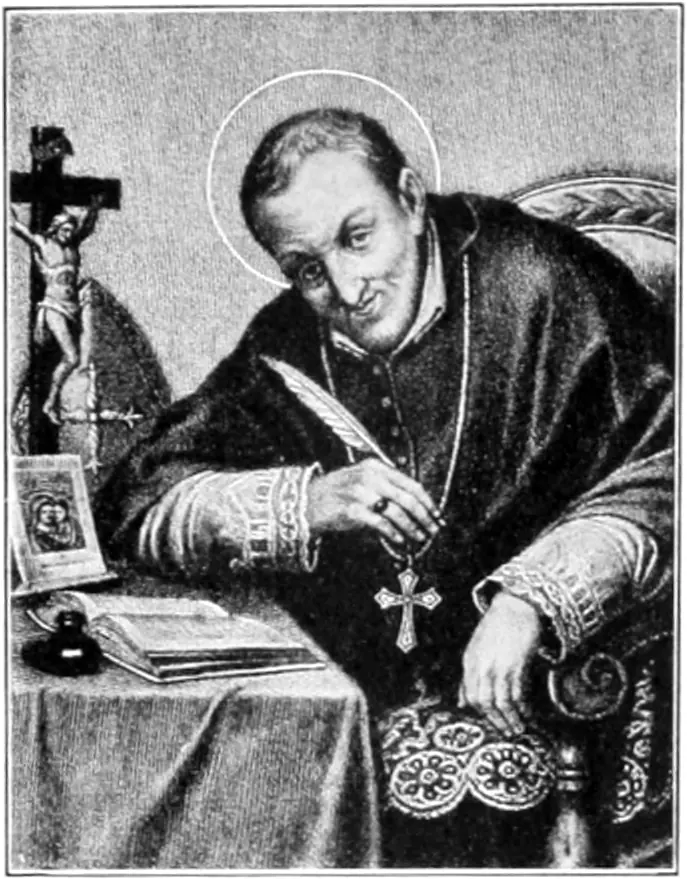

The life of St. Alphonsus Liguori
The lawyer who lost a case
Alphonsus was a prodigy. At sixteen, on January 21, 1713, he took his doctorate in civil and canon law, and he said later that he was so small that the spectators laughed at him buried in his gown. Benedict XVI says he won every case he defended for eight years.
In 1723 he argued a lawsuit over property worth 500,000 ducats. After his opening speech, opposing counsel pointed out a document he had misread all along. He conceded on the spot and left the court saying, "World, I know you now. Courts, you shall never see me more." For three days he would not eat.
"Leave the world"
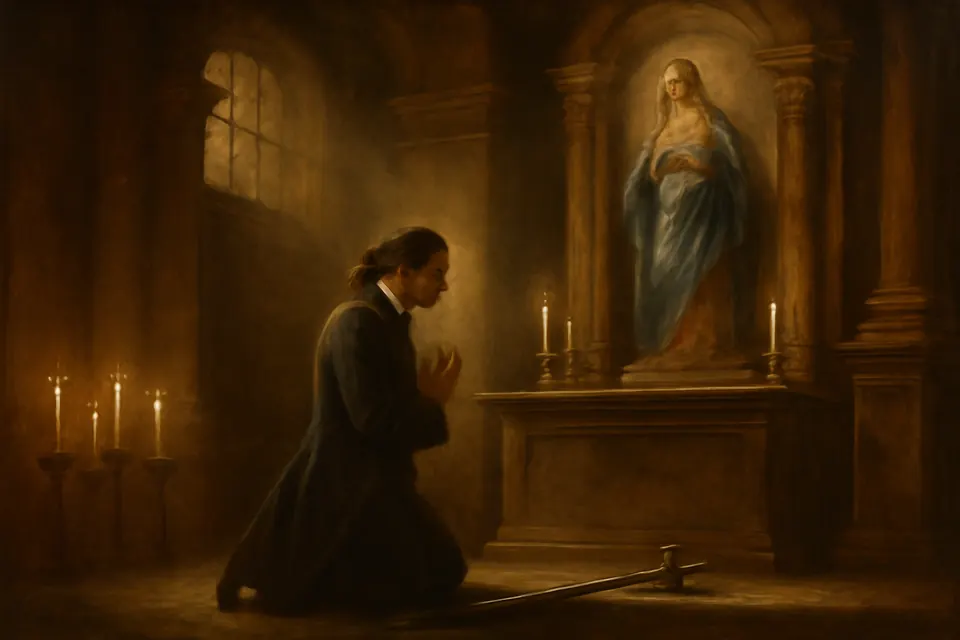
On August 28, 1723, while visiting the sick at the Hospital for Incurables in Naples, he heard an inner voice say, "Leave the world and give thyself to Me." He went to the church of the Redemption of Captives and laid his sword before the statue of Our Lady. His father fought the decision for two months. Alphonsus was ordained a priest on December 21, 1726, at thirty.
Founder of the Redemptorists
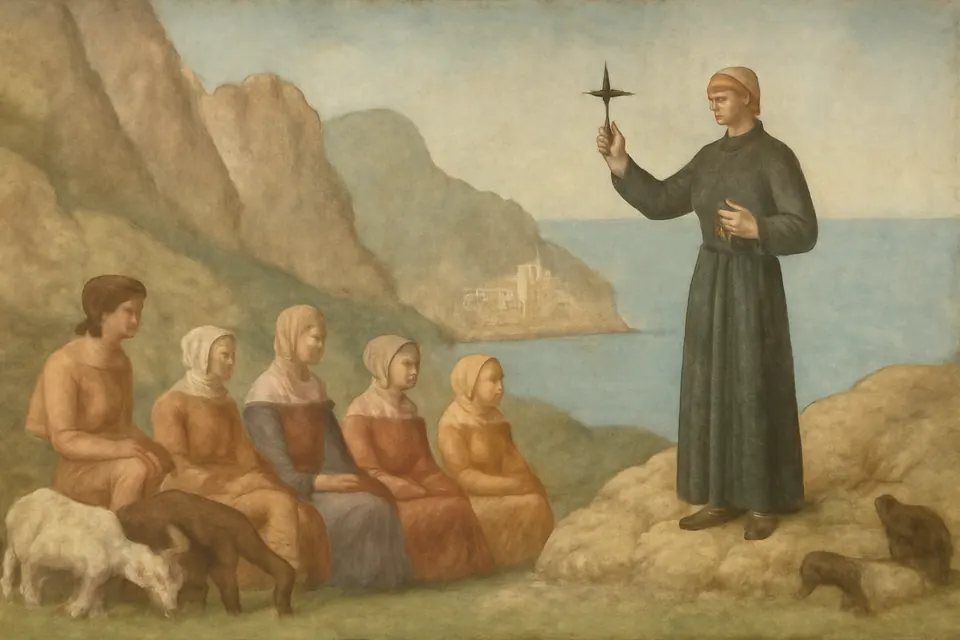
As a young priest he preached to the poorest people of Naples and organized the "evening chapels," small groups that met in homes and workshops to pray. In 1730, resting in the mountains above Amalfi, he preached to the goatherds and was shaken by how little they knew of the faith. On November 9, 1732, at Scala, he founded the Congregation of the Most Holy Redeemer to give missions in such places. Benedict XIV approved its rule in 1749. Among its early members was St. Gerard Majella.
Bishop, then an old man in disgrace
In 1762 he was made bishop of Sant'Agata dei Goti, a small diocese near Capua. During the famine of 1764 he fed the poor and saved the life of a town official by offering his own to the mob. Crippled by illness, he was allowed to resign in 1775.
His last years were hard. In 1780, nearly blind and deaf, he signed a revised rule for his congregation, the Regolamento, which allies had altered so badly that it dropped the religious vows. The congregation split, and, in the words of the Catholic Encyclopedia, he fell "into disgrace with the pope" and found himself "deprived of all external authority." He also passed through a long night of scruples and temptations before he died peacefully on August 1, 1787, as the midday Angelus rang.
Miracles and wonders of St. Alphonsus
- A ray of light from a picture of Our Lady during his sermons: reported. The Catholic Encyclopedia says this happened three times while he preached, and that in old age he was "more than once raised in the air when speaking of God."
- Presence at the deathbed of Clement XIV (1774): reported. The same source says he fell into a trance at Arienzo on September 21, 1774, and was present in spirit when the Pope died in Rome.
- Healings at his intercession: reported in his lifetime, according to the Catholic Encyclopedia. The miracles formally examined for his beatification (1816) and canonization (1839) are not described in the sources used here.
Why St. Alphonsus is the patron of confessors
Rigorism, shaped by Jansenism, was strong in the Naples of his youth. As a confessor he saw how much harm it did and moved toward a milder path, which he worked out in his Moral Theology (first volume 1753), as the Catholic Encyclopedia explains. His system, called Equiprobabilism, allowed freedom from a doubtful law only when the opinions for and against it were about equal. Benedict XVI says Pius XII proclaimed him "Patron of all confessors and moral theologians," and that he wanted confessors to be faithful to doctrine and "charitable, understanding and gentle."
Symbols of St. Alphonsus in art
Alphonsus is almost always shown old, as people knew him:
- Bishop's miter, crozier and mozzetta: for his years at Sant'Agata.
- A bent head: rheumatic fever in 1768 and 1769 left his neck so bent that his chin pressed into his chest, and portraits keep that posture.
- A pen and book: for the writer and Doctor.
- A monstrance or the Blessed Sacrament: for the Visits.
- A picture of the Virgin Mary: for The Glories of Mary.
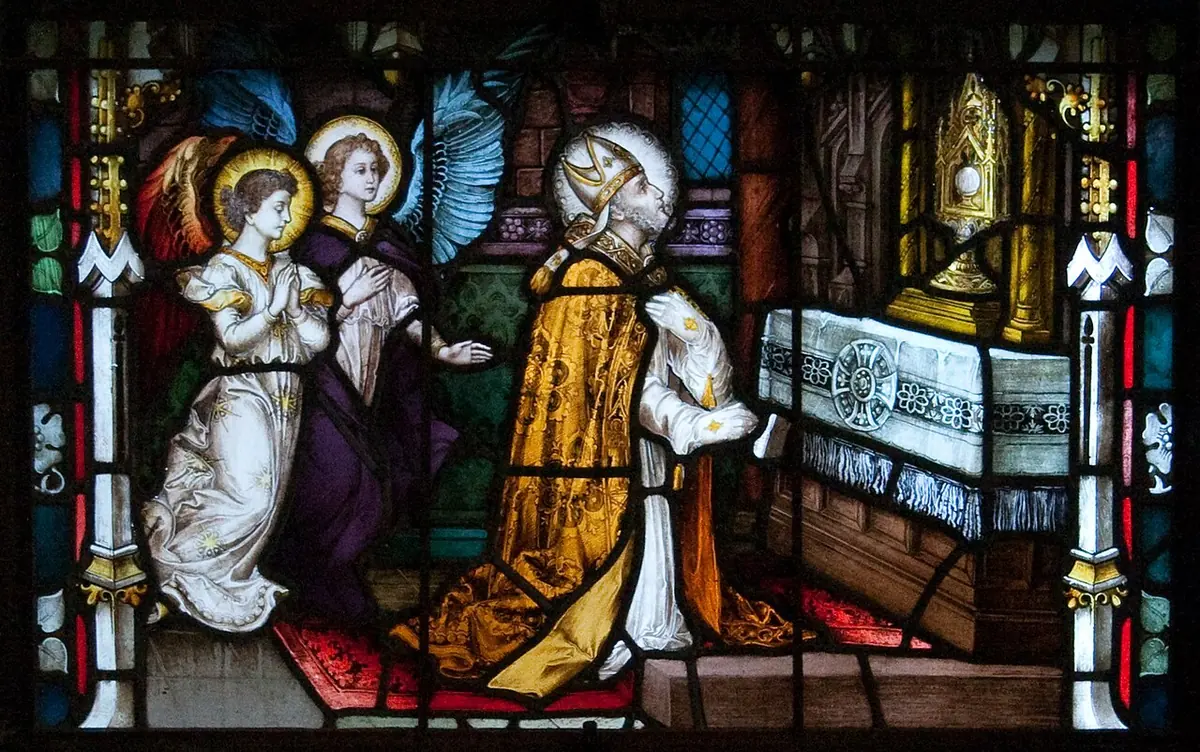

Visits to the Blessed Sacrament and other writings
His first book, a little volume of Visits to the Blessed Sacrament, appeared in 1744 or 1745, when he was nearly fifty. It gives a short visit for each day of the month. Benedict XVI quoted its introduction: "amongst all devotions, after that of receiving the sacraments, that of adoring Jesus in the Blessed Sacrament takes the first place." The Glories of Mary, The Practice of the Love of Jesus Christ and The Great Means of Prayer, with its axiom "He who prays is saved," followed. He also wrote the words and music of Tu scendi dalle stelle, which Benedict XVI called one of the most popular Christmas carols in Italy.


Feast day and the basilica at Pagani
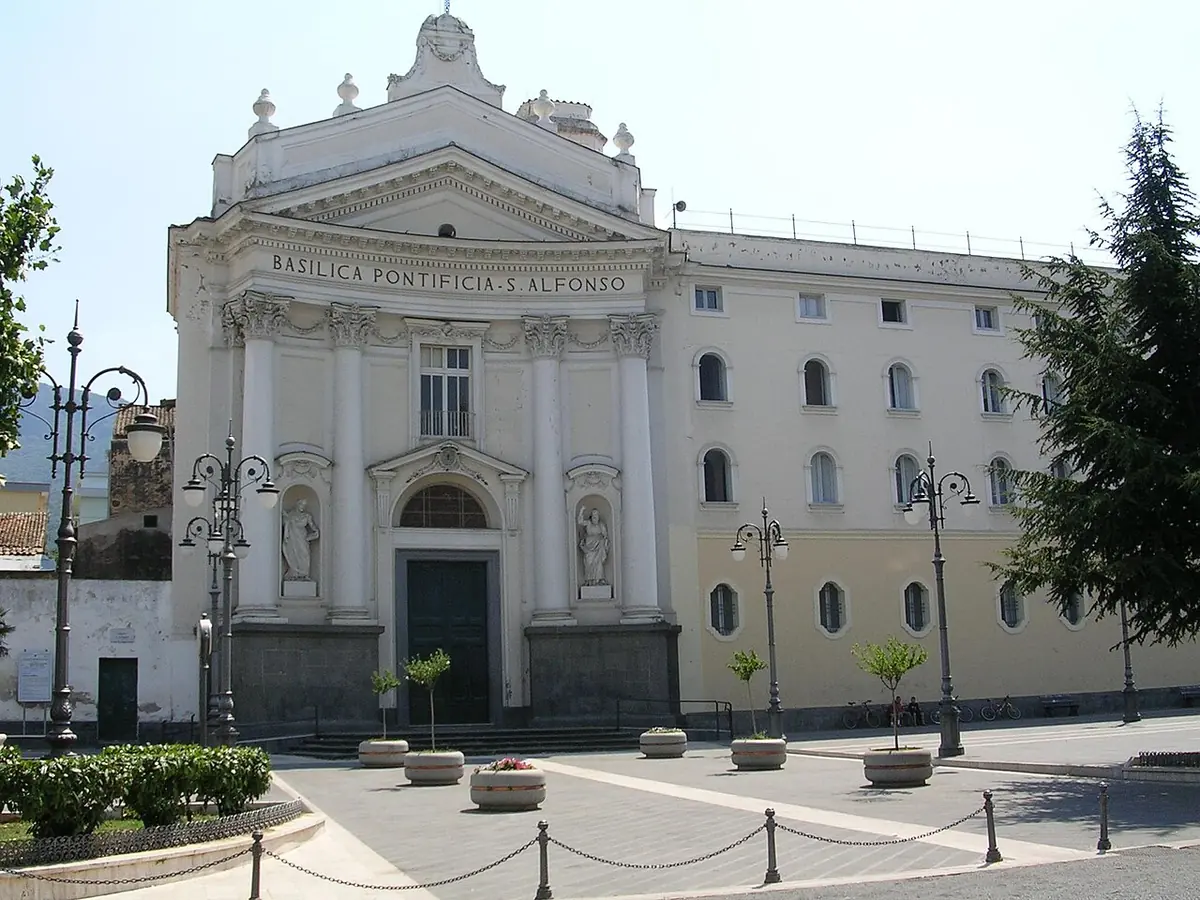
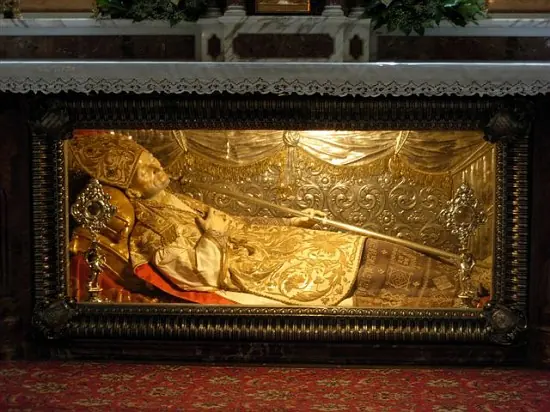
His feast is August 1 (see our feast days page). He was declared Venerable in 1796, beatified in 1816, canonized in 1839 and named a Doctor of the Church by Pius IX in 1871. His relics rest in the basilica at Pagani, beside the house where he died.

Prayer of St. Alphonsus: the act of spiritual communion
This prayer is his own, from the Visits to the Most Holy Sacrament, in the English translation published by the Catholic Publication Society in New York in 1870:
My Jesus, I believe that thou art present in the most holy sacrament. I love thee above all things: I desire to receive thee into my soul. Since I cannot now receive thee sacramentally, come at least spiritually into my heart. I embrace thee, and I unite myself entirely to thee, as if thou hadst already come: do not permit me to be ever separated from thee.
Catholics say it during Eucharistic adoration and whenever they cannot receive Communion.

Frequently asked questions
What is St. Alphonsus Liguori the patron saint of?
Confessors and moral theologians. Pope Pius XII named him "Patron of all confessors and moral theologians," as Benedict XVI recalled in his general audience of March 30, 2011, because his Moral Theology taught priests to hear confessions with both fidelity and gentleness.
What is St. Alphonsus Liguori known for?
Founding the Congregation of the Most Holy Redeemer (the Redemptorists) in 1732, writing the Moral Theology, The Glories of Mary and Visits to the Blessed Sacrament, and composing the Italian Christmas carol Tu scendi dalle stelle. He was canonized in 1839 and declared a Doctor of the Church in 1871.
What is St. Alphonsus's prayer of spiritual communion?
It comes from his Visits to the Most Holy Sacrament. In the 1870 New York edition it begins, "My Jesus, I believe that thou art present in the most holy sacrament. I love thee above all things." The full text is in the prayer section below.
When is the feast of St. Alphonsus Liguori?
August 1, the day he died in 1787. It is an obligatory memorial on the General Roman Calendar.
Sources
- Catholic Encyclopedia (1907): St. Alphonsus Liguori
- Benedict XVI, General Audience of 30 March 2011: Saint Alphonsus Liguori (vatican.va)
- Catholic Encyclopedia (1911): Redemptorists
- St. Alphonsus Liguori, Visits to the Most Holy Sacrament, etc., for Every Day in the Month (New York: Catholic Publication Society, 1870), Internet Archive
- Basilica di Sant'Alfonso Maria de' Liguori (Italian Wikipedia, location)