St. Anthony of Padua
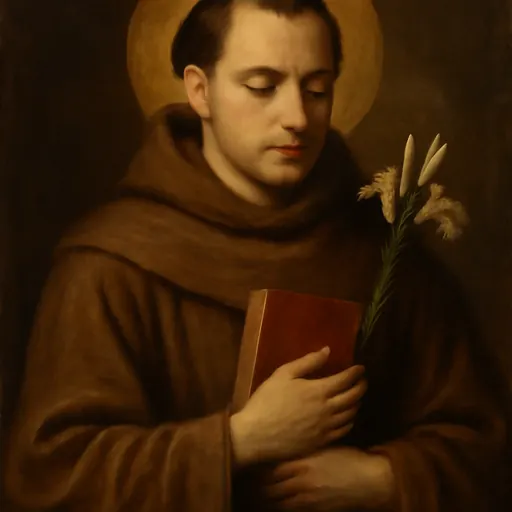
St. Anthony of Padua (1195–1231) was a Portuguese Franciscan friar and preacher, born in Lisbon, who spent his last years in Padua, Italy. He was canonized less than a year after his death and is a Doctor of the Church. Catholics pray to him above all to find lost things, and his feast day is June 13.
Who was St. Anthony of Padua?
St. Anthony of Padua was a Franciscan friar, preacher and teacher who lived only thirty-six years. He was born in Lisbon in 1195 and baptized Fernando, spent ten years as an Augustinian canon in Portugal, joined the new order of St. Francis in 1220, and died near Padua in northern Italy on June 13, 1231. Pope Gregory IX, who had heard him preach, canonized him less than a year later.
Portuguese Catholics still call him Santo António de Lisboa, after the city of his birth. The rest of the world knows him by the city where he died and where his tomb draws pilgrims every day of the year. In Padua he is simply il Santo, "the Saint," and his basilica is the Santo.


In his lifetime he was famous as a preacher who could fill a city square and as one of the first theology teachers of the Franciscan order. Today most people know him as the saint to call on when the car keys go missing. Pope Pius XII declared him a Doctor of the Church in 1946 with the title Doctor Evangelicus, the "Evangelical Doctor."
Don't confuse him with St. Anthony the Great, the Egyptian hermit of the 4th century who is called the father of monks. They are different men who lived nine centuries apart.
The life of St. Anthony
The earliest account of his life is the Assidua, written by an anonymous Franciscan for his canonization in 1232. Later lives added many stories, and the Catholic Encyclopedia warns that his fame as a wonder-worker has "to a certain extent obscured his personality." The outline below follows the early sources.
Fernando of Lisbon
Fernando grew up near Lisbon Cathedral, where he went to school. The Catholic Encyclopedia says his parents were noble and devout; the later claim that his father descended from the crusader Godfrey of Bouillon is not reliable. At fifteen, in 1210, he joined the Canons Regular of St. Augustine at the monastery of São Vicente outside the city walls.
To escape the visits of friends and relatives, in 1212 he moved to the canons' house of Santa Cruz in Coimbra, then the leading center of learning in Portugal. He stayed eight years. Benedict XVI, in a 2010 catechesis, says he studied the Bible and the Church Fathers there.
The martyrs of Morocco
In 1220, the bodies of five Franciscan friars who had been killed for preaching in Morocco were brought to Santa Cruz. Fernando was deeply moved. He wanted to preach to the Muslims of North Africa and, if God willed it, to die as they had. He asked the friars of the small house at Olivais, near Coimbra, to receive him, and he put on their gray habit.
He also took a new name, Anthony. A common explanation is that the friars' chapel at Olivais was dedicated to St. Anthony the Great. The Catholic Encyclopedia says the reverse: the friary later took its name from him.
He sailed for Morocco but fell seriously ill and spent the winter in bed. In the spring of 1221 he set out to return to Portugal. A storm drove his ship to Sicily instead.
Hidden at Montepaolo
From Sicily he went to the general chapter of the Franciscans at Assisi in May 1221, the famous "Chapter of Mats," where he saw St. Francis. No one there knew who he was. The Assidua says he "said not a word of his studies." A superior from northern Italy took him to the hermitage of Montepaolo, near Forlì, to say Mass for the lay brothers, and there he lived for about a year in prayer and penance.
The sermon at Forlì
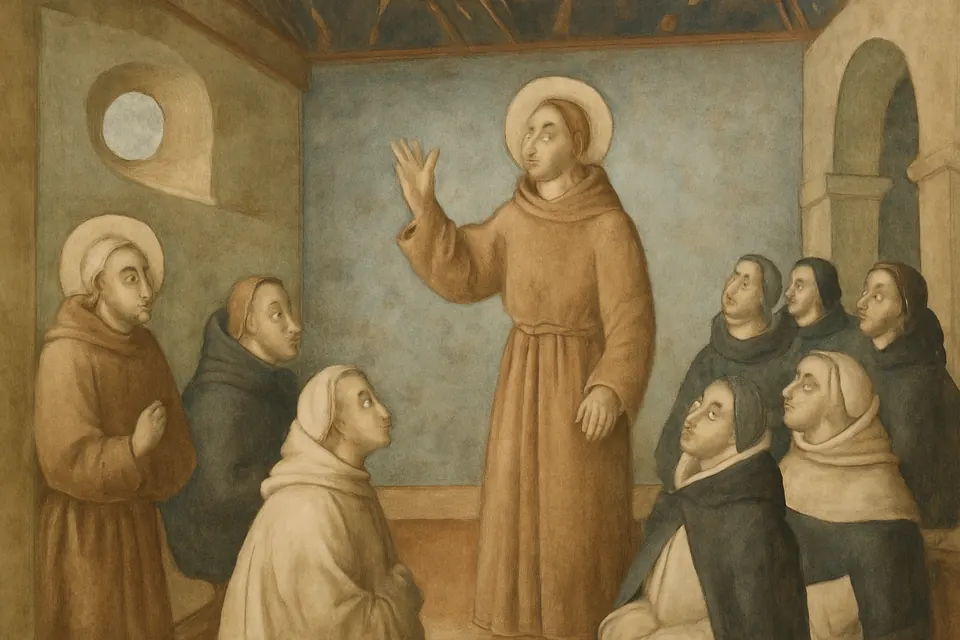
Then came an ordination at Forlì, attended by Franciscan and Dominican friars. When the time came for the sermon, no one had been chosen to give it. Each of the Dominicans declined, and the superior finally told Anthony, whom everyone took for a simple friar, to say whatever the Holy Spirit gave him. He began slowly. Before long, the Catholic Encyclopedia says, he was explaining the hidden meanings of Scripture with such learning that all were "struck with astonishment." His public life began that day.
Teacher and preacher
Around 1224, Francis wrote him a short letter that survives:
To Brother Anthony, my bishop, Brother Francis sends his greetings. It is my pleasure that thou teach theology to the brethren, provided, however, that as the Rule prescribes, the spirit of prayer and devotion may not be extinguished. Farewell.
"Bishop" here means teacher. Anthony taught at Bologna, then in southern France at Montpellier and Toulouse, and served the friars as guardian at Le Puy and as custos in the Limousin. He preached against the Cathars, the dualist movement then strong in southern France and northern Italy, and was remembered as the "Hammer of Heretics." He also preached against the sins of the powerful. The Catholic Encyclopedia reports that at a synod in Bourges he rebuked the archbishop to his face.
After Francis died in 1226, Anthony returned to Italy and served as minister provincial of the friars in northern Italy. In 1230 he resigned that office to give his time to preaching and settled at Padua.
The last Lent in Padua
His Lenten sermons in Padua in 1231 drew crowds the Catholic Encyclopedia estimates at 30,000 and more, too many for any church, so he preached in the open fields. Enemies were reconciled, thieves made restitution, and so many people came to confession that the priests of Padua could not hear them all. On March 15, 1231, at his urging, the city council passed a law that spared debtors who could not pay from prison if they gave up their goods. He also wrote. His Sunday Sermons and Sermons for the Feasts of Saints were meant as material for other preachers. Benedict XVI notes that they read Scripture in its literal, allegorical, moral and heavenly senses, and quotes a line from them: "Charity is the soul of faith, it gives it life; without love, faith dies."
Death at Arcella
After Easter he withdrew to Camposampiero, a few miles north of Padua, where a friend, Count Tiso, gave the friars a wooded property. Tradition says Anthony had a little cell built in the branches of a walnut tree. In June he fell gravely ill. The friars set out to carry him back to Padua in an ox cart, but he could go no farther than the Poor Clares' convent at Arcella, on the edge of the city. There, the Assidua says, he sang a hymn to Our Lady, looked up and said, "I see my Lord." He died that evening, Friday, June 13, 1231.
Children ran through the streets crying, "The holy Father is dead! St. Anthony is dead!" Padua and Arcella quarreled over his body, and he was buried in the friars' church of Santa Maria Mater Domini on Tuesday, June 17.
The miracles of St. Anthony
Few saints have more miracle stories than Anthony. They fall into three groups.
Approved. Gregory IX canonized Anthony on Pentecost Sunday, May 30, 1232, in the cathedral of Spoleto, after miracles reported at his tomb had been examined. The canonization came less than a year after his death, one of the fastest in the Church's history. Benedict XVI says it followed "miracles attributed to his intercession."
Reported. When his tomb was opened in 1263, the friars found his body reduced to bones and dust, but the tongue still soft and red. St. Bonaventure, then minister general of the Franciscans, took it in his hands and, according to the Catholic Encyclopedia, said, "O Blessed Tongue that always praised the Lord, and made others bless Him, now it is evident what great merit thou hast before God." Countless favors attributed to his prayers, above all lost things found, are also reported by devotees today. These are personal testimonies, not cases the Church has examined.
Traditional. The famous stories below come from later lives and collections, written from a few decades to more than a century after his death.
The sermon to the fish
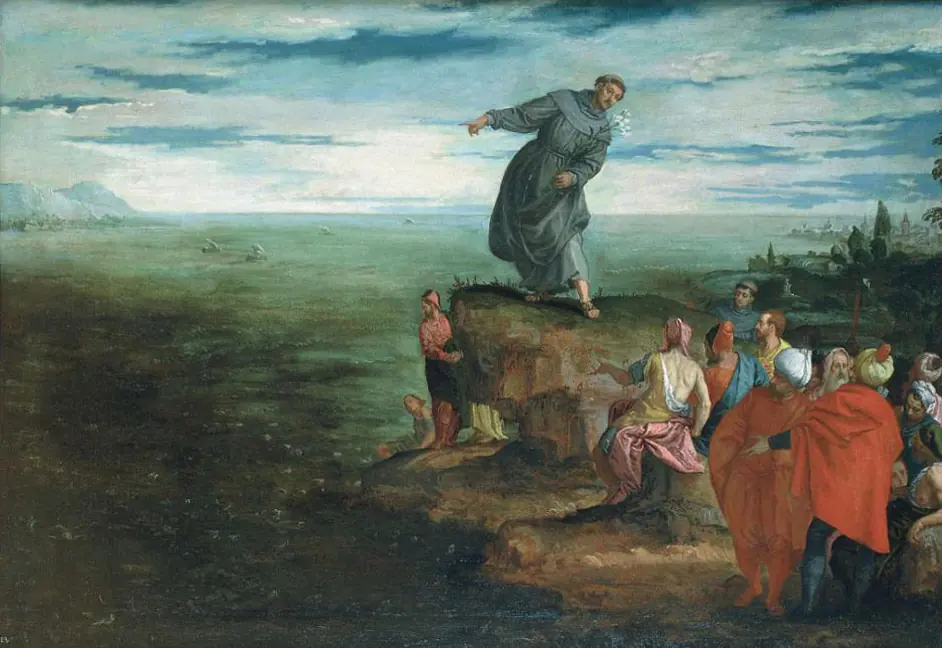
The Little Flowers of St. Francis, a 14th-century collection, tells how the heretics of Rimini refused to listen to Anthony. He went down to where the river runs into the sea and called out, "Listen to the word of God, O ye fishes of the sea and of the river, seeing that the faithless heretics refuse to do so." A great crowd of fish gathered "in perfect order," the small ones near the bank and the largest in deeper water, with their heads out of the water. He reminded them that God had saved them from the Flood and given them Jonah to carry, and they bowed their heads. When the townspeople came to see, the heretics were converted. The Catholic Encyclopedia places the event on the Brenta River near Padua instead.

The mule that knelt
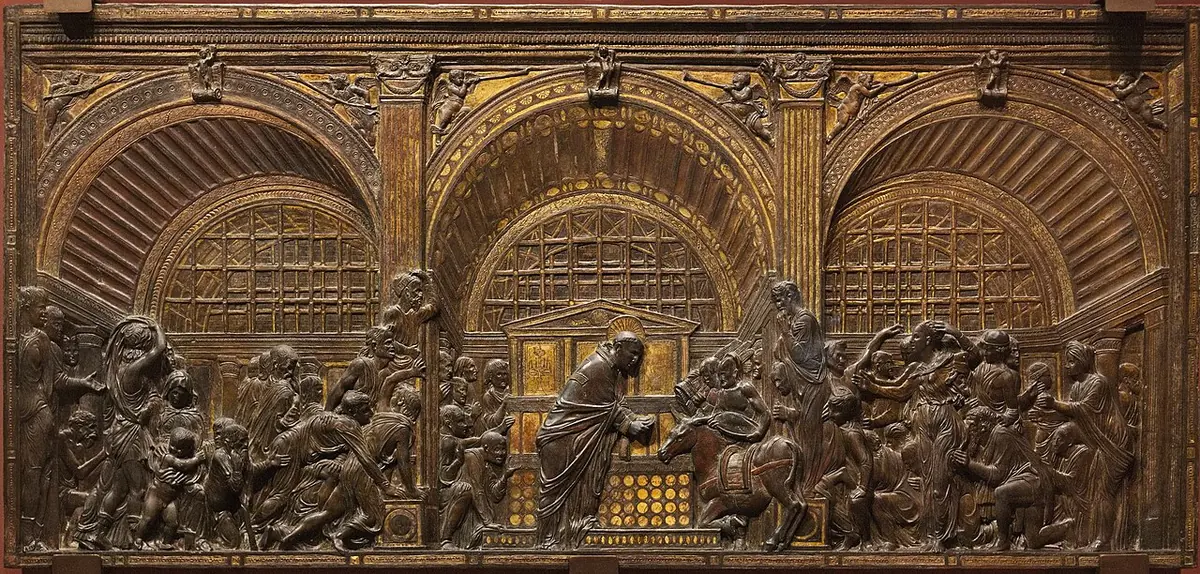
A man who denied that Christ is present in the Eucharist challenged Anthony. He would keep his mule without food for three days, then set oats before it while Anthony held up the consecrated Host. The hungry animal ignored the oats and knelt before the Sacrament, and its owner believed. The Catholic Encyclopedia places the story at Rimini; later versions move it to Toulouse or Bourges. Donatello cast it in bronze for the high altar of Anthony's basilica in the 1440s.

The newborn who spoke
A jealous husband accused his wife of adultery and refused to accept their newborn son. Anthony asked the baby who his father was, and the infant pointed to the husband and named him. Titian painted the scene in 1511 for the Scuola del Santo, the confraternity hall beside the basilica in Padua, in a series that also shows Anthony healing a young man's leg.


Other stories
- The young man's foot: Leonardo of Padua confessed that he had kicked his mother. Anthony said that such a foot deserved to be cut off, and the young man went home and did it. Anthony rejoined the foot.
- In two places at once: at Limoges on Holy Thursday, Anthony was preaching in a church when he remembered he was to sing a lesson in the friars' choir. He was seen in the choir singing it while still standing in the pulpit.
- The murdered man: a man was killed and his body left in a garden, and an innocent man was accused of the crime. In the best-known version, set in Lisbon, the accused was Anthony's own father. Anthony raised the dead man long enough to say who was innocent. Goya painted this miracle on the dome of San Antonio de la Florida in Madrid in 1798.
The Christ Child
The story behind his best-known image says that Count Tiso, looking through a door at night, saw a radiant child in Anthony's arms. Anthony asked him to tell no one until he had died. The Catholic Encyclopedia notes that Italian writers place the vision at Camposampiero, French writers at the castle of Châteauneuf-la-Forêt in the Limousin, and that "the existing documents ... do not decide the question."
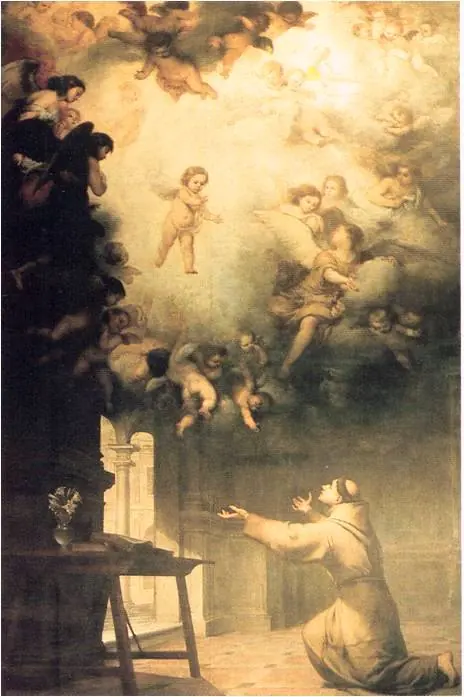

Why St. Anthony is the patron saint of lost things
The story goes back to a book. Anthony had a psalter, a handwritten book of psalms with his notes for teaching the friars, at a time when every book was copied by hand and a scholar might own only a few. Franciscan tradition says a novice who had grown tired of religious life ran away with it. Anthony prayed for its return. The novice came back, gave him the book and returned to the order. The story is traditional.
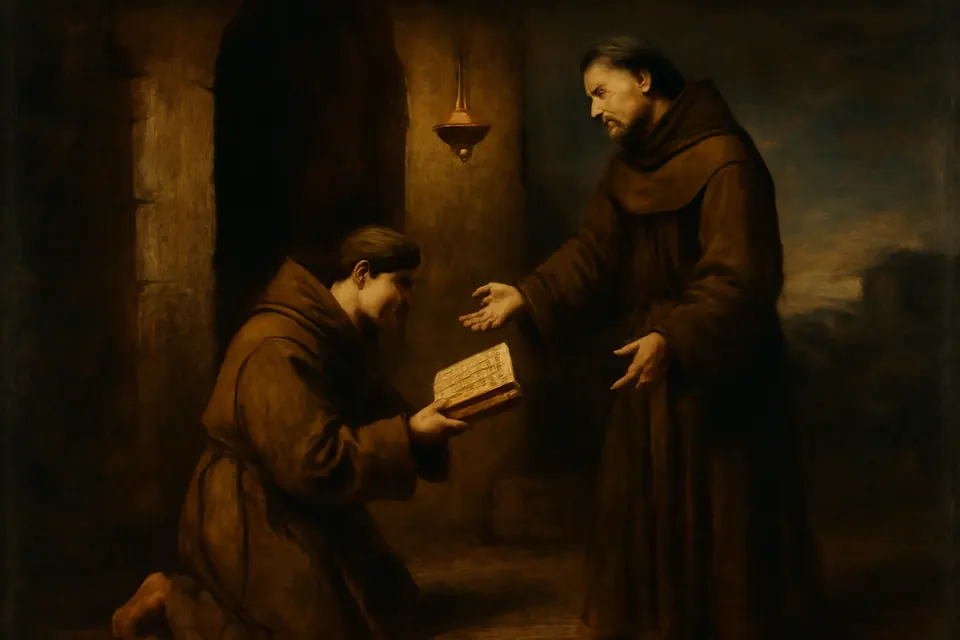
Asking his help for lost things began early. The Si quaeris miracula, written by Julian of Speyer for Anthony's liturgical Office within a few years of his death, already says that through him "limbs and lost things" (membra resque perditas) are restored. For centuries people have prayed the responsory when something is lost.
His other patronages:
- The poor: from his preaching against greed and his care for debtors, and from the custom of St. Anthony's Bread.
- Travelers and those at sea: the Si quaeris says "the sea obeys," and he himself was shipwrecked on his way home from Africa.
- Portugal, Lisbon and Padua: the land of his birth and the city of his death.
- Finding a spouse: in Portugal, Brazil and Spain, young women have long asked him for a good husband. In Brazil, Valentine's Day (Dia dos Namorados) falls on June 12, the eve of his feast.
See the full list of patron saints.
Symbols of St. Anthony in art
Anthony is nearly always shown as a young, beardless friar with a tonsure, in the brown or gray habit of the Franciscans tied with a knotted cord. Look for:
- The Christ Child: his most common sign since the 17th century, from the vision told above. The child often sits on a book Anthony holds.
- A lily: purity. Benedict XVI mentions the lily and the Christ Child as the two ways he is usually painted.
- A book: Scripture and his learning as a teacher and Doctor of the Church.
- Bread: St. Anthony's Bread and his care for the poor.
- Fish or a kneeling mule: his two most famous miracles. A small mule kneeling before a friar holding a monstrance is always Anthony.
Spanish painters, from El Greco to Murillo, almost always gave him the Christ Child.
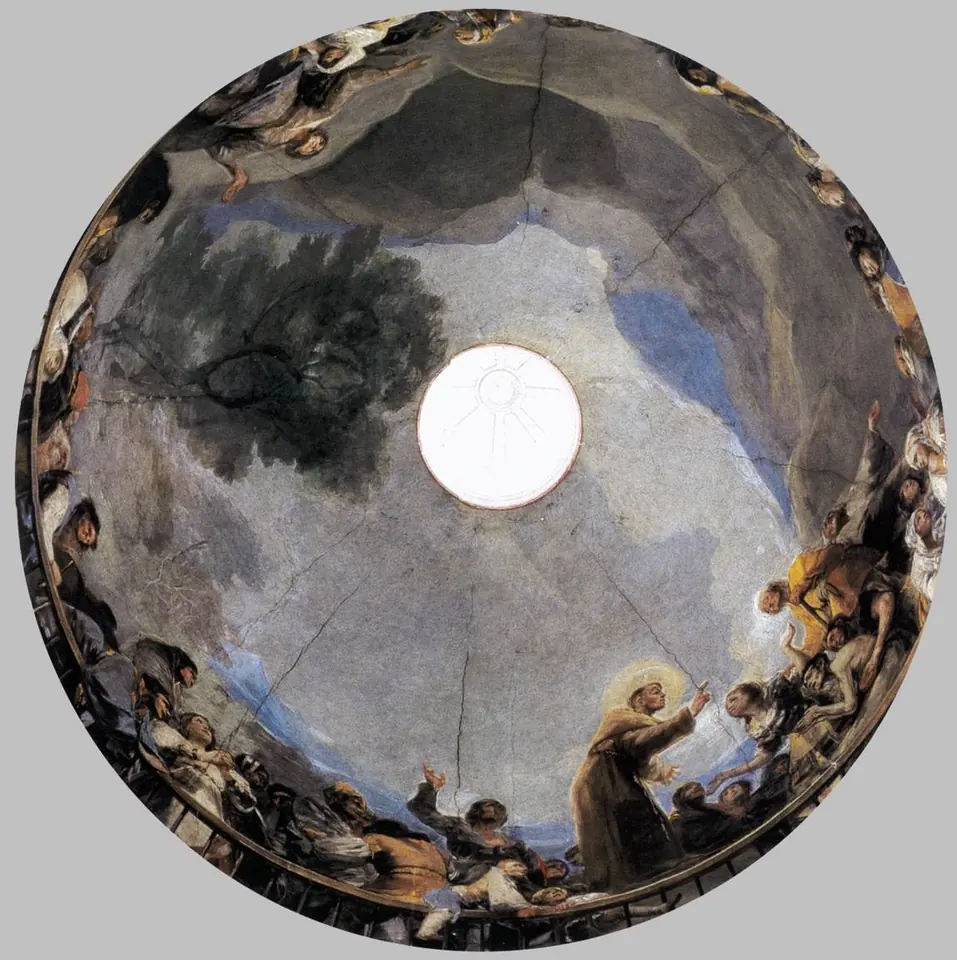

He can be confused with other Franciscans. St. Francis is bearded and shows the stigmata. St. Bonaventure usually wears a cardinal's hat. St. Anthony the Great is an old bearded hermit with a T-shaped staff, a bell and a pig.
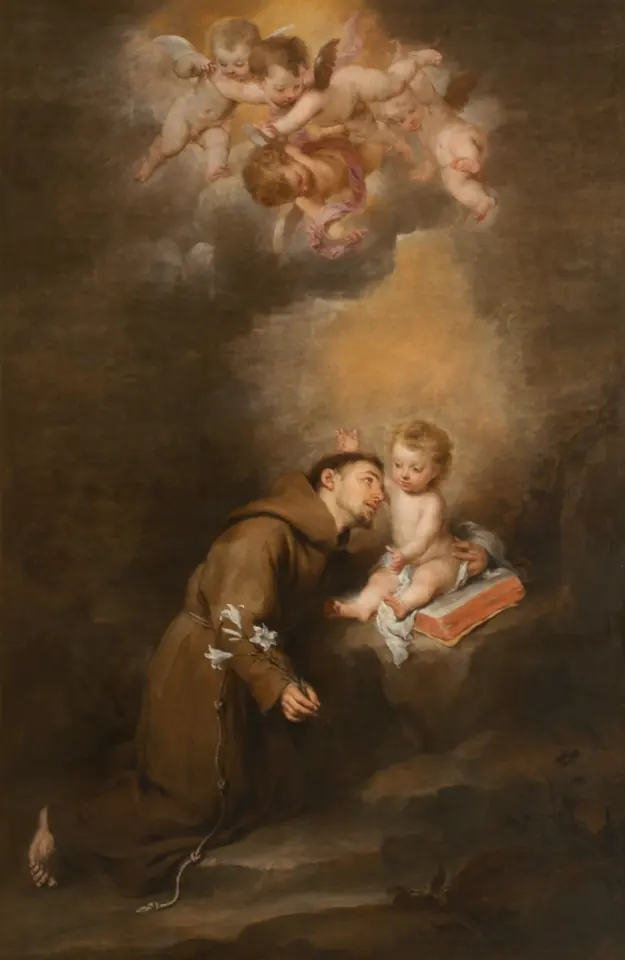

The St. Anthony medal, sold in every Catholic shop, shows the same image in miniature: the friar holding the Christ Child, sometimes with a lily, and often with "St. Anthony, pray for us" around the edge. Like any medal, it is a sign of devotion, not a charm.

Feast day, customs and where St. Anthony is honored
The Church celebrates St. Anthony on June 13, the day of his death, as an obligatory memorial in the General Roman Calendar. See the feast day calendar.
Thirteen Tuesdays
Many Catholics prepare for the feast by praying to St. Anthony on the thirteen Tuesdays before it, or on any thirteen Tuesdays in a row for a special intention. The tie to Tuesday is his funeral, which was held on Tuesday, June 17, 1231, when many miracles were reported at his grave. The Basilica in Padua still keeps every Tuesday as his day, with the Si quaeris sung.
St. Anthony's Bread
The custom of giving bread to the poor in his honor has two stories behind it. The older, told in the chronicles, says a child drowned in Padua while the basilica was being built, and his mother promised the poor his weight in grain if Anthony would restore him; the child lived. The name comes from Toulon, France. In the 1890s a shopkeeper named Louise Bouffier could not open the stuck lock of her shop, even with a locksmith's help. She promised bread for the poor if St. Anthony would let the door open without breaking it. The locksmith tried again, and the door opened at once. Her friends began making the same promise, and "St. Anthony's Bread" became an organized charity. Accounts differ on the year and on whether her shop sold linen or bread.
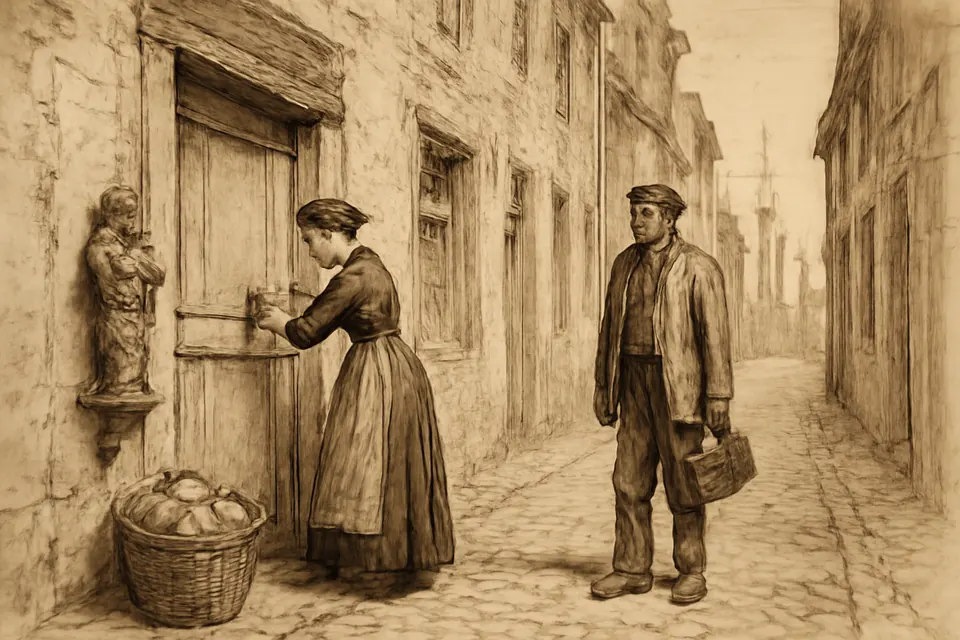
Many churches have a box marked "St. Anthony's Bread" for alms for the poor, and on June 13 parishes often bless small loaves in his honor.
The Basilica of St. Anthony in Padua
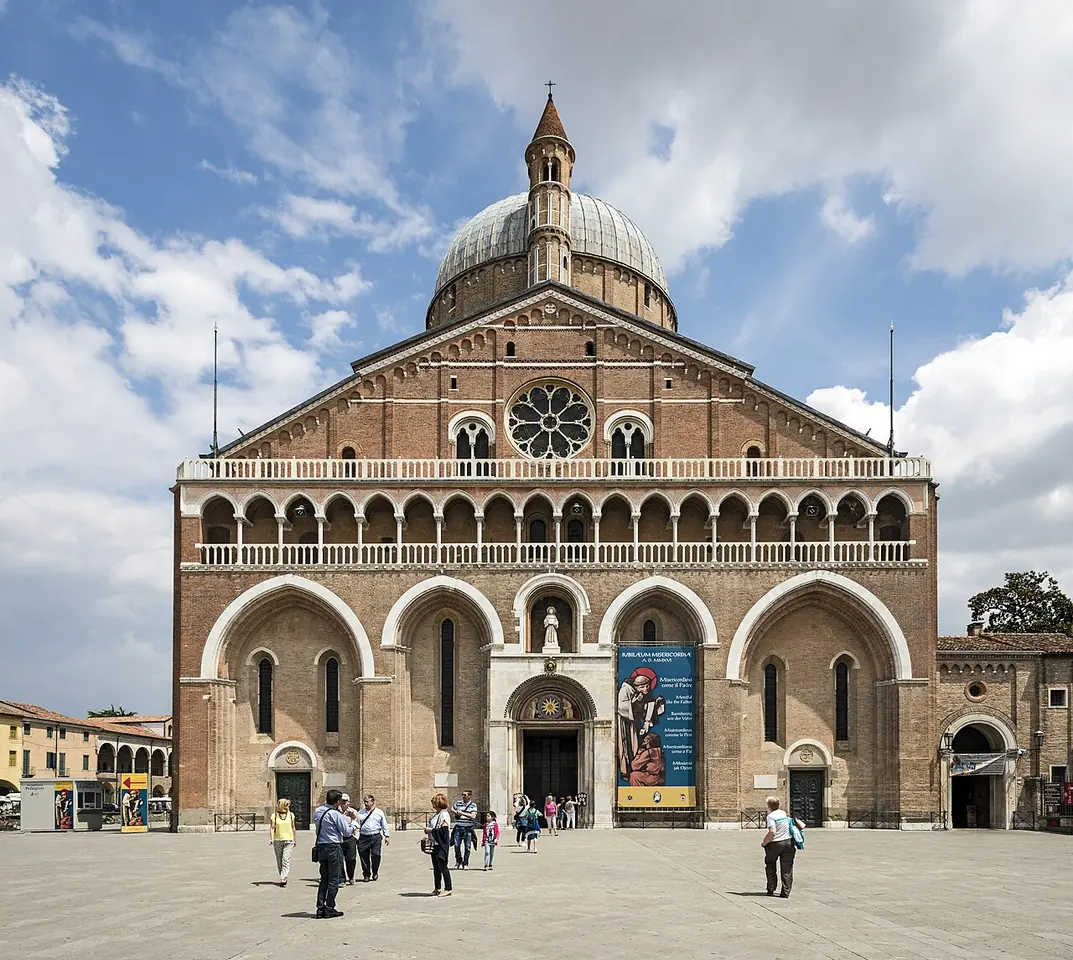
Padua began building a great church over his grave soon after his canonization. The Basilica of St. Anthony mixes Romanesque, Gothic and Byzantine styles, with a cluster of domes rising over the nave. On April 8, 1263, his remains were moved there in the presence of Bonaventure, which is when the tongue was found incorrupt. In 1350 Cardinal Guy de Boulogne, who credited Anthony with saving him from the plague, gave a reliquary for the saint's jaw.

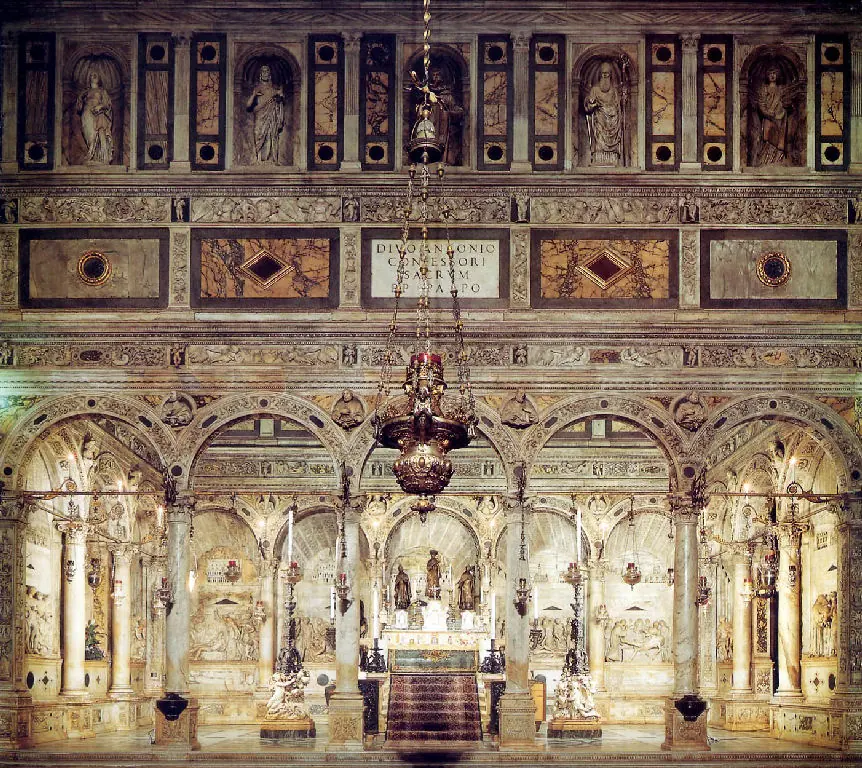
His tomb stands in the Chapel of St. Anthony, which was remade in marble in the early 16th century, with large reliefs of his miracles by Tullio Lombardo, Jacopo Sansovino and other sculptors. Pilgrims file past to lay a hand on the stone of the tomb and leave written petitions.

In January 1981, for the 750th anniversary of his death, the tomb was opened again with the approval of Pope John Paul II. A team from the University of Padua studied the remains, and the Basilica says that more than 650,000 people came to see them during a month-long exposition. Accounts of the examination say his vocal apparatus was found preserved. The Basilica now keeps it on permanent display with his habit in the Chapel of the Relics, along with the reliquaries of his tongue and jaw.


On June 13 a procession carries his statue and a relic through the streets of Padua in the evening.
Lisbon
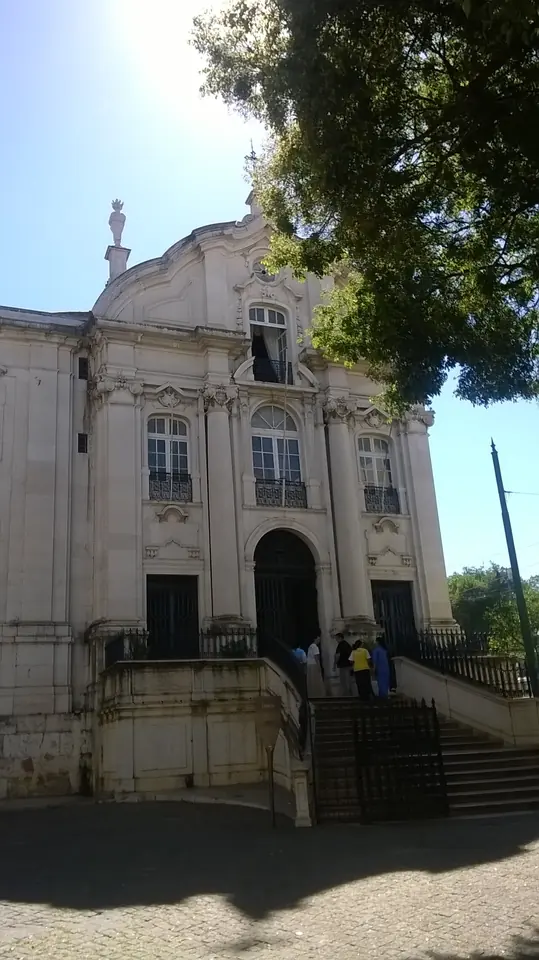
The Church of Santo António in Lisbon stands near the cathedral on the site the city honors as the house where he was born; the present building dates from after the earthquake of 1755. On the night of June 12, Lisbon holds its marchas populares, parades of neighborhood groups, and June 13 is a city holiday, with streets full of grilled sardines and pots of basil.

Prayers to St. Anthony
Catholics ask St. Anthony to pray for them when something is lost, from keys to faith itself, and also in need, in travel and in times of trouble. The prayers below have a known origin.
Si quaeris miracula (the "miraculous responsory")
This responsory was written by Julian of Speyer, a German Franciscan who died around 1250, as the eighth and last responsory of his rhymed Office of St. Anthony. The Basilica of St. Anthony dates the Office to 1233, two years after the saint's death, and says the responsory is sung there every Tuesday. The Catholic Encyclopedia also credits it to Julian. It is called "miraculous" because of the old custom of reciting it to ask for Anthony's help. The Latin:
Si quaeris miracula, / Mors, error, calamitas, / Daemon, lepra fugiunt, / Aegri surgunt sani.
Cedunt mare, vincula: / Membra resque perditas / Petunt et accipiunt / Juvenes et cani.
Pereunt pericula, / Cessat et necessitas: / Narrent hi, qui sentiunt, / Dicant Paduani.
A traditional English version, as printed in older Catholic prayer books and reproduced by the New Liturgical Movement:
If you ask for miracles, / Death, error, all calamities, / Leprosy and demons fly, / And health succeeds infirmities.
The sea obeys, and fetters break, / And lifeless limbs thou dost restore, / While treasures lost are found again, / When young and old thine aid implore.
All dangers vanish at thy prayer, / And direst need doth quickly flee, / Let those who know thy power proclaim, / Let Paduans say, "These are of thee."
The responsory is followed by a versicle and response: "Pray for us, blessed Anthony. That we may be made worthy of the promises of Christ."
St. Anthony's Brief
A short Latin prayer called "St. Anthony's Brief" appears on cards and medals: Ecce Crucem Domini! Fugite partes adversae! Vicit Leo de tribu Juda, Radix David! Alleluia! ("Behold the Cross of the Lord! Flee, you enemy powers! The Lion of the tribe of Judah, the Root of David, has conquered! Alleluia!"). The words come from the Book of Revelation (5:5). Tradition says Anthony gave them on a slip of paper to a Portuguese woman tormented by temptation. The story of its origin is traditional.
The folk rhyme
In English-speaking homes people say "Tony, Tony, look around, something's lost and must be found," or "St. Anthony, St. Anthony, please come down; something is lost and cannot be found." These are folk rhymes, said half in fun and half in faith. They are not liturgical prayers, and no one knows who first made them up.
Frequently asked questions
What is the prayer to St. Anthony for lost things?
The classic prayer is the Si quaeris miracula ("If you ask for miracles"), a responsory written by the Franciscan Julian of Speyer for the Office of St. Anthony soon after his death; the Basilica in Padua dates the Office to 1233. It says that "treasures lost are found again" through his prayers. Many people use a short request instead, such as "St. Anthony, please help me find what I have lost." The rhyme "Tony, Tony, look around, something's lost and must be found" is a folk custom, not a Church prayer.
Why is St. Anthony the patron saint of lost things?
Tradition says a novice ran off with Anthony's psalter, the book of psalms he used for teaching, and returned it after Anthony prayed. People soon began asking his help to recover lost and stolen things, and the Si quaeris responsory, written within a few years of his death, already names "lost things" among his miracles. The story of the psalter is traditional.
When is St. Anthony's feast day?
June 13, the day he died in 1231. It is an obligatory memorial in the General Roman Calendar. In Padua the day ends with a great procession, and in Lisbon June 13 is a city holiday.
Is St. Anthony of Padua the same as St. Anthony the Great?
No. St. Anthony the Great, or Anthony of Egypt, was a desert hermit who died in 356 and is the father of Christian monasticism; his feast is January 17. Anthony of Padua was a Franciscan friar of the 13th century. Anthony of Padua was born Fernando and took the name Anthony when he joined the Franciscans.
What is St. Anthony's Bread?
Alms given to the poor in thanksgiving for a favor received through St. Anthony's prayers. The custom got its name in Toulon, France, in the 1890s, when a shopkeeper named Louise Bouffier promised bread for the poor if her jammed door would open. Many churches still have a "St. Anthony's Bread" box for the poor.
What is St. Anthony the patron saint of?
Lost things, the poor, and travelers, along with Portugal, Lisbon and Padua. In Portugal and Brazil he is also a popular matchmaker, and young women ask his help in finding a husband.
What are the thirteen Tuesdays of St. Anthony?
A devotion of prayer to St. Anthony on thirteen Tuesdays in a row, often the thirteen before his June 13 feast. Tuesday is linked to his funeral, which took place on Tuesday, June 17, 1231, and the Basilica in Padua still keeps every Tuesday as his day.
Why does St. Anthony hold the baby Jesus?
Because of a tradition that the Christ Child appeared to him while he was praying in a room lent to him by a friend. Italian writers place the vision at Camposampiero near Padua, and French writers at Châteauneuf-la-Forêt in the Limousin. After the 1600s the Christ Child became his most common attribute.
Sources
- Catholic Encyclopedia (1907): St. Anthony of Padua
- Benedict XVI, General Audience of 10 February 2010: Saint Anthony of Padua
- The Little Flowers of St. Francis of Assisi, chapters 39 and 40 (Christian Classics Ethereal Library)
- New Liturgical Movement: The Miraculous Responsory of St Anthony of Padua (Gregory DiPippo, 2022)
- Basilica of St. Anthony, Padua: Si quaeris
- Basilica of St. Anthony, Padua: Expositions (history of the relics)
- National Catholic Register: The Opening of St. Anthony's Tomb and the 'Feast of the Tongue'
- Franciscan Mission Associates: St. Anthony's Bread
- Assidua, the first Life of St. Anthony (anonymous, about 1232)
- Pius XII, apostolic letter Exulta, Lusitania felix (January 16, 1946)
- Roman Martyrology, June 13