St. Cuthbert of Lindisfarne
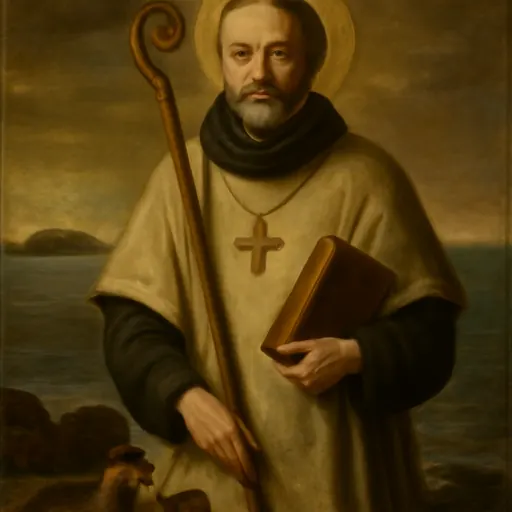
St. Cuthbert (about 634–687) was a shepherd boy who became a monk of Melrose, prior and bishop of Lindisfarne, and a hermit on the island of Inner Farne off the coast of Northumberland. Medieval England called him its "wonder-worker," and his body, reported incorrupt, rests in Durham Cathedral. His feast day is March 20.
Who was St. Cuthbert?
Cuthbert was a monk and bishop of seventh-century Northumbria, the Anglo-Saxon kingdom that stretched across what is now northern England and southeast Scotland. He was prior of Melrose and then of Lindisfarne, spent years as a hermit on Inner Farne, and served two years as bishop of Lindisfarne before he died in 687. After his death his tomb drew more pilgrims than any other in England until the murder of St. Thomas Becket in 1170.
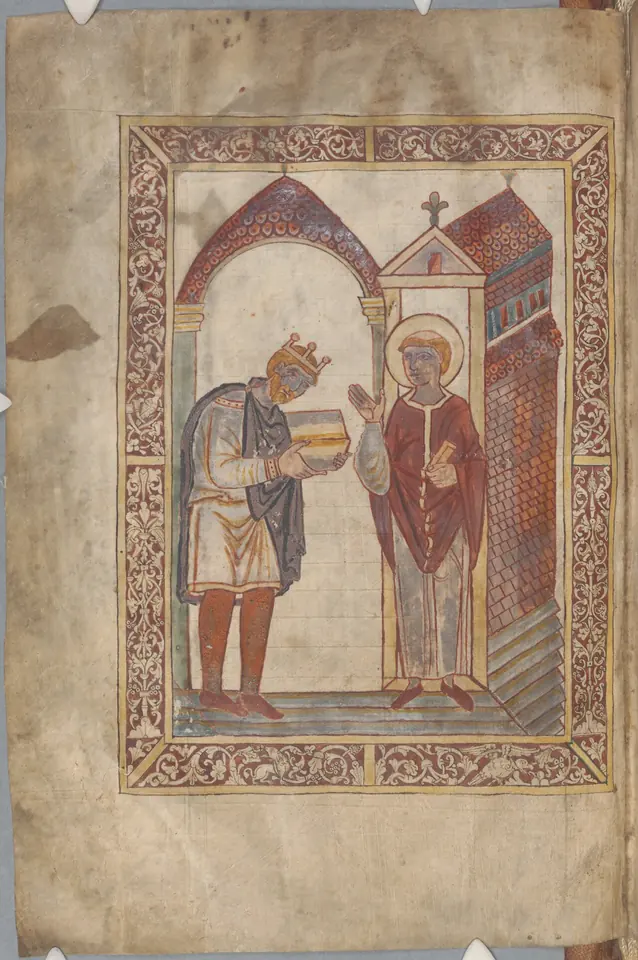
We know him unusually well. A monk of Lindisfarne wrote an anonymous Life about 700. St. Bede then wrote two more, one in verse and one in prose (about 721), and told his story again in the Ecclesiastical History in 731. Bede gathered eyewitness accounts, though his Life is built to show a saint, and many of its wonders are best read as tradition.

The life of St. Cuthbert
The shepherd's vision
Cuthbert was probably born about 634 near Melrose, on the Tweed. Bede's prose Life tells that as a youth he was keeping sheep on the hills one night in 651 when he saw a stream of light and angels carrying a soul to heaven. He learned the next day that St. Aidan, the bishop of Lindisfarne, had died at that hour. The Catholic Encyclopedia adds that he seems to have served for a time as a soldier, since he arrived at Melrose on horseback, carrying a spear.

Prior of Melrose and Lindisfarne
At Melrose he learned the Scriptures under the prior Boisil, and after Boisil died of plague in 664 he became prior himself. Bede says he would leave the monastery for a week or a month at a time to preach in villages "afar off amid steep and wild mountains," where other teachers would not go. People confessed their sins to him, Bede writes, because no one dared hide anything from him.
The Synod of Whitby in 664 adopted the Roman way of reckoning Easter over the Irish custom Cuthbert had grown up with. He accepted the decision and was sent to Lindisfarne as prior to introduce the change, which the Catholic Encyclopedia says took "all his gentle tact and patience."


Hermit of Farne
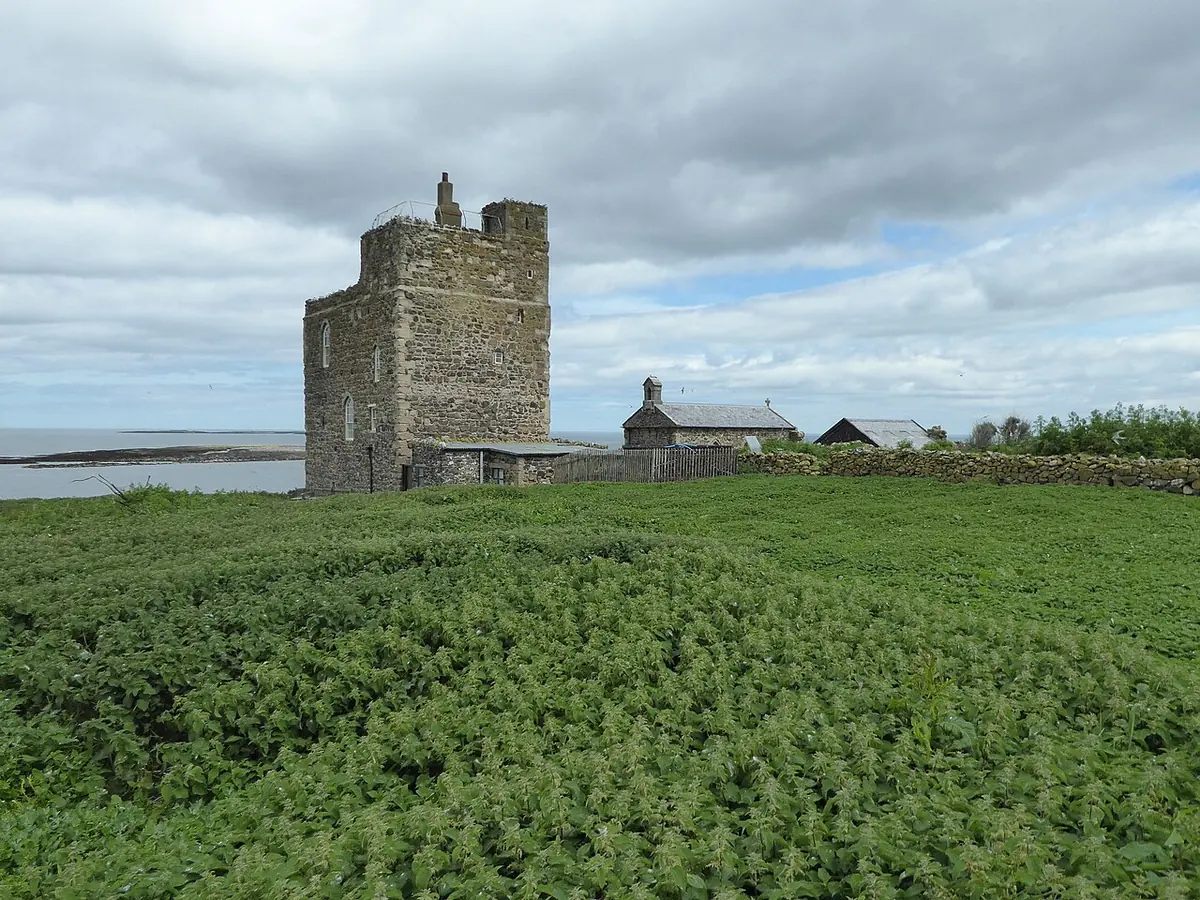
In 676 he withdrew to Inner Farne, a bare island off the Northumberland coast. Bede says the brothers dug a well in the rock at his request and found it full of water the next day, and that when his wheat failed he sowed barley late in the season and it grew. He built a cell with a wall so high he could see only the sky.

The reluctant bishop
In 684 a synod chose him bishop. He would not leave his island until King Ecgfrith himself sailed out with other leaders and they all knelt, Bede says, and "drew him, also in tears, from his beloved retreat." He was consecrated at York at Easter 685. After two years he went back to Farne, knowing he was dying, and died there on March 20, 687. Bede adds that his friend Herbert, the hermit of Derwentwater, died the same night, as Cuthbert had foretold.
The miracles of St. Cuthbert
- The otters on the shore: traditional, from Bede's prose Life. A monk saw two otters warm his feet after a night of prayer in the sea.
- Water and barley on Farne: traditional, from Bede.
- Cures in life and at his tomb: reported. Bede records many; they earned him the title "Wonder-worker of England."
- The incorrupt body: reported. In 698 the monks found it "whole, as if he were still alive." Durham's own account says Henry VIII's commissioners in 1539 found "an unconsumed body in priestly vestments."


The journey to Durham
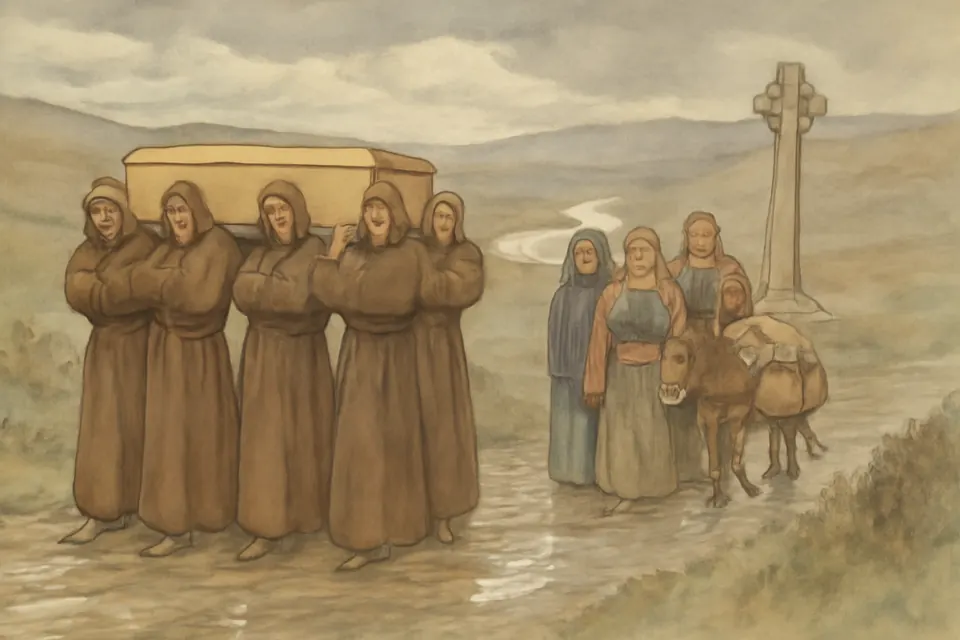
In 875 Danish raids drove the monks from Lindisfarne. They carried Cuthbert's coffin and the Lindisfarne Gospels around the north for seven years before settling at Chester-le-Street in 883. In 995 the coffin reached Durham. Durham Cathedral tells the traditional story that the cart stuck fast and would not move until Cuthbert told a monk in a dream to take him to "Dun Holm." The present cathedral was built around his shrine, and in 1104 his body was moved into it.
Why St. Cuthbert is the patron saint of Northumbria and Durham
Cuthbert is the patron of Durham, whose cathedral is dedicated to him, and the Catholic Encyclopedia names him patron of the Catholic Diocese of Hexham and Newcastle. He is honored as patron of Northumbria, the kingdom he served, and of shepherds, since he was keeping sheep when he saw Aidan's soul taken to heaven. See our patron saints page.
Symbols of St. Cuthbert in art
Look for:
- A crowned head in his hands: the head of St. Oswald, the king of Northumbria killed in battle in 642, which was buried in Cuthbert's coffin.
- Bishop's vestments, miter and crozier.
- Otters or sea creatures, from Bede's story.
- Eider ducks, which the Catholic Encyclopedia notes were called "Cuthbert ducks."
Late medieval painters in the north showed him almost always with Oswald's head, as on the Hexham Abbey panel.


Feast day, shrine and treasures
His feast is March 20; Durham and the Church of England also keep September 4. See the feast days calendar.
He lies in the feretory behind the high altar of Durham Cathedral, beneath a stone slab carved with his name. Henry VIII's commissioners stripped the shrine in 1539 and reburied the body.


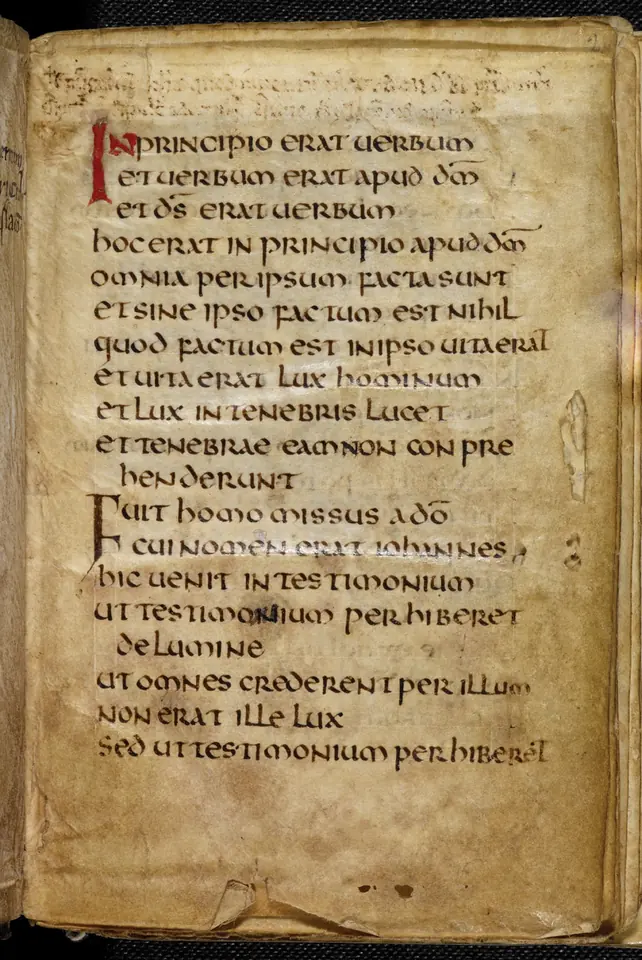
When the grave was opened in 1827, objects buried with him were removed; these Treasures of St. Cuthbert are now shown in the cathedral museum. A small seventh-century Gospel of John, found in his coffin when it was moved in 1104 (the Catholic Encyclopedia says 1105), is the St. Cuthbert Gospel, now in the British Library.

Prayer to St. Cuthbert
There is no widely used traditional prayer to St. Cuthbert in Catholic prayer books. Pilgrims to Durham pray at his shrine, and Catholics in the northeast of England ask his intercession, especially on March 20.
Frequently asked questions
Why is St. Cuthbert important?
He was the best-loved saint of northern England. A preacher who walked to remote hill villages, a hermit, a reluctant bishop and a healer, he became the focus of the greatest pilgrimage in early medieval England. Durham, its cathedral and the old county of Durham grew up around his shrine.
Was St. Cuthbert's body incorrupt?
Bede reports that when the monks opened his grave in 698, eleven years after his death, they found the body "whole, as if he were still alive." Durham sources record it found incorrupt again in 1104 and in 1539. When the grave was opened in 1827 only bones were found, and whether they are his has been debated. The incorruption is a reported wonder, not a formally approved miracle.
What is the story of St. Cuthbert and the otters?
In Bede's prose Life, a monk of Coldingham followed Cuthbert at night and saw him stand in the sea up to his neck, praying. At dawn, as Cuthbert knelt on the shore, "two quadrupeds, called otters, came up from the sea" and warmed and dried his feet. The story is traditional.
When is St. Cuthbert's feast day?
March 20, the day he died in 687. In Durham and the Church of England, September 4, the day his relics were moved into the new cathedral, is also kept.
Sources
- Catholic Encyclopedia (1908): St. Cuthbert
- Bede, Ecclesiastical History of England, Book IV, chapters 27–32, translated by A. M. Sellar (Project Gutenberg)
- Bede, The Life and Miracles of St. Cuthbert, Bishop of Lindesfarne (Internet Medieval Sourcebook)
- Durham Cathedral: The Shrine of St Cuthbert
- Durham World Heritage Site: St Cuthbert
- The Church of England: The Calendar