St. Hilda of Whitby, Abbess
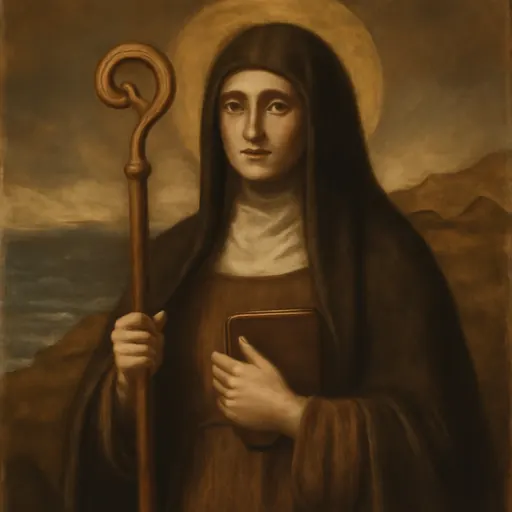
St. Hilda (Hild) of Whitby (614–680) was an Anglo-Saxon princess who became the abbess of a double monastery of monks and nuns at Whitby, in northern England. She hosted the Synod of Whitby in 664 and welcomed Caedmon, the first English poet whose name we know. Almost all we know of her comes from the historian Bede. Her feast day is November 17.
Who was St. Hilda of Whitby?
Hilda, or Hild in her own Old English, was a royal woman of Northumbria who became one of the most respected church leaders of seventh-century England. She ruled a double monastery of men and women at Whitby, on the Yorkshire coast. Kings came to her for advice, five of her monks became bishops, and the great council that set the course of the English Church met under her roof.
The Catholic Encyclopedia puts it plainly: "Practically speaking, all our knowledge of St. Hilda is derived from the pages of Bede." The monk and historian St. Bede finished his Ecclesiastical History in 731, about fifty years after her death, and gave her a full chapter (Book IV, chapter 23). Quotations below are from A. M. Sellar's translation.

The life of St. Hilda
A princess of Northumbria
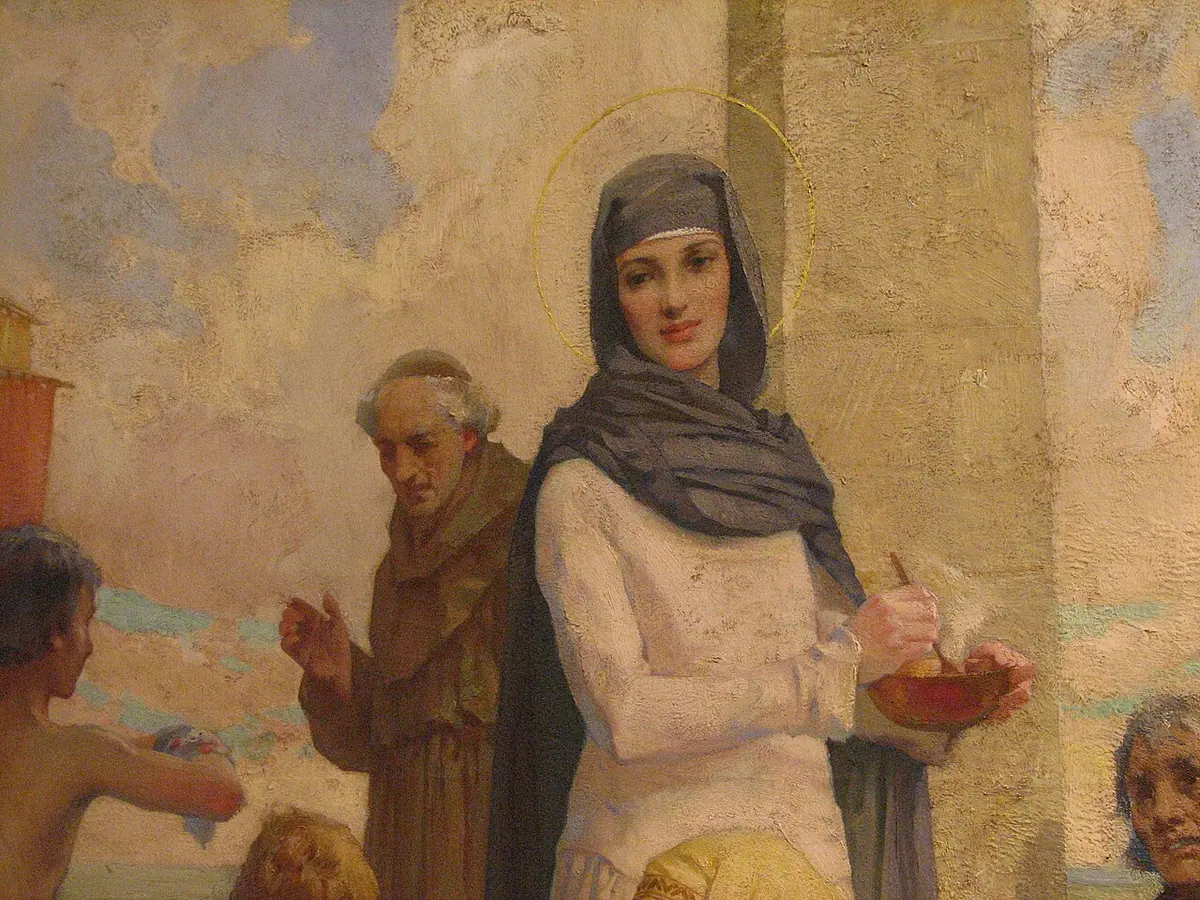
Bede says her life "falls into two equal parts": thirty-three years "living most nobly in the secular habit," and thirty-three in the monastic life. She was born in 614, the daughter of Hereric, a nephew of King Edwin of Northumbria. Her father was poisoned in exile. When she was about thirteen she was baptized with King Edwin by Paulinus, the missionary bishop from Rome, around 627.
Bede tells a dream her mother had while Hilda was an infant: she found "a most precious necklace" under her garment, which "seemed to shine forth with such a blaze of light that it filled all Britain with the glory of its brilliance." Bede saw it fulfilled in her daughter's life.
Called home by Aidan
At thirty-three Hilda decided to become a nun and went to East Anglia, meaning to join her sister Hereswith at the monastery of Chelles in Gaul. St. Aidan, the Irish bishop of Lindisfarne, called her back to Northumbria. After a year with a few companions on the north bank of the River Wear, she became abbess of Hartlepool, and Aidan and other monks often visited to teach her.
Abbess of Whitby
Around 657, with the support of King Oswiu, she founded or reorganized the monastery at Streanaeshalch, the place later called Whitby. Bede describes a community where "no one there was rich, and none poor, for they had all things common," where Scripture was studied closely, and where "not only meaner men in their need, but sometimes even kings and princes, sought and received her counsel." Five men trained there became bishops: Bosa, Aetla, Oftfor, John (St. John of Beverley) and Wilfrid. Bede says that "all that knew her called Mother."

The Synod of Whitby, 664
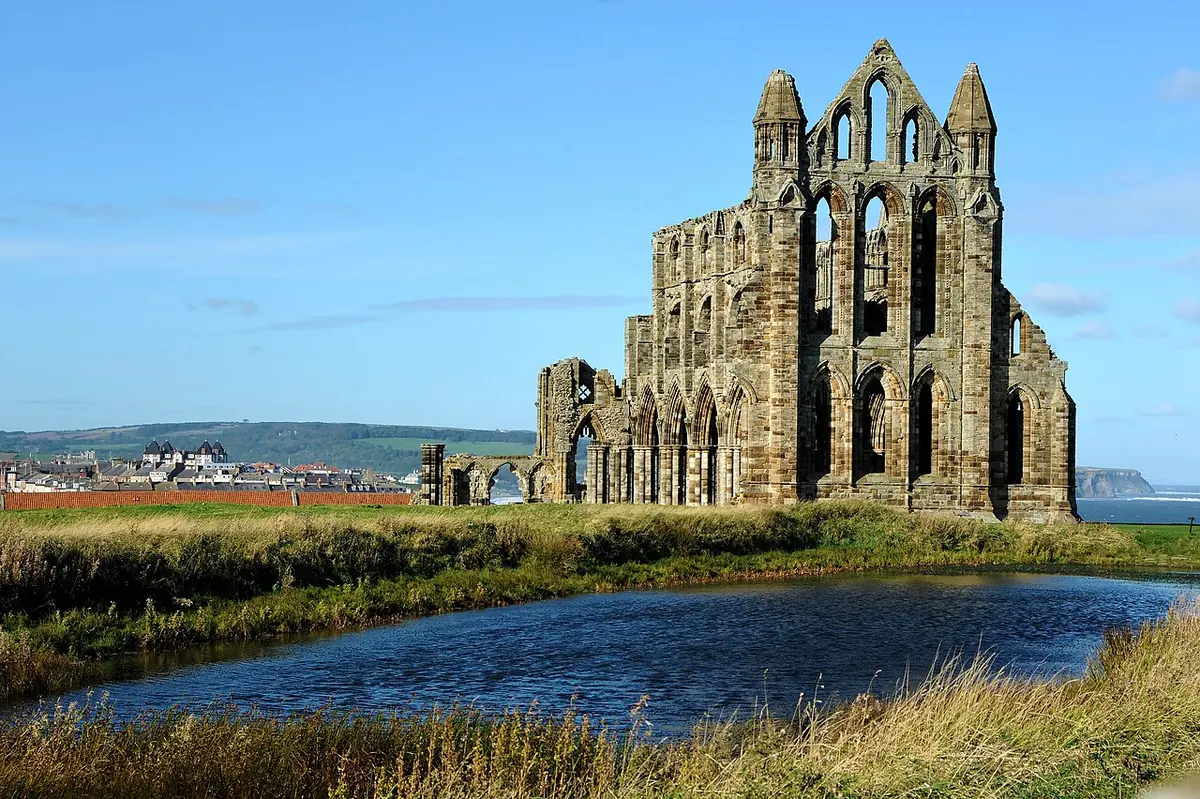
Christians in Northumbria kept Easter on different dates, depending on whether they followed the Irish tradition brought by Aidan's monks or the Roman one. In 664 King Oswiu called a synod at Hilda's monastery to settle the matter. Bede writes that "the Abbess Hilda and her followers were for the Scots," meaning the Irish party led by Bishop Colman. Wilfrid argued for Rome and appealed to St. Peter, keeper of the keys of heaven, and the king ruled for the Roman practice. English Heritage notes that the synod brought together two traditions that were already merging, not two hostile churches.

Caedmon the cowherd
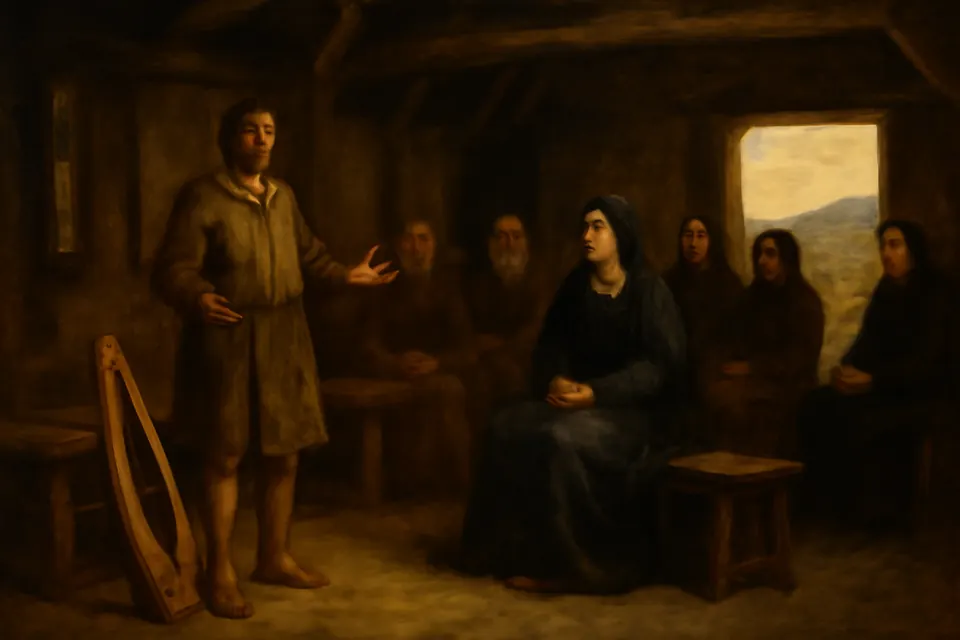
Bede's next chapter tells of a lay brother of the monastery, Caedmon, who used to leave feasts when the harp was passed because he could not sing. One night in the cattle shed a figure appeared to him in a dream and said, "Cædmon, sing me something," and he sang verses in praise of God the Creator that he had never heard. He was brought to the abbess. When she and her learned men had tested him, Hilda "joyfully recognizing the grace of God in the man, instructed him to quit the secular habit, and take upon him monastic vows." He spent his life turning Bible stories into English verse. English Heritage calls him the first named poet in the English language.
Illness and death
Hilda suffered a burning fever for her last six years and kept teaching through it. On November 17, 680, she received Communion and urged her nuns "to preserve the peace of the Gospel among themselves, and with all others," and died.
The miracles of St. Hilda
None of these was ever formally investigated; all are traditional.
- Her mother's dream of the shining necklace: traditional, recorded by Bede.
- The vision at Hackness: traditional. Bede writes that the night Hilda died, a nun named Begu at Hackness, a daughter house thirteen miles away, heard the bell that called the sisters when one of them died and saw Hilda's soul carried to heaven by angels.
- Caedmon's gift of song: traditional; Bede presents it as a gift of God.
- The snakestones: traditional, and much later. English Heritage dates the legend to the Middle Ages: Hilda prayed that Whitby's snakes lose their heads and turn to stone. The "snakes" are ammonite fossils.


Symbols of St. Hilda in art
Hilda appears as an abbess with a crozier and a book, sometimes crowned to show her royal birth, as in the window at Chester Cathedral. Her distinctive mark is a set of coiled ammonites at her feet, from the snakestone legend.


Feast day and where St. Hilda is honored
Her feast is November 17, the day of her death. The calendar of St. Willibrord, written in the early eighth century, already lists her, according to the Catholic Encyclopedia. She is not on the General Roman Calendar; the Church of England remembers her on November 19. See our feast days page.
Whitby Abbey, now cared for by English Heritage, stands on the site of her monastery. English Heritage says she was buried at Whitby; the Catholic Encyclopedia calls the later claim that her bones went to Glastonbury part of "the great Glastonbury myth." Fourteen medieval churches were dedicated to her, and St Hilda's College, Oxford, founded in 1893, bears her name.


Prayer to St. Hilda
No traditional Catholic prayer to St. Hilda is in wide use, and this encyclopedia found none with a citable origin. Those who honor her simply ask her to pray for them. Bede preserved the substance of her last counsel: she urged her community "to preserve the peace of the Gospel among themselves, and with all others."
Frequently asked questions
What is St. Hilda of Whitby known for?
Running one of the great monasteries of Anglo-Saxon England, where five future bishops were trained; hosting the Synod of Whitby in 664, which settled how the English Church would date Easter; and recognizing the gift of the poet Caedmon, a cowherd of her monastery.
What happened at the Synod of Whitby?
King Oswiu of Northumbria called churchmen to Hilda's monastery to settle a dispute over the date of Easter between the Irish and Roman traditions. Bede says Hilda and her community favored the Irish side, but the king decided for the Roman practice after Wilfrid appealed to the authority of St. Peter.
When is St. Hilda's feast day?
November 17, the day Bede gives for her death in 680. The Church of England commemorates her on November 19. She is not on the General Roman Calendar, so Catholic observance is local.
What are the snakestones of Whitby?
Ammonite fossils found on the Whitby shore. A medieval legend says Hilda prayed away a plague of snakes and turned them to stone. English Heritage notes that Victorian dealers carved snakes' heads onto the fossils to sell to visitors.
Sources
- Bede, Ecclesiastical History of England, Book IV, chapters 23–24, translated by A. M. Sellar (Project Gutenberg)
- Catholic Encyclopedia (1910): St. Hilda
- English Heritage: St Hild of Whitby
- English Heritage: History of Whitby Abbey
- English Heritage: How the Synod of Whitby settled the dates of Easter
- The Church of England: The Calendar