St. Apollonia of Alexandria

St. Apollonia was an elderly Christian woman of Alexandria, Egypt, martyred in a riot against the Christians in late 248 or early 249. Her bishop, Dionysius, wrote that the mob broke out all her teeth and threatened to burn her alive; she would not deny Christ and went into the fire herself. Because of her teeth, she is the patron saint of dentists and of people with toothache. Her feast day is February 9.
Who was St. Apollonia?
Apollonia was a Christian woman of Alexandria, the great Greek city of Roman Egypt, killed by a mob in late 248 or early 249. Unlike most early martyrs whose stories were written centuries later, she is known from a letter by someone who was there: Dionysius, bishop of Alexandria from 247 to 265, who described the riot to Fabius, bishop of Antioch. The historian Eusebius copied long passages of the letter into his Church History in the early fourth century, and that is how her story survives.
Dionysius calls her "that most admirable virgin, Apollonia, an old woman." The Catholic Encyclopedia notes that his Greek phrase may mean an older consecrated virgin with a role in the church, perhaps a deaconess. Most paintings show a young woman, but the earliest witness says she was old.

The martyrdom of St. Apollonia
The riot in Alexandria
The violence began a year before the emperor Decius ordered all citizens to sacrifice to the gods. Dionysius writes that a man he calls the "prophet and author of evils to this city" stirred up the pagan crowd. The mob seized an old man named Metras and a woman named Quinta and put them to death, then broke into Christian homes, carried off what was valuable and burned the rest in the streets, "so that the city appeared as if taken by an enemy."
Dionysius's account
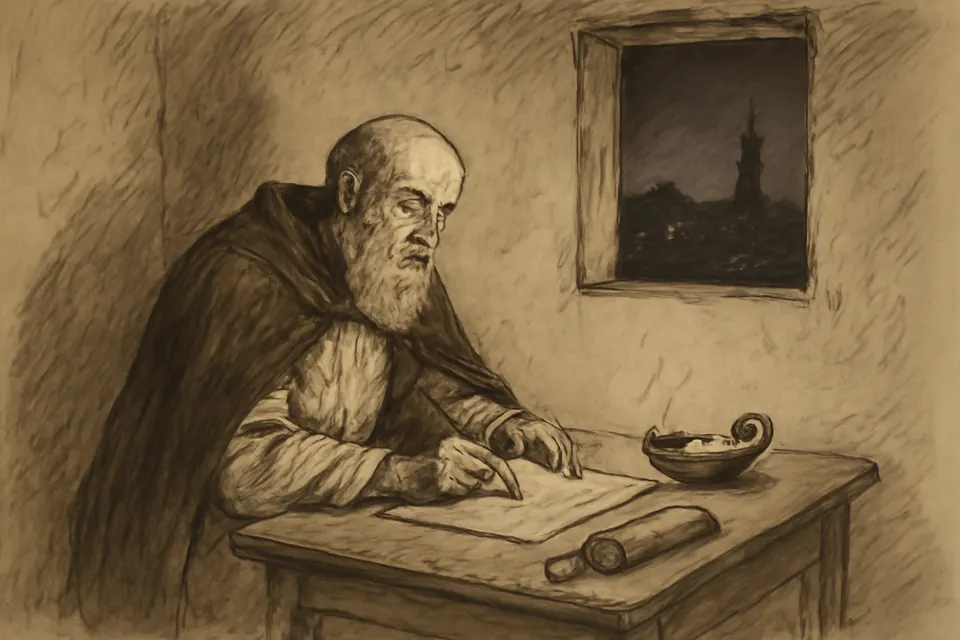
Then the crowd turned to Apollonia. Here is the passage in the translation of the Nicene and Post-Nicene Fathers:
Then they seized also that most admirable virgin, Apollonia, an old woman, and, smiting her on the jaws, broke out all her teeth. And they made a fire outside the city and threatened to burn her alive if she would not join with them in their impious cries. And she, supplicating a little, was released, when she leaped eagerly into the fire and was consumed.
That is the whole of it: a few sentences, plainly told. Pius Parsch's rendering of the Roman Martyrology, quoted by Catholic Culture, adds that her executioners "were astounded to see a weak woman willingly embracing death with such determination before they were ready to carry out their threats."


A martyr, not a suicide
Readers have long asked whether walking into the fire was suicide. Dionysius did not think so; he counted her among the martyrs, and the Church of Alexandria honored her as one. The Catholic Encyclopedia places her among early women martyrs who, faced with renouncing the faith or dying, "voluntarily embraced the latter in the form prepared for them," and it quotes St. Augustine, who wrote in The City of God (I.26) that he dared not judge such cases lightly and thought these women may have acted at God's command.
Miracles and legends of St. Apollonia
The account of her death is history, from an eyewitness bishop. What came after is mostly devotion:
- Traditional: a later legend made Apollonia a young Roman virgin martyred under Julian the Apostate. The Catholic Encyclopedia says plainly that there was only one martyr of the name, the saint of Alexandria.
- Traditional: her role as the helper of people with toothache, which grew out of the detail of her teeth and spread across medieval Europe.
- Reported: relief from toothache and dental pain through her intercession, claimed by Christians for centuries but never formally examined.
Churches in Rome and elsewhere have claimed relics of her, including teeth. Catholic Culture lists major relics at Roman churches, including her head at Santa Maria in Trastevere. As with many early martyrs, the number of claimed relics is larger than one body could supply, and their history is uncertain.

Why St. Apollonia is the patron saint of dentists
The reason is simple and a little grim: her teeth were broken out before she died. In the Middle Ages people with toothache prayed to her, and her image appeared on the walls of churches and in books of hours. In modern times dentists, dental students and dental technicians have taken her as their patron, and Catholic Culture lists her patronage "against tooth disease; against toothache; dental technicians; dentists." See all the patron saints by cause.
Symbols of St. Apollonia in art
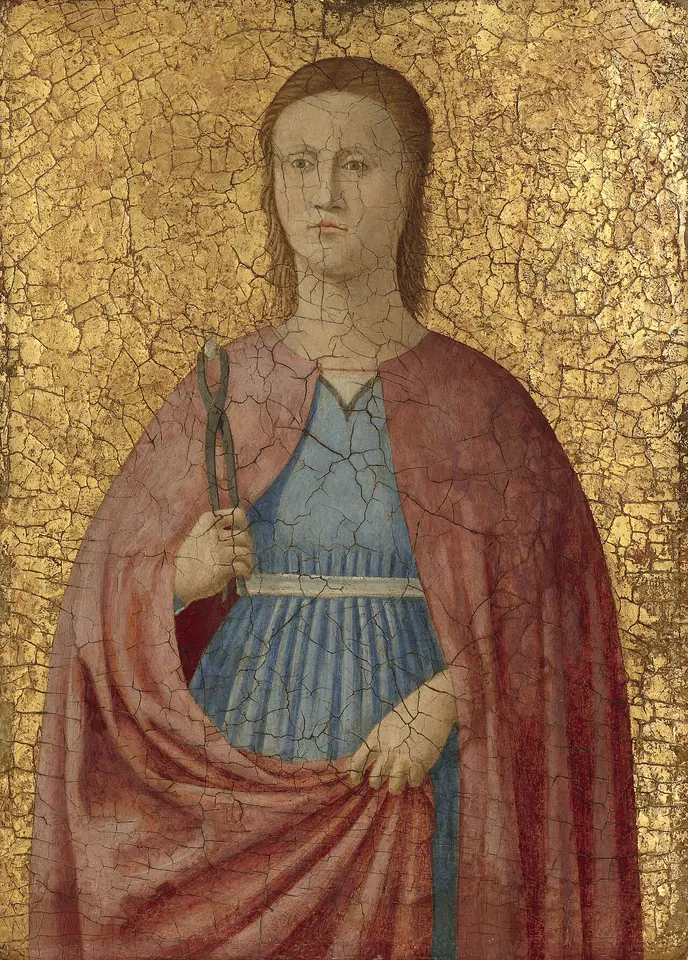
Apollonia is one of the easiest saints to identify. The Christian Iconography site puts it simply: she "is the only saint whose attribute is a tooth-extractor." Look for:
- Pincers or tongs gripping a tooth, her unique attribute. Sometimes the pincers are empty, and sometimes she holds a single tooth or wears a gold tooth on a chain.
- A martyr's palm, like other martyrs.
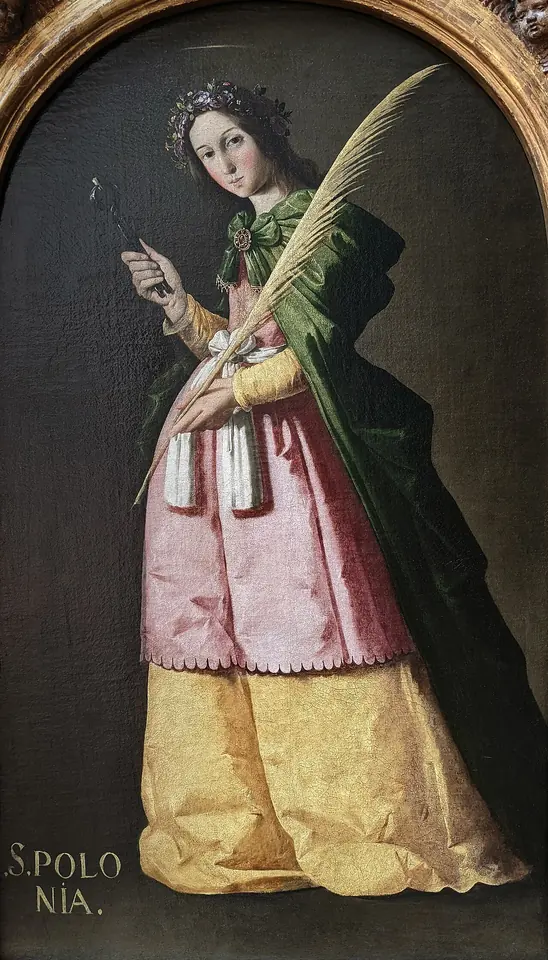
- A crown or wreath, the crown of virgin martyrs, as in Zurbarán's painting.
- Fire, in scenes of her death, as in Reni's painting.
- A book, in some images, as with many saints.
Most Western artists painted her as a young, fair-haired woman like the other virgin martyrs, St. Agatha, St. Lucy and St. Agnes, though Dionysius described an old woman. She appears often in altarpieces among groups of saints, and in medieval English and German stained glass.
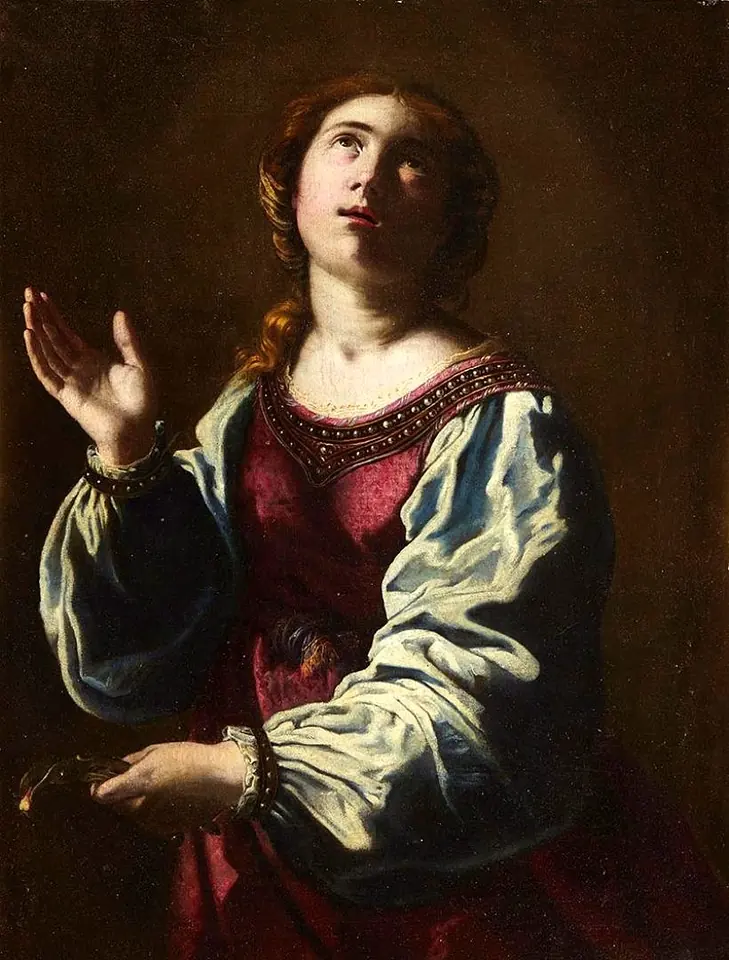

She is rarely painted at the moment of her torture, and when she is, the scene is usually a medieval miniature or print. Most images show her calm, holding the pincers like a badge.
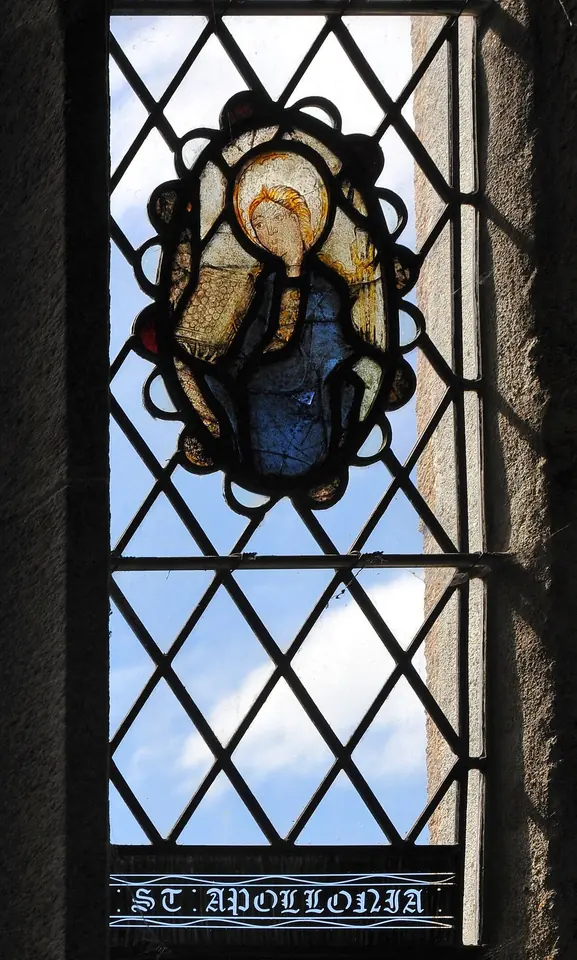

Feast day and devotion
St. Apollonia's feast is February 9, the day the Roman Martyrology commemorates her. She is not on the General Roman Calendar, so her day is kept locally and by personal devotion. See our feast days calendar; she follows St. Agatha by four days.
The Catholic Encyclopedia recalls that Rome once had a church dedicated to her; it no longer exists, but the little square where it stood is still called Piazza Sant'Apollonia.


Prayer to St. Apollonia
No prayer from Apollonia herself survives, and no single prayer to her is used everywhere. Catholics with toothache, and dentists before their work, simply ask for her intercession, often in a short invocation such as "St. Apollonia, pray for us." Catholic Culture suggests asking her for a courageous and holy death, and notes that the elderly especially may pray to her to strengthen their faith as they grow weak, since she was old herself when she died for Christ.
Frequently asked questions
Why is St. Apollonia the patron saint of dentists?
Because her tormentors broke out all her teeth before her death, according to the letter of her own bishop, Dionysius of Alexandria. From the Middle Ages Christians called on her for toothache, and dentists, dental students and dental technicians adopted her as their patron.
When is St. Apollonia's feast day?
February 9. The Roman Martyrology commemorates her on that day; she is not on the General Roman Calendar, so her feast is kept locally and by devotion.
How do you recognize St. Apollonia in art?
Look for a woman holding a pair of pincers or tongs, usually gripping a single tooth. She often also holds a martyr's palm or a book. She is the only saint with this attribute.
Did St. Apollonia commit suicide?
The Church has never treated it so. Dionysius, who knew her, honored her as a martyr. The Catholic Encyclopedia explains that she belongs to a group of early women martyrs who, faced with denying Christ or dying, chose the death already prepared for them, and that St. Augustine judged such cases cautiously, suggesting they may have acted on God's prompting.