St. Scholastica
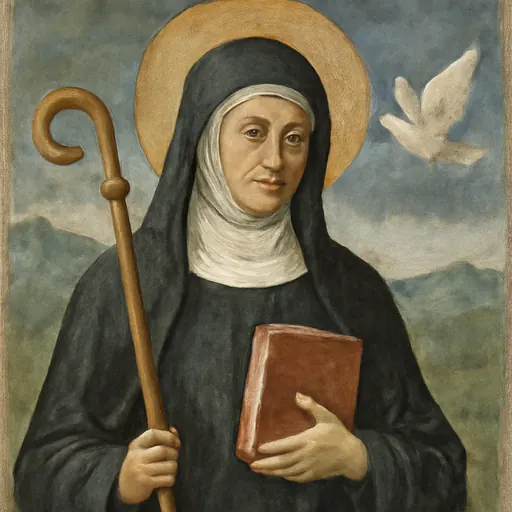
St. Scholastica was a 6th-century Italian nun, the sister of St. Benedict and by tradition his twin. Almost all that is known of her comes from Pope St. Gregory the Great, who tells how her prayer brought a sudden storm so that her brother had to stay and talk with her through their last night together. She is the patron saint of nuns and is invoked against storms. Her feast day is February 10.
Who was St. Scholastica?
Scholastica was the sister of St. Benedict, the monk whose Rule shaped monastic life in the Western Church. She lived in 6th-century Italy, gave her life to God as a girl, and lived as a nun not far from her brother's monastery at Monte Cassino, between Rome and Naples. She died around 543, a short time before him, and they share a tomb.
Nearly everything known about her comes from two short chapters of the Dialogues of Pope St. Gregory the Great, written in the early 590s, about fifty years after her death. Gregory's second book is a life of Benedict. Scholastica appears in it only at the end, in one unforgettable scene, and Gregory tells it to make a point: that even a great saint could be overruled by a woman who loved more.

A later tradition, which the Catholic Encyclopedia notes St. Bede accepted, makes Benedict and Scholastica twins, born at Nursia, the town now called Norcia in the mountains of Umbria. The Benedictine order honors her as its first nun and the mother of Benedictine women.
The life of St. Scholastica
Given to God from childhood
Gregory says Scholastica "was dedicated from her infancy to our Lord." He says nothing about where she lived, except that it was close enough to Monte Cassino for a yearly visit. Benedictine tradition places her community at Plumbariola (Piumarola), a few miles from the abbey, and calls her its abbess. Vatican News, following later accounts, adds a family background: a noble father, a mother who died giving birth to the twins, and a childhood in which she followed her brother first to Rome and then to the religious life. These details are traditional and do not come from Gregory.
The yearly meeting
Brother and sister met once a year. Gregory explains that Benedict would go down with some of his monks to a house belonging to the abbey, a little way from its gate, and receive her there. They spent the day praising God and talking of spiritual things, ate together at evening, and then each returned home.

The storm
At their last meeting, as they sat at table late into the evening, Scholastica asked her brother to stay the night so they could go on "discoursing of the joys of heaven." Benedict refused. He "might not by any means stay all night outside of his Abbey." Gregory notes that the sky was so clear that not a cloud could be seen. Then, in the translation published by the Order of St. Benedict:
The Nun, hearing this denial of her brother, joined her hands together, laid them on the table, bowed her head on her hands, and prayed to almighty God. Lifting her head from the table, there fell suddenly such a tempest of lightning and thundering, and such abundance of rain, that neither venerable Benedict, nor his monks that were with him, could put their heads out of doors.
Benedict, unable to leave, complained: "God forgive you, what have you done?" Scholastica answered:
I desired you to stay, and you would not hear me; I have desired it of our good Lord, and he has granted my petition. Therefore if you can now depart, in God's name return to your monastery, and leave me here alone.
He stayed, "against his will," and they spent the night in "spiritual and heavenly talk."
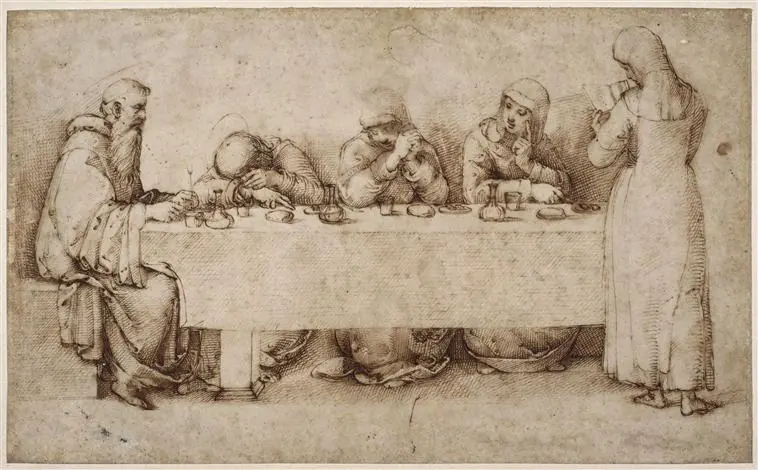

Gregory draws the lesson himself. Benedict wanted one thing and could not get it, because, as St. John says, "God is charity." Gregory concludes: "Therefore, as is right, she who loved more, did more." He sets the story beside St. Paul, who prayed three times for the thorn in his flesh to be taken away and was refused: holy people do not always obtain what they ask.


The dove
Gregory finishes the story in his next chapter. The next morning Scholastica went back to her monastery and Benedict to his abbey. Three days later, standing in his cell, Benedict looked up and "beheld the soul of his sister (which was departed from her body) ascend into heaven in the likeness of a dove." He gave thanks with hymns, told his monks of her death, and sent them to bring her body to the abbey, "to have it buried in that grave which he had provided for himself."
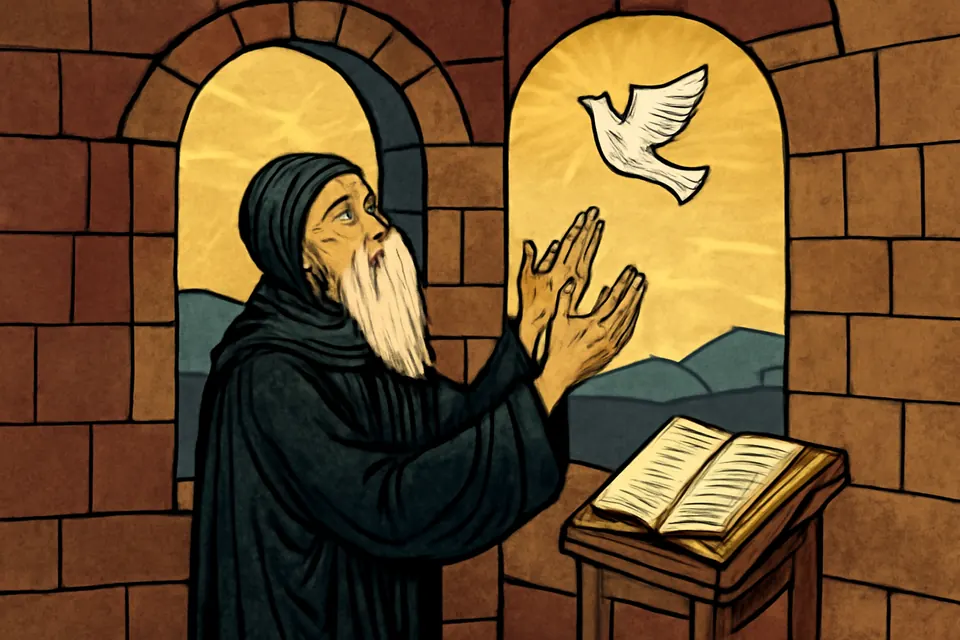
Gregory ends: "as their souls were always one in God while they lived, so their bodies continued together after their death." Benedict himself died a short time later and was laid in the same grave.
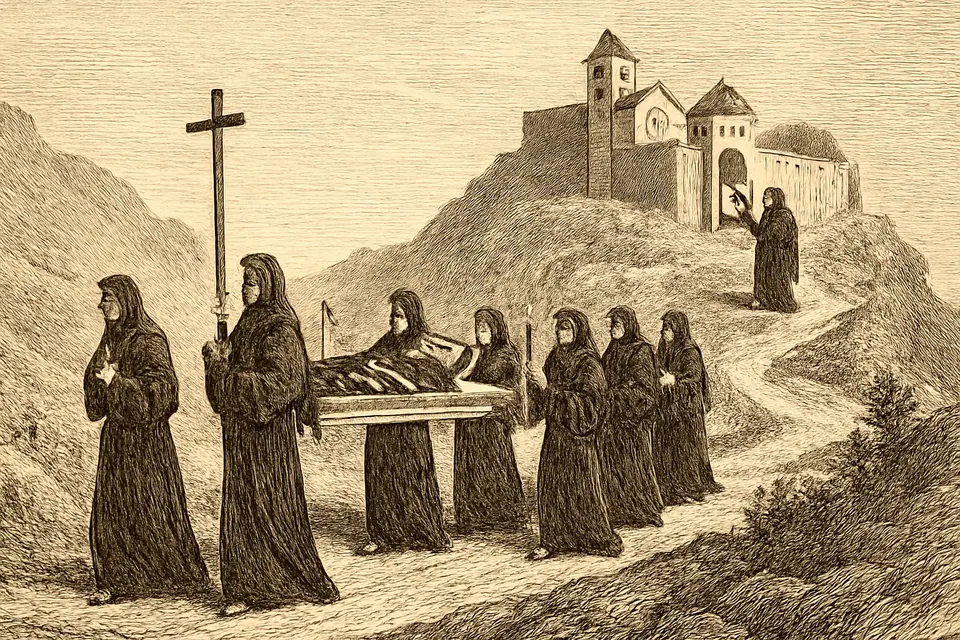
The miracles of St. Scholastica
Scholastica lived centuries before the Church began investigating miracles formally, so none is approved in the modern sense.
- The storm at her last meeting with Benedict: reported by Gregory the Great, who says he learned Benedict's story from the saint's own disciples. It is the earliest and only miracle told of her.
- The dove: strictly a vision granted to Benedict rather than a miracle of hers, also from Gregory.
- Help in storms and drought: traditional. Because her prayer brought rain from a clear sky, Christians in Italy and France came to ask her prayers both for protection from storms and lightning and for rain in dry seasons.
Why St. Scholastica is the patron saint of nuns and against storms
As the sister of the founder of Western monasticism and, in Benedictine tradition, the first Benedictine nun, Scholastica is the natural patron of women religious, and of Benedictine nuns and sisters above all. Monasteries, schools and colleges run by Benedictine women around the world carry her name, and the long line of Benedictine women saints, from St. Hildegard of Bingen to St. Gertrude the Great, looks back to her.
Her patronage against storms comes straight from the story of the tempest. See all the patron saints by cause.
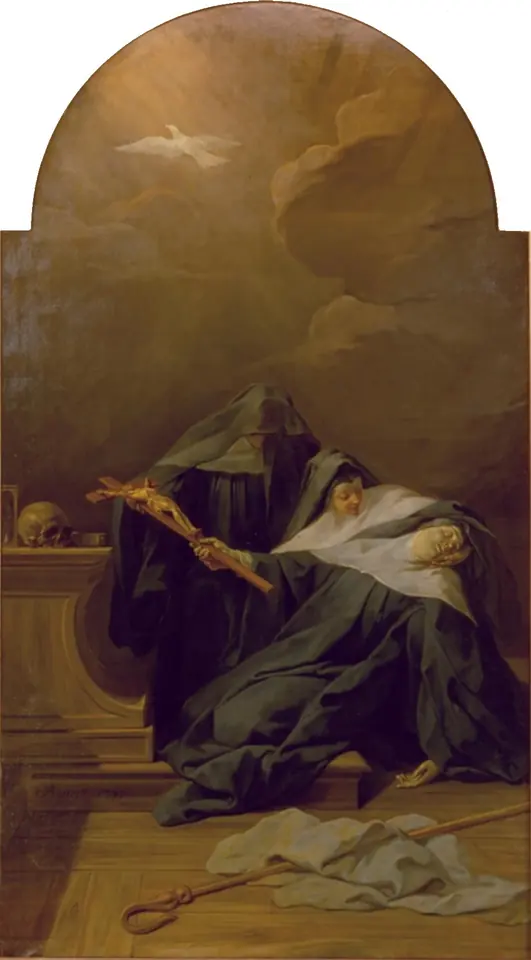

Symbols of St. Scholastica in art
Scholastica is easy to mistake for any other Benedictine nun, so look for these signs:
- A black habit and veil: the dress of Benedictine nuns, usually with a white wimple framing the face.
- A dove: her soul rising to heaven, sometimes flying from her mouth, perched on her book or hovering above her. This is her surest attribute.
- An abbess's crozier: for the tradition that she led a community of nuns.
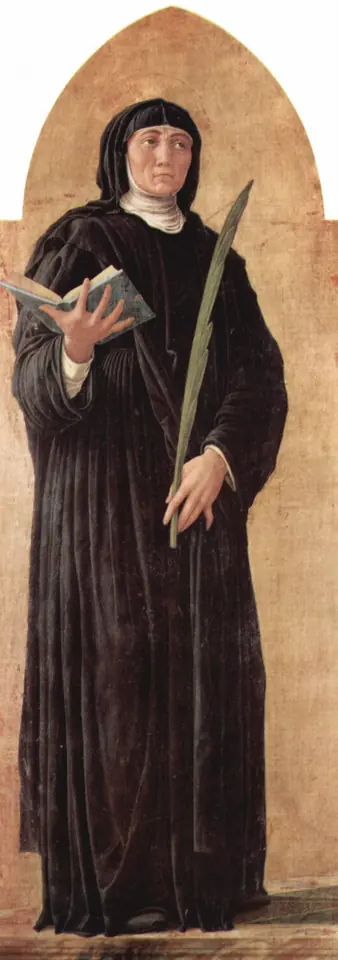
- A book: the Rule of St. Benedict, or the Scriptures. Mantegna gives her an open book and the palm often given to holy virgins.
- Rain, clouds or lightning: in narrative scenes of her last meeting with Benedict, and sometimes in single images.
- Next to St. Benedict: the most common way to find her. When a nun in black stands beside a bearded abbot in black, she is almost always Scholastica.


Baroque painters liked the drama of her death, with the dove escaping toward the light, as in Restout's canvas. The monks of the Beuron school in Germany, around 1900, gave the pair a calm, stylized look, as in the Prague wall painting above.


Feast day and where St. Scholastica is honored
The Catholic Church celebrates St. Scholastica on February 10, a memorial in the General Roman Calendar. On that day the Liturgy of the Hours reads Gregory's account of the storm. See her neighbors on the feast days calendar.
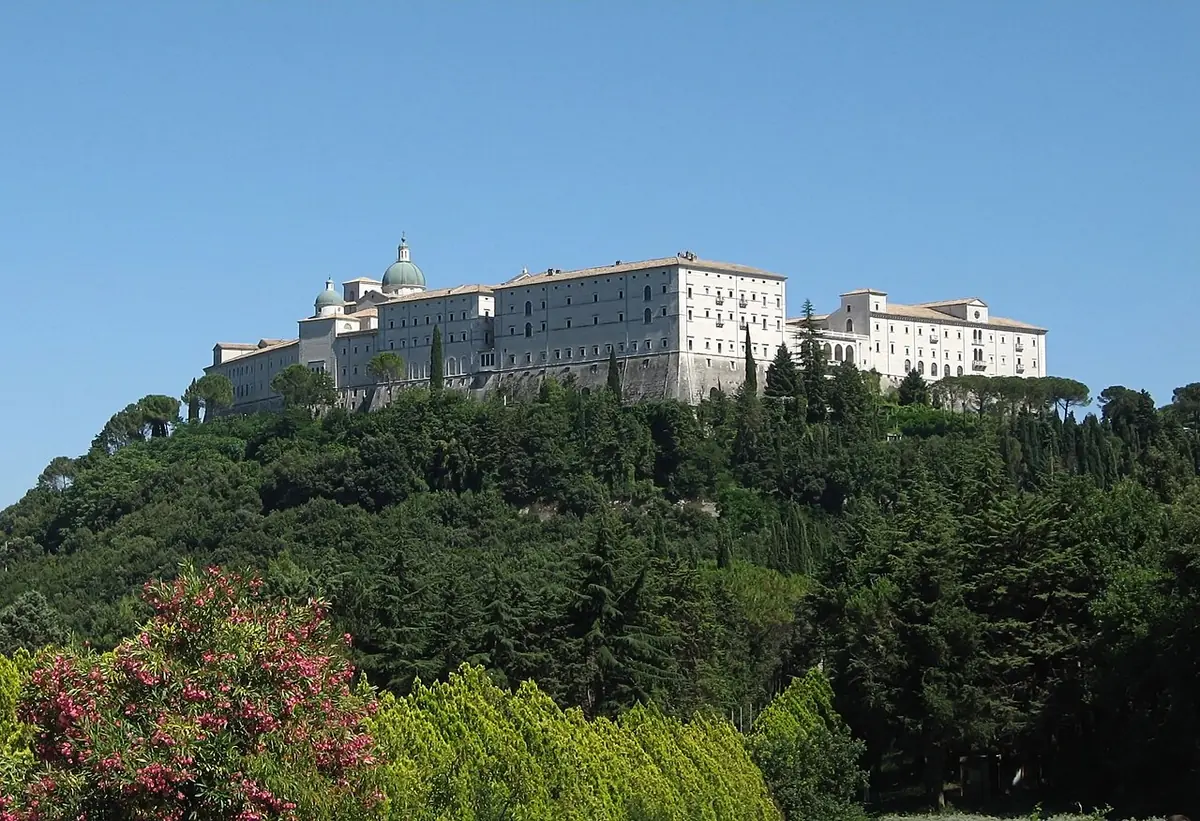
Monte Cassino
Gregory says Benedict buried his sister in his own grave at Monte Cassino, and the Catholic Encyclopedia says that Benedict "was buried in one tomb with his sister." Their tomb lies beneath the high altar of the abbey church. The monastery has been destroyed and rebuilt several times, most recently after the Allied bombing of February 1944. A statue of Scholastica stands in one of its cloisters.


Fleury and Le Mans
In the 7th century, while Monte Cassino lay abandoned after the Lombards sacked it, monks from France are said to have taken the bones of both saints north. A Benedictine martyrology published by the Order of St. Benedict records that the Abbey of Fleury (Saint-Benoît-sur-Loire) commemorates this translation and that "the relics of St. Scholastica were at one time preserved in Mans." Monte Cassino has always held that the relics never left.

Subiaco
At Subiaco, east of Rome, where Benedict first lived as a hermit, a monastery bears her name. The Monastery of Santa Scolastica is also where the first printing press in Italy was set up in the 1460s.


Prayer to St. Scholastica
The Roman Missal gives this Collect for her memorial (English translation, 2011):
As we celebrate anew the Memorial of the Virgin Saint Scholastica, we pray, O Lord, that, following her example, we may serve you with pure love and happily receive what comes from loving you. Through our Lord Jesus Christ, your Son, who lives and reigns with you in the unity of the Holy Spirit, God, for ever and ever.
An older Collect for her feast, found in Benedictine manuscripts and given by the Order of St. Benedict in English, recalls the dove:
O God, to show us where innocence leads, you made the soul of your virgin Saint Scholastica soar to heaven like a dove in flight. Grant through her merits and her prayers that we may so live in innocence as to attain to joys everlasting. This we ask through our Lord.
Benedictine nuns and sisters keep her feast with special solemnity, and Catholics ask her prayers for women in religious life, for the grace of loving prayer, and for safety in storms.
Frequently asked questions
Who was St. Scholastica?
The sister of St. Benedict of Nursia, the father of Western monasticism, and a nun consecrated to God from childhood. Benedictine tradition honors her as the first Benedictine nun and the foundress of Benedictine women's communities. She died around 543 and was buried in Benedict's tomb at Monte Cassino.
Were St. Scholastica and St. Benedict twins?
Gregory the Great calls her only Benedict's sister. The tradition that they were twins is later; the Catholic Encyclopedia notes that St. Bede accepted it. Benedictines have long honored them as twins.
What is the story of St. Scholastica and the storm?
At their last yearly meeting she begged Benedict to stay the night and talk about heaven. He refused, since his Rule kept him in the monastery. She bowed her head on her hands and prayed, and a storm broke out of a clear sky, so he could not leave. "I desired you to stay, and you would not hear me," she told him; "I have desired it of our good Lord, and he has granted my petition."
Why is St. Scholastica shown with a dove?
Gregory writes that three days after their last meeting, Benedict, standing in his cell, saw his sister's soul ascend into heaven "in the likeness of a dove." The dove became her chief emblem.
What is St. Scholastica the patron saint of?
Nuns, and especially Benedictine nuns and sisters, and she is invoked against storms and lightning because of the storm at her last meeting with her brother. Many Benedictine women's monasteries, schools and colleges bear her name.
Sources
- Order of St. Benedict: Saint Scholastica, Virgin and Religious Founder (Gregory the Great, Dialogues II, chapters 33–34)
- Gregory the Great, Dialogues, Book II: Life of Saint Benedict (P. W. translation, 1608, ed. Edmund Gardner, 1911), Order of St. Benedict
- Catholic Encyclopedia (1907): St. Benedict of Nursia
- Catholic Encyclopedia (1911): Abbey of Monte Cassino
- Order of St. Benedict: Saints of the Order of Saint Benedict, S–Z (Translation of St. Benedict)
- Vatican News: St. Scholastica, Virgin, sister of St. Benedict
- Catholic Culture: Memorial of St. Scholastica, Virgin (Mass propers and collect)
- Roman Martyrology, February 10