St. Polycarp of Smyrna
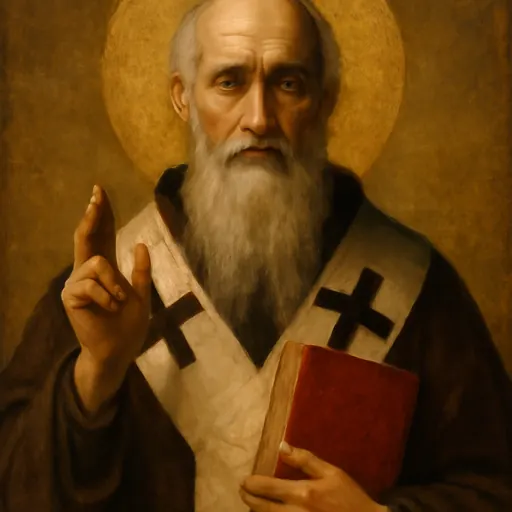
St. Polycarp was the bishop of Smyrna (now Izmir, Turkey), a disciple of the apostle John, and one of the last living links between the apostles and the later Church. Around 155, at about 86, he was burned at the stake for refusing to curse Christ. His feast day is February 23, and the account of his death is one of the oldest Christian martyr stories outside the New Testament.
Who was St. Polycarp?
Polycarp was bishop of Smyrna, a rich port on the Aegean coast of Asia Minor that is now Izmir in Turkey. He lived from about 69 to about 155, long enough to connect two worlds. As a young man he had heard the apostles. As an old man he taught St. Irenaeus, who carried what he learned to Gaul and wrote it down.
Irenaeus, writing about 180, says Polycarp "was not only instructed by apostles, and conversed with many who had seen Christ, but was also, by apostles in Asia, appointed bishop of the Church in Smyrna." Tradition, following Irenaeus and St. Jerome, names his teacher as St. John the Apostle.


The letter the Church of Smyrna wrote about his martyrdom is one of the oldest surviving accounts of a Christian martyr after the Acts of the Apostles, and one of the first to speak of Christians gathering each year on a martyr's anniversary.
The life of St. Polycarp
Disciple of John
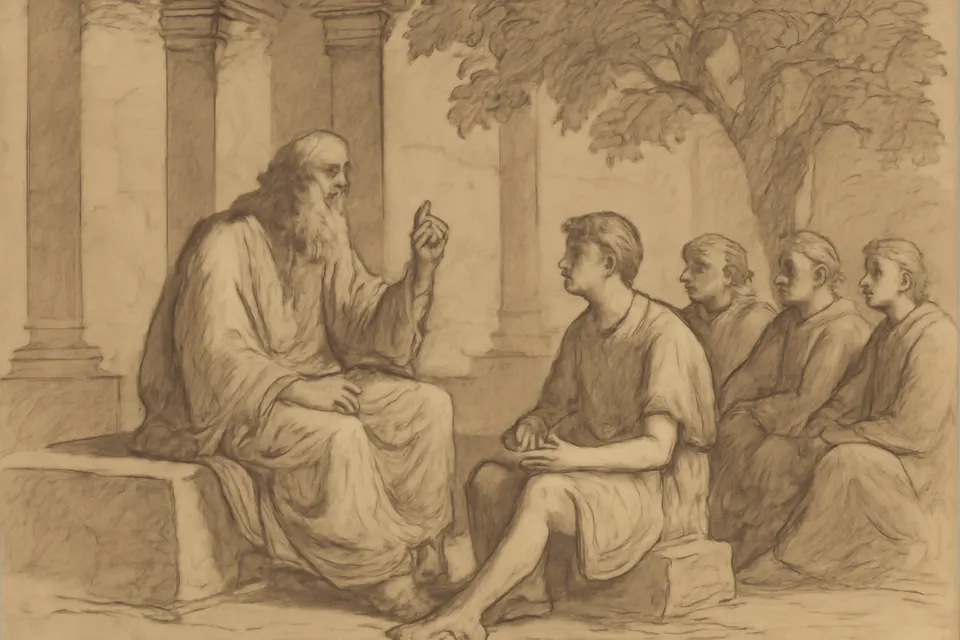
Irenaeus never forgot the old bishop. In a letter to a boyhood friend named Florinus, preserved by the historian Eusebius, he wrote: "I am able to describe the very place in which the blessed Polycarp sat as he discoursed ... and the accounts which he gave of his intercourse with John and with the others who had seen the Lord."
Friend of Ignatius
Early in the 2nd century, St. Ignatius of Antioch passed through Smyrna under guard on his way to die in Rome. He wrote one of his seven letters to Polycarp. When the Christians of Philippi asked Polycarp for copies of Ignatius's letters, he sent them with a letter of his own, his Epistle to the Philippians, the only writing of his that survives. It is short and full of lines from the New Testament. "Let us then be imitators of His patience," he wrote, "and if we suffer for His name's sake, let us glorify Him."
Defender of the apostles' teaching
Irenaeus says that when Marcion, who rejected the Old Testament, met him and asked, "Do you know me?" Polycarp answered, "I do know you, the first-born of Satan." Late in life he went to Rome to discuss the date of Easter with Pope Anicetus. They did not agree, but Anicetus let him celebrate the Eucharist, "and they parted from each other in peace."
The martyrdom of St. Polycarp
The Church of Smyrna described his death in a letter to the Church of Philomelium. The quotations below are from the translation by Alexander Roberts and James Donaldson in the Ante-Nicene Fathers (1885).
When persecution broke out, the crowd in the stadium shouted, "Away with the Atheists; let Polycarp be sought out!" Friends persuaded him to hide on a farm. Three days before his arrest he dreamed his pillow was on fire and told his companions, "I must be burnt alive." A tortured servant boy gave away his hiding place. When the soldiers came, Polycarp refused to run, saying, "The will of God be done." He had food set out for them and asked for an hour to pray. He prayed for two, and some of the men began to regret coming for "so godly and venerable an old man."

In the stadium the proconsul told him to swear by the fortune of Caesar and curse Christ. Polycarp answered:
Eighty and six years have I served Him, and He never did me any injury: how then can I blaspheme my King and my Saviour?
Threatened with fire, he replied, "You threaten me with fire which burns for an hour, and after a little is extinguished." The crowd gathered wood from the shops and baths. He asked not to be nailed to the stake, only bound, and prayed aloud, thanking God "that You have counted me, worthy of this day and this hour, that I should have a part in the number of Your martyrs."
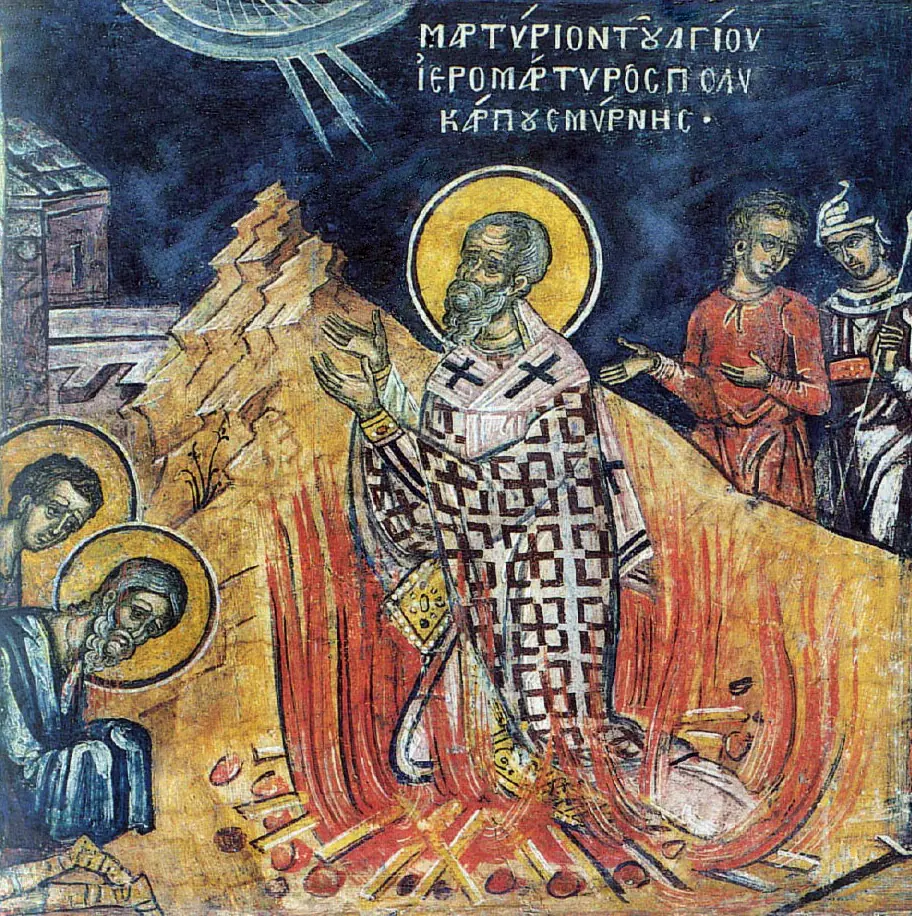

The letter dates his death to "the great Sabbath"; the Catholic Encyclopedia (1911), following the reading "the seventh day before the Kalends of March," puts it on Saturday, February 23, most likely in 155, though it also discusses the alternative of 166.
The miracles of St. Polycarp
The Smyrna letter claims to be an eyewitness account, but no miracle of Polycarp has been formally examined, so all are labeled traditional here.
- Traditional: the flames forming an arch. The letter says the fire, "shaping itself into the form of an arch, like the sail of a ship when filled with the wind, encompassed as by a circle the body of the martyr," that he looked "as bread that is baked, or as gold and silver glowing in a furnace," and that a scent like frankincense rose from the pyre. An executioner was then sent to stab him, and his blood put out the fire.
- Traditional: the dove that some texts say flew from the wound. The Catholic Encyclopedia thinks it came from a copying error or a later addition.
- Traditional: the voice from heaven. As he entered the stadium, Christians present heard a voice say, "Be strong, and show yourself a man, O Polycarp!"


Why St. Polycarp is the patron saint of earaches
Modern lists of patron saints name Polycarp the patron of people with earaches; no early source explains why. Smyrna, where the Catholic Church of St. Polycarp stands, honors him as its own saint. See all the patron saints.
Symbols of St. Polycarp in art
Polycarp is an old man, usually with a long white beard, dressed as a bishop: in Eastern icons, the white omophorion with black crosses and a Gospel book; in Western images, a pallium and sometimes a book for his letter. The Ravenna mosaic shows him as a martyr in white carrying a crown. Scenes of his death put him on a pyre with the flames curving around him.


Feast day, relics and prayer
The Catholic Church celebrates Polycarp on February 23, a memorial in the General Roman Calendar; before 1969 the date was January 26. The Orthodox Church also keeps February 23. See the feast day calendar.
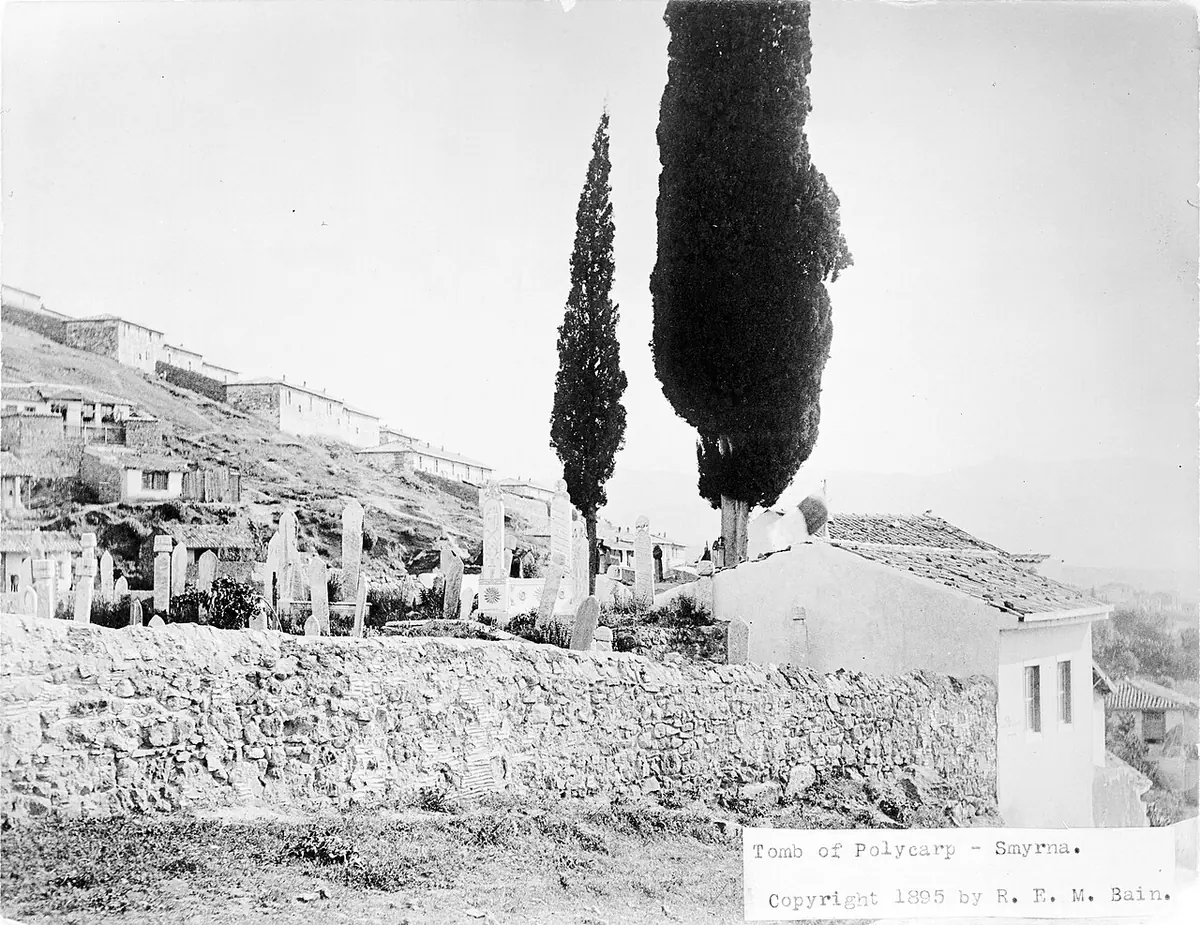
The Smyrna letter says the Christians gathered his bones, "more precious than the most exquisite jewels," laid them "in a fitting place," and planned to keep the anniversary of his martyrdom there. That grave is lost, though 19th-century visitors were shown a traditional tomb above the city. The church of Sant'Ambrogio della Massima in Rome claims relics under its main altar.

The Catholic Church prays this collect on his memorial (English translation of the Roman Missal, as given by Catholic Culture):
God of all creation, who were pleased to give the Bishop Saint Polycarp a place in the company of the Martyrs, grant, through his intercession, that sharing with him in the chalice of Christ, we may rise through the Holy Spirit to eternal life.
Many Christians also pray Polycarp's own prayer from the pyre, preserved in chapter 14 of the Martyrdom.
Frequently asked questions
Who was St. Polycarp?
The bishop of Smyrna in Asia Minor in the first half of the 2nd century. St. Irenaeus, who knew him, wrote that he had been taught by apostles and had talked with many who had seen Christ. He wrote a letter to the Philippians that survives, and he was martyred around 155.
What did St. Polycarp say before he died?
When the Roman proconsul told him to curse Christ, he answered, in the Roberts and Donaldson translation of the Martyrdom of Polycarp, "Eighty and six years have I served Him, and He never did me any injury: how then can I blaspheme my King and my Saviour?" Other translations render it "Eighty-six years I have served him."
When is St. Polycarp's feast day?
February 23, in both the Catholic and Orthodox calendars. The Catholic Church kept it on January 26 until the calendar reform of 1969. February 23 is the date given in the Smyrnaeans' letter about his death.
What is St. Polycarp the patron saint of?
Modern lists of patron saints name him the patron of people with earaches. No early source explains this. He is also honored as the patron of his city, Smyrna, today's Izmir, where a Catholic church is dedicated to him.
Sources
- Catholic Encyclopedia (1911): St. Polycarp
- Martyrdom of Polycarp (Roberts and Donaldson translation, Ante-Nicene Fathers, Vol. 1)
- Polycarp, Epistle to the Philippians (Ante-Nicene Fathers, Vol. 1)
- Irenaeus, Against Heresies, Book III, chapter 3
- Eusebius, Church History, Book V (Irenaeus's letter to Florinus, chapter 20)
- Eusebius, Church History, Book IV (chapters 14 and 15)
- Orthodox Church in America: Hieromartyr Polycarp, Bishop of Smyrna
- Orthodox Church in America: Hieromartyr Polycarp, Troparion and Kontakion
- Catholic Culture: Memorial of St. Polycarp, Bishop and Martyr (February 23)
- Roman Martyrology, February 23