St. Gabriel of Our Lady of Sorrows
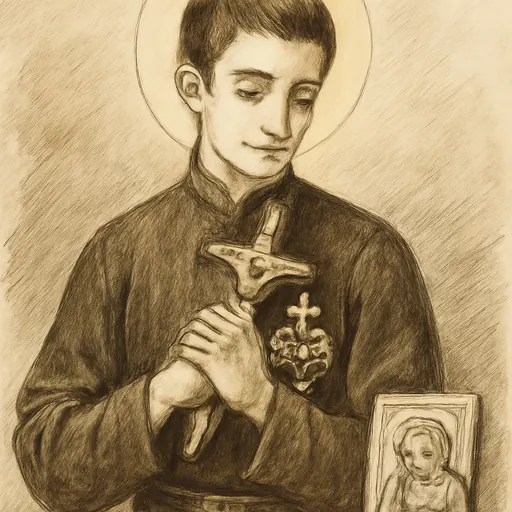
St. Gabriel of Our Lady of Sorrows was Francesco Possenti (1838–1862), a lively young man from Spoleto who joined the Passionists at eighteen and died of tuberculosis at 23 before he could be ordained a priest. He was canonized in 1920 and is the patron saint of students and young people and of the Abruzzo region of Italy. His feast day is February 27.
Who was St. Gabriel of Our Lady of Sorrows?
Francesco Possenti was born in Assisi on March 1, 1838, the eleventh of thirteen children of Sante Possenti, a lawyer in the service of the Papal States, and Agnese Frisciotti. He was baptized the same day in the Church of San Rufino, where St. Francis of Assisi had been baptized. When he was four, his mother died, and the family settled in Spoleto, where his father held a judicial post.
He became a Passionist at eighteen and died of tuberculosis at twenty-three, still a student for the priesthood. Nothing he did in the monastery looked extraordinary. What drew the Church's attention was how completely he kept his order's rule, his cheerfulness, and his love for the sorrowing Mother of Jesus. He was canonized in 1920.


The life of St. Gabriel
"The dancer" of Spoleto
Francesco studied with the Christian Brothers and then at the Jesuit college in Spoleto, where he did well. He was also, by every account, fond of the theater, fine clothes and parties; the Hage and Ward Life mentions "his fondness for theatres and balls," and later biographers say friends called him "the dancer." Twice, in 1851 and 1853, a serious throat illness brought him close to death, and both times he promised to become a religious if he recovered. Both times he recovered and put it off. The second time he credited his cure to Blessed Andrew Bobola and even applied to the Jesuits, but never followed through.
The icon in the procession
In 1855 cholera killed his older sister Maria Luisa, who had raised him after their mother's death. The shrine's biography says he then chose the Virgin Mary as the mother who would not leave him. On August 22, 1856, Spoleto carried its ancient icon of the Virgin through the cathedral in thanksgiving for the end of the epidemic. Francesco went along, by his own later admission more out of curiosity than devotion.
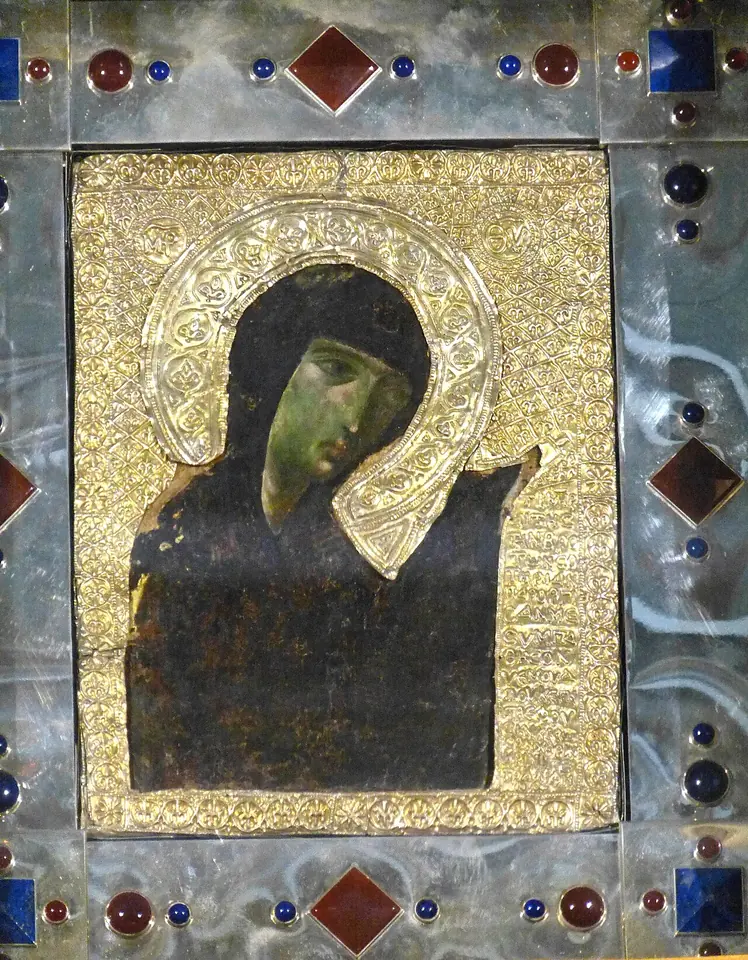

As the icon passed, he heard within himself, in the words of the 1910 Life:
Why! thou art not made for the world! . . . What art thou doing in the world? ... Hasten, become a religious! . . .
The shrine gives the words in Italian with his family nickname: "Checchino, il mondo non è per te! Presto, fatti religioso!" This is a reported experience, known from his own account.

Passionist
His father resisted, but within weeks Francesco left for the Passionist novitiate at Morrovalle, in the Marche. On September 21, 1856, he received the habit and the name Gabriel of Our Lady of Sorrows, and he made his vows on September 22, 1857. The Passionists, founded by St. Paul of the Cross, take a special vow to keep alive the memory of Christ's Passion.
In July 1859 the students moved, to escape the fighting of the Italian wars of unification, to an old Franciscan friary at Isola del Gran Sasso in the Abruzzo. Gabriel received minor orders at Penne in May 1861, but by that summer tuberculosis had taken hold. That Christmas he wrote to his father that he did nothing but bless "la misericordiosa mano di quella Vergine che mi tolse dal mondo," the merciful hand of the Virgin who took him from the world. Before he died he asked that his spiritual notes be burned. He died at dawn on February 27, 1862. His director, Father Norbert Cassinelli, testified that he had no doubt the Virgin herself came for him at that moment.
The miracles of St. Gabriel
- Maria Mazzarella and Dominic Tiberi: approved. After the friary at Isola had stood empty for years, his grave was opened in October 1892, and cures began at once. Maria Mazzarella, a young woman of Isola, was healed of advanced tuberculosis, and Dominic Tiberi, a farmer from nearby Colliberti, of a severe hernia after touching the gravestone. These two cures were accepted for his beatification in 1908.
- The healing of Gemma Galgani: reported. St. Gemma Galgani believed that Gabriel had obtained her cure from a dangerous illness and guided her toward the Passionists.
- The Garibaldi soldiers: traditional. A story says that in 1860 he faced down a band of soldiers looting Isola, took a revolver from one of them, shot a lizard in the road and sent them away. It is not in the 1910 Life, and its sources are late.
When the Passionists tried to move his body elsewhere, the townspeople of Isola surrounded the church. "Gabriele è morto tra noi," they said, according to the shrine: Gabriel died among us, and he is ours.

Why St. Gabriel is the patron of students and youth
He died young, in the middle of his studies, and Popes Leo XIII and Pius X wished him to be regarded, in the Catholic Encyclopedia's words, as "the chief patron of the youth of today" and of young religious. In 1959 Pope John XXIII named him principal patron of the Abruzzo. Every spring, thousands of high school students from the Abruzzo and the Marche visit his tomb about a hundred days before their final exams. See more patrons of students on our patron saints page.
Symbols of St. Gabriel in art
No authentic portrait of him survives, so his pictures were painted from the descriptions of people who knew him, and from 1908 a bust made with advice from his brother Michele. He is a young man in the black Passionist habit with the white heart-shaped badge on the breast, bearing a cross and the words Jesu XPI Passio. He usually holds a crucifix or a picture of Our Lady of Sorrows, her heart pierced by a sword, and sometimes a lily.


His shrine and feast day
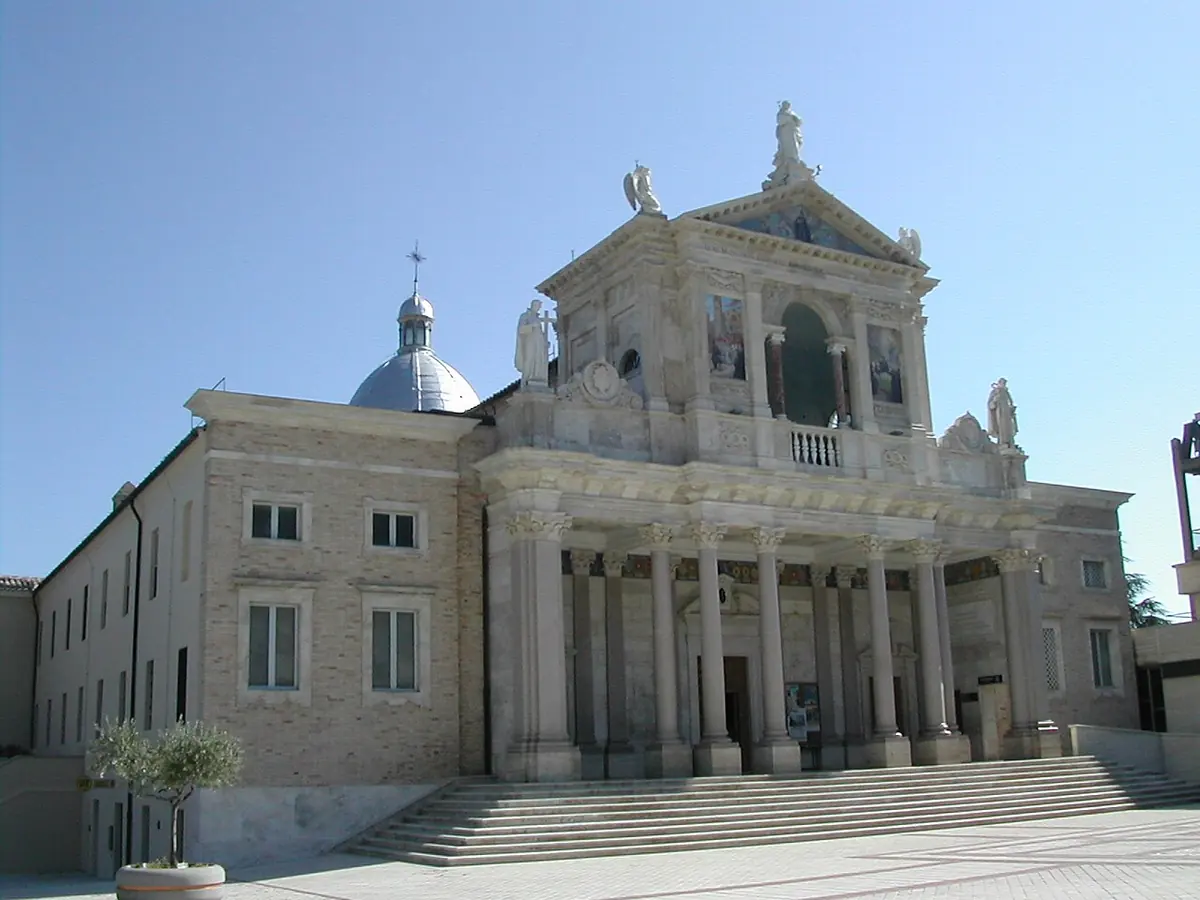
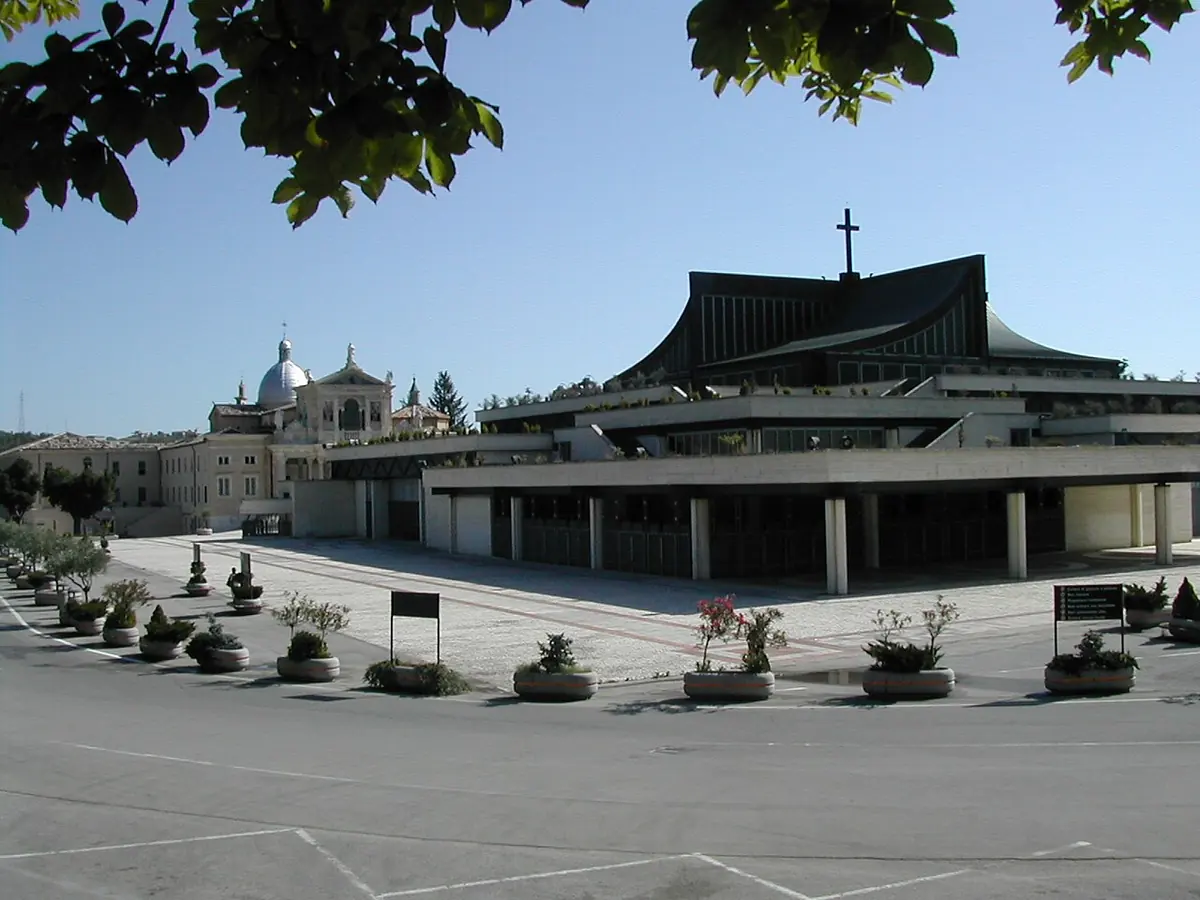
Gabriel is buried at Isola del Gran Sasso, beneath the Gran Sasso mountains. The little friary church was enlarged for his beatification, made a minor basilica by Pius XI in 1929, and joined by a large modern sanctuary consecrated in 2014. In his 1959 decree John XXIII noted pilgrims coming not only from all of Italy but from distant countries. A bronze bust holding a relic of his arm is taken on pilgrimage to Italian communities abroad.

His feast is February 27; see the other saints of that week on our feast days page.
Prayer to St. Gabriel
No prayer of his own composition survives; he had his notes burned. The shrine publishes a novena to St. Gabriel in Italian, which asks his help in each area of a young person's life and ends each day with an Our Father, a Hail Mary or a Glory Be. Students, especially, ask him to pray for them before exams.
Frequently asked questions
What is St. Gabriel of Our Lady of Sorrows the patron saint of?
Young people, students and seminarians. Popes Leo XIII and Pius X wished him to be regarded as patron of the youth of their day, and in 1959 Pope John XXIII named him principal patron of the Abruzzo region, where he died. Italian high school students visit his tomb each spring before their final exams.
Did St. Gabriel Possenti really drive off Garibaldi's soldiers with a pistol?
The story is traditional. It says that in 1860 he took a revolver from a band of soldiers who were looting Isola, shot a lizard to show his aim, and made them leave. It does not appear in the 1910 English Life drawn from the beatification process and comes from later popular biographies.
When is St. Gabriel of Our Lady of Sorrows' feast day?
February 27, the day he died in 1862. It is kept by the Passionists and throughout Italy and is listed in the Roman Martyrology, but he is not on the General Roman Calendar.
How did St. Gabriel get his religious name?
When he received the Passionist habit on September 21, 1856, Francesco Possenti took the name Gabriel of Our Lady of Sorrows (Gabriele dell'Addolorata), after his devotion to the Virgin Mary's sorrows at the foot of the cross.
Sources
- Catholic Encyclopedia (1909): Bl. Gabriel Possenti
- Hyacinth Hage and Nicholas Ward, The Life of Blessed Gabriel of Our Lady of Sorrows (1910, Internet Archive)
- Santuario di San Gabriele: Scheda biografica
- Santuario di San Gabriele: L'antica basilica
- Santuario di San Gabriele: Patrono d'Abruzzo (decree of John XXIII, 1959)
- Santuario di San Gabriele: Busto di San Gabriele
- Santuario di San Gabriele: Novena di San Gabriele
- Roman Martyrology, February 27