St. Stephen, the First Martyr
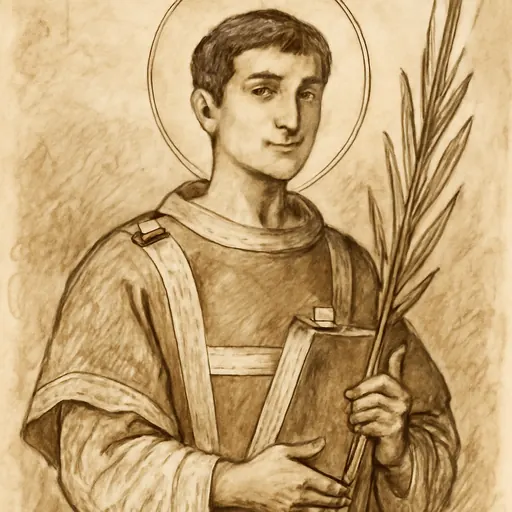
St. Stephen was one of the seven men the apostles chose to serve the poor of the Jerusalem church, the first of the deacons, and the first Christian martyr. The Acts of the Apostles tells how he was stoned outside Jerusalem while praying for the men who killed him, with the young Saul, later St. Paul, looking on. His feast day is December 26, the day after Christmas, and he is the patron saint of deacons.
Who was St. Stephen?
Stephen was a member of the first Christian community in Jerusalem, a few years after the death and resurrection of Jesus. Everything known about his life comes from two chapters of the Acts of the Apostles (6:1 to 8:2). He was one of seven men chosen to look after the community's poor, and the first one named. Acts calls him "a man full of faith and of the Holy Spirit" (Acts 6:5, RSV). He preached, worked "great wonders and signs among the people" (6:8), was put on trial before the council and was stoned to death outside the city. That makes him the first Christian martyr, or protomartyr.
His name is Greek for "crown" or "wreath," which suggests to the Catholic Encyclopedia that he was a Hellenist, a Greek-speaking Jew born outside the land of Israel. Nothing certain is known about his family or how he came to believe in Jesus. The Orthodox life says he was about thirty when he died.


The life of St. Stephen
One of the seven
Acts 6 opens with a quarrel in the young church. The Greek-speaking believers, the "Hellenists," complained that their widows were being overlooked in the daily distribution of food. The twelve apostles called the community together and said they could not "give up preaching the word of God to serve tables" (6:2). They told the disciples to pick "seven men of good repute, full of the Spirit and of wisdom" (6:3) for the work.
The community chose Stephen, Philip, Prochorus, Nicanor, Timon, Parmenas and Nicolaus. "These they set before the apostles, and they prayed and laid their hands upon them" (6:6).


Acts never actually calls the seven "deacons." Pope Benedict XVI, in a 2007 catechesis on Stephen, said that tradition sees in the group "the seed of the future ministry of 'deacons.'"
Preacher and debater
Stephen did more than wait on tables. Men from the synagogues of Greek-speaking Jews in Jerusalem argued with him, "but they could not withstand the wisdom and the Spirit with which he spoke" (6:10). They found witnesses to accuse him before the council of speaking "against this holy place and the law" (6:13). Then, Acts says, "all who sat in the council saw that his face was like the face of an angel" (6:15).


The speech before the council
Stephen's answer fills Acts 7, the longest speech in the book. He retells the history of Israel from Abraham to Solomon's Temple, showing how often God's people refused the leaders God sent them, and insists that "the Most High does not dwell in houses made with hands" (7:48). He ended by charging his judges with betraying and murdering "the Righteous One" whom the prophets foretold (7:52). Benedict XVI called the speech a reading of the whole Old Testament "in a Christological key."
The stoning of Stephen
The council was enraged. Then, Acts says, Stephen "gazed into heaven and saw the glory of God, and Jesus standing at the right hand of God," and told them:
"Behold, I see the heavens opened, and the Son of man standing at the right hand of God." (Acts 7:56, RSV)
They covered their ears, rushed at him and drove him out of the city to stone him. "The witnesses laid down their garments at the feet of a young man named Saul" (7:58). Stephen's last words echo two sayings of Jesus on the cross:
"Lord Jesus, receive my spirit."
"Lord, do not hold this sin against them." (Acts 7:59–60, RSV)
"And when he had said this, he fell asleep." "Devout men buried Stephen, and made great lamentation over him" (8:2).


Saul and the first persecution
Acts sets Stephen's death beside the first appearance of Saul of Tarsus: "And Saul was consenting to his death" (8:1). A persecution followed, and the believers scattered through Judea and Samaria, preaching as they went. Saul was "ravaging the church" (8:3) until his conversion on the road to Damascus made him St. Paul. Years later Paul recalled that he had stood by, approving, and kept the garments of Stephen's killers (Acts 22:20).
St. Fulgentius of Ruspe, a North African bishop of the early 6th century, joined the two men in a sermon still read on Stephen's feast. In the translation given by Catholic Culture:
"Supported by the strength of charity, he overcame Saul, who was so cruelly raging against him; and him whom he had as a persecutor on earth, he deserved to have as a companion in heaven."


The finding of St. Stephen's relics
For almost four centuries no one knew where Stephen was buried. In 415, the Catholic Encyclopedia reports, a priest named Lucian "learned by revelation" that the body lay at Caphar Gamala, north of Jerusalem. Lucian's own letter says that Gamaliel, the teacher of the Law in Acts 5, appeared to him in a dream; the Orthodox life adds that Gamaliel had buried the martyr on his own estate. The dream is traditional. The discovery itself, in 415, is well documented by writers of the time.

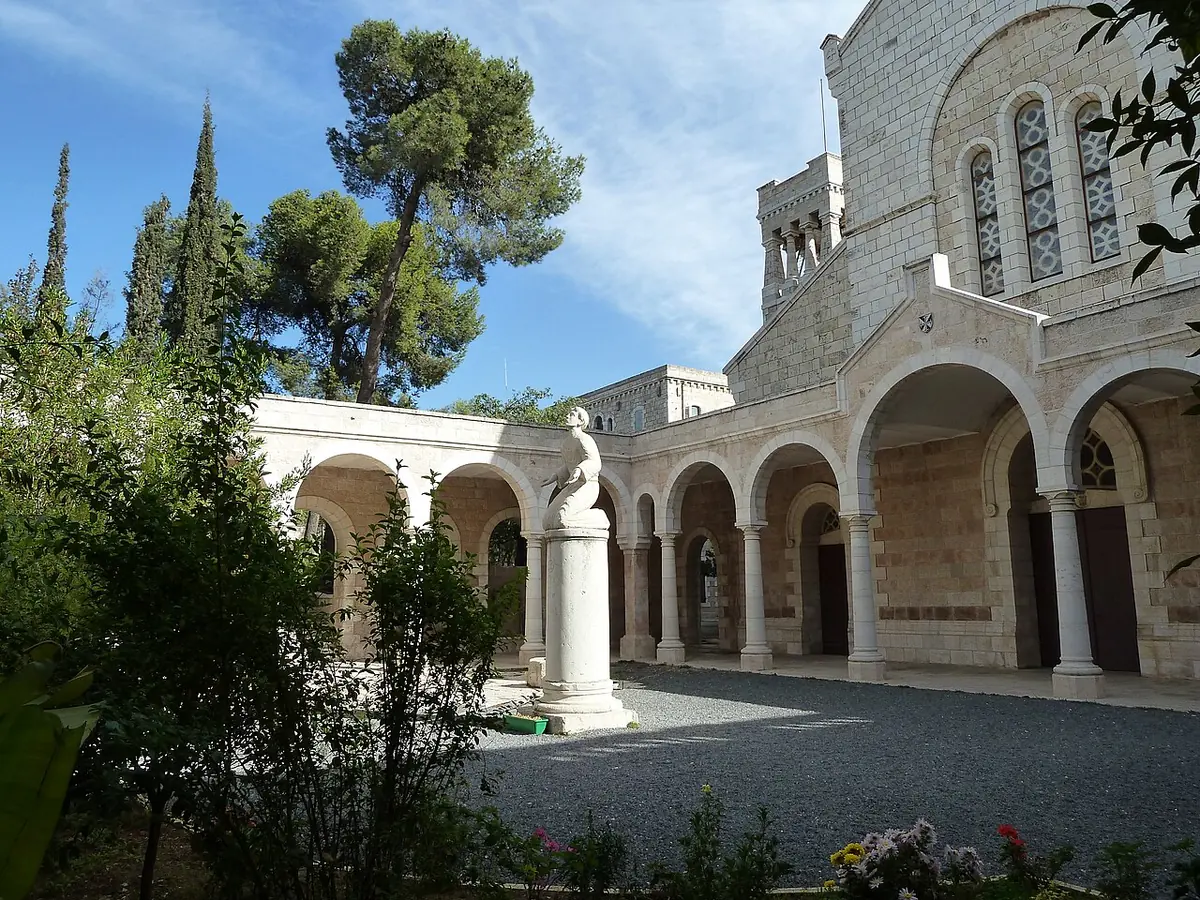
The relics went first to the church on Mount Sion and, in 460, to a basilica built by the Empress Eudocia outside the Damascus Gate, where tradition placed the stoning. The Dominicans built the present Basilica of Saint-Étienne on its foundations, beside their École Biblique. The Orthodox Church keeps September 15 for the uncovering of the relics and August 2 for their transfer to Constantinople.

The miracles of St. Stephen
In Acts
Acts says Stephen "did great wonders and signs among the people" (6:8) but describes none of them.
At his relics in North Africa
Portions of the relics traveled quickly, and within a few years shrines to Stephen stood at Uzalis, Calama and Hippo in Roman North Africa. Hippo's bishop, St. Augustine, had accounts of the healings written down and read aloud in church. In The City of God (Book XXII, chapter 8), finished around 426, he wrote that the healings at Calama and Hippo alone "would fill many volumes," and that at Hippo, within two years of the relics' arrival, those already published "amount to almost seventy." All of these are reported miracles: claims recorded by an eyewitness bishop, not formally investigated in the modern sense.
Among the stories Augustine tells:
- The blind woman at Tibilis: she pressed to her eyes the flowers carried by the bishop who brought Stephen's relics "and immediately saw."
- Martial: an old pagan nobleman who asked for baptism after his son-in-law prayed for him at Stephen's shrine. To the end he kept repeating, without knowing their origin, Stephen's last words: "Christ, receive my spirit."
- The boy and the oxcart: a small boy run over by a wagon wheel revived unhurt when his mother laid him at the shrine.
- Paulus and Palladia: a brother and sister from Cappadocia with a violent trembling of the limbs. On Easter Sunday the brother fell down as if asleep at the shrine in Hippo and rose cured; three days later, while Augustine was preaching about it, his sister was cured the same way.

Rome and St. Lawrence
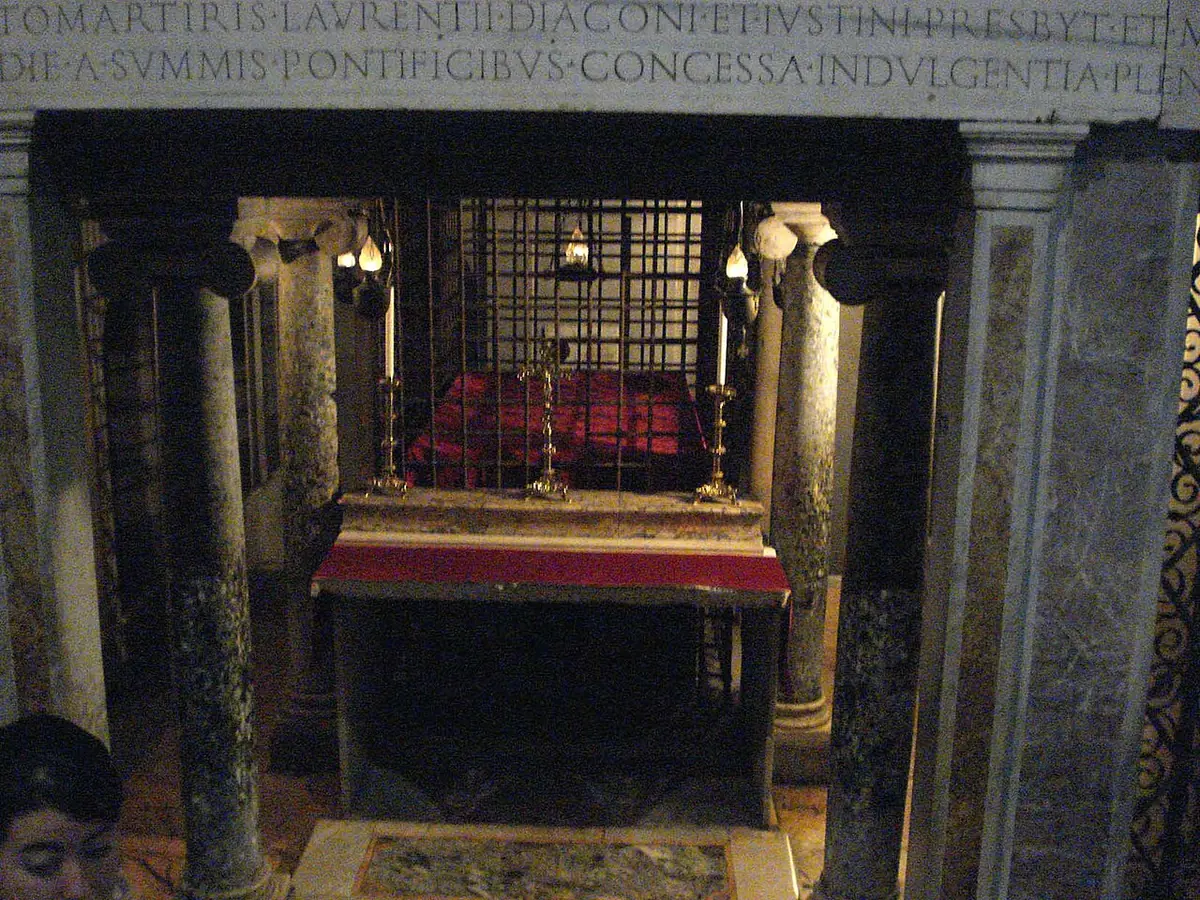
The Golden Legend says that when Stephen's relics were later brought to Rome and placed in the tomb of the deacon martyr St. Lawrence, Lawrence's body moved aside to make room. The story is traditional. The two deacons still share a tomb under the high altar of the Basilica of San Lorenzo fuori le Mura.

Why St. Stephen is the patron saint of deacons
Stephen heads the list of the seven, and the Orthodox Church calls him "Archdeacon" for that reason. His ministry joined service of the poor with preaching, as a deacon's does. His other patronages come from his death and from folk custom:
- Stonemasons and bricklayers: from the stones of his martyrdom.
- Horses: Catholic Culture notes that "from early times" Stephen was venerated as patron of horses in much of Europe, though "there is no historical basis" for it in his life. Farmers had their horses blessed on December 26 and rode them around the church.
See all patronages on our patron saints page.
Symbols of St. Stephen in art
Stephen is almost always a young, beardless man, often tonsured. Look for:
- The dalmatic: the deacon's wide-sleeved tunic, often red or richly embroidered, as in Crivelli's panel and Juan de Juanes's two paintings on this page.
- Stones: resting on his head, shoulders or book, or held in his hand or in a fold of his vestment. Crivelli places them like jewels on his head.
- The martyr's palm, and sometimes a crown or wreath, a play on his Greek name, Stephanos.
- A Gospel book or a censer: a deacon's duties in the liturgy.
He is often paired with St. Lawrence, the other famous deacon martyr, who holds a gridiron. Eastern icons show Stephen as a youthful archdeacon in a white sticharion with a long orarion (the deacon's stole) over his shoulder, holding a censer and sometimes a small model of a church.
St. Stephen's Day
The feast of St. Stephen falls on December 26, inside the octave of Christmas, followed by St. John the Apostle on December 27 and the Holy Innocents on December 28. St. Fulgentius tied it to Christmas: "Yesterday we celebrated the temporal birth of our Eternal King; today we celebrate the triumphant passion of His soldier." See the neighboring feasts on our feast days page.
Boxing Day
In Britain, December 26 is also Boxing Day. Catholic Culture gives the usual explanation: medieval priests opened the churches' alms boxes on the day after Christmas and gave the money to the poor, and apprentices later broke open their own clay money boxes on the same day.
"Good King Wenceslas"
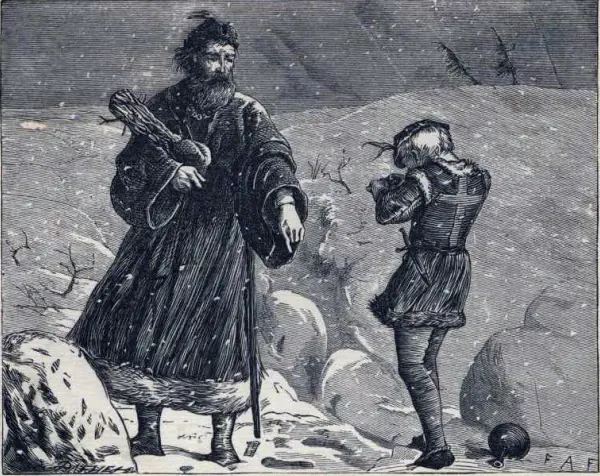
The best-known song about the day isn't about Stephen. John Mason Neale, an Anglican priest, published "Good King Wenceslas" in 1853:
Good King Wenceslas looked out, on the Feast of Stephen,
When the snow lay round about, deep and crisp and even
The king, St. Wenceslaus of Bohemia, sees a poor man gathering firewood and sets out with his page, carrying meat, wine and pine logs to his door.

Wren Day in Ireland
In Ireland, St. Stephen's Day is also Wren Day, when "Wren Boys" in straw suits go from house to house singing, "The wren, the wren, the king of all birds, / On Saint Stephen's Day was caught in the furze," and collecting money.


Prayer to St. Stephen
The Church's own prayer for the feast is the collect of the Mass of December 26 in the Roman Missal. The older English translation, given by Catholic Culture, reads:
We beseech Thee, O Lord, grant us to imitate what we revere, that we may learn to love also our enemies; for we celebrate his birthday, who knew to plead even for his persecutors with Thy Son, our Lord Jesus Christ.
The current translation asks that we "may imitate what we worship, and so learn to love even our enemies." Many Catholics pray on this day especially for their enemies and for persecuted Christians.
The prayer most closely tied to Stephen is his own, from Acts 7:60: "Lord, do not hold this sin against them."
Frequently asked questions
When is St. Stephen's feast day?
December 26 in the Catholic Church and in the Anglican and Lutheran calendars, the day after Christmas. The Orthodox Church keeps it on December 27. In Ireland, Britain and much of Europe the day is a public holiday, called St. Stephen's Day or Boxing Day.
Why is St. Stephen called the protomartyr?
"Protomartyr" means "first martyr." Stephen is the first follower of Jesus whose death for the faith the New Testament records (Acts 7). The Orthodox Church calls him "Protomartyr and Archdeacon," because he heads the list of the seven deacons.
What is St. Stephen the patron saint of?
Deacons, because he was the first of the seven chosen in Acts 6. Stonemasons and bricklayers, from the stones of his martyrdom. In much of Europe he was also the patron of horses, and farmers brought their horses to church to be blessed on his day, though the custom has no basis in his life.
Who was Saul in the story of St. Stephen?
Saul of Tarsus, a young Pharisee who watched the cloaks of the men who stoned Stephen and "was consenting to his death" (Acts 8:1, RSV). After his conversion on the road to Damascus he became the apostle Paul. Years later Paul recalled the scene himself in Acts 22:20.
What does St. Stephen's Day have to do with "Good King Wenceslas"?
The carol, written by John Mason Neale in 1853, opens with the king looking out "on the Feast of Stephen," December 26, and going out in the snow to help a poor man. The day was already associated with gifts to the poor, which is also the root of the British name Boxing Day.
Sources
- Acts of the Apostles 6:1–8:3 (Revised Standard Version), Bible Gateway
- Catholic Encyclopedia (1912): St. Stephen
- Benedict XVI, General Audience of 10 January 2007: Stephen, the Protomartyr
- Augustine, The City of God, Book XXII, chapter 8
- Orthodox Church in America: Protomartyr and Archdeacon Stephen
- Catholic Culture: Feast of St. Stephen, First Martyr (liturgical calendar and collect)
- Catholic Culture: Customs of St. Stephen's Day
- Catholic Culture: Celebrating St. Stephen's Day (with St. Fulgentius, Third Sermon on St. Stephen)
- Catholic Culture: "Boxing" Day
- Roman Martyrology, December 26