St. Cyprian of Carthage

St. Cyprian of Carthage was the bishop of Carthage in North Africa from about 248 until his martyrdom on September 14, 258. He led his church through the persecutions of Decius and Valerian, settled how Christians who had denied the faith could return, and wrote On the Unity of the Church. His feast day is September 16, shared with Pope St. Cornelius.
Who was St. Cyprian of Carthage?
Cyprian was bishop of Carthage, the great Roman port near today's Tunis, from about 248. He was a wealthy orator and lawyer before he became a Christian, around 246. In 258 he was beheaded outside the city, the first bishop of Carthage to die as a martyr.
The sources are unusually good: sixty-two of his own letters, his treatises, a biography by his deacon Pontius, and the court record of his two trials. Very little in his story is legend.


He is not Cyprian of Antioch, the converted magician of a later legend.
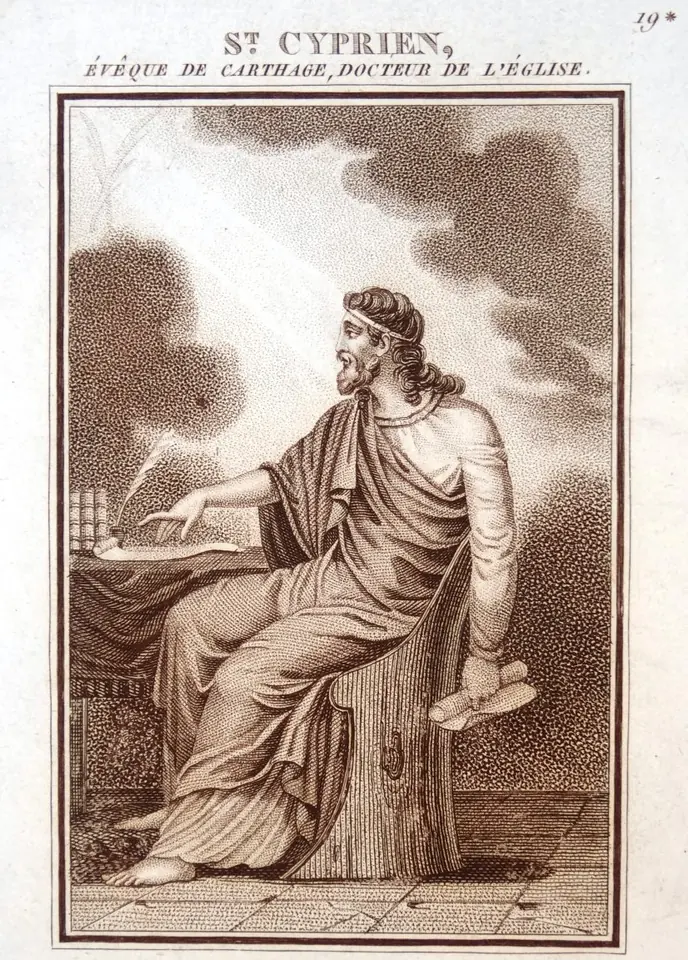

The life of St. Cyprian
Conversion
Cyprian describes his conversion in a letter to a friend, To Donatus, quoted by Benedict XVI in 2007: "When I was still lying in darkness and gloomy night, I used to regard it as extremely difficult and demanding to do what God's mercy was suggesting to me." An elderly priest, Caecilianus, brought him to faith, and he sold much of his property for the poor.
Bishop in hiding
He became bishop about 248, over the opposition of five priests. In January 250 the emperor Decius ordered everyone to sacrifice to the gods, and bishops were to die. Cyprian went into hiding and governed his church by letter, a choice his critics never let him forget; he argued that staying would only endanger others and leave the church leaderless.

The lapsed controversy
Thousands of Carthaginian Christians gave way. Some sacrificed; others bought a libellus, a certificate saying they had sacrificed when they hadn't. When the persecution eased, these "lapsed" Christians wanted to return, and some confessors who had suffered for the faith were handing out letters of pardon by the hundred.
Cyprian took a middle road. He refused to readmit the lapsed without penance, but he rejected the Roman priest Novatian's view that they could never be forgiven. A council at Carthage in 251 judged each case on its merits, with long penance for certificate-buyers and lifelong penance for those who had sacrificed. In 252 or 253, with new persecution looming, another council readmitted all the penitents so the Eucharist would strengthen them. Cyprian also stood by Pope St. Cornelius against Novatian, who had made himself a rival bishop of Rome.
On the Unity of the Church
For that council he wrote his best-known work, On the Unity of the Church. Its sixth chapter holds the line he is quoted for most often. In the Ante-Nicene Fathers translation:
He can no longer have God for his Father, who has not the Church for his mother.
The line is usually quoted in the shorter form "He cannot have God for his Father who has not the Church for his mother." Cyprian meant chiefly unity with one's own bishop, and through the bishops with the whole Church.

The plague
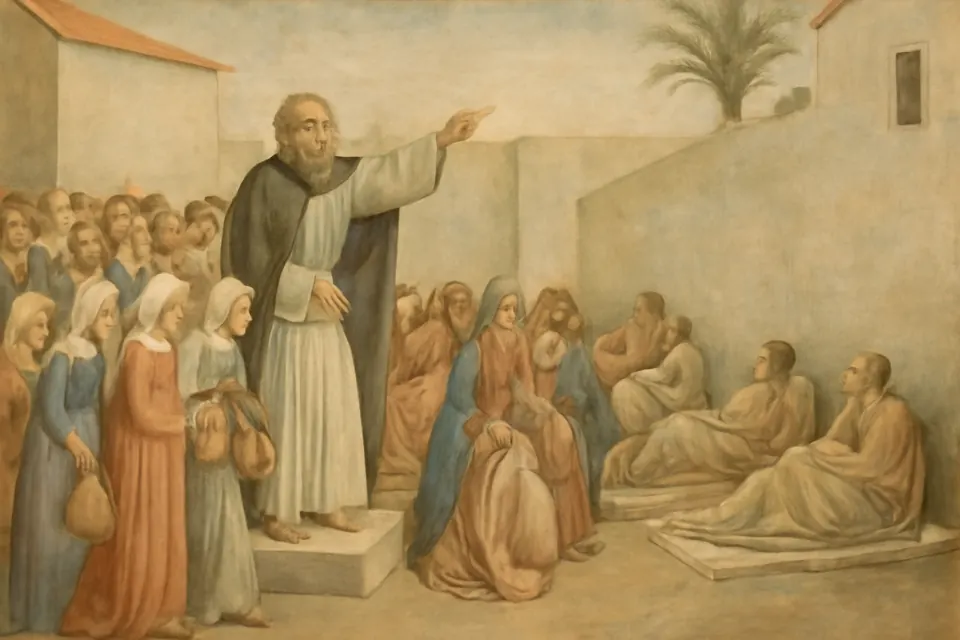
A plague swept the empire in the early 250s. Pontius describes bodies in the streets and families abandoning their sick. Cyprian told his people that loving only their own was nothing special; they should care for pagans too, even their persecutors. His treatise On the Mortality comforted Christians who wondered why believers died along with everyone else.
The baptism quarrel
In 255 and 256 Cyprian clashed with Pope Stephen I. African councils rebaptized converts baptized by heretical groups; Rome accepted such baptisms. The letters on both sides were sharp, and the dispute faded after Stephen died in 257. The Western Church later followed Rome's practice, and St. Augustine, who went through Cyprian's letters one by one, trusted that his glorious martyrdom had atoned for his harsh words.
The martyrdom of St. Cyprian
In August 257 Cyprian told the proconsul Paternus he was a Christian and a bishop, and was exiled to Curubis. A year later a harsher edict ordered clergy killed; Pope Sixtus II died in Rome on August 6, 258, and his deacon St. Lawrence days later.
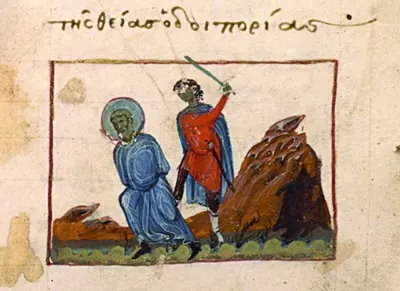
Cyprian was brought back to Carthage. On the morning of September 14 he was tried again, refused to sacrifice, and was condemned. The Orthodox life says he answered, "Thanks be to God!" The crowd shouted, "Let us be beheaded with him!" In a grove where people climbed the trees to watch, he knelt and prayed, gave his outer garments to his deacons, ordered twenty-five gold pieces for the executioner, and bound his own eyes. Christians buried him that night by torchlight.

Miracles and visions
No cures are attributed to Cyprian in life. His sources report visions and signs instead.
- Visions: reported. Cyprian wrote that visions warned him of coming persecution, and Pontius tells of a dream at Curubis foretelling his sentence, which came a year later to the day.
- Signs against the lapsed: reported by Cyprian himself, such as a small child, taken by a nurse to a pagan altar, who could not keep down the consecrated wine.
Why St. Cyprian is the patron saint of Algeria and North Africa
Catholic Culture's calendar records that Pope Pius X proclaimed Cyprian patron of Algeria in 1914; he is also honored as patron of North Africa, the most famous African bishop before St. Augustine. See our patron saints page.
Symbols of St. Cyprian in art
Look for:
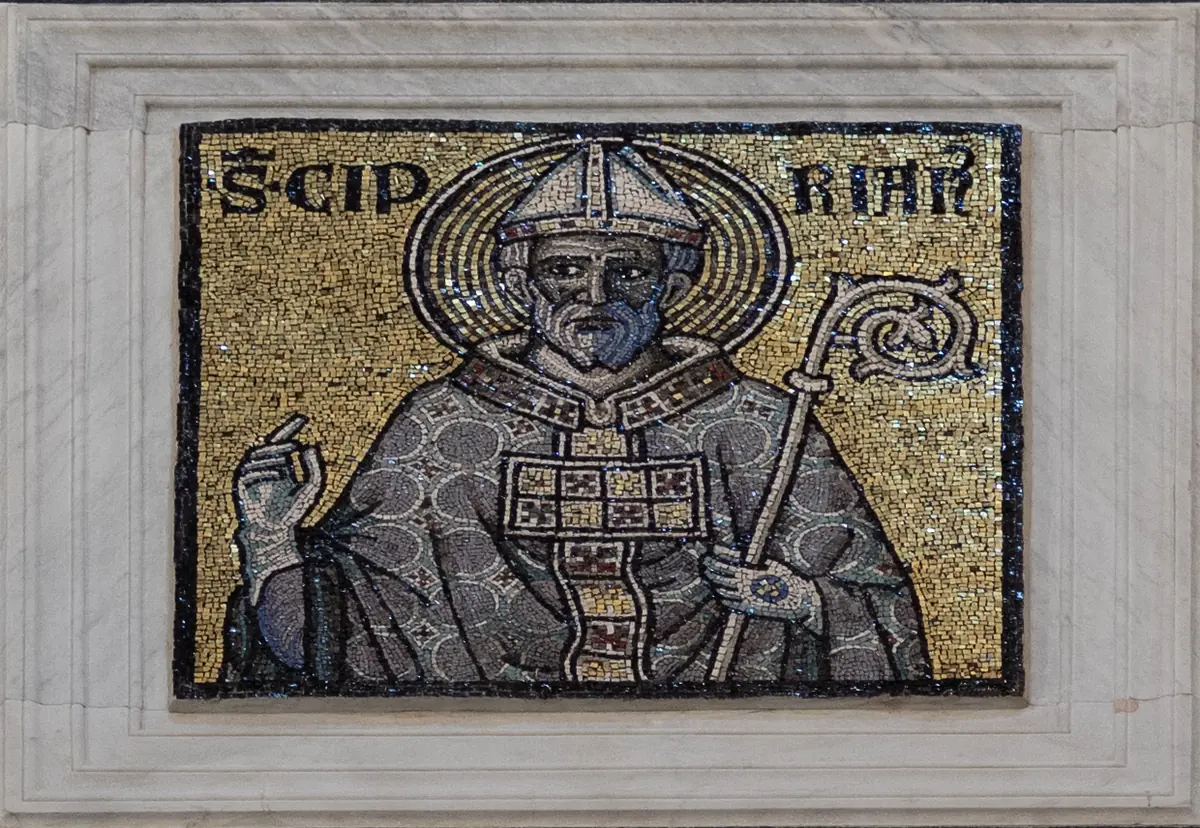
- Bishop's vestments: miter and crozier in the West, a white stole with black crosses in icons.
- A sword: for his beheading.
- A palm and crown: signs of a martyr.
- A book or pen: for his writings.
Western painters often give him a palm and crozier, as in the Messkirch panel above. In the Ravenna mosaic he is a beardless young man in white carrying a crown, one of a line of martyrs walking toward Christ.


Feast day and where he is honored
Cyprian's feast is September 16, a memorial shared with Pope St. Cornelius; both are named in the Roman Canon, Eucharistic Prayer I. The Orthodox Church remembers him on August 31. See the feast days calendar.
He was buried in the cemetery of Macrobius Candidianus in the Mapalia district outside Carthage. The Orthodox life adds that some say his relics were taken to France under Charlemagne; the claim is old and unconfirmed, and no church today can show his tomb.
Prayer to St. Cyprian
The Church's prayer on his feast is the Roman Missal's collect for Sts. Cornelius and Cyprian:
O God, who gave Saints Cornelius and Cyprian to your people as diligent shepherds and valiant Martyrs, grant that through their intercession we may be strengthened in faith and constancy and spend ourselves without reserve for the unity of the Church.
His own treatise on the Lord's Prayer teaches that it is said in the plural because "we the whole people, are one."
Frequently asked questions
Who said "He cannot have God for his Father who has not the Church for his mother"?
St. Cyprian of Carthage, in his treatise On the Unity of the Church (about 251), chapter 6. The translation in the Ante-Nicene Fathers reads: "He can no longer have God for his Father, who has not the Church for his mother." The short form "He cannot have God for his Father who has not the Church for his mother" is a common paraphrase of the same line.
When is St. Cyprian's feast day?
September 16 in the Catholic Church, a memorial he shares with Pope St. Cornelius, his ally in the lapsed controversy. He died on September 14, 258. The Orthodox Church keeps his memory on August 31.
Is Cyprian of Carthage the same as Cyprian of Antioch?
No. Cyprian of Carthage is a well-documented bishop with surviving letters and treatises, beheaded in 258. Cyprian of Antioch is the hero of a legend about a magician converted by the virgin Justina; the Catholic Encyclopedia and modern historians treat that story as fiction, though the Orthodox Church honors Cyprian and Justina on October 2.
What is St. Cyprian the patron saint of?
Catholic Culture's calendar lists him as patron of Algeria, proclaimed by Pope Pius X in 1914, and of North Africa. Carthage lies in present-day Tunisia, next door.
Sources
- Catholic Encyclopedia (1908): St. Cyprian of Carthage
- Cyprian, Treatise 1: On the Unity of the Church (Ante-Nicene Fathers, Vol. 5)
- Pontius the Deacon, The Life and Passion of Cyprian (Ante-Nicene Fathers, Vol. 5)
- Cyprian, Treatise 7: On the Mortality (Ante-Nicene Fathers, Vol. 5)
- Pope Benedict XVI, General Audience of 6 June 2007: Saint Cyprian
- Orthodox Church in America: Hieromartyr Cyprian, Bishop of Carthage
- Catholic Culture: Memorial of Sts. Cornelius, Pope, and Cyprian, Bishop, Martyrs (September 16)
- Roman Martyrology, September 14