St. Damien of Molokai (Father Damien)
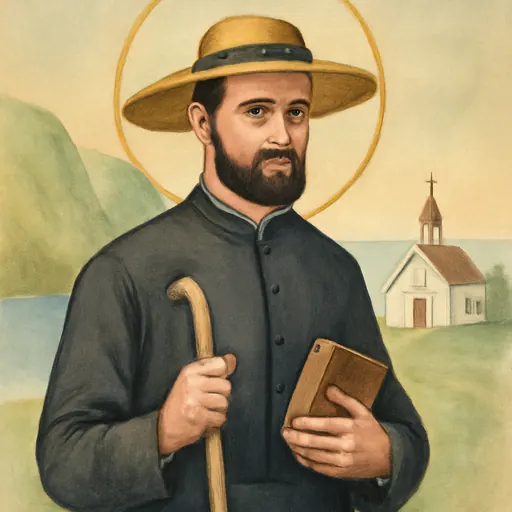
St. Damien of Molokai (1840 to 1889), known as Father Damien, was a Belgian priest of the Congregation of the Sacred Hearts who in 1873 went to serve the people exiled with leprosy (Hansen's disease) at Kalaupapa on Molokai, Hawaii. He stayed sixteen years, caught the disease himself and died there. He is the patron of people with Hansen's disease and of outcasts, and his feast day is May 10.
Who was St. Damien of Molokai?
Father Damien was a Belgian farmer's son who became a missionary priest in Hawaii and, in 1873, volunteered to live at Kalaupapa, the remote settlement on the island of Molokai where the Hawaiian government sent people with leprosy. The disease is now called Hansen's disease, and it is curable today. In Damien's time there was no treatment, and the law separated patients from their families for life.
He meant to stay a few weeks. He stayed sixteen years. He was pastor, builder, nurse and gravedigger for the settlement, he caught the disease himself, and he died there on April 15, 1889, at 49. Pope Benedict XVI canonized him in 2009 and said that he "felt at home" with the patients and became "a leper with the lepers, for the last four years of his life."

This entry uses "Hansen's disease" in its own prose. The older word "leprosy," and "lepers," appear where the sources and Damien himself used them.
Early life in Belgium
He was born Jozef De Veuster on January 3, 1840, in Tremelo, a village in Flemish Brabant. The Catholic Encyclopedia says his father, a small farmer, sent him to a college at Braine-le-Comte to train for business. A parish mission preached by the Redemptorists in 1858 changed his plans. His older brother Pamphile had already joined the Congregation of the Sacred Hearts of Jesus and Mary, known as the Picpus Fathers, and early in 1859 Jozef entered the novitiate at Louvain (Leuven) in the same house and took the name Damien.
The Vatican's biography says he prayed every day before a picture of St. Francis Xavier, the patron of missionaries, asking to be sent to the missions. In 1863 Pamphile was chosen for Hawaii but fell ill before sailing. Damien asked the superior general to let him go instead, and permission came.


Missionary in Hawaii
He landed in Honolulu on March 19, 1864, and was ordained a priest in the Cathedral of Our Lady of Peace that May. The Vatican and the National Park Service give the date as May 21; the 1908 Catholic Encyclopedia says May 24. For about eight years he worked on the island of Hawaii, the Big Island, traveling long distances in the districts of Puna, Kohala and Hamakua and building chapels with his own hands.
Kalaupapa
From 1866 the Kingdom of Hawaii sent people diagnosed with leprosy to Kalawao and later Kalaupapa, on a flat peninsula on Molokai's north shore, cut off from the rest of the island by towering sea cliffs. The Board of Health supplied food and clothing but at first no resident doctor, nurse or priest. A superintendent quoted in the Catholic Encyclopedia wrote that once patients became helpless, "it would seem that even demons themselves would pity their condition."
Bishop Louis Maigret, himself a Picpus father, did not want to send anyone "in the name of obedience," since the assignment could mean death. Four priests volunteered to take turns. Damien went first. He landed at Kalaupapa with the bishop on Saturday, May 10, 1873. According to the Hawaii Catholic Herald, which quotes the bishop's journal, residents handed them a petition with 200 signatures asking for a priest to stay. Two days later Damien wrote, "I am willing to devote my life to the leprosy victims. It is absolutely necessary for a priest to remain here. The harvest is ripe."

Sixteen years at Kalawao
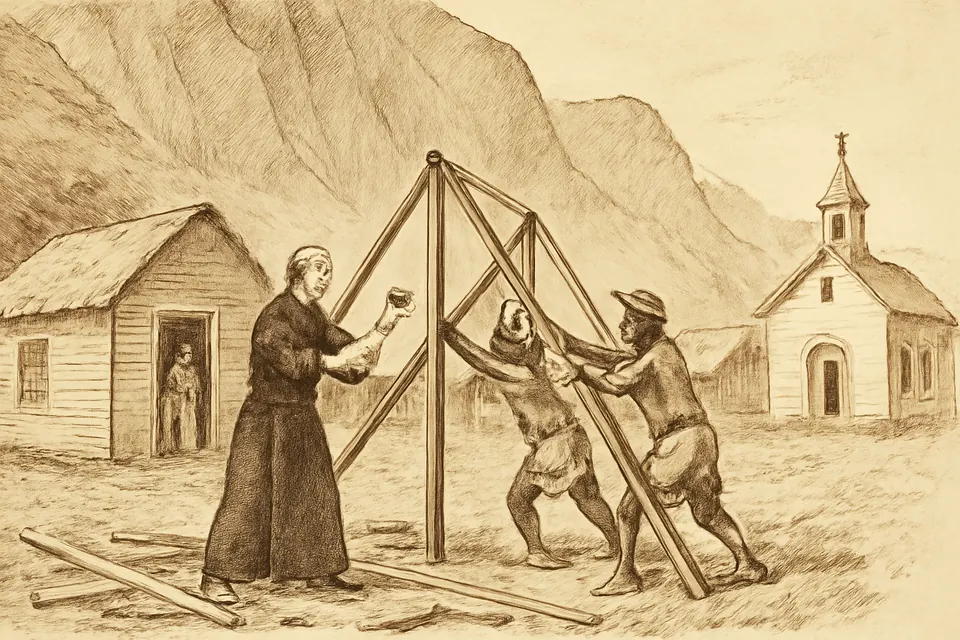
The Vatican biography says he first slept under a pandanus tree, the same tree under which he was later buried. He spoke Hawaiian. The National Park Service lists what he did with the residents: built houses, laid a water system, planted trees, organized schools, bands and choirs, gave medical care and buried the dead. The Catholic Encyclopedia adds that he dressed ulcers, dug graves and made coffins. He also enlarged St. Philomena Church at Kalawao.


He was not an easy man. The Park Service calls him "not a 'retiring' personality" and says he did not hesitate to badger both the government and his own church for more help. The Vatican biography notes that his close friends included Lutheran, Anglican, freethinking and Buddhist colleagues, among them Meyer, the Lutheran superintendent, and the Japanese doctor Masanao Goto.
"We lepers"
After about twelve years at the settlement, he was confirmed to have the disease. Sources differ on the year: the Vatican biography dates the announcement to 1884, while the Catholic Encyclopedia and the Sacred Hearts congregation say 1885. The Sacred Hearts biography says that from then on he identified completely with his people: "We lepers." The Church Life Journal at Notre Dame points out that he had used the phrase in sermons even earlier, while still healthy.
He kept working. The American layman Joseph Dutton came to help in 1886, and in November 1888 Mother Marianne Cope arrived with Franciscan sisters from Syracuse. She was at his bedside when he died. Shortly before, he wrote to his brother Pamphile, in the words quoted by the National Park Service: "I am gently going to my grave. It is the will of God, and I thank Him very much for letting me die of the same disease and in the same way as my lepers."
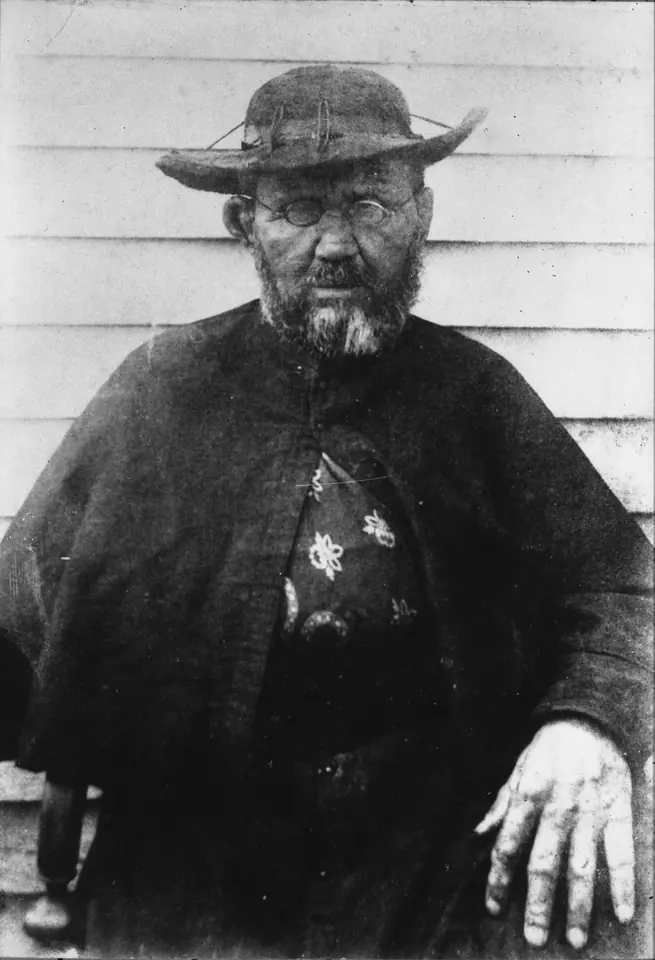

He died on April 15, 1889, and was buried beside St. Philomena Church.
Stevenson's defense
News of his death went around the world, and with it came criticism. In August 1889 the Rev. Charles McEwen Hyde, a Presbyterian minister in Honolulu, wrote a private letter attacking Damien's character and his morals. The letter was published in San Francisco. Robert Louis Stevenson, who visited the settlement soon after Damien's death and talked with people who knew him, answered with a public letter in 1890. He did not hide Damien's faults, but he defended his character and told Hyde: "if that world at all remember you, on the day when Damien of Molokai shall be named a Saint, it will be in virtue of one work: your letter to the Reverend H. B. Gage." The Catholic Encyclopedia adds that letters published in Honolulu in 1905 cleared Damien of the charge.
The miracles of St. Damien
Two miracles were approved by the Church after investigation.
- A French nun's cure (1895), approved: CNN's report on the canonization describes the overnight healing of a French nun on her deathbed from an intestinal ailment. Later accounts name her as Sister Simplicia Hue and say she had made a novena to Damien. This cure was accepted for his beatification in Brussels by Pope John Paul II on June 4, 1995.
- Audrey Toguchi (1999), approved: a retired schoolteacher from Aiea, Oahu, had liposarcoma, an aggressive cancer that had spread through her body. The Hawaii Catholic Herald reports that she had been given a few months to live when family and friends asked Father Damien's intercession, and that she was cured "with no possible scientific explanation." Her physician, Dr. Walter Chang, who is not Catholic, confirmed the recovery. At the canonization Mass on October 11, 2009, she and Dr. Chang carried a relic of Damien, a lock of his hair, to the altar.
Pope Paul VI declared Damien venerable in 1977. Beyond these two cases, favors reported by people who pray to him are reported testimonies, not cases the Church has examined.
Why St. Damien is the patron saint of people with Hansen's disease
The patronage comes straight from his life. He chose to live among people the law had exiled, treated them as his parishioners and neighbors, and died of their disease. Catholic Culture lists him as the spiritual patron of people with leprosy, of outcasts, of people with HIV/AIDS and of the State of Hawaii. At the canonization, Benedict XVI said Damien "invites us to open our eyes to the forms of leprosy that disfigure the humanity of our brethren."
See all the patron saints by cause.
Symbols of St. Damien in art
Because Damien lived in the age of photography, his image is mostly fixed by real photographs, and artists usually work from them.
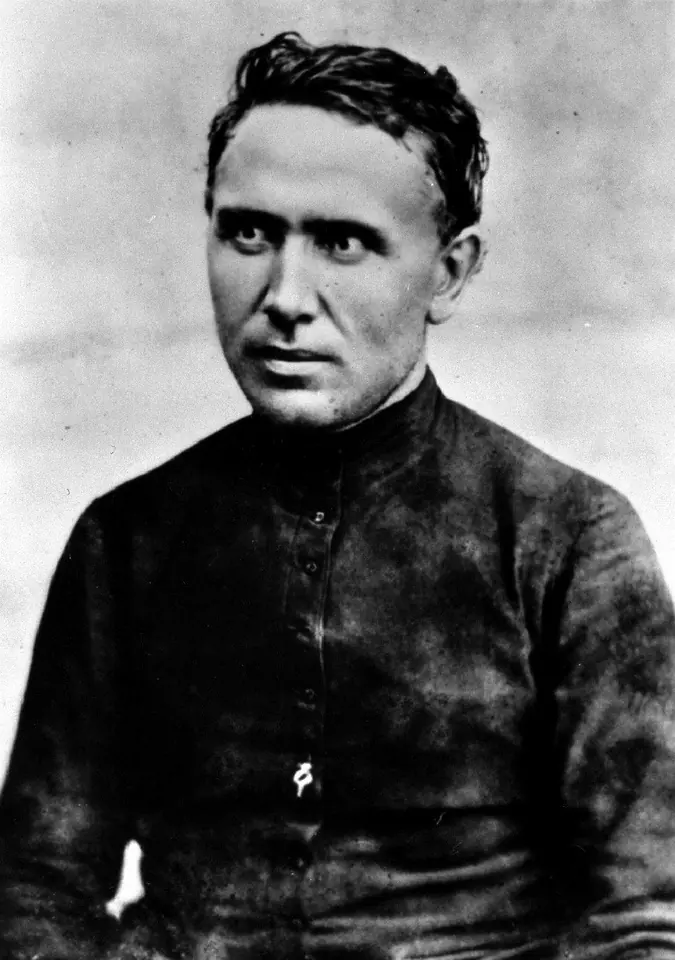
- Black cassock and wide-brimmed hat: his everyday clothes at Kalawao, seen in the 1878 and 1889 photographs on this page.
- Walking stick or cane: common on statues of the older Damien.
- Hands and face marked by the disease: Marisol Escobar's bronze shows him as he looked near the end of his life, under a broad hat and a heavy cloak, much as he appears in the 1889 photograph.
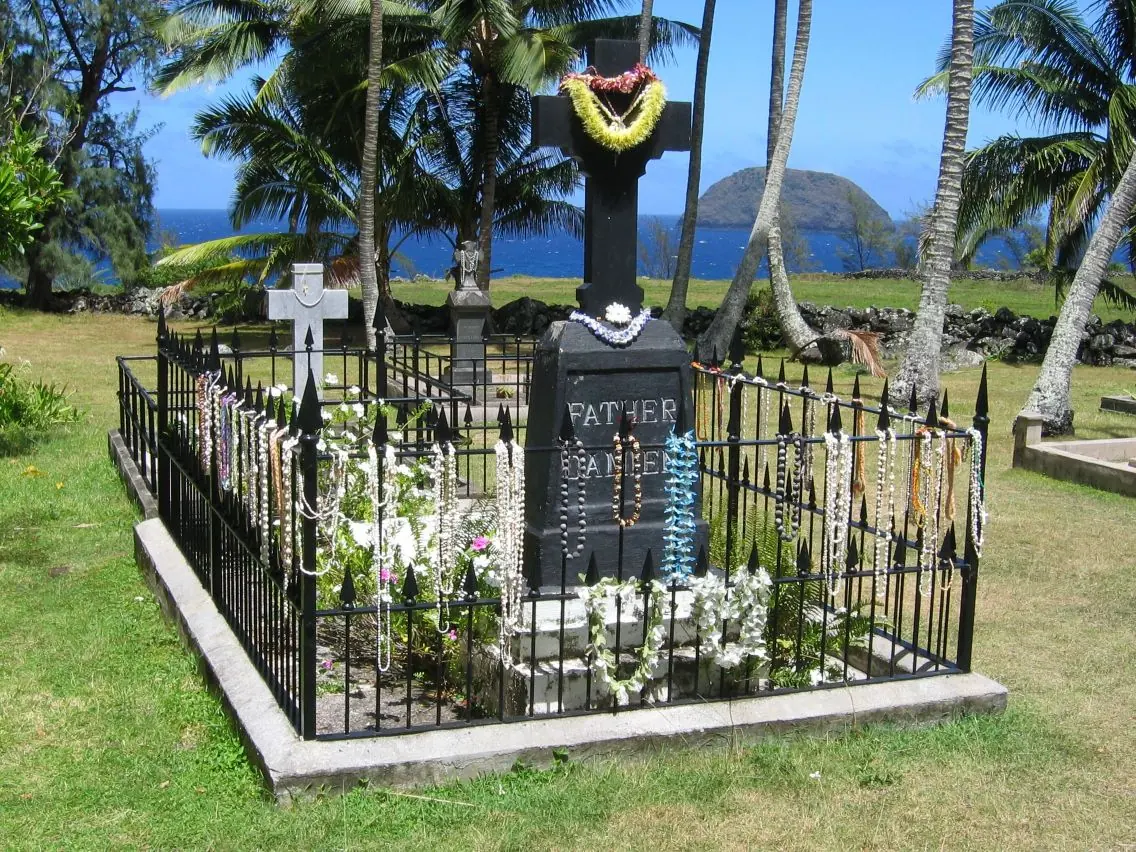
- Lei and flowers: not part of the statue itself, but in Hawaii his statues and grave are often draped with lei, especially around April 15 and May 10.
- A church or children: holy cards sometimes show St. Philomena Church at Kalawao or the children of the settlement.
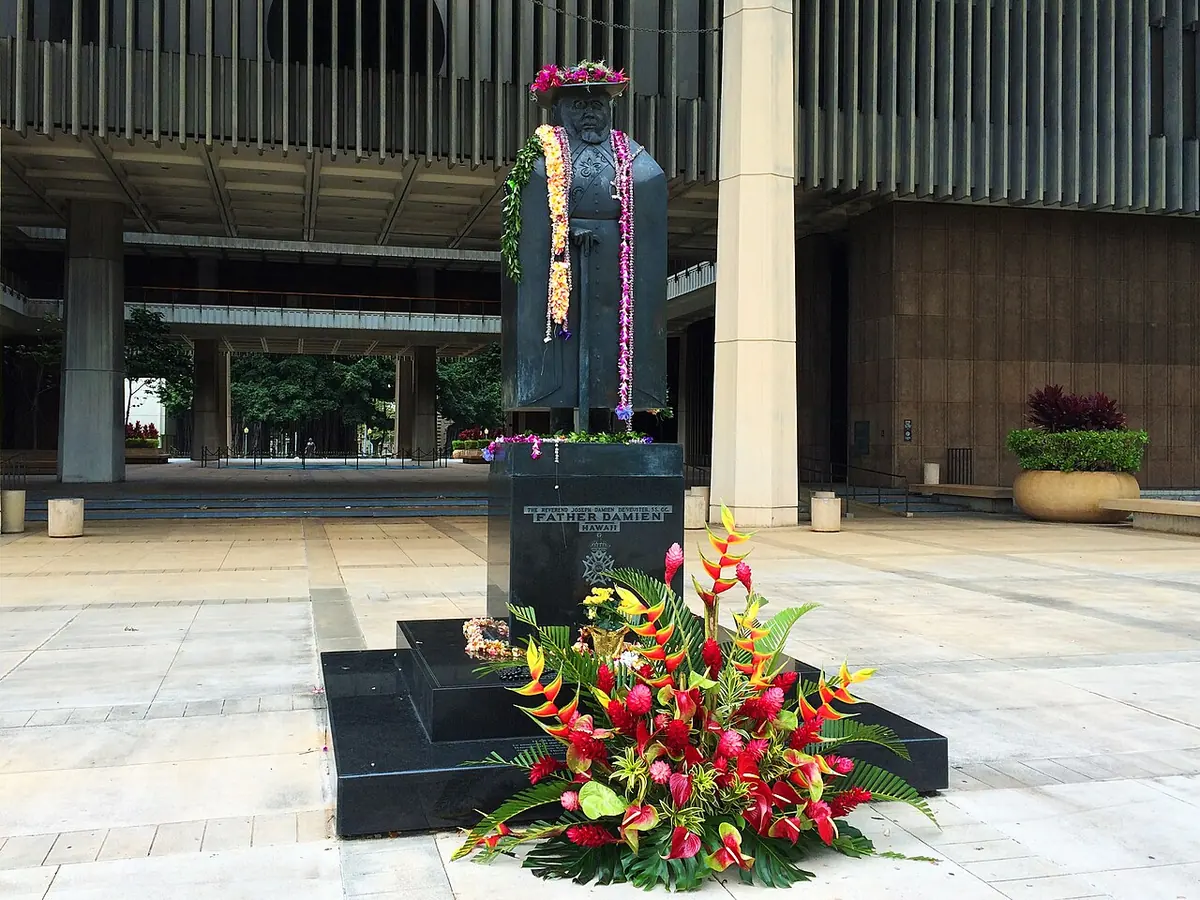

Marisol's statue was given by Hawaii to the National Statuary Hall Collection in the U.S. Capitol in 1969, and a matching bronze stands before the State Capitol in Honolulu. In churches, look for a priest in black with a broad hat and a cane, often next to Hawaiian figures.
Feast day and where St. Damien is honored
His optional memorial in the United States is May 10, the anniversary of his arrival at Kalaupapa. The Hawaii Catholic Herald explains that April 15, the day he died, often falls in Lent, when memorials are not celebrated. The U.S. bishops asked for May 10 in 1999, the Vatican first set April 15, and in 2001 it agreed to May 10. See the feast day calendar.

- Leuven, Belgium: in 1936, at the request of the Belgian government, his body was taken from Molokai and placed in the crypt of the Sacred Hearts' St. Anthony chapel (Sint-Antoniuskapel) in Leuven, the city where he had made his novitiate.


- Kalawao, Molokai: after his beatification, a relic of his right hand was buried in his original grave beside St. Philomena Church in 1995. The peninsula is now Kalaupapa National Historical Park, where access is restricted. CNN reported in 2009 that about 25 former patients, all cured, still lived there by choice.
- Honolulu: the Cathedral Basilica of Our Lady of Peace, where he was ordained, keeps a relic of St. Damien beside the remains of St. Marianne Cope.


Prayer to St. Damien
The best-documented prayer is the one Pope John Paul II read at the end of his homily at the beatification Mass in Brussels on June 4, 1995. The Congregation of the Sacred Hearts publishes it in its prayer collection under the title "Prayer to Blessed Damien of Molokai":
Blessed Damien, you let yourself be guided by the Holy Spirit as a son obedient to the will of the Father.
By your life and your mission you manifest the tenderness and mercy of Christ, who reveals to us the beauty of the inner person that no sickness, no deformity, no weakness can completely disfigure.
By your work and your preaching you remind us that Jesus took upon himself the poverty and suffering of every person, and by doing so he revealed its mysterious value.
Intercede with Christ, healer of bodies and souls, for our sick brothers and sisters, so that, in their anguish and pain, they may not feel abandoned but united to the risen Lord and his church.
May they see that the Holy Spirit has come to visit them and thus may they experience the consolation promised to the sorrowful. Amen.
The same collection includes several novenas to Father Damien. Many Catholics also simply ask, "St. Damien, pray for us," for the sick and for people who live cut off from others.
The Sacred Hearts congregation keeps one of his sayings about where he found his strength: "It is at the foot of the altar that we find the strength we need in our isolation."
Frequently asked questions
What is St. Damien of Molokai the patron saint of?
People with Hansen's disease (leprosy), outcasts and the State of Hawaii. Catholic Culture also lists him as a spiritual patron of people with HIV/AIDS.
When is St. Damien's feast day?
May 10 in the United States, where it is an optional memorial (obligatory in Hawaii). May 10 is the day he landed at Kalaupapa in 1873. The Roman Martyrology lists him on April 15, the day he died, and Hawaii keeps April 15 as Father Damien Day.
What miracles led to St. Damien's canonization?
Two approved healings. For his beatification in 1995, the Church accepted the overnight cure in 1895 of a French nun, named in later accounts as Sister Simplicia Hue, who was dying of an intestinal illness. For his canonization in 2009, it accepted the recovery of Audrey Toguchi, a retired teacher in Hawaii, from liposarcoma, a cancer that had spread through her body, in 1999.
How did Father Damien get leprosy?
No one knows exactly. He lived among patients for twelve years before the diagnosis was confirmed in the mid-1880s. The National Park Service notes that he shared poi bowls and his pipe with residents and did not always wash his hands after dressing sores. Hansen's disease is in fact only mildly contagious, and today it is curable.
Where is St. Damien buried?
In Leuven, Belgium, in the crypt of the Sacred Hearts chapel of St. Anthony, where his body was moved from Molokai in 1936. In 1995 a relic of his right hand was buried again in his first grave beside St. Philomena Church at Kalawao, on Molokai.
Sources
- Vatican: St Jozef Damien De Veuster (1840-1889), biography
- Benedict XVI, Homily for the canonization of five new saints, 11 October 2009
- Catholic Encyclopedia (1908): Father Damien (Joseph de Veuster)
- National Park Service, Kalaupapa National Historical Park: Father Damien
- Congregation of the Sacred Hearts (SSCC Picpus): Saint Damien De Veuster
- Congregation of the Sacred Hearts: Compilation of SSCC prayers (English, 2011-2012), section E: About Fr. Damien
- Hawaii Catholic Herald: St. Damien's feast day not the customary date of death (2013)
- Hawaii Catholic Herald: 10th anniversary reprint, the canonization of St. Damien de Veuster
- Hawaii Catholic Herald: 15 years a saint, recalling St. Damien's canonization (2024)
- Catholic Culture: Liturgical calendar, May 10 (St. Damien de Veuster)
- Robert Louis Stevenson, Father Damien: An Open Letter to the Reverend Dr. Hyde of Honolulu (1890), Project Gutenberg
- CNN: 'Father Damien' among new Vatican saints (2009)
- Church Life Journal (University of Notre Dame): Why We Still Need Saint Damien of Molokai