St. Francis of Assisi

St. Francis of Assisi (about 1181–1226) was the son of a rich cloth merchant who gave up everything to live in poverty and preach the Gospel, and founded the Franciscan friars, the Poor Clares and a Third Order for lay people. He is remembered for his love of the poor and of all creatures, and tradition says he bore the wounds of Christ. His feast day is October 4, and he is the patron saint of animals, ecology and Italy.
Who was St. Francis of Assisi?
Francis was born in Assisi, a hill town in Umbria in central Italy, in 1181 or 1182. His father, Pietro di Bernardone, was a rich cloth merchant, and his mother, Pica, was said to come from Provence. He was baptized Giovanni, but his father, who traded in France and was there when the boy was born, called him Francesco, "the Frenchman," and the name stuck.
As a young man he gave up his inheritance, his fine clothes and his future in trade to live as a beggar and serve lepers. Within a few years thousands of men had joined him. He founded the Order of Friars Minor, the "lesser brothers," known today as the Franciscans. With St. Clare he founded the Poor Ladies, now the Poor Clares, and he gave a way of life to lay men and women that grew into the Third Order. He was never ordained a priest. He died on October 3, 1226, at about forty-four, and Pope Gregory IX canonized him less than two years later.

The sources for his life are unusually good for the Middle Ages. Thomas of Celano, a friar who knew him, wrote the First Life for his canonization in 1228 and a Second Life about twenty years later. St. Bonaventure's Legenda Maior, finished in 1263, became the order's official life. Francis also left writings of his own: two Rules, a Testament, letters, prayers and the Canticle of the Creatures. The much-loved Little Flowers of St. Francis (the Fioretti) is later, an Italian reworking from the late 14th century of Latin stories gathered a hundred years after his death. Its tales are best read as legend.
The life of St. Francis
The merchant's son
Celano describes the young Francis harshly, as a leader in the revels of Assisi's young men. The Catholic Encyclopedia paints him as a cheerful, generous spender who loved fine clothes and the songs of the troubadours. Around 1202 he went to war with the men of Assisi against nearby Perugia, was taken prisoner, and spent more than a year in a Perugian jail before he fell ill and was released.
In 1205 he set out to win glory as a knight in southern Italy, but at Spoleto, the biographers say, a dream told him to go home.
The leper
The change began with a man he had always avoided. Near the end of his life Francis wrote in his Testament (in Paschal Robinson's 1906 translation):
The Lord gave to me, Brother Francis, thus to begin to do penance; for when I was in sin it seemed to me very bitter to see lepers, and the Lord Himself led me amongst them and I showed mercy to them. And when I left them, that which had seemed to me bitter was changed for me into sweetness of body and soul.
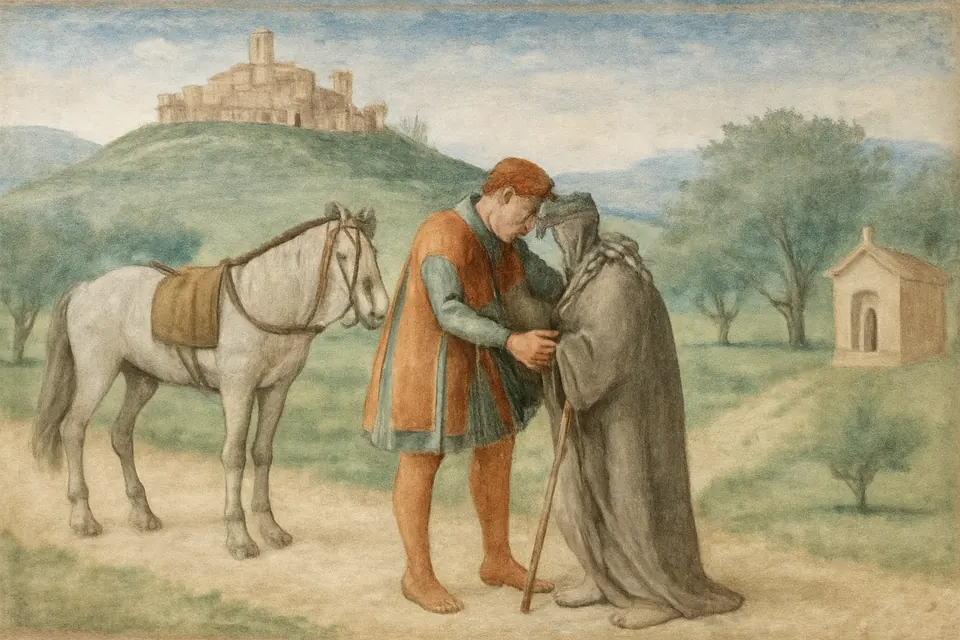
His biographers tell the story of the day he met a leper on the road below Assisi, got down from his horse, gave the man money and kissed his hand.
"Repair my house"
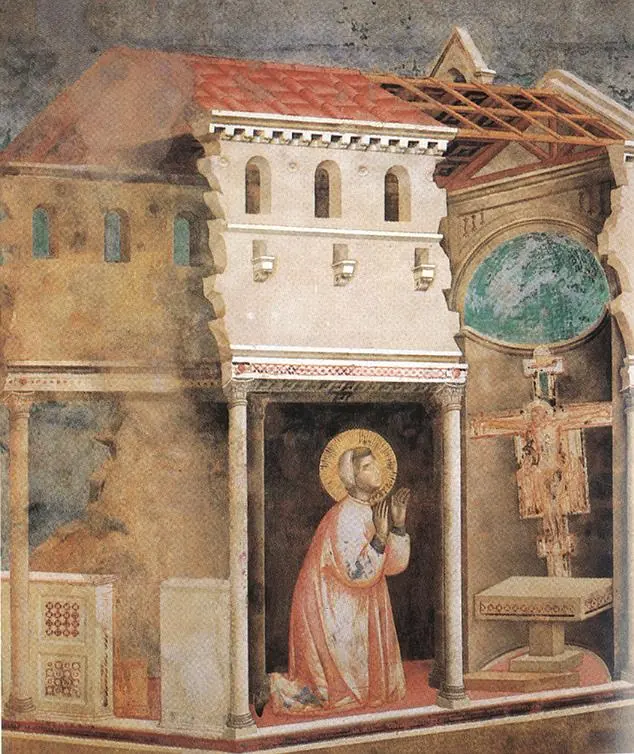
Not long after, Francis was praying in San Damiano, a half-ruined chapel outside the walls of Assisi, before a painted crucifix. He heard a voice from the cross: "Go, Francis, and repair my house, which as you see is falling into ruin." He took the words literally. He sold a load of cloth from his father's shop, and his horse, and offered the money to the priest of San Damiano. Benedict XVI, in his 2010 catechesis on Francis, says the words also meant something larger: Francis was being called to renew the Church itself.

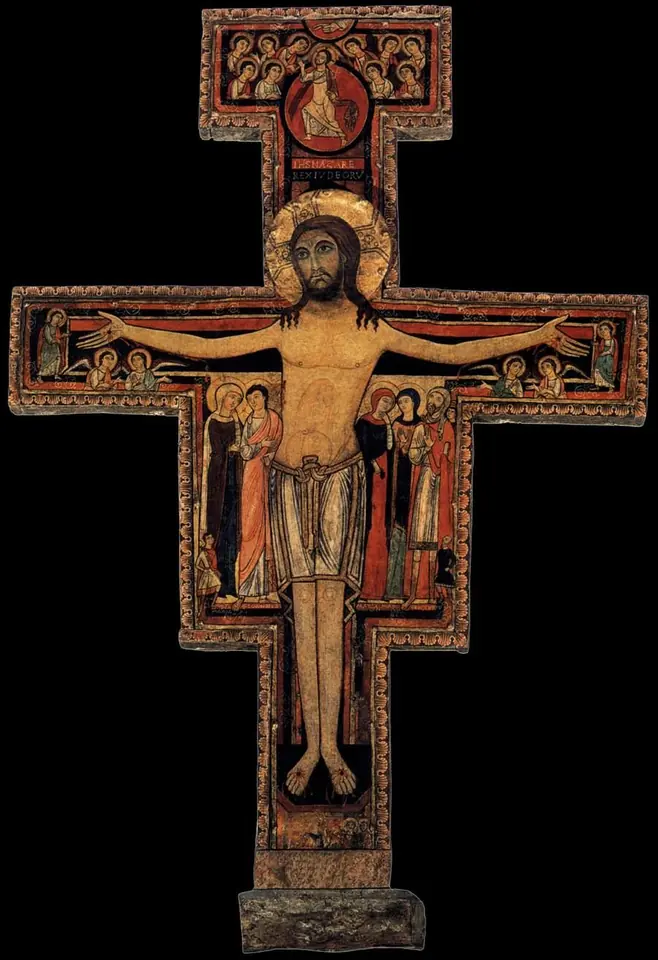
The cross that spoke to him is a painted wooden icon-style crucifix of the 12th century. When the Poor Clares moved from San Damiano into the town after Clare's death, they took it with them to their new Basilica of St. Clare, where it still hangs. Franciscans around the world use copies of it.

Before the bishop
Pietro di Bernardone was furious. He locked his son up, then took him before the bishop of Assisi to make him give back the money and renounce his inheritance. In front of the bishop and the townspeople, Francis took off all his clothes, laid them at his father's feet, and said, according to the Catholic Encyclopedia's summary of the sources, "Hitherto I have called you my father on earth; henceforth I desire to say only 'Our Father who art in Heaven.'" The bishop covered him with his own cloak.
For the next two years Francis begged stones to rebuild San Damiano and two other chapels with his own hands, among them the little church of St. Mary of the Angels, called the Porziuncola, "the little portion," in the plain below the town.
The brothers and the Rule
In 1208, at Mass in the Porziuncola, Francis heard the Gospel in which Jesus sends his disciples out with no gold, no bag, no second tunic and no staff (Matthew 10). He took it as meant for him. He put on a rough tunic tied with a rope and began to preach penance and peace. Bernard of Quintavalle, a wealthy man of Assisi, joined him, then Peter Catani and Brother Giles. When they were twelve, they went to Rome, and around 1209 Pope Innocent III gave verbal approval to their simple rule. Tradition says the pope had dreamed of a small, poor man holding up the falling Lateran Basilica on his shoulders.
Clare
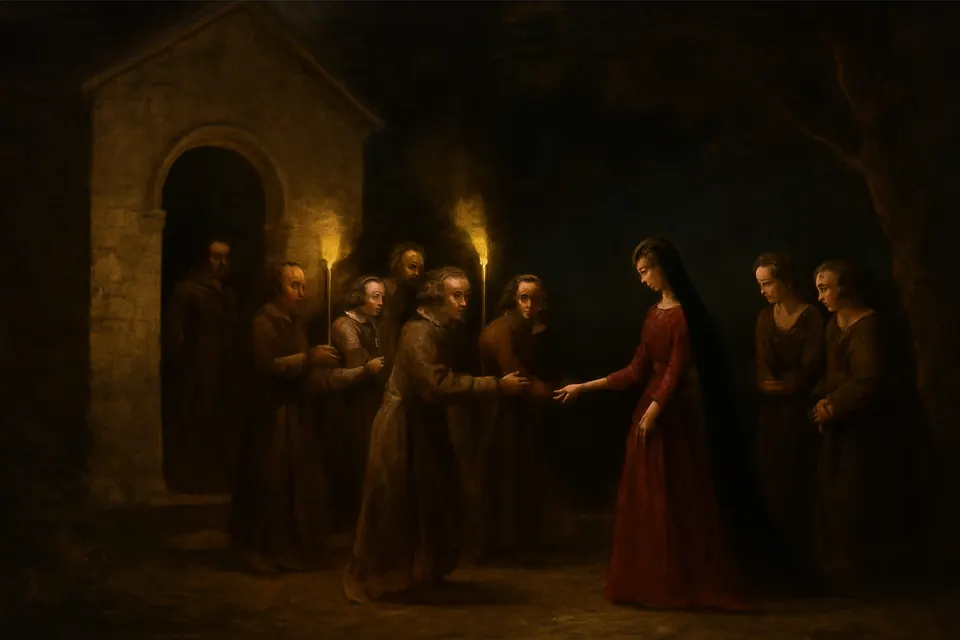
On the night after Palm Sunday in 1212, Clare, an eighteen-year-old daughter of a noble family of Assisi, slipped out of her family's house and went to the Porziuncola. The friars met her with torches. Francis cut off her hair and gave her a rough habit, and she soon settled with her sister Agnes and other women at San Damiano, the chapel he had rebuilt. Clare lived there until her death in 1253.
Preaching to the birds
Thomas of Celano, writing within three years of Francis's death, tells how near Bevagna he saw a great flock of birds, walked into the field and spoke to them, telling them to praise their Creator, and how they stayed until he blessed them. The Little Flowers gives the sermon in fuller form: "My little sisters the birds, ye owe much to God, your Creator, and ye ought to sing his praise at all times and in all places."


The sultan
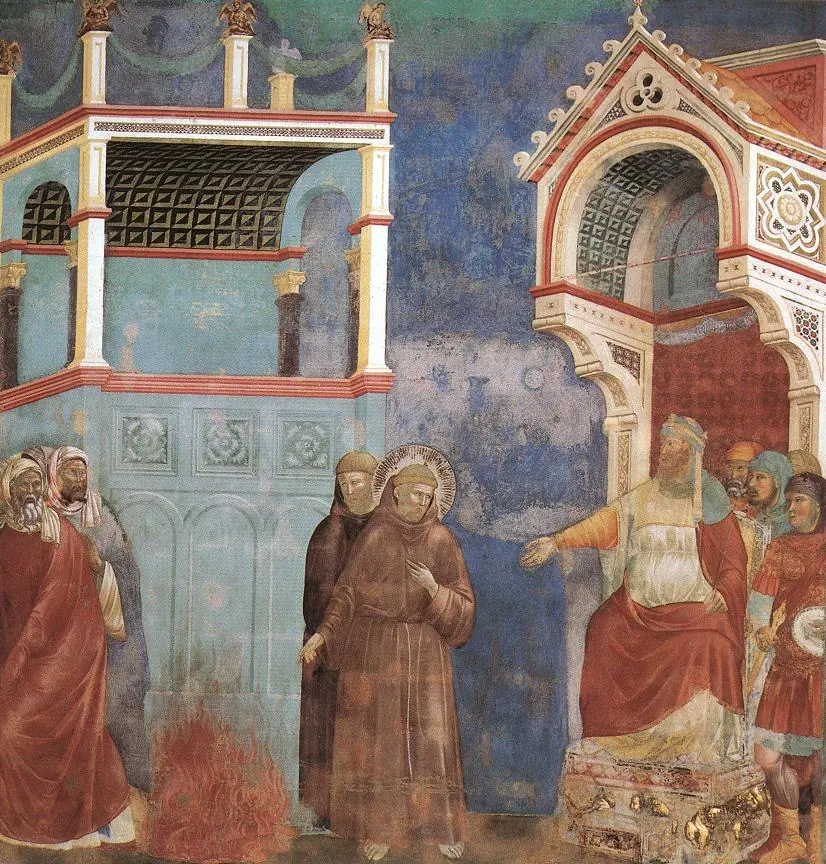
Francis tried three times to reach the Muslim world. In 1219, during the Fifth Crusade, he sailed to Egypt, where the crusaders were besieging Damietta. He crossed the battle lines with Brother Illuminato and was brought before Sultan al-Malik al-Kamil, the nephew of Saladin. The crusader bishop Jacques de Vitry, who was in the camp, wrote that the sultan listened to him for several days and sent him back safely. Benedict XVI calls the meeting an example of dialogue: Francis came "armed only with his faith and personal humility."
Bonaventure's later Legenda Maior adds that Francis offered to walk through fire with the sultan's religious scholars to show which faith was true, and that they declined. That detail is traditional.

The Rule of 1223 and Greccio
By 1220 the order had grown to thousands of friars, and Francis gave up its leadership. He wrote a long rule in 1221 and a shorter one that Pope Honorius III approved on November 29, 1223. That Rule, which begins, in Robinson's translation, "The Rule and life of the Minor Brothers is this, namely, to observe the holy Gospel of our Lord Jesus Christ," is still professed by Franciscan friars.
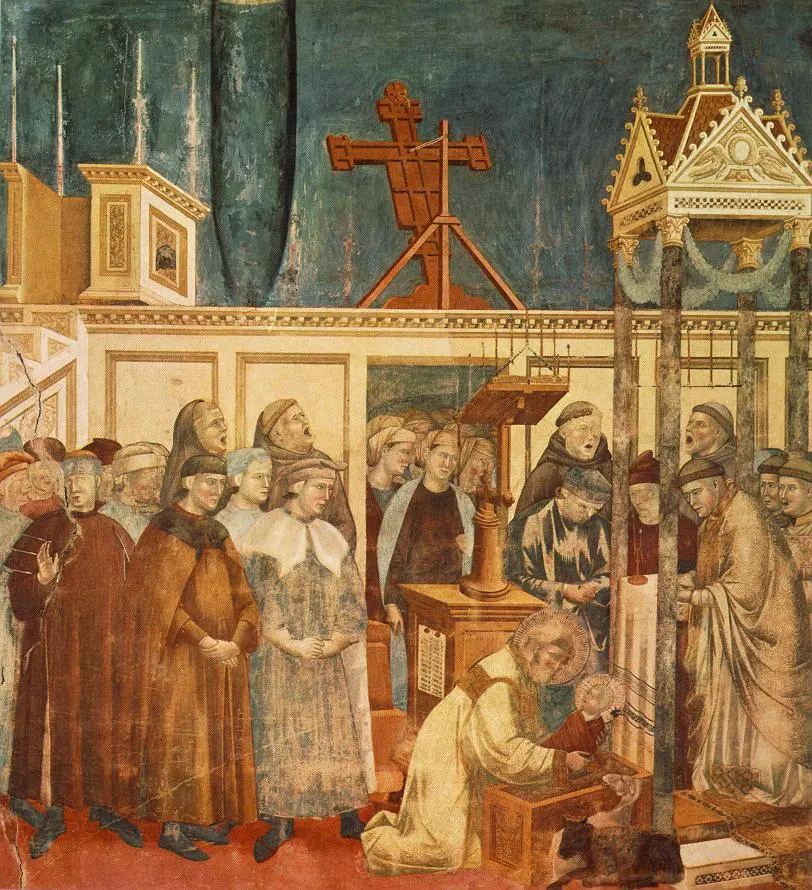
That Christmas, at Greccio near Rieti, Francis asked a friend named John to prepare a cave with a manger, hay, an ox and a donkey. In his 2019 letter Admirabile signum, Pope Francis quotes Celano's account of what Francis wanted: "to see as much as possible with my own bodily eyes the discomfort of his infant needs, how he lay in a manger, and how, with an ox and an ass standing by, he was laid upon a bed of hay." Townspeople came with torches, Mass was celebrated over the manger, and Francis, as deacon, sang the Gospel and preached. Celano says one man there saw the Christ Child lying in the manger. It is the origin of the Christmas crèche.

La Verna and the stigmata
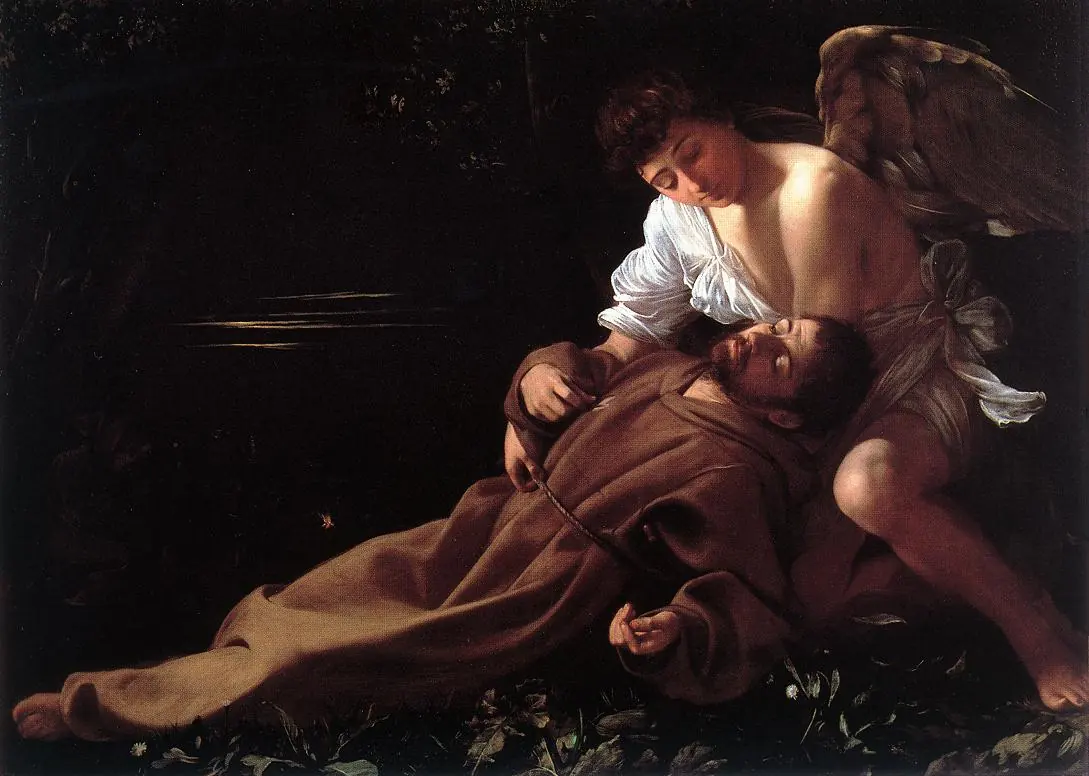
In August 1224 Francis went with a few companions to La Verna, a rocky mountain in Tuscany that a nobleman had given him, to fast for forty days before the feast of St. Michael. Around the feast of the Exaltation of the Cross, September 14, he saw a vision: a seraph, an angel with six wings, fixed to a cross. When it was gone, wounds like those of the crucified Christ remained in his hands, feet and side. Celano describes the wounds in the hands and feet as having the look of nails, black, with the points bent back. His companion Brother Leo was with him on the mountain.
The Canticle of the Creatures
The last two years were full of pain. Francis was nearly blind, probably from an eye disease he had picked up in Egypt, and his body was worn out. In 1225, staying in a hut near San Damiano, he composed the Canticle of the Creatures, one of the earliest poems in the Italian language. Its last verses, on forgiveness and on "sister death," were added later. The full text is below.

Sister Death
In the autumn of 1226 he was carried down to the Porziuncola to die. The Catholic Encyclopedia, following the early lives, says he had bread brought, broke it and gave it to the brothers, and asked to hear the Passion from the Gospel of John. He took off his habit and lay on the bare ground. He began Psalm 141 (142), and at the last verse, "Bring my soul out of prison," he died. It was Saturday evening, October 3, 1226. Bonaventure says a flock of larks gathered over the roof at that hour.
The next day his body was carried into Assisi, with a halt at San Damiano so Clare and her sisters could say goodbye.
The miracles of St. Francis
Approved. Gregory IX, who had known Francis well as Cardinal Ugolino, canonized him in Assisi on July 16, 1228, after the miracles reported at his tomb had been examined. Celano's First Life ends with a list of these healings, read aloud at the canonization.
Reported. The stigmata are the best attested of the wonders told about Francis. Brother Elias announced them in his letter on Francis's death, Celano described them, and Brother Leo, who was with him on La Verna, wrote a note about them on the small parchment that Francis gave him there. The parchment, with the saint's own handwriting, is kept in the Basilica of St. Francis. The Catholic Encyclopedia calls the event "better attested than many another historical fact." The Church has not formally investigated it, but Franciscans celebrate the Impression of the Stigmata every September 17.


Traditional. The best known story is the wolf of Gubbio, told in chapter 21 of the Little Flowers. A wolf was killing animals and people outside the town. Francis went out to meet it and said, "Come hither, brother wolf; I command thee, in the name of Christ, neither to harm me nor anybody else." The wolf lay down at his feet. In the market square, Francis made a pact: the townspeople would feed the wolf, and the wolf would harm no one. The wolf "lifting up his paw placed it in the hand of St Francis," lived two more years in Gubbio going from door to door, and was mourned when it died. The story is not in Celano or Bonaventure; it first appears in the 14th-century Acts of Blessed Francis, the Latin source of the Fioretti.


Why St. Francis is the patron saint of animals and ecology
Francis called all creatures his brothers and sisters, from the sun to a worm on the road. Celano says he picked worms off the path so they would not be stepped on and had honey set out for bees in winter.
- Animals: from these stories, the birds and the wolf of Gubbio. October 4 is also World Animal Day, set on his feast.
- Ecology: on November 29, 1979, Pope John Paul II's letter Inter sanctos named Francis the heavenly patron of "those who promote ecology," citing his Canticle. Pope Francis took the Canticle's refrain, "Laudato si', mi' Signore" ("Praise be to you, my Lord"), as the title and opening words of his 2015 encyclical on care for the earth. The ecumenical Season of Creation runs from September 1 to October 4, his feast.
- Italy: in 1939 Pope Pius XII named Francis and St. Catherine of Siena the principal patrons of Italy.
- Assisi: his hometown, where he is buried.
See our full list of patron saints.
Symbols of St. Francis in art
Francis is one of the easiest saints to recognize. Look for:
- The stigmata: wounds in the hands and feet and often a wound in the side showing through a tear in the habit. No other early saint is painted with them.
- A brown or gray habit with a knotted cord: the habit of the friars. In later art the cord has three knots, which Franciscans explain as their vows of poverty, chastity and obedience.
- A seraph or a crucifix: the vision on La Verna.
- A skull: a reminder of death, common in Spanish paintings of Francis praying alone.
- Birds, a wolf, a lamb: his love for creatures.
- A Tau cross: a cross shaped like the Greek letter T, which Francis used as a sign of penance and drew on the blessing he wrote for Brother Leo.
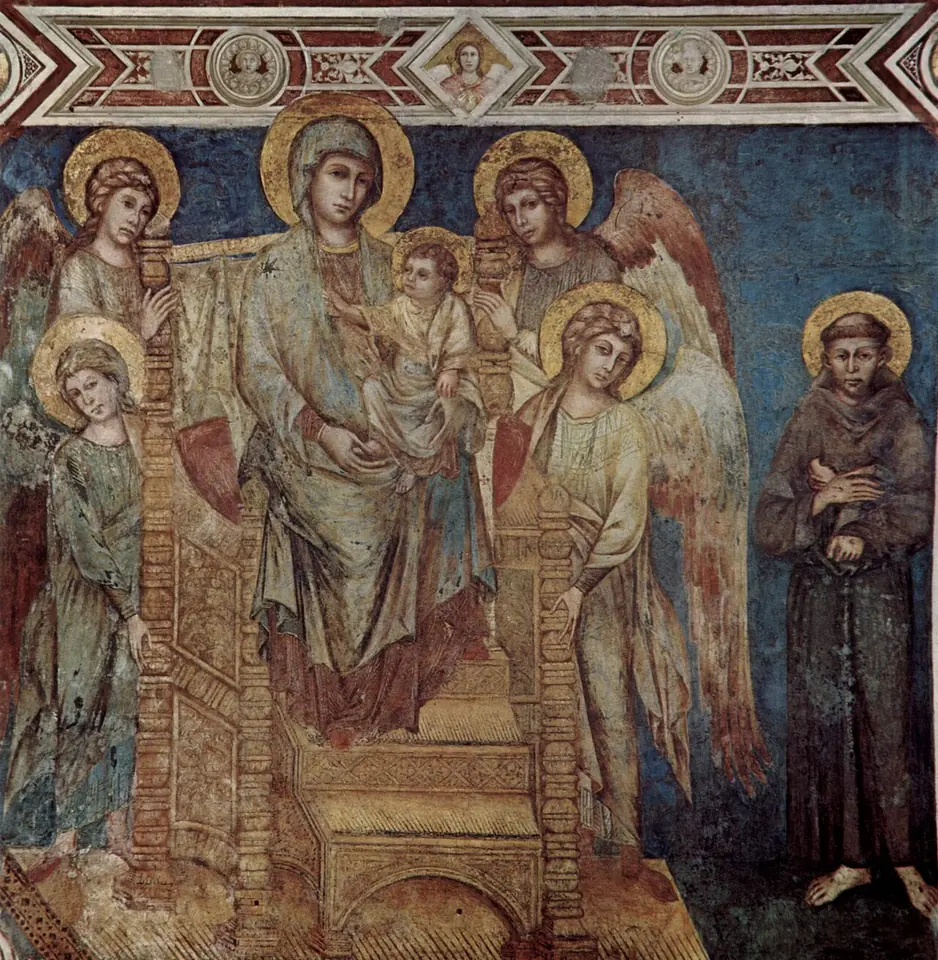
The oldest images, like Cimabue's fresco in the Lower Church, show him as a small, thin man with a short beard, close to the description in Celano. The 28 scenes of the Legend of St. Francis in the Upper Church of Assisi, painted in the 1290s and long credited to Giotto, became the model for how Europe pictured his life; scholars still debate how much of the cycle is by Giotto himself. Baroque painters turned to his inner life.

El Greco painted Francis dozens of times, gaunt and hooded, his eyes on the crucifix, and Zurbarán painted him alone in the dark with a skull.


Other Franciscan saints wear the same habit. St. Anthony of Padua is young and beardless and holds the Christ Child. Padre Pio, a Capuchin of the 20th century, also bore the stigmata but is usually shown with fingerless gloves and a full white beard.


Feast day, customs and where St. Francis is honored
The Church celebrates St. Francis on October 4 as an obligatory memorial. Franciscans begin the feast on the evening of October 3 with the Transitus, a service that recalls his "passing" from this life with readings from the early lives. See the feast day calendar.
The blessing of animals
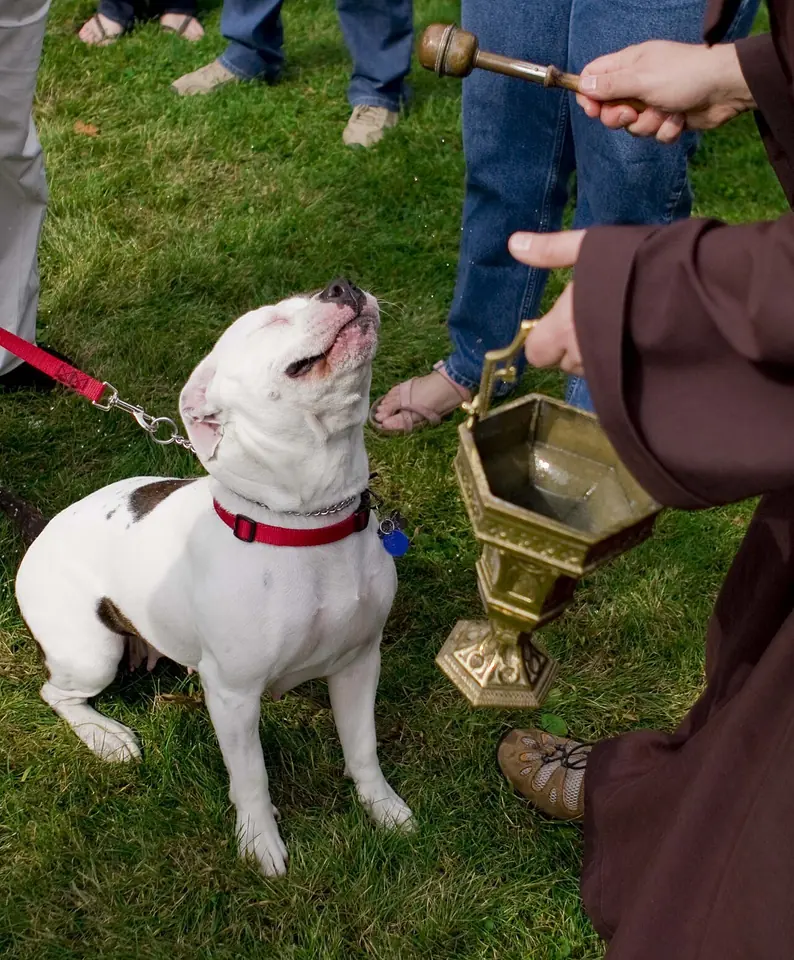
Many Catholic, Anglican and Lutheran parishes hold a blessing of animals on or near October 4. People bring dogs, cats, birds, horses and goats to the church lawn, and a priest or minister prays over each one and sprinkles it with holy water. The custom honors Francis's love for creatures.

Assisi
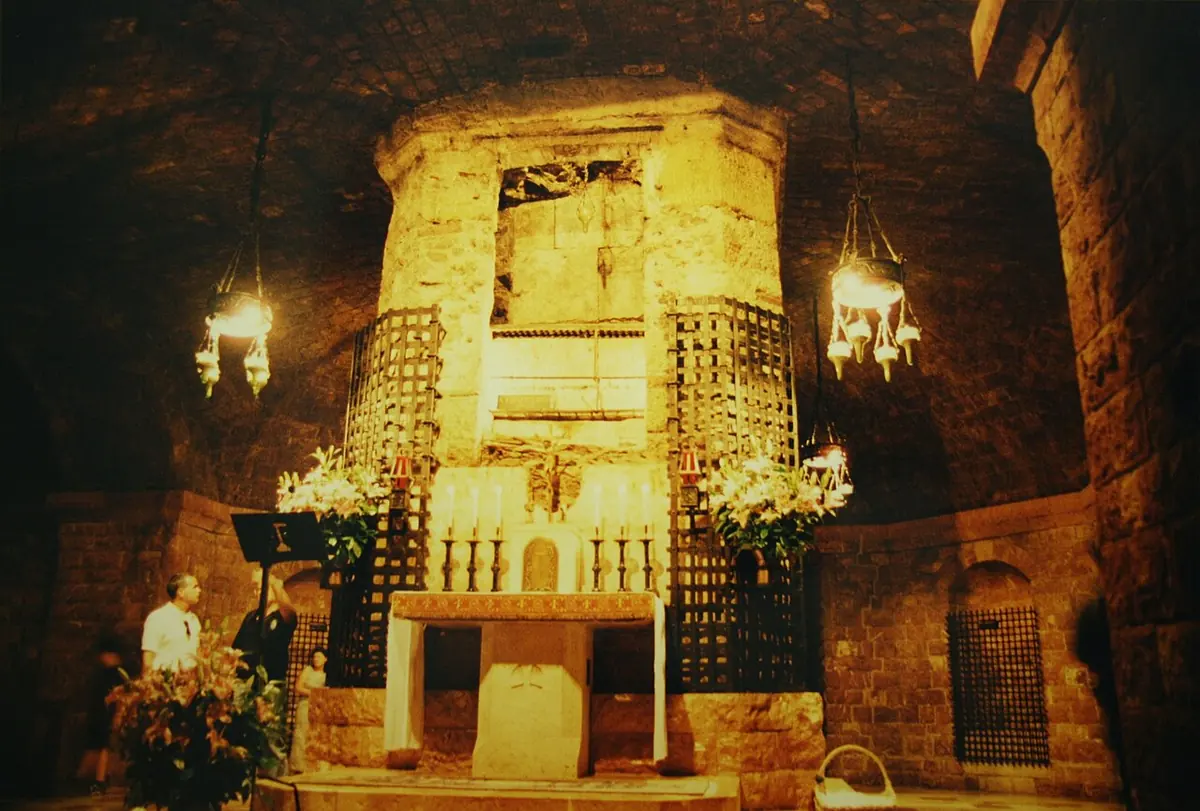
Francis was first buried in the church of San Giorgio in Assisi, where he had learned to read. The day after his canonization, Gregory IX laid the first stone of a great double church on the western edge of town. On May 25, 1230, Brother Elias moved the body there and hid it deep under the high altar of the Lower Church to protect it from relic hunters. It stayed hidden until December 12, 1818, when it was found after fifty-two nights of digging. Pilgrims now pray at the tomb in the crypt.
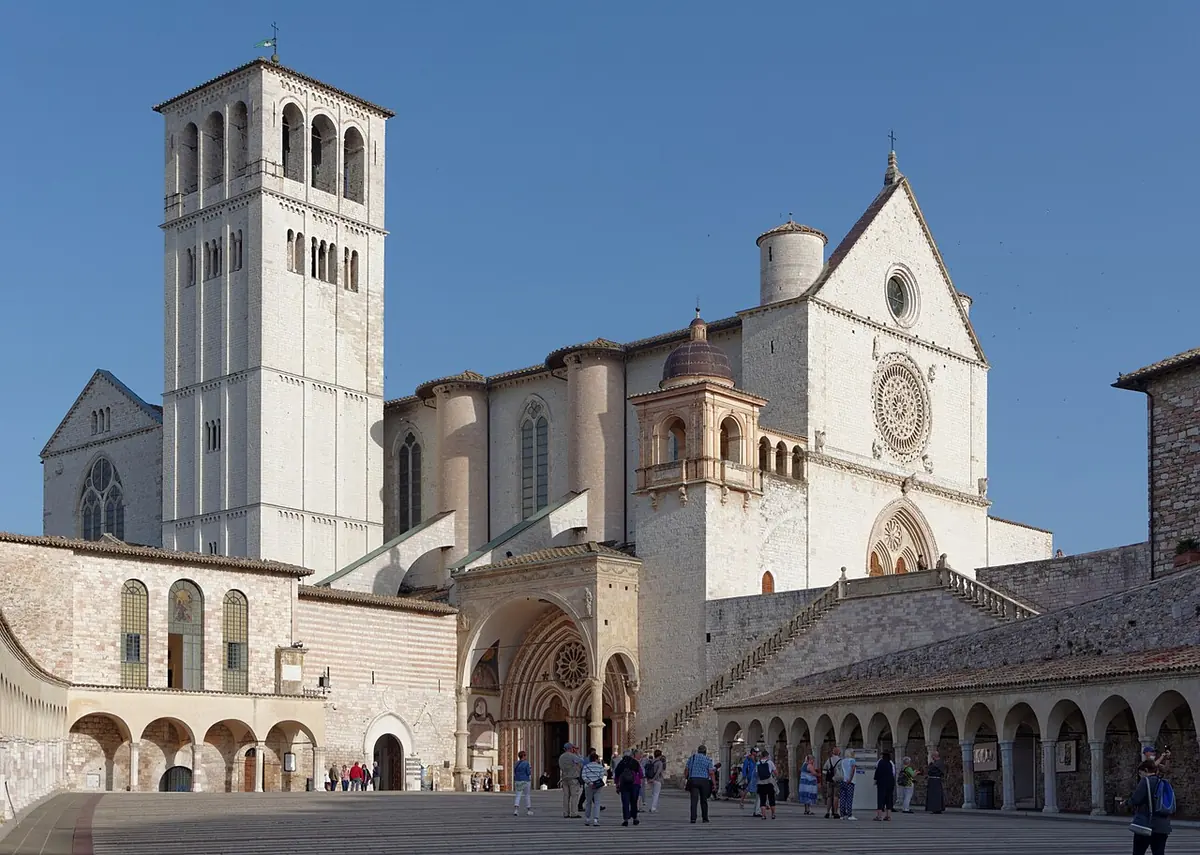

The Upper Church holds the fresco cycle of his life, and the Lower Church holds frescoes by Cimabue, Giotto's workshop, Simone Martini and Pietro Lorenzetti.

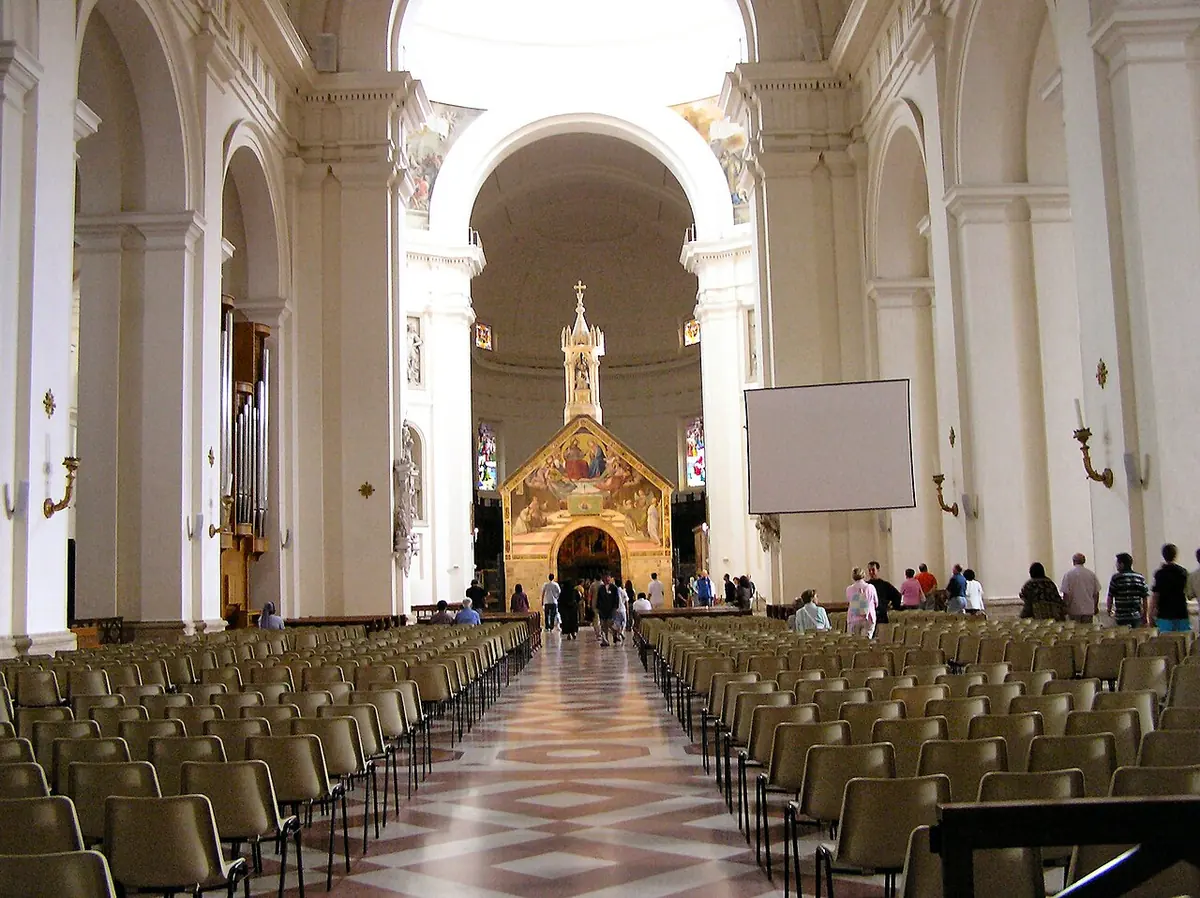
Below the town, the little Porziuncola chapel, where Francis found his vocation, received Clare and died, now stands inside the huge Basilica of Santa Maria degli Angeli, built around it from 1569. The Catholic Encyclopedia calls the Porziuncola the "cradle of the Franciscan Order."

Pilgrims also visit San Damiano, La Verna and Greccio, where the friars still keep the cave of the first crèche.
Prayers of St. Francis
The Canticle of the Creatures
This is Francis's own prayer, written in the Umbrian Italian of his day in 1225 and finished shortly before his death. It survives in a 13th-century manuscript at Assisi. Paschal Robinson's 1906 translation aims to keep its plain, line-by-line rhythm:
Most high, omnipotent, good Lord, / Praise, glory and honor and benediction all, are Thine. / To Thee alone do they belong, most High, / And there is no man fit to mention Thee.
Praise be to Thee, my Lord, with all Thy creatures, / Especially to my worshipful brother sun, / The which lights up the day, and through him dost Thou brightness give; / And beautiful is he and radiant with splendor great; / Of Thee, most High, signification gives.
Praised be my Lord, for sister moon and for the stars, / In heaven Thou hast formed them clear and precious and fair.
Praised be my Lord for brother wind / And for the air and clouds and fair and every kind of weather, / By the which Thou givest to Thy creatures nourishment.
Praised be my Lord for sister water, / The which is greatly helpful and humble and precious and pure.
Praised be my Lord for brother fire, / By the which Thou lightest up the dark. / And fair is he and gay and mighty and strong.
Praised be my Lord for our sister, mother earth, / The which sustains and keeps us / And brings forth diverse fruits with grass and flowers bright.
Praised be my Lord for those who for Thy love forgive / And weakness bear and tribulation. / Blessed those who shall in peace endure, / For by Thee, most High, shall they be crowned.
Praised be my Lord for our sister, the bodily death, / From the which no living man can flee. / Woe to them who die in mortal sin; / Blessed those who shall find themselves in Thy most holy will, / For the second death shall do them no ill.
Praise ye and bless ye my Lord, and give Him thanks, / And be subject unto Him with great humility.
Robinson notes that, according to the Mirror of Perfection, the verse on forgiveness was added during a feud between the bishop and the magistrates of Assisi, and the verse on death when he knew he was dying. The hymn "All Creatures of Our God and King" is a free paraphrase of the Canticle.
The Peace Prayer: not by St. Francis
The prayer that begins "Lord, make me an instrument of your peace" is the most famous prayer in the world with Francis's name on it, but he did not write it. Christian Renoux of the University of Orléans traced it to a French Catholic magazine, La Clochette ("The Little Bell"), published in Paris by the League of the Holy Mass. It appeared there anonymously in 1912 as "A Beautiful Prayer to Say During Mass." Renoux suggests the League's founder, Father Esther Bouquerel, may have written it, but the author is unknown.
In 1915 the French text was sent to Pope Benedict XV, and in 1916 an Italian version appeared in L'Osservatore Romano. Around 1920 a French Franciscan printed it on the back of a holy card of St. Francis, without saying Francis wrote it. In 1927 a French Protestant peace movement, the Knights of the Prince of Peace, published it as a prayer of St. Francis, and the attribution stuck. The first known English version, in Kirby Page's 1936 book Living Courageously, already credited it to Francis.
So the prayer is a 20th-century prayer written in his spirit. A common English version reads:
Lord, make me an instrument of your peace. / Where there is hatred, let me sow love; / where there is injury, pardon; / where there is doubt, faith; / where there is despair, hope; / where there is darkness, light; / where there is sadness, joy.
O divine Master, grant that I may not so much seek / to be consoled as to console; / to be understood as to understand; / to be loved as to love. / For it is in giving that we receive; / it is in pardoning that we are pardoned; / and it is in dying that we are born to eternal life. Amen.
Other prayers of Francis
Francis's genuine prayers are short and full of Scripture. On the parchment he gave Brother Leo on La Verna he wrote the Praises of God on one side and, on the other, the blessing from the Book of Numbers (6:24–26): "May the Lord bless thee and keep thee. May He shew His face to thee and have mercy on thee. May He turn His countenance to thee and give thee peace." Below it he added, "Brother Leo, may the Lord bless thee."
Catholics ask St. Francis to pray for them for peace, for the poor, for their animals and for the grace to live simply.
Frequently asked questions
When is St. Francis of Assisi's feast day?
October 4, the day after his death on the evening of October 3, 1226. It is an obligatory memorial in the General Roman Calendar and a major feast for Franciscans, who keep the Transitus, a service remembering his death, on the evening of October 3. Many churches hold a blessing of animals on or near October 4.
Did St. Francis write the Peace Prayer ("Make me an instrument of your peace")?
No. The prayer first appeared, unsigned, in 1912 in a small French Catholic magazine called La Clochette. It was printed on the back of a holy card of St. Francis around 1920 and was first credited to him in 1927. It is a beautiful 20th-century prayer in his spirit, but it is not among his writings.
What prayers did St. Francis actually write?
His genuine writings include the Canticle of the Creatures (also called the Canticle of Brother Sun), the Praises of God and the blessing for Brother Leo (both written on one small parchment kept in Assisi), the Prayer before the Crucifix, the Rule of 1223, his Testament and several letters.
Why is St. Francis the patron saint of animals?
Because his early biographers tell how he preached to birds, freed animals from traps, and called every creature "brother" or "sister." Thomas of Celano, who knew him, describes the sermon to the birds near Bevagna, and the later Little Flowers tells of the wolf of Gubbio. Pope John Paul II also named him the patron of ecology in 1979.
What are the stigmata of St. Francis?
Wounds like the five wounds of the crucified Christ, in his hands, feet and side, which his companions say appeared after a vision of a seraph on Mount La Verna in September 1224. They are the earliest stigmata of which there are eyewitness reports. The Franciscan family celebrates the feast of the Stigmata on September 17.
Was St. Francis a priest?
No. He was ordained a deacon but, out of humility, never became a priest. Most of his first followers were lay brothers as well.
Did St. Francis make the first nativity scene?
He is credited with the first living crèche, at Greccio near Rieti on Christmas 1223, with a manger, hay, an ox and a donkey in a cave, where Mass was celebrated. Pope Francis wrote about it in his 2019 letter Admirabile signum, signed at Greccio.
Why did Pope Francis choose the name Francis?
He told journalists in March 2013 that when he was elected, Cardinal Cláudio Hummes embraced him and said, "Don't forget the poor!" He thought of Francis of Assisi, "the man of poverty, the man of peace, the man who loves and protects creation."
Sources
- Catholic Encyclopedia (1909): St. Francis of Assisi
- Benedict XVI, General Audience of 27 January 2010: Saint Francis of Assisi
- The Writings of Saint Francis of Assisi, translated by Paschal Robinson (Dolphin Press, 1906), Internet Archive
- The Little Flowers of St. Francis of Assisi (Christian Classics Ethereal Library)
- Christian Renoux: The Origin and Original Text of the Peace Prayer of St. Francis (Franciscan Archive)
- Quote Investigator: Lord, Make Me an Instrument of Your Peace
- Pope Francis, Apostolic Letter Admirabile signum on the nativity scene (1 December 2019)
- Pope Francis, Encyclical Laudato si' (24 May 2015)
- John Paul II, Apostolic Letter Inter sanctos (29 November 1979), Latin text
- Pope Francis, Audience with the media representatives (16 March 2013)
- Thomas of Celano, First Life of St. Francis (1228–1229)
- St. Bonaventure, Legenda Maior (Major Life of St. Francis, 1260–1263)
- Roman Martyrology, October 4