St. Peregrine Laziosi
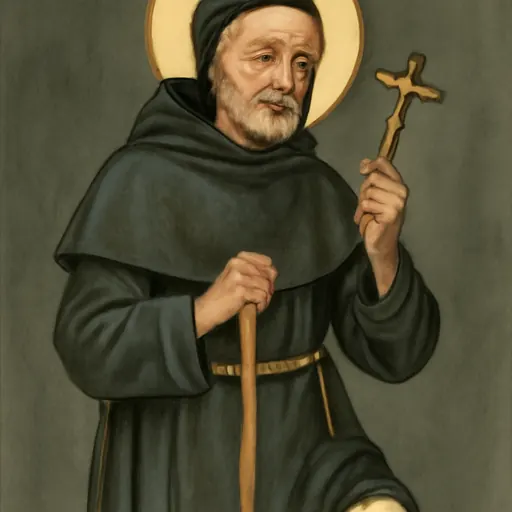
St. Peregrine Laziosi (about 1265–1345) was an Italian friar of the Servants of Mary from Forlì who, according to tradition, was healed of a cancerous wound on his leg the night before it was to be amputated. He is the patron saint of cancer patients and of people with serious illness. His feast day is May 1, kept on May 4 in many Servite churches.
Who was St. Peregrine?
Peregrine Laziosi was a friar of the Servants of Mary, the Servites, who spent most of his long life in his hometown of Forlì, in the Romagna region of northern Italy. He was a rebellious young nobleman who changed his life after an act of violence was answered with forgiveness. As an old man he suffered from a festering wound on his leg that his doctor took to be incurable, and tradition says Christ healed it the night before the leg was to be cut off. Since then, people with cancer and other grave illnesses have asked for his prayers.
If you are reading this because you or someone you love is ill, the Servite friars who keep his shrines put it simply. Peregrine knew sickness and pain, and he brought them to the foot of the cross. Their shrines pray every week for the sick whose names are sent to them.

The life of St. Peregrine
Where the story comes from
The oldest account of Peregrine is a short Latin legenda, or Life, written soon after his death by a fellow friar who had known him, according to the basilica in Forlì. The original is lost; what survives is a version rewritten in classical Latin in 1483 by Niccolò Borghese, a scholar and politician of Siena. The episodes below come from that Life and from Servite tradition.
A rebel in Forlì
Peregrine was born in Forlì around 1265 into the well-off Laziosi family, which, like much of the city, sided against the pope in the wars between the papacy and the Ghibelline cities of Romagna. In 1282 Pope Martin IV placed the rebellious city under interdict, which meant no Masses and no sacraments.
The prior general of the Servites, Philip Benizi, came to Forlì to preach peace and obedience to the pope. The crowd drove him out of the city with insults, whistles and shoving. Peregrine, then about eighteen, was among them, and in the version most often told today he struck Philip in the face. Philip, the Servites say, prayed for the people who attacked him.
Peregrine was overcome with remorse. According to the basilica in Forlì, he ran after Philip along the Via Emilia, caught up with him by the river Ronco, and threw himself at his feet. Philip embraced him.

A Servite friar
Not long afterward, praying before an image of the Virgin Mary in the cathedral of Forlì, Peregrine felt called to join Philip's order. He received the Servite habit in Siena, where he lived alongside the friar Blessed Francis of Siena. Around 1295 he was sent back to Forlì, and he stayed there for the rest of his life. Sources differ on whether he was ever ordained a priest; the Roman Martyrology calls him simply a religious of the Servants of Mary.
In Forlì he became known for prayer, penance and care for the poor. The Servites tell that during a famine he multiplied grain and wine for the hungry, a traditional story. He set himself a hard penance: never to sit down when he did not have to. When he was tired he leaned on a choir stall or a rock, and when sleep overcame him he lay on the bare ground.
The wound on his leg
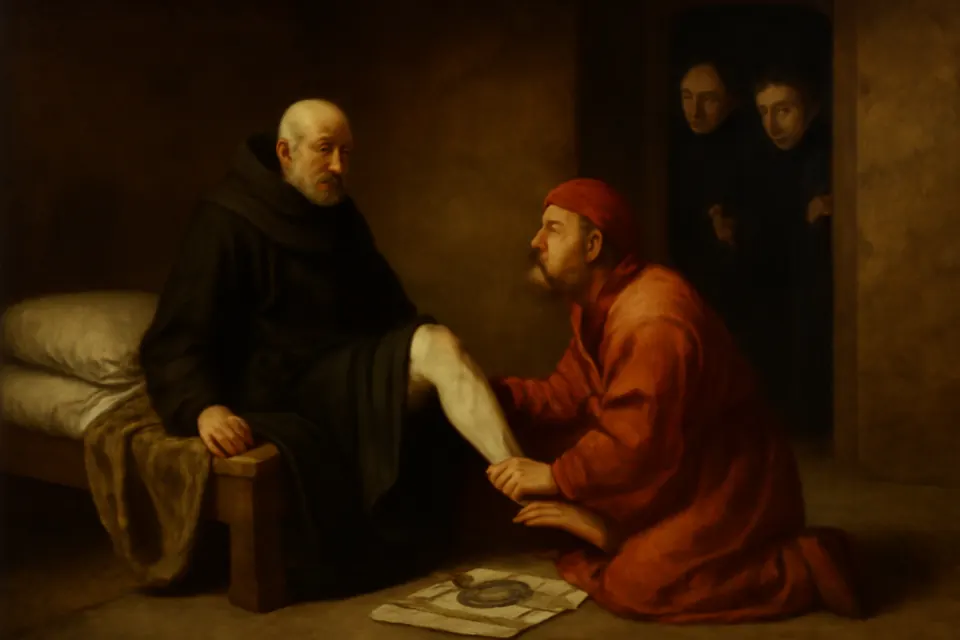
Years of standing took a toll. When Peregrine was about sixty, around 1325, varicose veins in his right leg broke down into an open ulcer, which the Servites describe as cancer. It spread, gave off a terrible smell and would not heal. The friary's physician, named in the sources as Paolo Salazio or Salaghi, decided with the agreement of the friars that the only remedy was to amputate the leg.
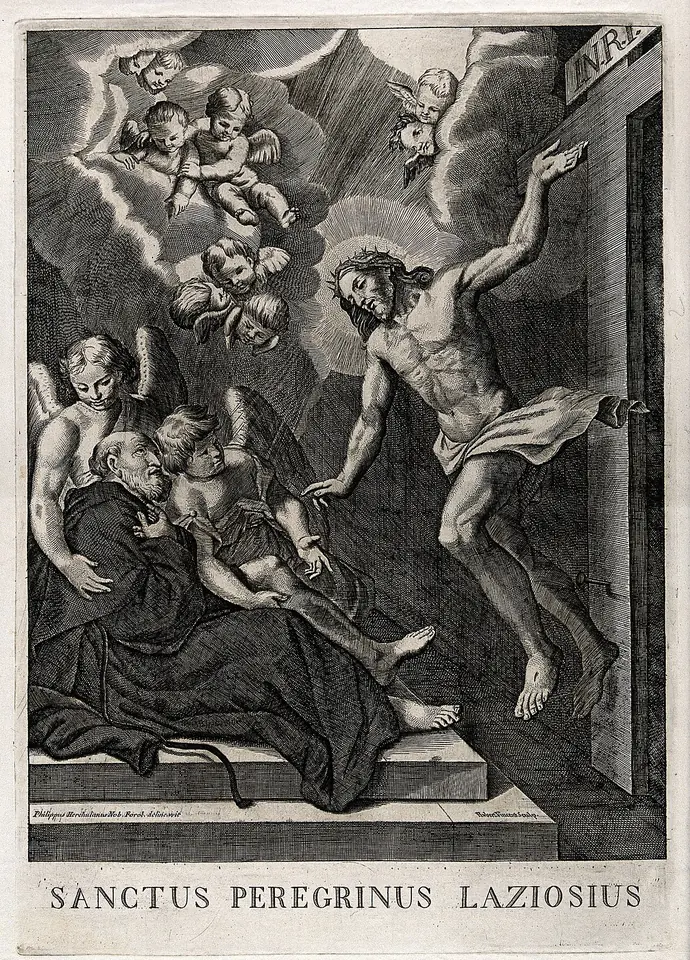
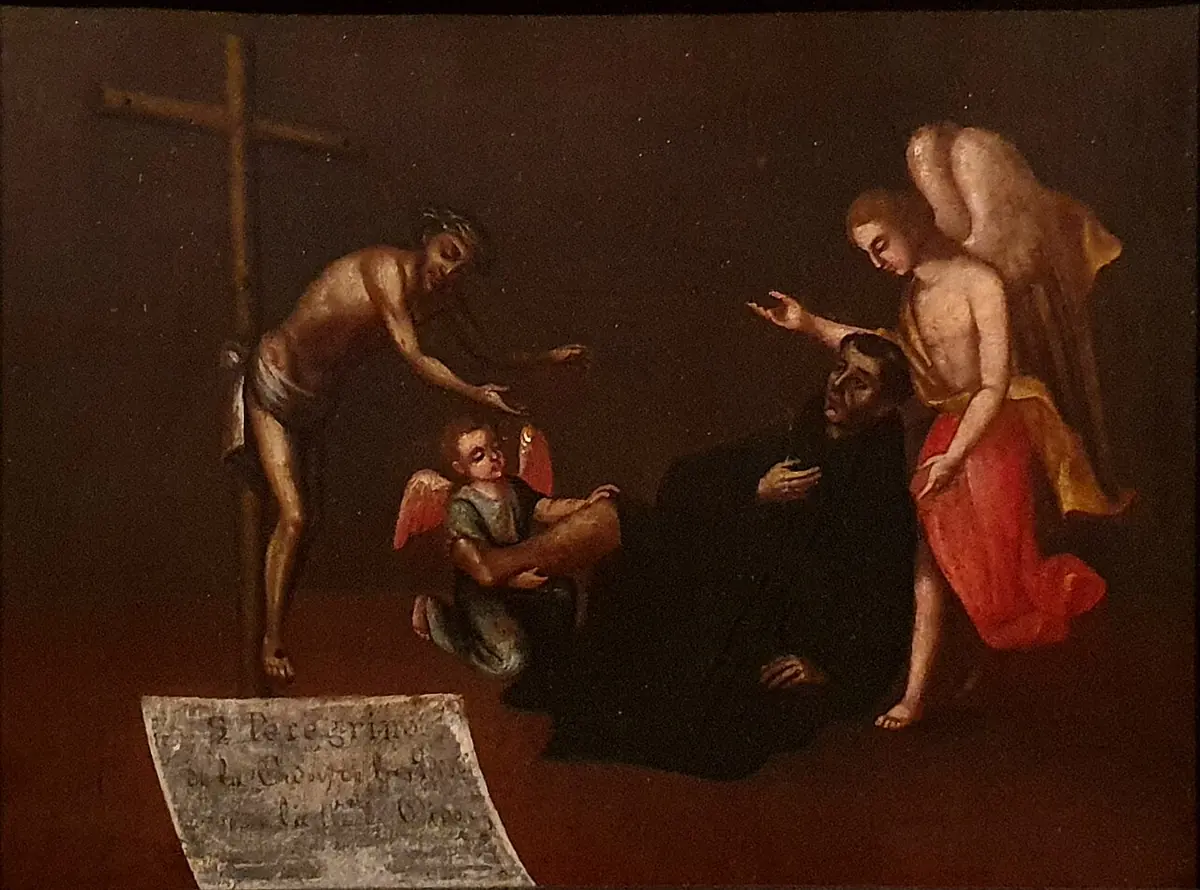
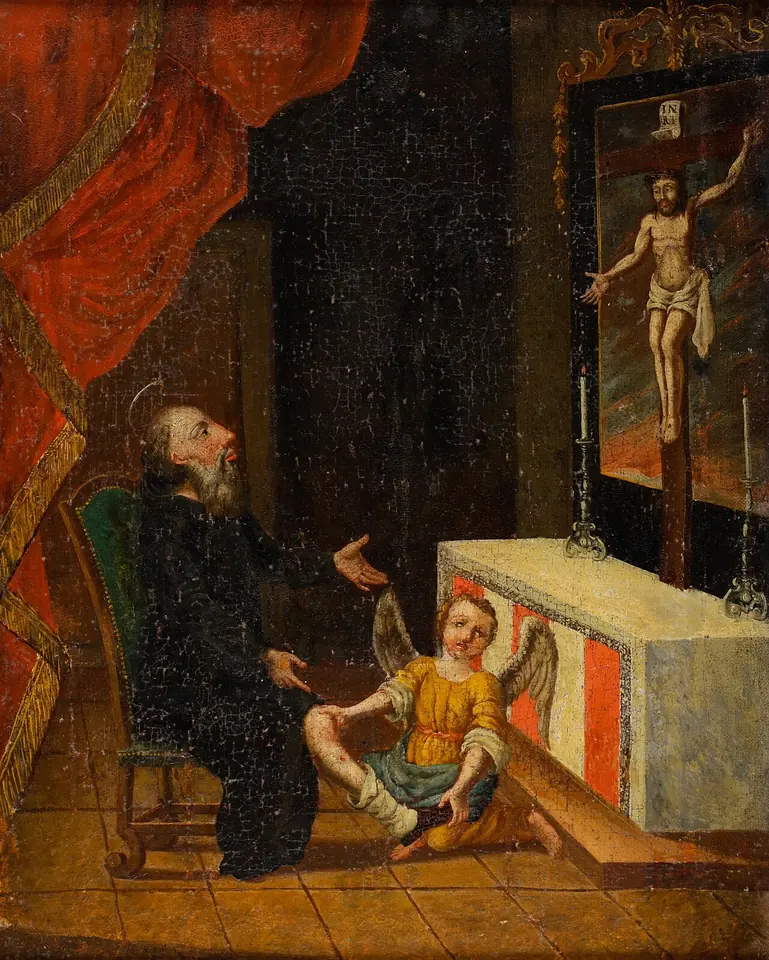
The night before the operation, Peregrine dragged himself to the large crucifix in the chapter room, the room where the friars met. He prayed there, and as he grew drowsy he seemed to see Jesus come down from the cross and touch his leg. The next morning the physician came to operate and found no sign of the disease, not even a wound. The doctor was so shaken that he spread the news all over town.
Peregrine lived another twenty years. He died of a fever in Forlì on May 1, 1345, almost eighty years old. The basilica in Forlì says such crowds came to see his body that the city gates could not be closed.
The miracles of St. Peregrine
Sorted by the labels this encyclopedia uses:
- The healing of his leg (about 1325): traditional. It is told in the early Life and has been the center of his cult ever since, but there is no independent medical record from the time. Modern doctors cannot know whether the wound was a cancer, a severe venous ulcer or something else.
- The multiplication of grain and wine during a famine: traditional.
- Healings at his death: traditional. The Life says that while his body lay in the church, a blind man was given his sight and a woman possessed by a demon was freed.
- Cures through his intercession: reported. Miracles were examined in the process that led to his canonization in 1726, and Servite shrines have received testimonies of healing and comfort ever since. The individual modern accounts have not been formally examined by the Church.
His story has a small place in medical history too. Doctors sometimes use the name "Saint Peregrine tumor" for a cancer that shrinks without effective treatment, which is called spontaneous regression. A review of the subject in the journal ImmunoTargets and Therapy notes that most medical historians begin with Peregrine, while cautioning that a 14th-century diagnosis, made without a microscope, may have been mistaken.

Why St. Peregrine is the patron saint of cancer patients
The healing of his leg made him the saint of the sick from the start, and the Servites, who brought his devotion to many countries, have always presented the illness as cancer. The Servite friars in the United States say the news of his cure "spread rapidly round the western Church," and that his canonization in 1726 carried the devotion beyond his own order. The Grotto in Portland, a Servite shrine, calls him the saint "of people with cancer, AIDS, or other life-threatening diseases." Women with breast cancer also turn to St. Agatha. See all the patron saints by cause.
The Servites draw a lesson from where the healing happened. In their words, it "might have occurred in a sick bed or a shrine. But it didn't." It happened at the foot of the cross, and they present Peregrine as a companion for the sick whether or not a cure comes. As The Grotto puts it, the lesson of his life "is not that God worked a miracle, but that a faithful, trustful servant placed himself, unconditionally, in the hands of our Lord."
Symbols of St. Peregrine in art
St. Peregrine is easy to recognize once you know the signs:
- A black Servite habit, with a hood or short cape and a leather belt. The Servites are devoted to Our Lady of Sorrows, and his images often appear in their churches near hers.
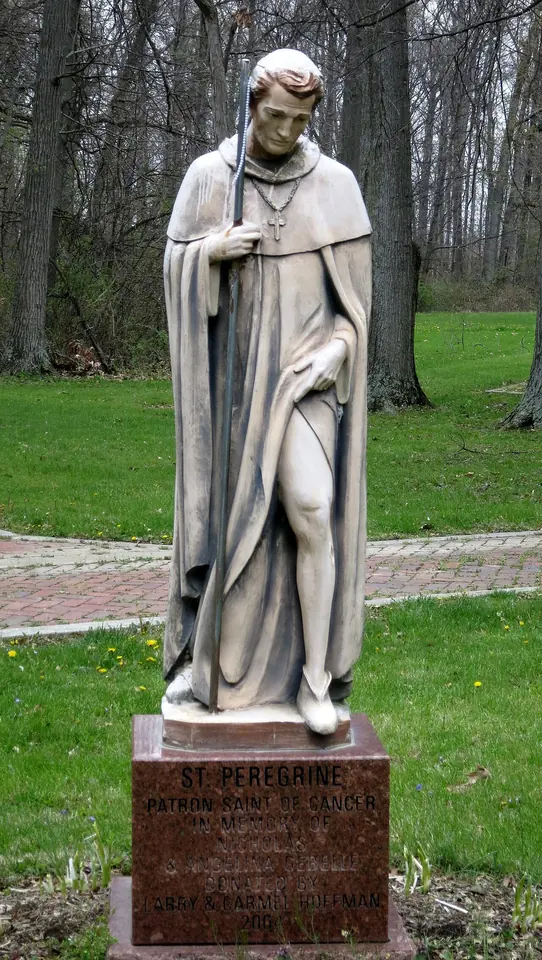
- A wounded or bandaged leg: the clearest sign. Statues often show him lifting the hem of his habit to show it.
- A crucifix: held in his hand, or hanging above him.
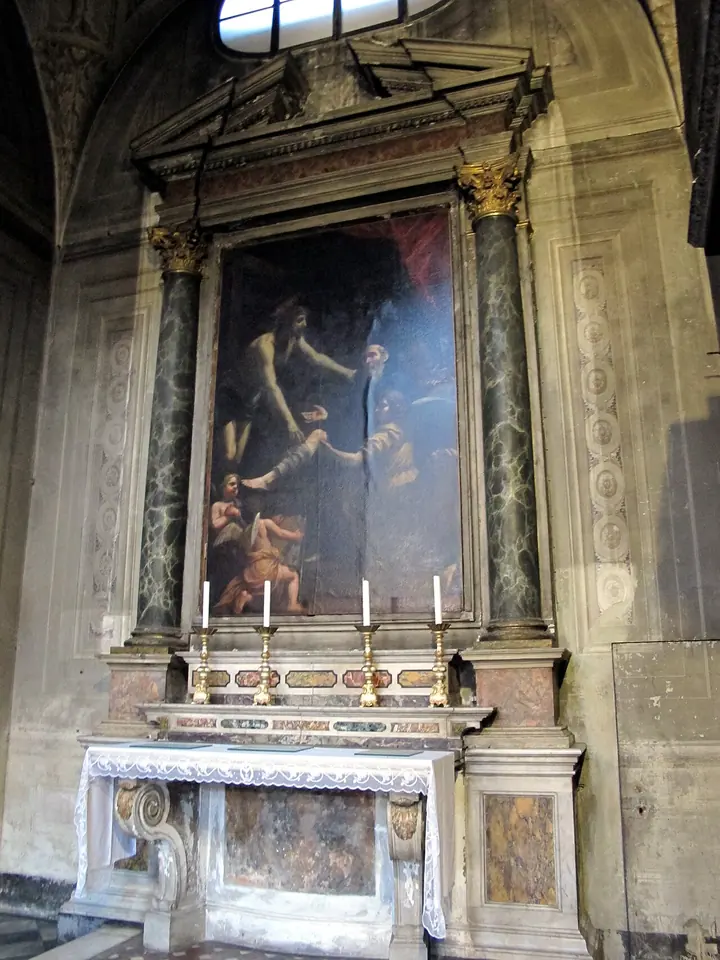
- Christ coming down from the cross: the great subject of Baroque paintings and engravings of him. Christ leans or steps down from the cross to touch the friar's leg, often with angels.
- An angel tending his leg: a variation in later paintings.
- A pilgrim's staff: because peregrinus means "pilgrim" in Latin, some images give him a staff, and he is sometimes confused with pilgrim saints like St. Roch, who also shows a sore on his leg. Roch wears a pilgrim's hat and is usually with a dog; Peregrine wears the Servite habit.

In Florence, the Servites' mother church has a chapel of St. Peregrine.

Feast day and where St. Peregrine is honored
The Roman Martyrology lists St. Peregrine on May 1, the day he died, and Forlì celebrates him that day with a traditional citron fair, the festa dei cedri. Many Servite churches, including those in the United States and Ireland, keep his feast on May 4. See the feast day calendar.
Forlì
His body lies in the Servite church of Forlì, Santa Maria dei Servi, now called the Basilica of San Pellegrino Laziosi. Pope Paul V beatified him in 1609, and Pope Benedict XIII canonized him on December 27, 1726. For the 300th anniversary in 2026, Forlì opened a jubilee year on May 1. Earlier that spring, with the bishop and the Servites present, his remains were examined for the first time since April 16, 1958, including a full-body CT scan at the city hospital, under the direction of the paleopathologist Mirko Traversari. The results were still being validated when the local paper reported on them.


The United States
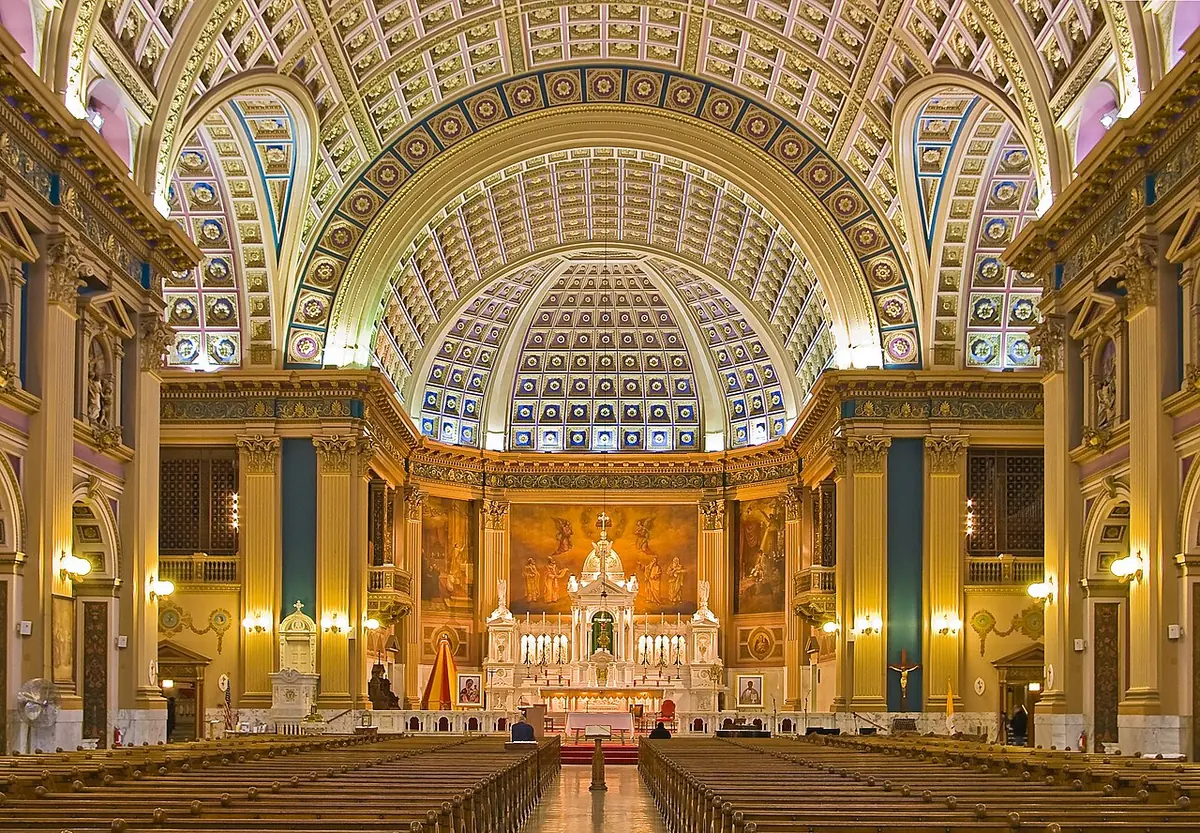
The National Shrine of St. Peregrine is at Our Lady of Sorrows Basilica, 3121 W. Jackson Blvd., on Chicago's West Side, run by the Servite friars. A Mass for the Sick, with a blessing of each person with a relic of St. Peregrine, is celebrated on the third Saturday of every month at 11:00 a.m., and a Spanish-language healing Mass on the second Saturday. Each week a Mass is offered for all the intentions the shrine receives.

The Grotto, the National Sanctuary of Our Sorrowful Mother in Portland, Oregon, also run by the Servites, celebrates a St. Peregrine Mass with a blessing with his relic on the first Saturday of each month at noon.

In Northern Ireland, the Servite Priory at Benburb is marking the 300th anniversary of his canonization from May 4, 2026, to May 4, 2027.
Prayer to St. Peregrine
There is no prayer by St. Peregrine himself. The prayers below are published by the Servite friars, who keep his shrines. Catholics pray them alongside medical treatment, never instead of it.
Prayer to St. Peregrine for the sick
This is the first of the prayers for sick relatives and friends published by the Servite friars of the USA Province:
Saint Peregrine, as a humble Servant of Mary, you experienced human weakness and the pain and suffering of sickness. Knowing that medicine and human knowledge have limits, we pray for all those involved with the medical profession that they will be a true source of healing and comfort to all people. Like you, we also turn to God in our suffering. Just as Jesus reached out and touched you with His healing hand, we pray that the following sick person(s) will be strengthened in body and spirit and cured of their illness by Jesus Christ through your intercession: (here mention the name(s) of your sick relatives and friends)
In gratitude we pray for all the people of the world that they will come to know you, St. Peregrine, and the love that God has for each of them. Amen.
Prayer for the sick of the world
This short prayer is used at The Grotto in Portland:
Graciously hear the prayers which we present O God, to you in honor of St. Peregrine, your beloved servant and patron of those suffering from cancer, AIDS, or other life-threatening disease. Grant that we may receive help in our needs through the intercession of him whose life was so pleasing to you. Hear us in the name of Christ, our Lord. Amen
Praying a St. Peregrine novena
A novena is a prayer said on nine days in a row. Many people pray one of the prayers above for nine days, often before a scan, a surgery or a round of treatment, adding an Our Father, a Hail Mary and a Glory Be. The National Shrine in Chicago accepts prayer petitions online and by mail.
Frequently asked questions
What is St. Peregrine the patron saint of?
People with cancer, and more broadly people facing serious or life-threatening illness. Shrines run by his order, the Servites, also pray for families, caregivers and medical staff. Forlì, his hometown, honors him as its own saint.
When is St. Peregrine's feast day?
May 1 in the Roman Martyrology and in Forlì, where the day is kept with a traditional citron fair. Many Servite churches, including those in the United States and Ireland, celebrate him on May 4. The year from May 2026 to May 2027 marks the 300th anniversary of his canonization.
How was St. Peregrine healed?
His early life says that around 1325, when he was about sixty, an ulcer on his right leg became so bad that the physician decided to amputate. The night before, Peregrine dragged himself to the crucifix in the friary's chapter room to pray, fell into a kind of sleep and saw Jesus come down from the cross and touch his leg. In the morning the doctor found it healed. The account is traditional, from the Life written by a friar who knew him.
Where is the St. Peregrine shrine?
His body is in the Basilica of San Pellegrino Laziosi in Forlì, Italy. In the United States, the National Shrine of St. Peregrine is at Our Lady of Sorrows Basilica, 3121 W. Jackson Blvd., Chicago, with a monthly Mass for the sick. The Grotto in Portland, Oregon, has a St. Peregrine Mass on the first Saturday of each month.
Was St. Peregrine's illness really cancer?
The Servites have always described it as cancer of the right leg that began with varicose veins, and doctors still use the name "Saint Peregrine tumor" for a cancer that regresses on its own. But no one in 1325 could examine tissue under a microscope, and a medical review in ImmunoTargets and Therapy notes the diagnosis may have been mistaken. The healing is told as traditional.
Sources
- Friar Servants of Mary, USA Province: St. Peregrine
- Friar Servants of Mary, USA Province: St. Peregrine, History
- Friar Servants of Mary, USA Province: St. Peregrine, Devotions
- Friar Servants of Mary, USA Province: National Shrine of St. Peregrine
- Basilica of Saint Pellegrino Laziosi, Forlì: The Saint (archived 2010)
- Roman Martyrology 2004, May 1 (GCatholic)
- The Grotto, National Sanctuary of Our Sorrowful Mother: St. Peregrine Devotions
- Benburb Priory: Tercentenary of the Canonisation of St Peregrine
- Il Resto del Carlino: Il corpo del Santo. Pellegrino Laziosi, raggi x alla storia (2026)
- Il Resto del Carlino: Giornate pellegriniane, scienza e fede (2025)
- William Bradley Coley, MD, and the phenomenon of spontaneous regression (ImmunoTargets and Therapy, PMC)