The 12 apostles
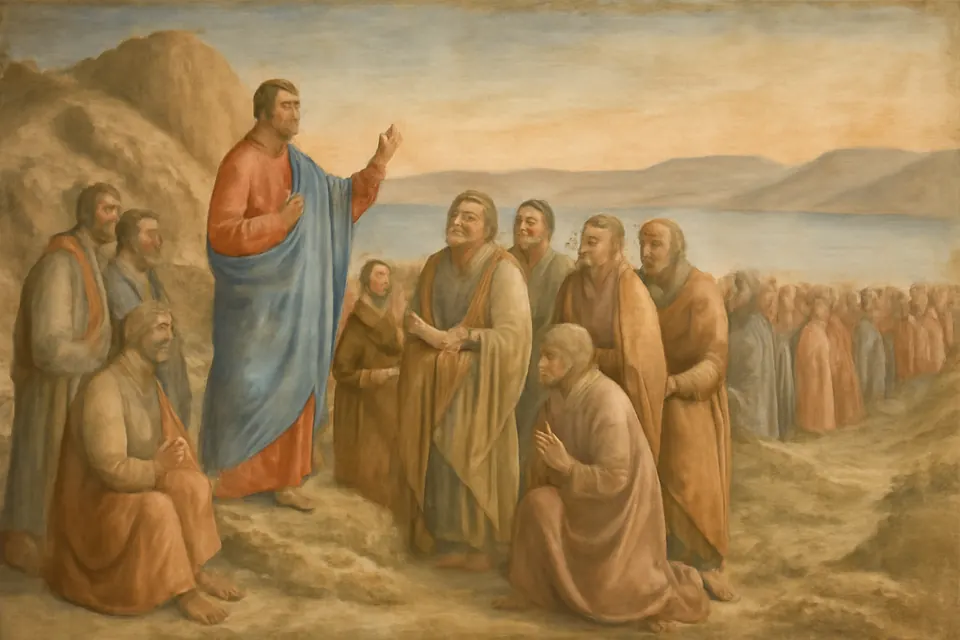
The 12 apostles were the men Jesus chose from among his disciples to be with him and to be sent out to preach: Peter, Andrew, James and John (the sons of Zebedee), Philip, Bartholomew, Thomas, Matthew, James the son of Alphaeus, Jude Thaddeus, Simon the Zealot and Judas Iscariot. After Judas betrayed Jesus, St. Matthias was chosen to take his place (Acts 1:26).
The 12 apostles were the men Jesus chose to stay close to him, to learn from him and to carry his Gospel to the world. The Church still stands on their witness. Every time we say in the Creed that we believe in "one, holy, catholic and apostolic Church," we are naming them.
The call of the Twelve
St. Luke tells us that before Jesus chose them, "he went out into a mountain to pray, and he passed the whole night in the prayer of God" (Luke 6:12). In the morning he called his disciples together and chose twelve of them, "whom also he named apostles." The Greek word apostolos means one who is sent.
St. Mark gives the scene in a few spare lines, here in the Douay-Rheims translation:
And going up into a mountain, he called unto him whom he would himself: and they came to him. And he made that twelve should be with him, and that he might send them to preach. And he gave them power to heal sicknesses, and to cast out devils. (Mark 3:13–15)
Two things come first in that call: to be with him, and to be sent. The Twelve were friends before they were missionaries. They walked the roads of Galilee with Jesus for about three years, heard his parables explained in private, saw the miracles, and were with him in the upper room on the night before he died.
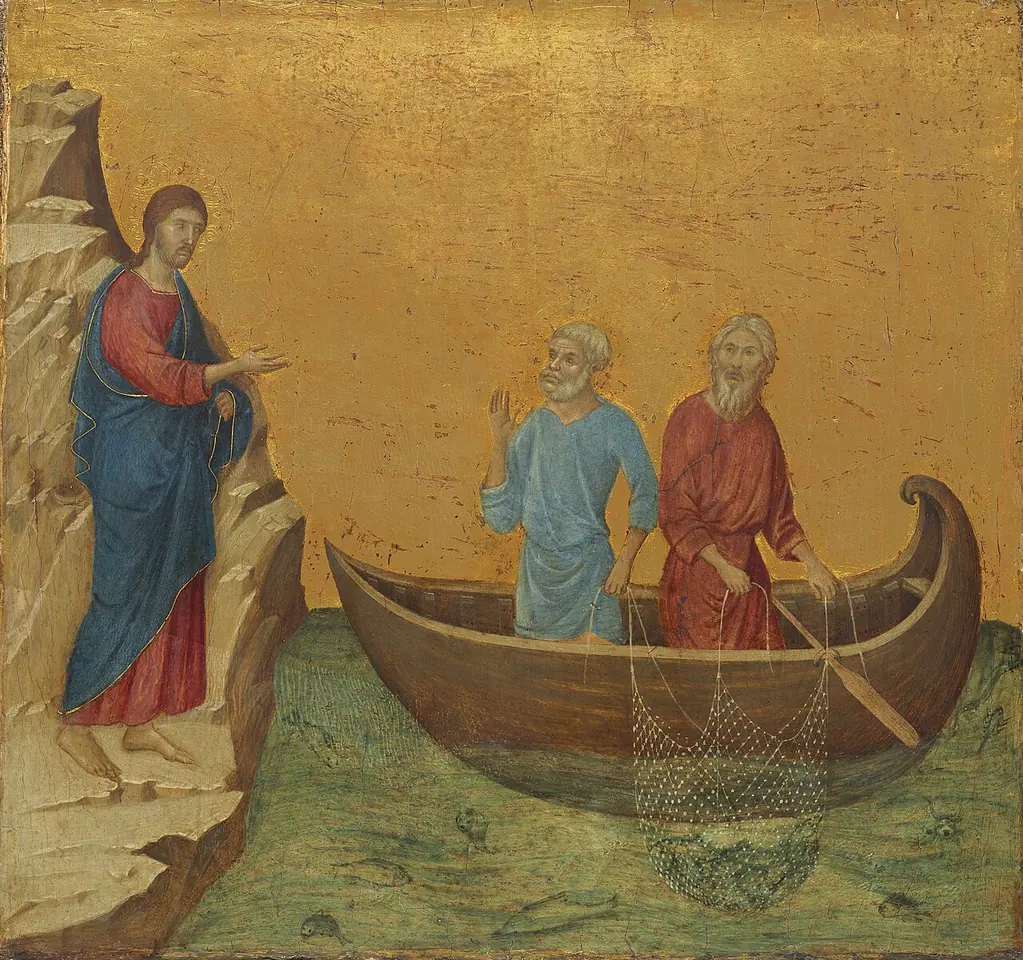
Some of them we know well. Peter, Andrew, James and John were fishermen, two pairs of brothers, and Jesus called them from their nets. Matthew sat at the tax collector's table when Jesus said to him, "Follow me." Philip brought his friend Nathanael, whom tradition identifies with Bartholomew. Of others, such as Simon the Zealot, the Gospels record little more than the name.
Jesus sent them out on mission even before his Passion, two by two, with power over unclean spirits and orders to take nothing for the journey but a staff (Mark 6:7–8). After the Resurrection he sent them to all nations.

The twelve apostles' names, feast days and symbols
Matthew, Mark and Luke each list the Twelve, and Acts 1:13 lists them again without Judas. The order shifts a little, but Peter always comes first and Judas Iscariot always last. Several apostles carry two names, which is why lists can look different at first glance. Here they are in the order of Matthew 10:2–4, with the names you may meet, the day the Church keeps their feast in the General Roman Calendar, and their usual signs in art.
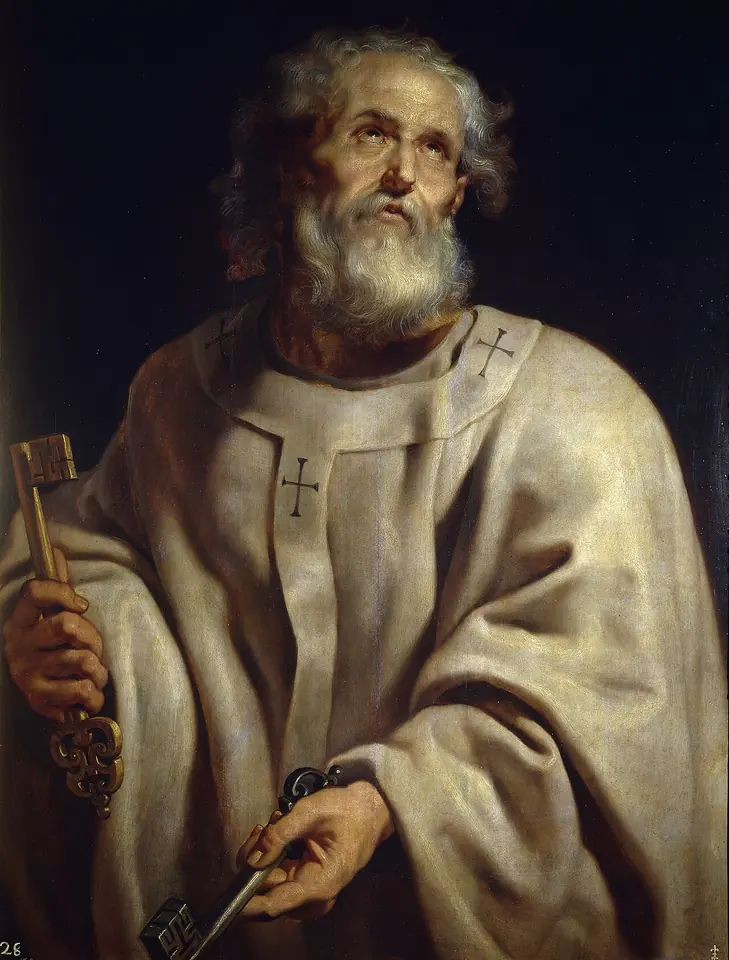
- St. Peter: Simon, Cephas, Simon Bar-Jona, Prince of the Apostles. Feast June 29 (with St. Paul); the Chair of St. Peter on February 22. Symbols: two keys, a rooster, an upside-down cross, a boat or net.
- St. Andrew: Peter's brother, called the First-Called in the East. Feast November 30. Symbols: an X-shaped cross (saltire), a fishing net.
- St. James the Greater: James son of Zebedee, Santiago. Feast July 25. Symbols: a scallop shell, a pilgrim's staff and hat, a sword.
- St. John the Apostle: John son of Zebedee, the Beloved Disciple, the Evangelist, the Theologian. Feast December 27. Symbols: an eagle, a chalice with a serpent, a book.
- St. Philip: Philip of Bethsaida. Feast May 3 (with St. James the Less). Symbols: a tall cross, loaves of bread.
- St. Bartholomew: traditionally identified with Nathanael. Feast August 24. Symbols: a knife, a book.
- St. Thomas: Didymus, "the Twin," Doubting Thomas. Feast July 3. Symbols: a spear, a builder's square.
- St. Matthew: Levi, the tax collector and Evangelist. Feast September 21. Symbols: a winged man or angel, a money bag, a pen and book.
- St. James the Less: James son of Alphaeus; in Western tradition also James "the brother of the Lord." Feast May 3. Symbols: a fuller's club, a book.
- St. Jude: Thaddeus, Lebbaeus, "Jude the brother of James." Feast October 28 (with St. Simon). Symbols: a medallion with the face of Christ, a flame over his head, a club.
- St. Simon: the Zealot, the Cananean. Feast October 28. Symbols: a large saw, a book.
- Judas Iscariot: the one who betrayed Jesus. He has no feast and no halo; painters often show him clutching a money bag or set apart at the Last Supper.
And the apostle chosen to fill the empty place:
- St. Matthias: chosen by lot in Acts 1. Feast May 14. Symbols: an axe or halberd, stones.
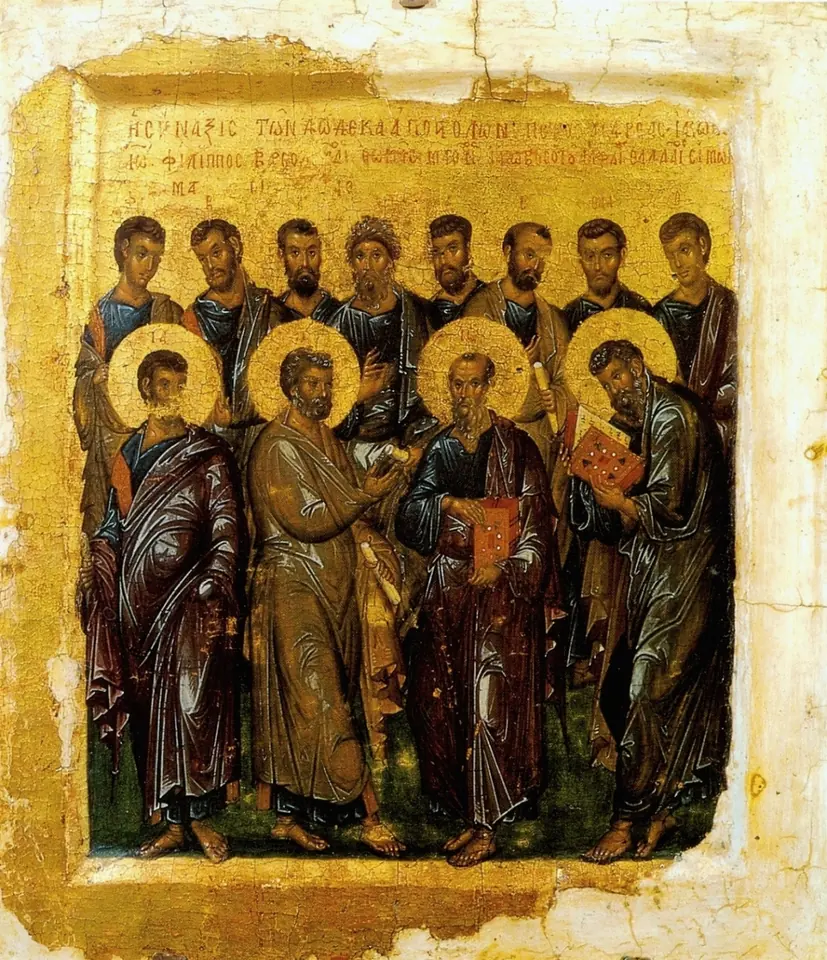
The Orthodox Church keeps many of these feasts on other days, and on June 30 it honors all twelve together in the Synaxis of the Holy Apostles. Each saint's page gives the Eastern dates. For every saint's day through the year, see our feast days calendar.
How to read the symbols
Most of the signs come from the way each apostle died, as tradition tells it: Andrew's cross, Bartholomew's knife, Simon's saw, Matthias's axe. Others come from the Gospels. Peter holds the keys of the kingdom of heaven that Jesus promised him (Matthew 16:19), and Thomas carries a builder's square because the Acts of Thomas says he was hired as a carpenter and builder in India. John's eagle is the sign of his Gospel, which soars from its first line, "In the beginning was the Word." James the Greater wears the scallop shell of the pilgrims who walk to his shrine at Compostela.
When you see a row of bearded men with books on a church wall or a carved altarpiece, look at the object each one holds. That is usually how to tell them apart. Our guide to saints' symbols in art goes further.

Judas, and how St. Matthias took his place
Judas Iscariot was truly chosen and truly sent. He received the same call as the others, and the Gospels make clear that he kept the common purse. His betrayal for thirty pieces of silver is one of the saddest pages of the Gospel. St. Matthew records that he threw the silver down in the temple, "and went and hanged himself with an halter" (Matthew 27:5). The Church has never named anyone as damned, Judas included, and leaves his judgment to God. We are not given his story so that we can despise him; we are given it as a warning to our own hearts.

After the Ascension the Eleven waited in the upper room, "persevering with one mind in prayer with the women, and Mary the mother of Jesus" (Acts 1:14). Peter stood up among about a hundred and twenty disciples and said that Judas's place had to be filled. The new apostle had to be a man who had been with them "beginning from the baptism of John, until the day wherein he was taken up from us," so that he could "be made a witness with us of his resurrection" (Acts 1:22).
And they appointed two, Joseph, called Barsabas, who was surnamed Justus, and Matthias. And praying, they said: Thou, Lord, who knowest the hearts of all men, shew whether of these two thou hast chosen, to take the place of this ministry and apostleship, from which Judas hath by transgression fallen... And they gave them lots, and the lot fell upon Matthias, and he was numbered with the eleven apostles. (Acts 1:23–26)
Casting lots after prayer was an old way of leaving the choice to God. It is the only time the New Testament shows the apostles choosing this way, and it happened before Pentecost; once the Holy Spirit had come, the apostles chose and laid hands on others. Matthias is never mentioned again in the New Testament.

St. Paul and St. Barnabas: apostles in a wider sense
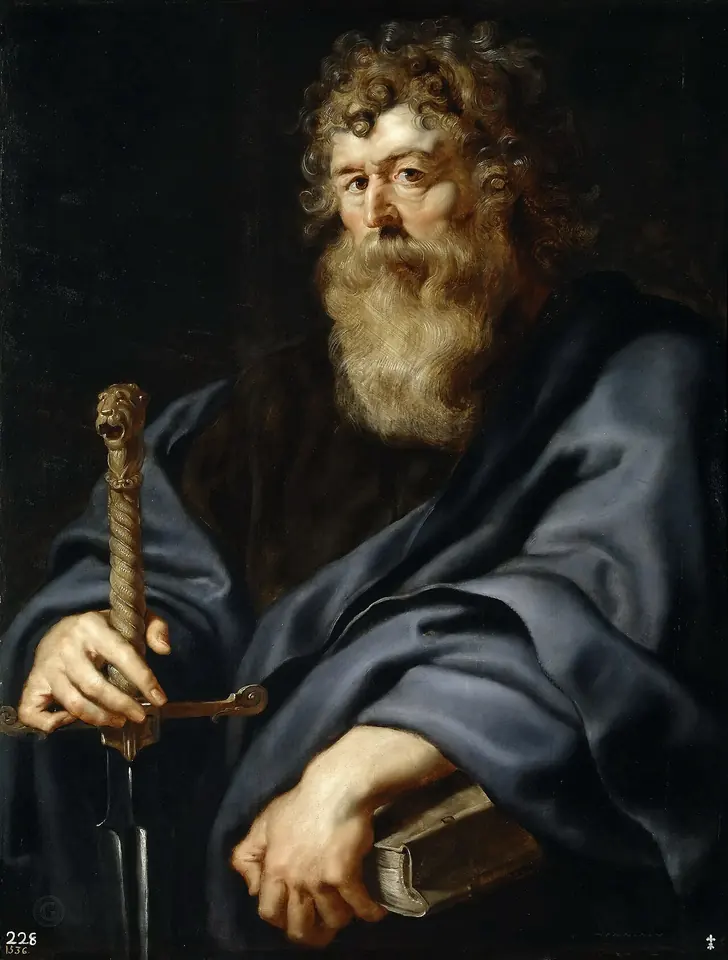
Scripture also uses the word "apostle" more broadly. The greatest example is St. Paul. He never walked with Jesus in Galilee, but the risen Lord appeared to him on the road to Damascus and sent him to the Gentiles, and he opens his letters as "Paul, an apostle of Jesus Christ." The Church calls him the Apostle to the Gentiles and keeps his feast with St. Peter on June 29, and his conversion on January 25.
St. Barnabas, Paul's companion on his first missionary journey, is also called an apostle in Acts 14:13: "the apostles Barnabas and Paul." The Catholic Encyclopedia notes that the New Testament may extend the title to a few other missionaries as well, such as Andronicus and Junias (Romans 16:7). The Roman Canon honors this wider circle too. In its prayer before the consecration it names the Twelve with Paul in place of Matthias, and after the consecration it names Matthias and Barnabas with John the Baptist, Stephen and the martyrs.
The foundation of the Church
St. Paul tells the Christians of Ephesus that they are "built upon the foundation of the apostles and prophets, Jesus Christ himself being the chief corner stone" (Ephesians 2:20). The Catechism of the Catholic Church explains this in paragraph 857: the Church is apostolic because she was and remains built on the apostles, because she keeps and hands on their teaching, and because she continues to be taught, sanctified and guided by them through their successors, the bishops, "in union with the successor of Peter."
Paragraph 858 reminds us that Christ continues his own mission through them: "As the Father has sent me, even so I send you." And paragraph 860 draws a careful line. One part of the apostles' office cannot be handed on: they were "the chosen witnesses of the Lord's Resurrection and so the foundation stones of the Church." Another part is permanent, and so "the apostles took care to appoint successors." No one after them saw what they saw. But every bishop in communion with the Pope stands in the line they began.
Where the apostles went
The Acts of the Apostles follows mostly Peter and Paul. For the others we rely on early writers and later tradition. Eusebius of Caesarea, writing in the early 300s, passes on what Origen had written a century before: "Parthia, according to tradition, was allotted to Thomas as his field of labor, Scythia to Andrew, and Asia to John, who, after he had lived some time there, died at Ephesus." Peter preached to the Jews of the dispersion in Asia Minor and finally came to Rome. Later traditions send Bartholomew to Armenia and India, Matthew to Ethiopia or Persia, and Simon and Jude to Persia.
Except for St. John, every one of the Eleven is honored as a martyr, though how firmly we know the details varies a great deal from apostle to apostle. We tell each story, with its source, in how the apostles died.
The Church did not keep feast days for most of the apostles at first. The Catholic Encyclopedia notes that apart from Sts. Peter and Paul, whose martyrdom in Rome was well remembered, the dates of the apostles' deaths were unknown, and their feasts appear only from the fourth century. Now each has his own day, and we can walk through the year in their company. Holy apostles of Christ, pray for us.
Frequently asked questions
What are the names of the 12 apostles?
Simon Peter, Andrew his brother, James the son of Zebedee, John his brother, Philip, Bartholomew, Thomas, Matthew, James the son of Alphaeus, Thaddeus (also called Jude), Simon the Zealot and Judas Iscariot. Matthew 10:2–4, Mark 3:16–19 and Luke 6:14–16 give the list, and Acts 1:13 repeats it without Judas.
Who replaced Judas as an apostle?
St. Matthias. After the Ascension, St. Peter told the hundred and twenty disciples gathered in Jerusalem that one of the men who had been with them from the baptism of John to the Ascension had to become a witness of the Resurrection with them. Two were put forward, Joseph Barsabas and Matthias. The community prayed and cast lots, "and the lot fell upon Matthias, and he was numbered with the eleven apostles" (Acts 1:26).
Is St. Paul one of the 12 apostles?
Not one of the Twelve, but truly an apostle. The risen Christ called Paul on the road to Damascus, and he names himself an apostle at the opening of most of his letters. The Church honors him with St. Peter as one of the two pillars of the Church of Rome, and they share the solemnity of June 29.
What are the symbols of the 12 apostles?
Most apostles carry a book or scroll for the Gospel, plus a personal sign, usually the instrument of martyrdom that tradition assigns them. Peter has keys, Andrew an X-shaped cross, James the Greater a scallop shell, John an eagle or a chalice, Philip a cross or loaves, Bartholomew a knife, Thomas a spear or builder's square, Matthew a winged man or money bag, James the Less a fuller's club, Jude a medallion of Christ or a club, Simon a saw, and Matthias an axe.
Which apostles were brothers?
Two pairs. Peter and Andrew were brothers, fishermen from Bethsaida. James and John were the sons of Zebedee, whom Jesus nicknamed Boanerges, "the sons of thunder" (Mark 3:17). Luke calls Jude "the brother of James," which the Western tradition reads as James the son of Alphaeus.
Why did Jesus choose twelve apostles?
The number recalls the twelve tribes of Israel. Jesus told the Twelve that "you also shall sit on twelve seats judging the twelve tribes of Israel" (Matthew 19:28), and the heavenly Jerusalem in the Apocalypse has twelve foundations bearing "the twelve names of the twelve apostles of the Lamb" (Apocalypse 21:14). In choosing twelve, Jesus was gathering a renewed people of God.
Sources
- Douay-Rheims Bible, Mark 3 (the call of the Twelve)
- Douay-Rheims Bible, Acts of the Apostles 1 (the choosing of Matthias)
- Douay-Rheims Bible, Ephesians 2 (built upon the foundation of the apostles)
- Catechism of the Catholic Church, 857–865 (the Church is apostolic). Paragraphs 857–860 on the apostles as foundation and the mission of the Twelve
- Apostles, Catholic Encyclopedia (1907). The wider use of "apostle" for Barnabas and others; the late start of feasts of the apostles
- Eusebius, Church History, Book III. Origen's account of where the apostles preached (III.1)