How did the apostles die?
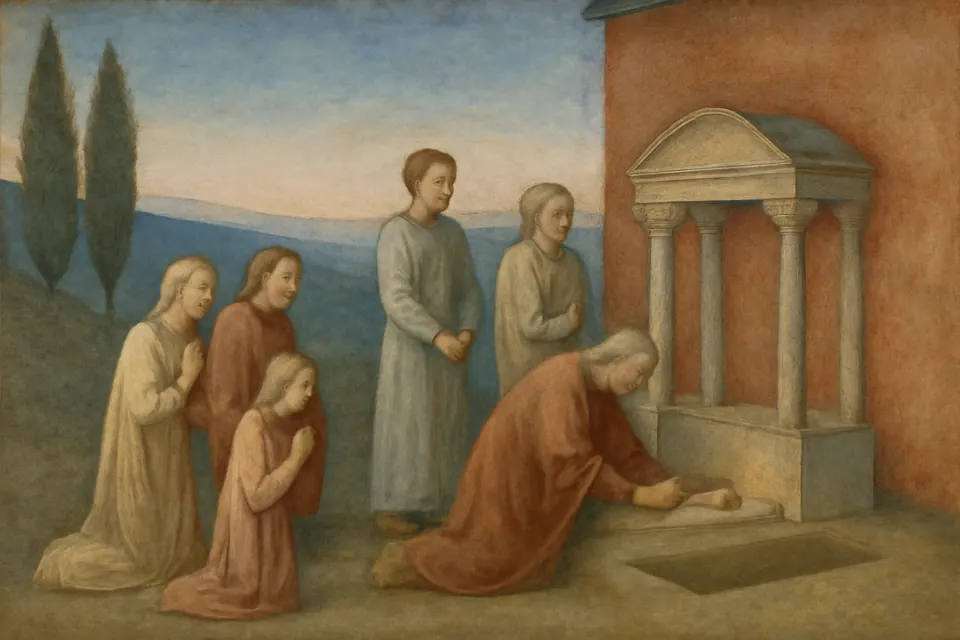
How did the apostles die? Scripture records only one apostle's death, St. James the Greater, killed "with the sword" by Herod about the year 44 (Acts 12:2). Early Christian writers testify that Sts. Peter and Paul were martyred in Rome under Nero, Peter by crucifixion and Paul by beheading. The deaths of most of the others come from later tradition, and St. John alone is held to have died in old age at Ephesus.
How did the apostles die? The honest answer is that we know some deaths very well and others only through tradition. The New Testament records the death of one apostle. Christian writers of the first and second centuries bear witness to two more. For the rest we have the memory of the churches they founded, written down in later centuries and sometimes in more than one version.
That doesn't make the traditions worthless. They are the Church's family memory, and the Church honors the apostles as martyrs in her liturgy. But it helps to know which kind of evidence stands behind each story. On this page every death carries one of three labels:
- Scripture: told in the Bible itself.
- Early testimony: recorded by Christian writers within about a century and a half of the event.
- Later tradition: handed down in writings of the third century or later, often in more than one form.
The apostles' deaths at a glance
- St. James the Greater: put to the sword in Jerusalem by Herod Agrippa I, about 44. Scripture.
- St. Peter: crucified in Rome under Nero, about 64–67, by tradition head downward. Early testimony.
- St. Paul: beheaded in Rome under Nero, about 64–67. Early testimony.
- St. John: died in old age at Ephesus, about 100. Early testimony.
- St. James the Less: if he is James "the brother of the Lord," stoned and struck down in Jerusalem in 62. Early testimony for the death; the identification is tradition.
- St. Andrew: crucified at Patras, Greece. Later tradition.
- St. Philip: died at Hierapolis in Asia Minor, by tradition crucified. Later tradition.
- St. Bartholomew: martyred in Armenia. Later tradition.
- St. Thomas: killed with spears in India. Later tradition.
- St. Matthew: martyred in "Ethiopia," Persia or Parthia; accounts differ. Later tradition.
- St. Simon and St. Jude: martyred together in Persia, in the Western account. Later tradition.
- St. Matthias: stoned in Jerusalem, or crucified in Colchis. Later tradition.
- Judas Iscariot: took his own life after the betrayal. Scripture.
Told in Scripture: St. James the Greater
James, the son of Zebedee and brother of John, was the first of the Twelve to give his life for Christ. St. Luke reports it in a single sentence:
And at the same time, Herod the king stretched forth his hands, to afflict some of the church. And he killed James, the brother of John, with the sword. (Acts 12:1–2)
This Herod is Herod Agrippa I, who died in 44, so James died in or just before that year. Jesus had once asked James and John whether they could drink the chalice he would drink, and they answered that they could (Mark 10:38–39). James was the first to keep that promise.
Clement of Alexandria, writing about 200, adds a moving story he had received "from those who had lived before him," as Eusebius quotes it. The man who brought James to trial was so moved by his witness that he confessed he was a Christian too. On the way to execution he asked James to forgive him. James "after considering a little, said, Peace be with you, and kissed him. And thus they were both beheaded at the same time." That detail is early testimony, not Scripture, but it is old and it rings true.
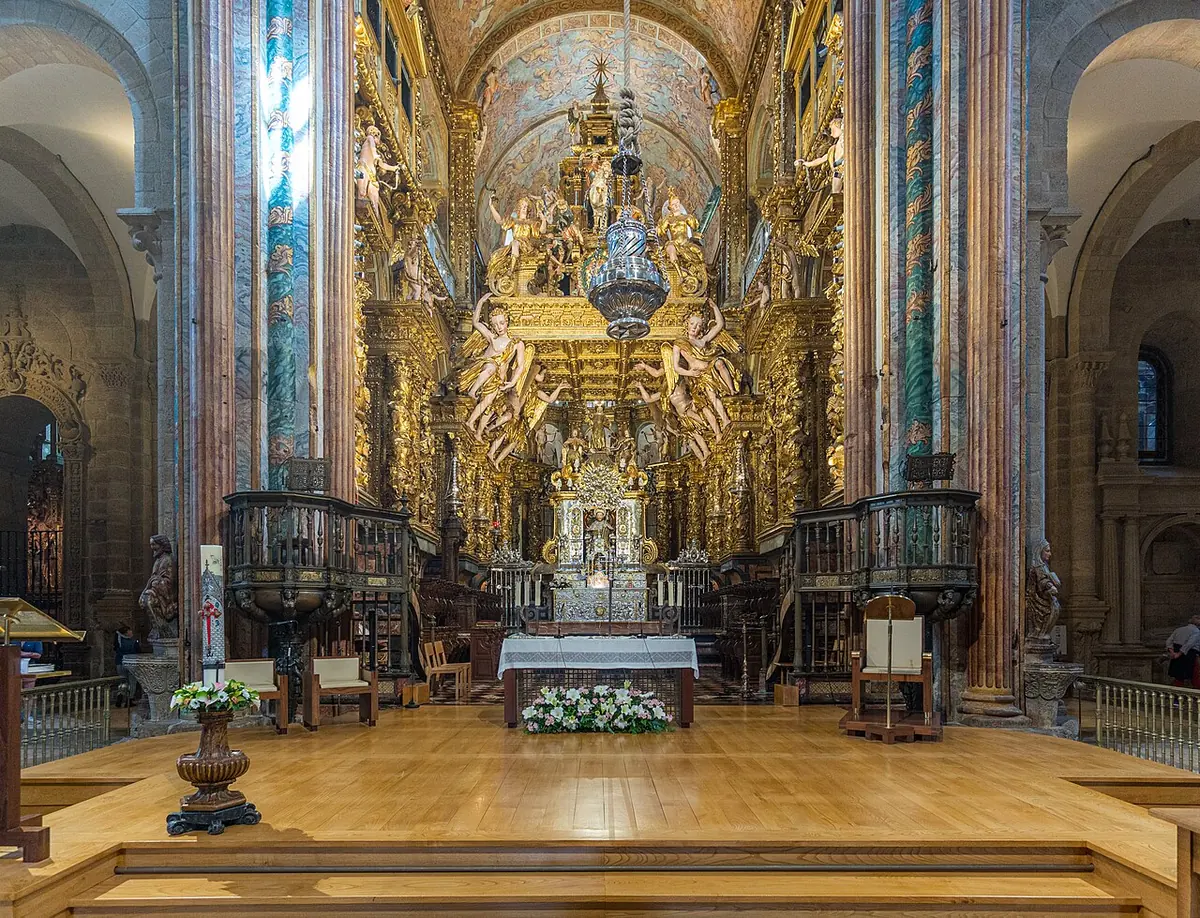
Tradition holds that James's body was later carried to Spain, and his tomb at Compostela became one of the great pilgrimages of Christendom.
Scripture also tells how Judas Iscariot died. St. Matthew says that after throwing the thirty pieces of silver into the temple he "went and hanged himself with an halter" (Matthew 27:5), and Acts 1:18 adds that he fell and "burst asunder in the midst." He is not counted among the martyrs, and his place among the Twelve went to St. Matthias, as we tell on our page about the 12 apostles.
Early testimony: Sts. Peter and Paul in Rome
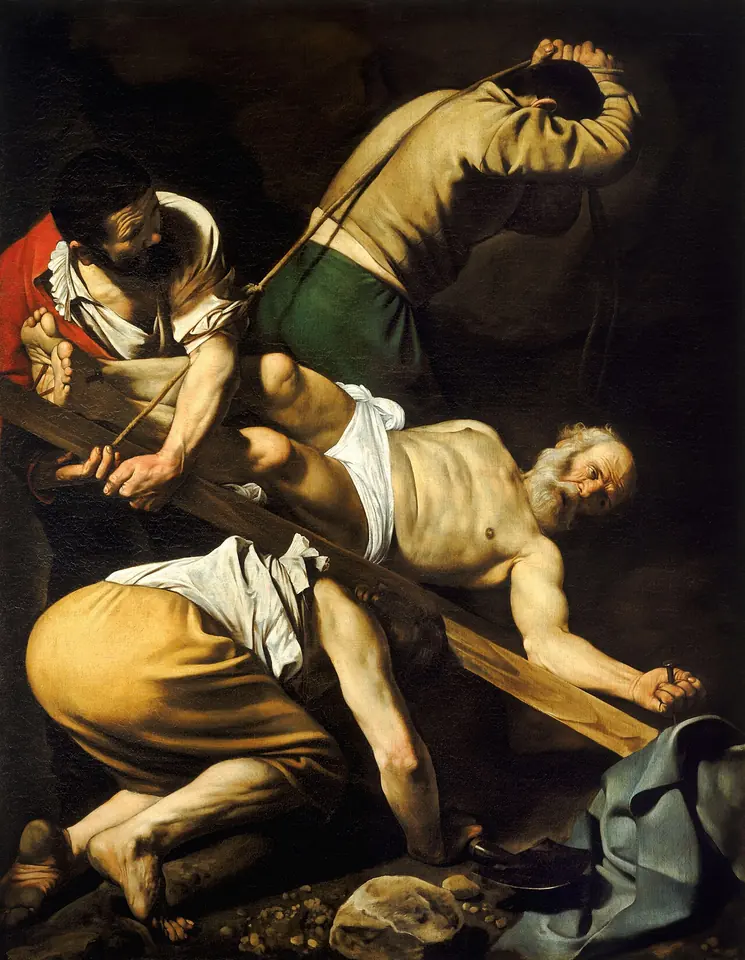
No apostle's death outside Scripture is better attested than those of Peter and Paul. Jesus himself foretold Peter's: "when thou shalt be old, thou shalt stretch forth thy hands, and another shall gird thee, and lead thee whither thou wouldst not." St. John explains, "this he said, signifying by what death he should glorify God" (John 21:18–19).
The witnesses after that come early and from several places:
- St. Clement of Rome, writing to Corinth about 96, says that Peter "when he had at length suffered martyrdom, departed to the place of glory due to him," and that Paul "suffered martyrdom under the prefects." He speaks of them as "the most recent spiritual heroes," men of his own generation.
- Dionysius, bishop of Corinth, about 170, writes that the two apostles taught together in Italy "and suffered martyrdom at the same time."
- Gaius, a Roman priest writing about 200, tells a heretic: "if you will go to the Vatican or to the Ostian way, you will find the trophies of those who laid the foundations of this church." The trophies were monuments over their graves.
- Tertullian, about the same time, calls Rome the church "where Peter endures a passion like his Lord's" (crucifixion) and "where Paul wins his crown in a death like John's," that is, beheaded like John the Baptist.
- Origen, in the first half of the third century, adds that Peter "was crucified head-downwards; for he had requested that he might suffer in this way."
Both deaths came in the persecution under Nero, who blamed the Christians for the great fire of Rome in 64. Peter died on the Vatican hill and Paul, a Roman citizen, by the sword on the road to Ostia. We keep their solemnity together on June 29.
Their tombs
Excavations under St. Peter's Basilica, begun under Pius XII in 1939, uncovered a second-century monument over a simple grave, very likely the trophy Gaius mentioned. On June 26, 1968, Pope Paul VI announced that bones found near it had been identified as Peter's in a way he called convincing. That finding is reported, the conclusion of scholars accepted by the Pope, not a matter of faith.
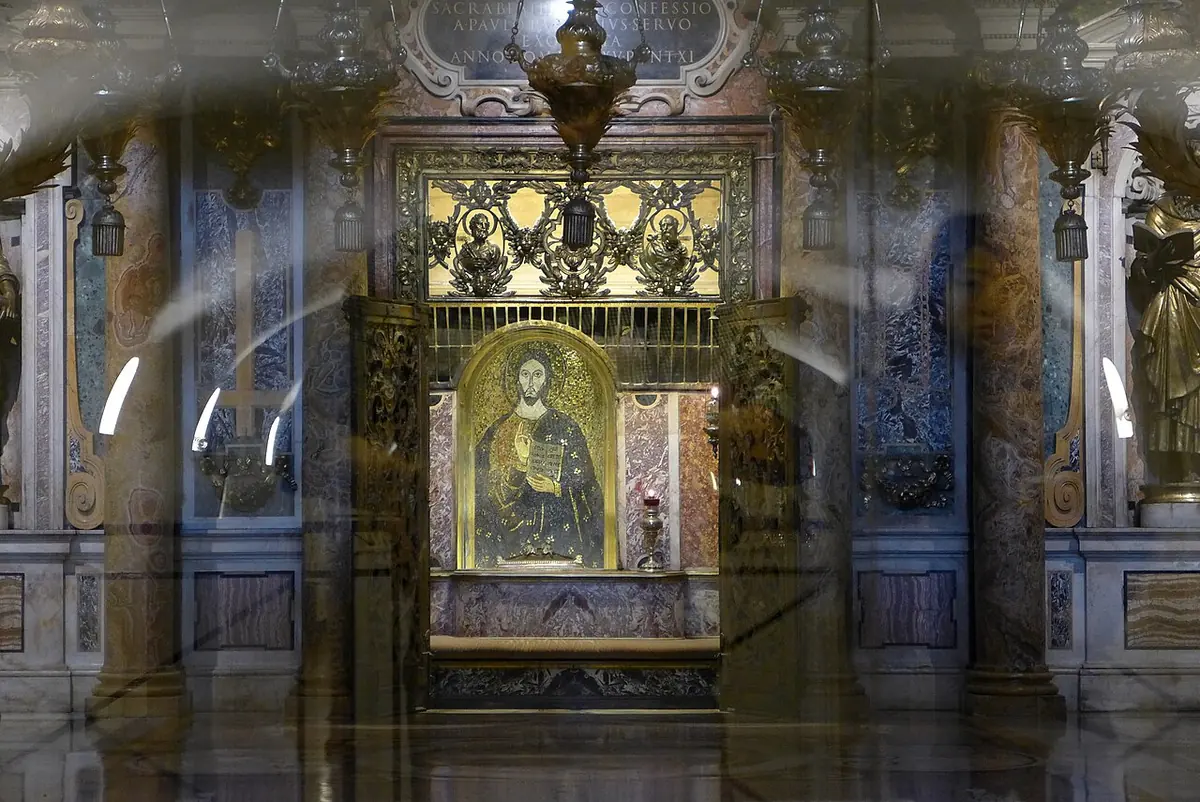
St. Paul lies beneath the high altar of the basilica that bears his name on the Ostian Way. At the close of the Pauline Year on June 28, 2009, Pope Benedict XVI reported that a probe inserted into the sarcophagus had found traces of precious linen, grains of incense and fragments of bone dated to the first or second century, which, he said, would seem to confirm the tradition.
St. James the Less
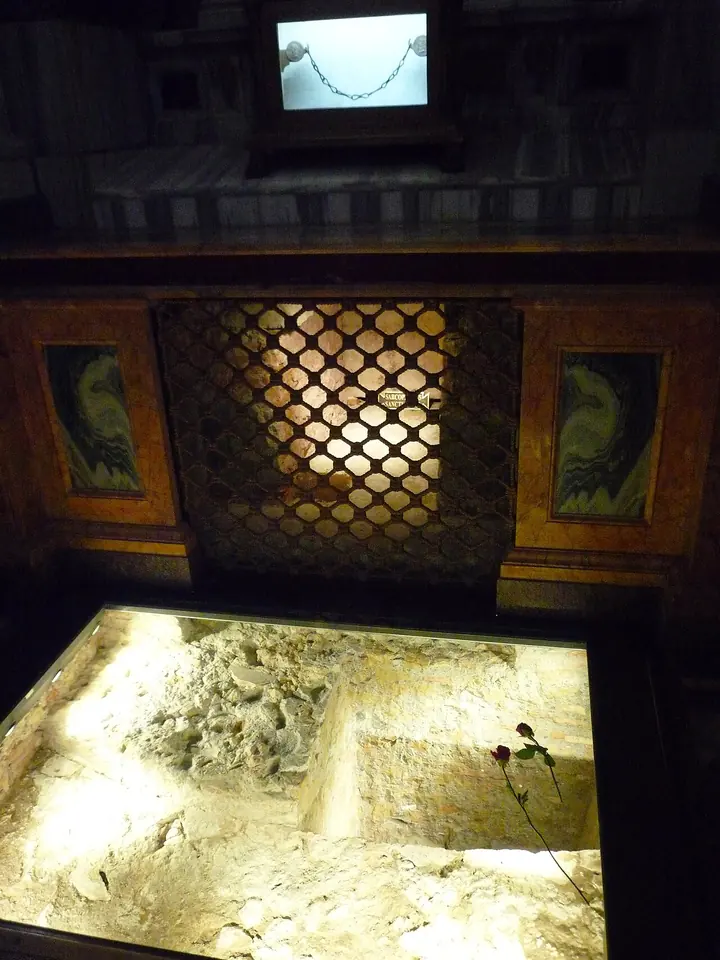
If St. James the Less is the same man as James "the brother of the Lord," leader of the church in Jerusalem, as Western tradition since St. Jerome has held, then his death is also well attested. The Jewish historian Josephus says the high priest Ananus had "the brother of Jesus, the so-called Christ, James by name" condemned and stoned in 62. Hegesippus, a second-century Christian writer, adds that he was thrown down from the temple, stoned, and finally struck on the head by a fuller with the club he used to beat cloth. That club is still the saint's emblem. The Eastern Churches count the apostle and the brother of the Lord as two men, and their tradition says the son of Alphaeus was crucified in Egypt.
St. John: the apostle who died in old age
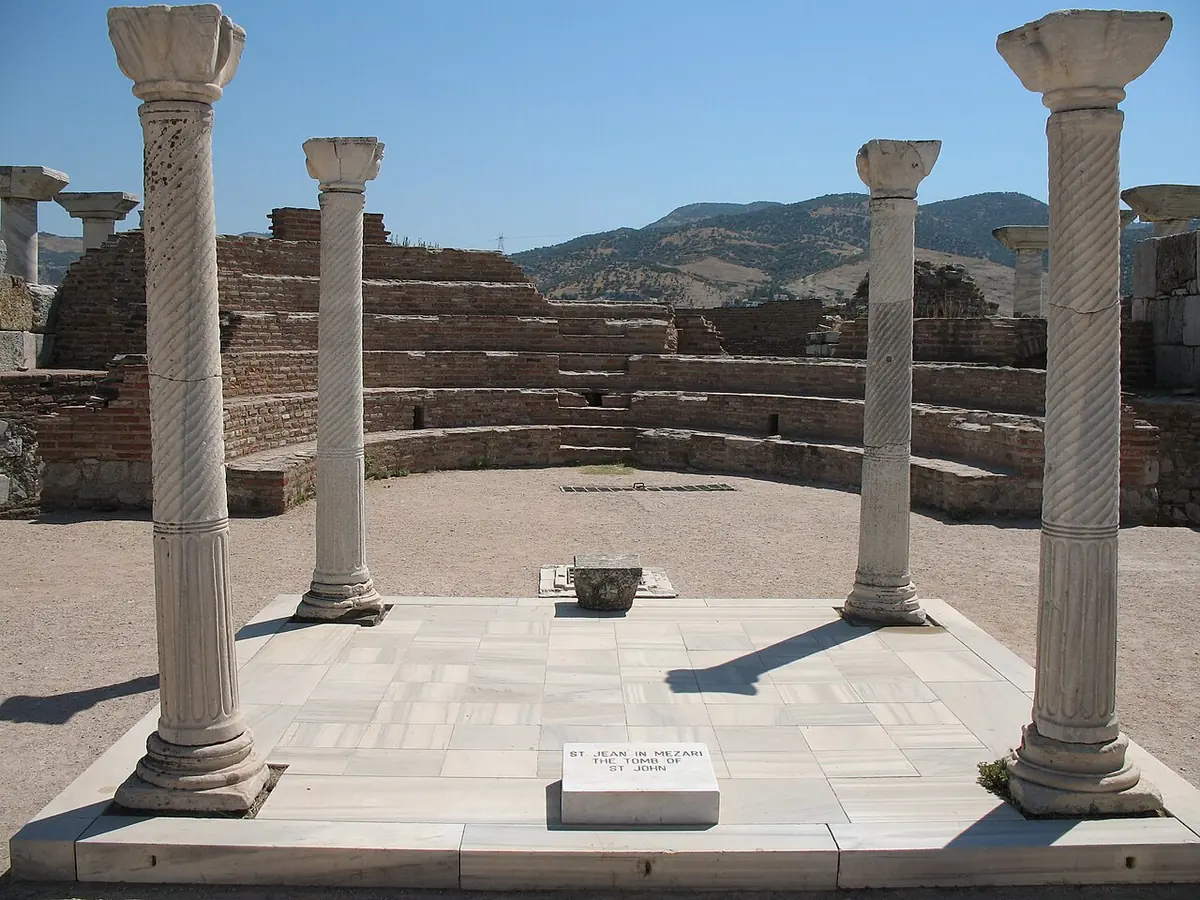
St. John was the youngest of the Twelve, and he alone is not honored as a martyr. Early testimony is clear that he lived a long life and died peacefully at Ephesus. St. Irenaeus, who as a young man had heard St. Polycarp, John's disciple, wrote that John remained with the Church in Ephesus "until the time of Trajan," who became emperor in 98. Polycrates, bishop of Ephesus, wrote to Pope Victor about 190 that John, "who reclined upon the bosom of the Lord," "sleeps at Ephesus."
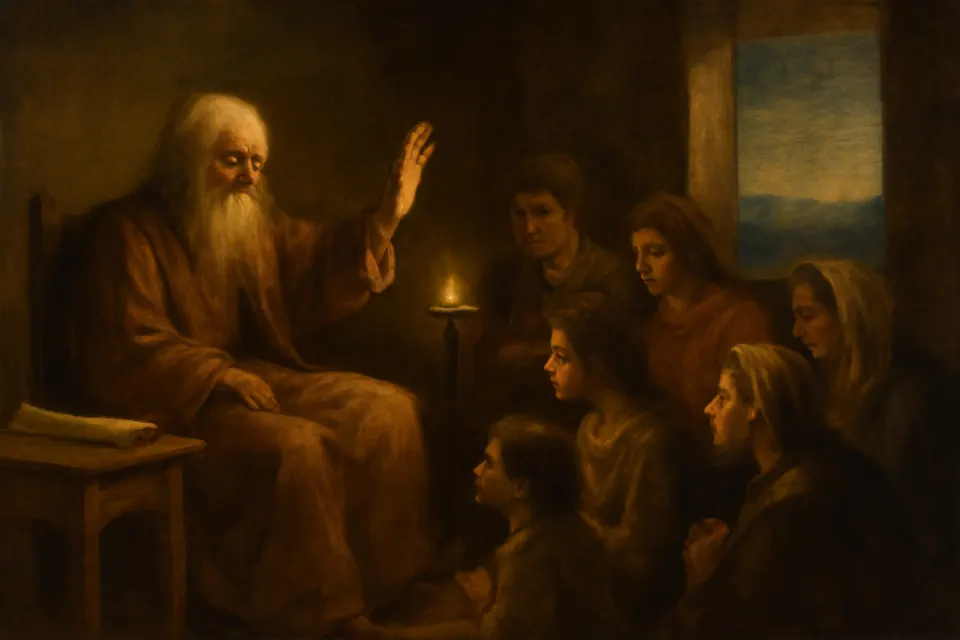
John did not escape suffering. He was exiled to the island of Patmos "for the word of God" (Apocalypse 1:9). Tertullian passes on the tradition that in Rome John "was first plunged, unhurt, into boiling oil, and thence remitted to his island-exile." That story is traditional; Tertullian is our earliest witness to it. John stood at the foot of the Cross, took Mary into his home, and lived to see the Gospel spread across the empire. The Orthodox Church keeps the anniversary of his falling asleep on September 26.
Later tradition: how the other apostles died
For the remaining apostles our accounts come mostly from "Acts" and "Passions" written in the third to sixth centuries, from the old martyrologies, and from the memory of the churches that claim their tombs. Where these sources disagree, we give the main versions.
St. Andrew
The Acts of Andrew, a work of the late second century, tell that Andrew was crucified at Patras in Achaia by the Roman governor Aegeates, and that he was bound rather than nailed so that he would suffer longer. On the cross he preached to the crowd until he died. The X-shaped cross of later art is a medieval addition; earlier images show an ordinary cross.
St. Philip
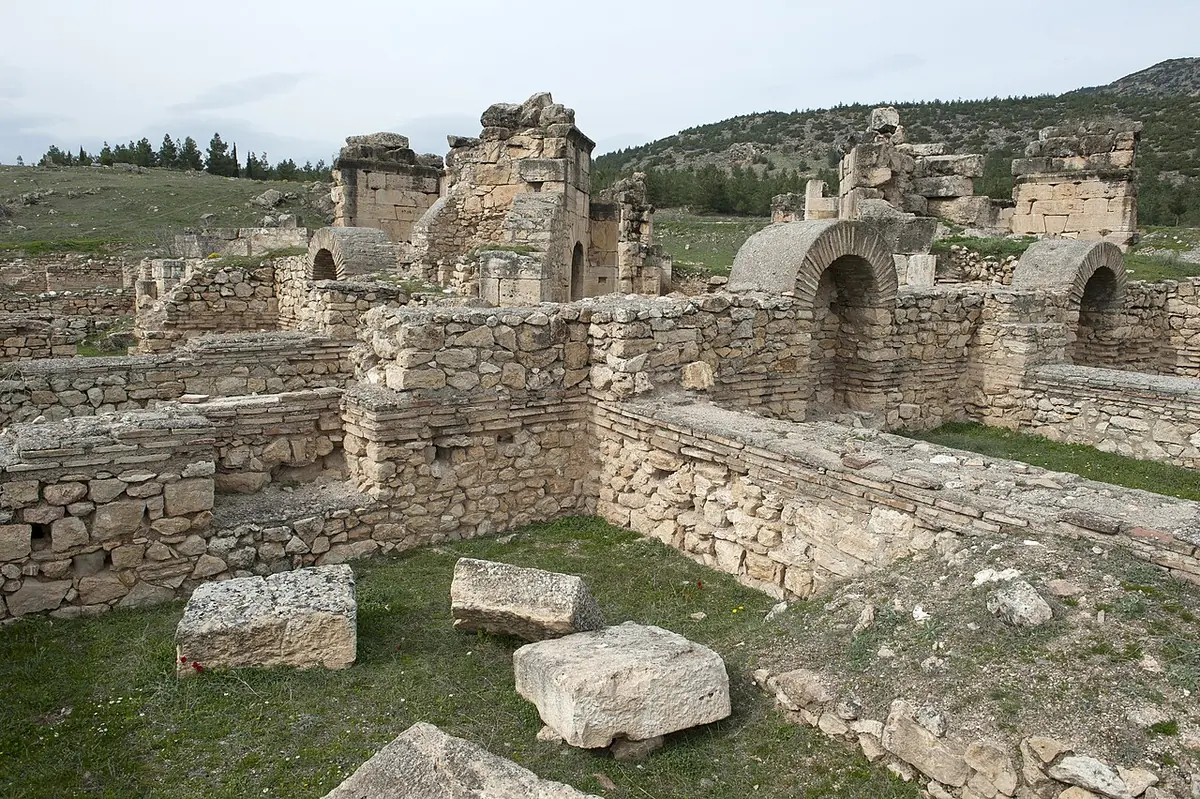
Bishop Polycrates, about 190, wrote that "Philip, one of the twelve apostles," "sleeps in Hierapolis," a city in Asia Minor, with his daughters. He says nothing about a martyrdom, and some scholars think he may have confused the apostle with Philip the deacon, who also had daughters (Acts 21:8–9). The later Acts of Philip say the apostle was crucified at Hierapolis. Pilgrims have honored his tomb there since ancient times, and his relics are now venerated in the Basilica of the Twelve Apostles in Rome.
St. Bartholomew
Tradition sends Bartholomew to India and then to Armenia, where the Armenian Church honors him as one of its founders. The accounts of his death differ: some say he was beheaded, others that he was flayed and put to death at Albanopolis on the order of a local king. That second story is why artists give him a knife. His relics are venerated in Rome, at the Basilica of St. Bartholomew on the Tiber Island.
St. Thomas
The Acts of Thomas, written in Syria in the early third century, say Thomas preached in India and was put to death by soldiers who pierced him with spears on the orders of a king. The Christians of India, who call themselves St. Thomas Christians, place his death near Mylapore, in today's Chennai, and date it to 72. His tomb there is honored in San Thome Basilica, though most of his relics were taken west, first to Edessa and in 1258 to Ortona in Italy.

St. Matthew
No account of Matthew's death is certain. The Roman Martyrology says he was martyred while preaching in Ethiopia, a name the ancient writers used loosely. Medieval legend says a king's soldier killed him with a sword at the altar after Mass. Other traditions place his death in Persia or Parthia. And Clement of Alexandria quotes Heracleon, a second-century teacher, who names "Matthew, Philip, Thomas, Levi" among those who did not die as martyrs by spoken confession. The Church honors him as a martyr, and his relics are venerated in the cathedral of Salerno.
Sts. Simon and Jude
The Latin Passion of Simon and Jude, a work of the sixth century or so, says the two apostles preached together in Persia and were martyred there on the same day, which is why the Western Church keeps their feast together on October 28. Medieval tradition said Simon was cut in two with a saw and Jude killed with a club or halberd. Eastern traditions differ: they place Simon's death on the Black Sea coast and Jude's in Armenia or near Edessa. Relics of both are venerated in St. Peter's Basilica.
St. Matthias
One tradition says Matthias was stoned in Jerusalem and then beheaded, which is why Western art gives him an axe. Another, recorded by the Byzantine historian Nicephorus, says he preached in Colchis, on the eastern shore of the Black Sea, and was crucified there. The Abbey of St. Matthias in Trier, Germany, keeps the tomb venerated as his.
Witnesses to the end
The word martyr means witness. Whatever the details of each death, the apostles gave their lives for what they had seen: the risen Lord. They had nothing to gain from it in this world. That is part of why their witness still carries such weight, and why the Church calls herself apostolic.
We can honor each of them on his feast day, which you will find in our feast days calendar, and we can ask for their prayers in our own trials. Holy apostles and martyrs of Christ, pray for us.
Frequently asked questions
Which apostle died first?
Of the faithful apostles, St. James the Greater, the brother of St. John. Acts 12:2 says King Herod Agrippa I "killed James, the brother of John, with the sword," which happened about the year 44, since Herod himself died that year. Judas Iscariot died earlier, soon after the Crucifixion.
Were all the apostles martyred?
Tradition honors every apostle except St. John as a martyr, but the evidence is uneven. James's death is in Scripture, and the martyrdom of Peter and Paul in Rome is attested by Christian writers from the late first century on. For most of the others the accounts come from writings of the third century or later, and they sometimes disagree. One second-century writer, Heracleon, even said that Matthew, Philip and Thomas were not martyred.
Which apostle was not martyred?
St. John. St. Irenaeus, writing about 180, says John remained with the Church in Ephesus "until the time of Trajan," who became emperor in 98, and Bishop Polycrates of Ephesus wrote about 190 that John "sleeps at Ephesus." Tertullian adds the tradition that John was once thrown into boiling oil in Rome and came out unhurt.
Was St. Peter crucified upside down?
That is the ancient tradition. Origen, in the first half of the third century, wrote that Peter "was crucified head-downwards; for he had requested that he might suffer in this way," as Eusebius quotes him. Later tradition explains that Peter did not consider himself worthy to die in the same way as his Lord.
How did St. Andrew die?
Tradition, going back to the second-century Acts of Andrew, says he was crucified at Patras in Greece and was tied rather than nailed to the cross. The X-shaped cross we associate with him appears in art much later; the Catholic Encyclopedia traces it to about the fourteenth century.
How did Judas Iscariot die?
Scripture gives two accounts. St. Matthew says he "went and hanged himself with an halter" (Matthew 27:5), and the Acts of the Apostles says that "being hanged, burst asunder in the midst" (Acts 1:18). Since early times the two have been read together as one event described from two sides.
Sources
- Clement of Rome, Letter to the Corinthians, chapter 5. The martyrdom of Peter and Paul, written about 96
- Tertullian, The Prescription Against Heretics, chapter 36. Peter's passion "like his Lord's," Paul's death "like John's," and John in boiling oil
- Eusebius, Church History, Book II. Clement of Alexandria on James's accuser (II.9); Hegesippus on James of Jerusalem (II.23); Gaius and Dionysius of Corinth on Peter and Paul (II.25)
- Eusebius, Church History, Book III. Origen on Peter crucified head-downward (III.1); Irenaeus (III.23) and Polycrates (III.31) on John and Philip
- Clement of Alexandria, Stromata, Book IV, chapter 9. Heracleon's statement that Matthew, Philip and Thomas did not die as martyrs
- Paul VI, General Audience, June 26, 1968 (the relics of St. Peter)
- Benedict XVI, Homily closing the Pauline Year, June 28, 2009