St. Barnabas the Apostle
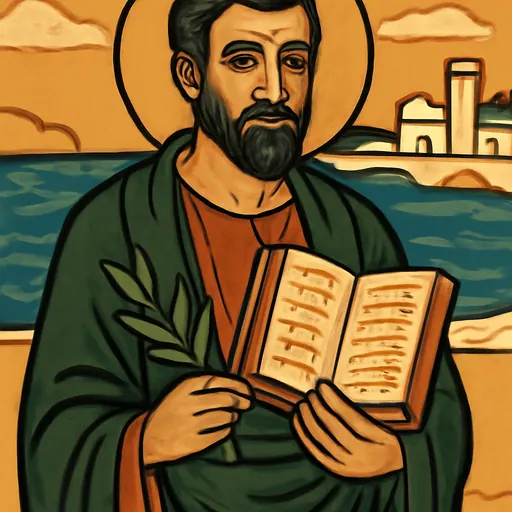
St. Barnabas was a Jewish Levite from Cyprus, one of the leaders of the first Christian generation. The Acts of the Apostles says the apostles named him Barnabas, "Son of encouragement"; he vouched for the newly converted Paul and took him on the first mission to the Gentiles. He is the patron saint of Cyprus, and his feast day is June 11.
Who was St. Barnabas?
Barnabas was a Jewish Christian from Cyprus who became one of the most trusted leaders of the earliest Church. Almost everything reliable about him is in the Acts of the Apostles, written by St. Luke, with a few lines in St. Paul's letters. Luke rarely praises anyone, but of Barnabas he wrote, "he was a good man, full of the Holy Spirit and of faith" (Acts 11:24, RSVCE).
He was born Joseph, a Levite. The apostles gave him the name Barnabas, which Acts translates "Son of encouragement" (Acts 4:36). His cousin was John Mark, later known as St. Mark (Colossians 4:10), and the Mark family had a house in Jerusalem.

He is not one of the Twelve, but Acts calls him an apostle (14:14), and the Church honors him with the apostles. His name is said in the Roman Canon of the Mass. Two later traditions add to the biblical picture. Clement of Alexandria and Eusebius record that he was one of the seventy disciples Jesus sent out (Luke 10), and the Orthodox Church still calls him "Apostle of the Seventy." The Catholic Encyclopedia notes that Acts seems instead to describe him as a convert after Pentecost.
The life of St. Barnabas
The field he sold
Barnabas enters the story in Jerusalem soon after Pentecost. Acts says he "sold a field which belonged to him, and brought the money and laid it at the apostles' feet" (4:37). Luke tells it as the model of generous giving, just before the story of Ananias and Sapphira, who held back part of their price.
The man who vouched for Paul
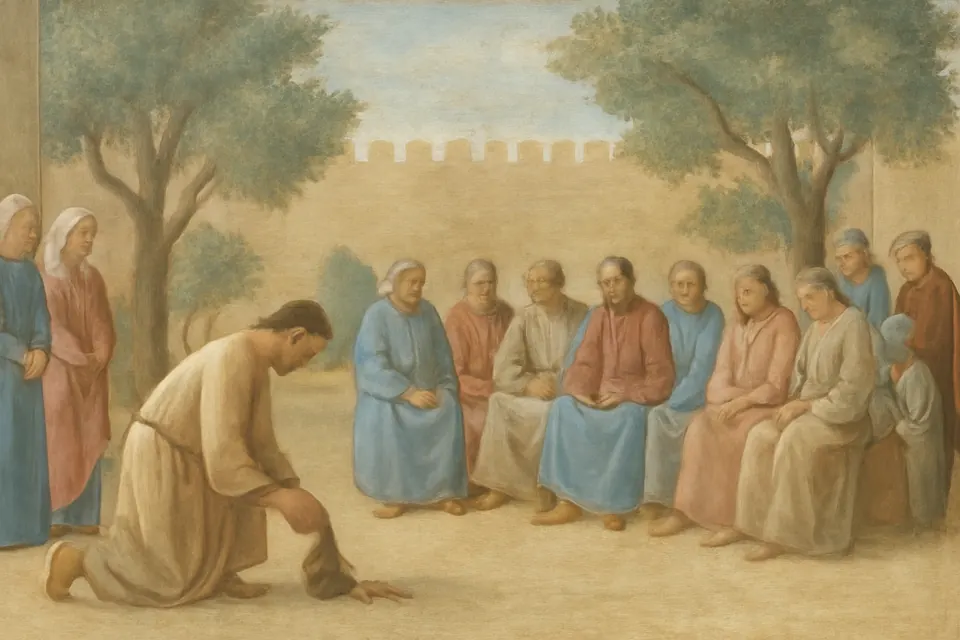
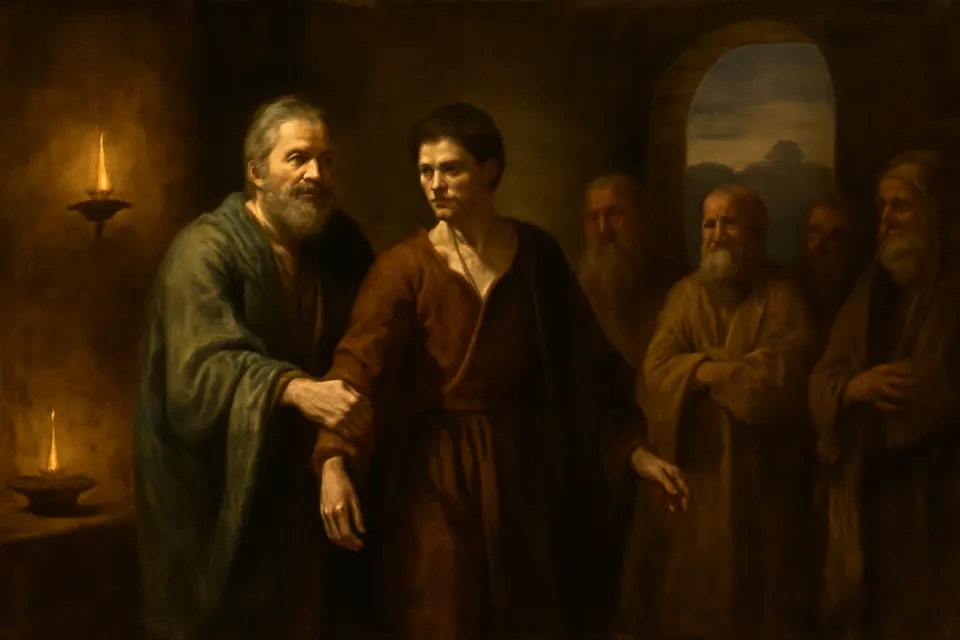
A few years later Saul of Tarsus, who had hunted Christians, came to Jerusalem a believer. The disciples "were all afraid of him." Barnabas took him to the apostles and told them how Saul had met the Lord on the road to Damascus and had preached boldly there (Acts 9:26–27). Paul himself says he saw only Peter and James on that visit (Galatians 1:18–19).
Antioch, where they were first called Christians
When believers from Cyprus and Cyrene began preaching to Greeks in Antioch, the Jerusalem church sent Barnabas to look into it. He "saw the grace of God" and was glad. Then he went to Tarsus, found Saul, and brought him back, and the two taught in Antioch for a whole year. "In Antioch," Acts adds, "the disciples were for the first time called Christians" (11:22–26). The two later carried famine relief from Antioch to Jerusalem.
The first missionary journey
While the church at Antioch was fasting, the Holy Spirit said, "Set apart for me Barnabas and Saul for the work to which I have called them" (Acts 13:2). They sailed first to Cyprus, Barnabas's home, with Mark as helper, and preached across the island from Salamis to Paphos. Then they crossed to Asia Minor, where Mark left them, and went on to Antioch of Pisidia, Iconium, Lystra and Derbe.
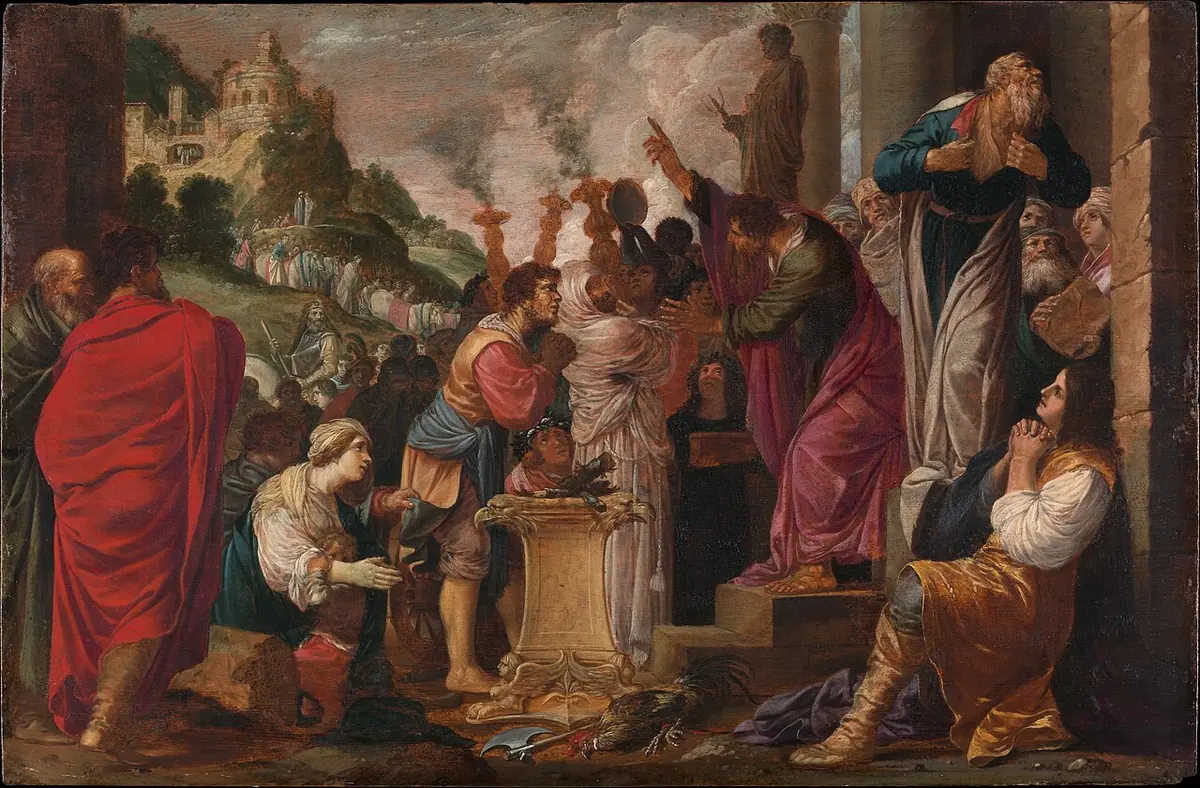
At Lystra, after Paul healed a man who had never walked, the crowd took them for gods. "Barnabas they called Zeus, and Paul, because he was the chief speaker, they called Hermes" (14:12). The priest of Zeus brought oxen and garlands to sacrifice to them. The two tore their clothes and shouted, "We also are men, of like nature with you" (14:15).

The Council of Jerusalem
Back in Antioch, teachers from Judea insisted that Gentile converts must be circumcised. Paul and Barnabas went up to Jerusalem to argue the case, and the apostles and elders agreed with them (Acts 15). Soon afterward, Paul writes, Barnabas briefly sided with Peter when Peter stopped eating with Gentile believers at Antioch: "even Barnabas was carried away" (Galatians 2:13).
The parting over Mark
When Paul proposed a second journey, Barnabas wanted to bring Mark again. Paul refused, because Mark had left them in Pamphylia. "There arose a sharp contention, so that they separated from each other; Barnabas took Mark with him and sailed away to Cyprus" (Acts 15:39). Acts never mentions Barnabas again.
The quarrel didn't end the friendship. A few years later Paul names Barnabas as a fellow worker who, like him, earned his own living (1 Corinthians 9:6). Mark later appears at Paul's side in Rome, which the Catholic Encyclopedia reads as a sign that Barnabas's patience with his cousin was rewarded.
The death and tomb of St. Barnabas
Scripture is silent about how Barnabas died. The Catholic Encyclopedia thinks he was probably dead by the time Paul wrote Colossians, in the early 60s.
Later traditions fill the gap, and they disagree. One has him preaching in Rome and Alexandria; another makes him the first bishop of Milan. The Catholic Encyclopedia calls these traditions "all late and untrustworthy." The Cypriot tradition, told in the 5th-century Acts of Barnabas and in the Orthodox life, says he was stoned at Salamis, his body was thrown into a fire, and Mark buried what remained in a cave with a copy of the Gospel of Matthew on his chest.
The Roman Martyrology records that "in the time of the Emperor Zeno [474–491] his body was discovered, himself having revealed it, along with a copy of the Gospel of Matthew written in Barnabas's own hand." The Orthodox life says Barnabas appeared three times in a dream to Archbishop Anthemios of Cyprus to show him the place. The discovery mattered politically: it helped the Church of Cyprus defend its independence from the Patriarch of Antioch as a church founded by an apostle.


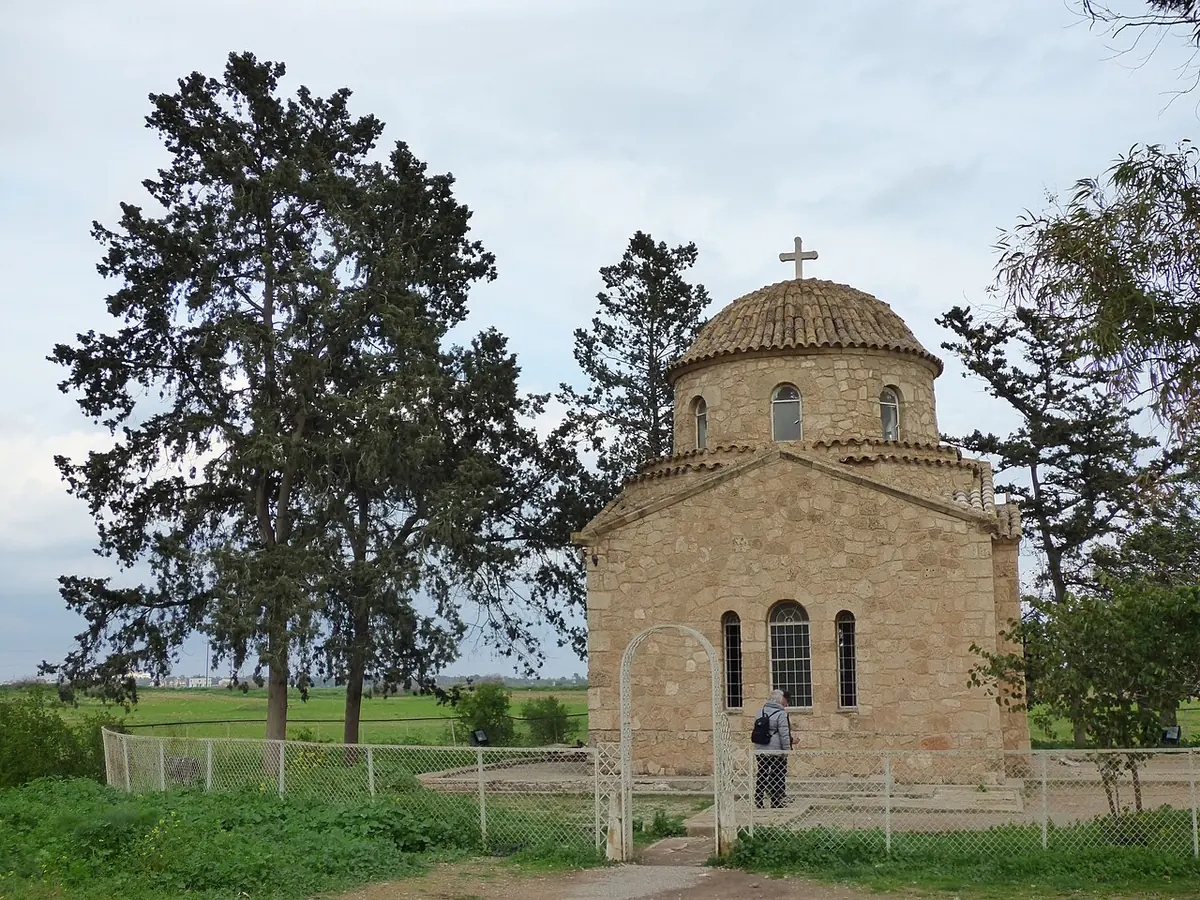
A monastery was built beside the tomb. Its present buildings date from the 18th century. Since 1974 the monastery has been in the Turkish-controlled north of Cyprus and is an icon museum rather than a working church. A small domed chapel stands over the tomb a short walk away.

The miracles of St. Barnabas
The "signs and wonders" that Acts says God worked through Paul and Barnabas among the Gentiles (Acts 14:3, 15:12) are part of Scripture, and Christians receive them as Scripture rather than as later reports. None of Barnabas's miracles is approved in the modern sense, since he lived long before the Church investigated miracles.
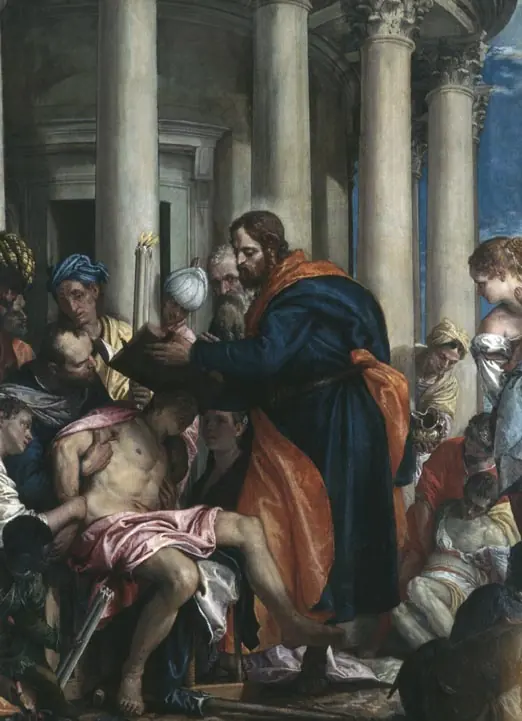
- Healing with Matthew's Gospel: traditional. The Golden Legend (about 1260) says he held a copy of Matthew's Gospel over the sick and many were cured. Veronese's painting in Rouen shows this scene.
- The finding of his body with the Gospel: traditional, recorded in the Roman Martyrology and the Orthodox life.

Why St. Barnabas is the patron saint of Cyprus
Barnabas was born on Cyprus, preached there with Paul on their first journey, returned there with Mark, and by tradition died and was buried there. The Church of Cyprus counts him as its founder.
- Antioch: he led the young church there and brought Paul to it.
- Peacemakers: Catholic Culture lists him as "invoked as peacemaker." The Christian Iconography project suggests his olive branch recalls the peace mission of Acts 15, which settled the dispute over circumcision.
- Against hailstorms, weavers and coopers: these old patronages appear in Catholic lists, but no early source explains them.
See the full list on our patron saints page.
Symbols of St. Barnabas in art
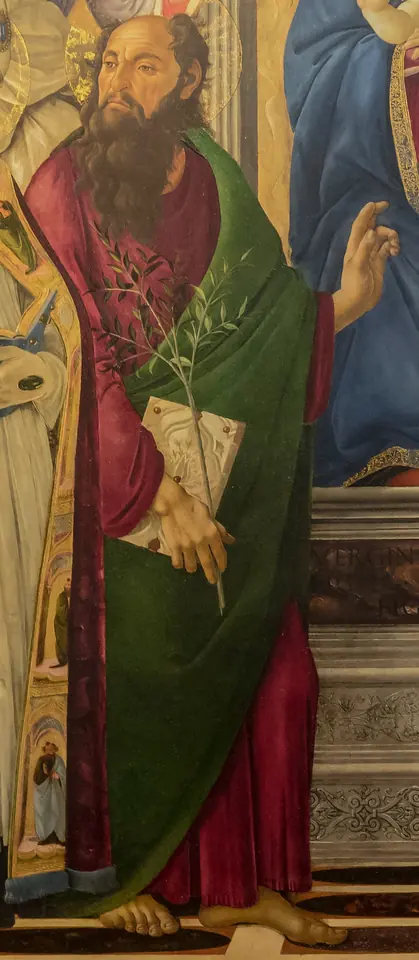
Barnabas is usually a mature bearded man in an apostle's robe and cloak. A book alone could mean almost any saint, so look for:
- A book or scroll: the Gospel of Matthew he is said to have carried.
- An olive branch: as in Botticelli's altarpiece near the top of this page.
- Stones, fire or a pyre: the stoning and burning of the Cypriot tradition.
- A pilgrim's staff: for his missionary travels.
- Paul beside him: especially in scenes of Lystra, where the crowd tries to sacrifice to them.
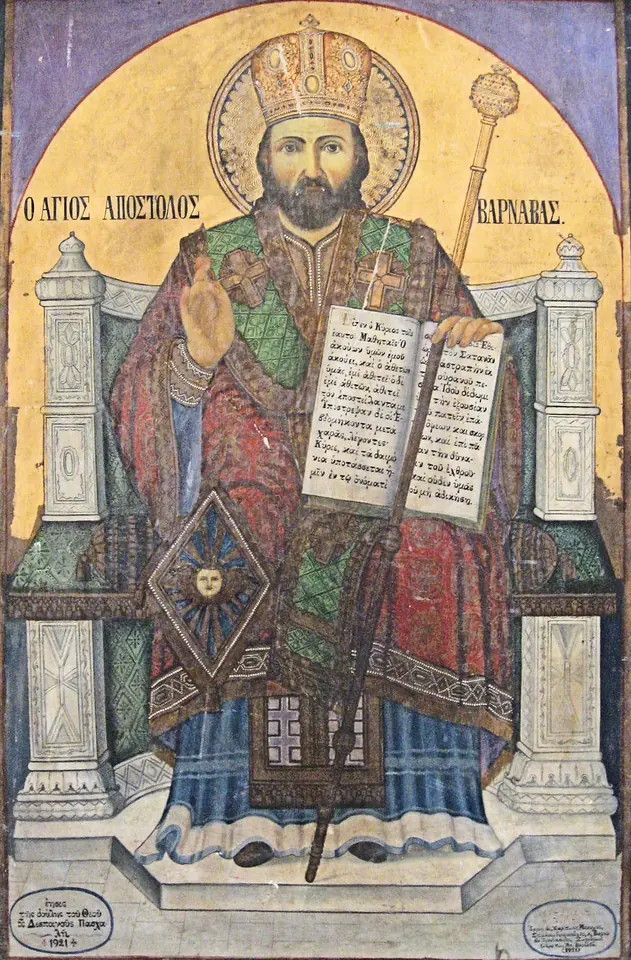
Eastern icons, like the 20th-century one in the monastery museum near Salamis, often show him as a bishop holding the Gospel, since the Church of Cyprus honors him as its first bishop.

The Epistle of Barnabas and other writings
No writing by Barnabas survives for certain. Two works have been credited to him. Tertullian thought he wrote the Letter to the Hebrews, which the Catholic Encyclopedia calls "probably" a false attribution.
The other is the Epistle of Barnabas, a Greek letter that reads the Old Testament as an allegory of Christ. Clement of Alexandria and Origen quoted it under Barnabas's name, and it was copied after the New Testament in the 4th-century Codex Sinaiticus. The Catholic Encyclopedia dates it to about A.D. 130–131, after Hadrian's plan to rebuild Jerusalem's Temple for Jupiter. It argues that the author was a Gentile, probably of Alexandria, who didn't know Jewish rites well. That rules out the Levite Barnabas of Acts. The letter was never accepted into the Bible.
Feast day of St. Barnabas
Barnabas's feast is June 11, a memorial in the General Roman Calendar, and the Orthodox Church keeps the same day. Find him on our feast days page next to his partner St. Paul, whose feast follows on June 29.
Prayer to St. Barnabas
The Church's prayer for his feast is the collect of the Mass on June 11:
O God, who decreed that Saint Barnabas, a man filled with faith and the Holy Spirit, should be set apart to convert the nations, grant that the Gospel of Christ, which he strenuously preached, may be faithfully proclaimed by word and by deed. Through our Lord Jesus Christ, your Son, who lives and reigns with you in the unity of the Holy Spirit, God, for ever and ever.
Orthodox Christians sing the troparion and kontakion of his feast, which the Orthodox Church in America publishes with his life.
Frequently asked questions
Was Barnabas one of the twelve apostles?
No, but the New Testament calls him an apostle (Acts 14:14), and the Church honors him with the same rank. The Catholic Encyclopedia says he is "ranked by the Church with the Twelve, though not one of them," like St. Paul. His name is in the Roman Canon of the Mass. The Orthodox Church counts him among the Seventy disciples.
What does the name Barnabas mean?
Acts 4:36 explains it as "Son of encouragement" (Revised Standard Version, Catholic Edition); older translations say "son of consolation." His given name was Joseph. The Catholic Encyclopedia notes that the real origin of the name is disputed.
Did St. Barnabas write the Epistle of Barnabas?
Probably not. Clement of Alexandria and other early writers credited it to him, but the Catholic Encyclopedia dates the letter to about A.D. 130–131 and judges that its author was a Gentile Christian, probably of Alexandria. It is not in the Bible.
How did St. Barnabas die?
The New Testament doesn't say. A late tradition, found in the 5th-century Acts of Barnabas and in the Orthodox life, says he was stoned at Salamis in Cyprus and his body thrown into a fire, and that his cousin Mark buried him. The Catholic Encyclopedia calls the later traditions about him "late and untrustworthy."
When is St. Barnabas's feast day?
June 11, in both the Catholic and the Orthodox calendars. In the Catholic Church it is a memorial.
Sources
- Catholic Encyclopedia (1907): St. Barnabas
- Catholic Encyclopedia (1907): Epistle of Barnabas
- The Epistle of Barnabas (New Advent, Church Fathers)
- Acts 4, 9, 11, 13–15; Galatians 2; 1 Corinthians 9; Colossians 4 (RSVCE, Bible Gateway)
- Orthodox Church in America: Apostle Barnabas of the Seventy
- Catholic Culture: Memorial of St. Barnabas, Apostle, June 11
- Christian Iconography: St. Barnabas in Art
- Roman Martyrology, June 11