St. James the Greater
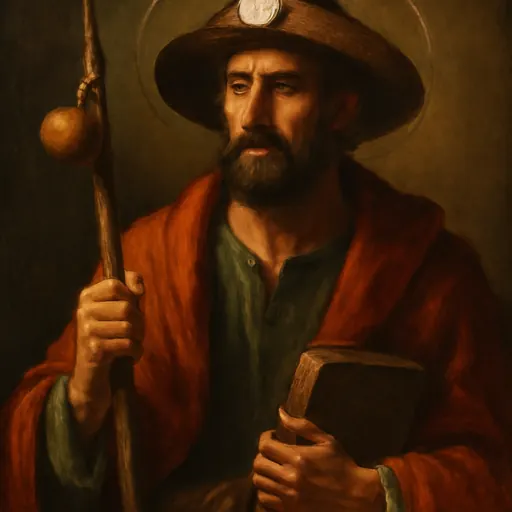
St. James the Greater was one of the twelve apostles, the son of Zebedee and the brother of St. John, and with Peter and John one of the three disciples closest to Jesus. He was the first apostle to die for the faith, beheaded in Jerusalem around the year 44. His feast day is July 25, and as Santiago he is the patron saint of Spain and of pilgrims, honored at his tomb in Santiago de Compostela.
Who was St. James the Greater?
St. James the Greater was a fisherman from Galilee who left his boat to follow Jesus. He was the son of Zebedee and the brother of St. John the Apostle, and with St. Peter he belonged to the small inner circle of three disciples who saw what the others did not: the raising of Jairus's daughter, the Transfiguration and the agony in Gethsemane. Around the year 44, King Herod Agrippa I had him beheaded in Jerusalem. He was the first of the Twelve to die for Christ, and the only apostle whose martyrdom the New Testament records.
Two of the Twelve were named James. The Church calls this one "the Greater" (in Latin, Jacobus Maior) to tell him apart from St. James the Less, the son of Alphaeus. Pope Benedict XVI, in a 2006 catechesis on the apostle, said the two titles "are certainly not intended to measure their holiness." They only mark the larger place the son of Zebedee has in the Gospels. This page is about the son of Zebedee, the James of Santiago de Compostela.
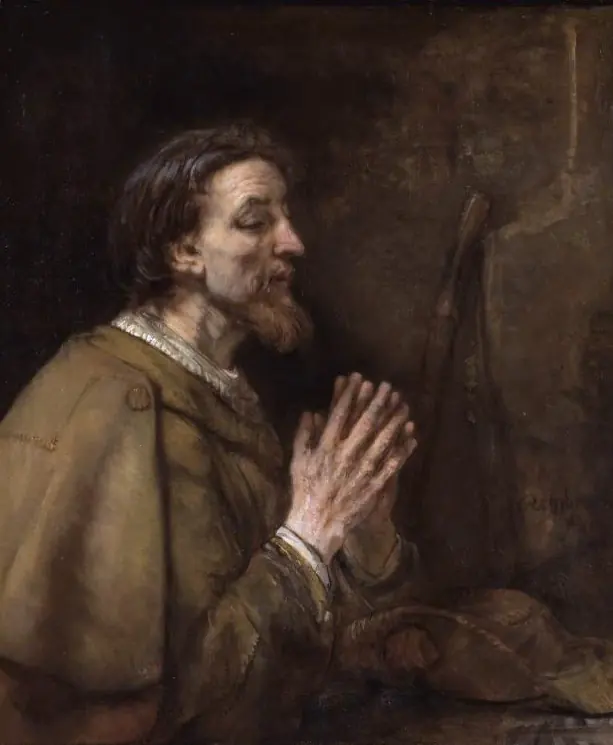

His name is Jacob. The Greek Iakobos is the form of the patriarch's name, and it passed through Latin Iacobus into the English James, the French Jacques and the Spanish Santiago, from Sant Iago. Almost everything that made him famous after his death comes from a later tradition: that he preached in Spain, that his body was carried to Galicia, and that his tomb was found there in the 9th century. That tradition turned a small city at the edge of Europe into one of the three great pilgrimage destinations of Christianity, alongside Jerusalem and Rome.
St. James in the Gospels
A fisherman's son
Zebedee was a fisherman on the Sea of Galilee, and the family seems to have been comfortable. Mark notes that he had hired men working with him in the boat. James's mother, usually identified as Salome, was one of the women who followed Jesus and provided for him, and she stood near the cross on Good Friday. The Catholic Encyclopedia reports an old reading of John 19:25 that makes Salome a sister of the Virgin Mary, which would make James and John first cousins of Jesus, but it calls that relationship doubtful.
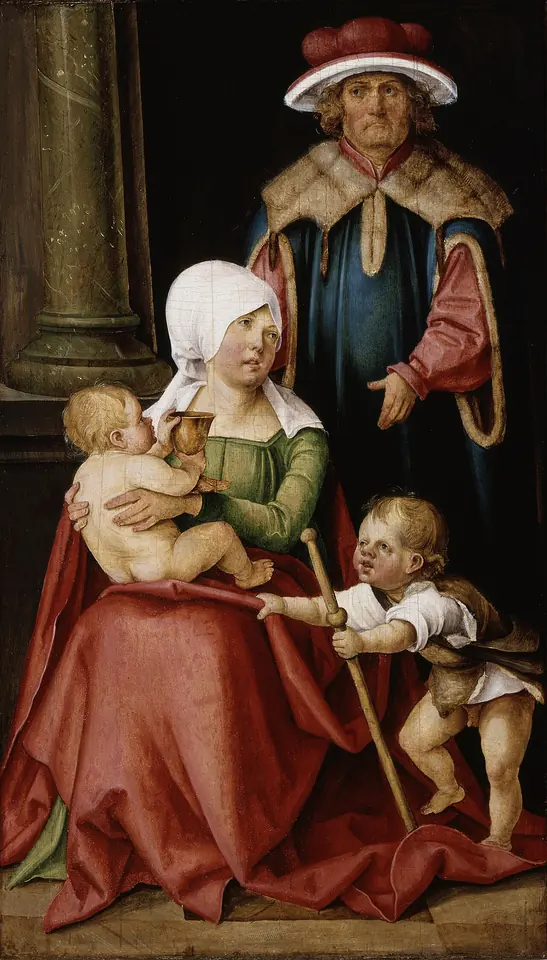

The call came at the lakeshore. Matthew tells it in two sentences: Jesus "saw two other brothers, James the son of Zebedee and John his brother, in the boat with Zebedee their father, mending their nets, and he called them. Immediately they left the boat and their father, and followed him" (Matthew 4:21–22, RSV). James and John were partners in the fishing trade with Peter and St. Andrew.


"Sons of thunder"
Mark's list of the Twelve says that Jesus surnamed James and his brother "Boanerges, that is, sons of thunder" (Mark 3:17). The Gospels show why. When a Samaritan village refused to receive Jesus on the road to Jerusalem, "his disciples James and John saw it, they said, 'Lord, do you want us to bid fire come down from heaven and consume them?'" Jesus "turned and rebuked them" (Luke 9:54–55, RSV). On another occasion the brothers asked to sit at his right and left in his glory. Matthew has their mother make the request for them.
Jesus answered with a question: "Are you able to drink the cup that I drink?" They said they were. "The cup that I drink you will drink," he told them (Mark 10:38–39, RSV). For James, that promise came true sooner than for anyone else.
On the mountain and in the garden
Peter, James and John are the only disciples Jesus took into the house of Jairus, up the mountain of the Transfiguration, and deeper into the garden of Gethsemane on the night before he died. On the mountain "his face shone like the sun, and his garments became white as light" (Matthew 17:2, RSV). In the garden Jesus told the same three, "My soul is very sorrowful, even to death; remain here, and watch" (Mark 14:34, RSV), and they fell asleep.
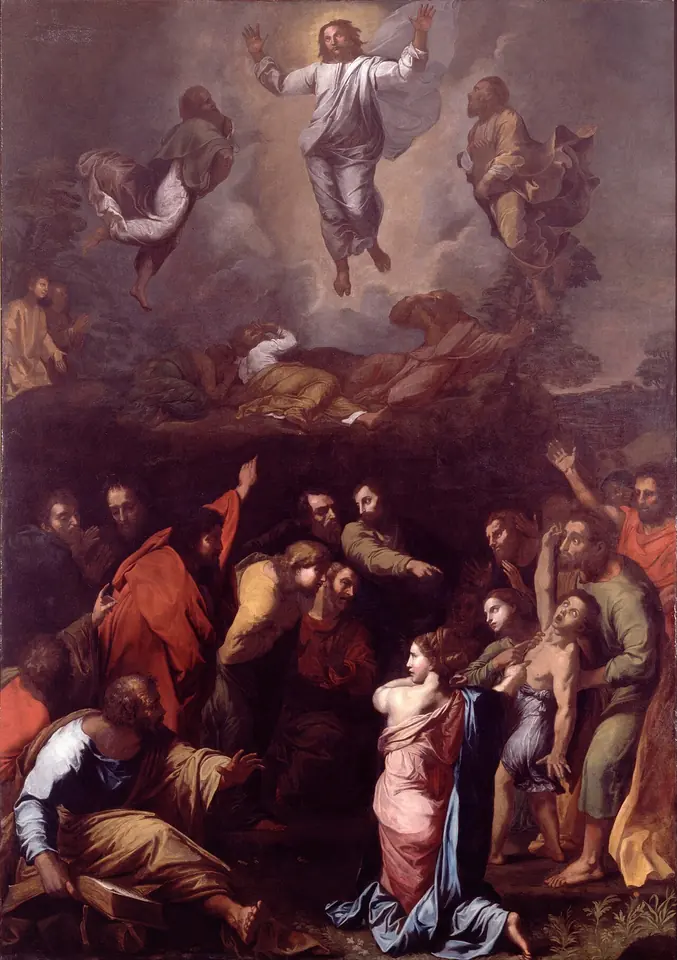

Benedict XVI drew the two scenes together. On the mountain James saw the Lord's glory; in the garden he saw the Son of God humbled and suffering. The pope called the road "from the mount of the Transfiguration to the mount of the Agony" a picture of the whole pilgrimage of Christian life.


The first apostle martyred
The Acts of the Apostles records his death in a single line. "About that time Herod the king laid violent hands upon some who belonged to the church. He killed James the brother of John with the sword" (Acts 12:1–2, RSV). This Herod was Agrippa I, the grandson of Herod the Great, who ruled Judea from 41 to 44. The Catholic Encyclopedia dates the martyrdom to the Passover of 44, and the Cathedral of Santiago gives the year 43.
The historian Eusebius of Caesarea, writing in the early 4th century, adds a story he found in a lost work by Clement of Alexandria, who said he had it from "those who had lived before him." The man who brought James to trial was so moved by his testimony that he declared himself a Christian too. On the way to execution he begged James's forgiveness. "And he, after considering a little, said, Peace be with you, and kissed him. And thus they were both beheaded at the same time." The Orthodox life of the apostle gives this accuser the name Josiah.
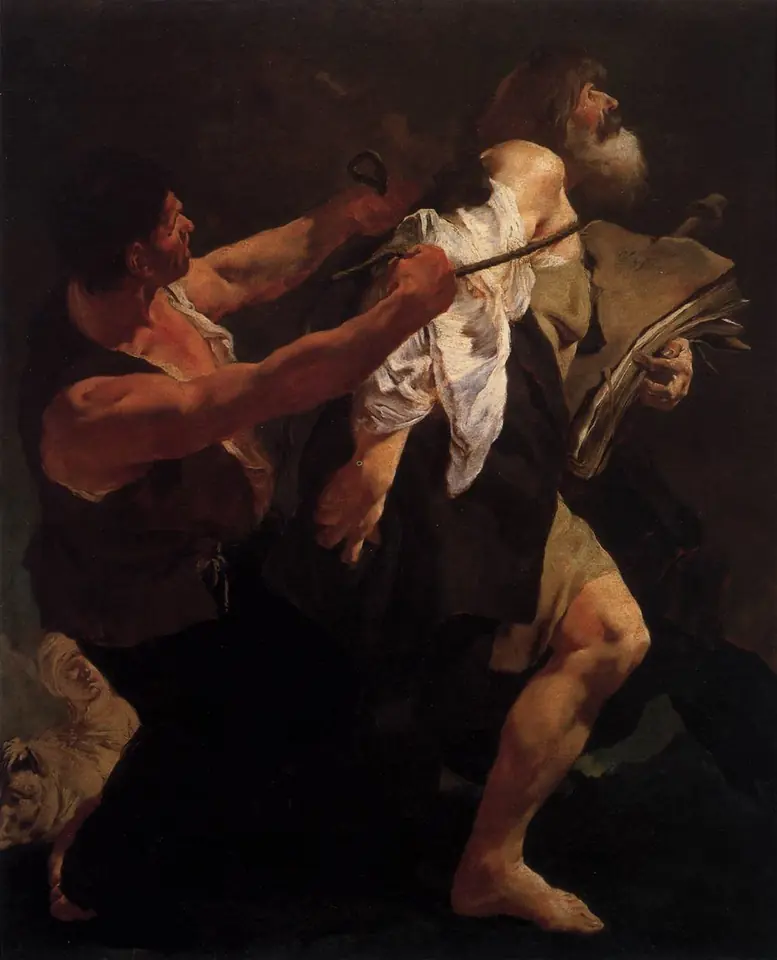

Medieval tellers added more. The Golden Legend, compiled by Jacobus de Voragine around 1260, says that James converted a magician named Hermogenes, who burned his books of sorcery, and that on the road to his death he healed a paralyzed man. Those episodes are traditional.
St. James and Spain
The preaching in Spain
The tradition that James preached in Spain before he died is old but not early. Benedict XVI said it dates back "at least to Isidore of Seville," the 7th-century bishop, and the Catholic Encyclopedia found it widespread by about 700, when the English abbot Aldhelm wrote that James "did convert the Spanish peoples." The same encyclopedia lists the difficulties honestly: Acts places James's death in Jerusalem in 44, the tradition of the early Church held that he hadn't yet left the city by then, and St. Paul planned to go to Spain because he did not want to "build upon another man's foundation." The Golden Legend itself admits that in Spain James "profited but little," making only nine disciples.
The Orthodox Church also remembers that "Saint James, after the Descent of the Holy Spirit, preached in Spain and in other lands, and then he returned to Jerusalem."
Our Lady of the Pillar
The best loved part of the Spanish tradition is set in Zaragoza, the Roman Caesaraugusta. As the old Roman Breviary told it, the Virgin Mary appeared to James while he was praying by the River Ebro and asked him to build a chapel there. Tradition dates the vision to the year 40, while Mary was still living in Jerusalem, and says she stood on a pillar, which is why the shrine is called Nuestra Señora del Pilar. Pope Callixtus III approved the tradition in 1456, and the feast of Our Lady of the Pillar is October 12.
The Catholic Encyclopedia notes that "there has been much discussion as the truth of the tradition," and that the oldest written evidence of devotion to Mary in Zaragoza dates from 1155. The apparition is traditional. It is also the reason for the Basilica of Our Lady of the Pillar, which the Catholic Encyclopedia called the most popular shrine of the Virgin in Spain. See the Blessed Virgin Mary for her other titles.


The boat to Galicia
The tradition that matters most for pilgrims is not that James lived in Spain but that he was buried there. The Golden Legend says his disciples took his body by night, put it in a boat "without sail or rudder," and let the angel of the Lord steer it to Galicia, in the far northwest. They laid the body on a great stone, which "received the body into it as it had been soft wax." A pagan queen named Lupa tried to trick them by lending them wild bulls to pull the cart; the bulls became "meek as lambs," and she was baptized. The landing place, Iria Flavia near today's Padrón, kept the memory: the Catholic Encyclopedia says the hamlet of Padrón has carried that name since the 9th century in memory of the galley that brought the apostle's body. All of this is traditional.
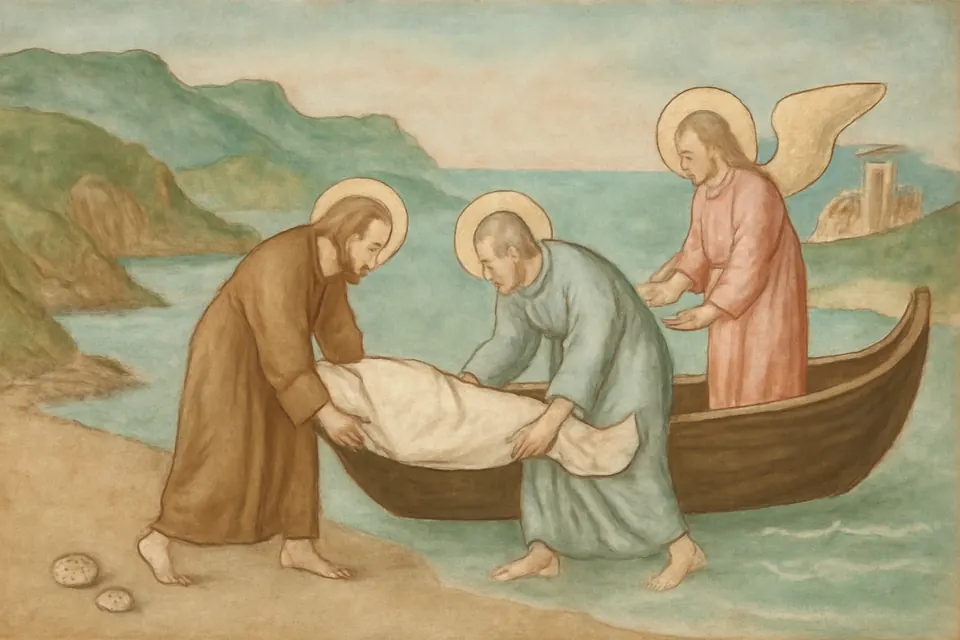
The tomb found
The tomb was then forgotten for centuries, the tradition continues, until a hermit named Pelayo saw lights shining at night over a wooded hill. He told Theodemar, bishop of Iria Flavia, who found a burial there and declared it the apostle's. King Alfonso II of Asturias came to see it and built the first church over the tomb. This happened in the early 9th century, during the reign of Alfonso II (791–842). Theodemar was a real bishop: his tombstone, dated October 20, 847, was found under the cathedral during excavations in 1955.

A popular explanation says Compostela means campus stellae, "field of the star," after those lights. The Catholic Encyclopedia, in its article on the city, prefers a plainer origin in composta, "established," and notes that the name first appears in the 10th century.
Historians have long doubted the identification, since no written source mentions a tomb of James in Spain before the 9th century. The Church has not wavered. In 1879 Cardinal Miguel Payá y Rico, archbishop of Compostela, found bones in a crypt behind the high altar. In his bull Deus Omnipotens of November 1, 1884, Pope Leo XIII confirmed that they were the bodies of St. James and his disciples Athanasius and Theodore. The pilgrims' office calls that bull a "renewed impetus" for the pilgrimage, which has grown ever since.
Santiago Matamoros
One more legend belongs to Spain's medieval wars. A 12th-century document from Compostela claims that James appeared on a white horse with a white banner to help the army of King Ramiro I at the battle of Clavijo in 844, against the Muslim rulers of al-Andalus. Historians regard the battle as legendary. From the story came Santiago Matamoros, "St. James the Moor-slayer," a mounted warrior with a raised sword, and the old battle cry "¡Santiago!" The Order of Santiago, a military and hospitaller order founded in the 12th century, took his name and protected pilgrims on the roads to his shrine.


These images are part of Spanish history and art, and many still stand in churches. They are hard to see today without thinking of the people on the other side of the sword. In Spanish America the same type was even turned against Indigenous peoples. The cathedral's own pages for pilgrims speak of James as the apostle who brought the faith and as a companion on the road, and the pilgrim with staff and shell is the image most people know today.
The miracles of St. James
James lived long before the Church investigated miracles, so none of his is approved in the modern sense. Sorted by this encyclopedia's labels:
- The healing of a paralyzed man on the way to his execution, and the conversion of Hermogenes: traditional, from the Golden Legend.
- The conversion of his accuser at his trial: traditional, from Clement of Alexandria as quoted by Eusebius. The Catholic Encyclopedia says this account "has a better foundation than many other traditions" because Clement named his sources.
- The apparition of the Virgin of the Pillar at Zaragoza: traditional. Popes approved the devotion and its feast; the event itself rests on tradition.
- The boat to Galicia, the stone that became a tomb, and Queen Lupa: traditional.
- The lights over the tomb and its discovery: traditional.
- The appearance at Clavijo: traditional; historians consider the battle legendary.
- Favors granted to pilgrims: reported. The Codex Calixtinus, the 12th-century "Book of St. James" kept at the cathedral, gathers a whole book of miracles credited to him, and pilgrims still tell of answered prayers. The Church has not examined them.
Why St. James is the patron saint of Spain and pilgrims
He is the patron of Spain because of the tradition that he first preached there and that his body rests there. Spanish kings fought under his name during the Reconquista, and the Catholic Encyclopedia notes that the Christians of Galicia "began in the ninth century to combat and drive back" their enemies under his banner. Galicia and the city of Santiago de Compostela claim him for the same reason.
He is the patron of pilgrims because for more than a thousand years people have walked to his tomb. The Cathedral of Santiago's pilgrim's prayer calls him "the great protector of pilgrims." Many cities of the Spanish-speaking world bear his name, among them Santiago de Chile and Santiago de los Caballeros in Guatemala, and Chile and Guatemala list him among their patrons.
Catholic lists add patronages that grew from local custom: pharmacists, veterinarians, horsemen and laborers, and people suffering from arthritis and rheumatism. See all the patron saints by cause.
Symbols of St. James in art
St. James is one of the easiest apostles to recognize, because Western artists since the Middle Ages have dressed him as a pilgrim to his own shrine. Look for these clues:
- A scallop shell: on his hat, his cloak or his satchel. The Catholic Encyclopedia explains that pilgrims to Compostela brought scallop shells home "as proofs of their journey," and the shell became the badge of the pilgrimage. In French a scallop is still a coquille Saint-Jacques.
- A pilgrim's staff, often with a hook and a gourd for water, and a broad-brimmed hat. Christian Iconography notes that he is usually barefoot.
- A book or scroll: the Gospel he preached, as an apostle.
- A sword: the weapon of his martyrdom (Acts 12:2).
- A white horse and a banner: the knight of the Clavijo legend, as in the Codex Calixtinus drawing above.
- With Peter and John: in scenes of the Transfiguration and Gethsemane, where James usually has a dark beard and John none.


Eastern icons show him without the pilgrim's dress: a dark-haired, bearded apostle in tunic and cloak, holding a scroll or a Gospel book, with his name written beside him. In a Western church, the hat and the shell settle the question at once.
Santiago de Compostela and the Camino
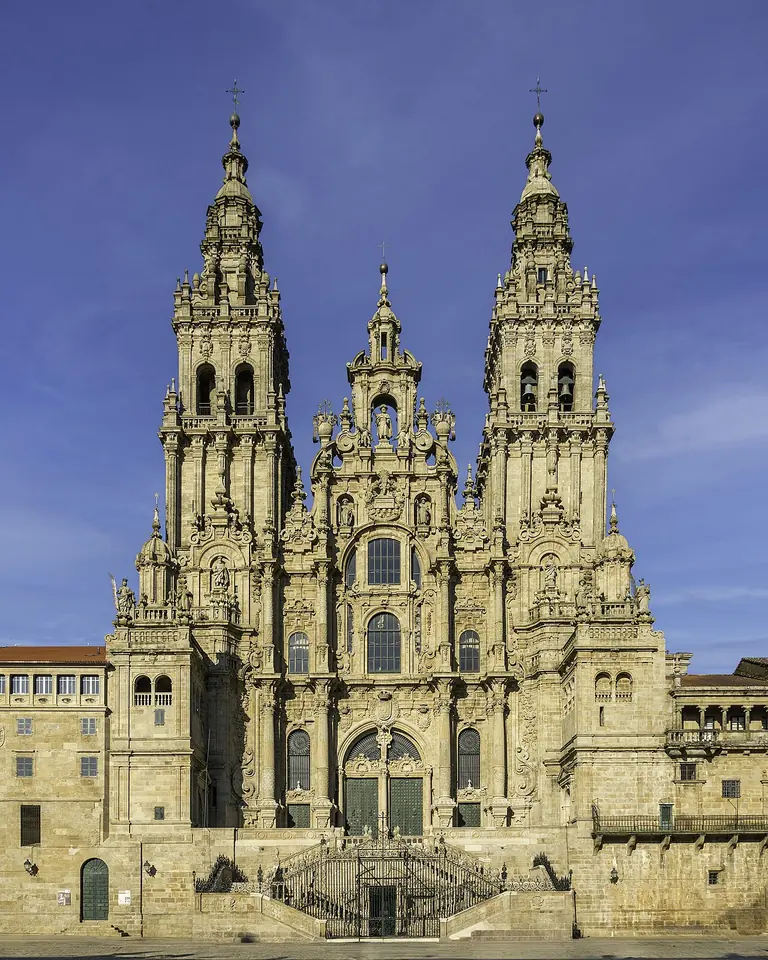

The cathedral that stands over the tomb today was begun in 1075 and built through the 12th century. Master Mateo finished its western entrance, the Portico of Glory, and placed its lintels on April 1, 1188. In 1738 Fernando de Casas began the granite Obradoiro facade that now fronts the square. The Catholic Encyclopedia notes that the medieval registers of the Inquisition at Carcassonne list the shrine of St. James among the four great pilgrimages imposed as penances, with Rome, Canterbury and Cologne.
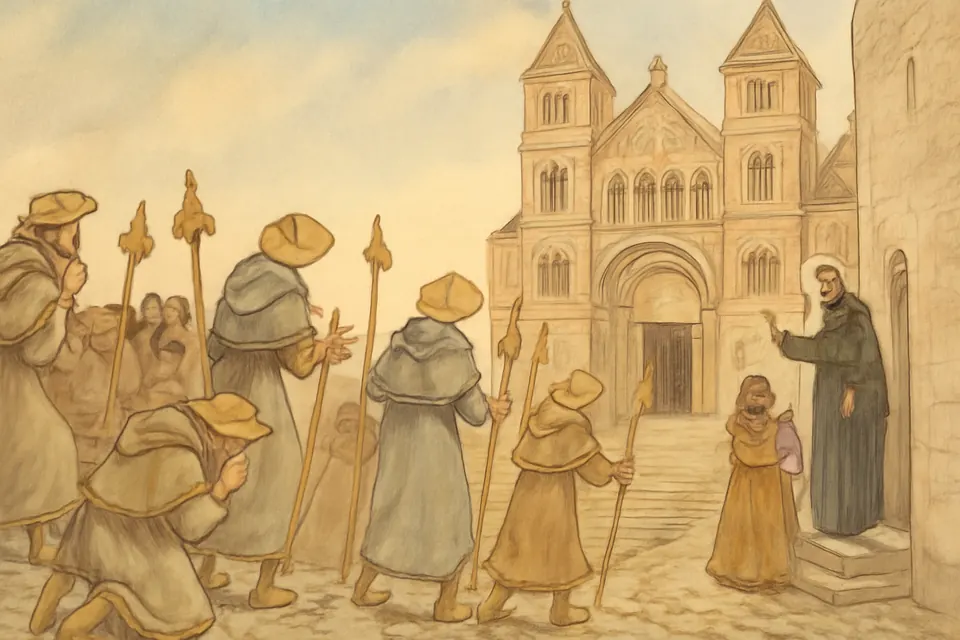
The Way of St. James
There is no single Camino. Pilgrims traditionally set out from their own front doors, and the cathedral lists several main routes: the French Way over the Pyrenees through Pamplona, Burgos and León, which most walkers use today; the Northern Way along the Cantabrian coast; the Primitive Way from Oviedo; the English Way from the ports of A Coruña and Ferrol; the Portuguese Way; and the Vía de la Plata from Seville. Yellow arrows and scallop-shell markers show the route.


Pilgrims carry a credencial stamped along the way. To receive the Compostela, the certificate issued by the cathedral's pilgrims' office, they must have come for religious or spiritual reasons and covered at least the last 100 kilometers on foot or horseback, or the last 200 by bicycle.
Rites at the cathedral
The cathedral describes the traditional rites of arrival. Pilgrims climb a small stair behind the high altar to embrace the 13th-century statue of the apostle, wrapped in a silver cape. Below the altar, in a crypt built in the late 19th century on the site of the Roman-era mausoleum, they pray before the silver reliquary that holds his remains.
The botafumeiro
At some Masses the cathedral swings the botafumeiro, a giant censer whose Galician name means "that lets out smoke." The first record of it is a note in the Codex Calixtinus calling it a Turibulum Magnum. The brass one used today was made in 1851 by José Losada to replace one stolen during the French occupation, and a silver replica dates from 1971. Hung from the crossing, it swings in a great arc over the transept. The cathedral explains the meaning plainly: as the incense rises to the vaults, "so must the prayers by the pilgrims rise to reach the heart of God."


Holy Years
When July 25 falls on a Sunday, Compostela celebrates a Holy Year, or Año Santo Jacobeo. The cathedral traces the custom to Pope Callixtus II in 1122 and to Alexander III's bull Regis aeterni of 1179, and says the years follow a cycle of 11, 6, 5 and 6 years. During a Holy Year the Holy Door at the east end of the cathedral is opened, and pilgrims can receive a plenary indulgence by visiting the tomb, praying for the pope's intentions, going to confession and receiving Communion. The next Holy Years fall in 2027 and 2032.
Popes have come as pilgrims too. On November 9, 1982, John Paul II stood in Santiago and spoke to the whole continent: "From Santiago I send you, old Europe, a cry full of love: Find yourself again. Be yourself" (our translation from the Spanish).
Feast day and customs
The Catholic Church celebrates St. James on July 25, a feast in the General Roman Calendar and a public holiday in Galicia. The Roman Martyrology for the day says that his "blessed bones were taken from Jerusalem to Spain and hidden away in the farthest corner of Galicia." The Golden Legend explains the date by saying July 25 was the day of his translation to Compostela, not of his death. St. Christopher shares the date. The Orthodox Church keeps April 30. See the feast day calendar.
Prayer to St. James
These prayers come from published sources.
The collect of the feast
The Roman Missal's prayer for July 25:
Almighty ever-living God, who consecrated the first fruits of your Apostles by the blood of Saint James, grant, we pray, that your Church may be strengthened by his confession of faith and constantly sustained by his protection. Through our Lord Jesus Christ, your Son, who lives and reigns with you in the unity of the Holy Spirit, God, for ever and ever.
The pilgrim's prayer of Santiago Cathedral
The cathedral offers this prayer to pilgrims on its website:
Saint James, Apostle, chosen among the first. You were the first to drink the Cup of the Master and you are the great protector of pilgrims; make us strong in faith and happy in hope on our pilgrim journey following the path of Christian life and sustain us so that we may finally reach the glory of God the Father. Amen.
The Orthodox troparion
The Orthodox Church sings this hymn on April 30, in the translation of the Orthodox Church in America:
As a soldier of the Lord you were ranked among the choir of Apostles. / Together with your brother, O James, you clung wholeheartedly to the Savior. / Armed with the power of the Spirit you proclaimed Him to all, and were slain by the sword. / Therefore, we sing your praises.
The cathedral's suggested words for pilgrims at the tomb end with the name Jesus gave him: "You the strong, you the intrepid, you Son of Thunder."
Frequently asked questions
What is St. James the Greater the patron saint of?
Spain, Galicia, the city of Santiago de Compostela and pilgrims above all. Catholic lists also name Chile, Guatemala, pharmacists, veterinarians, horsemen, laborers and people with arthritis or rheumatism.
When is the feast day of St. James the Greater?
July 25 in the Catholic Church, where it is a feast, and in many Anglican and Lutheran calendars. The Orthodox Church honors him on April 30. When July 25 falls on a Sunday, Santiago de Compostela keeps a Holy Year; the next ones are 2027 and 2032.
What is the difference between St. James the Greater and St. James the Less?
They were two different apostles. James the Greater was the son of Zebedee and brother of John. James the Less was the son of Alphaeus. Pope Benedict XVI explained that "Greater" and "Less" don't measure holiness; they only reflect how much each man appears in the New Testament. Searches for "St. James" can mean either one, and sometimes James the brother of the Lord.
Why is the scallop shell the symbol of St. James?
Medieval pilgrims to his tomb brought scallop shells home from the Galician coast as proof of their journey, according to the Catholic Encyclopedia. The shell became the badge of the Santiago pilgrimage, and today yellow shells on blue markers guide walkers along the Camino.
Is St. James really buried in Santiago de Compostela?
The Catholic Church holds that he is. Bones found in a crypt behind the high altar in 1879 were declared to be his by the archbishop, and Pope Leo XIII confirmed the finding in 1884. Historians point out that no written source mentions the tomb before the 9th century, and the Catholic Encyclopedia itself admits that the relic's authenticity "has been questioned."
Did St. James preach in Spain?
Spanish tradition says he did, and Benedict XVI traced that tradition back to at least Isidore of Seville in the 7th century. The New Testament doesn't mention it, and Acts records his death in Jerusalem around 44, so many historians doubt the journey. This encyclopedia treats it as traditional.
What does "Santiago" mean?
It is Spanish for "Saint James," from the Latin Sanctus Iacobus. James is the English form of Iakobos, the Greek version of the Hebrew name Jacob.
What is the botafumeiro?
The giant censer of Santiago Cathedral. Its Galician name means "smoke-spreader." It swings in a huge arc across the transept on great feasts, and the cathedral explains the rising incense as a picture of pilgrims' prayers rising to God.
Sources
- Catholic Encyclopedia (1910): St. James the Greater
- Catholic Encyclopedia (1908): Compostela
- Catholic Encyclopedia (1912): Order of Saint James of Compostela
- Catholic Encyclopedia (1911): Pilgrimages
- Catholic Encyclopedia (1911): Nuestra Señora del Pilar
- Eusebius, Church History, Book II, chapter 9 (the martyrdom of James)
- Benedict XVI, General Audience of 21 June 2006: James, the Greater
- John Paul II, Acto europeo en Santiago de Compostela, 9 November 1982 (Spanish text)
- Cathedral of Santiago de Compostela: The Cathedral (history, art, botafumeiro, the Apostle)
- Cathedral of Santiago de Compostela: Pilgrimage (Pilgrim's prayer, rites, Holy Year)
- Pilgrim's Reception Office: The Compostela
- Orthodox Church in America: Apostle James the Brother of Saint John the Theologian
- Orthodox Church in America: Troparion and Kontakion of the Apostle James
- Jacobus de Voragine, The Golden Legend (Caxton translation): Life of St. James the Greater
- Christian Iconography: St. James the Greater in Art
- Catholic Culture: Feast of St. James, Apostle (collect, patronages)
- Roman Martyrology, July 25