St. James the Less
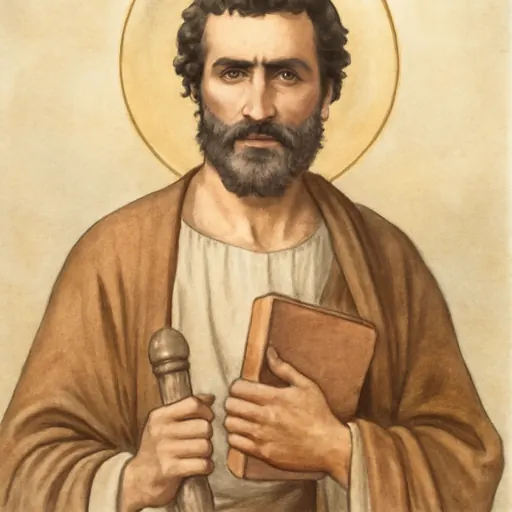
St. James the Less was one of the Twelve Apostles, called "James the son of Alphaeus" in every Gospel list. Catholic tradition has long identified him with James "the brother of the Lord," the leader of the church in Jerusalem, while the Orthodox Church counts them as two men. His feast day is May 3, shared with St. Philip, and he is a patron saint of pharmacists, hatters and the dying.
Who was St. James the Less?
James the son of Alphaeus was one of the Twelve Apostles. Every list of the apostles names him at the head of the third group of four (Matthew 10:3, Mark 3:18, Luke 6:15, Acts 1:13). Beyond that, the Gospels say nothing about him as an individual.
He is called "the Less" to tell him apart from St. James the Greater, the son of Zebedee and brother of John. The title comes from Mark 15:40, which mentions a "James the less" (in Greek mikros, "the little" or "the younger"), the son of a Mary who stood near the cross. Pope Benedict XVI noted in 2006 that the titles don't rank the men's holiness.


One James or two?
Most of what Christians say about James hangs on one question. Besides the two apostles, the New Testament names James "the brother of the Lord" (Galatians 1:19, Mark 6:3), who led the Jerusalem church in Acts 12, 15 and 21. Was he the son of Alphaeus?
The Catholic tradition: one man
Western tradition, following St. Jerome in the 4th century, holds that the son of Alphaeus, "James the less" of Mark 15:40 and the brother of the Lord are one and the same. The main argument is Galatians 1:19, where Paul says he saw no other apostle "saving James the brother of the Lord." On this reading, "brother" means a close relative, most likely a cousin; Jerome argued this against Helvidius, who taught that Mary had other children.
The Catholic Encyclopedia of 1910 calls the identification "by far the most probable" while granting that "there is no full evidence" for it. Pope Benedict XVI was more cautious in 2006: the question, he said, "is disputed" among experts.
The Orthodox tradition: two men
The Orthodox Church keeps the Apostle James son of Alphaeus on October 9 and calls him the brother of St. Matthew, since Mark 2:14 calls Levi the tax collector "the son of Alphaeus" too. Its tradition says he preached in Judea and Gaza and was crucified in Egypt. James the brother of the Lord it keeps on October 23 and describes as a son of St. Joseph by an earlier marriage, a view held by most Greek Fathers.
Other views
Most Protestant scholars, as the Catholic Encyclopedia itself noted, read the "brothers of the Lord" as later sons of Joseph and Mary, and so separate the brother of the Lord from the apostle. This encyclopedia doesn't settle the question.
The brother of the Lord in Jerusalem
Paul says the risen Christ appeared to James (1 Corinthians 15:7) and names him with Peter and John as one of the "pillars" of the Jerusalem church (Galatians 2:9). When Peter escaped from prison, he asked that word be sent "to James" (Acts 12:17).
At the Council of Jerusalem, around the year 50, James spoke after Peter and proposed that Gentile converts should not be bound to circumcision, asking only that they abstain from a few things, such as meat offered to idols (Acts 15:13–21).
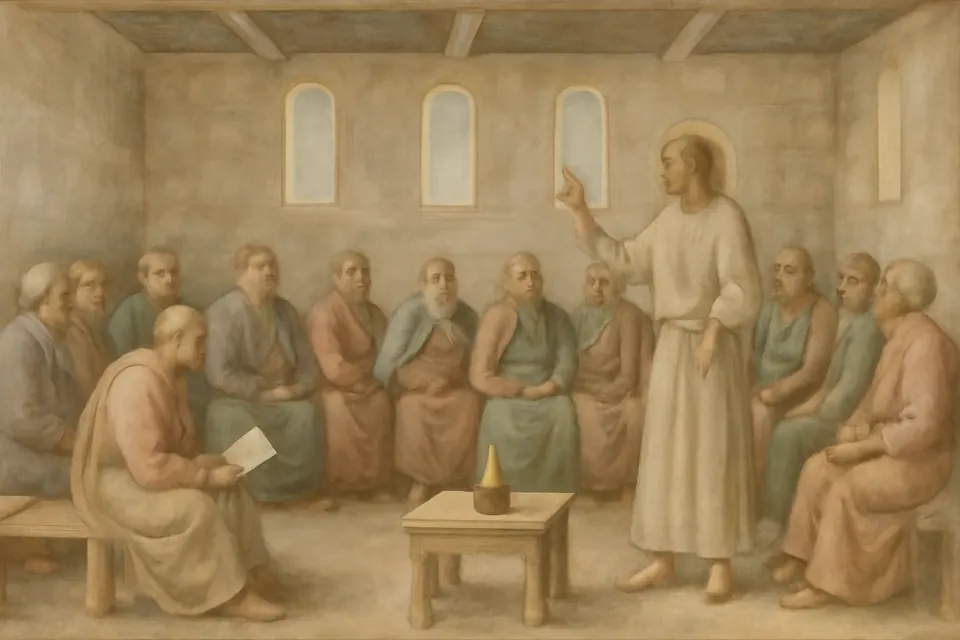
The Letter of James, the first of the "Catholic" or general letters, is traditionally credited to this James. It is the source of the line "faith without works is dead" (James 2:26). Eusebius, writing in the early 4th century, already noted that its authorship was "disputed" in his day.

The death of St. James
The Jewish historian Josephus, writing in Rome in the 90s, says the high priest Ananus brought "the brother of Jesus, the so-called Christ, James by name" before the Sanhedrin and had him stoned. This happened in 62, between the death of the Roman governor Festus and the arrival of his successor.
Hegesippus, a 2nd-century Christian writer quoted by Eusebius, gives a fuller account. He says James was called "the Just" and prayed so often in the Temple that his knees grew hard "like those of a camel." When he refused to deny Christ, the scribes and Pharisees threw him from the pinnacle of the Temple. He survived the fall, knelt and prayed, "I entreat you, Lord God our Father, forgive them, for they know not what they do." A fuller then "took the club with which he beat out clothes and struck the just man on the head." Hegesippus's details are traditional; Josephus's short report is the historical core.

Miracles and legends
The New Testament records no miracles by James, and none has been formally examined. The stories about him, from Hegesippus and from the Orthodox lives, are traditional.
Why St. James the Less is a patron saint
Catholic Culture lists him as patron of apothecaries and pharmacists, fullers, hatters and milliners, the dying, and Uruguay, which he shares with St. Philip. The fullers take him from the club of his martyrdom, a tool of their trade. The reasons for the others aren't recorded. See more on our patron saints page.
Symbols of St. James the Less in art
Look for these attributes:
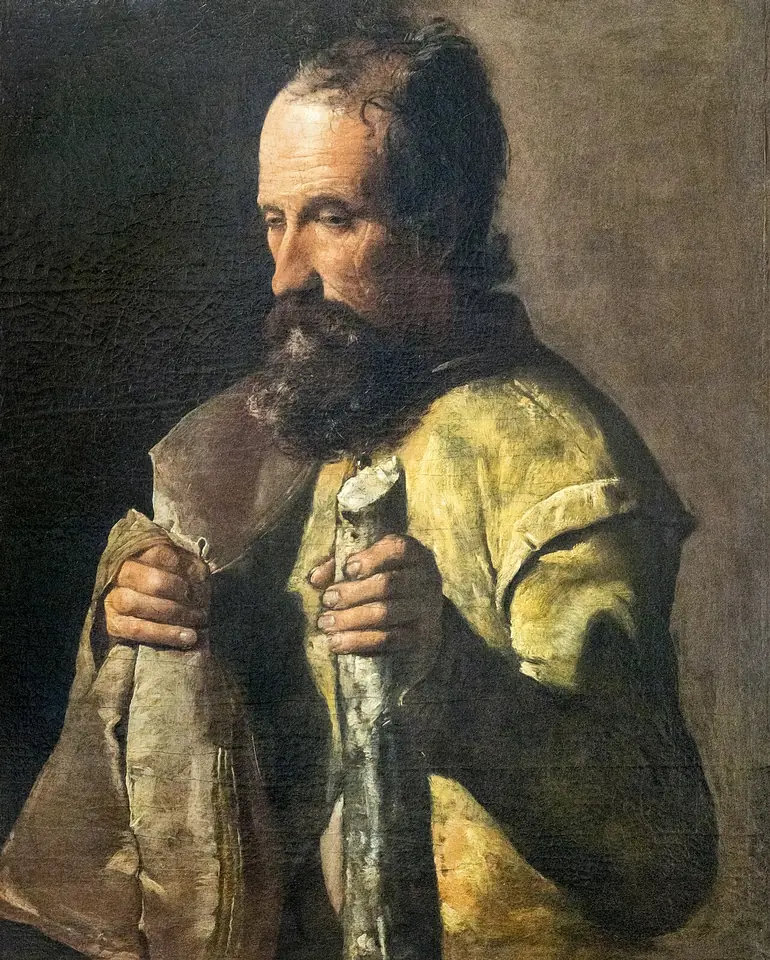
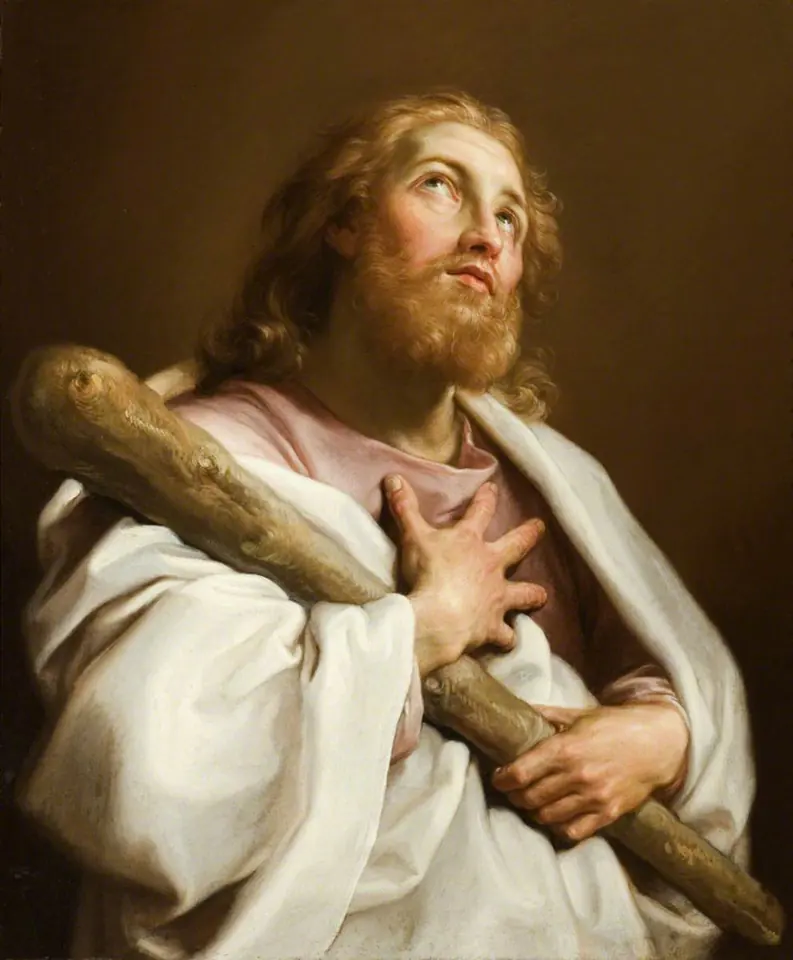
- A fuller's club: a thick wooden bat, his most common sign in Western art. Pompeo Batoni and Georges de La Tour both put one in his hands.
- A book: for the Letter of James, as in Rubens's painting at the top of this page.
- A saw: listed among his attributes by Catholic Culture and found in some series of the apostles, though less often than the club.
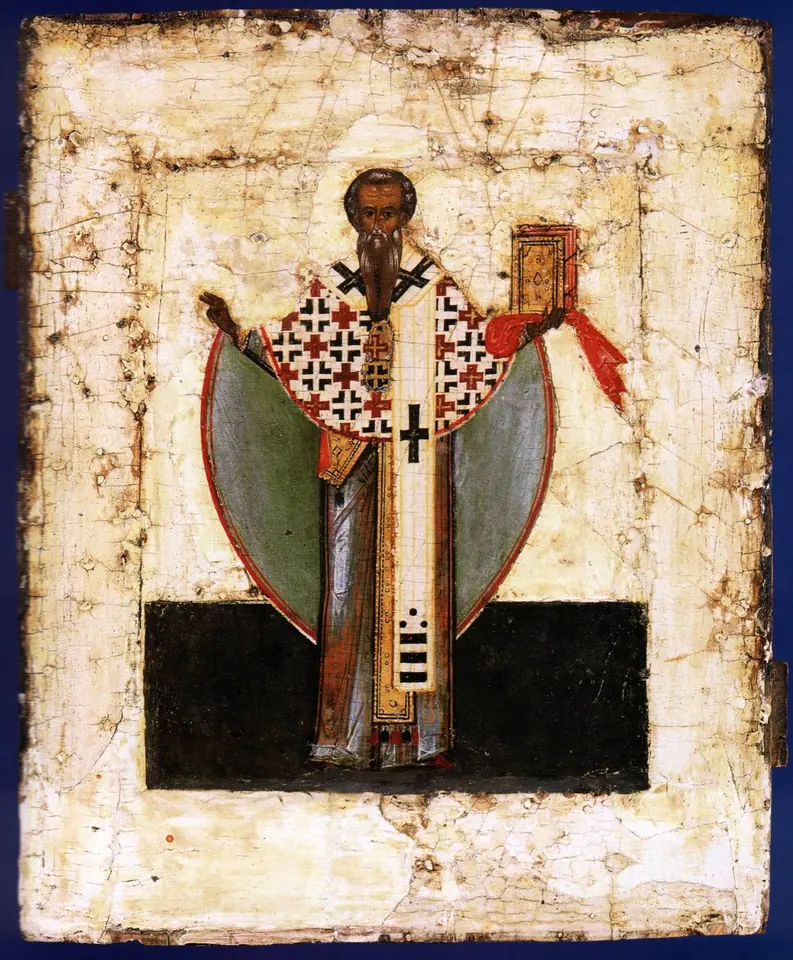
- Bishop's vestments: Eastern icons of James the brother of the Lord show him as a bishop in a white stole marked with crosses, as in the Novgorod icon above.


Feast day and relics
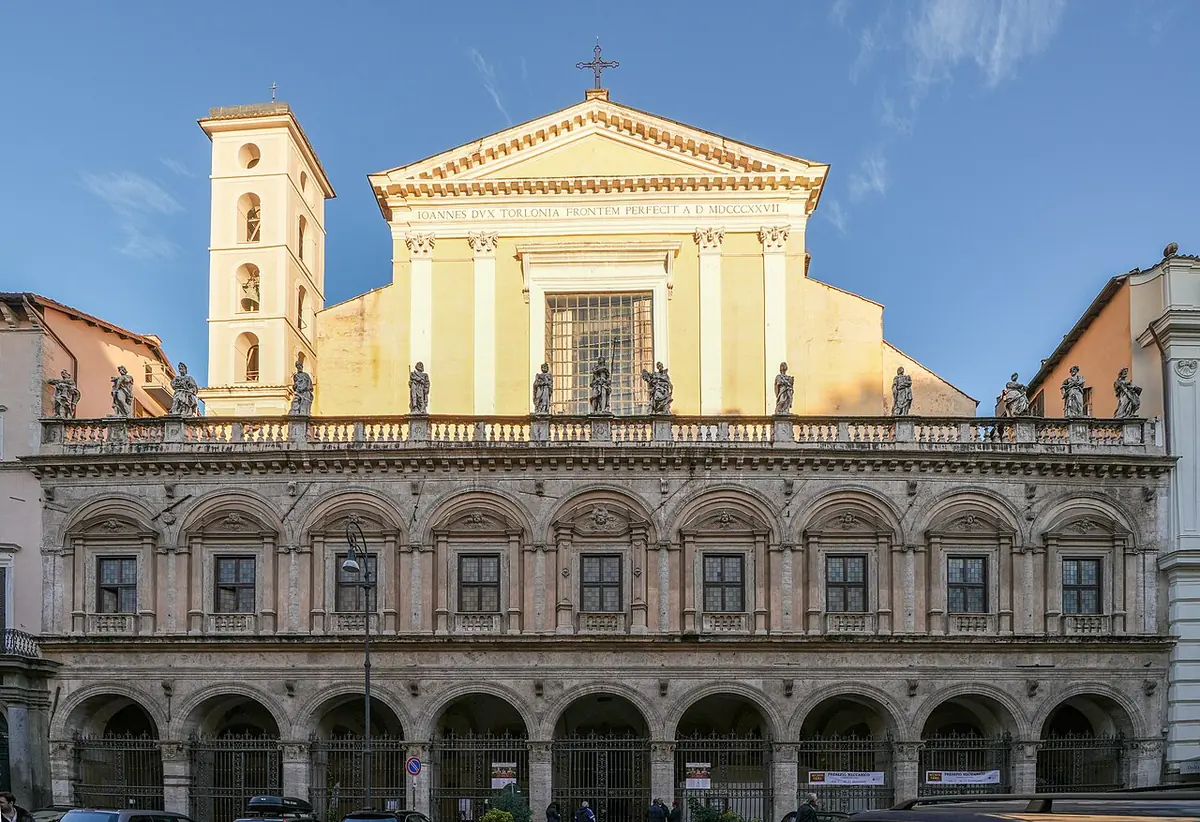
The Catholic Church keeps May 3 as the feast of Sts. Philip and James. Pope John III dedicated the Basilica of the Holy Twelve Apostles in Rome in the 560s, especially to these two, and their relics still lie together in its crypt. Find the rest of the calendar on our feast days page.

Prayer to St. James the Less
There is no well-known traditional prayer to St. James the Less alone. Catholics honor him in the Roman Canon and the Litany of the Saints. Many also pray with the Letter of James, especially its counsel for the sick, which the Catholic Church reads as the basis of the anointing of the sick: "Is any man sick among you? Let him bring in the priests of the church, and let them pray over him, anointing him with oil in the name of the Lord" (James 5:14, Douay-Rheims).
Frequently asked questions
Why is he called St. James the Less?
The name comes from Mark 15:40, which calls one James "the less" or "the younger" (Greek mikros, "little"). It may mean he was younger or shorter than the other apostle James. It separates him from St. James the Greater, the son of Zebedee. Pope Benedict XVI said the two titles don't measure holiness.
Is St. James the Less the same as James the brother of Jesus?
Opinions differ. The 1910 Catholic Encyclopedia calls the identification "by far the most probable" but admits it is not proved. Pope Benedict XVI said in 2006 that the question "is disputed" among experts. The Orthodox Church honors James the son of Alphaeus on October 9 and James the brother of the Lord on October 23, as two different saints.
When is the feast of St. James the Less?
May 3 in the Catholic Church, shared with St. Philip the Apostle. Until 1955 the two apostles were kept on May 1. Their names also appear together in the Roman Canon of the Mass.
What is the symbol of St. James the Less?
A fuller's club, a heavy wooden bat used to beat cloth. It comes from the 2nd-century account of his death, in which a fuller struck him on the head with one. He is also shown with a book for the Letter of James, and sometimes with a saw.
Sources
- Catholic Encyclopedia (1910): St. James the Less
- Catholic Encyclopedia (1907): The Brethren of the Lord
- Pope Benedict XVI, General Audience, 28 June 2006: James, the Lesser
- Eusebius, Church History, Book II, chapter 23 (quoting Hegesippus and Josephus)
- St. Jerome, The Perpetual Virginity of Blessed Mary (Against Helvidius)
- Orthodox Church in America: Apostle James, son of Alphaeus
- Orthodox Church in America: Apostle James, the Brother of the Lord
- Catholic Culture: Feast of Sts. Philip and James, Apostles